
INTRODUCTION
Entrepreneurs of all descriptions operate in a world that is increasingly mediated by technology (Pérez-Escoda et al., 2019) and while an enterprising mindset can equip individuals with the skills and attributes to tackle societal challenges and act on opportunities (Gibb, 2011; Rae, 2008), the ability to create and present an engaging, multi-media story about these solutions and opportunities is an increasingly important skill for entrepreneurs to develop (Dehaas, 2014). Digital storytelling is a process that blends narrative techniques with digital media (images, text, music, video) to create and share stories (Rahimi, 2001). It has emerged as a popular tool in education to encourage students to organise and express their ideas in a meaningful way (Robin, 2016; Robin, 2008), with significant benefits for enhancing student engagement and digital literacy skills (Robin, 2016). However, little research has been conducted on the use of digital storytelling in enterprise education (Wu and Chen, 2020), despite its potential to support entrepreneurial skill development, including digital literacy (Çetin, 2021). This paper aims to address this gap by examining students’ experiences using digital storytelling as a means to present entrepreneurial ideas to opportunities they identify in education, or solutions to problems they identify in education.
CONTEXT
Enterprise education is focused on developing a set of behaviours, attributes and skills which empower students from all areas of study to think and act in innovative ways (Bridge et al., 2010; QAA, 2018). It is a vehicle through which students can learn how to be creative and innovative (Hameed and Irfan, 2019); to spot opportunities and develop solutions in a range of social, political, environmental, and business contexts (Rae, 2006; Rae and Woodier-Harris, 2013); and have the confidence and resilience to turn these ideas into action (The European Parliament and the Council of the European Union, 2006). A wealth of literature exists which explores some of the underlying competencies associated with this mindset, such as: creativity, innovation, risk-taking and a tolerance for ambiguity (Arruti and Paños-Castro, 2020; Gómez Núñez et al., 2017; Purrohman, 2019; Seelig, 2012); proactiveness and achievement-orientation (Al-Mamary et al., 2020; Che Embi et al., 2019); the confidence to propose ideas (Gibb, 2007; Kaur and Bains, 2013); and perseverance and dedication (Valenciano et al., 2019). However, there is much debate in the academic literature about not only how these skills are taught, but also how they are assessed. While enterprise education is being delivered using a variety of approaches such as traditional lectures (Hynes, 1996; Hynes et al., 2011), experientially oriented activities and project-based learning (Blenker et al., 2011; Ruskovaara and Pihkala, 2015; Tiernan, 2016; Tiernan and O’Kelly, 2022), and guest speakers (Jones and Liu, 2017; Solomon, 2007), there remains criticism regarding an over-reliance on traditional modalities like lectures, case studies and business plans (Samwel Mwasalwiba, 2010; Sirelkhatim and Gangi, 2015). Consequently, attention has been drawn to the best way to teach entrepreneurial skills (Che Embi et al., 2019) and consideration given to the development of skills and behaviours by adopting an imaginative approach to teaching (Hindle, 2007; Samuel and Rahman, 2018), which promotes the development of students’ analytical and lateral thinking. Digital storytelling offers a creative alternative for entrepreneurial skills development, as it allows students to present their ideas in a visually engaging format while also developing digital literacy (Çetin, 2021) and exploring multimedia tools despite practical challenges (Nuroh et al., 2025). Some of the most eminent researchers in the area of enterprise education have been critical of the lack of research on assessment in the field, arguing that more attention needs to be paid to the specific assessment tools used to measure entrepreneurial characteristics (Pittaway et al., 2009), and the connection between theory and practice (Murray, 2019; Zhai, 2024). Researchers have called for assessment approaches which move away from traditional modalities and measure more than just students’ knowledge, providing students with opportunities to experience ‘real life’ scenarios and present their work and ideas in creative ways (Carey and Matlay, 2010; Frolova et al., 2021; Karimi et al., 2016).
Digital storytelling grew from the arts movement of the 1980s (Lambert, 2013) where it was used to empower students to develop personal narratives based on specific life experiences (Austen et al., 2021). Over time, digital storytelling has evolved into a much broader pedagogical and assessment tool which encourages students to produce digital content, using tools such as Adobe Spark and Powtoon, about a range of topics. It has emerged as a popular educational tool which encourages students to research, script and develop an interesting narrative in their subject area using a range of multimedia content (Alismail, 2015; Robin, 2016). The variety of skills required throughout the process, from initial investigations to narration of videos has been shown to improve student understanding of and engagement with subject material (Robin, 2016; Sadik, 2008). Moreover, by encouraging students to arrange and express their ideas in a meaningful way, digital storytelling helps students value their work and communicate their ideas with others in more meaningful ways (Nuroh et al., 2025; Robin, 2008). In addition to the pedagogical, motivational, and expressive benefits, digital storytelling by its very nature has the potential to develop digital literacy skills as students work with technology to plan and produce their work (Çetin, 2021; Muller et al., 2006; Ohler, 2013).
Digital storytelling has been introduced in a range of subjects at primary, secondary and higher education levels, with examples of its use showing up in subjects as diverse as healthcare (Guse et al., 2013), religious studies (Hess, 2014), geography (Ryan and Aasetre, 2021), history (de Chantal, 2021), and even mathematics (Niemi and Niu, 2021). Scholarly interest in the area is globally represented, with studies being published in Europe, Asia, Africa, and the United States, and while interest in the area has existed since the late 2000s, a significant upsurge in interest can be seen from 2015 onwards (Wu and Chen, 2020). In their comprehensive systematic review of the field, Wu and Chen (2020) identified five orientations of digital storytelling: appropriative, agentive, reflective, reconstructive, and reflexive. The appropriative orientation is concerned with developing students understanding of topics and concepts through production. As students apply ideas through digital storytelling, they gradually incorporate them into their existing knowledge and experience. The agentive orientation aims to provide students with a degree of autonomy and self-directedness, whereby students are free to choose an area of interest and method of presentation (Anderson and Wales, 2012; Bjorgen, 2010). The reflective orientation is, as the name suggests, designed to encourage students to make meaning from experiences through the creation of reflective artefacts (Castleden et al., 2013). The reconstructive orientation is focused on developing students’ critical thinking by counter-arguing traditional beliefs, stereotypes and social stigmas (Coventry, 2008). Finally, the reflexive orientation is tied up with identity, where students are encouraged to explore who they and others are, and can be (Anderson and Macleroy, 2017). This study adds to the current discourse in the area of enterprise education by implementing digital storytelling as a tool for students to present their entrepreneurial ideas and solutions for areas identified within an educational context. Our overarching research aim is to explore student experiences using digital storytelling as a means to present their entrepreneurial ideas and solutions.
METHODOLOGY
Sample
This study was carried out in the Institute of Education at Dublin City University. Participants were drawn from the B.Sc. in Education and Training. Students were completing the module ‘Entrepreneurship in Education and Training’ during semester two of their first year. This sample was selected as it was a compulsory module, taught by the authors, two hours per week.
The module
The module is designed to provide students with an opportunity to experience being enterprising in an educational context. Students are given an overview of the theory and practice of enterprising behaviour and supported in the development of their skills, attitudes, and behaviours in this regard. Module topics include ‘what is entrepreneurship and who is entrepreneurial’, ‘opportunity recognition and exploitation’, ‘creativity and innovation’, ‘problem solving’, and ‘digital storytelling’.
Description of process
The purpose of this module was to increase students’ understanding of what it means to be enterprising and provide the opportunity to experience this within the context of education. This was achieved in two ways. First, a variety of in-class approaches were employed, such as: case studies to demonstrate how enterprising attitudes, attributes and behaviours manifest themselves in education contexts; discussion and reflective exercises to encourage reflection on and deeper understanding of enterprising behaviours and their application in education contexts; group activities such as ‘being observant’, ‘challenging assumptions’, ‘connect and combine’ (all adapted from Seelig, 2012) and the ‘idea space’ (Rae, 2007), to practise and experience enterprising skills.
Second, as a means of deeply embedding enterprising skills in the module, students were required to identify an opportunity or problem in education and create a ten-minute digital story to present their idea or solution. In groups of five, students worked together to create their stories, with the final product being produced using Adobe Spark. To support the students in this endeavour, several strategies were employed. First, students were provided with a training session and materials to ‘storyboard’ their digital stories before video creation started in earnest. Storyboards are an important part of the digital storytelling process as they allow students to organise and express their ideas in paper format, without technological restrictions or limitations (Cheng and Chuang, 2019). Second, groups were provided with detailed instructions and resources on how to use the Adobe Spark software. These sessions covered everything from adding images and text, to publishing their creations online. Students were free to choose their opportunity or problem according to their own research and personal or professional interests and were encouraged to explore various methods of delivery, from linear stories to role plays. Students were assessed using DIFAP model, adapted from Rae’s (2007) DIFA model. Students were required to outline the Demand for the idea, explain its Innovation, justify its Feasibility, explain the Attraction to the group to tackle this area, and use the available video tools and resources to create an engaging Presentation.
Instruments
Data collection was carried out using an anonymous online questionnaire. Questions gathered a mixture of qualitative and quantitative information. The questionnaire consisted of a series of open and closed questions. Open questions were used to gather students’ thoughts, feelings, and opinions. Closed questions were structured to ascertain students’ level of agreement with a statement by selecting along a five-point scale (1=strongly disagree, 2=somewhat disagree, 3=neither disagree nor agree, 4=somewhat agree, 5=strongly agree), this was followed with a qualitative prompt to support their selection. To address our research, questions were asked with the following research objectives in mind: 1) Student impressions of digital storytelling as an assessment format in Enterprise Education, and 2) digital storytelling as a tool to present entrepreneurial ideas and solutions.
Ethical considerations
This study received ethical approval from the university ethics committee prior to commencement. Particular care was taken due to the dual role of the authors as both tutors and researchers. To minimise bias and ensure ethical integrity, students were informed that participation was voluntary and that their responses would remain anonymous, with no impact on their grades or course progress.
Procedure
Students attended the module over one semester as part of their overall study. The questionnaire was distributed at the end of the semester, and students completed this anonymously. Out of the 62 students, 35 completed questionnaires were returned, giving a response rate of 56%.
Data analysis
The data collected for this inquiry was analysed in two ways. Quantitative data was analysed using descriptive analysis, and while this form of analysis cannot make inferences for general populations, it is useful in presenting patterns from within individual studies (Tashakkori and Teddlie, 2003). In an effort to understand how students experienced digital storytelling, qualitative data was analysed using the constant comparative method (Glaser and Strauss (1967) in Maykut and Morehouse (1994:126)). The constant comparative method is a form of thematic analysis (Braun and Clarke, 2006; Xu and Zammit, 2020) that involves analysing the qualitative data for patterns in the words and phrases in student responses, which were coded and grouped together as initial categories. As categories emerged, rules of inclusion were developed to ensure consistency in each category. If a piece of data did not meet the rules for inclusion, a new category was created. For example, in the ‘please explain your answer’ section of the question ‘Overall, how would you rate the use of digital storytelling to present your entrepreneurial idea’, responses contained a variety of positive comments. For these comments to be included in the ‘multi-media nature of content’ theme, the rule of inclusion required the comments to specifically mention the technological or multi-media aspects of the task. Other comments that were related to a general enjoyment of the digital storytelling process were coded in a separate category. This process was repeated until clear categories were present. Finally, propositional statements were developed to capture the essence of each category they represented.
FINDINGS & DISCUSSION
Key themes and findings are now presented using quantitative data and extracts from qualitative responses to address the themes outlined previously. This is followed by overall conclusions drawn from the study. As stated in the methodology section, qualitative data was analysed using the constant comparative method, and as such will now be presented using propositional statements in an effort to portray the overall meaning of the data categories.
Digital storytelling is a unique and engaging form of assessment that facilitates the use of digital tools
Digital storytelling is a unique and engaging form of assessment that facilitates the use of digital tools, enhancing digital literacy and creative expression (Çetin, 2021). In this section, students’ impressions of digital storytelling as a tool for assessment in enterprise education are examined and discussed. This includes both quantitative and qualitative data on several areas: the perceived benefits and challenges of digital storytelling, as outlined by the students themselves; how enjoyable students found the process; their ability to express themselves using the digital storytelling format; and their overall impressions.
Many scholars (Carey and Matlay, 2010; Frolova et al., 2021; Karimi et al., 2016) have called for enterprise education practitioners to move away from traditional assessment modalities, instead seeking to provide students with assessments that allow them to express their work and their ideas in innovative ways. Data suggests that this study facilitated digital storytelling from the agentive orientation, providing students with a degree of autonomy and self-directedness, and providing freedom in how they presented their work (Anderson and Wales, 2012; Bjorgen, 2010). Robin (2016; 2008) spoke of the power of digital storytelling to facilitate communication of ideas in unique and meaningful ways, emphasising its role in educational engagement and digital skill development (Robin, 2016). When asked about the benefits of digital storytelling, participants in this study commented on the uniqueness (n=25 comments) of the approach. Participants said that the format was a ‘P13 - welcome change’ from written assignments which offered a ‘P18 - unique method of creating a presentation’ that made it ‘P30 – easy to show ideas’, which were ‘P1 – more likely to be accepted as a result of it being in a video format’. When asked if the process was enjoyable (see Figure 1), 92% (n=32) of participants agreed, with one of the main reasons (n=21 comments) being the variety offered by the format. Participants said that digital storytelling provided ‘P21 – variety in the continuous assessment experience’ and allowed them to explore the ‘P11 – different formats available’. This allowed them to ‘P2 – input information in a different way’. By its very nature, digital storytelling has the potential to encourage engagement with digital media as a means to communicate ideas and solutions (Muller et al., 2006; Ohler, 2013; Quah and Ng, 2022). Participants in this study seemed to value this, stating that the format allowed them to ‘P18 – express [our] ideas using images, music and video’ and that they appreciated the ‘P26 – opportunity to practise these skills’, as they are a ‘P6 – better reflection on future workplace projects’. These reflective aspects suggest that students also experienced the reflective orientation of digital storytelling, encouraging students to make meaning from their experiences (Castleden et al., 2013). However, in line with previous work which has suggested that students often struggle using technology beyond basic tasks such as social media and email (Mitra et al., 2010), participants cited (n=23 comments) technical challenges as one of the major obstacles of the digital storytelling approach, a challenge previously noted in pre-service teacher education (Nuroh et al., 2025). Participants found it difficult to ‘P33 – navigate the way around the software’, while others had ‘P5 – problems with the audio recording’. There were also some general comments around the software being ‘P7 – hard to use’, ‘P17 – hard to understand’ and ‘P3 – a little buggy’. The most significant technical issue relates directly to the tool chosen in this study (Adobe Spark), which only allows one member of the group to make edits at any one time. This was mentioned by 15 students.
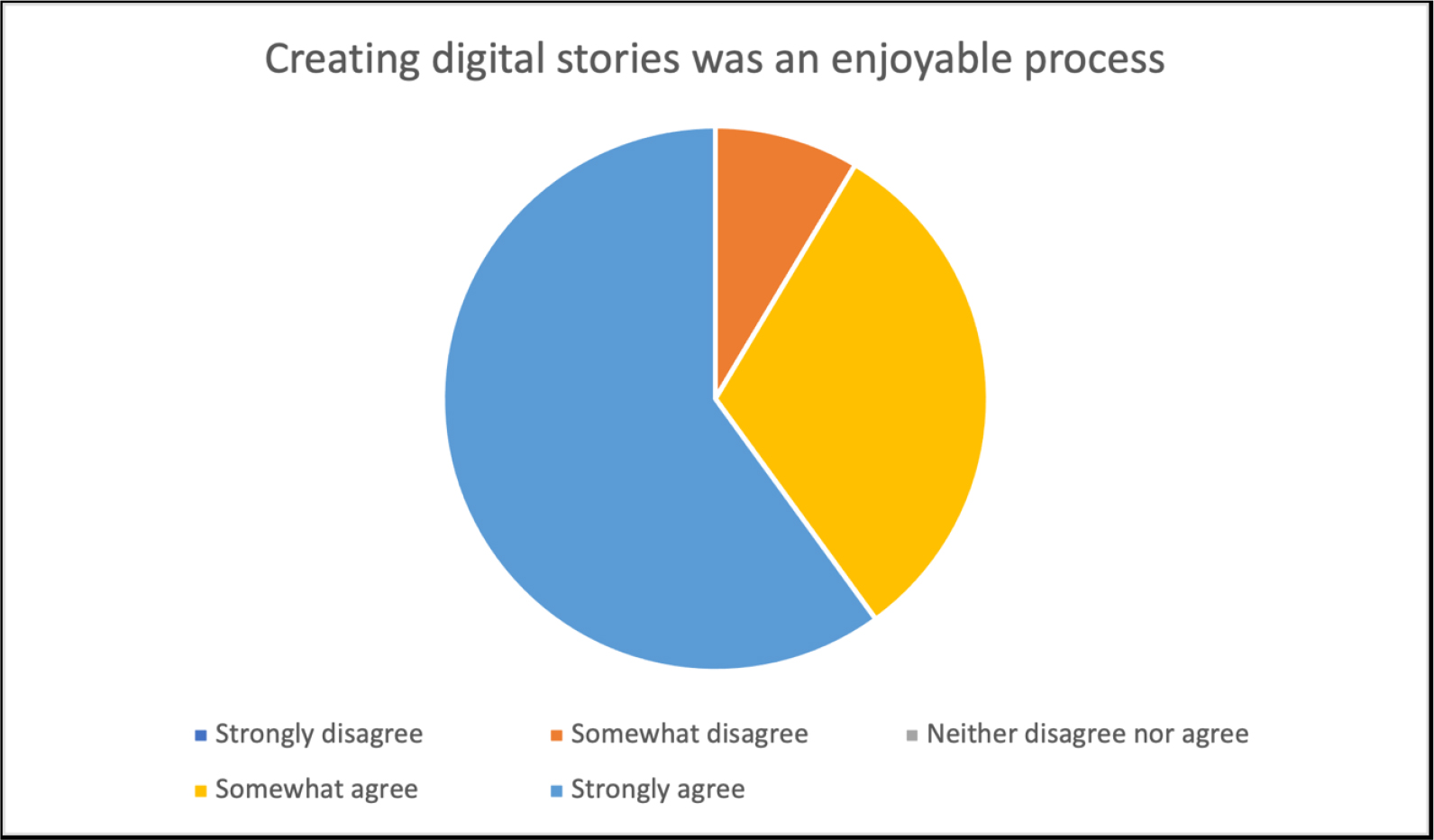
Figure 1:
Digital storytelling as an enjoyable process.
Many authors (Arruti and Paños-Castro, 2020; Bridge et al., 2010; Gómez Núñez et al., 2017; Hameed and Irfan, 2019; QAA, 2018; Seelig, 2012) cite the potential for enterprise education to develop students’ attitudes towards creativity and innovation, and the development of skills in these areas through experiential approaches. When asked if digital storytelling made it easier to express their ideas, 84% of participants (n=29) agreed (see Figure 2), with one of the main reasons (n=15 comments) being that it facilitated creativity and innovation. Participants said that it ‘P5 - supports more creativity’ and that it leaves ‘P25 – room for creativity’. While teamwork and collaboration are acknowledged as vital skills for enterprise education (Jardim, 2021), participants in this study suggested that this also aided in the creative process. Students said that working in groups was an ‘P1 – ideal solution’ for the digital storytelling project as it allowed them to ‘P27 – work collectively’ to ‘P31 – gather interesting resources’, which allowed them to receive ‘P7 – help and ideas from other group members’. This suggests that the digital storytelling process allowed them to incorporate the knowledge about teamwork into practice, therefore capturing the appropriative orientation of digital storytelling (Wu and Chen, 2020).
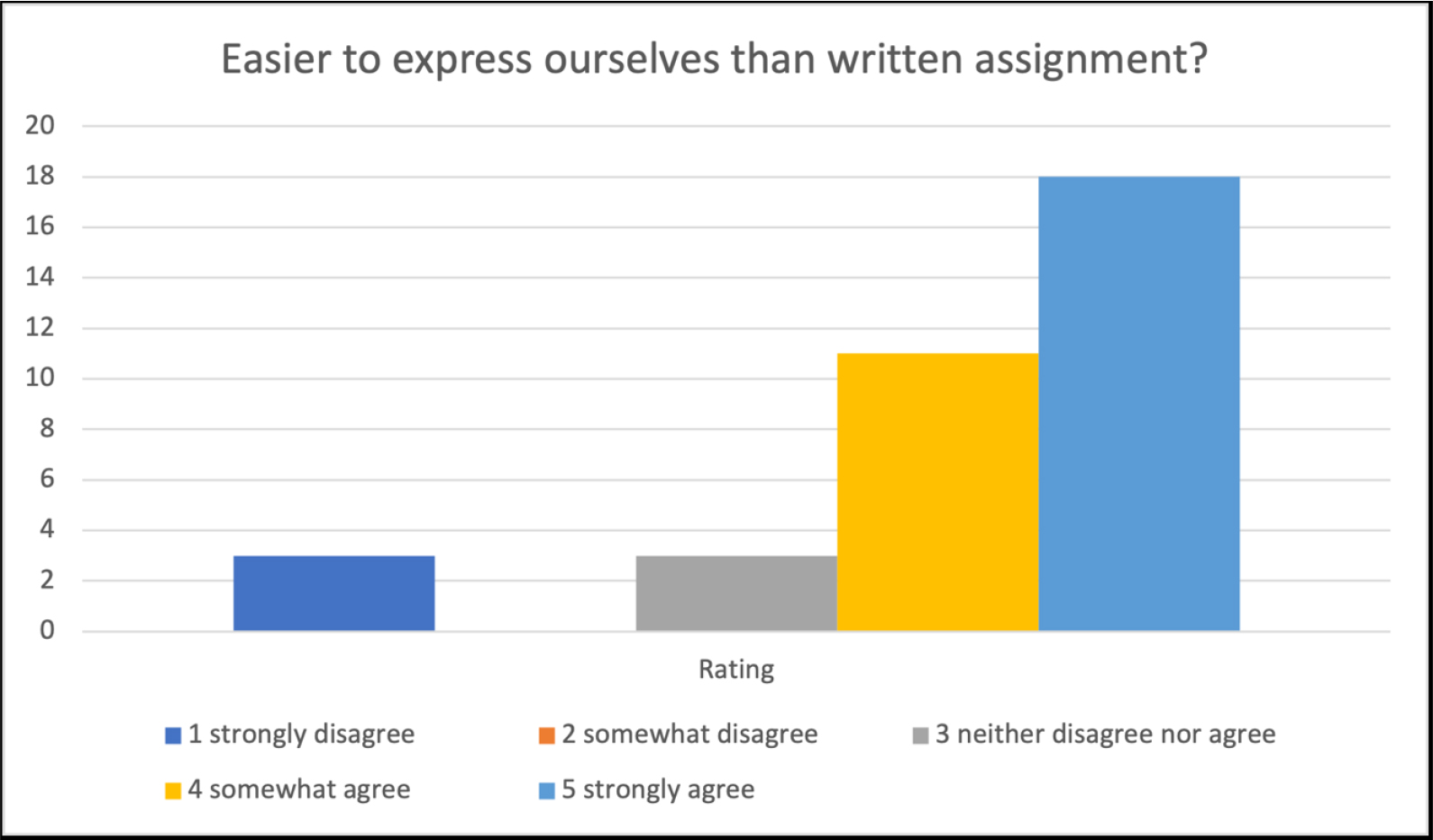
Figure 2:
Expressing ideas in digital stories.
Participants’ perceptions of digital storytelling suggest that, in addition to being an innovative form of assessment, it also provides an enjoyable and engaging experience for students. Participants overwhelmingly agreed (92%, n=32) that producing an assignment through digital storytelling was more enjoyable than a traditional written piece of work (see Figure 1). Comments spoke to the enjoyable nature (n=10 comments) of the assignment and how it better reflected the presentation of information in the real world (n=3 comments). Participants said it was ‘P17 – enjoyable to work on the project’ and that they would like ‘P29 – more assignments like this’ as they ‘P34 – enjoyed the process’. They appreciated the ‘P16 – opportunity to practise these skills’ as they are a ‘P6 – better reflection of future workplace projects’. Authors such as Brown et al., (2013) and Young (1999) stress the importance of accommodating individuality in assessment, with (Austen et al., 2021) suggesting digital storytelling as an ideal tool to achieve this. Participants in this study said that the digital storytelling format was ‘P17 – more personal’ where groups had the opportunity to ‘P34 – explain our own ideas’ in a way ‘P9 – that made sense to us’, allowing groups to ‘P16 – create a narrative’ for themselves.
Data in this theme suggests that digital storytelling goes some way towards addressing questions raised by authors such as, Carey and Matlay (2010), and Frolova et al. (2021), by offering a unique approach to assessment in enterprise education. Participants’ overall impression of the format was high (See Figure 3), and they valued the alternative approach to written work which allowed them to create engaging multi-media presentations and express their ideas in interesting ways. While challenging in some respects, the process also facilitated the integration of digital media, which participants acknowledge as a requisite for their future endeavours. Creativity and innovation are acknowledged by many as core aspects of enterprising behaviour (Arruti and Paños-Castro, 2020; Bridge et al., 2010; Gómez Núñez et al., 2017). Digital storytelling appears to allow students to experience and demonstrate this creativity in nuanced ways, allowing students to express their individuality (Austen et al., 2021) in an enjoyable and engaging process.
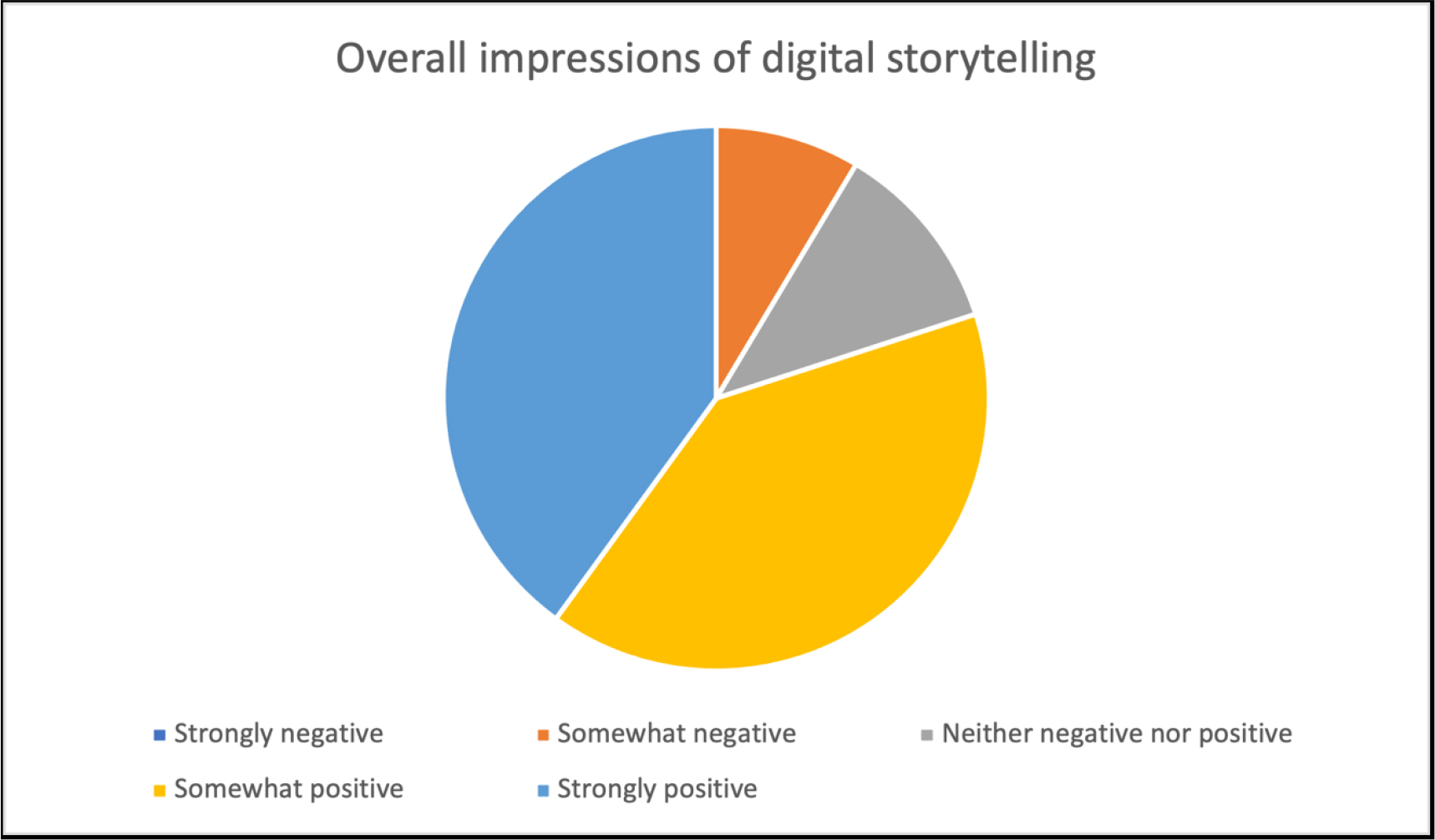
Figure 3:
Overall impressions of digital storytelling.
Digital stories allow students to develop and present their entrepreneurial ideas in creative ways
In this section, students’ impressions of digital storytelling as a tool to present their entrepreneurial ideas is examined and discussed. Quantitative and qualitative data is used to explore the use of digital storytelling to present the feasibility, demand, and detail of students’ ideas and solutions.
A component of enterprise education is the development of students’ ability to propose ideas (Gibb, 2007; Kaur and Bains, 2013), and the ability to spot opportunities and develop solutions in a range of social, political, environmental, and business contexts (Rae, 2006; Rae and Woodier-Harris, 2013). The primary focus of the students’ digital stories was presenting their entrepreneurial ideas or problem solutions. As such, participants were asked their level of agreement with a series of statements to ascertain if digital storytelling was a useful tool in this regard. Figure 4 shows students’ level of agreement for each of these statements. In summary, 72% (n=25) of students agreed digital storytelling was useful for presenting the demand for their idea/solution. Participant qualitative responses revealed consistent themes across all three questions and, as such, they are presented together for the reader. 84% (n=74) of the ‘explain your choice’ comments provided by participants on the questions above related to the contemporary, visual, and multi-media nature of digital story content. Students seemed to value the ability to propose their ideas and solutions in a format that appeals to a wide range of contexts, aligning with findings that digital storytelling enhances digital literacy and engagement in educational settings (Çetin, 2021; Rae, 2006; Rae and Woodier-Harris, 2013). Participants commented on the visual nature of the projects, saying the ‘P31 – visual explanation of the concept is effective and enables the audience understand the idea’ and that ‘P16 – the video format is the most appealing format’ for the viewer. They also felt that the format is ‘P21 – contemporary’ and could appeal to a ‘P1 – broader audience’. Students also mentioned the ability to add audio as a factor that helped. They said that voice-over was a beneficial tool to ‘P14 – explain things’, to ‘P27 – provide more details’ and ‘P33 – articulate the idea’. One participant also mentioned that the ability to add audio in the form of background music helped to ‘P2 – set the mood for the topic’. The general sentiment towards the multi-media nature of the digital stories indicated that participants valued the ability to plan and develop an interesting narrative around their chosen topic (Alismail, 2015; Robin, 2016). Participant comments sum this up well, for example, one participant said it ‘P33 – gave us the tools to easily explain the idea to the audience’. Others said it was an ‘P6 – effective format’, and ‘P1 – the easiest format to present ideas’. These comments suggest that, in enterprise education too, digital storytelling can help students communicate their ideas with others in more meaningful ways (Robin, 2008). The data again suggests that the digital storytelling approach adopted in the study captured the appropriative orientation of digital storytelling (Wu and Chen, 2020), allowing students to apply their ideas in an engaging format. The second theme that emerged from these responses, with 16% (n=14) of comments, was creativity. Similar to earlier comments, it appears that digital storytelling allowed participants to experience what it means to be creative (Purrohman, 2019; Seelig, 2012) when completing a real-world task (Carey and Matlay, 2010; Karimi et al., 2016). Participants felt that video offered ‘P25 – more room for creativity’ when compared to other more traditional assignment formats, as it allowed them to present information ‘P27 – in unique ways’ and offered more ‘P11 – flexibility’ in how ‘P22 – we formatted the assignment’.
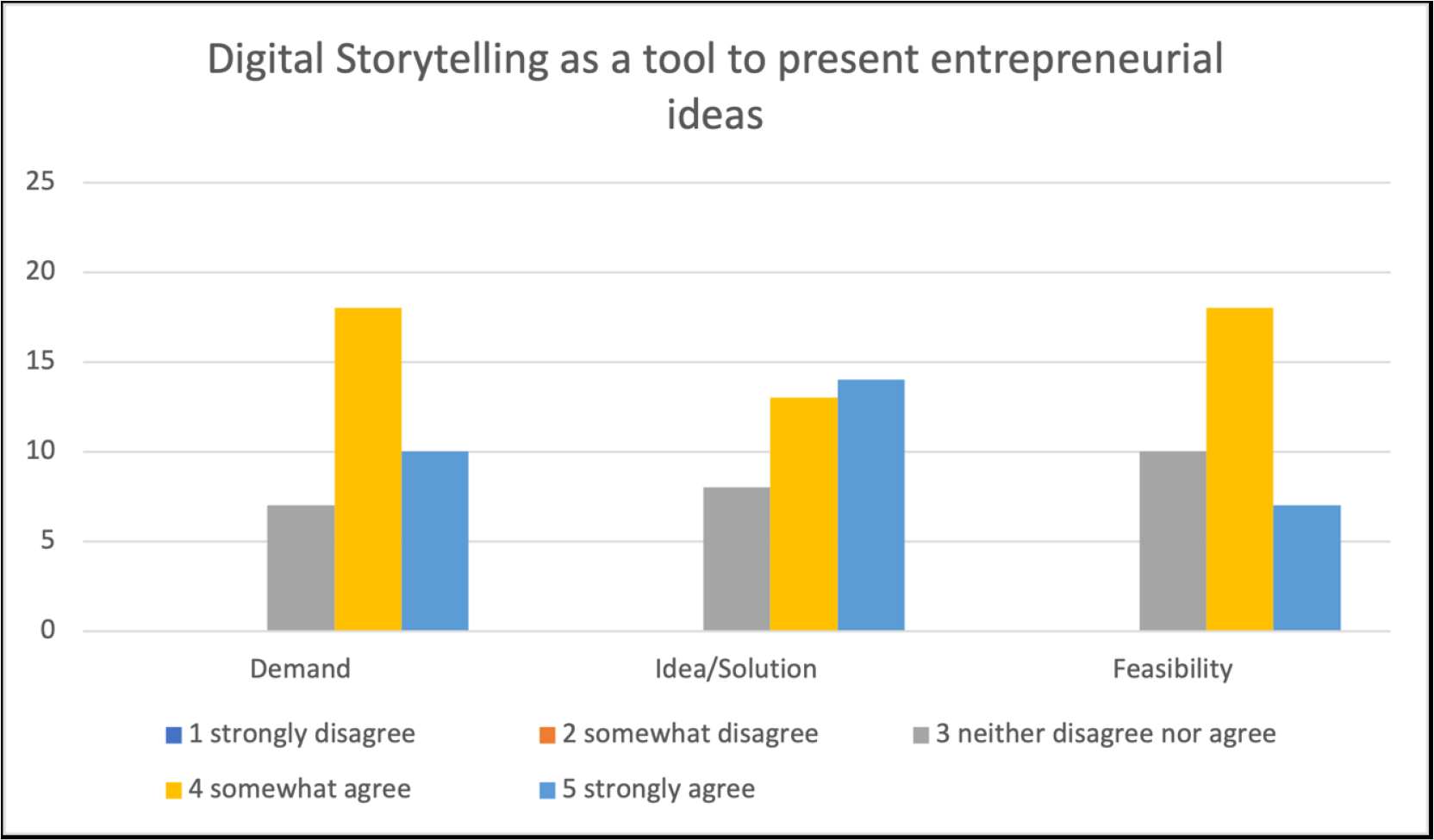
Figure 4:
Digital storytelling as a tool to present entrepreneurial ideas.
The data in this section suggests that digital storytelling is an effective tool in enterprise education assessment for facilitating students’ development of their ideas and presenting them in an engaging and informative way (Gibb, 2007; Kaur and Bains, 2013). Participants were able to research their ideas and solutions and present them in a manner that is applicable in a wide range of contexts (Rae, 2006; Rae and Woodier-Harris, 2013), using the tools of the 21st century. The multi-media nature of digital storytelling seems particularly relevant to students, who feel it allows them to create an engaging narrative (Alismail, 2015), nuanced by audio, voice-over, and images. One of the main drivers of enterprise education is to allow students to experience what it feels like to be an entrepreneur (Samwel Mwasalwiba, 2010). digital storytelling appears to allow students to experience what it means to be creative, rather than discussing this in an abstract sense. The process allows students more freedom and flexibility to express their ideas in creative and innovative ways.
CONCLUSION
The purpose of this paper was to explore the use of digital storytelling as a tool for presenting entrepreneurial ideas in enterprise education and gather student perceptions around the experience and its effectiveness. Data, which was gathered using an online survey, collected responses around the benefits and challenges of digital storytelling, the enjoyment factor, its impact on expression, and its suitability in presenting various elements of an entrepreneurial idea. Findings suggest that digital storytelling offers a unique approach to assessment in enterprise education whereby students can present their ideas and express themselves in interesting and engaging ways. The multi-media approach afforded by the format facilitated the use of modern delivery approaches which allowed the groups to display their individuality, creativity, and innovation in ways that are not possible using traditional text-based formats. The manner in which digital storytelling was applied in this study captured the appropriative, agentive, and reflective orientations of digital storytelling, facilitating the development of knowledge, and application of a range of skills. While technology was predominantly seen as an enabling factor for expression and creativity, this aspect also brought difficulties for participants. The digital skills required to use the software and produce digital stories were challenging for some, suggesting gaps in the skills possessed by undergraduate students in this regard. Data from the second section also suggests that digital storytelling is an effective tool for students to develop and present their entrepreneurial ideas. The format offers students freedom and flexibility in how to approach their tasks, allowing them to focus on creating an engaging narrative using audio, video, and voice to add impact. Importantly, the approach seems to allow students to experience what it means to be creative, rather than discussing this in an abstract sense. The flexible and engaging nature of digital storytelling, coupled with the focus on innovative and student-led assessment, suggests that the approach is applicable across multiple curricular areas and with a variety of student cohorts.
LIMITATIONS
This study has some limitations which should be noted in relation to the findings and conclusions described above. The research sample which was used for this research was relatively limited in size, focusing on one university class. While the intention of this study was to capture the use of digital storytelling in practice, and gather student experiences in this regard, larger-scale studies may be needed to explore and develop these areas further. Second, as the data was obtained from a survey delivered at the end of an academic semester, alternative findings may have emerged if students used digital storytelling in a number of modules over a longer period of time. Finally, literature on the use of digital storytelling in enterprise education is relatively limited. As research in this area increases, alternative areas for investigation may emerge which were not addressed in this study.
RECOMMENDATIONS AND FUTURE RESEARCH
Reflecting on the data gathered from students and the process more generally, the authors have some recommendations for others wishing to use digital storytelling with their students. First, it is important to have a general understanding of digital storytelling, its history, purpose, and potential. The authors encourage the exploration of existing case studies and the use of cases. Second, as evidenced in this study and many others, digital storytelling holds great potential for facilitating creativity and student-centred engagement. With this in mind, care should be taken to design assignments and other digital storytelling tasks that allow for creativity, individuality, and exploration of ideas from multiple perspectives. Third, as outlined in the ‘description of process’ section above, providing students with the time and space to explore their ideas and the technology needed to present them, is crucial. Ideation and initial storyboards are a vital part of the process which allow students to flesh out concepts without concern for the technology and its implementation. However, it is also important to prepare students to use the digital tools necessary to create digital stories. This may involve face-to-face training and supplementary videos. A particular learning from this study, from the authors’ perspective, would be the introduction of a simple ‘how-to’ or FAQ guide to alleviate specific challenges regarding video editing software.
Future research in this space considered valuable by the authors includes further exploring the use of digital storytelling in enterprise education. For example, how might digital storytelling be used by students to reflect on the process of learning how to be creative? The authors are also interested in carrying out follow-up research on the implementation of the ideas presented in the digital stories. Additionally, it might be useful to explore students’ reactions to their peers’ creations and ideas. Interesting data could be gathered through peer evaluations and the impact of distributing videos amongst a student audience. Finally, with the increased power and availability of AI-enabled video creation tools, future work could explore AI-enabled digital storytelling and the impact this has on student creations and their experience of producing digital stories.