

Introduction/Background
Health professionals need to manage the challenging and intense contemporary workplace by developing strong levels of clinical expertise (Benner et al., 2010). However, unless undertaking postgraduate studies, there are few opportunities for these practitioners to find time to publish and thus share their knowledge with others (King et al., 2017). University-based academics of health-related disciplines, on the other hand, are actively encouraged to publish frequently and given greater opportunities to access and participate in research. We used the term “academic” broadly to include those employed in universities undertaking either teaching or research or a combination of these activities. While academics’ roles vary, there is a risk over time of some academics becoming less connected with their practitioner colleagues and the health care workplace (Benner et al., 2010). This disconnection is problematic as the current evidence-based knowledge is critical to professional expertise (Evans et al., 2014). Research knowledge is best developed through collaborative activities between practitioners and academics through a genuine nexus of research, education and practice.
While professional or discipline knowledge can be heterogeneous and highly fragmented (Grimen, 2008), it must be grounded in advanced theory and research (Freidson, 2001) and highly integrated into practical situations. Professional problem-solving in today’s health and educational systems requires the use of evidence-based practice (EBP), research involvement and participation in communities of practice (Bereiter & Scardamalia, 1993; Engestrom, 2008). However, participation in research and integration of research-based knowledge into practice requires considerable time, significant intellectual effort and support (Eraut, 1994). When considering the relationship between different professional contexts and views of academics and practitioners on research, knowledge development and knowledge use, Eraut (1985) offered a classic and yet very current observation:
“in some professions nearly all new practice is both invented and developed in the field, with the role of academics being confined to that of dissemination, evaluation and post-hoc construction of theoretical rationales. In others, knowledge is developed by practitioners ‘solving’ individual cases and problems, contributing to their personal store of experience and possibly that of their colleagues but not being codified, published or widely disseminated.” (Eraut 1985, p. 129)
As a process of dissemination of the results of research activities, publishing greatly improves access to current knowledge and efficiency of communication. Publishing in peer-reviewed journals facilitates the impartial assessment of research and provides the last stage in securing high-quality distribution of information. In the light of contemporary health service and educational institution contexts, it could be argued that publishing more than ever should be a requirement in professional advancement.
Given the abovementioned concerns, we performed a systematic review, focusing on the following research question:
What are the facilitators and challenges to health practitioners working collaboratively with academics to undertake research and publish their findings in peer-reviewed journals?
Conceptual Framework
The process of collaboration and participation in research and publishing is complex and depends on many prerequisites (King et al., 2015). These fundamentals can include the following: the level of research-oriented training; training in (academic) writing; the gratification systems for academics and thus the rewards for engaging in practitioner-based research; educational policy and epistemic beliefs about the nature of knowledge and knowing (Markauskaite & Goodyear, 2014). We structured this review within the framework of professional knowledge, EBP (Sackett, 1996) and the relationship of these concepts with the utilisation of research in practice.
The twenty-first century requires strong connections between the production of knowledge and its use in professional work. Scientific excellence is sought (Markauskaite & Goodyear, 2014) to meet patient demands for increasing quality, efficiency, safety and satisfaction in health care. The link between professional knowledge base and academic knowledge production to provide resources for meeting the challenges of practice is clearly recognised (Abbott, 1988; Friedson, 2001). The drive for practice settings to adopt and utilise robust research knowledge and the ability of education to keep pace with rapid changes in practice are illuminated in the literature from the health professions (Benner et al., 2010; Sullivan, 2005; Staykova, 2012). Moreover, knowledge creation, innovation and transformation capacities are important qualities of successful practitioners as well as organisations (Engeström, 2008). In relation to health professions, professional competencies can only remain current if practitioners continually engage with new knowledge (Eraut, 1994; Friedson, 2001). Furthermore, practitioners need to demonstrate professional maturity to challenge accepted boundaries of practice and initiate new developments (McGee and Castledine, 2003).
EBP, as a concept, provides a basis for making decisions on approaches to health care by integrating the best available research evidence to inform practice. This concept continues to receive significant support as it has over the past two decades (Sackett, 1996). Research evidence is integrated with practitioners’ expertise and is considered alongside available resources and the characteristics, needs, values and preferences of those receiving care. EBP is widely accepted in the health professions as a way to establish a research culture for professional knowledge building and practice transformation, drawing together academics and practitioners alike. However, despite best intentions and acceptance of EBP, in practice, the objectives of this concept often lack broad implementation across disciplines and health organisations.
Methodology
The recommended stages were followed for performing a systematic review: initiation of the review by the review team, formulation of review questions and methodology, development of a search strategy, descriptions of study characteristics, quality and relevance assessment and synthesis (Gough et al., 2012).
Database searches
We conducted a comprehensive literature search of diverse databases (Figure 1) investigating the disciplines of nursing, other health professions, health management, psychology and sociology. We also performed manual searches to minimise the risk of missed studies due to electronic selection from the use of predetermined search terms (Brunton et al., 2012).
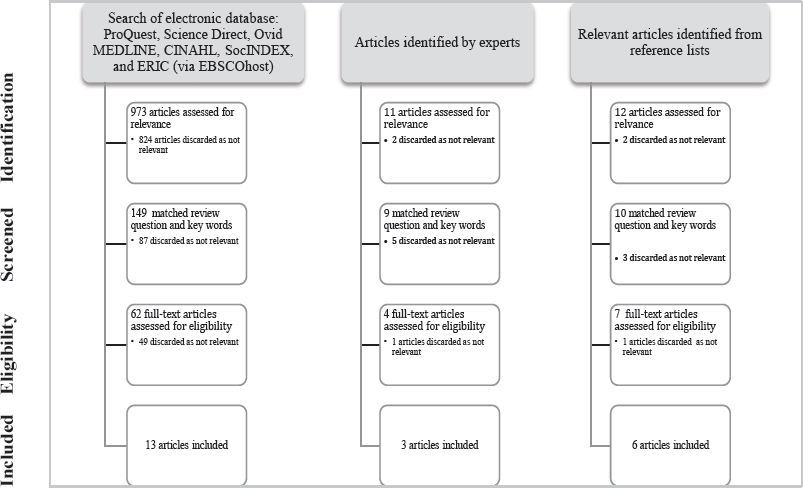
Figure 1
Flow of information through the different phases of study selection inspired by PRISMA Statement (Moher et al., 2010)
The initial keywords included health practitioners, research competencies, development, research–practice nexus, facilitators and barriers and publishing. Synonyms of these words were then determined and further arranged based on the Medical Subject Heading (MeSH) terms to identify the root terms. These root terms incorporated the following: health practitioners/professionals (non-academic); research outcomes, research–practice nexus/research–professional practice integration; collaboration with academics/clinical and university collaboration; facilitators and barriers; publishing/publications/ dissemination of findings/communication of research evidence/writing for publications. Using the terms in various combinations yielded a substantial number of studies, as described in the following section.
Selection of the studies
In the first stage, we read the titles and keywords of the articles and selected 172 studies that matched the review question. In the second stage, we read the abstracts to consider content alongside the inclusion criteria, as presented in Table 1.
Table 1
Inclusion and exclusion criteria
| Inclusion criteria | Exclusion criteria | Rationale |
|---|---|---|
| Peer-reviewed studies | Non-peer-reviewed and/or non-research articles | To ensure scientific quality by decreasing risk for inappropriate conclusions |
| Empirical studies | Editorials, letters, conceptual and opinion papers, and duplicate texts | To accumulate research-based knowledge on phenomena, highlighting important issues and trends in existing body of literature |
| English | Other languages | English-speaking researchers |
| Developed countries | Studies undertaken in undeveloped or countries in transition | Lack of congruence with contemporary experiences in developed countries |
| Practitioner and academic collaboration in research and/or writing for publication | Not focused on practitioner-academic collaboration in research and/or writing for publication | To identify the issues raised by health practitioners and academics when collaborating in research activities; enablers, and challenges to dissemination by publication |
| Publishing period 2006-current | Studies published before 2006 | Contemporary studies during period affected by hospital accreditation policies seeking practitioners to publish outcomes of research projects in journals |
When the search was limited to defined criteria, the number of studies decreased substantially. Electronic searches showed that many studies employed the same terms but did not share the same focus (Gough et al., 2012). For those abstracts considered relevant to the review question, we retrieved the full-text articles for further reading. After excluding duplicate articles and evaluating the abstracts, 73 full-text articles remained.
After a comprehensive examination of the full-text articles, we compiled a list of the final studies to be included: 20 studies met the inclusion criteria and were included for critical appraisal. A flowchart providing a detailed illustration of the search trail is shown in Figure 1.
The application of exclusion criteria eliminated non-research articles as well as many studies with limited focus upon practitioner–academic collaboration in research and/or writing for publication.
Critical appraisal
Through further reading, we derived criteria for identifying and evaluating studies (Long et al., 2002). Ten highly pertinent questions from Long et al.’s evaluation tool for mixed method designs were applied to the reviewed studies (Table 2).
Table 2
Key questions in the critical appraisal of the studies
| 1. | Are the aims / research question clearly stated? |
| 2. | Is there a clear relationship between the study and the area of topic review? |
| 3. | Are theoretical/conceptual framework used to explain, predict, or understand the research problem? |
| 4. | Are the methods (study design, samples, and instruments) appropriate for examination for the research question? |
| 5. | Were data gathering and analysis processes described in clear and sufficient detail within the study? |
| 6. | Have ethical issues been adequately addressed in each study? |
| 7. | Are cited sources appropriate to support the conclusions? |
| 8. | Are the key points illustrated? |
| 9. | Are the study’s findings generalizable, or transferability high? |
| 10. | Are implications for policy and service practice stated? |
Further, we summarised the process of judging rigor through the epistemic quality and relevance of the studies following the Transparency, Accuracy, Purposivity, Utility, Propriety, Accessibility and Specificity (TAPUPA) framework (Pawson et al., 2003). The included studies were summarised to provide detailed information on methods and findings and their specific strengths and limitations (Appendix 1). In the relatively large body of literature that we searched, the need for practitioners to undertake writing for publication was rarely stated. The selection process ultimately resulted in 20 articles being included in the final review.
Analytical approach
Performing a configurative review principally means to arrange findings from primary research studies to answer the review question. The primary studies identified in configurative reviews can be heterogeneous and involve interpretive analysis. We applied thematic synthesis to bring together the findings from these studies that used different research designs (Thomas et al., 2012) using the following steps:
We began the analysis with familiarisation with the data body: reading and rereading the findings of each study allowed us to become familiar with commonalities and differences.
We extracted and combined the quantitative and qualitative findings from each study using Oliver and Sutcliffe’s (2012) approach. We used MAXQD11 software (2015) to organise the data.
We analysed the qualitative studies first by comparing the authors’ theme headings and illustrations of participants’ perceptions. By closely examining the individual studies, we identified codes. These codes involved identification of full sentences that had consistent meanings. The codes were then organised into subcategories. We then grouped similar subcategories together.
Next, we assessed the mixed methods and quantitative studies. We repeated the processes of step 3 and placed the results of the coding into the emergent subcategories.
We re-examined the identified subcategories to determine how they were connected. The emergent subcategories were, in this process, reduced to 11 through merging of some of the smaller subcategories. In this stage of synthesis, we also explored similarities and differences across subcategories (e.g. confidence versus support). Finally, the 11 subcategories were organised into four main themes, as described in the “Results” section.
Results
Summary of the reviewed studies
The 20 studies were conducted in the developed countries of Australia, the United States, New Zealand, the United Kingdom, the Netherlands, France and Sweden. The clearly stated aims were strengths in all identified studies. Direct mention of publication or writing for publication occurred in seven studies: Finch et al. (2013); King et al. (2015); Koivula et al. (2011); Metcalf et al. (2010); Murray and Newton (2009); Probst et al. (2015) and Stephens et al. (2009), although this was explored in detail in one study only (King et al., 2015).
Ten studies have defined theoretical/conceptual foundations indicating a wide range of approaches: Bedoee (2011); Behar-Horenstein and Johnson (2010); Dupin et al. (2015); Finch et al. (2013); Gonzalez et al. (2012); Hauck et al. (2015); King et al. (2015); Koivula et al. (2011); Pager et al. (2012) and (Stephens et al., 2009). The remaining ten studies used the relevant literature as background for their research: Evans et al. (2013); Finch et al. (2015); Gerrish et al. (2011); Jansen and Hoeijmakers (2013); Janssen et al. (2015); Metcalf et al. (2010); Murray and Newton (2009); Probst et al. (2015); Rickard et al. (2011) and (Ulrich et al., 2015).
The types of research design used were clearly detailed in 13 of the studies. In total, eight studies used qualitative methods: Bedoee (2011); Behar-Horenstein and Johnson (2010); Dupin et al. (2015); Evans et al. (2013); Finch et al. (2015); Gonzalez et al. (2012); Hauck et al. (2015) and Murray and Newton (2009); seven were quantitative: Finch et al. (2013); Koivula et al. (2011); Metcalf et al. (2010); Pager et al. (2012); Probst et al. (2015); Stephens et al. (2009) and Ulrich et al. (2015) and five combined quantitative and qualitative methods: Gerrish et al. (2011); Jansen and Hoeijmakers (2013); Janssen et al. (2015), King et al. (2015) and Rickard et al. (2011). The preferred methods for data collection were fixed response and self-completed questionnaires. Six studies including Janssen et al. (2015); King et al. (2015); Metcalf et al. (2010); Pager et al. (2012), Probst et al. (2015) and Stephens et al. (2009) used standardised or developed instruments only. Five studies used a combination of questionnaire and qualitative methods: Gerrish et al. (2011); Jansen and Hoeijmakers (2013); Janssen et al. (2015), King et al. (2015) and Rickard et al. (2011). Six studies used a face-to-face interview only: Bedoee (2011); Dupin et al. (2015); Evans et al. (2013); Finch et al. (2015); Gonzalez et al. (2012) and Murray and Newton (2009). The sample sizes in the reviewed studies ranged from six to 40 in the qualitative studies and from six to 855 in the studies based on quantitative methodology. Although the review drew on studies including health practitioners in general, nurses were the main study participants (1,305 across eight of the studies).
The overall quality of studies included in the review was good with all studies meeting the requirements of the TAPUPA framework (Pawson et al., 2003). There were some limitations in relation to reporting of ethics information in the studies by Bedoee (2011), Gonzalez et al. (2012), Jansen and Hoeijmakers (2013), Koivula et al. (2011), Metcalf et al. (2010) and Pager et al. (2012). Metcalf et al. (2010) and Murray and Newton (2009) lacked details in terms of clear methods and process of analysis.
All empirical studies addressed ethical concerns. The qualitative studies provided more detail on the ethical issues than the quantitative studies, particularly concerning the methods of data gathering and the role of the researcher. Nine studies indicated financial support for their projects. No conflicts of interest were declared in any of the studies.
Themes
The four major themes captured the facilitators and barriers to health practitioners working collaboratively on research with academics and subsequently publishing their findings. These themes included practitioners, academics, institutions and professional demands. Numerical evidence of the studies associated with each of the themes is summarised in Table 3.
Table 3
Themes and sub-themes that emerged from reviewed studies.
The quantitative distribution of the themes and subcategories allowed us to visualise the data and the relationship between the themes according to the frequency of identified codes (MAXQD11 software, 2015). The software indicated the percentage of codes related to each theme; the findings are shown in Figure 2. In the following sections, we have synthesised the four themes that emerged from the findings of the reviewed studies.
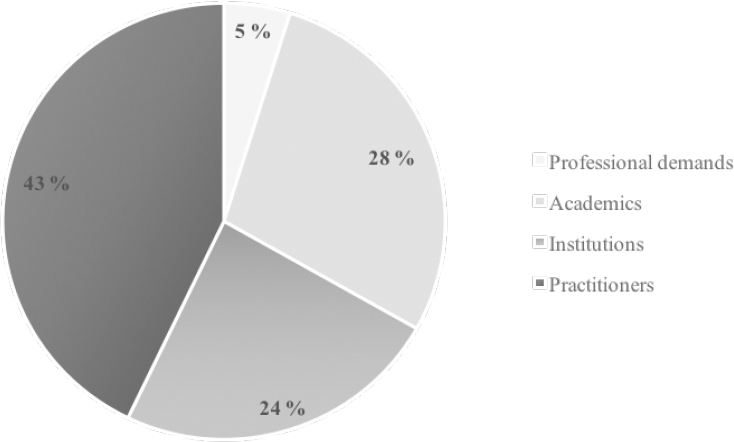
Figure 2
Quantitative distinction of themes
Practitioners
The term “practitioner” describes the health professional implementing care, such as nurses, medical staff or allied health professionals. This theme received the most attention in the reviewed studies. It focused on the practitioners’ need to combine professional competencies with interest, motivation, commitment and confidence to perform research. Allied health professionals reported ambivalence about their involvement (55%) and personal commitments as barriers to the undertaking of research (34%), while 11% were not interested in this activity (Pager et al., 2012). Interestingly, while 50% of these practitioners held undergraduate qualifications, they were not required to undertake research within their role in the health institution. Speech language pathologists reported an association between research interest and research engagement as well as variation in their level of research interest across different research tasks (Finch et al., 2013). Nurses indicated that researcher and nursing perspectives became more integrated as their interest in research grew through progression towards higher academic levels (Dupin et al., 2015). Similarly, participants described changes in the understanding of academic thinking and “working like a scientist” (Behar-Horenstein and Johnson, 2010, p. 64), as a basis for growing interest in doing research. In addition, those practitioners with no current involvement in research were the least interested in learning about research (Stephens et al., 2009). Nurses connected the level of research engagement with the lack of knowledge: “Definitely knowledge deficit... There are a lot of people that have done their nursing in hospitals, who don’t have [the] academic background and that is a huge hurdle” (Evans et al., 2014, p. 228). Some social workers, professional leaders and managers considered research to be a “stretch” and preferred updating knowledge and skills at a more basic (non-research) level (Bedoee, 2011). Dupin et al. (2015) provided evidence that nurses’ apprenticeships in research activities depended on the perceived usefulness in optimising patient care and direct connection to practice. These nurses focused on having separate research and nursing roles: “If I perform an interview and analyse a questionnaire, then I am a rresearcher, and I feel very much as a researcher. For being a nurse, I see it more like being next to the patient” (Dupin et al., 2015, p. 76).
A lack of confidence amongst practitioners in their ability to conduct research emerged in 17 of the studies. The majority of public health professionals felt that their confidence to conduct research was low (Janssen et al., 2015). Furthermore, they expressed attitudes towards research directly related to their confidence and motivation for involvement in research activities. Participants who were not confident to participate in research also struggled to access electronic databases and to understand EBP. Similarly, 45% of nurses in Gerrish et al.’s (2011) research identified themselves as complete beginners or novices in relation to EBP skills. Amongst this group, 50% considered themselves competent or expert in relation to using EBP in their work. Only one-quarter (25%) of these nurses indicated that they felt competent to undertake research.
Overcoming low confidence and apprehension about the individual practitioner’s ability to undertake research tasks successfully was a crucial element to subsequent engagement in research (Finch et al., 2015). Nurses in hospital-based research roles reported the need to have confidence in their pre-existing, in-depth knowledge in the associated clinical specialty before involvement in related research studies (Rickard et al., 2011). Further, nurses considered improvement in their critical appraisal skills to be crucial to overcome low levels of confidence and research engagement (Evans et al., 2014).
The most confident activity for 67% of therapeutic radiographers participating in Probst et al.’s (2015) research was the use of quantitative methods. Regarding research type, physiotherapists preferred randomised controlled trials and systematic reviews; they perceived case studies or case series as less scientific, while qualitative research methods were not mentioned (Janssen et al., 2015). Nurses also stressed the value of syntheses of research in the form of systematic reviews and indicated greatest confidence, experience and interest in qualitative research methods (Gerrish et al., 2011).
Lack of confidence connected with lack of research competencies, skills and knowledge to undertake research occurred in six studies. Allied health professionals (54%) reported the lack of research skills and knowledge as one of their main barriers to research (Pager et al., 2012). Practitioners in studies by Evans et al. (2014), Hauck et al. (2015) and Murray and Newton (2009) emphasised that research knowledge and skills increased only after further education provision on top of their undergraduate studies. Furthermore, traditional Masters programmes may provide insufficient research training while higher doctoral research training, Masters by Research and/or Master of Philosophy qualifications were reported as most appropriate for developing applicable research skills (Probst et al., 2015). For example, public health professionals valued confidence in performing oral presentations and increased the ability to contact university staff to collaborate in new research projects following “master class” research-related programmes (Jansen and Hoeijmakers, 2013). These health professionals (31%) felt confident to analyse data from new research without supervision, while 25% reported low confidence in following medical ethics approval procedures. Conversely, students majoring in different sciences reported gains in various research skills while undertaking one specific undergraduate course (Behar-Horenstein and Johnson, 2010). An alternative way of learning knowledge and skills was expressed by nurses in research roles within one hospital who indicated “learning on the job” (Rickard et al., 2011, p. 172) was central to their development. These nurses explained that some practitioners preferred to learn informally rather than through formal postgraduate studies (Rickard et al., 2011).
Participants’ abilities to write for professional publication indicated developing research competencies in seven studies (as summarised in Table 3). These studies commonly reported a link between a participant’s desire to develop skills and increase knowledge with successful publishing or presenting results of research activities. For example, a desire to prove a theory or hunch, undertake and publish research for career advancement, recognition and job satisfaction was reported (Pager et al., 2012). However, respondents frequently considered themselves inexperienced or lacking confidence when applying for research funding, writing and presenting oral reports or writing for publication (Finch et al., 2013; Stephens et al., 2009). One-quarter of allied health professionals reported feeling intimidated by research language (Pager et al., 2012). Public health professionals (25%) also reported low confidence in writing scientific articles in English (Jansen and Hoeijmakers, 2013). Similarly, physiotherapists indicated a lack of confidence in their writing ability with comments such as “writing is not for me” and “[writing is] a very highfaluting [high status] kind of activity” (Murray and Newton, 2009, p. 31). Lack of writing confidence also emerged as a moderate or major barrier to research-related publications in 50% of respondents in King et al.’s (2015) study. Low confidence was one of the two most powerful barriers to writing, together with “difficulty in getting started” (King et al., 2015, p. 180). Overall, participants indicated the need for developing research competencies, increased academic vocabulary, greater guidance and support, as well as further practical experience in the field before embarking on research as ways of developing greater confidence (Bedoee, 2011; King et al., 2015).
Academics
The term “academic” describes those employed in universities undertaking either teaching or research or a combination of these activities. The importance of mentoring, ongoing support, feedback, qualifications and collaboration emerged as expectations of academics across all the reviewed studies. Feedback, support and mentoring figured as the most important of the academics’ contributions to the shared academic/practitioner publishing effort. Moreover, individual academic qualifications, as well as the level of established collaborations with practitioners, influenced the outcome of these individual-based research activities.
Personal characteristics including interest, motivation and commitment that academics manifested indirectly related to their demographic characteristics, an interesting aspect that has remained relatively unexplored. However, participants’ academic degrees and official titles showed significant connections to their broad approaches to knowledge acquisition (Koivula et al., 2011). More specifically, academics considered PhD acquisition to be a necessity to their research education and acculturation (Dupin et al., 2015).
Koivula et al. (2011) found that 40% of academic participants undertook no research activities. In addition, these academics provided significantly less nursing science-based teaching and had a narrower knowledge acquisition and a more traditional approach to teaching than those working in research and development. Furthermore, most of these nursing academics held Master’s degree qualifications, although 12% had “a licentiate” or PhD (Koivula et al., 2011). Unsurprisingly, only 12% of these participants had published in international, peer-reviewed scientific journals, while 30% had conference-based publications. At the same time, radiologic technologists holding doctoral degrees reported lack of specific training and mentorship in how to write for publication during their doctoral programmes as well as when they entered the workplace (Metcalf et al., 2010). Controversially, 30 research radiographers participating in Probst et al.’s (2015) study reported 27 peer-reviewed articles published and 95 conference presentations delivered in the period of 12 months. All held higher degree (postgraduate) qualifications, three had PhDs, while two were professors. Interestingly, these participants reported that very little time (<10%) was devoted to writing research proposals or publications, while partnerships and collaborations were not developed (Probst et al., 2015). Yet, medical staff, non-medical practitioners and administrative staff indicated that developing and sustaining research collaborations were crucial; they highlighted that issues connected to the lack of communication and collaboration between researchers, practitioners and users, while responsibility for this cooperation was placed on academics (Gonzalez et al., 2012).
Academic and/or health professional researchers who chose to participate in clinical activities through the provision of support and mentoring emerged as the most valued (Gonzalez et al., 2012; Ulrich et al., 2015). In particular, over 90% of nurse scientists indicated that three issues underpinned successful research collaborations: clearly defined roles, responsibilities and boundaries; clear and frequent communication and complementary interests or expertise (Ulrich et al., 2015). Surprisingly, in this digital age, these participants also reported close geographic proximity of collaborators as important to their successful collaborations. Lack of communication (92.1%) and timeliness (90.9%) emerged as challenging to successful research partnerships. Most of these respondents reported learning about collaborative relationships from personal experiences and from research mentors (Ulrich et al., 2015). Mentoring, feedback and ongoing support arose as strong sub-themes across reviewed studies. Interestingly, only Behar-Horenstein and Johnson (2010) criticised academics for failing to engage with practitioners when providing research-related presentations. Mentoring was regarded as a central and essential component empowering practitioners’ research experiences and emerged as the most significant facilitating factor in practitioners’ involvement in research. For example, allied health professionals (41%) acknowledged mentors as personal motivators and enablers (Pager et al., 2012). Even with increased publication outputs after a “writing for publication” course, physiotherapists identified the need for further mentoring and ongoing support (Murray and Newton, 2009). King et al. (2015) investigated the role of mentors further: their respondents (>80%) appreciated encouraging supervisor and peer feedback. Positive comments on drafts and suggestions of worthiness for publication assisted participants to progress towards subsequent journal submission and successful publication, even if they had published previously (King et al., 2015).
Institutions
The term “institution” refers to an employing organisation involved in research, education and/or health care. Institutional characteristics of educational and health institutions, such as organisation, orientation and operationalisation of activities, were recognised as crucial in facilitating or obstructing research activities in 18 studies. Time, pressures of practical work and leadership were major issues for involvement in research across participants, groups and studies, conducted in both educational and health institutions. These factors reflected those traditionally cited in the literature: conflicting job demands and a heavy workload, lack of time for research, other work roles taking priority, low staffing levels and high staff turnover (Bedoee, 2011; Behar-Horenstein and Johnson, 2010; Pager et al, 2012).
Lack of resources especially funding and/or discrepancies in the ways in which different practitioners’ disciplines received resource provision emerged. The lack of coordination of approaches, due to little support given by managers, was noticeable (Pager et al, 2012). Limited infrastructure such as access to computers, research-specific software and dedicated workspaces and administrative support were also problematic (Metcalf et al., 2010). In addition, becoming a researcher was regarded as difficult due to the lack of clear career pathways (Rickard et al., 2011) and balancing research activities with family life (Metcalf et al., 2010). Furthermore, linking research to business planning cycles, job recruitment and advertising materials and/or nominating employees as leaders of research teams within departments varied widely. The variations indicated great differences in the priority of research within educational and health institutions’ organisational structures and processes (Probst et al., 2015; Ulrich et al., 2015). The opportunity to research together as a team, led by a supportive team manager, was also an important enabler (Pager et al., 2012; Rickard et al., 2011). Similarly, Dupin et al.’s (2015) findings revealed a causal link between practitioners’ research learning processes and activities, facilitated by established integration which drew them into academic structures, peer groups and exchanges with other students.
Interestingly, characteristics of educational institutions including organisation, orientation and operationalisation of activities accompanied by their endeavour to cooperate with health institutions to undertake research appeared unexplored. The organisation of specific research programmes or courses on offer emerged as important in five of the studies. Specifically, access to university facilities and well-coordinated, relevant and structured courses along with effective supervision contributed strongly to the development of practitioners’ research knowledge (Bedoee, 2011; Behar-Horenstein and Johnson, 2010; Dupin et al., 2015; Metcalf et al., 2010; Ulrich et al., 2015). In addition, these studies identified the achievement of creative linkages between universities and health institutions as extremely important. These authors proposed introducing apprenticeship arrangements including research traineeships, training fellowships, postdoctoral career opportunities and affiliations with universities and university-based researchers for health professionals. The studies noted that health institutions needed to invest in workforce development and research infrastructure to assist in the research education of their staff (Bedoee, 2011; Behar-Horenstein and Johnson, 2010; Dupin et al., 2015; Metcalf et al., 2010; Ulrich et al., 2015).
Relationships between the academic and health institutions were challenging for nurse “scientists” (Ulrich et al., 2015), particularly for multidisciplinary and international collaborations across different academic and practice settings. Laboratory and clinically based research especially challenged multidisciplinary collaboration. The expanded use of qualitative methodologies and mixed methods led to greater requirements of qualitative expertise in many research teams. Participants reported that negotiating their role in a well-established quantitative research group brought epistemological challenges in relation to data ownership (Ulrich et al., 2015). Moreover, nurse respondents (54.5%) in Ulrich et al.’s (2015) sample agreed that junior faculty academics were at risk of being exploited in these collaborative relationships. Studies involving participants from other professions have not illuminated these issues.
Professional demands
The term “professional demand” refers to expectations and requirements of professionals in the course of their employment. Professional demands as well as those required by governments and/or governmental bodies through hierarchical based policies received substantially less attention. These demands placed on both academics and practitioners emerged in 11 studies, as summarised in Table 3. The specific professional discipline and its existing culture were noted to have an effect (facilitating or obstructing) on practitioners’ and academics’ approaches and knowledge of research.
Several physiotherapists emphasised that their discipline’s culture and expectation had shaped their motivation towards involvement in research, increasing their professional status “research buys us that academic title, and also it should cement our position within the healthcare system” (Janssen et al., 2015, p. 4). In contrast, another participant’s view was “we’re now legally bound to work within evidence-based practice and there’s no such real thing. In the majority of our physiotherapy, realistically... you can’t measure it, you can’t research it” (Janssen et al., 2015, p. 4). Social workers viewed research as a way of justifying their actions and roles in institutions. Research findings “help us to better meet the managerial demands [for] effectiveness, we can more effectively answer what it is that social work brings to this organization, what it brings to its clients... in a way that impresses other people” (Bedoee, 2011, p. 563). A further social worker stated that their development in research “would be seen in terms of paralleling other professions, particularly doctors a kudos thing really” (Bedoee, 2011, p. 569). Similarly, in Dupin et al.’s (2015) study, hospital nurse researchers’ perspectives on research merged with their professional identity. One participant perceived being a researcher as “something you breathe, to be a researcher, is to breathe new knowledge” (Dupin et al., 2015, p. 76). Nurses identified a form of loneliness as a barrier and pointed to the need to defend research as an essential component of the nursing profession. Allied health professionals also reported feelings of isolation because of little support from managers as well as from colleagues and partners (Pager et al., 2012). This notable variation in cultural expectation around research activity echoed across disciplines. Speech therapists expressed the highest level of research interest, followed by social workers, occupational therapists and physical therapists with dieticians indicating no interest or experience in research at all (Stephens et al., 2009).
Changing the prevailing culture towards research within their disciplines was, according to participants, essential to encourage greater participation in and engagement with research by others. For example, participants in Bedoee’s (2011) study described basing their work on research evidence as a vital element of professional culture. Similarly, Dupin et al. (2015) depicted learning about research as a continual process of creating new knowledge and professional development. Professional communities that supported members’ research qualification development appeared to be a major facilitator in the development of nurse researchers. Participants described sharing research practices and projects as a way of contributing to knowledge development and developing collaborations across academia, clinical practice and management (Dupin et al., 2015).
However, several studies emphasised the ethical need to provide better evidence of the effectiveness and impact of practitioners’ work. These authors recommended longitudinal research to evaluate the impact of research evidence application to health professionals’ practice along with the need to increase interest and passion for research amongst practitioners in general. Yet, the demands placed on practitioners in the current professional environment have rarely received attention in recent studies. Strategic initiatives intended to increase the level of research engagement amongst health practitioners emerged: “health professionals’ competency assurances have taken on a whole new meaning around people’s continuing education... ensuring that they are keeping up to date with latest trends….” (Bedoee, 2011, p. 564). Participants in Pager et al.’s (2012) study reported a new health initiative driving the research agenda as a significant motivator for their involvement in research. Furthermore, an appreciation of value driven person-centred or participatory approaches to social and health research emerged in studies by Bedoee, (2011), Dupin et al. (2015) and Gerrish et al. (2011) studies, where participants focused strongly on client satisfaction and working collaboratively with service users.
Discussion
Despite the heterogeneity of the practitioners and academics participating in the reviewed studies, our synthesis of the evidence resulted in themes that were found to be interrelated. The relationship between practitioners, academics, professional demands, health organisations and educational organisations emerged as critical to successful collaboration in research activities and dissemination of findings through publication (Figure 3).
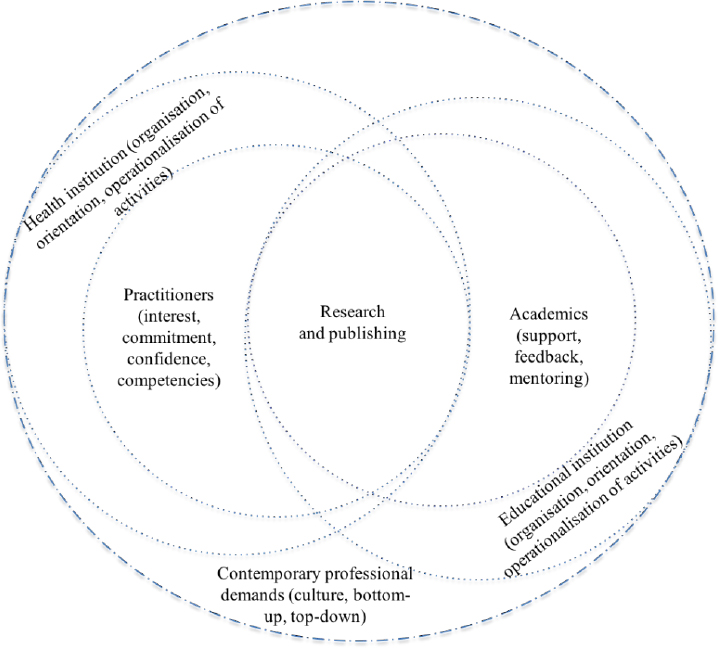
Figure 3
The relationship between practitioners, academics, professional demands and employing organisations and their impact on collaborative research activities
Barriers were also found that reduced collaborative research activities between practitioners and academics in nursing as well as the other disciplines (Janssen et al., 2015; Hauck et al., 2015). Practitioners particularly reported a lack of research knowledge, skills and confidence and the need for ongoing development. The importance of user participation received powerful support in the literature (Carr, 2007, Markauskaite and Goodyear, 2014; Read and Maslin-Prothero, 2011; Truman and Raine, 2001).
Practitioners’ need for ongoing support from academics was highlighted. On the other hand, academics identified their need to gain further research education and a higher level of qualification such as PhD (Logan et al. 2015). Surprisingly, however, less emphasis was placed on the importance of academics’ interest and motivation towards research and capacity to link with practitioners. Likewise, limited attention was directed towards the accountability of academics and their commitment to mentoring, feedback and ongoing support. However, specific challenges emerged for nursing academics seeking national and international multidisciplinary collaborations with other academics and practitioners. Despite potential issues, conducting research in groups allowed, amongst other things, collaboration between a range of individuals, environments and cultures across disciplines (Griffin et al., 2005).
The academics’ qualifications, further education, research and publication activities affected their ability to mentor practitioners in collaborative research and publication endeavours.
The importance of academics and practitioners bridging the theory–practice gap through professional education has been a major focus in the literature (Benner et al., 2010; Sullivan, 2005). However, bridging the research–theory–practice gap has received far less attention in the literature. The research–theory–practice nexus has major implications for the development of evidence to inform the practical and theoretical knowledge of the discipline. The findings also indicated that academics and practitioners have been isolated in their research activities in a number of disciplines. While the research capacity of nursing internationally has increased largely because of extensive use of qualitative methodologies, such activities may be unsupported by employing institutions from their own and other disciplines (Hoff and Witt, 2000; Show, 2003; Weiner et al., 2011).
The facilitators and barriers that emerged from the reviewed studies establish the relationship of an individual’s personal and professional characteristics (such as motivation, interest and academic qualification) and their subsequent research activities. However, the importance of the academics’ and practitioners’ research activities reached beyond the personal and professional characteristics of these individuals. To make it possible for academics and practitioners to overcome these barriers, cooperative and collective actions are necessary. Siedlecki et al. (2017), investigating research active nurses, highlighted the need for research-supportive environments and mentor support. In contrast, weak relationships hindered the development and undertaking of collaborative research activities, especially in relation to educational institutions. Therefore, health and educational institutions and professional communities need to encourage the building of collaborative, collegial networks. These networks need to extend across their own disciplines and beyond, thereby disseminating and creating new interdisciplinary knowledge.
Existing dissonance in conceptual understanding and structural support influenced whether research activities developed across institutions or remained fragmented, individualised and isolated. Likewise, relationships between academics and practitioners, within and across organisations, were crucial to collaborative research activities.
Interestingly, none of the reviewed studies stated the professional associations’ positions on practitioners’ involvement in research. Yet, professional associations support practitioners to participate and adopt EBP to provide best clinical practice (Hordern, 2014). These associations have been particularly vocal in stipulating the maintenance of high standards of professional practice and in negotiating and setting professional and institutional norms (Nerland and Karseth, 2013). As Sackett (1996) asserted, to achieve the objectives of EBP, both professional and organisational development must occur.
The findings also pointed out that the existing levels of collaboration relied on individuals. Despite the final “product” for both professional education and health system delivery being the best quality of health care possible with regard to patient outcomes, well-established links between educational and health institutions were not found. Current requirements for assuring safety and quality in the delivery of health care services (AHCS, 2012) require practice and educational collaboration. Quality assurance and accountability are needed within educational systems (Frank et al, 2012; Higher Education Standards Framework [Threshold Standards], 2015) and professional standards (Abbott, 1988; Friedson, 2001) particularly in relation to nurse and other health practitioners (Benner et al., 2009; McGee and Castledine, 2003; Sullivan, 2005). This relationship can only occur where the previously mentioned tensions that influence professional knowledge building and transformation are not present. It also highlights the necessity for strong institutional collaboration, for common actions to establish shared preconditions to secure safety and quality in the delivery of services, by providing opportunities for practitioners and academics to continually expand and improve their research capabilities. Furthermore, drawing together academics and practitioners in the development of practice through research activities and publication of research is, in response to twenty-first century requirements, a critical necessity.
Strengths and Limitations
This literature review was limited by the number of available and relevant empirical studies. While search terms were chosen carefully, some studies with relevant content may have been missed due to variation in key terms used. The search was also limited to studies published in English potentially omitting pertinent studies published in other languages. Reviewers minimised reporting bias through the use of cross-checking and reflection on decision-making by the authorship team.
The majority of these studies provided limited information on research designs, research questions, data gathering processes and analyses. While the studies in this review suggest that nursing holds a prominent position in undertaking research activities compared with other health professionals (excluding medicine) and social workers (Bedoee, 2011; Janssen et al., 2015), it may be problematic to draw conclusions about individual professions. Generalisation of findings requires a cautious approach when applied to individual professions as studies may describe local practice only, particularly in relation to professions with low representation in respondent numbers. For example, the reported dietician disinterest in research from a single study provides little grounds for generalisation. However, the value of this systematic review lies in the consideration of overall themes and related strategies that can apply across professions. While interdisciplinary and contextual differences are acknowledged, there appears to be a high level of similarity in the findings and therefore potential transferability across disciplines.
Conclusions and potential implications
There is a lack of substantial research on the issue of practitioner–academic researcher collaboration as the available literature reaffirms the established academic–centric practice. Therefore, an important finding arising from this review is the limited amount of research examining the practitioner perspective on how to generate and disseminate clinical research and knowledge. There is a need for educational institutions to promote continuing cooperation with the health care sector and ongoing opportunities and encouragement for research development and collaborative research activities. Likewise, the health sector must recognise the need for investment in workforce development by operationalising the development of appropriate research infrastructure. A move is necessary towards a greater role of research rather than the prevailing efficiency and productivity measures as the only foci of health services (Hollingsworth, 2008).
One possibility would be to establish strong inclusive collaborative research centres that seek to maintain continuous development of research abilities and ongoing support for academics and practitioners. Currently, collaborative research centres often tend to focus successfully on high-end medical-related research. However, there is a need to address interdisciplinary practice and implementation of best evidence by involving larger numbers of practitioners. Step-by-step high-quality robust guidance in research and publishing processes for academics and practitioners regardless of their professional background would hasten the progress. Professional associations must take proactive action to create pathways and processes of knowledge appropriation and transformation for professional practice. These associations are in an excellent position to actively encourage the research and publishing activities of their members through funding opportunities and showcasing new evidence for practice.
Finally, in conclusion, we emphasise that it is increasingly difficult for a single individual (health practitioner or academic) to endeavour to undertake research activities in the current climate of the health care and educational systems. Working and learning together through intra-disciplinary, interdisciplinary and international collaborations, we see as central to securing innovations, developing and transforming knowledge, professional advancement and creative learning as well as quality in the delivery of services. Ultimately, we argue for research, education and practice integration through organised and structured cooperation in and across educational and health care institutions.
Appendices
Appendix 1
Summary of studies included in the review
| Author/ year/ title/ location of the study | Aim/research question | Theoretical or conceptual approach | Study design/ methods/ population/ instruments | Main findings | Conclusion | Rigor |
|---|---|---|---|---|---|---|
| Bedoee, 2011. Investing in the Future: Social Workers Talk about Research New Zealand | To report the health professional 'talk' about research revealed in a study of social workers' participation in continuing professional education. Research question not specified. | Concept of growing utilization of research and building research capacity both within Universities and in practice linked to the 'professionalization project' in social work. | Participatory action research design: qualitative study. 17 semi-structured individual and 6 group interviews involving 40 social workers, professional leaders and managers. Setting and sampling described. Thematic analysis and software mentioned. | Main themes: The value and importance of research to practitioners; the obstacles and constraints (need for social workers to participate in research not recognized by managers and lack of time); awareness of evidence-based practice; the organizational context; the lack of social worker confidence and skill in research activity; and status, other professions and research. | Leadership needs to be directed closer to the front line of practice through collaborative relationships between academics and research teams to encourage more scholarly activity in practice and grow a research agenda, generated by the questions in the field and focused on the needs of service users. | TAPUPAV" Ethical approval an consent not stated. |
| Behar-Horenstein and Johnson, 2010. Enticing Students to Enter Into Undergraduate Research: The Instrumentality of an Undergraduate Course USA | To discover how the Science for All course served as gatekeeper to engage students in undergraduate research. Research question: What role does the Science for All course play in encouraging students to seek research opportunities at the university? | The concept of undergraduate research, defined as an inquiryor investigation conducted by an undergraduate that makes an original intellectual or creative contribution to the discipline. | Observational design, qualitative study. Classroom observation of the course for students majoring in different sciences (1 per week for 50 minutes, during the 16-week); current research topics were presented. 133 students participated in course. 5 students were interviewed. Setting and sampling described. Thematic analysis. | Overall, the findings show that some of the participants began to engage in research activities while taking this course. However, overall the course lacked engaging pedagogy, student input, and participation. These findings indicate that students may have felt excluded from the research practice community, may not have understood what they were listening to, or may have found the process of doing research to be inaccessible. | If the course was solely designed to showcase faculty research, conduct faculty interviews, and motivate student interest in doing research, this purpose is being served | TAPUPAV |
| Dupin et al., 2015. Conceptions of learning research: Variations amongst French and Swedish nurses. A phenomenographic study. France and Sweden | To explore French and Swedish RNs' conceptions of research education and educational passage toward research and to describe how learning research contributes to the understanding of their norms and practices. Research question not specified. | Discussing nursing research in Europe: development of research capacity and education and differences between France and Sweden. | Explorative descriptive design. Qualitative study. Interview with five French and five Swedish Nurse Researchers with PhDs. Sampling and setting described. The phenomenographic method of data analysis. | The analysis revealed one main category, "Organizational factors to sustain individual apprenticeship". Three descriptive categories have emerged from the data and its variations amongst French and Swedish nurses: (1) entrance into research-modes of commitment; (2) nurses' engagement-the need for dedicated support; and (3) research as the means to resolve nursing situations. Registered nurses have integrated nursing and researcher roles. | Education in nursing research is part of the strategy needed for the development of nursing research and is supported by the integration of research and practice. | TAPUPAV |
| Evans et al., 2013. An exploration of nursing research perceptions of registered nurses engaging in research activities at a metropolitan hospital in Western Australia Australia | To explore perceptions about nursing research of registered nurses (RNs) who were engaged in research activities at a metropolitan hospital in Western Australia. Research question not specified. | Discussing Nurse Research Consultants (NRCs) role. | Explorative design. Qualitative study. Interview with 10 RN Setting and sampling not described. Thematic analysis | Four main themes were identified: perceptions of nursing research, perceived enablers, perceived barriers and improving research engagement. Some of the RNs that participated in this study were experienced in the conduct of research, finding adequate support from NRCs in the workplace, whilst others experienced barriers limiting their involvement in nursing research activities. | These barriers could be reduced with additional education, support, improved communication, time and opportunities to undertake research activities. | TAPUPAV |
| Finch et al, 2013. Factors influencing research engagement: research interest, confidence and experience in an Australian speech-language pathology workforce Australia | To examine the current research interest, confidence and experience of speech language pathologists (SLPs) in a public healthcare workforce, as well as factors that predicted clinician research engagement. The main research question not specified. | Concept of EBP and review of literature on the research experience of allied health professionals | Across-sectional design: quantitative study. An online survey; 158 speech language pathologists in a public healthcare responded. Setting and sampling described. Descriptive statistics and multiple regression using Predictive Analytics Software | Respondents were more confident and experienced with basic research tasks (e.g. finding literature) and less confident and experienced with complex research tasks (e.g. analyzing and interpreting results, publishing results). For most tasks, SLPs displayed higher levels of interest in the task than confidence and experience. Research engagement was predicted by highest qualification, current job classification level and overall interest in research. | SLPs have potential to benefit from research capacity building activities to increase their research skills in order to meet organizational research engagement objectives. | TAPUPAV |
| Finch et al, 2015. Uncovering motivators and stumbling blocks: Exploring the clinical research experiences of speech-language pathologists Australia | To explore the experiences and attitudes of speech-language pathologists in regards to undertaking research in their clinical settings. Research question not specified. Questions posted to initiate discussion within focus group listed. | Mentioning EBP and previous research. | Descriptive design Qualitative study. Six focus groups (video or teleconferencing) with 21 practicing speech-language pathologists Setting and sampling described. Qualitative content analysis. | Two overarching themes mediated research engagement. Engagement in research was shaped by whether participants overcame any "fear" of research and the unique characteristics of their clinical context. Contextualizing and further shaping participants' experiences of these themes were personal factors, such as initiative and proactivity. | The success of increasing the research engagement of the speech-language pathology workforce may be contingent on providing practitioners with more exposure to research opportunities and mentors, and ensuring organizational structures are in place to encourage, support and facilitate research. | TAPUPAV |
| Gerrish et ai, 2011. Factors influencing the contribution of advanced practice nurses to promoting evidence-based practice among front-line nurses: findings from a cross-sectional survey UK | To identify factors influencing advanced practice nurses' contribution to promoting evidence-based practice among front-line nurses. Research question: how APNs influence the care given by FLNs. | Concept of EBP. | A cross sectional design: quantitative study. Questionnaire with 855 advanced practice nurses (a purposive sample). SPSS. Descriptive statistics. Content analysis was mention in relation to the qualitative data from free text questions. | Advanced practice nurses used different sources of evidence. They engaged in various activities to promote evidence-based practice and had a positive influence on front-line nurses' practice. Their skills in evidence-based practice varied with few considering themselves expert; these with Masters qualifications perceived themselves to be more skilled in all aspects of evidence-based practice than those with lower qualifications. | Advanced practice nurses are well placed as clinical leaders to promote evidence-based practice by frontline nurses but require further development of their skills in evidence-based practice. In order to maximize their potential, advanced practice nurses require Master's preparation. | TAPUPA V |
| Gonzalez et al., 2012. Community Mental Health Agency Views of Research USA | To characterize community mental health agency staff's baseline attitudes and values regarding research and ideas for improving the academic-community collaboration. To develop a research infrastructure that fosters incorporation of research-based practices into clinical care. The main research question not specified; interview questions outlined. | Described processes and outcomes of academic-community partnerships; overview over reports. | Authors stated that the design is qualitative. Individual interviews with 4 leaders. Focus groups with medical staff (4), non-medical practitioners (6), and administrative staff (8). Setting and sampling process described in details. Analysis: NVIVO, integrative analyses, domains defined a priori. | The authors developed a AAA model to depict the elements necessary to achieve successful research collaborations: acceptance, access, active collaboration; prior to carrying out interviews and focus groups. Results systematized in 5 overarching themes: inter-agency communication, shared goals and equality in research, researchers adding knowledge to the agency, improving attitudes toward research, and agency involvement in research. Lack of shared values and inadequate communication processes can negatively impact community-based research collaborations. | More clear "benefits and reward structures" for community based partners are needed, such as a clear understanding of direct and indirect costs of the research project and ensuring agency funding is commensurate for the project and how the projects might impact the study population | TAPUPAV Ethical aspects stated: the role of the authors not described. |
| Hauck et al., 2015. Research capacity building in midwifery: Case study of an Australian Graduate Midwifery Research Intern Programme Australia | To evaluate an innovative Graduate Midwifery Research Intern Program offered at a tertiary obstetric hospital in Western Australia, to determine what was working well and how the program could be improved. Research question not specified. Questions included in the survey listed. | A framework with six principles to guide capacity building in research: develop skills and confidence; ensure research is useful and close to practice; foster partnerships and collaborations; promote appropriate dissemination; contain elements of sustainability to maintain skills; and include supportive infrastructure. | A case study Qualitative The Graduate Research Intern (GRI) Program Evaluation; 6 GRI mid-wives participated in a survey. Setting and sampling described. Coding of open-ended responses mentioned. | Findings confirm that the GRI program increased the graduates understanding of how research works, its capacity to define a problem, generate new knowledge and inform clinical practice. The GRI midwives' feedback suggested the program opened their thinking to future study and gave them enhanced insight into women's experiences around childbirth. | To grow own knowledge as a professional group, midwives must develop and promote programs to build own pool of research capable midwives. | TAPUPAV |
| Jansen and Hoeijmakers, 2013. A Masterclass to Teach Public Health Professionals to Conduct Practice-Based Research to Promote Evidence-Based Practice: A Case Study from the Netherlands Netherlands | To describe and evaluate the curse aim to train public health professionals to design and conduct scientific research based on a problem in practice or policy. The main research question not specified. | Describing a Masterclass on Scientific Research Training for Public Health Professionals | Multiple method design: mix-methods Public health professionals completed formative evaluation forms with report marks for each lecture, as well as for the role of the tutor and the coordinator; 2 focus group (with 8 in each), with the master class participants by the end of the class and 6 months after completion; a 36-item questionnaire. | Twenty-one candidates started the program, 66% completed it. Teaching materials, lectures, organization, and facilities were favourably evaluated. At the end of the master class, participants were able to design and implement a research proposal in their daily work setting, write a draft article, and critically appraise scientific research for practice and policy purposes. Participants had become more confident about their research competence. Management support from their employer proved crucial. Results obtained with the different methods were consistent. | The master class appeared to be an effective instrument to increase the practice-based research skills of public health professionals, in a supportive organization with management backing and supervision by senior university researchers; using master classes to contribute to the improvement of practice-based evidence for projects addressing current and future public health problems was recommended. | TAPUPAV Legal and ethical aspects not stated. Analysis not describe |
| Janssen et al., 2015. Perceptions of physiotherapists towards research: a mixed methods study. New Zealand | To explore the perceptions of physiotherapists towards the use of and participation in research. Research question not specified. | None. | Explorative design; mix-methods study. In-depth interviews and questionnaires (demo-graphics, Edmonton Research Orientation Survey, and confidence and motivation to participate in research) with 25 physiotherapists. Thematic analysis and mean and standard deviation. | Physiotherapists were generally positive towards research, but struggled with the concept of research, the available literature and the time to commit to research. Individual confidence and orientation towards research seemed to influence how these barriers were perceived; physiotherapists struggle to implement research in their daily practice and become involved in research. | Changing physiotherapists' conceptions of research, making it more accessible and providing dedicated research time could facilitate increased involvement in the physiotherapy profession. | TAPUPAV |
| King et al, 2015. Facilitating refereed publication by health professionals: research informed software to scaffold the integration of research evidence with practice knowledge | To describe research processes underpinning design of e-learning software used to support preparation of refereed publications by health care professionals, postgraduate and undergraduate students. Research q. stated as issue: integrating clinical practice knowledge with research evidence. | Bases on the Critique for Publication (CFP) e-learning software project; combines authentic assessment with elements of constructivism (Herrington et al., 2014) process emphasizes assessment for learning. | Mixed methods design, framework interacting research with software modification. 79 Nursing and Mid-wifery Undergraduate, Honours, Masters and Research Higher Degrees students filled out online questionnaire; 8 semi structured interviews. Setting and sampling described. Descriptive and thematic analysis. | Barriers to publication: lack of writing confidence and competence; difficulties starting and fear of undertaking a major task. Publication facilitators: Academics' feedback positive on drafts and worthiness for publication, writing for publication workshops, have own academic work recognized beyond the university. | The CFP project provides initial research on clinician /academic collaborative publications. Ongoing research program; potential benefits: from teaching/ learning, research and practice perspective. | TAPUPAV |
| Koivula et al., 2011. Research utilization among nursing teachers in Finland: A national survey Finland | To assess research utilization by nursing teachers and connections of teachers' background, further education and research activity variables to research utilization on nursing education. Research question not specified. | Describing the most common barriers to research utilization in nursing research: a lack of authority in changing patient care procedures, difficulties understanding statistical analysis, insufficient time, organization, the climate and communication of research, the role of the nurse, access to resources, and nurses' attitudes to research. | Across-sectional design Quantitative Survey with 339 nursing teachers. Setting described no details on selection process. Statistical analyses were carried out using SPSS | The mean age of teachers was 51 years and most had master's degrees, although 12% had a licentiate or PhD. Most nursing teachers had taken further education, were members of research and development teams and had publications. Research utilization in nursing teaching was connected to teachers' age, nursing diploma, academic degree, work experience, official title, further education, research and development activities and publication activity. | Nursing teachers with doctoral degrees make better use of research on nursing education than those with master's degrees. | TAPUPAV Property: (-) legal and ethical aspects not stated. |
| Metcalf et al., 2010. Survey of R.T.S with doctorates: barriers to conducting research. USA | To characterize the barriers to publishing and research by doctoral prepared radiologic science practitioners using a national survey instrument. Research question not specified. | Review of literature on barriers to publication from 1988-2008. | Design not specified. Quantitative study. The instrument comprised a total of 25 closed-ended survey questions; 163 radiologic technologists holding doctoral degrees participated. Analysis not described. Ethical considerations not outlined. | Specifying demographic characteristics and presenting the main barriers as The barriers identified as lack of time, energy or motivation to write, statistical technical, institutional or departmental support, faculty mentors and funding. Limited knowledge of grant writing and paperwork associated with grant writing were mentioned, as well as that research is not a job requirement and is viewed as low priority. Staff shortages at work, and major distractions such as travel as competing job demands were pointed out. | Mentoring on 3 levels: 1) Faculty members must mentor their radiologie science students through both didactic and clinical training. 2) Practicing radiologie technologists and supervisors in the clinical setting must mentor radiologic science students by teaching and modelling proper clinical skills and professional behaviour. 3) Radiologie science practitioners who published research must share their experiences with others in the profession. | TAPUPA VEthical aspects not stated. The study explains its aims, setting, but not theoretical framework, and needs to provide greater clarity and full methods and the process of analysis. |
| Murray and Newton, 2009. Facilitating writing for publication UK | To assess writing for publication course for AH professionals; explore the writing skills and strategies that participants developed during the course; to assess whether these skills and strategies were sustained in clinical workplaces after the course. Research question not specified | Describing the course. The course consisted of six 3-hour meetings, with one meeting every month for 6 months. The course had three aims: (1) to develop participants' skills and strategies for writing for publication; (2) to support the writing and submission of a paper during the course; and (3) to help participants to develop skills, networks and understanding for writing beyond the course. | Design not specified. Qualitative study. 12 Physiotherapists in writing for publication course were interviewed 6 months after course. Setting and sampling described in a way, although the main authors focus is on the description of the course, not the methodology applied. Thematic analysis mentioned. | The course participants reported a range of benefits, which included improved skills and increased confidence. They also increased their published output. However, participants also identified the need for ongoing support. | Perhaps the next step is to include training in writing for publication in the undergraduate curriculum, although this would put pressure on an already packed curriculum and on tutors. | TAPUPA V The researcher' role not stated. Theoretical framework, full methods and the process of analysis not provided: however will pass normal transparency thresholds |
| Pager et al, 2012. Motivators, enablers, and barriers to building allied health research capacity | Understand motivators, enablers, and barriers impact on research for allied health in health care settings. Also aim to increase understanding of factors influencing individuals and teams of allied health professionals to do research. Research question not specified. | Organizational behaviour and theories of motivation | Quantitative: cross-sectional design. 85 participants from ten intervention and control healthcare teams (selection process described) Written version of research capacity and culture survey Quantitative data analysis. Descriptive report. | Barriers: 1. Time: lack of time for research, other work roles taking priority, low staffing levels, and high staff turnover.2. Resources and infrastructure: lack of resources especially money, administrative support, research software, and library access.3. Skills and knowledge: lack of research skills and knowledge and access to experts and training.4.Coordination: lack of a coordinated approach with little support from managers, colleagues, and partners causing feelings of isolation. | Supporting already motivated allied health professional individuals and teams to conduct research by increased skills training, infrastructure, and quarantined time is likely to produce better outcomes for research capacity building investment. | TAPUPAV Ethical approval and informed consent not stated. |
| Probst et al, 2015. Research from therapeutic radiographers: An audit of research capacity within the UK UK | To audit research capacity across therapy radiography in the UK. Research question not specified. | Describing national policy documents. | Design not specified. Quantitative study. 45 Therapeutic radiographers responded to the survey-adapted version of the 'Auditing Research Capacity' tool. Sampling and setting described. Statistical analyses were carried out using SPSS | Variation was evident in the commitment to the development of a research culture identified by practices such as linking research to the business planning cycle, inclusion of research in recruitment and advertising materials, or having a nominated therapeutic radiographer lead on research for the department. Luck of research strategy and training for RRs was mentioned, specifically in areas such as writing funding bids, writing for publication and the research and governance process. | The research strategy should include mentoring or developing appropriate research skills for those engaged in research (including higher degree qualifications). RSMs should also encourage peer-reviewed publications, and conference presentations from all staff to ensure research results are disseminated to the wider profession. | TAPUPAV Property: (-) legal and ethical aspects not stated. |
| Rickard et al., 2011. Towards improved organizational support for nurses working in research roles in the clinical setting: A mixed method investigation. | To explore experiences of nurses employed in research positions regarding organizational structures and support for research career pathways, and determine what reforms would strengthen an effective research specialization pathway. Research question not specified. | Discussing previous research in field. | Across-sectional design: mix-methods. A survey and semistructured interviews of 11 nurses in research roles at an acute care hospital. Setting and sampling described. Descriptive statistic and thematic analysis | Research nurses lack organizational support in many important job aspects. They need individual mentorship, collective support, and the professional recognition and status that researchers in other settings are afforded. | A comprehensive research management model would provide structured organizational support for nurses in research, improve professional development opportunities, ensure efficient use of human resources, synergistic working partnerships, and further contribute to a culture of evidence-based healthcare. | TAPUPAV |
| Stephens et al., 2009. Research Experience and Research Interests of Allied Health Professionals Australia | To examine the research experience and level of research interest of AHP, as well as difference and/ or relationship between research experience and interest, the areas in which interested in developing skills was highest, and whether there was a difference between disciplines in research interest and experience. | Describing components in The Research Spider survey tool: writing a research proposal, using quantitative methods, publishing research, writing and presenting a research report, analysing and interpreting results, using qualitative research methods, critically reviewing literature, finding relevant literature, generating research ideas and applying for research funding. | Not specified Quantitative The Research Spider survey tool with 132 allied health professional Setting and sampling described. Descriptive statistic and SPSS | Allied health professionals rated themselves as having 'little research experience.' While practitioners' level of interest in research was significantly greater than their level of research experience, practitioners as a whole only had 'some interest' in research. Fifteen percent of the sample was very interested in research. | Practitioners highly interested in research may benefit from intensive support and training in areas of clinical research. A combination of strategies will be required if some allied health professionals are to pursue clinical research activities and for most allied health professionals to adopt evidence based best practice. | TAPUPAV Ethical considerations stated, not the role of the authors. |
| Ulrich et al.,2015.Establishing good collaborative research practices in the responsible conduct of research in nursing science. USA | To examine nurse scientists' views on collaborative research as part of a larger study on standards of scientific conduct. Research question not specified. | Describing training in the responsible conduct of research (RCR). | Design not specified. Quantitative study. Web-based descriptive survey; the authors invited 1,550 nursing faculty (a random sample) to participate in this web-based survey, with an overall 27% response rate. Statistical analyses were carried out using SPSS. | Nearly 40% of nurse respondents were not able to identify good collaborative practices for the discipline; more than 3/4 did not know of any published guidelines available to them. Successful research collaborations were challenged by different expectations of authorship and data ownership, lack of timeliness and communication, poorly defined roles and responsibilities, language barriers, and when they involve junior and senior faculty working together | Individual and organizational standards, practices, and policies for collaborative research need clarification within the discipline. | TAPUPAV |