
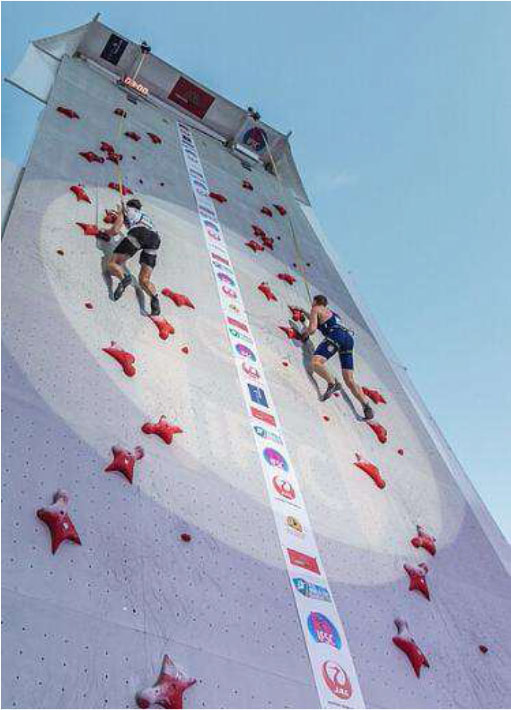
Figure 1.
The International Federation of Sport Climbing (IFSC) World Cup Climbing Men’s Speed Climbing Competition site, Chamonix, France, 2018. Photograph by Jan Kriz, via Wikimedia Commons. (https://en.wikipedia.org/wiki/Speed_climbing_wall).
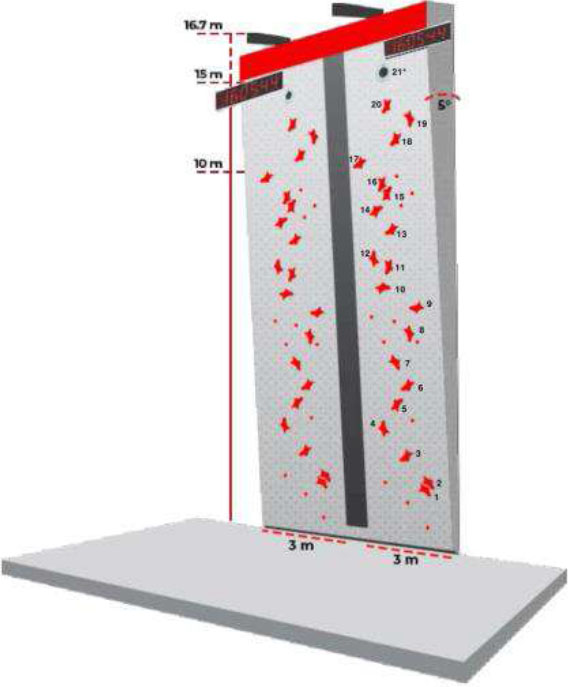
Figure 2.
Diagram of the official speed climb wall including numbered hand holds. Adapted from (Walltopia 2020). *Final button or ‘hold 21’ (Lau, 2021)
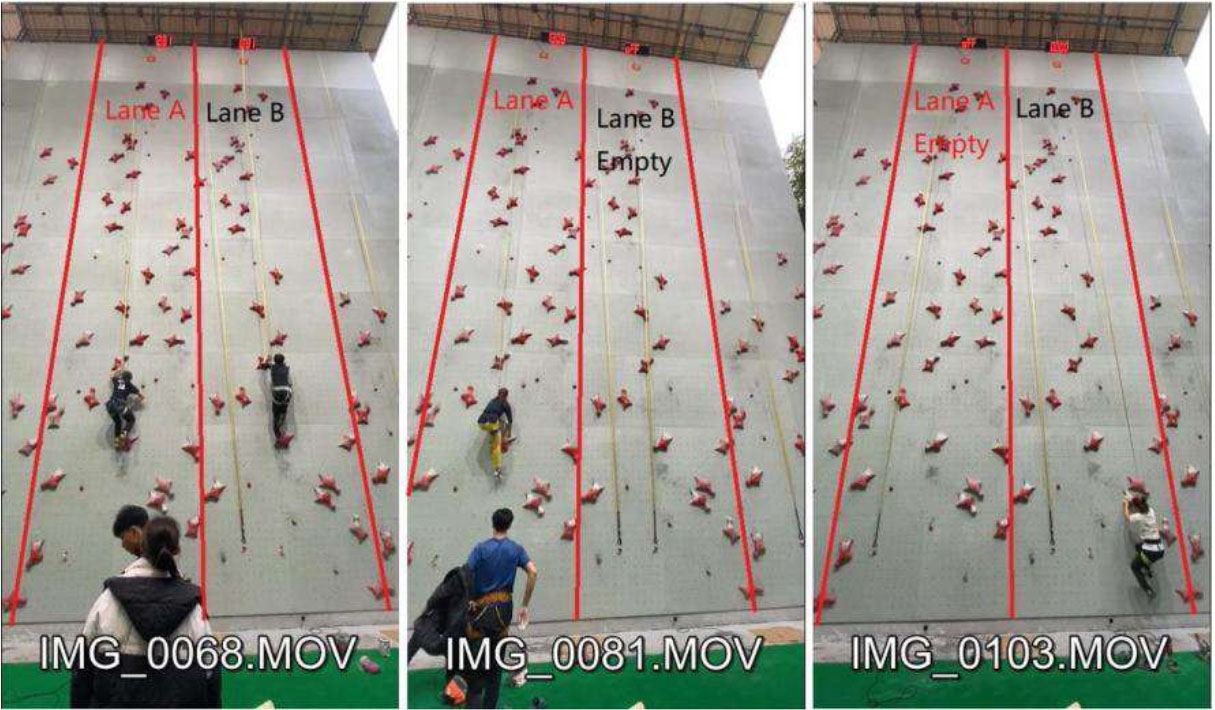
Figure 3.
Images of the three training situations for speed climbing, (1)Dual-Lane double climbing, both lanes are occupied, (2)Dual-Lane single climbing on the left lane, the left lane is occupied and the right lane is empty, (3)Dual-Lane single climbing on the right lane, the right lane is occupied and the left lane is empty.
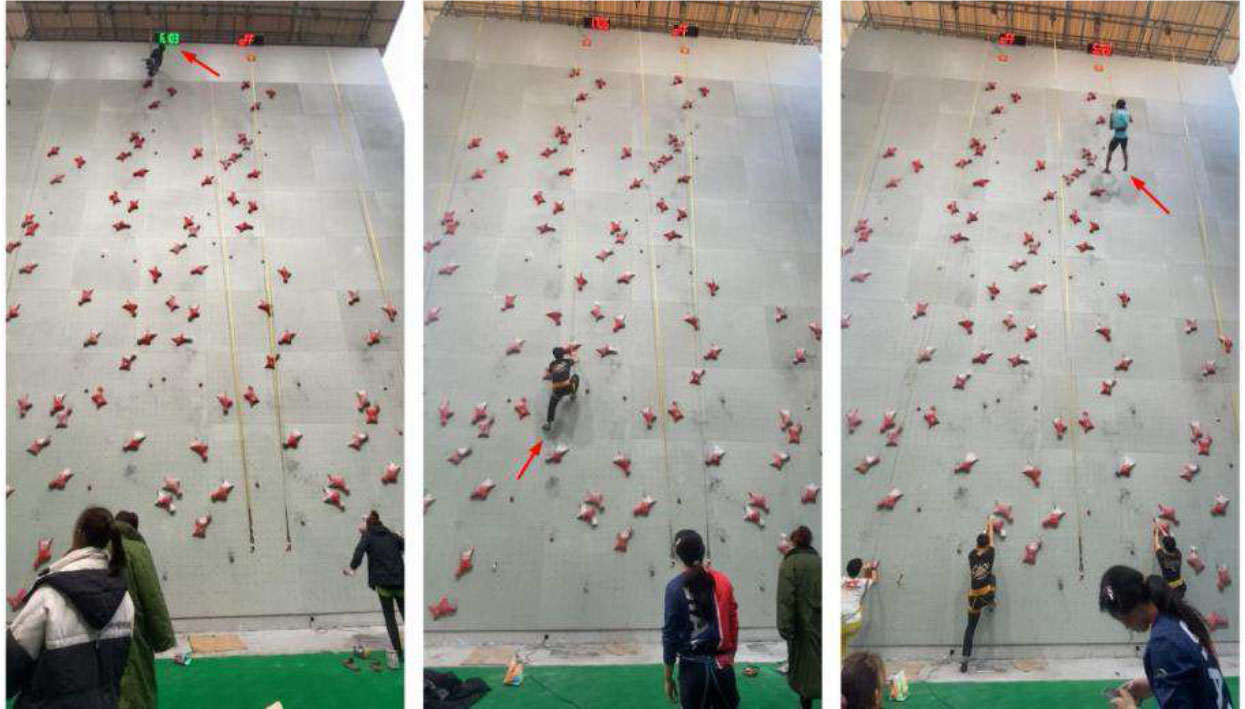
Figure 4.
Images of the Three States in Speed Climbing: Flash, Slip, and Fall, (1)Flash, the climber has tapped the timer to stop and the display light is green, (2)Slip, the climber’s left foot steps out of the air and slips (3)Fall, he climber’s feet are dangling in the air, falling downward slowly, and the timer continues to keep time and the display light is red.
Table 1.
Comparison table for classification, labelling and coding of video status for dual lane speed climbing.
| Dual-lane climb state | Annotation | Encode | Videos Quantities |
|---|---|---|---|
| left flash, right flash | 1-1 | 0 | 237 |
| left flash, right slip | 1-2 | 1 | 86 |
| left flash, right fall | 1-3 | 2 | 57 |
| left flash, right empty | 1-4 | 3 | 72 |
| left slip, right flash | 2-1 | 4 | 93 |
| left slip, right slip | 2-2 | 5 | 45 |
| left slip, right fall | 2-3 | 6 | 20 |
| left slip, right empty | 2-4 | 7 | 31 |
| left fall, right flash | 3-1 | 8 | 44 |
| left fall, right slip | 3-2 | 9 | 10 |
| left fall, right fall | 3-3 | 10 | 29 |
| left fall, right empty | 3-4 | 11 | 15 |
| left empty, right flash | 4-1 | 12 | 90 |
| left empty, right slip | 4-2 | 13 | 20 |
| left empty, right fall | 4-3 | 14 | 23 |
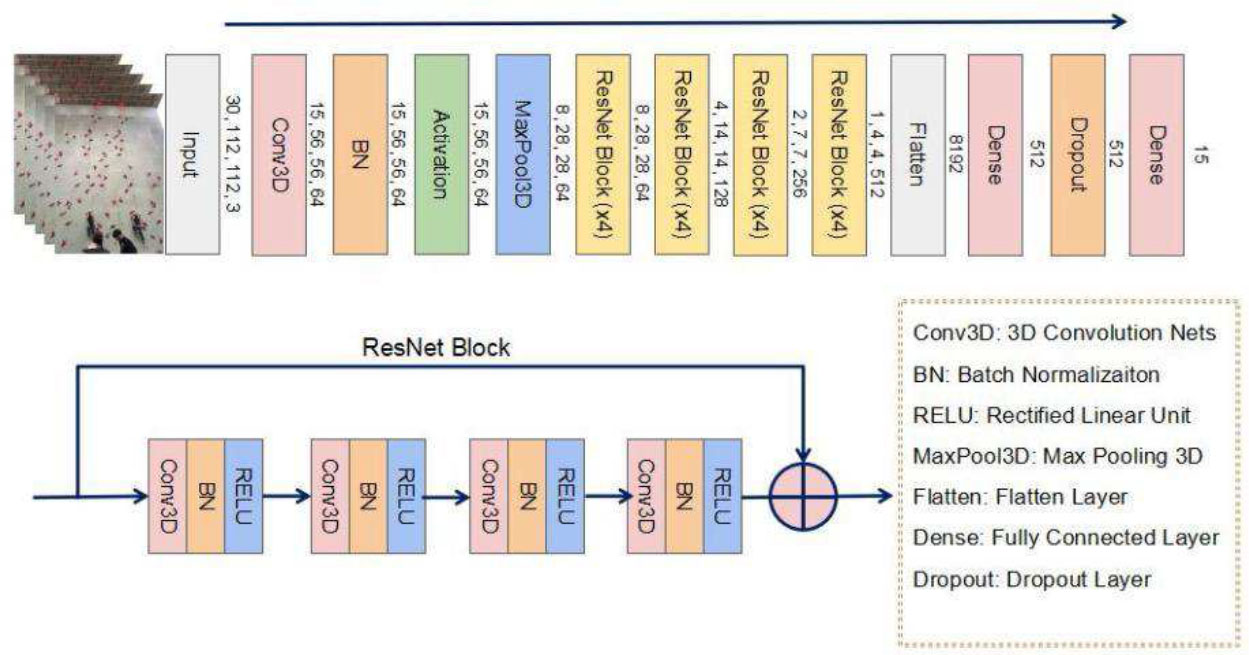
Figure 5.
Simplified diagram of the 3D ResNet model architecture designed for this study.
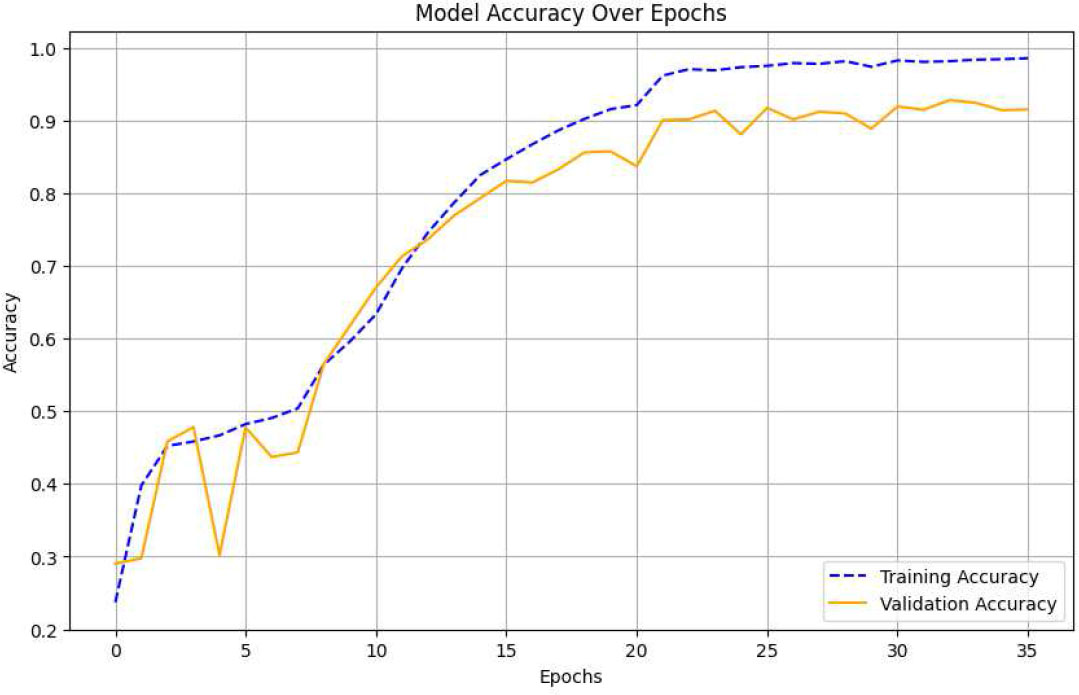
Figure 6.
Accuracy Curve of 3D ResNet Model. The horizontal “Epoch” indicates the number of training rounds, starting from 0 and incrementing, demonstrating the model’s training iteration. The vertical “Accuracy” represents the model’s accuracy in classifying 15 climbing results on the Training and Testing Accuracy sets, ranging from 0 to 1.
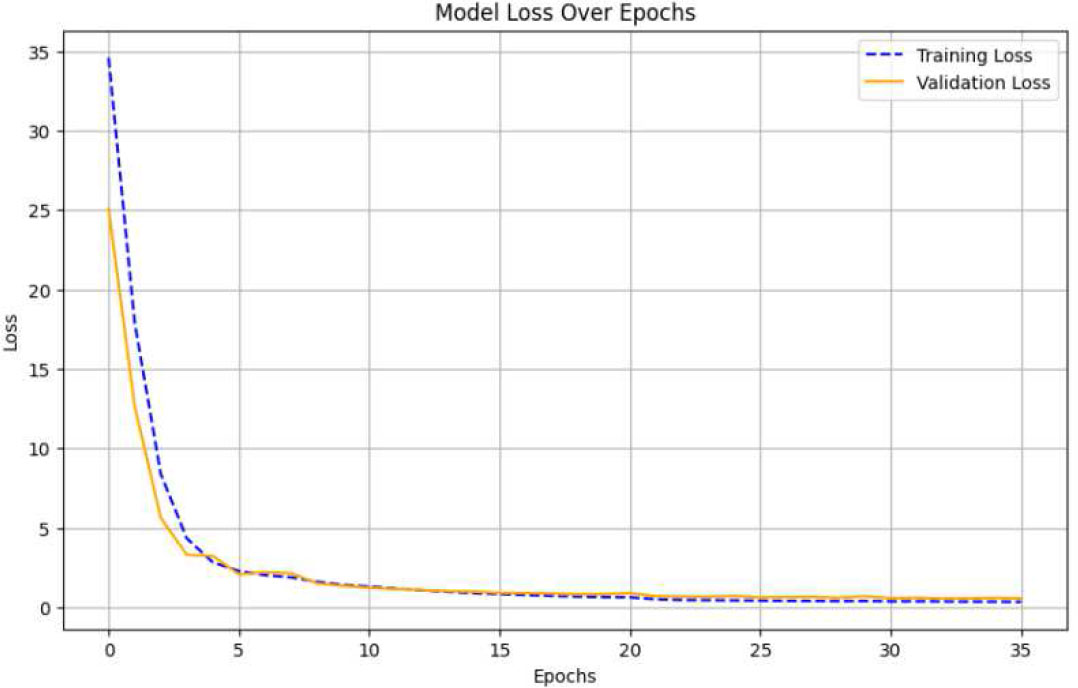
Figure 7.
Loss Curve of 3D ResNet Model. The horizontal coordinate is also “Epoch” and the vertical coordinate “Loss” indicates the loss value of the model on the training set and the Testing set, the magnitude of which reflects the model’s predicted the degree of difference between the results and the true labels.
Table 2.
Table of 3D ResNet model classification report
| Class | Precision | Recall | F1-Score | Support |
|---|---|---|---|---|
| 0 (L-Flash; R-Flash) | 0.91 | 0.95 | 0.93 | 594 |
| 1 (L-Flash; R-Slip) | 0.85 | 0.91 | 0.88 | 190 |
| 2 (L-Flash; R-Fall) | 0.95 | 0.82 | 0.88 | 131 |
| 3 (L-Flash; R-Empty) | 0.95 | 0.96 | 0.95 | 164 |
| 4 (L-Slip; R-Flash) | 0.94 | 0.82 | 0.88 | 244 |
| 5 (L-Slip; R-Slip) | 0.93 | 0.92 | 0.93 | 125 |
| 6 (L-Slip; R-Fall) | 0.89 | 0.98 | 0.93 | 57 |
| 7 (L-Slip; R-Empty) | 0.95 | 0.94 | 0.95 | 83 |
| 8 (L-Fall; R-Flash) | 0.93 | 0.93 | 0.93 | 124 |
| 9 (L-Fall; R-Slip) | 0.95 | 0.95 | 0.95 | 20 |
| 10 (L-Fall; R-Fall) | 0.84 | 0.91 | 0.88 | 58 |
| 11 (L-Fall; R-Empty) | 1.00 | 0.79 | 0.88 | 24 |
| 12 (L-Empty; R-Flash) | 0.99 | 0.98 | 0.99 | 250 |
| 13 (L-Empty; R-Slip) | 0.99 | 0.99 | 0.99 | 72 |
| 14 (L-Empty; R-Fall) | 0.98 | 1.00 | 0.99 | 52 |
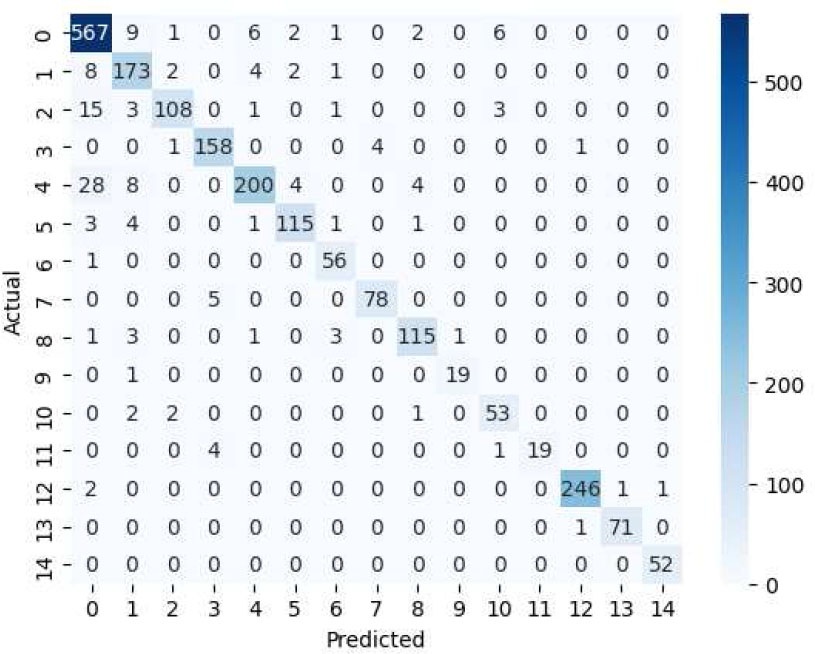
Figure 8.
Confusion Matrix for 3D ResNet Model Performance on Speed Climbing Video Analysis. Rows: Represent the actual classes. Columns: Represent the predicted classes. Diagonal Values: Indicate correct classifications, with higher values reflecting better performance. Off-Diagonal Values: Represent misclassifications, identifying areas where the model struggled.