
INTRODUCTION
The growing desire of the business world to maintain a high level of development and ensure our planet's sustainable development has led to a significant focus on innovation (Ghobakhloo et al., 2021; Porter, 1998). Innovation has become firmly embedded in the business world as a critical factor influencing corporate competitiveness, resulting in ongoing interest in this topic from both industry and academia (Annamalah et al., 2023; Lelo de Larrea et al., 2021).
Open innovation is a subject of interest for researchers and entrepreneurs seeking contemporary approaches to innovation management in an era of rapid technological change and increasing competitiveness. The highly recognized work by H.W. Chesbrough (2003) already had 1800 citations on Google Scholar in 2010 (Huizingh, 2011), and by 2025, this number had grown to 30,900 (Google Scholar, February 2025). This illustrates both the academic significance of and the ever-growing interest in open innovation. Open innovation is understood as the conscious sharing and gathering of knowledge while simultaneously using it to accelerate innovation within a given organization and to enter new markets with innovative solutions (Chesbrough & Crowther, 2006). The concept, which convinced many readers, was based on a departure from the belief that a company must generate its own ideas and develop them independently into potential products, which are subsequently introduced to the market, distributed, and supported. In open innovation, a company's competitive advantage is based on open innovations, i.e., those originating from other individuals or companies. In a broader context related to company development, the idea of open innovation points to the potential of external organizations with business models better suited to innovative products and markets, while simultaneously commercializing the latest technology more effectively (Chesbrough & Crowther, 2006).
The tourism industry has witnessed significant technological development for over two decades accompanying trends such as digitalization, mobile technologies, online travel agencies, and the growing role of sustainable development, which technology has the potential to significantly support (Molina-Collado et al., 2022; Ratna et al., 2023). To meet these changes and market expectations, the tourism industry in its core operations seeks cost-effective and competently available solutions from networks of cooperation. This stems from the search for modern solutions by tourism entities based on open innovation networks.
The conducted literature review, in light of existing bibliometrics analyses and systematic literature reviews, indicates two interesting phenomena. The first is the manufacturing and technology sectors (Laursen & Salter, 2006; Parida et al., 2014). Subsequently, the scope of research has expanded to include services, including publications on the tourism, hospitality, and leisure industries (Cruz-Ruiz et al., 2022; Fasnacht, 2009). The second phenomenon is the evolution of publications toward review papers focused on small and medium-sized enterprises, which operate under different conditions than large enterprises (Almeida, 2021; van de Vrande et al., 2009). Their ability to implement open innovation is conditioned by different factors than in the case of large enterprises. The juxtaposition of these two research paths reveals a significant gap in research, namely, the lack of studies dedicated to the tourism industry, which is mostly represented by SMEs, while simultaneously deepening the existing knowledge about the activities of tourism enterprises engaged in open innovation. As our research indicates, the vast majority of scientific works are dedicated to open innovation in the context of tourist destinations (cities or regions) or tourist behavior, with little emphasis placed on the innovative activities of tourism companies.
The aim of this study is to expand the knowledge of existing research presented in scientific publications on open innovation in tourism and to understand the knowledge structures in this area. This defined research objective allows for the formulation of six research questions that will outline the analytical framework, creating a new state of knowledge in the field of knowledge structures in open innovation in tourism. The research questions posed are:
RQ 1: What changes can be observed in the number of publications and citations of works dedicated to open innovation in tourism (OIT) through an applied holistic approach?
RQ 2: Which research centers worldwide (and countries) are leaders in OIT research through an applied holistic approach?
RQ 3: What clusters can be identified in the keyword network of publications on OIT through an applied holistic approach?
RQ 4: What are the characteristics of publications literally dedicated to OIT (precise approach) in terms of article type, data type, analytical method, and level of research (individual, organization, destination)?
RQ 5: What clusters can be distinguished in the keyword network of publications literally dedicated to OIT (precise approach)?
RQ 6: What research areas can be observed over time for publications literally dedicated to OIT (precise approach)?
The obtained research results will enable the identification of experts in OIT. These results can facilitate the development of international scientific cooperation and knowledge exchange, and accelerate further research on this topic. The results presented in the following work will permit the identification of the main areas of scientific interest in OIT, while simultaneously indicating the emergence of new research threads related to OIT. This work can enable the construction of a comprehensive picture of the research field in OIT, as well as serve as a basis for building new research hypotheses, contributing to new research initiatives.
The method enabling the achievement of the research objective and answering the research questions is bibliometric analysis, which utilizes existing publications as research material and allows, on their basis, to draw conclusions of interest to the scientific community (Donthu et al., 2021). In the adopted research approach, two research stages were assumed. In the first stage, open innovation in tourism was adopted in a holistic approach, referring to concepts suggested in the literature as conceptually similar to open innovation, such as collaborative innovation, co-creation, or external innovation process (Annamalah et al., 2022; Klaß, 2020). In this case, publications were obtained containing both OIT and the aforementioned concepts similar in meaning to OIT. In the second stage (called the precise approach), only publications containing the terms “open innovation” and “tourism” in the title, abstract, or keywords were accepted for further analysis—the details are discussed in the methodological part of the work. The bibliometric method was applied to this research because it is considered an effective way to assess and monitor changes in research topics presented in international journals (Lacka et al., 2020). A systematic approach to the research process, combined with the ability to work with large datasets as well as to visualize the results and their impact, has contributed to the high recognition of this method in the scientific community (Donthu et al., 2021). This method is one of the best methods for addressing the vast amount of scientific publications generated today.
The remaining part of the article is structured as follows. The article begins with an overview of the research topic, followed by a literature review on open innovation in tourism. Subsequently, the methodological assumptions of the conducted research are presented, which are discussed in the following part of the work based on two perspectives—holistic and precise. The article concludes with a discussion of the research findings, their limitations, and suggestions for future research paths in the area of open innovation in tourism.
THEORETICAL BACKGROUND
The concept of open innovation is based on the groundbreaking work of H.W. Chesbrough, who presented open innovation as the deliberate use of inflows and outflows of knowledge in processes to accelerate internal innovation and to expand external markets (Chesbrough, 2003). This type of innovation is also understood as a business model that utilizes the support of external entities, particularly those based on advanced technologies such as startups, laboratories, or universities, at every stage of the development of a certain idea, while simultaneously drawing knowledge from engaged customers (Chesbrough, 2003; Jelonek & Pawełoszek, 2013). Open innovation can also be seen as a kind of system that encourages the development of multilateral cooperation and thus the transfer of knowledge between members of the cooperation network, which can include other enterprises, as well as consumers and scientists (Chesbrough, 2006; Swan & Scarbrough, 2005).
The unwavering interest in the concept of open innovation may also stem from the fact that this type of innovation is perceived as one of the essential options in the search for sources of competitive advantage in modern enterprises forced by the market to react quickly and utilize the most advanced technological solutions (Hoarau, 2016). The rich literature in this area may indicate the adoption of a certain paradigm that assumes the ability and necessity for companies to utilize both internal and external ideas to build innovative solutions and improve results, including new paths to enter new markets (especially in the area of new technology development) (Casais et al., 2020; Szromek et al., 2023).
The understanding of open innovation as a driver of a company’s competitive advantage highlights three key features of this phenomenon. Firstly, the strategic use of knowledge flows within the organization; secondly, the involvement of partners from cooperation networks; and thirdly, it serves to accelerate innovation and thereby expand market reach.
Based on the definitions presented above and the research conducted thus far on open innovation, certain types of open innovation can be distinguished. The diversity of open innovation allows for an understanding of their versatility in organizational implementation and, simultaneously, the need to adapt the conditions for their optimal development. The most common distinction is to focus on the direction in which knowledge flows within the organization. Inbound open innovation refers to instances where companies acquire external knowledge from various sources, as opposed to outbound open innovation, where companies primarily disseminate their knowledge resources.
Another interesting approach to open innovation is to divide it into four categories, adding to the previous dimension of knowledge flow direction the element of financial reward associated with the transfer of this knowledge. Based on this, Dahlander & Gann (2010) distinguished between incoming open innovations: monetary (acquiring) and non-monetary (sourcing), as well as outgoing open innovations: monetary (selling) and non-monetary (revealing).
The concept of open innovation in the literature is very often used interchangeably with terms such as sourcing ideas, collaborative innovation, co-creation, social innovation, innovation network, and external innovation process (Gegenhuber & Mair, 2024; Portuguez-Castro, 2023; Cricelli et al., 2022; Schuurman et al., 2016; Kovacs et al., 2015; Martins & de Souza Bermejo, 2015).
Although there are certainly some differences, there are also many similarities between these terms and open innovation. This allowed for the adoption of the aforementioned two analytical perspectives. Thus, the phrase “sourcing ideas” appears in the literature interchangeably with open innovation due to the common focus of both concepts on using external knowledge to develop innovations through cooperation with external entities (Kovacs et al., 2015; Cricelli et al., 2022; Dorrego et al., 2022). In both of these concepts, attention is paid to the possibility of using intermediary networks connecting both sides of knowledge exchange, while treating such cooperation as a strategic action leading to the generation of competitive advantage based on new solutions.
The term “innovation network” is (to some extent) interchangeable with open innovation (Kovacs et al., 2015; Schuurman et al., 2016). An innovation network is based on a network of entities and enables the engagement of many entities from the network to create and develop innovations in a selected area of network activity. Collaborative innovation, or external innovation, is likewise comparable to open innovation and focuses on cooperation with the environment and knowledge sharing, leading to the improvement of innovation processes by enhancing creativity and idea generation activities in the organization (Martins & de Souza Bermejo, 2015; Salazar & Pérez-Uribe, 2017). Similarities can also be observed between open innovation and co-creation (Ertz, 2024; Portuguez-Castro, 2023), as both emphasize cooperation and value creation. Both concepts deal with the use of external knowledge based on stakeholder engagement, serving to improve the innovative processes of the organization. In both concepts, attention is paid to the exchange and combination of specialized knowledge, which increases the quality of cooperation effects, while enabling the generation of shared value beyond a single organization.
Also, open innovation is sometimes used interchangeably with “social innovation” (Gegenhuber & Mair, 2024). Both concepts are based on the same assumption of cooperation between various stakeholders, with the latter mainly focused on addressing complex social challenges. As these numerous common areas between open innovation and interchangeably used terms in the literature indicate, despite the presence of certain minor differences in the essence of these terms, adding a broader perspective to research allows for a better understanding of research phenomena in this area of analysis.
METHODOLOGY
Method
The research objectives were achieved using a quantitative approach, which enabled the mapping of scientific activity within the designated area. Our study employed solely bibliometric analysis, based on bibliographic information from online databases (Secinaro et al., 2020). Bibliometric analysis is considered effective in assessing and monitoring dynamic changes in research topics within a specific scientific field (Lacka et al., 2020). It enables research teams to construct a comprehensive picture of scientific areas of interest, and with the contemporary increase in the number of electronic publications and their accessibility, a growing number of bibliometric reviews can also be observed.
Bibliometric analysis is defined as a statistical method based on meta-analysis, facilitating the understanding of the state of knowledge in a selected area of international scientific production in terms of structure, social networks, and current research interests within a given discipline (Zupic & Čater, 2015). It can encompass the content of scientific publications, their citations, and bibliographic data, allowing for the measurement of the impact of the analyzed documents (Gutiérrez-Salcedo et al., 2018). A key advantage of this method is its high methodological rigor, which reduces researcher bias throughout the process, thereby leading to more objective conclusions through the application of proposed indicators (Donthu et al., 2021; Liu & Chen, 2012).
Shakeel et al. (2022) point out certain shortcomings of this method, notably, its tendency to favor publications with high impact or authors affiliated with prestigious institutions, thereby diminishing the recognition of high-quality contributions from other scholars. Another characteristic often perceived as a weakness is its frequent confinement to single scientific disciplines, despite the inherently interdisciplinary nature of contemporary research. This limitation was mitigated by incorporating publications from several disciplines, as detailed in the methodological section of the study. It is essential to acknowledge the inherent time lag associated with citation accumulation, which may affect the assessment of the currency and relevance of publications.
Additional imperfections include incomplete indexing of publications (since databases such as Scopus do not cover the entire global body of research, insufficient consideration of non-English studies, and the dominant role of large countries with substantial scientific output (Matorevhu, 2024; Holden et al., 2005). In this context, the rationale for selecting Scopus as the primary data source was twofold: the availability of analytical tools within the platform (some structural analyses were conducted using these tools) and the database’s strong focus on the research domain of this study, namely, management sciences.
For the bibliometric analysis, the Scopus database was selected as the primary data source, from which scientific publications related to the research subject—open innovation in tourism—were extracted. Scopus was chosen as the data source due to its global reputation as the most rigorous, comprehensive, and high-quality bibliometric database (Vila et al., 2020). This approach aligns with the common practice in the field, where many influential bibliometric studies in innovation research published in international journals are predicated solely on Scopus-based analyses (Sikandar et al., 2024; Kumar et al., 2024).
Methodological Process Stages
The research methodology was structured into four stages. In the first stage (identification), the Scopus database was used as a reliable and credible source of bibliographic data, ensuring the indexing of all relevant journals across various disciplines, particularly in the fields of management, business, and economics, which were crucial for the study’s objectives. At this stage, a broad perspective on open innovation in tourism industry collaboration was adopted, incorporating conceptually related terms such as sourcing ideas, collaborative innovation, co-creation, social innovation, innovation network, and external innovation process. The concept of tourism was also broadly defined, necessitating the use of a set of terms at each stage to ensure a comprehensive approach to the research problem, specifically: tourism, hotel, hospitality, leisure, and travel.
To extract relevant publications from the database, the following search query was applied: TITLE-ABS-KEY ((“open innovation” OR “sourcing ideas” OR “collaborative innovation” OR “co-creation” OR “social innovation” OR “innovation network” OR “external innovation process”) AND (“tourism” OR “hotel” OR “hospitality” OR “leisure” OR “travel”)).
Initially, the analysis was planned to cover publications starting from the year 2000. However, the earliest publications within the identified thematic scope appeared in 2006. Consequently, this year was adopted as the starting point for the collected bibliographic data. Ultimately, the analysis was based on data from 1,489 publications.
In the second stage, the collected studies were screened based on disciplinary relevance, publication format, and preferred language. The following exclusion criteria were applied using appropriate queries: LIMIT-TO (SUBJAREA, “BUSI”) OR LIMIT-TO (SUBJAREA, “SOCI”) OR LIMIT-TO (SUBJAREA, “ECON”) OR LIMIT-TO (SUBJAREA, “DECI”) OR LIMIT-TO (SUBJAREA, “ENVI”) – to ensure disciplinary relevance; LIMIT-TO (DOCTYPE, “ar”) – to include only scientific articles (papers); LIMIT-TO (LANGUAGE, “English”) – to include only publications in English.
As a result, 895 scientific papers on open innovation in tourism were selected for the third stage. The dataset compiled in this stage was analyzed using the VOSviewer application and basic analyses/statistics available in the Scopus database. Additionally, the mapchart.net service was employed for visualization. The dataset of 895 scientific papers exhibited a longer publication history and a broad perspective, illustrating the research context surrounding and within the field of openness to innovation in tourism.
In the fourth stage of the analysis, while maintaining the previous criteria of disciplinary relevance, format, and language, the search query was refined to include only the term “open innovation” in the title, abstract, or keywords. This refinement resulted in a final dataset of 64 papers specifically dedicated to open innovation in tourism. This dataset was further analyzed using VOSviewer and the Atlas.ti software. The individual stages of the research process are presented graphically below (Figure 1), where selected elements were adapted from the PRISMA model, which serves as the established standard within the Systematic Literature Review (SLR) methodology. This research process employed a modified version of the PRISMA model due to the fact that this study is not strictly based on an SLR approach, and, crucially, owing to the adoption of a dual-stage research strategy encompassing both a holistic and a precise approach in the analytical phase (representing a novel methodological element in this type of research). The data was collected in February, 2024.
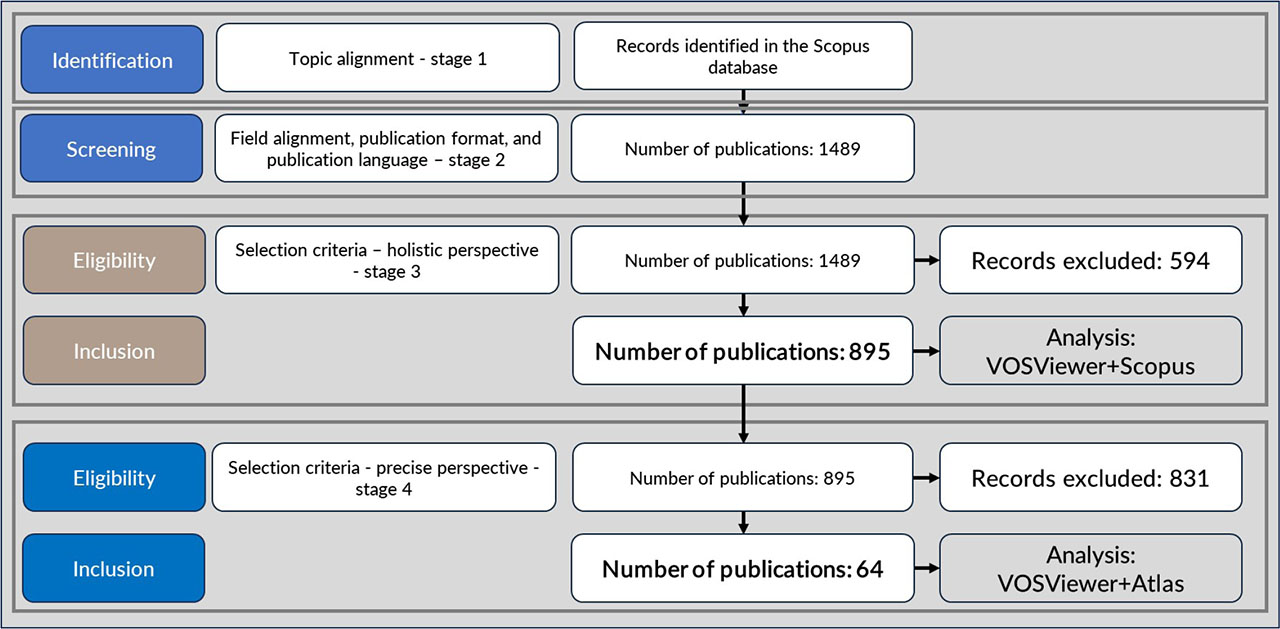
Figure 1.
Modified PRISMA flow diagram used for bibliometric review
Source: Authors’ elaboration.
RESULTS
Holistic Perspective on Open Innovation in Tourism
The number of publications studied, 895 in total, in the analyzed period from 2006 to 2024 indicates their systematic and gradual increase, with the number exceeding 100 works per year since 2019. In the analyzed period, the average number of publications was 47 per year, while the highest number of publications was 189 in 2023. There was an upward trend to the changes in the number of citations (with fluctuations in selected years). The highest number of citations was observed for 2019, when it amounted to 3,814 citations. In total, the works accepted for analysis in the Scopus database had 25,884 citations registered, which, with 895 works, constitutes an average of just under 29 citations per publication (Figure 2). Both the number of publications on the timeline, as well as the number of citations, confirm the growing interest in the topic of open innovation (and related issues) and the rich scientific discussion in the forum of scientific journals.
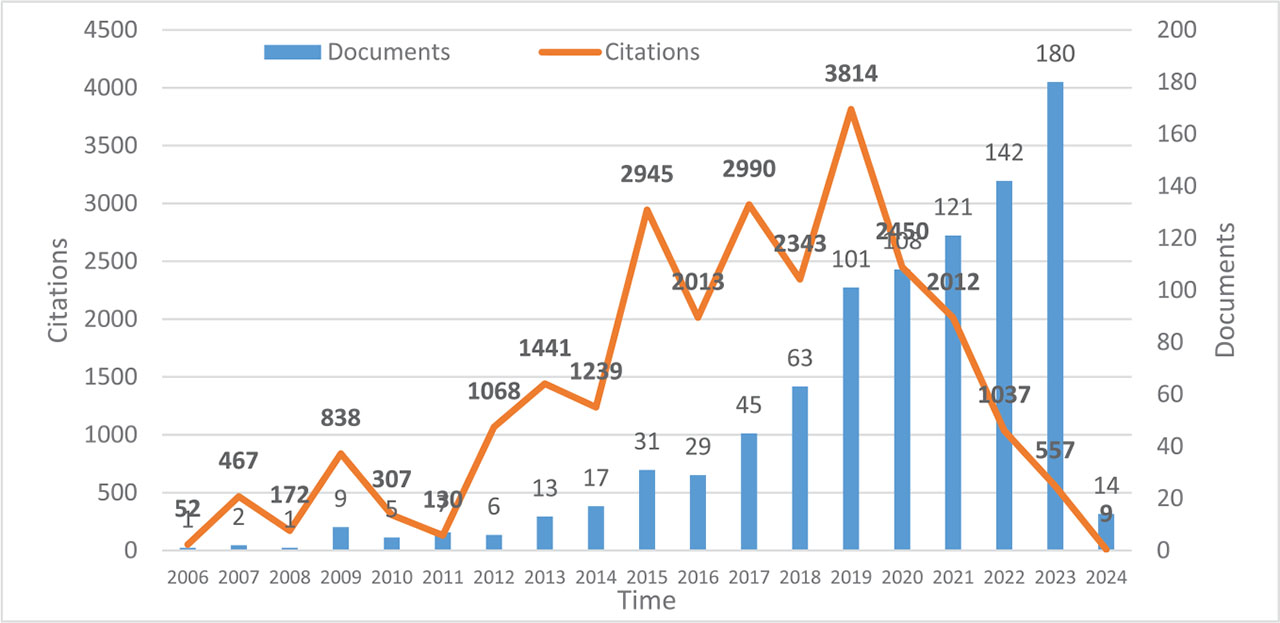
Figure 2.
Scientific production evolution and citation development between 2006 and 2024
Source: Authors’ elaboration.
Adopting the criterion of scientific production volume measured by the number of publications in the Scopus database in the field of open innovation in tourism, three dominant countries exceeding the threshold of one hundred publications can be identified. The data represent the number of documents assigned to countries based on the institutional affiliations of all authors, meaning that in the case of co-authored publications, each country represented by an author is counted as a contributor to that document. In the top three, the United Kingdom (135 publications), the United States (118), and China (109) stand out. In subsequent positions were countries that were represented by more than 50 publications, i.e., Spain (92), Italy (78), Portugal (70), and Australia (55). The list of the top 10 countries with the highest scientific output also includes Taiwan (49), Finland (41), and Sweden (36). The compilation of scientific production in the subject scientific area indicates two interesting features. First, the top three countries represent three different continents—Europe, North America, and Asia; second, the dominance of European countries in the forefront is visible in the top 10 list (Figure 3).
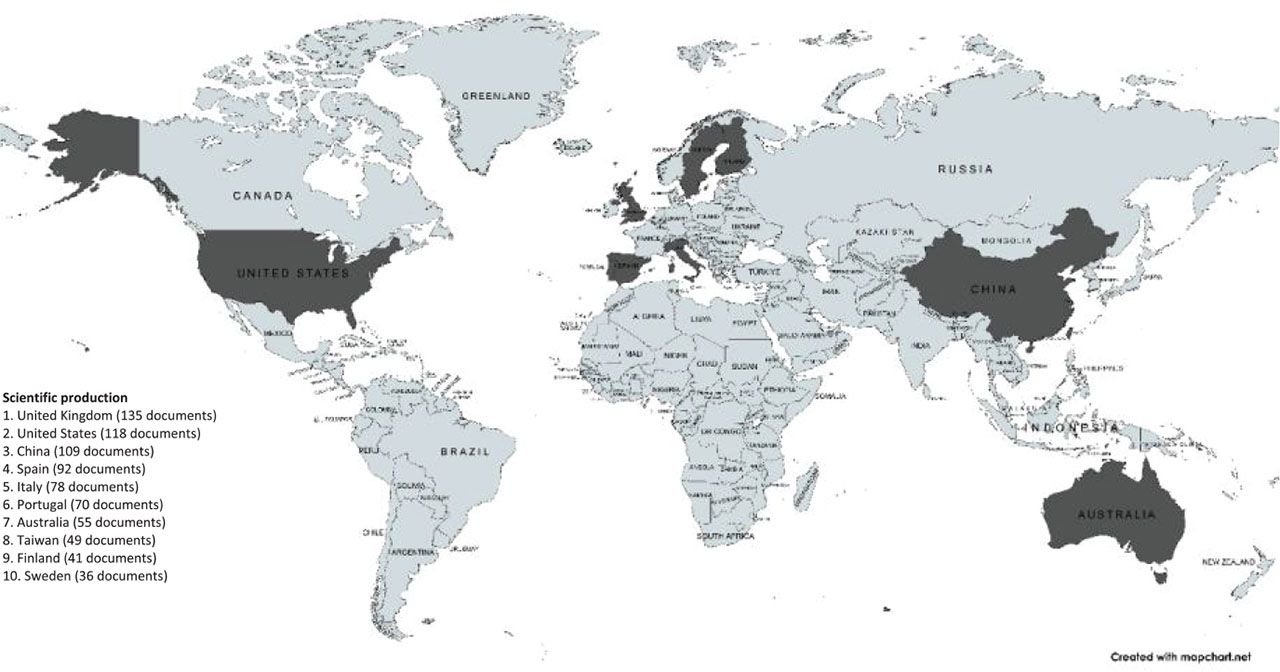
Figure 3.
Top 10 countries in academic output in tourism open innovation based on authors’ national affiliations
Source: Authors’ elaboration (with use of mapchart.net)
Among the most cited publications related to the issues of open innovation, where the adopted holistic perspective resulted in the use of several synonymous terms for this issue, three dominant research directions emerge. The first is undoubtedly smart tourism and technological disruption, represented by the works of Gretzel et al. (2015) (TC (total citations)=1023, C/Y (citations per year)=114) and Buhalis et al. (2019) (TC=355, C/Y=71). This direction emphasizes the strong scientific interest in the technology-driven transformation of tourism, which is strongly reflected in open innovations originally based on technological changes. The second research direction in the presented list is co-creation and customer engagement, which can be found in many publications on this list. This highlights the high value placed on the role of customers in shaping tourist services and the overall tourist travel experience. This direction includes the publications of Grissemann and Stokburger-Sauer (2012) (TC = 473, C/Y=39); Binkhorst and Den Dekker (2009) (TC=466, C/Y=31); and Prebensen, Vittersø, and Dahl (2013) (TC=313, C/Y=28). The third research direction is conceptual advancements in technology-enhanced experiences, emphasizing the inclusion of available and emerging technological solutions in communication processes and engaging interactions with tourists. This direction includes, among others, the works of Neuhofer et al. (2014) (TC=392, C/Y=39), and Neuhofer et al. (2012) (TC=358, C/Y=30).
The journals that published the most works devoted to the studied area can be divided into those oriented towards tourism or hospitality and those of an interdisciplinary nature. The former journals contained in their titles terms relating to tourism, and emphasized the importance of tourism in the scientific debate related to co-creation and open innovation in services. Journals from the first group include the International Journal of Contemporary Hospitality Management (49 publications); the Journal of Hospitality and Tourism Management (28); Tourism Management (26); and Current Issues in Tourism (25). The leading journals publishing the analyzed works also included multi-disciplinary sources, proving that the discussion on co-creation and open innovation transcends industries, combining a broader perspective of management and business sciences. Such journals include Sustainability Switzerland (57); the Journal of Open Innovation: Technology, Market, and Complexity (29); and the Journal of Business Research (16).
Considering the institutional affiliations of the contributing authors and the most productive universities, the Hong Kong Polytechnic University, including the School of Hotel and Tourism Management, is a clear leader with 50 publications, which testifies to its strong position as a global hub in research on co-creation and open innovation in the area of tourism. Other leaders include American universities, represented by the University of Central Florida (22) and the Rosen College of Hospitality Management (18), in the company of European universities, such as the Universidade de Aveiro, including GOVCOPP – Research Unit on Governance, Competitiveness and Public Policies (36), Bournemouth University (20), Universitat de València (17), and the Silesian University of Technology (12). This list also included a university representing the African continent: the University of Johannesburg (11) (Table 1).
Table 1.
The most productive universities by institutional affiliation of contributing authors
| No | Affiliation | Documents |
|---|---|---|
| 1 | Hong Kong Polytechnic University | 33 |
| 2 | University of Central Florida | 22 |
| 3 | Universidade de Aveiro | 22 |
| 4 | Bournemouth University | 20 |
| 5 | Rosen College of Hospitality Management | 18 |
| 6 | Universitat de València | 17 |
| 7 | School of Hotel and Tourism Management, The Hong Kong Polytechnic University | 17 |
| 8 | UiT Norges Arktiske Universitet | 15 |
| 9 | Hanken – Svenska handelshögskolan | 14 |
| 10 | Aalborg University | 14 |
| 11 | GOVCOPP – Research Unit on Governance, Competitiveness and Public Policies | 14 |
| 12 | Silesian University of Technology | 12 |
| 13 | Manchester Metropolitan University | 12 |
| 14 | University of Johannesburg | 11 |
| 15 | Sun Yat-Sen University | 11 |
The network analysis conducted using VOSViewer, based on the co-occurrence of keywords, allowed for the identification of five thematic clusters. The first of these was focused on issues related to value co-creation, where, within this cluster, keywords such as hotel industry, customer behavior, communication, hospitality industry, service-dominant logic, and trust can also be mentioned. In the second cluster, connections with tourist destination, tourism development, tourism market, heritage tourism, cultural tourism, creative tourism, and smart tourism dominated. The third cluster was focused mainly on methodological aspects, with the keywords qualitative analysis, social network, stakeholder, theoretical study, participatory approach, and numerical model. In the fourth cluster, the term co-creation comes to the fore and co-occurs with words such as experience, hospitality, hotel, value, and technology. In the fifth and last of the identified clusters, the concepts concerned the sharing economy, tourism management, Airbnb, authenticity, perception, and value co-destruction (Figure 4).
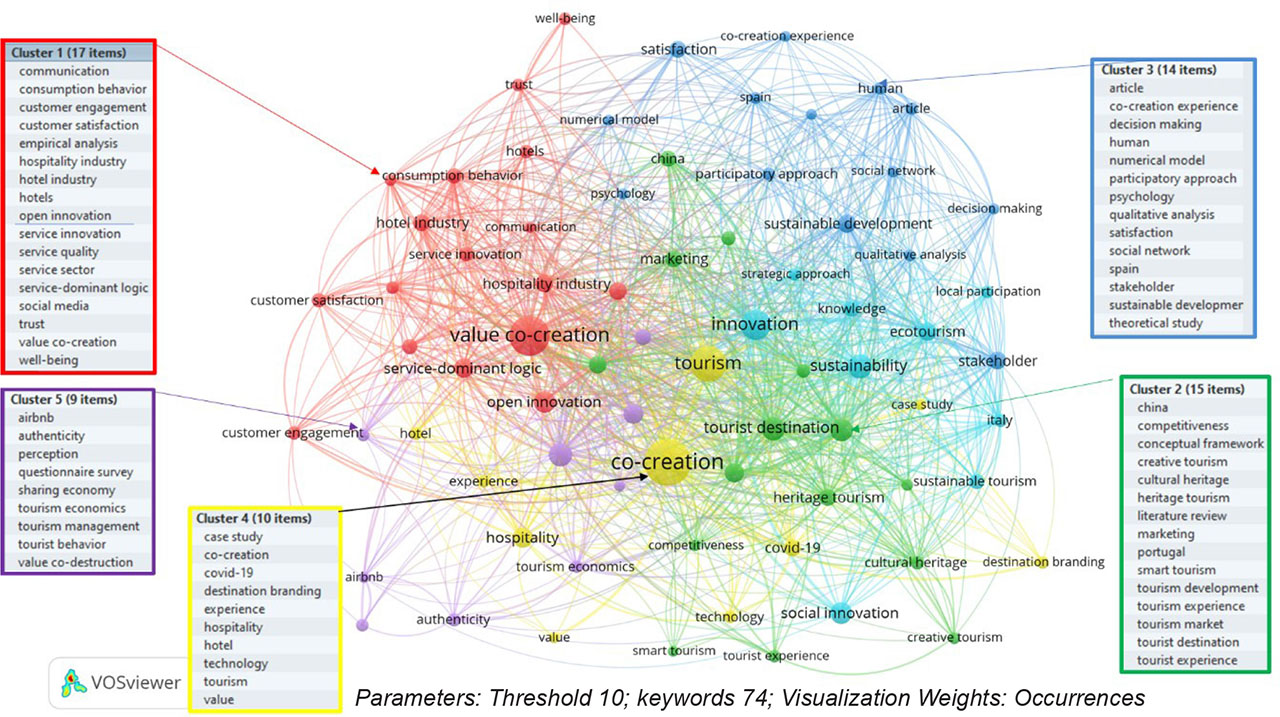
Figure 4.
Keyword network visualization
Source: Authors’ elaboration
Focusing on a holistic perspective on the connection with the keyword regarding open innovation, four emerging research sub-themes functioning in this context can be identified. The first is the location of research primarily in hotel facilities, which is represented in the network by the words hotel, hospitality, hospitality industry, and hotel industry. The second research sub-theme in open innovation is the relationship with clients, represented by concepts such as customer satisfaction and customer engagement. The third theme is the understanding of the relationship between these market parties, which takes place through interaction using social media, which is reflected in the concepts of communication and social media. The fourth research sub-theme related to open innovation in a holistic approach is sustainable development, which can be represented by such keywords as sustainability, stakeholder, ecotourism, and sustainable development (Figure 5). Other significant keywords that have direct links to the term open innovation are co-creation, tourism, and innovation.
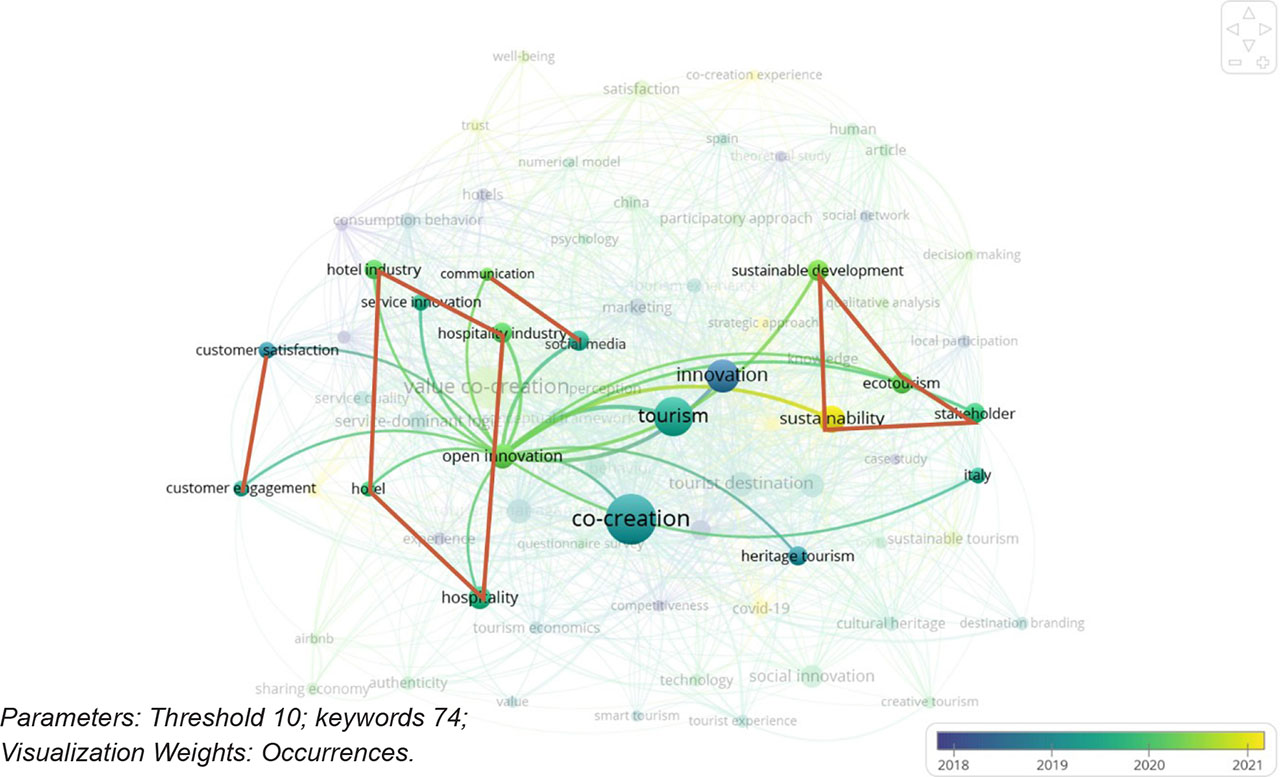
Figure 5.
Network visualization of open-innovation cluster in the context of the whole network
Source: Authors’ elaboration
Figure 6 visualizes the open-innovation keyword density and confirms earlier observations regarding the dominant concepts in the entire network, i.e., the significant role of the issues of co-creation and value co-creation in building innovative solutions in tourism (as evidenced by the red and orange areas associated with the concepts of co-creation, value co-creation, tourism, and innovation). The heat map allows us to state that the concept of open innovation is in close proximity to key issues and is thus strongly conceptually grounded in these concepts.
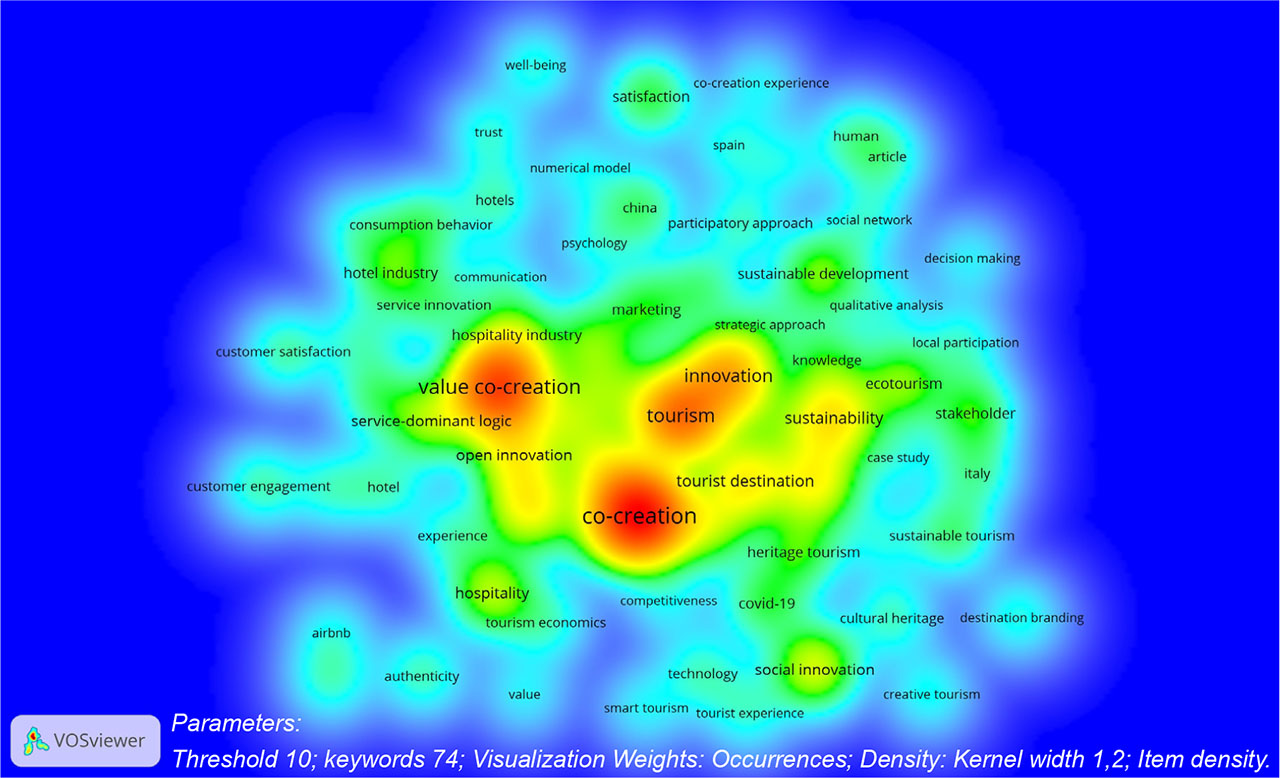
Figure 6.
Visualization of open-innovation keywords density
Source: Authors’ elaboration
An initial conclusion from the holistic perspective on open innovation is that the number of publications in the analyzed thematic scope is constantly growing. Additionally, the most cited publications are devoted to the issue of co-creation, while in overview, open innovations concern the co-creation of sustainable services by customers of the hotel industry using social media for mutual communication.
Precise Perspective on Open Innovation in Tourism
The research in the last stage was carried out on bibliometric data for 64 papers. Among these works, 56 were empirical research articles, five were conceptual works, and three were review works. The analysis of abstracts also allowed us to look at the structure of the works in terms of the type of data used in the documents. Twenty-six publications employed a survey, 16 works were based on secondary data, 15 publications used interviews, while six works declared that they resulted from a (systematic) literature review, and four works were prepared on the basis of observations. It should be emphasized that multiple authors used of several methods in their works. In the case of analysis methods, case studies were primarily used (13 works identified), six works used structural equation modeling (SEM), four works used descriptive statistics, two works used fuzzy set qualitative comparative analysis (fsQCA), and two works used qualitative text analysis. In other cases, no clearly defined research methods were identified. The collected data indicate that these publications are mainly based on an exploratory approach, searching for and exploring the essence of open innovations in the tourism industry.
The publications subjected to analysis appeared beginning in 2009 (one item) and in the next eight years only six publications appeared. A significant increase in the number of publications is noticeable from 2018, reaching the most in 2022, 17 works (which constitutes 25.56% of all analyzed documents). The next two years show lower values, which may result from the moment of collecting bibliometric data, i.e., February 2024 (Table 2).
Table 2.
Time and volume of scientific production
| Year | 2009 | 2010 | 2015 | 2016 | 2017 | 2018 | 2019 | 2020 | 2021 | 2022 | 2023 | 2024 |
|---|---|---|---|---|---|---|---|---|---|---|---|---|
| Number of papers | 1 | 1 | 3 | 1 | 1 | 3 | 7 | 7 | 11 | 17 | 11 | 1 |
The focus of these publications’ research is also noteworthy. One-fourth (25%) of the works were devoted to the analysis of the individual (mainly the consumer, but there were also works concerning the individual in the organization—employees). The level of the organization (enterprise) was the focus of 45% of the analyzed publications, while less than one-third (30%) of the studied documents focused on the development of open innovations in the context of a tourist destination (region or city).
The prepared network of keywords related to tourism and open innovation allows us to state the existence of six thematic clusters, while there is also some differentiation in the number of keywords in them (Figure 7). Thus, the main cluster based on open innovations (cluster 2) also includes such issues as openness, overtourism, tourism impact, open innovations and creativity. Cluster 1 contains concepts related to collaboration, communication, knowledge sharing, networking, social media and co-creation. Cluster 3 includes, among others, business performance, hotel and hospitality industry, and service innovation. Cluster 4 was created by the following concepts of business models, digital transformation in tourism, management, and web 2.0. Cluster 5 consists of three terms: competitive advantage, corporate risk management, and hotel industry. Cluster 6 also consists of three elements: coupling coordination, sustainable development, and tourism industry. The structure of this network emphasizes the interdisciplinary nature of the research conducted on open innovations in tourism, combining issues of cooperation and knowledge exchange with hotel innovations, digital transformation, risk management, and sustainable development of tourism.
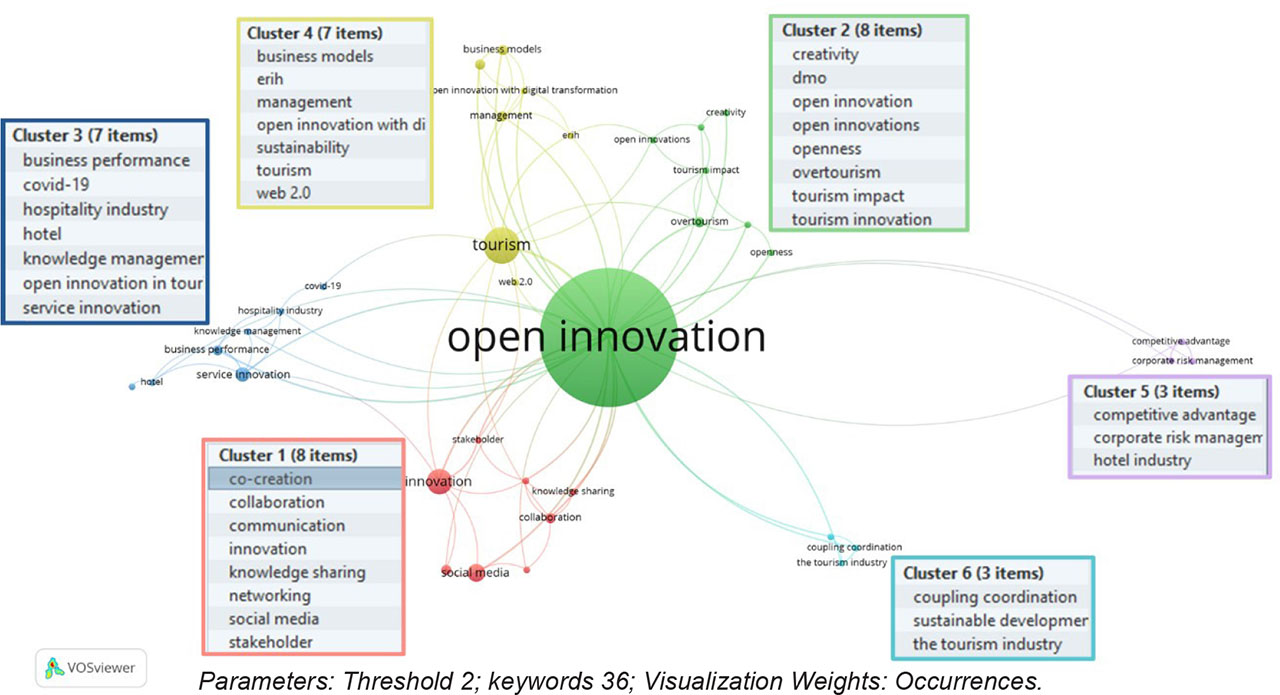
Figure 7.
Visualization of the keyword network of open innovation in tourism
Source: Authors’ elaboration
Looking at the dominant keywords on the timeline, one can point to initial (2019) research on open innovation in tourism in connection with business models, social media, collaboration, and knowledge sharing. This leads to a transitional period (2021) where concepts such as “coupling coordination in tourism,” “digital transformation,” “overtourism,” and “creativity” begin to play a role online. Keywords visible in the latest publications (2023) relate to “knowledge management,” “business performance,” “competitive advantage,” and “corporate risk management.” It can be stated that the changing keywords online represent the continuous development of the research topic dedicated to open innovation in tourism (Figure 8).
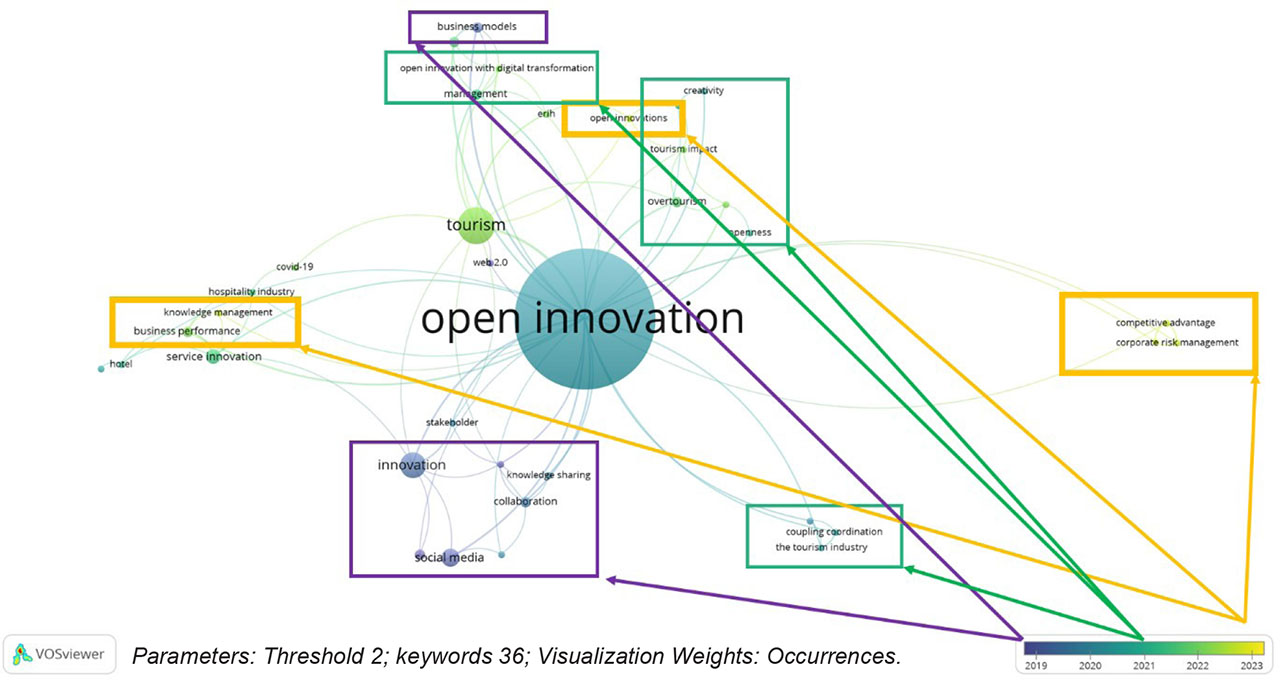
Figure 8.
Visualization of the keyword network over time
Source: Authors’ elaboration
A word cloud generated from keywords found in the analyzed 64 scientific publications dedicated to open innovation in tourism (Figure 9) reveals key issues located in the center of this cloud and similar to the central concept of open innovation. Among these issues illustrating the research conducted, words related to knowledge management and sharing, the online world, data and users, as well as risk management, strategy building and achieving results in the tourism business in the era of smart tourism are visible.
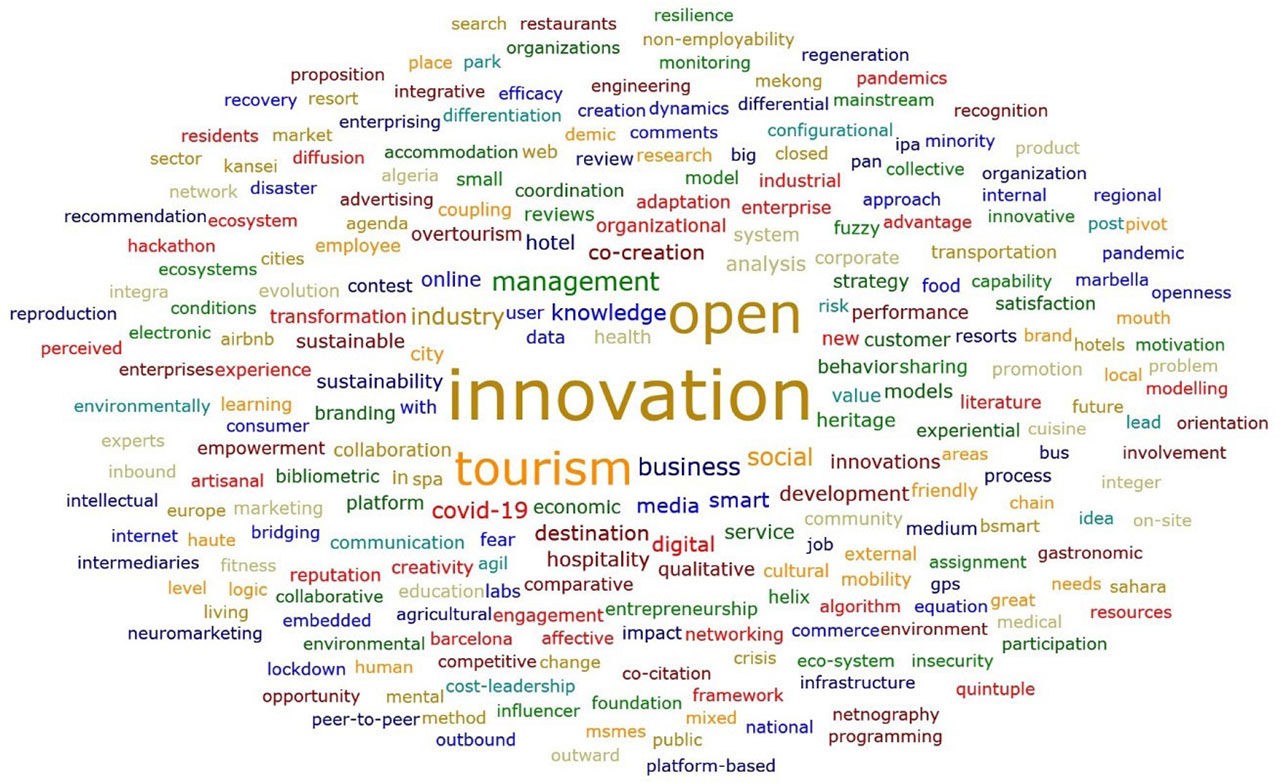
Figure 9.
Word cloud from abstracts of 64 papers related to open innovation in tourism
Source: Authors’ elaboration
Conclusions from the precise perspective (stage four) of bibliometric analysis of literature on open innovation in tourism indicate that the vast majority of the analyzed publications are of a research (empirical) nature. Less than half of the analyzed publications were based on survey data, while every fifth paper used case studies. On average, five publications were created per year in the analyzed period, and most (17 articles) were published in 2022. Most publications concerned open innovation at the organizational level (companies, e.g., hotels). The topics of publications on open innovation focus on six related areas (clusters). The oldest publications analyzed concerned business models in connection with cooperation with stakeholders and the use of social media and knowledge sharing. The latest publications indicating future possible research paths in this area concern company risk management with open innovation while ensuring competitive advantage. The second such separate trend seems to be knowledge management with open innovation while ensuring business results.
DISCUSSION
The bibliometric analysis conducted in this study offers a comprehensive overview of the evolving landscape of open innovation research within the tourism sector. By employing a two-tiered approach, encompassing both a holistic perspective and a precise examination of publications explicitly referencing “open innovation in tourism,” this study has identified key trends, research gaps, and potential directions for future research.
The holistic analysis, which included related concepts like co-creation and collaborative innovation, revealed a substantial and steadily growing body of literature. This surge in publications and citations, particularly evident since 2019, underscores the increasing recognition of innovation’s pivotal role in the tourism industry. These studies align with the dynamic growth of scientific production in the form of research articles, as presented in the bibliometric analysis by Della Corte et al. (2019) on open innovation in sustainable tourism. A significant similarity can be observed in the upward trend during the period covered in their study (1992–2019), which highlights the increasing number of publications on open innovation. Although their perspective focused on sustainable tourism, both studies confirm growing interest in the topic of open innovation within this industry. The geographic distribution of research highlights the global relevance of this topic. Furthermore, the identification of prominent research directions, such as smart tourism, co-creation, and technology-enhanced experiences, demonstrates the multifaceted nature of innovation in this sector. These findings reflect the industry’s rapid adaptation to digital advancements and the growing emphasis on customer engagement and personalized experiences. With regard to journals specializing in the broad field of open innovation, a strong alignment can be observed between the findings of this study and the one by Mota et al. (2024). The keyword network visualizations enabled the identification of distinct thematic clusters, thereby setting conceptual boundaries for OIT while simultaneously highlighting areas where practitioners can seek innovative solutions within the tourism sector. The delineated research sub-themes (such as hospitality, social media, and customer relations) outline future academic trajectories in the context of OIT, and concurrently define potential directions for strategic engagement within the socio-economic environment. Furthermore, the strong conceptual grounding of OIT in co-creation concepts provides the theoretical foundation necessary to treat OIT as a distinct research stream (Bogers et al., 2018).
However, the more precise analysis, which focused solely on publications explicitly using the term “open innovation in tourism,” provided a more nuanced picture. While the broader field of innovation in tourism exhibits robust growth, research specifically addressing open innovation within tourism companies remains relatively scarce. This disparity reveals a significant research gap, particularly concerning the application of open innovation strategies by tourism SMEs. The prevailing focus on destination-level studies, as opposed to business-level investigations, suggests a need for more granular analyses of how individual tourism enterprises leverage open innovation to enhance their competitiveness and sustainability. This is also evident in the study by Della Corte et al. (2019) on open innovation, where among the eight identified key thematic areas (so-called “motor themes”), one clearly pointed to “destination,” while none directly referred to business activities. In this regard, the present study may contribute to a new perspective on existing research topics in the context of the utilization and development of open innovation in tourism. The identification of six distinct clusters reinforces the scientific interdisciplinarity of the OIT research stream, while simultaneously providing guidance for socio-economic stakeholders to consider integrating OIT into their decision-making and operational processes. Moreover, the thematic evolution, presented graphically in a precise approach, confirms the dynamic development and maturation of the OIT domain.
The identification of leading research centers and scholars through this bibliometric analysis facilitates potential collaborations and knowledge exchange, fostering a more interconnected and dynamic research community. Moreover, the analysis of keyword networks provides valuable insights into the intellectual structure of the field, enabling researchers to identify emerging themes and potential areas for future investigation. The examination of publication characteristics, such as article type, data type, and analytical methods, sheds light on the methodological approaches employed in this research domain, contributing to a deeper understanding of the methodological rigor and diversity in this research area.
In addressing the stated aim of this study, it should be noted that, based on the performed bibliometric analysis, knowledge was expanded by identifying a literature gap concerning open innovation application at the business level within the tourism sector. Concurrently, the results imply that the knowledge structure is insufficiently developed regarding conceptual frameworks for SMEs and lacks an adequate technological perspective.
The bibliometric analysis performed allows us to confirm that the number of publications and citations exhibited a systematic upward trend throughout the studied period. Peak values were recorded in 2023 (189 publications) and 2019 (3,814 citations), thereby validating the increasing academic interest in the topic of Open Innovation in Tourism (OIT) and the intensifying scholarly discourse (RQ1). Furthermore, the study identified the United Kingdom, the United States, and China as the leading nations in scientific production, with The Hong Kong Polytechnic University recognized as the most productive institution (50 publications) (RQ2). The keyword network analysis facilitated the identification of five main thematic clusters, primarily focusing on value co-creation, destinations and specialized tourism, methodological aspects, experience and technology, and the sharing economy and tourism management (RQ3). Publications explicitly dedicated to OIT were predominantly empirical articles (56/64), relying mainly on survey data (26 works) or interviews (15 works), with case studies being the dominant analytical method (13 works), focusing primarily on the organizational level (45%) (RQ4). Among the works directly addressing OIT, six thematic clusters were distinguished, linking open innovation concepts with collaboration and communication, service innovations in the hospitality industry, business models and digital transformation, competitive advantage and risk management, and sustainable development (RQ5). The analysis of OIT-dedicated publications revealed a clear thematic evolution over time, progressing from initial studies on business models and social media (2019), through digital transformation and overtourism (2021), up to the latest publications focusing on knowledge management, business performance, and corporate risk management (2023) (RQ6).
In summary, the insights gained from this study provide a solid foundation for future research endeavors, facilitating a more nuanced and comprehensive understanding of open innovation’s role in driving sustainable growth and competitiveness within the tourism sector.
CONCLUSIONS AND FUTURE RESEARCH
This bibliometric review of open innovation in tourism has provided valuable insights into the current state of research and identified key areas for future exploration. The analysis, conducted in two distinct phases, has revealed both the breadth and depth of research in this field, while also highlighting significant gaps that require further attention.
First, the holistic analysis demonstrated a strong and growing interest in innovation within the tourism sector, encompassing a range of related concepts. This surge in publications and citations underscores the industry’s recognition of innovation as a critical driver of competitiveness and sustainability. The global distribution of research, with leading contributions from major academic centers, highlights the international significance of this topic.
Second, the more precise analysis, focusing specifically on publications that explicitly use the term “open innovation in tourism,” revealed a more concentrated but limited body of literature. This analysis highlighted a significant research gap concerning the application of open innovation strategies by tourism companies, particularly SMEs. While destination-level studies are prevalent, there is a clear need for more research that examines how individual tourism businesses can leverage open innovation to enhance their competitiveness and sustainability. Moreover, the observed thematic changes, presented graphically on networks in a precise approach, confirm the dynamic development and maturation of the OIT research area.
As with any scientific study, this work has certain limitations. The conscious identification of these is fundamental to the proper interpretation of the results obtained.
One set of constraints relates to the methodological and scope delimitations. This study utilized a single bibliometric database (Scopus) and was based exclusively on full-text English-language articles. This approach was scientifically justified due to the interdisciplinary nature of research on open innovation (at the intersection of management, economics, and tourism), where English-language publications with high impact factors and citation rates predominate.
Furthermore, this research focused solely on journal articles, intentionally excluding monographs, book chapters, and conference proceedings. These publication types may contain groundbreaking concepts (monographs) or novel thematic approaches (conference proceedings), which represents a potential gap in capturing the full spectrum of knowledge.
In addition, the limitations of the bibliometric method itself must be acknowledged. These include the inherent exclusion of a substantive evaluation of the content of the studied publications (i.e., qualitative analysis). The method concentrates on the structures of the adopted parameters and publication patterns, rather than on the in-depth interpretation of individual works.
The final limitation concerns the precision and consistency of titles, abstracts, and keywords (metadata) assigned by the authors of the works. This may inevitably lead to the failure to capture synonymous topics or newly emerging terms. However, this risk was partially and consciously mitigated by implementing a two-stage research procedure—a holistic approach followed by a more precise one.
Based on these findings, several key conclusions and future research directions can be outlined. First, the tourism sector is increasingly recognizing the importance of innovation, but the application of open innovation principles at the business level requires further exploration. Future research should focus on developing frameworks and models that specifically address the unique challenges and opportunities faced by tourism SMEs in implementing open innovation strategies.
Second, there is a need for more research that focuses on the specific challenges and opportunities faced by tourism SMEs in implementing open innovation strategies. Specifically, studies could investigate the role of collaboration networks, knowledge sharing mechanisms, and resource constraints in facilitating or hindering open innovation adoption by SMEs.
Third, future research could explore the role of emerging technologies in facilitating open innovation within the tourism sector, as well as the potential of open innovation to drive sustainable tourism practices. This includes investigating the impact of AI, blockchain, and big data analytics on open innovation processes, and examining how open innovation can contribute to the development of sustainable tourism products and services.
Finally, research could focus on the impact of cultural and institutional factors on the adoption of open innovation in different tourism contexts. Comparative studies across diverse regions and countries could provide valuable insights into the contextual factors that influence open innovation outcomes.