
INTRODUCTION
Intellectual property encompasses a collection of privileges, rights, and responsibilities that arise from creative and intellectual endeavors (Biga, 2017, p. 17). As the importance of knowledge increased, intellectual property transcended the boundaries of jurisprudence and became an object of study in economics, management, and business practice (Rivette & Kline, 2000; Dereń & Skonieczny, 2024). For example, Chesbrough and Ghafele (2014) highlight the need to shift perspective and view intellectual property through the management paradigm. In their opinion, such a perspective allows us to utilize intellectual property and unlock its full potential properly. Other authors stress that intellectual property is an important component which builds an organization’s value and future productivity (Dereń & Skonieczny, 2024; Heim, 2023; Galbreath, 2005). The concept of intellectual property rights relies on the exclusivity principle, which guarantees the right-holding organization’s monopoly on using the goods concerned. The monopoly in question strengthens the organization’s market position, while the property-related nature of the rights allows for their trade and commercialization (Dereń, 2011).
The generation of goods protected by intellectual property, especially by copyrights, characterizes the cultural sector’s activity (Towse 2011). In a knowledge-based economy, cultural institutions can be seen as leaders that continuously generate and distribute intellectual property. Already, the specific nature of this sector determines the protection of rights. Consequently, we should treat intellectual property as a basic component in the activity of every cultural institution. Moreover, the institutions’ managers ought to pay particular attention to intellectual property from the very beginning when making their decisions regarding cultural and economic activity (Hołda 2020, 199).
Curiously, the management of intellectual property rights is seldom studied from a management perspective, especially in public and nonprofit organizations. The situation stems from the specific nature of those bodies. While business entities seek mainly how to maximize profit (Stankiewicz 2002). Nonprofit institutions and organizations receiving state subsidies focus on achieving educational and artistic objectives that promote and safeguard cultural heritage (Varbanova 2015, 73). Thus, intellectual property rights hold significant value to cultural institutions because they enable effective and efficient accomplishment of those institutions’ mission. The possibility of trading, commercialization, and generating profit does not contribute to this perceived value (ffrench et al. 2019). Latest studies on the use of intellectual property rights confirm the significance of these intangible assets in all areas of museum activity (Pluszyńska 2024).
Scholars have long highlighted the significance of intellectual property rights in museums, underscoring their role in management (Pantalony 2013; Pluszyńska 2022). Managing intellectual property rights involves intentional and strategic creation, acquisition, and development of these rights to fulfill the institution’s mission. Rina Pantalony (2013) lists several reasons why the management of a museum’s intellectual property rights proves advisable. First, the application of coherent rules adopted in the entire organization reduces the risk of infringing on the rights. Second, a strategic approach to the management of intangible assets enables the museum to assess the potential to accomplish its mission. Third, a consistent approach to decision-making in this scope ensures quality throughout the organization, and the adopted rules guarantee that decision-making follows a consistent set of standards. Fourth, clear guidelines of using the rights promote the exploration of resources among audiences and foster educational activity.
Although the latest sources analyze the issue of intellectual property in museum management, its multidisciplinary and dynamic nature requires continuous, in-depth analysis in light of developments in management practices, museology, technology, and legislation. Due to the short-sighted approach to intellectual property management (Pluszyńska, 2023) and the uncertainty stemming from the current legal framework, museums find it difficult to seek and implement effective solutions in society’s interests (Benhamou & Ferland, 2022). The development of intellectual property management in museums is based on assimilating implemented solutions. Thus, we should continuously monitor and critically compare the latest concepts and practices present in global literature. This analysis draws on management, law, and museology literature to highlight key knowledge areas, research gaps, and links between theory and practice in this interdisciplinary context.
METHOD
Knowledge on intellectual property management in museums remains difficult to access due to the interdisciplinary nature of the field. This study utilized a systematic literature review to reveal the main areas discussed. A systematic review allows the combination of insights by synthesizing theories (Tranfield, Denyer, & Smart, 2003, p. 220). In the traditional approach, a systematic review serves as a tool to summarize the findings of positivist and quantitative research, such as medicine (Geraldi, Maylor, & Williams, 2011). Management has also successfully employed systematic review for many years (Lenart-Gansiniec, 2021). This method provides transparency, clarity, equality, and accessibility, offering a unified and focused approach (R. Thorpe et al., 2006). Moreover, scholars can effectively conduct a thematic mapping of the research field and adopt a holistic perspective (Sirelkhatim & Gangi, 2015). Therefore, a systematic review allows one to avoid the traps of a narrative literature review, which sometimes elicits criticism regarding a supposedly biased or limited selection of the works discussed (Petticrew and Roberts 2008).
This article adopts the five-step method for conducting a systematic review, as outlined by Denyer and Tranfield (2009): (1) develop one or more research questions, (2) identify relevant studies, (3) choose and assess the studies, (4) interpret and combine the findings, and (5) present and apply the outcomes. I based the research questions on my long-term studies conducted between 2021 and 2025, as well as the analysis of publications, interviews, and expert reports, with sources cited in the article. The questions were as follows:
- Which areas currently see the development of literature on intellectual property management in museums?
- What are the research gaps regarding intellectual property management in museums?
Afterwards, I selected the databases to use. Those included the Web of Science (WoS) and Scopus electronic databases, as they provide an optimum balance between research quality and the range of exploratory search (Palmaccio, Dicuonzo, and Belyaeva 2021). Scholars highlight that Scopus indexes most of the research items indexed in WoS (V. K. Singh et al., 2021). Therefore, I also used EBSCO as a third database to ensure additional verification. I chose these databases for their high comprehensiveness and reliability of metadata, and due to their application in other similar studies of business and management. To ensure transparency and repeatability, I applied the PRISMA method, developed by Moher et al. (2009) and typically used in systematic reviews and meta-analyses (Fig. 1).
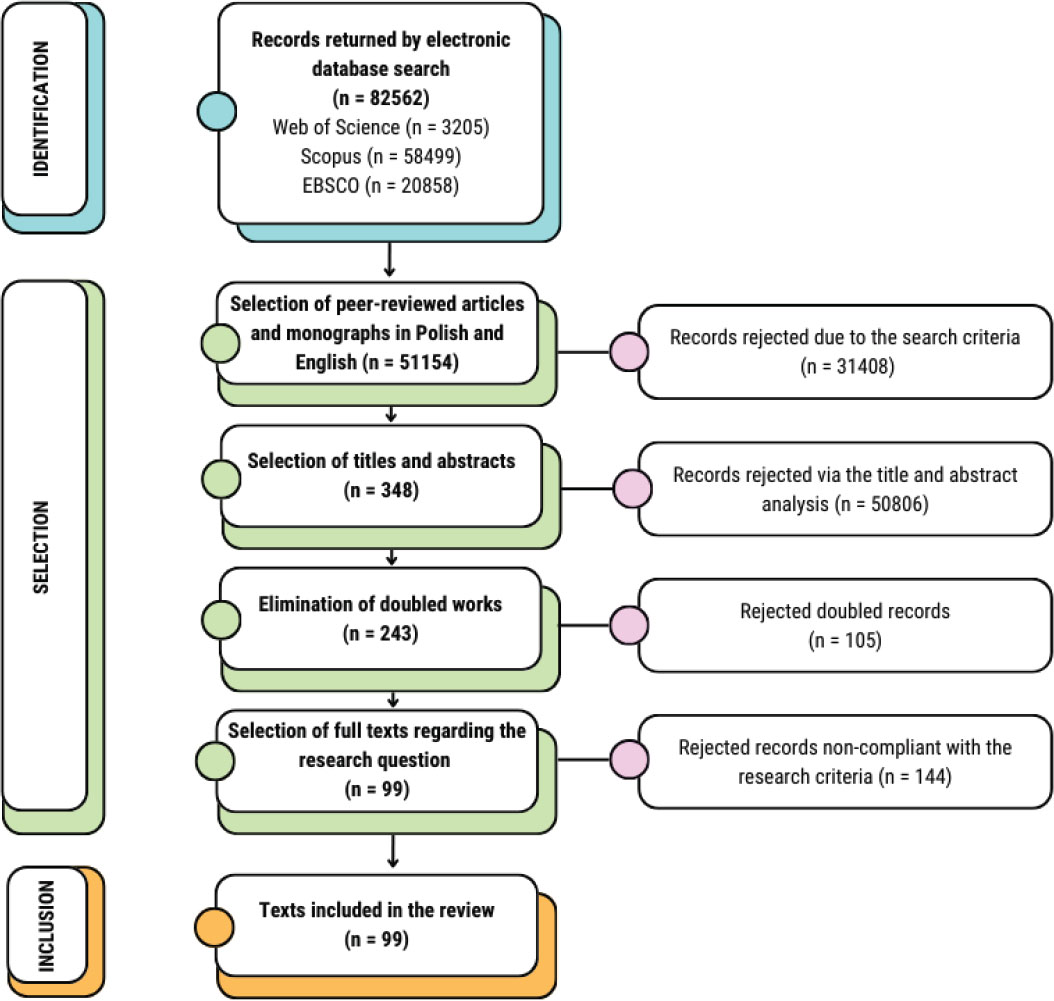
Figure 1.
Diagram depicting the process of literature search and selection
Source: own study
Because literature on intellectual property management remains scattered and focuses on specific aspects or legal contexts, I conducted a thorough, systematic literature review to cover the topic comprehensively. Although such an approach may yield less relevant items – a problem I address below – it produces more exhaustive and comprehensive findings (Lenart-Gansiniec 2021, 84). To include the highest possible number of accurate results, my choice of keywords in Polish and English partly relied on Boolean search – that is, I applied the “AND” operator and truncation (*) (Table 1). For English, I used both “intellectual property” and “copyright” because the literature commonly uses these terms interchangeably.
The study took place from July 1, 2024, to September 10, 2024. I identified a total of 82,562 records: 58,499 in Scopus, 3205 in WoS, and 20,858 in EBSCO. After a preliminary search, I applied inclusion and exclusion filters. Thus, my further analysis covered only complete texts: monographs, monograph chapters, and articles published in peer-reviewed journals. Due to linguistic limitations, I sought only publications in Polish or English. To include all relevant texts, I set no specific period and instead considered all works published in the first half of 2024. Given the interdisciplinary nature of the research area, I consciously left the discipline/field aspect unrestricted, too. This way, after eliminating irrelevant publications, I obtained 51,154 records for further analysis.
When reviewing the titles and abstracts, I identified a difficulty that forced me to check each one carefully, making the task incredibly time-consuming. Precisely speaking, numerous abstracts contained formal information about the publication’s copyright owner. Consequently, the word “copyright” did appear in those records, even though it had no connection with the publication content. Having selected the titles and abstracts this way, I obtained a total of 348 records. After eliminating duplicate items, I included 243 records in the full-text eligibility analysis. At that stage, I checked if they met the inclusion criteria regarding the research question. The full-text analysis excluded publications that marginally mentioned the topic of interest to me. Consequently, I omitted texts that only explained the legal aspects or discussed other fields than culture. However, I did include publications that pertained to any of the organizations jointly signified by the acronym GLAM (Galleries, Libraries, Archives, and Museums). Thus, the final review covered 99 texts.
RESULTS
The Evolution of Publications
The first work appeared in 1994, and the number of texts slowly grew each year, culminating in 2022. The results show that intellectual property in museums attracted scholarly and practical attention, especially during the COVID-19 pandemic and in the post-pandemic period (Chart 1).
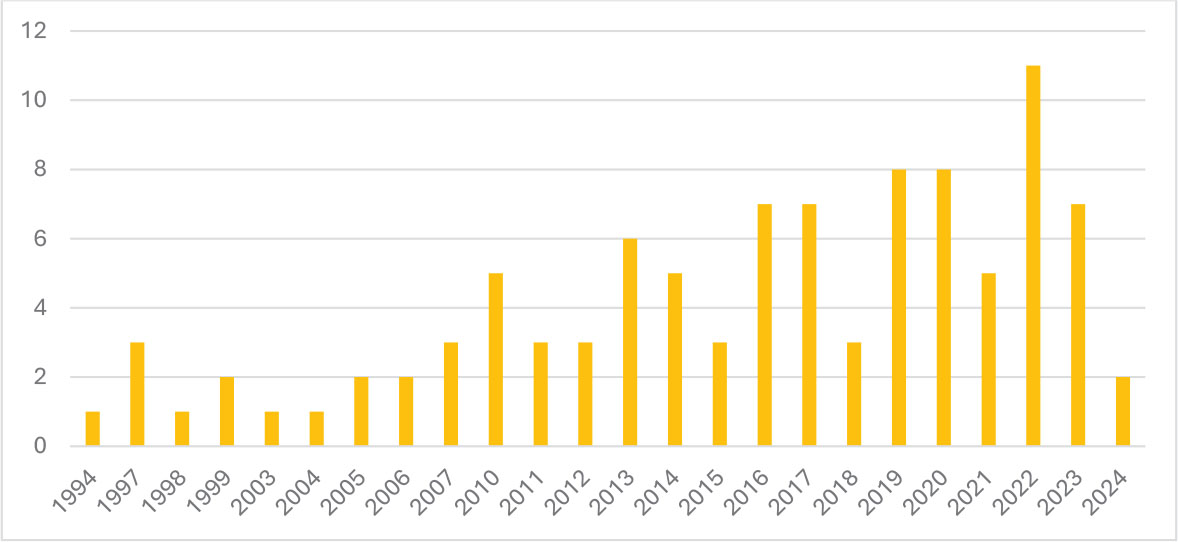
Chart 1.
Article frequency per year
Source: own study
The Impact of Publications
To determine the most impactful publications, I used the citation number as a measurement. I applied data collected from Google Scholar – the leading citation database – as of January 7, 2025 (Baima et al., 2021). Table 2 presents six publications whose citation number approaches or exceeds 100. The remaining texts have 70 or fewer citations, including five works with zero citations. Importantly, the most frequently cited studies appeared in the years 2005–2011, when intellectual property in the broadly defined cultural sector began to gain significance, particularly in connection with the development of digitization and digitalization.
Table 2.
List of most frequently cited publications
| Author(s) | Title | Year | Journal | Citation number | |
|---|---|---|---|---|---|
| 1 | Dan Hunter | “Culture War” | 2005 | Texas Law Review | 518 |
| 2 | Joseph Fishman | “Creating around Copyright” | 2015 | Harvard Law Review | 135 |
| 3 | Carmen Camarero | “Assessing the Impact of Organizational Learning and Innovation on Performance in Cultural Organizations” | 2010 | International Journal of Nonprofit and Voluntary Sector Marketing | 132 |
| 4 | Tom Evens, Laurence Hauttekeete | “Challenges of Digital Preservation for Cultural Heritage Institutions” | 2011 | Journal of Librarianship and Information Science | 122 |
| 5 | Margee Hume, Michael Mills | “Building the Sustainable iMuseum: Is the Virtual Museum Leaving Our Museums Virtually Empty?” | 2011 | International Journal of Nonprofit and Voluntary Sector Marketing | 92 |
| 6 | Theresa McNichol | “Creative Marketing Strategies in Small Museums: Up Close and Innovative” | 2005 | International Journal of Nonprofit and Voluntary Sector Marketing | 92 |
Author Impact and Affiliation
The results confirm that none of the 159 authors covered in the review stands out in terms of productivity in the area. Table 3 lists the names of ten authors who have published more than one article concerning intellectual property management in museums. On average, one author has published only two or three works on the topic. These data prove that few specialized authors study the field in question. This scenario should motivate more researchers and practitioners to direct their future studies toward this field, thereby advancing its development, particularly considering the minimal barriers to entry (Massaro, Dumay, & Guthrie, 2016).
Table 3.
List of authors with the highest number of publications
| Country | Publication number | Publication dates | ||
|---|---|---|---|---|
| 1 | Anna Pluszyńska | Poland | 3 | 2020, 2021, 2023 |
| 2 | Rita Elster Pantalony | USA | 3 | 2016, 2016, 2019 |
| 3 | Cristiana Sappa | France | 2 | 2022, 2023 |
| 4 | Anne M. Young | USA | 2 | 2016, 2019 |
| 5 | Alexander Cuntz | Switzerland | 2 | 2021, 2023 |
| 6 | Matthias Sahli | Switzerland | 2 | 2021, 2023 |
| 7 | Hairong Jing | China | 2 | 2022, 2022 |
| 8 | Liutao Zhao | China | 2 | 2022, 2022 |
| 9 | Jiawan Zhang | China | 2 | 2022, 2022 |
| 10 | Jeremy Rees | Great Britain | 2 | 1994, 1998 |
Chart 2 shows that American authors have the greatest interest in this topic. Besides the USA, the debate on intellectual property management in museums and culture involves scholars from 29 countries. This number suggests that the matter holds global relevance. Still, greater involvement by authors affiliated with underrepresented or nonrepresented countries would foster understanding of this topic in underdiscussed contexts and offer a fresh perspective on those areas.
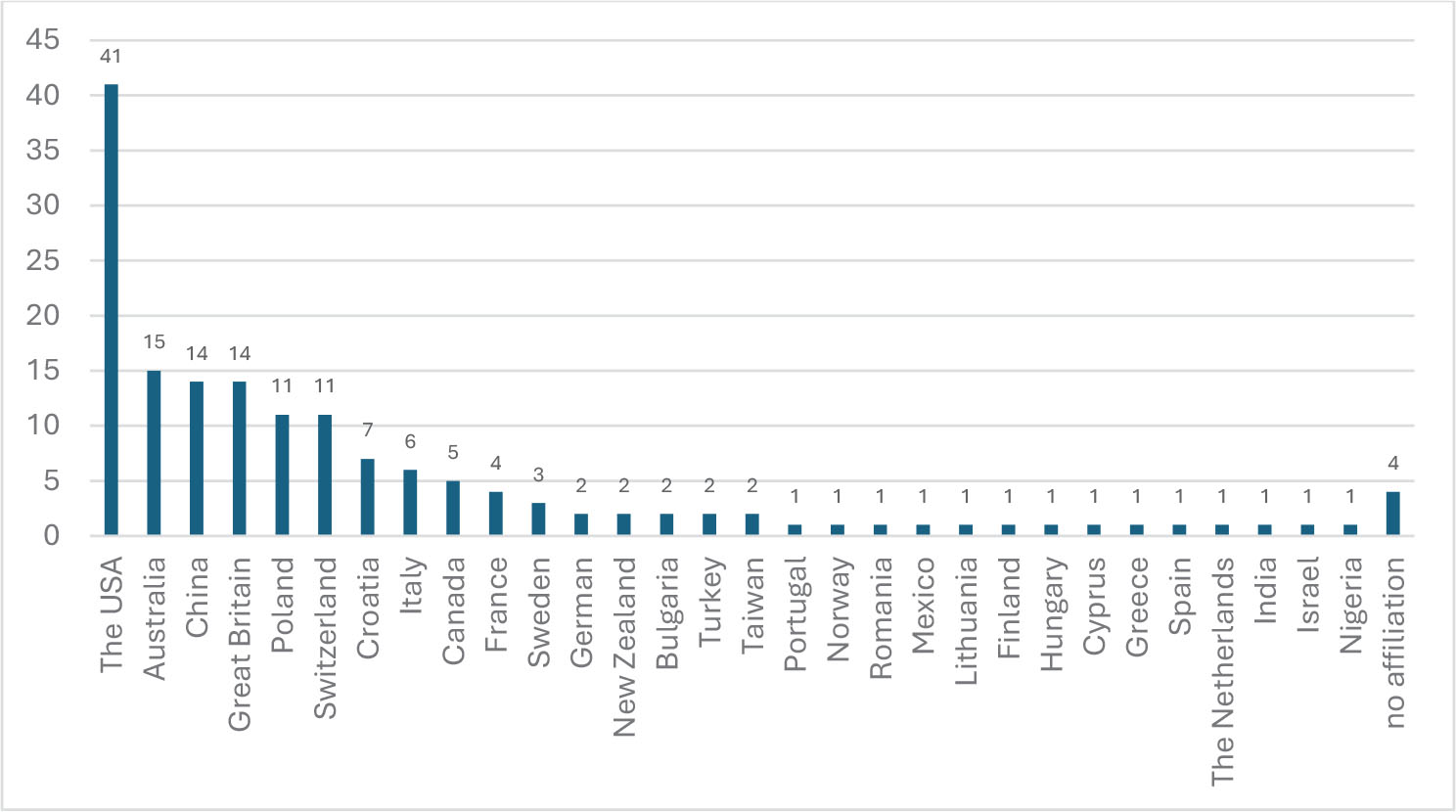
Chart 2.
Publications per country based on the authors’ affiliation
Source: own study
Interestingly, 42% of publications are case studies. The highest number of the cases described comes from the USA, followed by Australia, Canada, and Poland (Chart 3).
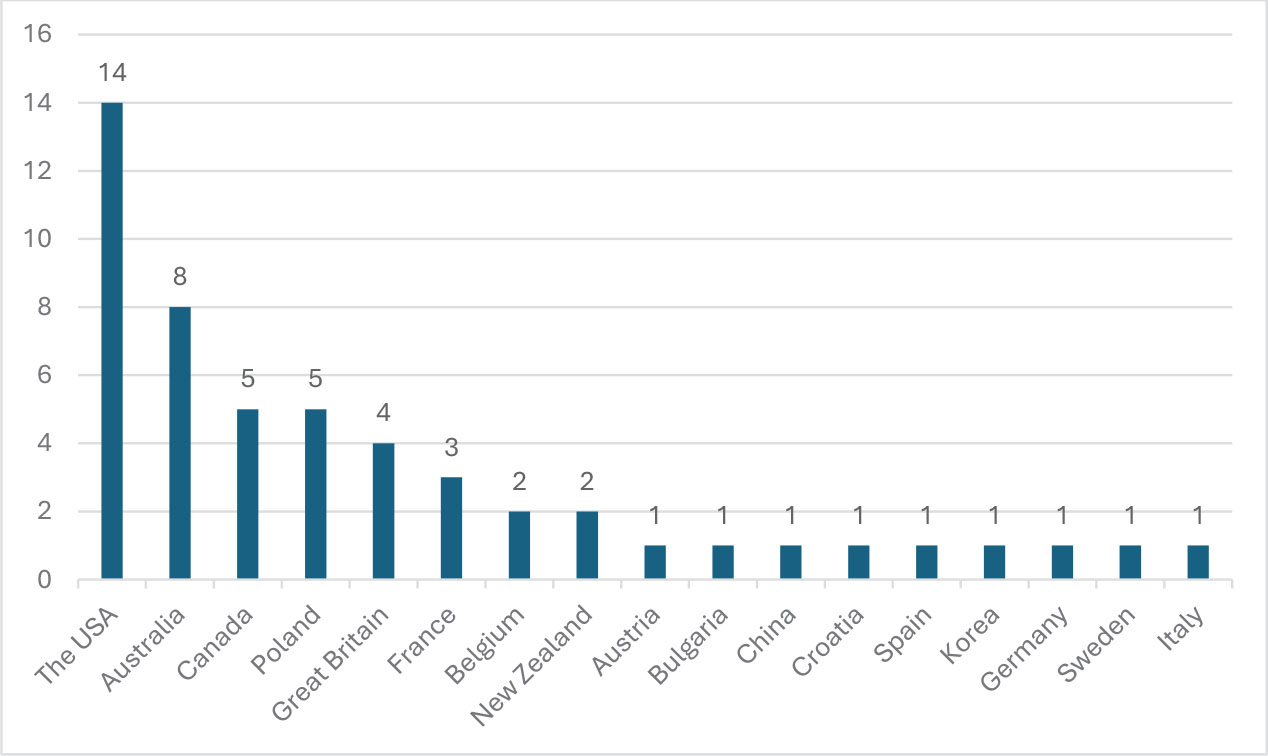
Chart 3.
Case studies in the publications
Source: own study
Journals and Citation Impact
No journal stands out in terms of the number of publications on intellectual property management (Table 4). The number of texts on this topic always equals three or fewer. The most impactful and frequently cited journal is the International Journal of Nonprofit and Voluntary Sector Marketing, as already confirmed in Table 2.
Table 4.
Journals according to the publication number and the citation number
| Journal | Publication number | Total citation number | |
|---|---|---|---|
| 1 | International Journal of Nonprofit and Voluntary Sector Marketing | 3 | 316 |
| 2 | Museum International | 3 | 76 |
| 3 | Museum Management and Curatorship | 3 | 73 |
| 4 | Visual Resources | 3 | 31 |
| 5 | VRA Bulletin | 3 | 3 |
| 6 | Journal of Cultural Heritage | 2 | 90 |
| 7 | Journal of Library Administration | 2 | 45 |
| 8 | Journal of Documentation | 2 | 28 |
| 9 | Santander Art and Culture Law Review | 2 | 18 |
| 10 | Economic Research Working Paper | 2 | 14 |
| 11 | Art Documentation: Journal of the Art Libraries Society of North America | 2 | 12 |
| 12 | Journal of Intellectual Property Law & Practice | 2 | 8 |
| 13 | Journal of Intellectual Property Rights | 2 | 5 |
| 14 | GRUR International | 2 | 4 |
Subject Matter Analysis of the Systematic Literature Review
To begin with, literature contains few publications that discuss intellectual property/copyright management in museums as their main topic and do so in a possibly exhaustive manner (Pantalony 2013; Young 2019; Pluszyńska 2022). Still, a subject matter analysis of the material obtained reveals three perspectives of discussion:
intellectual property as a museum’s asset;
intellectual property management as a process composed of functions;
the cultural organization – mainly a museum – as an entity dealing with intellectual property.
Below, I describe and characterize these three perspectives.
Intellectual Property as a Museum’s Asset
“Museums are a powerful interface between creators and end users of all sorts, and in that interface, copyright constantly hovers in the background” (Keshet, 2018, p. 254). Scholars highlight that the knowledge on intellectual property in GLAM institutions has recently gained importance (De Armond et al., 2019). Rediscovered during the development of digitization and technology (Borissova, 2018; Pantalony, 2016; Daigle, 2012), the significant role of intellectual property became even more prominent during the COVID-19 pandemic (Klinowski & Szafarowicz, 2023).
Intellectual property primarily pertains to creative results ownership, which entails searching, collecting, describing, documenting, preserving, restoring, and digitizing cultural heritage, along with its commercial and promotional use (Borissova 2018). Authors describe intellectual property as a tool to secure, preserve, and protect cultural values (Rub, 2019; Borissova, 2018; Wendland, 2004), effectuate commercialization, generate value (Wang, Chen, & Deng, 2021; Borissova, 2018; Pantalony, 2016; Chen, 2011; Handke, 2010), and encourage further creativity (Wendland 2004).
The most frequently listed type of intellectual property rights is copyrights to museum collections (Sappa, 2022; Pluszyńska, 2020; Evens & Hauttekeete, 2011)–both in the context of contemporary art (J. Rees, 1994) and public domain (Petri, 2014). Because literature on intellectual property management remains scattered and focuses on select aspects or legal contexts, I conducted a thorough and systematic search to cover the topic comprehensively (Sappa, 2023; Appel, 1999), and the pandemic exposed long-term neglect in this regard (Pluszyńska, 2022). Although to a limited extent, literature does discuss the matters of employee works, databases, new technologies – including software, museum names/logos, and other identification marks such as domain names – and architecturally valuable museum buildings (Szatkowska, 2023; Borissova, 2018; Pantalony, 2016; Evens & Hauttekeete, 2011). In rare cases, authors indicate that museum collections also store and promote new technical solutions, know-how, trade secrets, or business models (Borissova, 2018).
Numerous publications describe the idea of intellectual property rights and the political, economic, and social context explaining their origin (Menard, 2016; Chen, 2011). Scholars note that the protection of intellectual property arose mainly as a means to pursue two contradictory goals: private interest and public good (Coad 2019; Jones 2016; Menard 2016; Fishman 2015; Hunter 2005). At the same time, they keep debating whether the current legal framework remains accurate in view of mass digitization (Menard, 2016; M. A. Brown & Kenneth, 2011). The discussion underscores the significant role museums play in this tension, forced to reconcile these contradictory yet interconnected interests as part of their own mission (Arthur et al., 2024; Vučković, Kanceljak, & Jurić, 2021; Coad, 2019).
Literature frequently describes intellectual property rights as an obstacle or challenge to overcome while obtaining works, conducting digitalization, designing exhibitions, making digital resources available to the public, or even managing those resources in the long term (Sappa, 2023; Sappa, 2022; Jagielska-Burduk & Jakubowski, 2020; Evens & Hauttekeete, 2011). Authors also investigate the challenges concerning moral rights, especially regarding the differences in the approach pursued by European countries and those governed by the copyright law (Jones, 2016; Evens & Hauttekeete, 2011).
Functions of Intellectual Property Management
The literature review revealed seven functions that produce the process of intellectual property management in museums. These include: 1) verification of rights; 2) acquisition of rights; 3) the museum’s use of rights; 4) granting permissions/licenses; 5) digitalization; 6) making resources available – both those protected by rights and those in the public domain; and 7) control of rights.
Nonetheless, identifying intellectual property rights in museums before their use is an essential process that requires a specific level of expertise (Borissova, 2018). Numerous publications highlight that verification of rights consumes time and resources (Sappa, 2022; Evens & Hauttekeete, 2011). In some cases, verification proves virtually unattainable, especially regarding archival materials and orphan works – namely items whose authors remain impossible to determine or contact (Bayrou, 2022). The difficulty stems from the lack of data and access to information on the current legal status of collections (De Armond et al., 2019). Verification of rights also becomes problematic with new types of objects, which raise a concern regarding litigation risk (A. J. Rees, 2021). Moreover, museums lack qualified staff, including for the position of intellectual property specialist (Young, 2019). Besides time, verification of rights requires diligence, and the existing research standards governing copyright assessment and documentation remain insufficient (De Armond et al., 2019).
Finally, verification entails one more significant aspect: the acquisition and collection of metadata on intellectual property rights and their standardization (Roued-Cunliffe, 2020; De Armond et al., 2019; Evens & Hauttekeete, 2011; Nevile & Lissonnet, 2006). These data are crucial, particularly in scholarly communications, in which many expect that visual works properly attribute source, provenance, and authorship (Thornton, 2015; as cited in De Armond et al., 2019).
Regarding the following function, namely the acquisition of rights, authors commonly discuss various aspects of licenses, formulate practical recommendations, and explore the possibilities and challenges inherent in open licenses, especially regarding Creative Commons (Roued-Cunliffe, 2020; Evens & Hauttekeete, 2011). Negotiations with parties to obtain consent for the protection of rights are the priority in this area. However, the task frequently becomes problematic, for instance, due to a conflict between the artist and the organization (Evens and Hauttekeete 2011). Some scholars openly state that “the contract is a necessary evil” and that successful negotiations should rely on personal trust between the parties (Jones, 2016).
Regarding the use of intellectual property rights, museums act in diverse ways, including reproduction of works or making them available to the public, whether on site or online. Moreover, museums themselves create numerous works which the law considers copyright-protected (Young, 2019), and then use those for educational, marketing, publication, and other purposes. The scientific discourse analyzes the challenges museums face when applying legal exceptions (Sappa, 2022; Bayrou, 2022), managing orphan works (Sappa 2023; Evens & Hauttekeete, 2011; Teng, 2007), resorting to fair use (Cuntz & Sahli, 2021; Chandler, 2016), or employing public domain (Petri, 2014).
The responsibility required in the cases of orphan works, legal exceptions, and fair use closely connects to the issue of risk management. According to scholars, museums perceive intellectual property rights in two ways: as an asset that offers broad possibilities regarding the use of collections, and as a threat that “freezes” activities in fear of potential infringement and liability (Klinowski & Szafarowicz, 2023; A. J. Rees, 2021). The literature indicates that museums and other nonprofit organizations exhibit relatively low risk tolerance (Garrido & Camarero, 2010). These varying levels of comfort regarding risk render some museums less inclined than others to make their collections available online (De Armond et al., 2019; Dryden, 2014). In fact, authors admit that museums tend to adopt one of two approaches. The first approach entails accepting the law and strictly adhering to its provisions. The second attitude relies on risk management and making an effort to minimize the possibility of litigation on the part of right owners (Corbett, 2013). Stobo and colleagues (2018) argue that the skill to react to risk predominantly stems from the institution’s organizational capacity. Other authors go a step further and state that this kind of organizational reluctance to accept risk thwarts the ability to learn and create an environment that favors research and development oriented toward product or business innovations (Garrido & Camarero, 2010).
The discussion of granting permissions/licenses typically assumes the form of practical recommendations, including listing the advantages and disadvantages of solutions (Courtney, 2015; Young, 2019; Borissova, 2018). Some texts provide examples of museum activities that allow users to retrieve specific cultural values on site or that reproduce cultural values for the purposes of commercial, training-oriented, or traditional exhibitions. These texts notice that the permission-granting procedures usually have to follow a special regulation (Borissova, 2018).
The next function of intellectual property management discussed in literature is digitalization, namely a process which creates an electronic copy of an analog data carrier by scanning or another reproduction method. In this sense, digitalization fulfills two goals: safeguarding cultural heritage for future generations and ensuring access to cultural assets (Marcum, 2007; as cited in Borissova, 2018). Literature often describes digitalization using the language of benefits (Corbett, 2013), and the COVID-19 pandemic undoubtedly accelerated the digitalization movement regarding museum collections, since numerous museums worldwide had to close their facilities to visitors (Bayrou 2022; Pluszyńska 2022). Still, authors highlight that digitalization yields manifold challenges in terms of organization, technology, and finance (Garvin, 2019; Evens & Hauttekeete, 2011). Other scholars reflect on the selection of objects for this process (Dryden 2014; Evens and Hauttekeete 2011), reminding the readers that some items resist digitalization (Arthur et al., 2024). Moreover, digitalization does not produce “eternal carriers”; instead, it requires constant updating of methods, infrastructure, and practice (Evens & Hauttekeete, 2011; Anderson, 2003).
According to the literature, copyright law remains the main obstacle to the mass digitalization of cultural works (Stobo et al., 2018). “At the present stage, the relationship between intellectual property and digitalization still lacks full legal regulation.” (Borissova 2018). Consequently, museums’ actions continue to depend on internally made decisions. In this regard, authors pose two chief questions: 1) Does law permit the digitalization of collections for documentation and/or promotion purposes? 2) Does digitalization, whether 2D or 3D, produce a new right of the creator, for example, the photographer? As shown by a chronological analysis of the texts, nowadays researchers do not doubt that museums can digitize – and do digitize – their collections for documentation purposes. However, the ability to display the digitized collections and the rules that should govern this activity still provoke divergent opinions (see also below). Interestingly, we observe an increasing acceptance of the view that 2D digitalization lacks the hallmarks of creativity and thus protection does not apply. However, authors disagree whether copyright law protects, for instance, a three-dimensional photograph of a work of art, such as a sculpture (Pittman, 2020; Jones, 2016). Consequently, museums worldwide follow various decision-making practices in this scope, and digitalization keeps shedding light on new tensions in the relationships between right owners and cultural heritage institutions (Vučković, Kanceljak, & Jurić, 2021).
Regarding the making available of collections, scholars frequently refer to the museums’ mission, discuss the inherent challenges, and ponder the possibilities of digital availability as a form of decentralized curatorship and participation (Katyal. 2017). The analyses of making collections available also consider new technologies, such as digital and social media, mobile applications, multimedia installations, interactive games, virtual technology, or augmented reality. The purposes of all these means include providing the audience with additional experiences (Valtolina, 2016).
According to literature, legal status does affect the digital availability of museum objects (Cuntz, Heald, & Sahli, 2023; Bayrou, 2022). Some authors argue that intellectual property remains the greatest obstacle to digitalization and online availability, besides insufficient staffing and financial resources (Benhamou & Ferland, 2022). Consequently, numerous museum collections remain hidden from public view (Zhao et al., 2023; Benhamou & Ferland, 2022). Museums often avoid digitizing and displaying works that remain subject to copyright law and for which they have not acquired rights (Evens & Hauttekeete, 2011). This situation stems from the “simplicity” that underlies numerous digitalization and availability projects – that is, museums first digitize large, readily available, and previously verified collections (Näslund & Wasielewski, 2020; Salamon-Cindori, Tot, and Zivkovic, 2014). Moreover, the results of existing research indicate that digitized collections are predominantly presented in the largest and specialized museums (Salamon-Cindori, Tot, & Zivkovic, 2014).
Importantly, scholars do not analyze whether museums should make their collections available at all, because the answer seems obvious. Instead, they discuss how facilities can best make objects available to the public (Valeonti, Terras, and Hudson-Smith 2020). In this scope, we observe two clear approaches. The first one strives for openness, which entails respecting the public domain or taking actions based on the mechanisms of copyright law flexibility and open licensing tools. The second stance shows more distrust toward openness, viewing intellectual property rights as a tool to control the scope of making works available and generate income. Researchers examining this topic recognize both approaches, though they often emphasize or critique one more strongly (Lucia, Dore, & Umar, 2024; Sganga et al., 2023; Roued-Cunliffe, 2020; Hoster, 2020; Pittman, 2020; Garvin, 2019; McCutcheon, 2018; Katyal, 2017; Corbett, 2013; Boyle, 2008; M. A. Brown & Kenneth, 2011; Tanner, 2004). Interestingly, we still lack research that would confirm which approach is the leading one. Although the pandemic has made digitalization and online availability favor the public interest at the cost of creators’ rights (Klinowski & Szafarowicz, 2023). This phenomenon has not evolved into a permanent tendency. Isolated texts highlight that while museums often provide free online access to their digital resources, they simultaneously limit the manner of use, for example, by prohibiting reproduction or alteration (M. A. Brown & Kenneth, 2011). Therefore, we observe partial openness regarding availability.
Regarding the control of rights, literature typically defines it as a process that develops and implements tools for conducting searches, granting and refusing access to digital content, or using such content in the digital environment (Borissova, 2018). Authors describe intellectual property management also as a form of controlling the use of resources, mainly digital works (Sappa, 2023). This particularly applies to commercial use (Pittman 2020; McCutcheon 2018; Wendland, 2004) and appropriation (Cuntz & Sahli, 2021; Markellou 2013). Employing the legal measures, museums adopt an approach based on control, understanding the latter as a traditional way of managing rare resources such as cultural goods (Sappa, 2023). Some scholars admit that the fear of losing control over the exclusivity of cultural goods and related information is typical of cultural heritage institutions, including museums. Indeed, museums believe that, as the exclusive holders of those unique and rare resources, they enjoy a competitive advantage and occupy a unique position in society and on the market. Still, we can notice numerous opinions that the control-based approach remains, first and foremost, a time-consuming and costly task (Valeonti, Terras, & Hudson-Smith, 2020).
The Museum as an Organization Dealing with Intellectual Property
Literature frequently stresses the specific role of museums: although they act in the public interest, their very existence depends on the collections owned (Hume & Mills, 2011; McLean 1994). Intellectual property rights often constitute a bridge between the collection and the audience. After all, there exists no straightforward guide for copyright (De Armond et al., 2019, p. 54). Every institution faces different challenges, even if they all pursue the same mission of wide access (Pluszyńska, 2023). Developing a strategy or policy of intellectual property management forms an important aspect of an organization’s functioning (Pluszyńska, 2022; Borissova, 2018; Pantalony, 2013). Scholars often explore this topic by providing case studies, recommendations, or examples of processes leading to the creation of such a strategy or policy (Benhamou & Ferland, 2022; Pluszyńska, 2022; Pluszyńska, 2020; Young, 2019; Courtney, 2015; Rossetti & Soleau, 2014; Marvin, 2013).
Another perspective employed to analyze intellectual property management involves cultural staff. First and foremost, literature underlines the challenges stemming from overburdening museum employees with numerous responsibilities (Greffe, Krebs, & Pflieger, 2017; Appel, 1999) and from the decreasing number of experts necessary to obtain items for collections, secure rights to the items, or verify those rights (Evens and Hauttekeete 2011; Graham and Jomphe 2010). Authors also state that the staff of cultural institutions need better support regarding both their jobs (Graham & Jomphe, 2010) and the acquisition of knowledge and competence, especially regarding copyright literacy (Yordanova Todorova et al., 2017). Moreover, museum employees responsible for intellectual property management do not necessarily have to be – or even should not be – members of the bar. Rather than lawyers, this specialization demands persons with interdisciplinary knowledge and soft skills. Certainly, rights and reproduction specialists need to know the law in force, but the primary requirement for this position is the knowledge of collections, organizational culture, and ethical principles that govern museum work. Only with such knowledge and competence can these experts efficiently pursue their institutions’ mission, legal objectives, and ethical goals while minimizing the risk of infringe ment claims and thus protecting the museum’s image (Young, 2019).
The literature underscores that the development of digital culture questions the traditional role of museums and their curators as exclusive conservators and interpreters of collections. Consequently, authors encourage collaboration and interaction with the stakeholders (Benhamou & Ferland, 2022). Some publications analyze the positive aspects of public-private partnerships, such as the development of copyright-protected innovative solutions and services that offer high value to digital heritage (Evens & Hauttekeete, 2011).
Scholars also devote much attention to the rights of indigenous peoples and to collaboration between museums and communities. In this area, intellectual property often entails the necessity of accepting that an indigenous community has the right to regularly access and use nonmaterial heritage, as well as to spread this heritage and related rights (K. Thorpe & Booker, 2022; Leischner, 2022; Swan & Jordan, 2015; Kennedy & Laczniak, 2014; Wendland, 2004). Numerous texts consider the practical aspect of making decisions about the research (Laforet, 2014; La Follette, 2013), acquisition (Corbett, 2013), and digitalization (Prażmowska 2020; S. Singh, Blake, & O’Donnell, 2013) of objects coming from indigenous populations. The prevalent opinion stresses the need to follow a flexible approach that balances the rights of indigenous owners of traditional cultural works with the public interest in culture (OYELUDE, 2023; Corbett, 2013).
Another aspect in this sphere concerns the technical means of content protection, including watermarks (Li et al., 2008), systems, or software (Valtolina 2016; Young and Horowitz 2016), where authors indicate the advantages and disadvantages of each option (Menard 2016). The most frequently described solutions include developing non-fungible tokens (NFTs) and using blockchain technology for copyright registration. Scholarship primarily emphasizes the technologies’ merits in protecting rights, securing collection exchange, and enabling digital authorization (Zhang & Li, 2024; Zhao et al., 2023; Ferro et al., 2023; Jung, 2023; Zhao, Zhang, & Jing, 2022; Mucchi, Milanesi, & Becagli, 2022; Wang, Chen, & Deng, 2021).
Finally, literature discusses the financial aspects of intellectual property management. Researchers often mention the difficult financial situation of museums (Woodward, 2012), particularly after the outbreak of the COVID-19 pandemic (Wang, Chen, and Deng 2021), and analyze examples of introducing self-financing mechanisms (Sappa, 2023; Hume & Mills, 2011). The public goal of nonprofit museums characterizes this type of organization and distinguishes them from profit-oriented entities (Jones, 2016); but intellectual property monetization in museums forms yet another topic that reveals opposite approaches. Some texts indicate that some museums cringe at the mere thought of commercializing their intellectual property, and argue that enforcing the rights generates high costs, while the social gain may prove relatively low (Pantalony 2016; Handke 2010). Other studies observe that assuming control over the resources – even despite the possessed copyrights – and making works available against remuneration provides museums with an important source of income (Garvin, 2019; J. Rees, 1994). Compared with other entities, museums show the greatest fear of the costs associated with losing control over the reuse of works. This fact attests to the persistence of masked anxiety regarding the economic aspect (Sappa, 2023).
DISCUSSION
My systematic literature review confirms that the term “intellectual property management” primarily evokes associations with legal and, to a lesser extent, technological aspects rather than with management itself. We can distinguish three perspectives on exploring the topic in question. First, researchers define intellectual property as a valuable asset that cultural institutions can and should manage to accomplish their mission in a sustainable manner (Pluszyńska, 2020; Evens & Hauttekeete, 2011). Second, the texts reviewed describe intellectual property management in terms of its various functions, such as the verification, acquisition, and use of rights by museums, granting permissions/licenses, digitalization, making available both right-protected resources and those in the public domain, and the control of rights. Whether this list of functions is exhaustive remains hard to establish. Importantly, though, some of them still await a detailed and comprehensive analysis – an obvious research gap we need to fill in the future. Third, the authors present the museum as a cultural organization that addresses intellectual property rights and focuses on issues such as developing strategies or policies, collaborating with stakeholders, staffing, finance, and even technology.
In conclusion, the literature focuses on copyright issues in museum collections and on museums’ activities related to the digitalization of works and their availability. As shown by the literature review, reflection on other types of intellectual property rights, such as rights to employee works, databases, trademarks, or know-how, and the fulfillment of other management functions, including the acquisition of rights or the storage of right-related data, remains underdeveloped. Characteristically, intellectual property management provokes numerous – and often opposite – approaches and behaviors, such as openness versus isolation, availability versus control, or commercialization versus security.
Therefore, the literature analysis shows that intellectual property management in museums covers a wide range of legal and organizational issues, as well as diverse institutional practices and strategies shaped by dynamic legal, technological, and social changes. The variety of topics, perspectives, and solutions addressed in the literature reflects the complexity and multifaceted nature of the field. To confirm this conclusion, I developed a word map based primarily on the titles, abstracts, and keywords of the analyzed texts (Fig. 2).
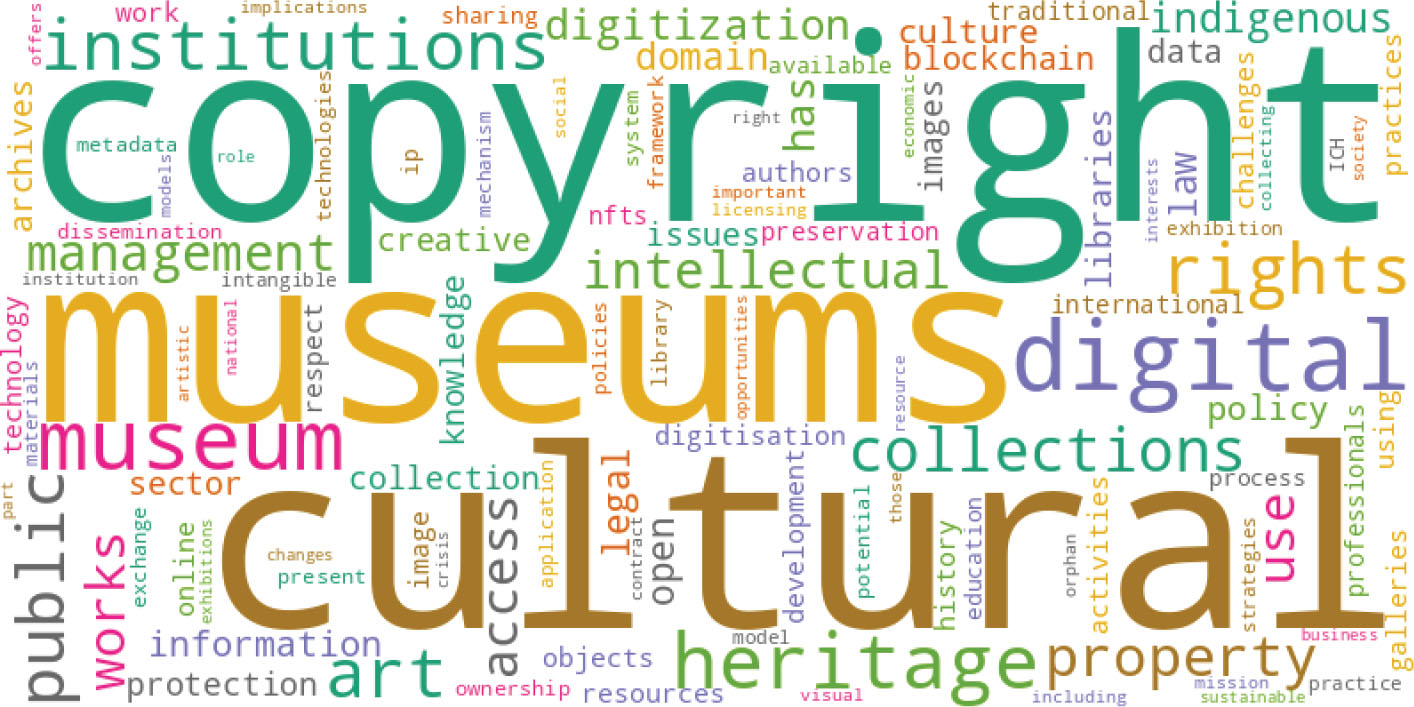
Figure 2.
Map of keywords
Source: own elaboration
All in all, intellectual property management in museums still requires systematization and thorough analysis. The topic is important because appropriate management of rights allows an institution to collaborate with its environment and stabilize its own operation effectively (Pluszyńska 2024). To fill the abovementioned research gap, scholars should investigate intellectual property management in museums from the perspectives of organization theory, resource theory, and process management.