Have a personal or library account? Click to login
Sustainable management in the time of uncertainty on the cruise shipping market Cover

Sustainable management in the time of uncertainty on the cruise shipping market

Open Access
|Dec 2022

Figures & Tables

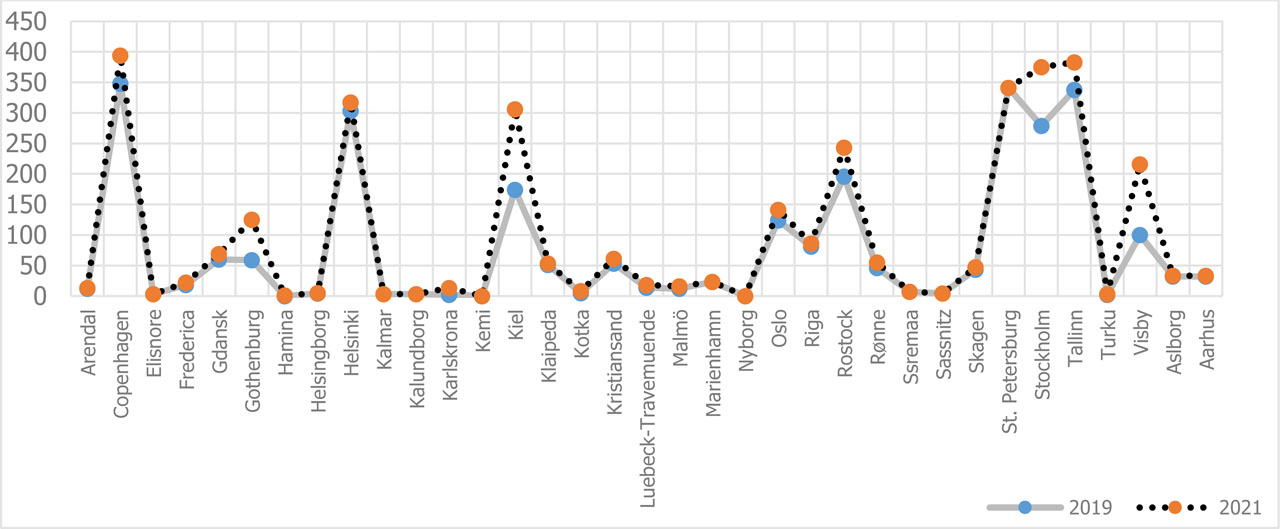
Figure 1

Cruise ship calls in NE in 2019 and 2021 – results of Covid’19.Source: own elaboration based on (Cruise Baltic, 2021, Cruise Baltic, 2022).
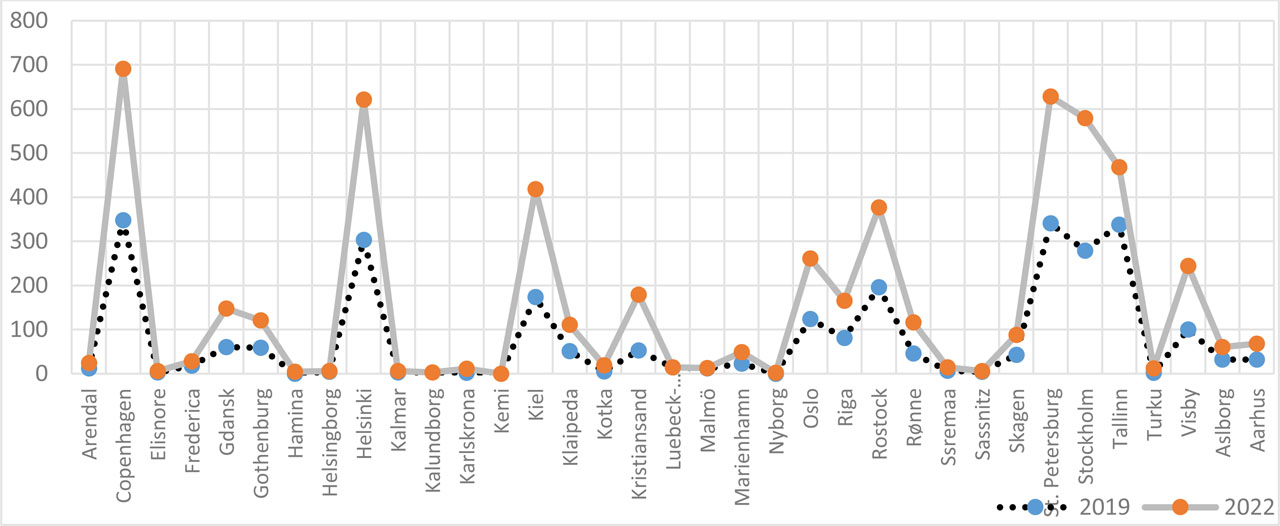
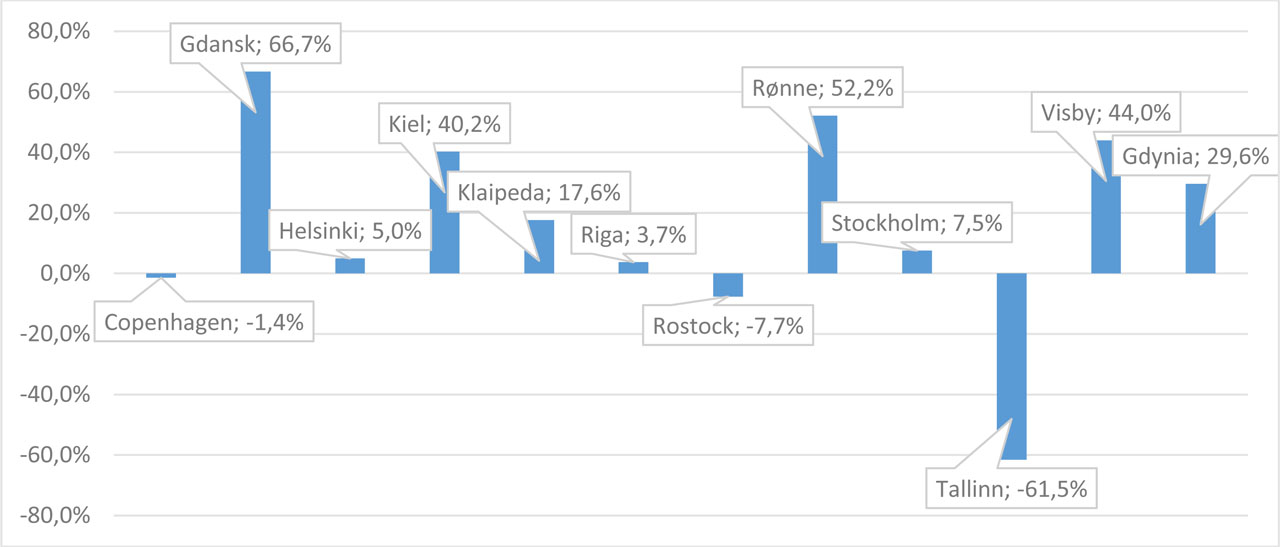
Figure 2

Cruise ship calls in NE in 2019 and 2022 – results War in Ukraine.Source: own elaboration based on (Cruise Baltic, 2021, Cruise Baltic, 2022).

Figure 3

Change in percentage in the number of cruise ship calls at key seaports in NE in 2022 as a result of the war in Ukraine.Source: Own elaboration based on Cruise Baltic (2021), Cruise Baltic (2022).
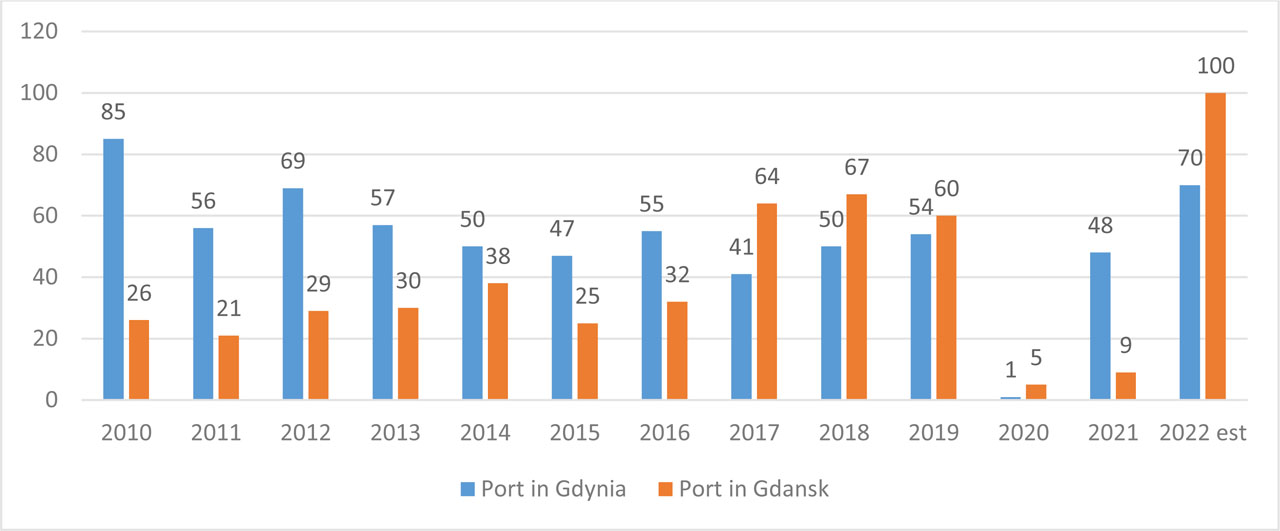

Figure 4

Number of cruise ship calls to seaports in Poland between 2010 and 2022.Source: Own elaboration based on Cruise Baltic (2021), Cruise Baltic (2022), Czech (2022), Kakowska-Mehring (2022).

Sustainable management activities carried out by cruise shipping companies (Model by Rosińska-Bukowska & Bukowski, 2014)

Pillar of Sustainable GovernanceAreas of Uncertainty

COVID-19 PandemicWar in UkraineEconomic CrisisLegal Regulations
Defining the mission and concept of the organization's development
  • Mainstreaming global crises in risk analysis

  • Verification of investment plans to ensure health safety on ships

Change of directions of cruise routes and destinations
  • Investments in renewable energy sources

  • Investments in equipment on ships for onshore power

  • Investments in LNG, EGCS, shoreside power systems

  • Increasing energy efficiency on ships

  • Reduction of emissions of harmful substances

Consistency of the developed and applied set of goals and effects of the organization
  • Verification of safety procedures on ships

  • Renegotiation of contracts with insurance companies

  • Decommissioning of ships

  • Breaking ship supply chains

  • Adoption of mandatory core elements of a set of health protocols

  • Searching for new destinations

  • Development of new cruise routes

  • Promotion of new directions

  • Renegotiation of contracts with contractors

  • Looking for savings by cutting operating costs

  • Suspension of new investments

  • Reduction of current expenses

  • Dismissal of employees

  • Employee training

  • Introduction of pollution monitoring systems

  • Renegotiation of contracts with contractors

  • Increase energy efficiency

Program of shaping the desired directions of organization development
  • Marketing campaigns to improve the image of cruise ships

  • Investments in equipment to increase sanitary safety on ships

  • Promotion of thematic cruises

  • Forced change of cruise directions and destinations

  • Withdrawal cruise ships from the East

  • Reducing costs

  • Limiting consumption

  • Increasing the propensity to save society

  • Reducing pollutant emissions

  • Minimizing engine emissions by using shore power supply

Accumulation and improvement of development capital in the organization
  • Training of employees in health care, first aid

  • Training of employees in the field of security and procedures for dealing with terrorist and other threats

  • Increase employees’ competence and skills

  • Employing experts responsible for coordinating environmental programs and technological projects

  • Training of employees in ISO quality management systems

Principles of creating development perspectives of the organization
  • Regular sanitary and hygienic inspections

  • Verification of knowledge of first aid

  • Regular tests and training in premedical assistance

  • Regular control of results by the heads of departments and divisions

  • Regular health and safety inspections

  • Inspections of ship equipment

  • Increased border/safety controls

  • Slowdown in the implementation of the investment

  • Pressure to increase sales results and work efficiency

  • Reduce and reduce expenses

  • Regular monitoring of pollution (ESI, SEEMP, EEDI etc.)

Internal quality assurance system in the organization
  • Sanitary inspections of authorized entities

  • Medical and public health programs are audited internally by public health specialists and externally by officers from health authorities worldwide

  • Observation of the political situation in NE

  • Estimation of the effects of actions related to the change of cruise directions

  • Analysis of financial reports of the Management Board

  • Evaluation of reports prepared by external audit

  • Conclusions of the report on the implementation of the entity's activities

  • Periodic reports on the state of emissions of pollutants emitted by ships

  • Reports on the energy efficiency of ships

DOI: https://doi.org/10.2478/ijcm-2022-0016 | Journal eISSN: 2449-8939 | Journal ISSN: 2449-8920
Language: English
Page range: 1 - 14
Published on: Dec 31, 2022
In partnership with: Paradigm Publishing Services
Publication frequency: 1 issue per year

© 2022 Joanna Kizielewicz, published by Jagiellonian University
This work is licensed under the Creative Commons Attribution-NonCommercial-NoDerivatives 4.0 License.