
Table 1
Selected definitions of corporate governance
| No. | Author | Definition of corporate governance |
|---|---|---|
| 1 | Monks and Minow (1996) | Maximising wealth creation in a way that does not burden others or society as a whole with undue costs. |
| 2 | Zingales (1998) | A system of restrictions that determine the creation of added value by the corporation and its allocation between its stakeholders. |
| 3 | Cadbury (1999) | A system through which companies are managed and controlled at the same time. |
| 4 | Zalega (2000) | Control and supervision over a corporation, exercised not only by the appropriate statutory organs of the company, but also by other groups interested in the firm or having an interest in its functioning. |
| 5 | Gospel and Pendleton (2003) | Corporate governance focuses on who controls the company, in whose interest it is managed, and on the way in which the control is conducted. |
| 6 | Jeżak and Bohdanowicz (2004) | Ways of resolving conflicts between different groups that influence the management of the company, shaping its strategies and its behaviour on capital markets, goods, and services markets, and the job market. |
| 7 | Ayuso and Argandoña (2007) | A system in which organisations are run and controlled and which defines the distribution of rights and obligations between shareholders and managers, as well as the rules and procedures for decision making in corporate matters. In a broader sense, corporate governance also includes relations with other stakeholders, both internal (e.g., employees) and external (e.g., customers, suppliers). |
| 8 | Gök (2009) | A set of principles that shape the behaviour of and exert pressure on managers to fulfil the promises given to stakeholders, in particular to shareholders. |
| 9 | Iwu-Egwuonwu (2010) | A system in which corporations are managed and regulated to increase shareholder value and meet the expectations of other stakeholders. |
| 10 | Krzysztofek (2012) | A mechanism used to control and coordinate the behaviour of shareholders who work with management to effectively perform the company’s tasks. |
| 11 | OECD (2004) | Concerns the relationship between the management and supervisory bodies of companies, their partners and shareholders, and other shareholders (entities with an interest in the company’s activities) and determines the structure through which the company’s objectives are set, the means of achieving these objectives, and the means of keeping track of the company’s performance. |
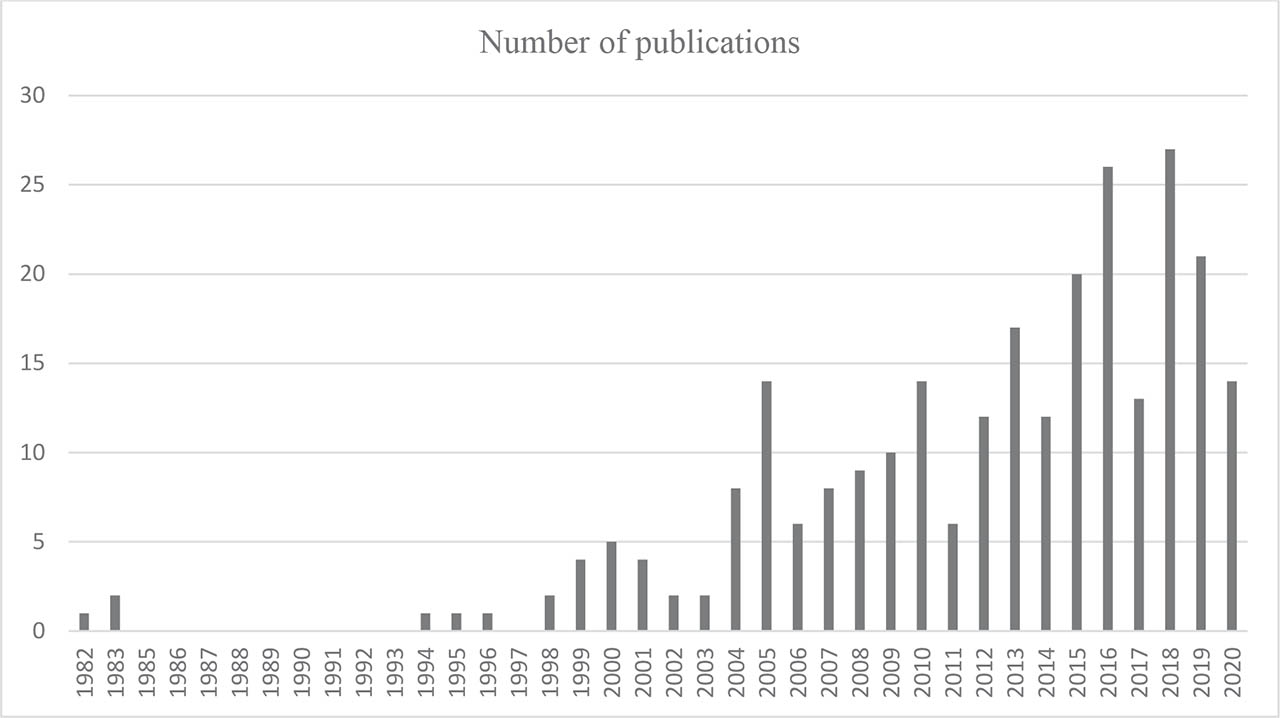
Figure 1
The number of scientific and research publications on corporate governance in state-owned enterprises from 1982 to 2020. Research based on EBSCO (analysis completed on 23 February 2021).
Table 2
Ranking of research articles with the highest number of citations
| No. | No. of citations | Position of an article | Journal | Impact factor (2019) |
|---|---|---|---|---|
| 1 | 723 | Jian, M., & Wong, T. J. (2010). Propping through related party transactions | Review of Accounting Studies | 2.600 |
| 2 | 456 | Ding, Y., Zhang, H., & Zhang, J. (2007). Private vs state ownership and earnings management: Evidence from Chinese listed companies | Corporate Governance: An International Review | 2.294 |
| 3 | 437 | Li, W., & Zhang, R. (2010). Corporate social responsibility, ownership structure, and political interference: Evidence from China | Journal of Business Ethics | 4.141 |
| 4 | 416 | Majumdar, S. K., & Chhibber, P. (1999). Capital structure and performance: Evidence from a transition economy on an aspect of corporate governance | Public Choice | 1.035 |
| 5 | 404 | Terjesen, S., Aguilera, R., & Lorenz, R. (2015). Legislating a woman’s seat on the board: Institutional factors driving gender quotas for boards of directors | Journal of Business Ethics | 4.141 |
| 6 | 392 | Kato, T., & Long, C. (2006). Executive compensation, firm performance, and corporate governance in China: Evidence from firms listed in the Shanghai and Shenzhen stock exchanges | Economic Development & Cultural Change | 1.860 |
| 7 | 369 | Peng, M. W., Tan, J., & Tong, T. W. (2004). Ownership types and strategic groups in an emerging economy | Journal of Management Studies (Wiley-Blackwell) | 4.888 |
| 8 | 347 | Lin, L.-W., & Milhaupt, C. J. (2013). We are the (national) champions: Understanding the mechanisms of state capitalism in China | Stanford Law Review | 1.579 |
| 9 | 332 | Ramamurti, R. (2000). A multilevel model of privatization in emerging economies | Academy of Management Review | 8.413 |
| 10 | 275 | Chen, Q., Chen, X., Schipper, K., Xu, Y., & Xue, J. (2012). The sensitivity of corporate cash holdings to corporate governance | Review of Financial Studies | 4.649 |
[i] Note: Data collected from Google Scholar, 23 February 2021.
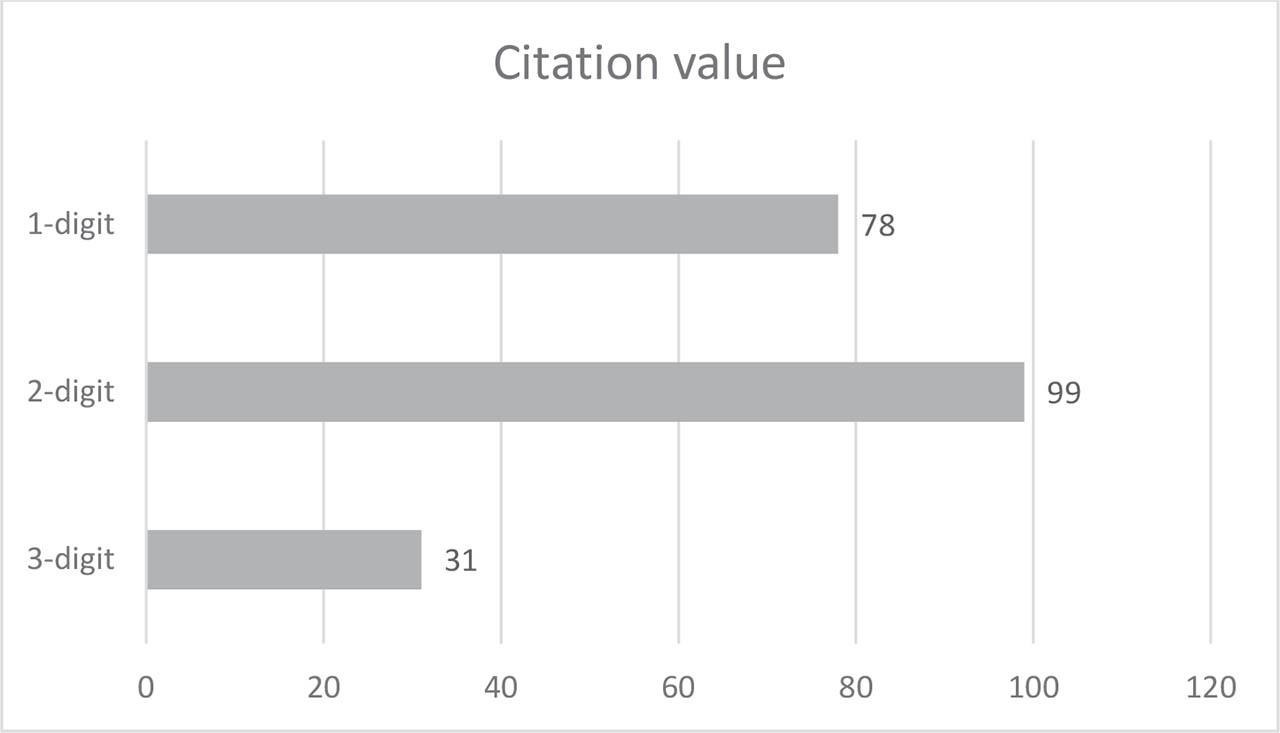
Figure 2
Breakdown of articles by the number of citations.
Note: Data collected from Google Scholar, 23 February 2021.
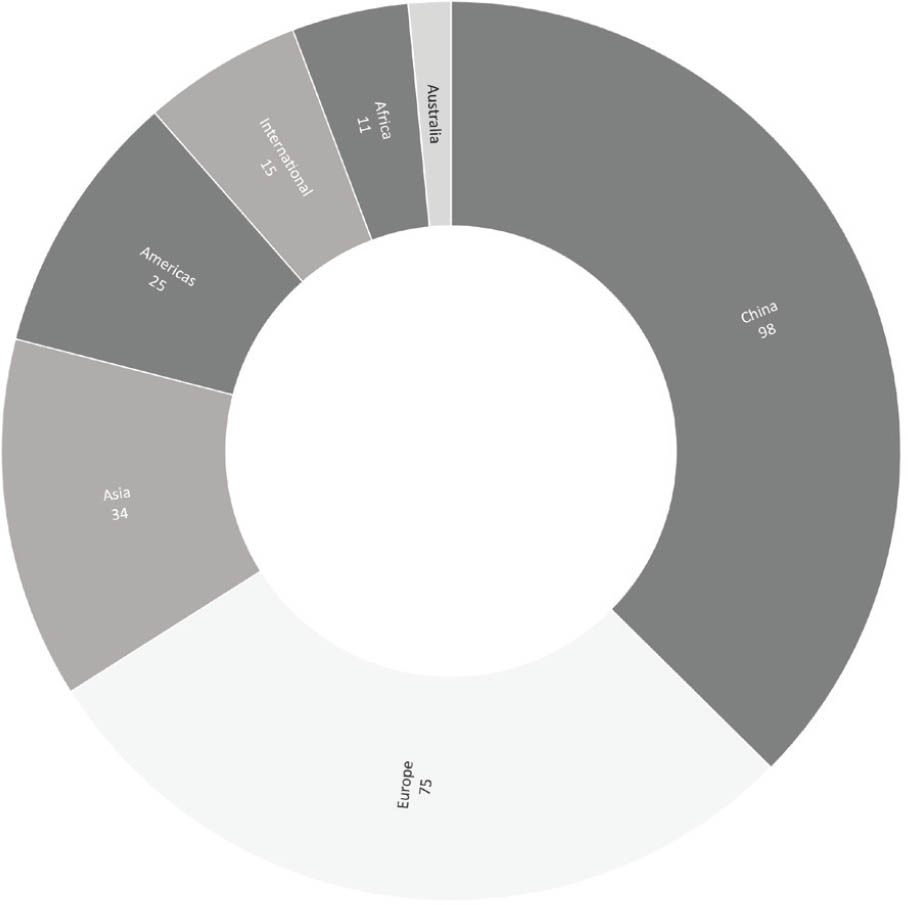
Figure 3
Geographical distribution of research on corporate governance in state-owned enterprises.
Note: Research based on the EBSCO database.
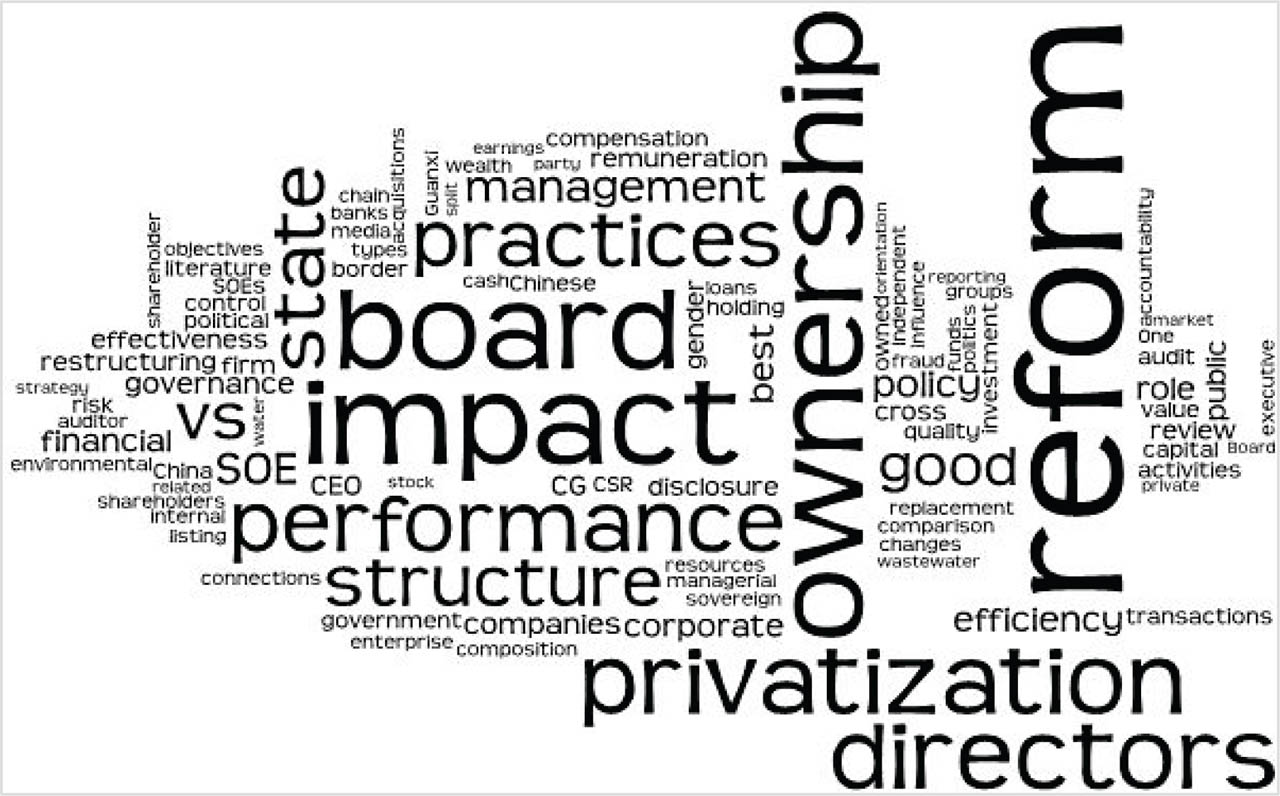
Figure 4
Word cloud for research on corporate governance in state-owned enterprises (general).
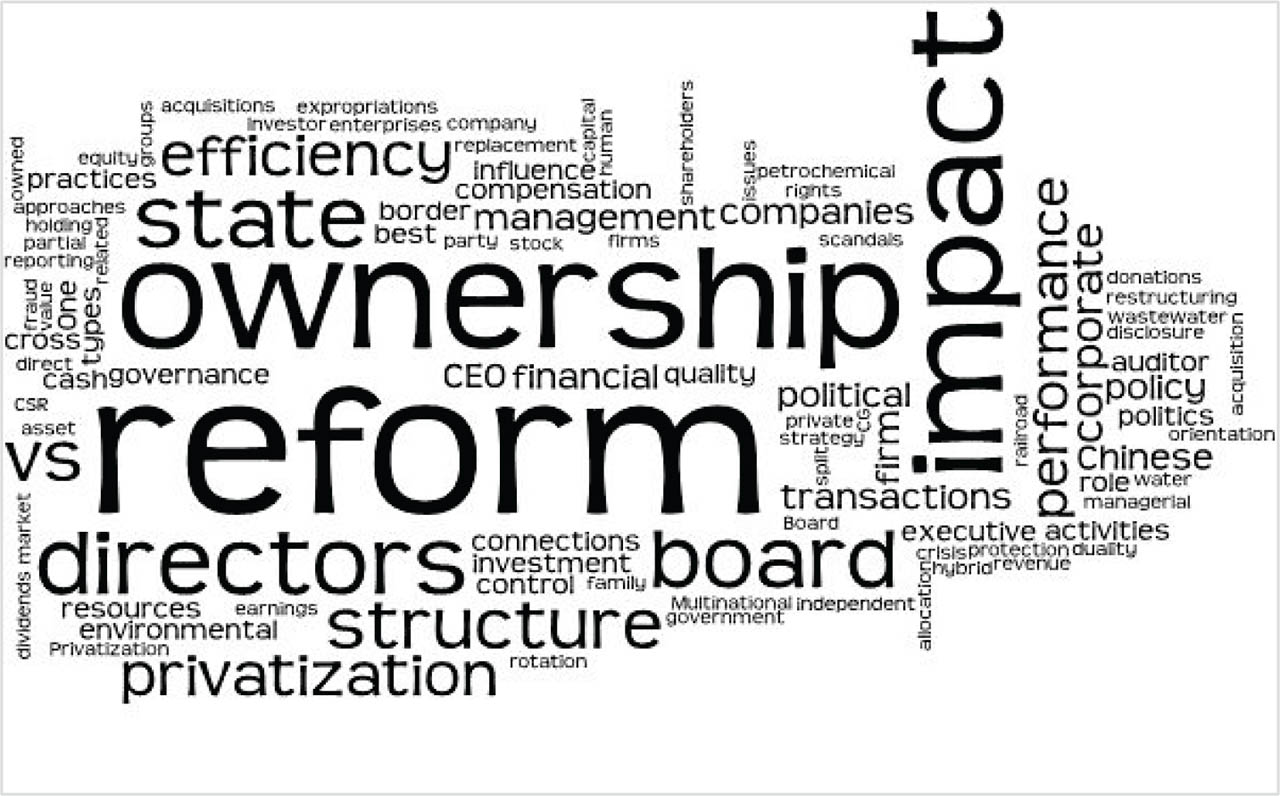
Figure 5
Word cloud for research on corporate governance in state-owned enterprises in China.
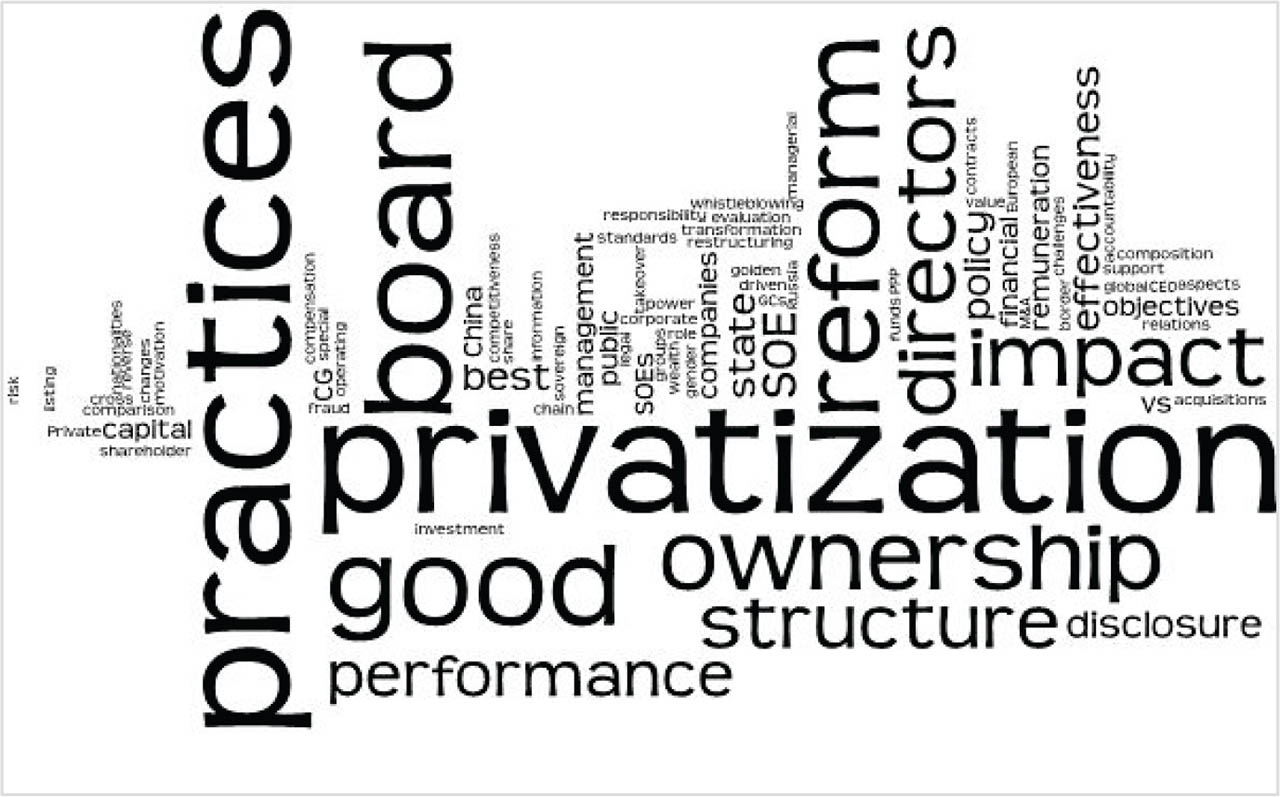
Figure 6
Word cloud for research on corporate governance in state-owned enterprises in Europe.
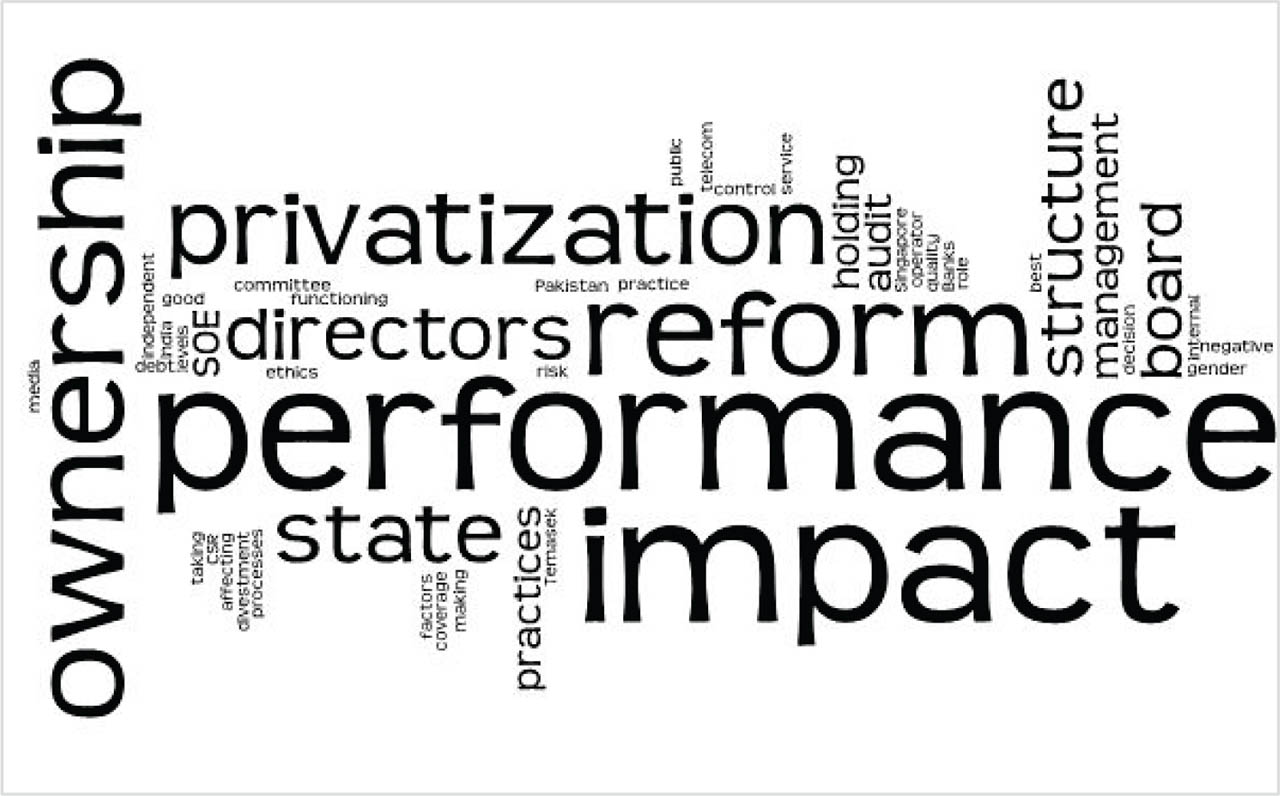
Figure 7
Word cloud for research on corporate governance in state-owned enterprises in Asia (excluding China).
Table 3
Comparison of dominant research categories in research on corporate governance in state-owned enterprises from the point of view of geography
| Frequency levels (1–5) | China | Europe | Asia (excluding China) |
|---|---|---|---|
| 1 | Reform of corporate governance | Privatisation | The impact of corporate governance on business performance |
| 2 | The impact of state ownership on corporate governance | Good practices in corporate governance | Reform of corporate governance |
| 3 | The functioning of the board of directors | The impact of ownership structure on results | Privatisation |
| 4 | Privatisation | Reform of corporate governance | The impact of ownership structure on results |
| 5 | The impact of corporate governance on business performance | The functioning of the board and the board of directors | None |