
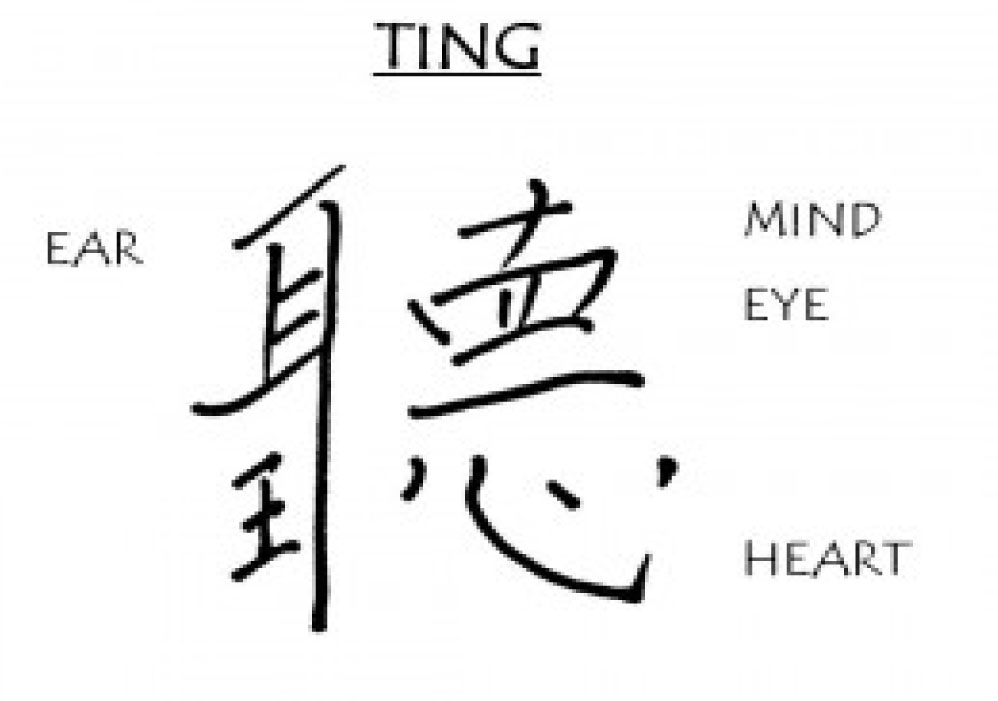
Figure 1
The Chinese character for listen
Table 1
Textual positionings of writer identity
| Types of intentional positionings (source: Harré & van Langenhove, 1999) | Corresponding identity facets (source: Lehman, 2018; Lehman and Sułkowski, 2020) | Rhetorical expressions of voice |
| Deliberate self-positioning | The individual self | Rhetorical expressions of individual ‘I’ voice The writer establishes authority for the content of their writing. The writer communicates their attitude and feelings towards the content of their writing. |
| Deliberate positioning of others | The collective self | Rhetorical expressions of collective ‘C’ voice The writer engages themselves in a dialogue with the reader. The writer involves the reader in the argument construction. |
| Forced self-positioning and forced positioning of others | The depersonalized self | Rhetorical expressions of depersonalised ‘D’ voice Writers align their writing with the rhetorical conventions sanctioned in their disciplinary community. Writers efface their commitment to the claims being made. |
[i] Source: own study