
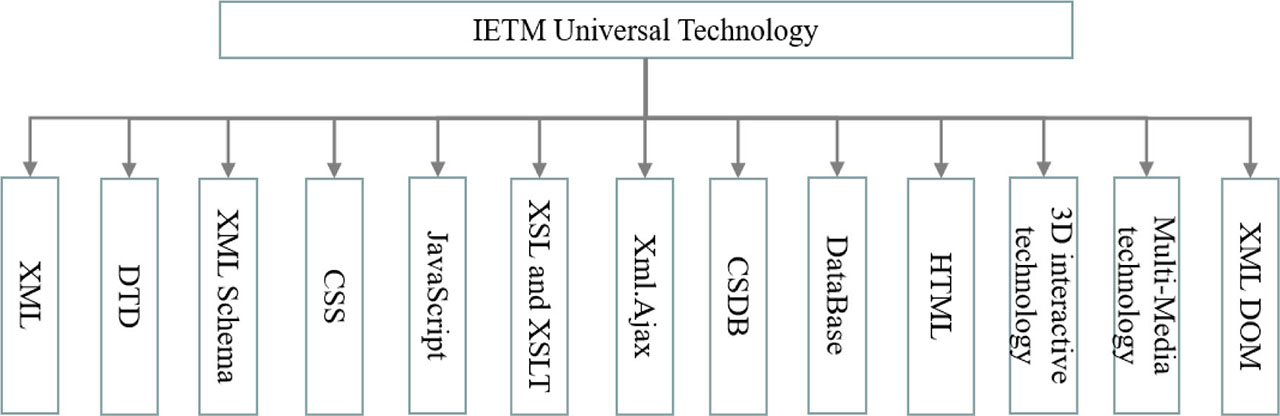
Figure 1.
Technical framework commonly used by IETM
TABLE I.
Table type styles
| Technical model | Main advantages and disadvantages |
|---|---|
| DTD | DTD comes from and is a subset of SGML. It is the standard before schema and an important part of XML1.0. Its definition is a specific application domain. It is mainly used for validation and good form verification. The main advantage of DTD is that it can quickly determine whether a document is valid by using a parser to match regular expressions and data patterns in the document. Its main disadvantages are that it uses non-XML syntax, requires special processing tools, and does not support various data types and spatial mechanisms. DTD cannot introduce other DTDs, and its scalability is poor. |
| XML Schema | XML Schema is the standard recommended by W3C at present. It introduces data type and namespace, supports internal reference of schema, has good expansibility, can be converted between different schemas through mapping, and has good data interchangeability. For this trend, this schema will replace DTD and be used to define rules for XML documents in all types of network applications. Its main advantage is that the schema itself is an XML document with good data scalability, consistency and accuracy. From the user's point of view, it has better simplicity, legibility and ease of use, better support for data exchange and stronger data binding. The main disadvantage of is that the schema cannot define entities like DTD, and it is more complicated than DTD. |
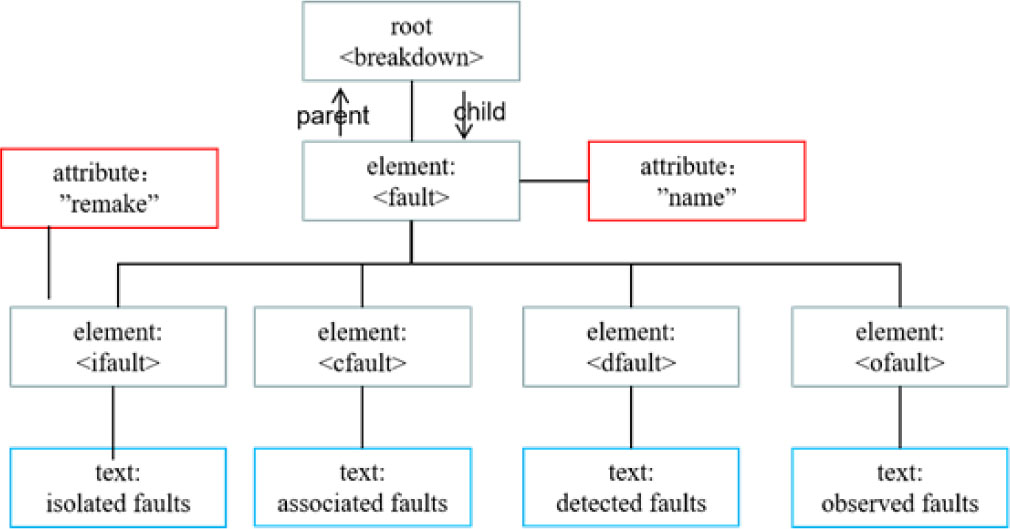
Figure 2.
XML DOM tree example
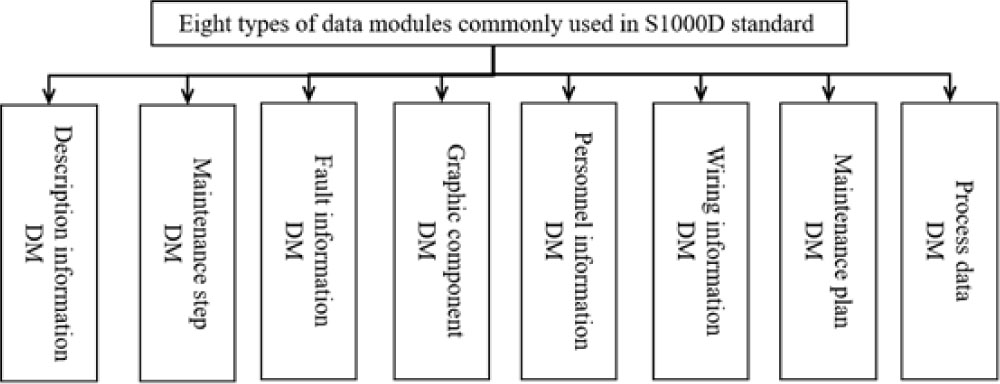
Figure 3.
Eight types of DM commonly used in S1000D standard
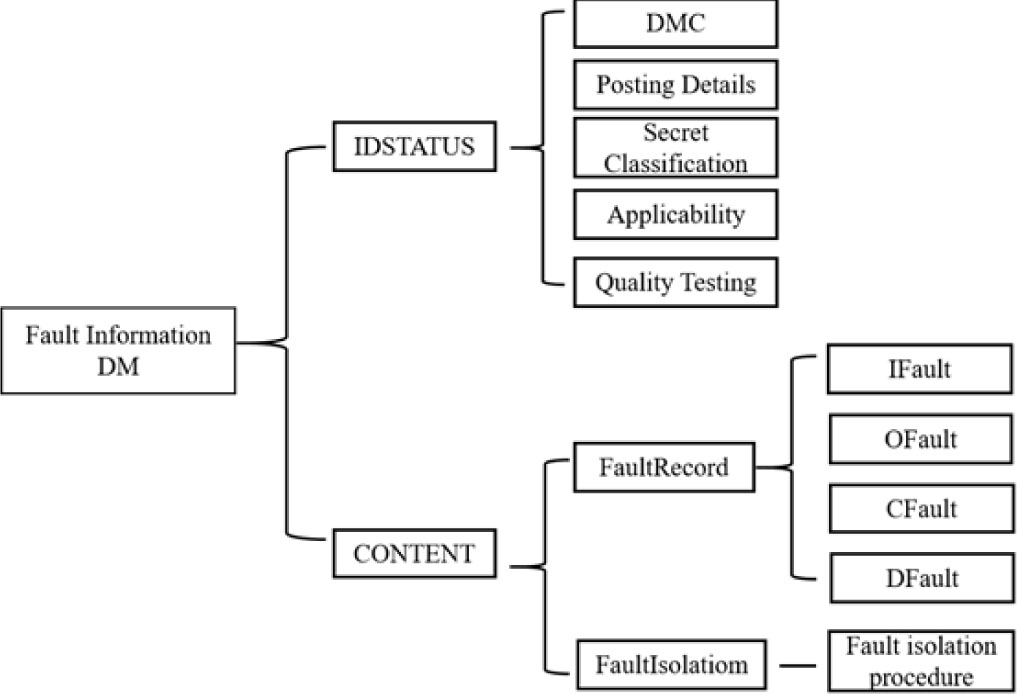
Figure 4.
Structure diagram of fault information data module
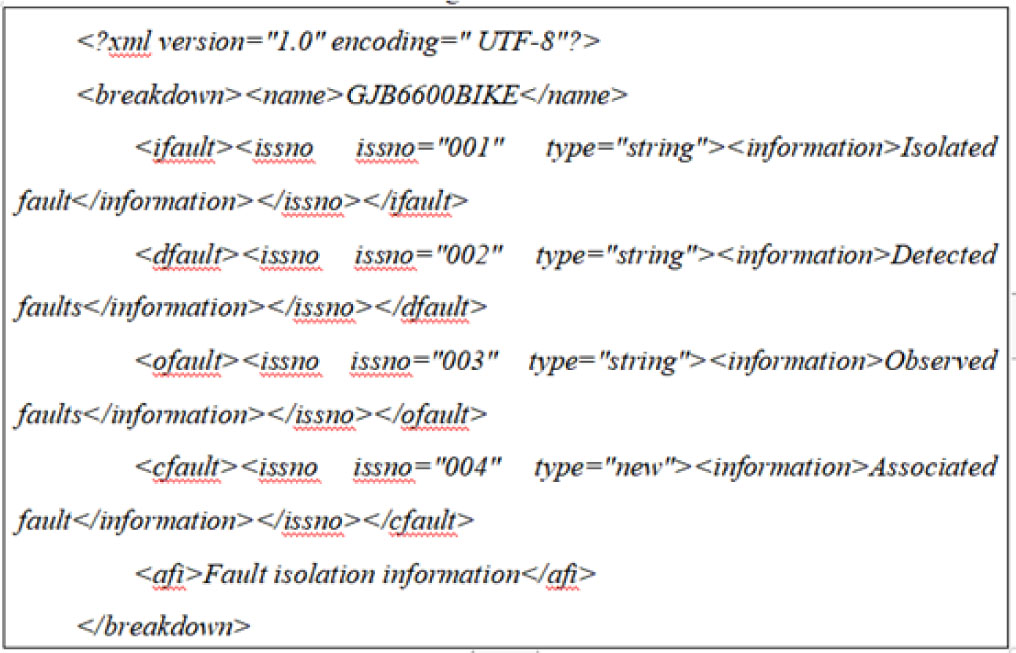
Figure 5.
Code snippets for XML documents
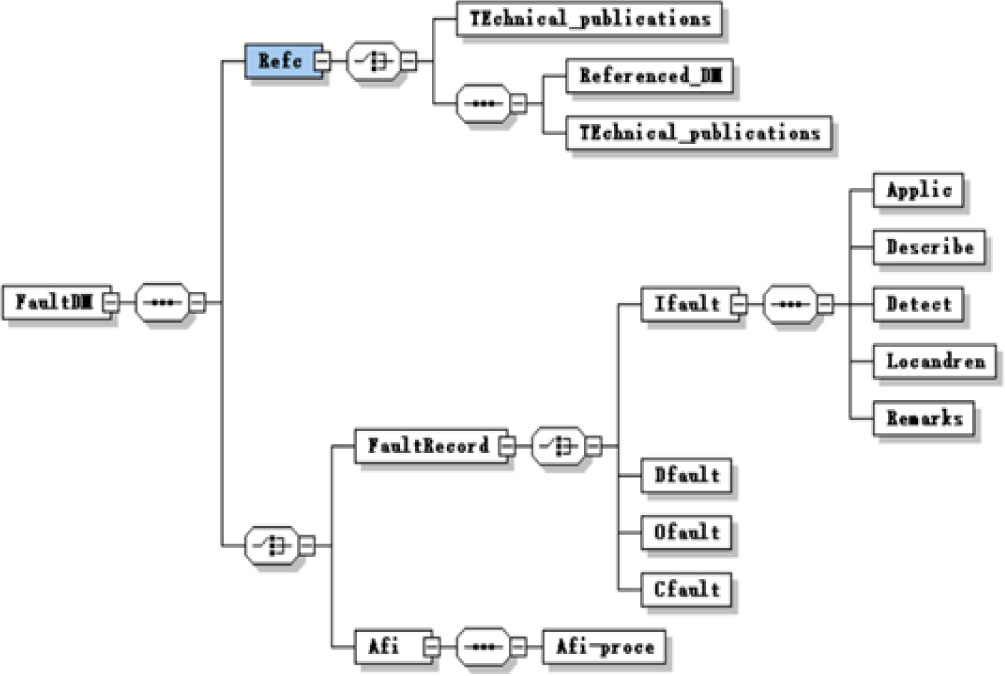
Figure 6.
Schema mode of fault information DM
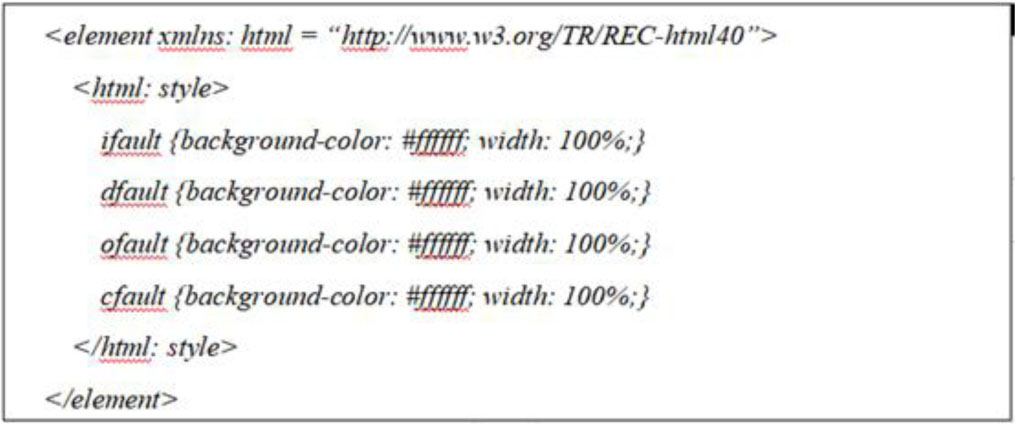
Figure 7.
XML document embedded CSS example
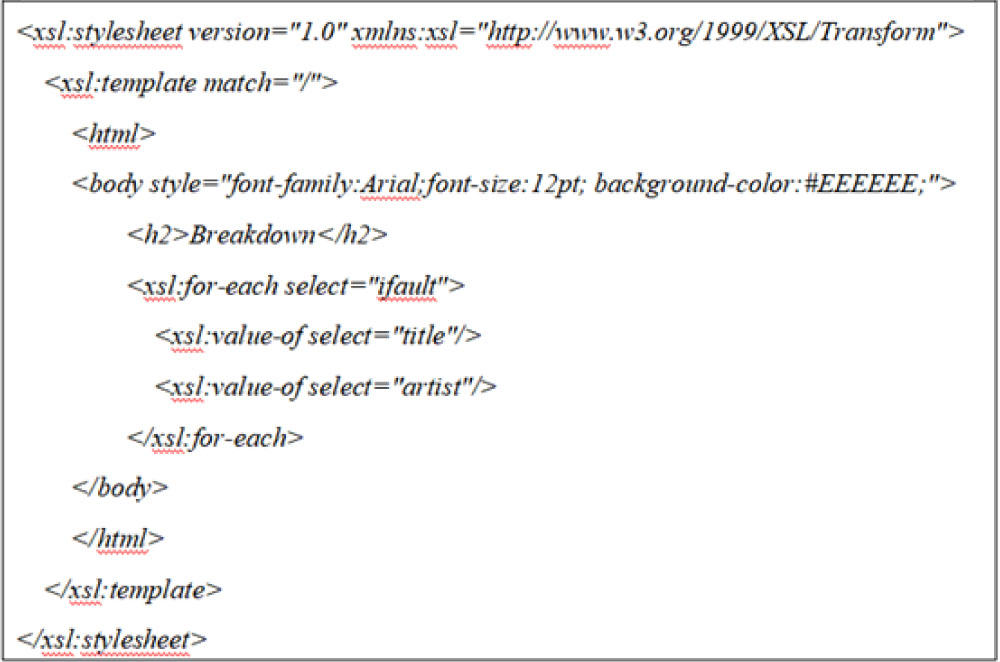
Figure 8.
Code snippets for XSLT documents
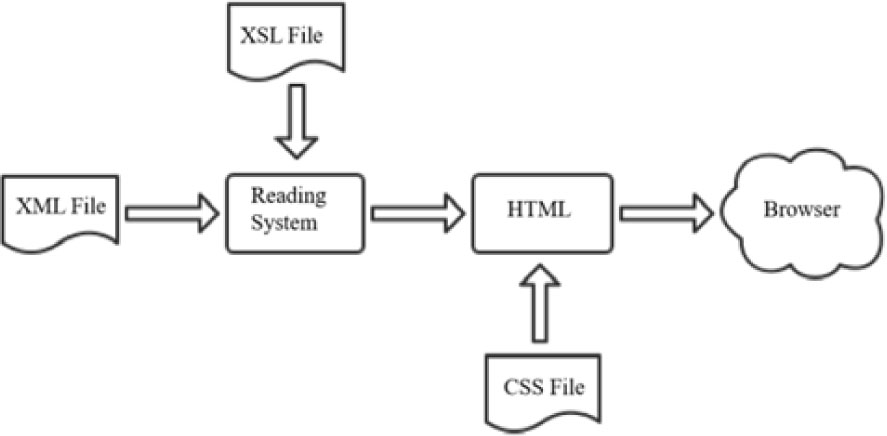
Figure 9.
XML display control process
TABLE II.
Label attribute field definition
| Attribute field | Data type | Field description |
|---|---|---|
| XmlID | Integer | XML document ID of the tag |
| LabelID | Integer | ID of the tag |
| LabelName | Varchar(30) | The name of the label |
| LabelType | Varchar(30) | Type of label |
| LabelVal | Varchar(255) | Text information in label |
| LabelParent | Integer | The ID of the label's parent label |
| LabelChild | Integer | The ID of the child tag of this tag |
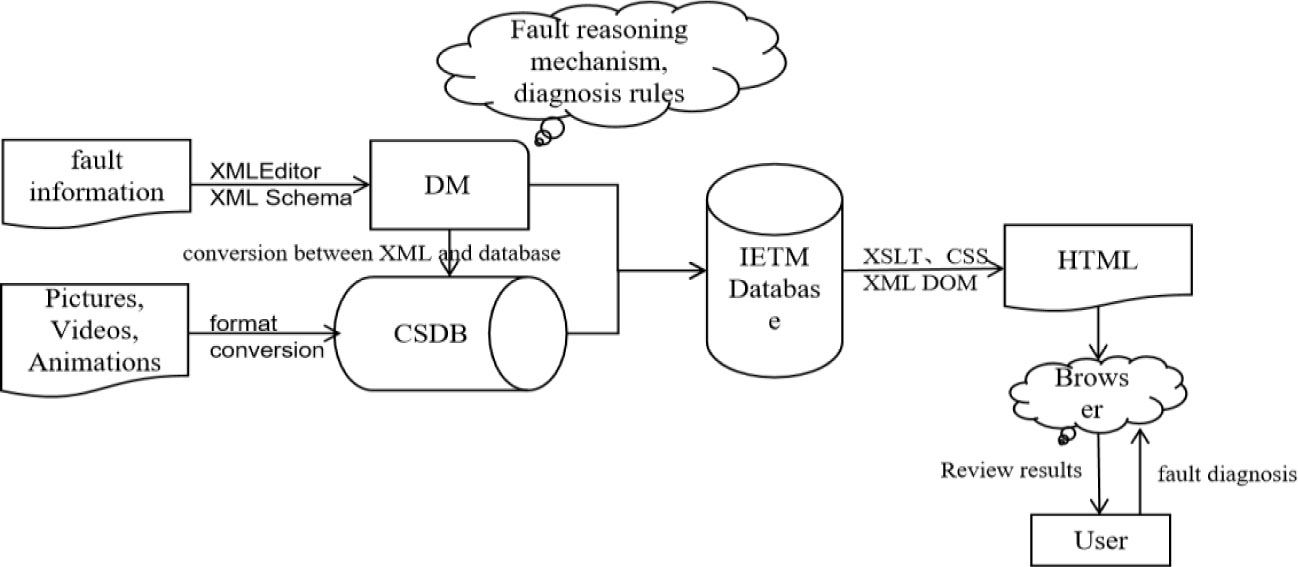
Figure 10.
Design flow of fault diagnosis IETM based on XML
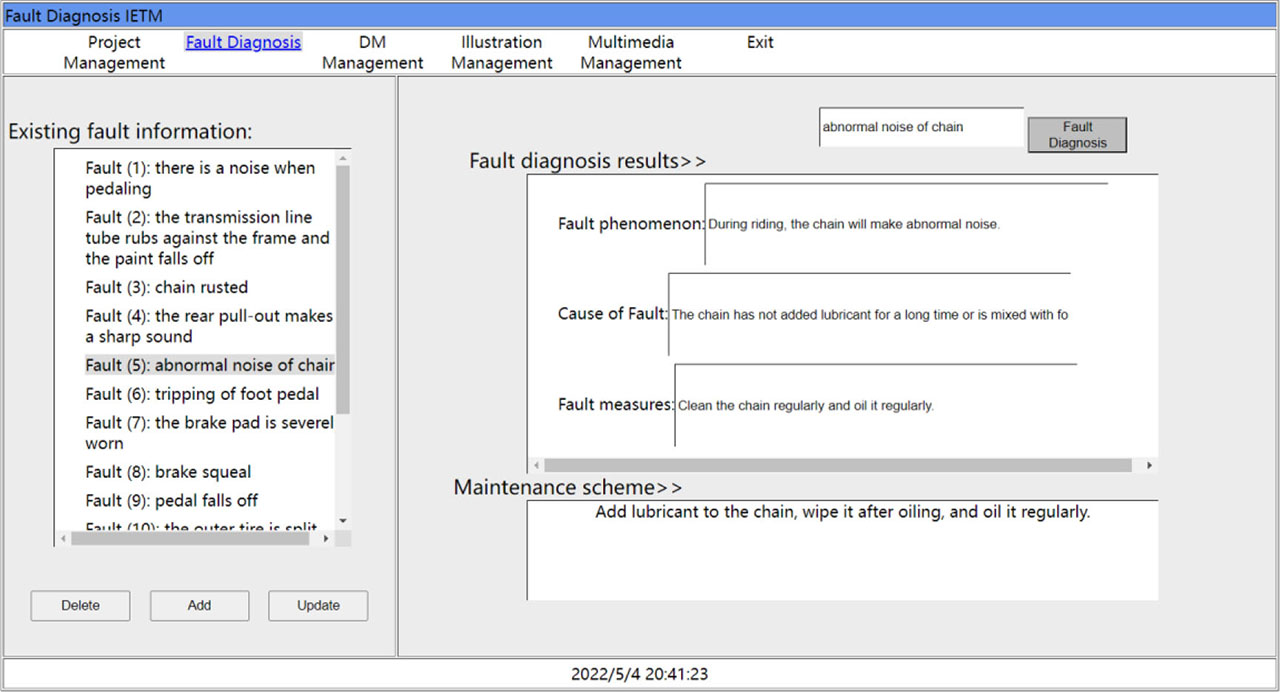
Figure 11.
Fault diagnosis interface