
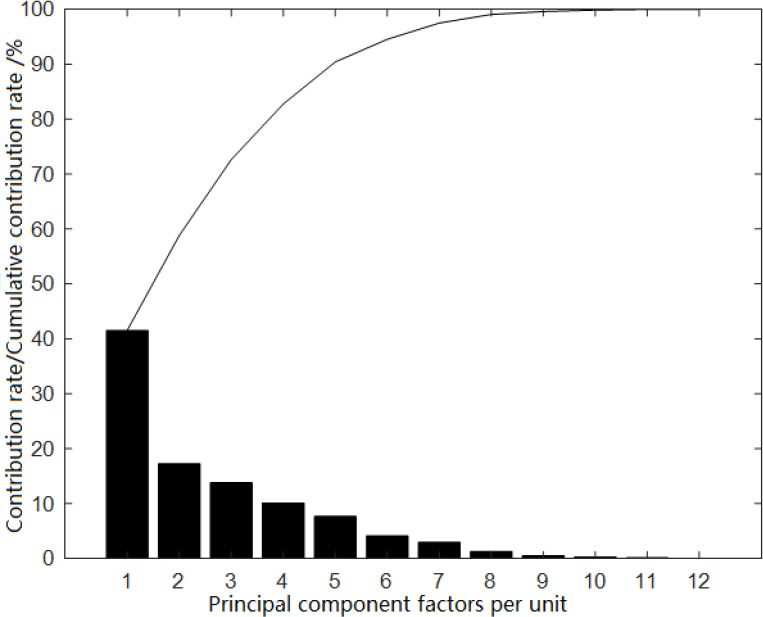
Figure 1.
Contribution rate and cumulative contribution rate
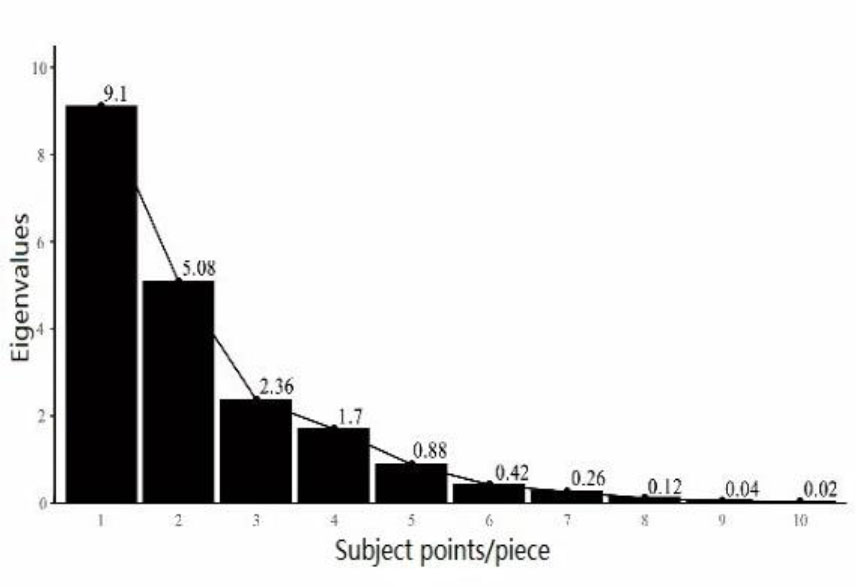
Figure 2.
Gravel map
TABLE I.
Principal component loading matrix
| Characteristic parameter | M1 | M2 | M3 | M4 |
|---|---|---|---|---|
| Deceleration time ratio Td | 0.423 | 0.341 | −0.723 | 0.248 |
| Distance traveled S | 0.893 | 0.134 | 0.045 | 0.432 |
| Fragment duration T | 0.432 | 0.231 | −0.142 | 0.768 |
| Acceleration time ratio Ta | 0.394 | −0.156 | 0.060 | 0.491 |
| Cruise time ratio Tc | 0.341 | 0.835 | −0.045 | −0.138 |
| Average velocity Va | 0.499 | 0.763 | 0.025 | 0.255 |
| Average driving speed Vd | 0.778 | 0.315 | 0.112 | 0.358 |
| Speed standard deviation Vstd | 0.198 | 0.033 | 0.034 | 0.189 |
| Accelerate standard deviation astd | 0.145 | 0.267 | −0.067 | −0.121 |
| Average acceleration aa | 0.014 | 0.223 | 0.033 | 0.024 |
| Average deceleration ad | 0.566 | −0.433 | −0.052 | 0.315 |
| Idle Time Ratio Ti | 0.125 | −0.351 | 0.843 | 0.467 |
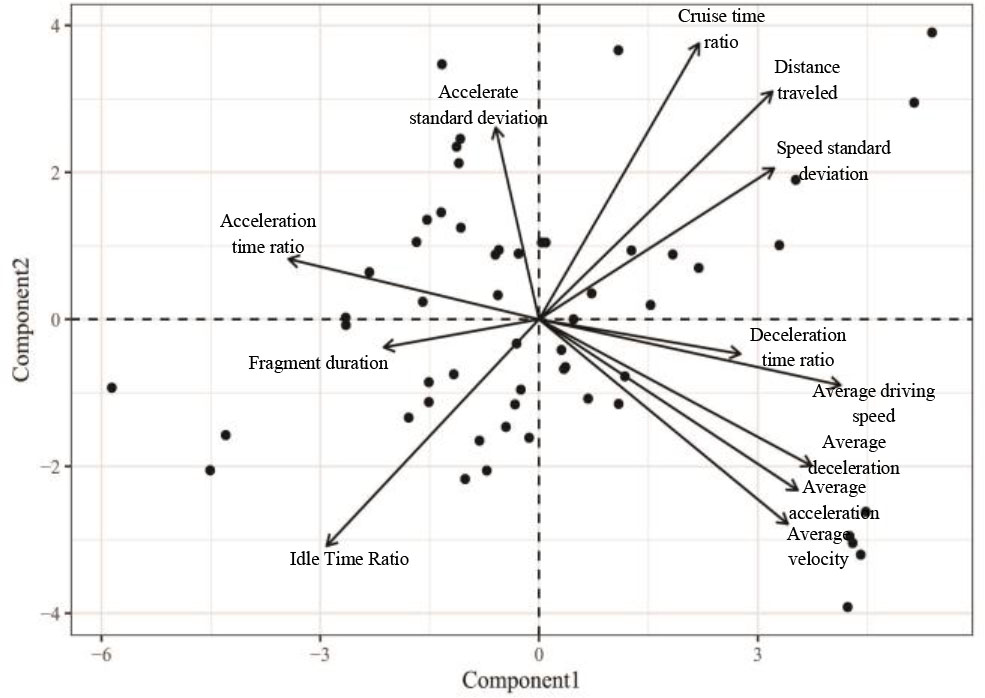
Figure 3.
Principal component analysis scatter plot
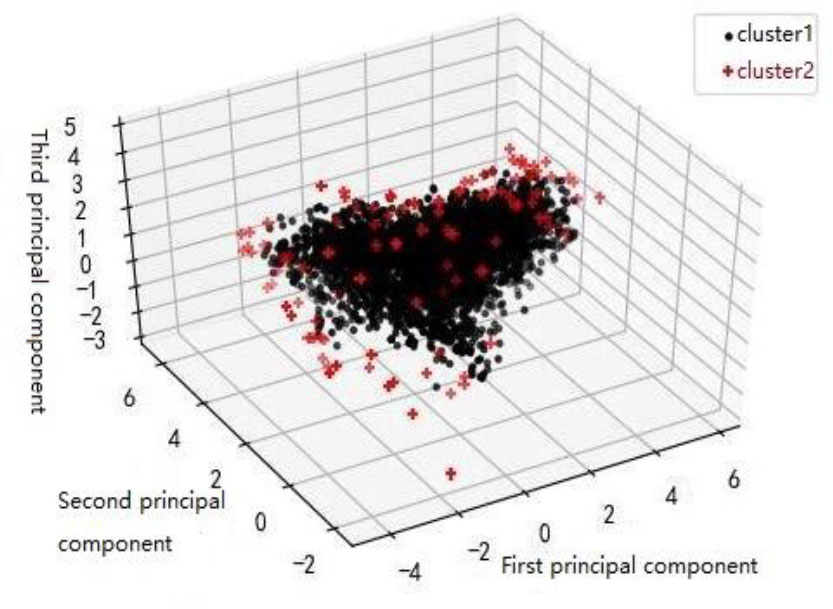
Figure 4.
Scatter plot of edge data points of working conditions
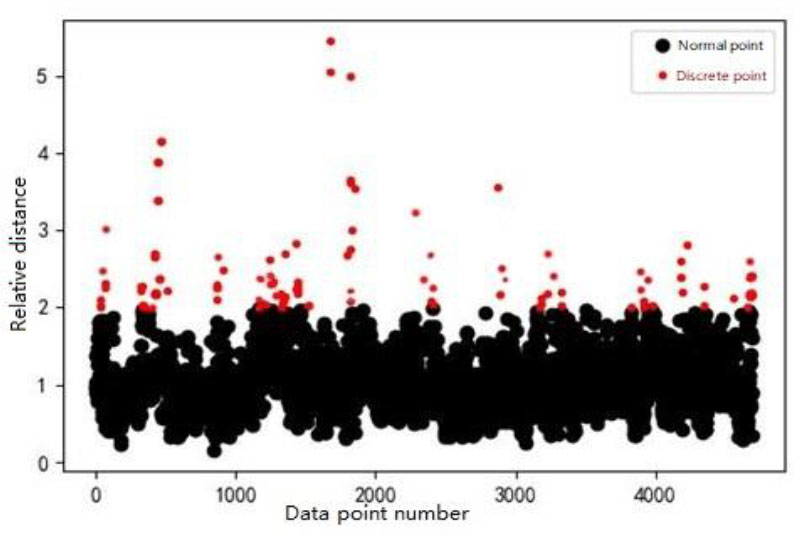
Figure 5.
Relative distance comparison of outliers
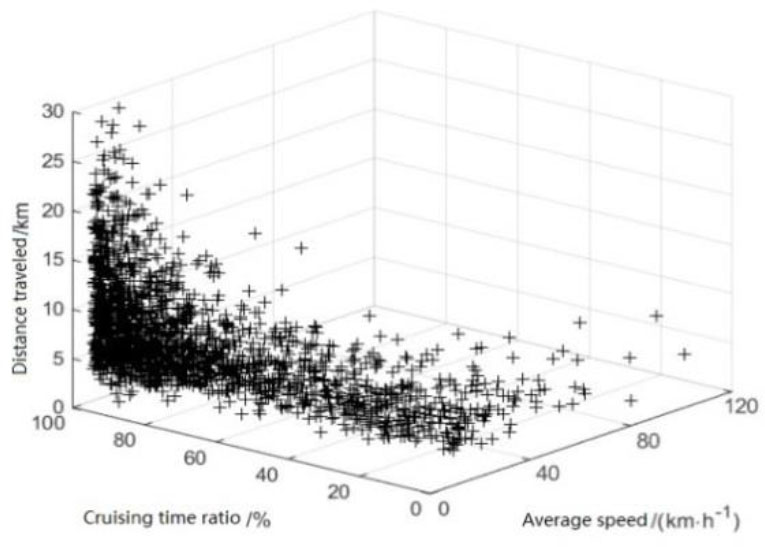
Figure 6.
Three-dimensional scatter plot of working conditions
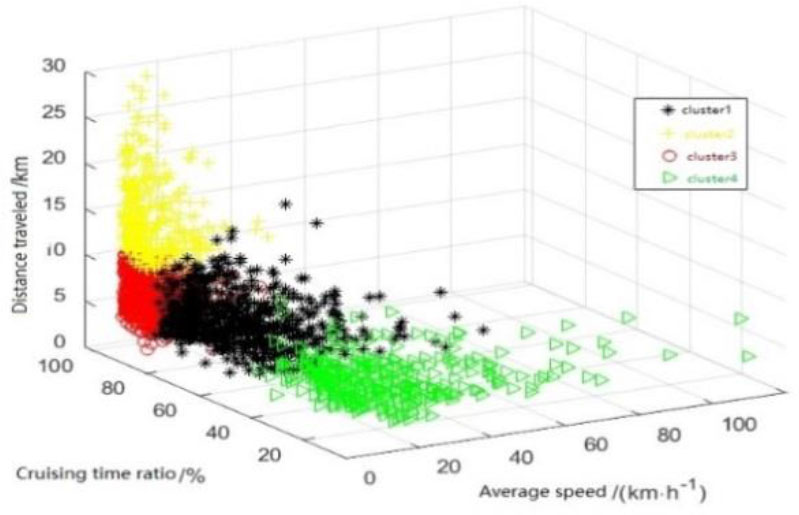
Figure 7.
Working condition cluster analysis scatter plot
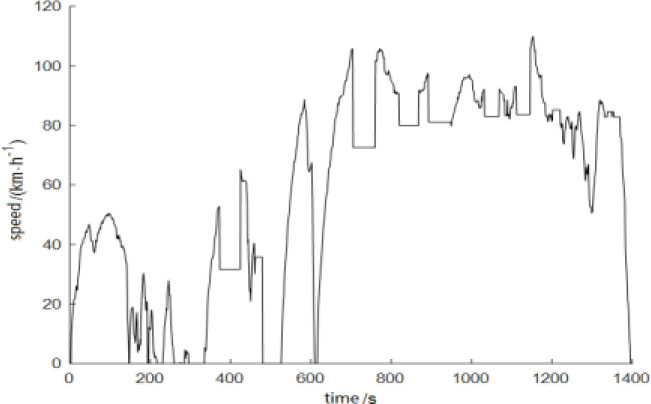
Figure 8.
Synthetic driving conditions
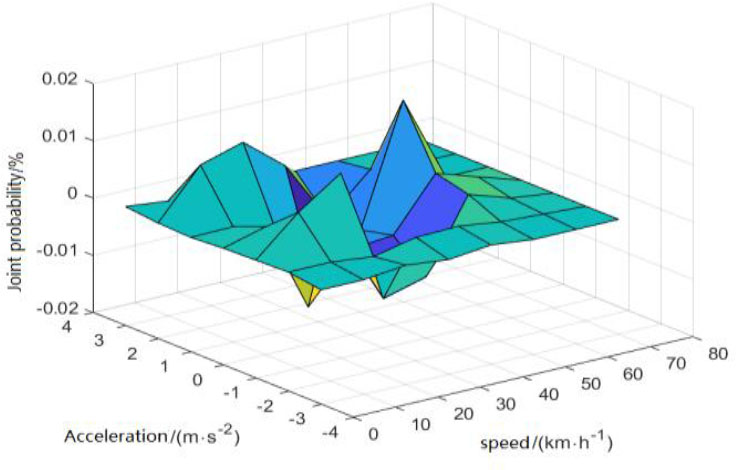
Figure 9.
SAFD difference between experimental data and synthetic conditions
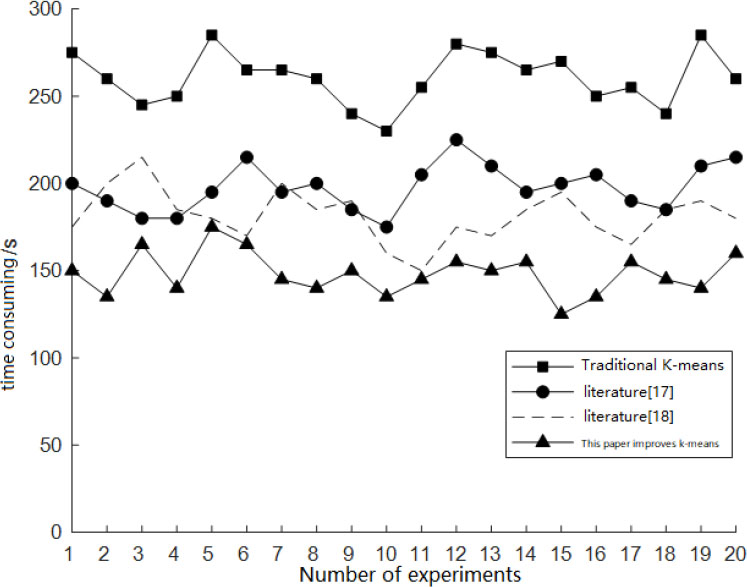
Figure 10.
The results of the running time of the four methods
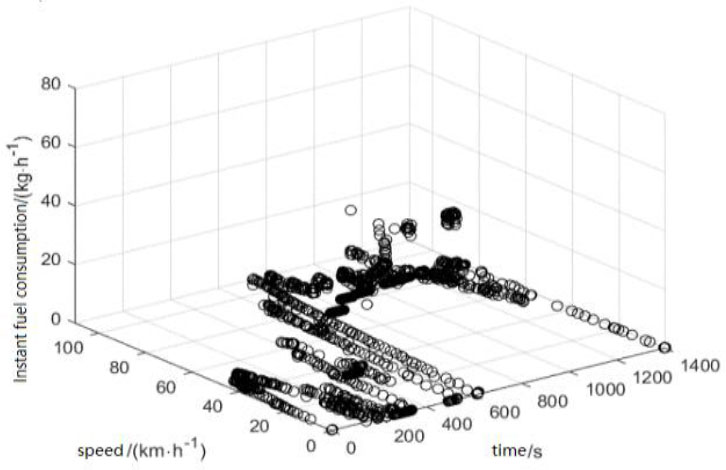
Figure 11.
The relationship between driving time and speed instant fuel consumption
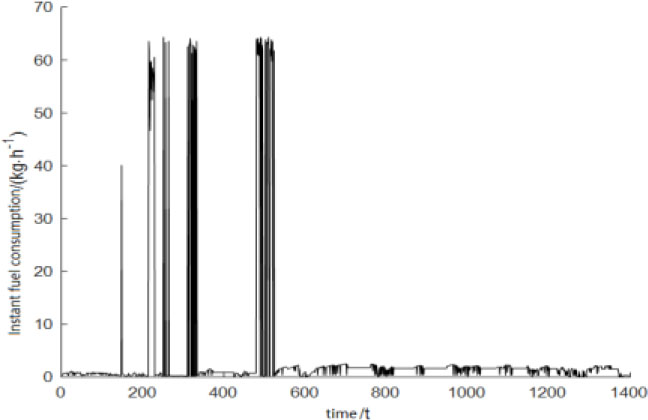
Figure 12.
Relationship between driving time and instantaneous fuel consumption
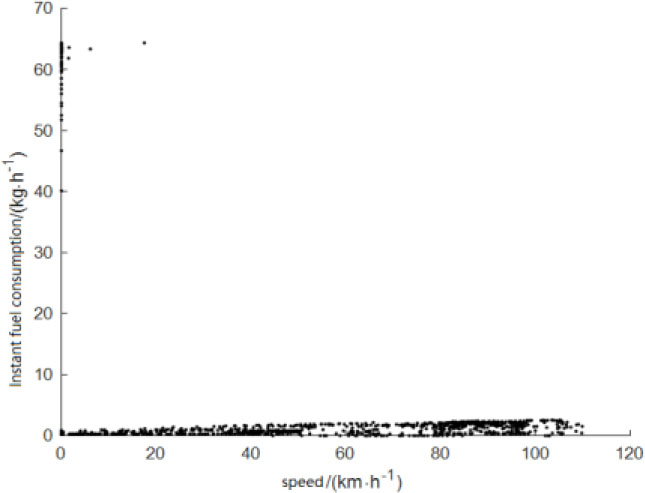
Figure 13.
The relationship between driving speed and instantaneous fuel consumption
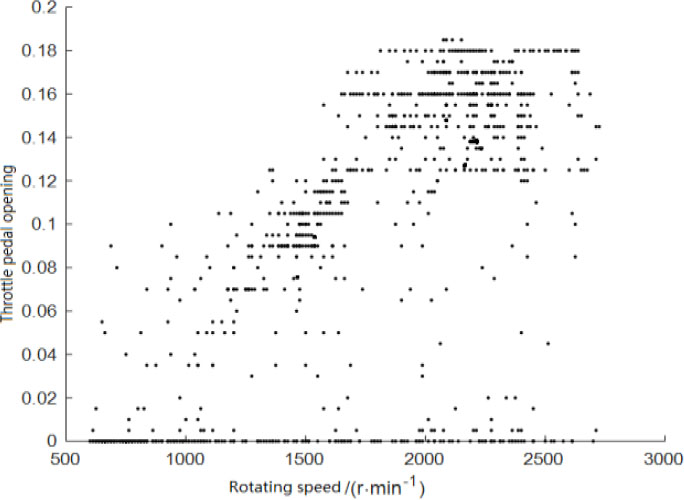
Figure 14.
The relationship between driving speed and accelerator pedal opening
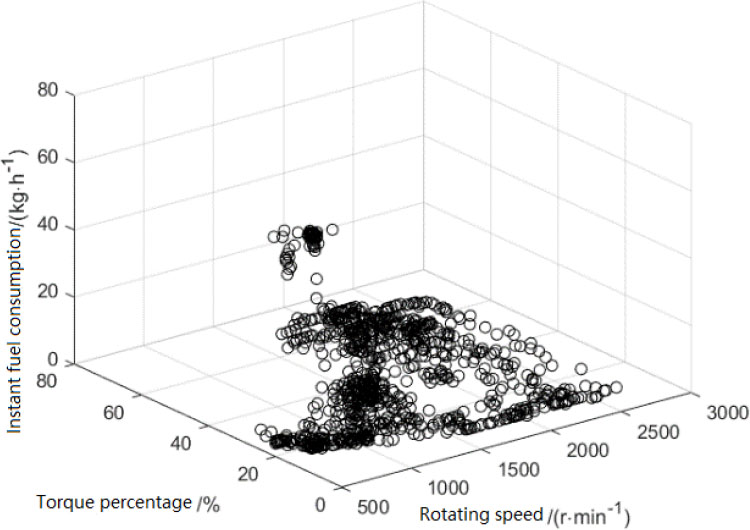
Figure 15.
Instantaneous fuel consumption off for driving time and speed