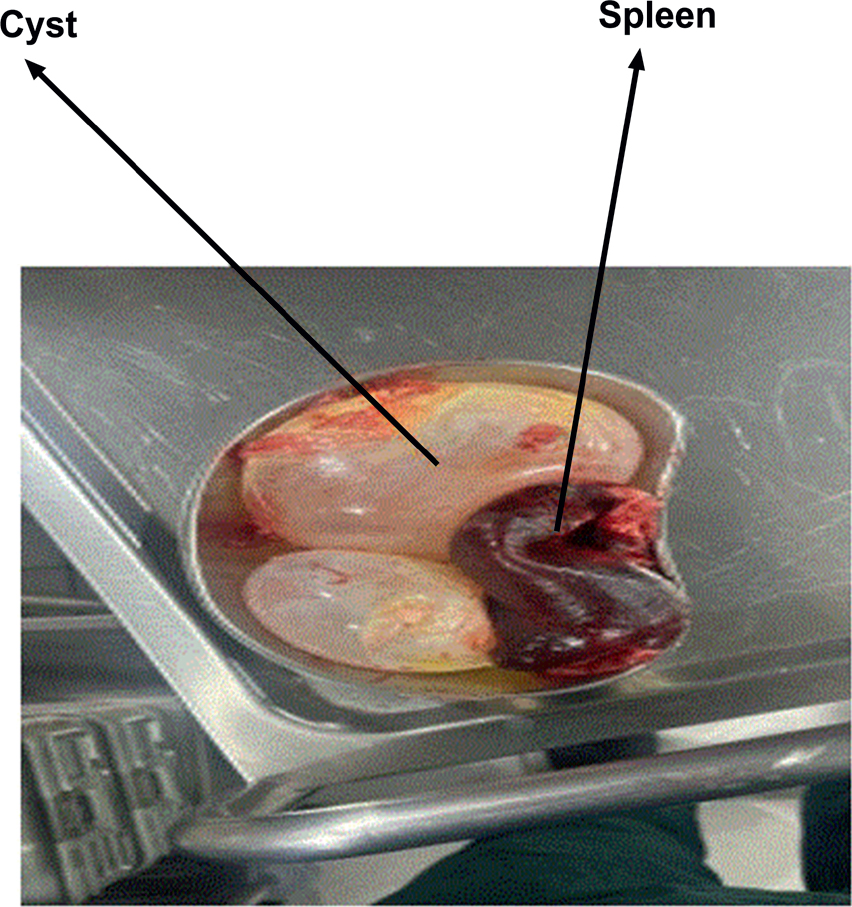
Fig. 1.
The macroscopic characteristics of hydatid cysts in the human spleen highlight cyst morphology and organ involvement associated with cystic echinococcosis in humans.
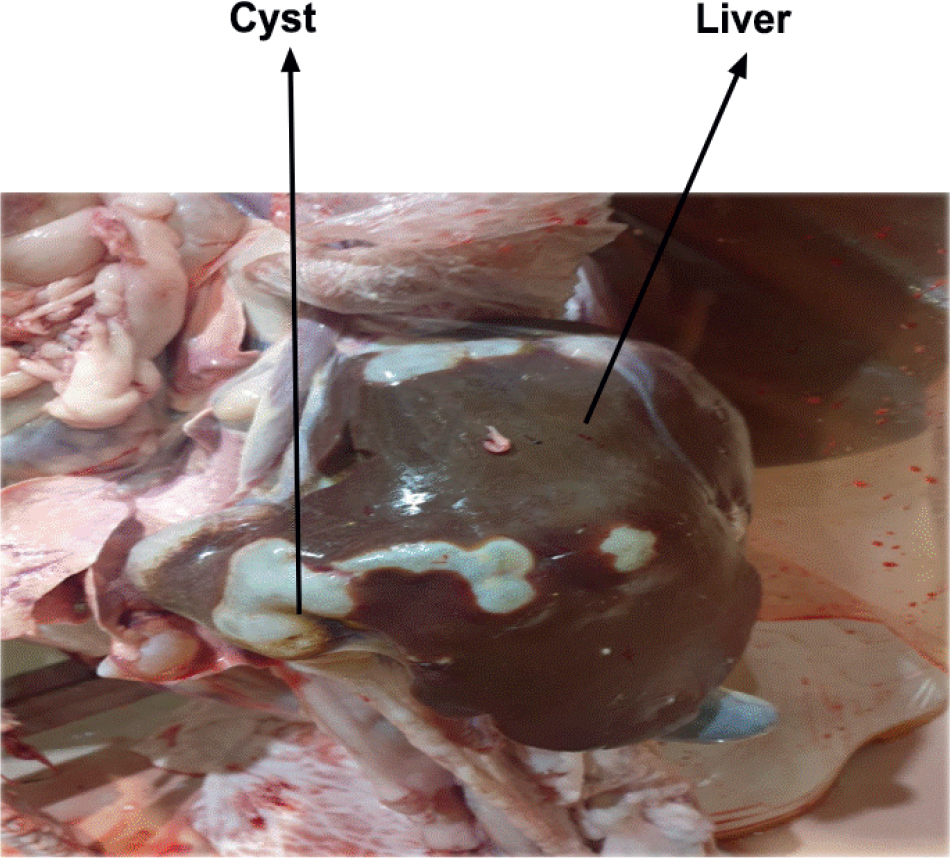
Fig. 2.
Hydatid cysts in a sheep’s liver are classified into different cyst types and evaluated for their fertility.
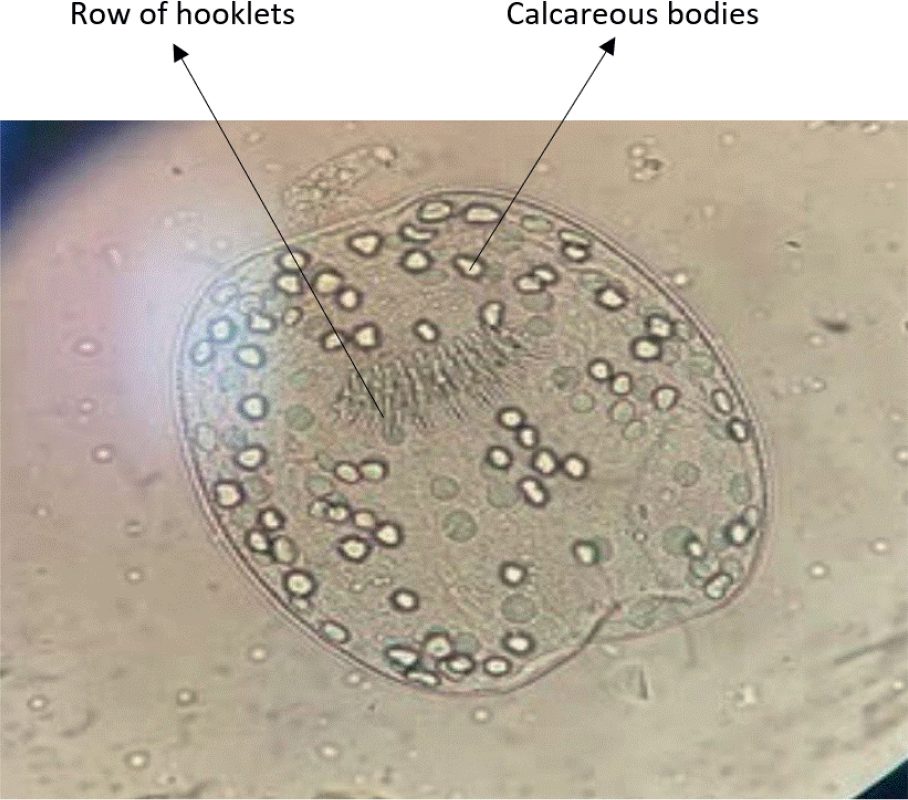
Fig. 3.
A light microscopic image (×40 magnification) illustrating protoscolices obtained from a viable hydatid cyst in sheep liver, thereby affirming cyst viability and corroborating fertility classification.
Table 1.
The designed species-specific primers of the Mt-COI gene for E. granulosus
| Primer | Sequence (5'->3') | No. of nucleotides | Size gene product |
|---|---|---|---|
| Mt-COI SH | GCAGGGTTTGGGGTCATCAT | 20 | 213bp |
| Mt-COI LU | CCGTAACTCCCCCAAACGTA |
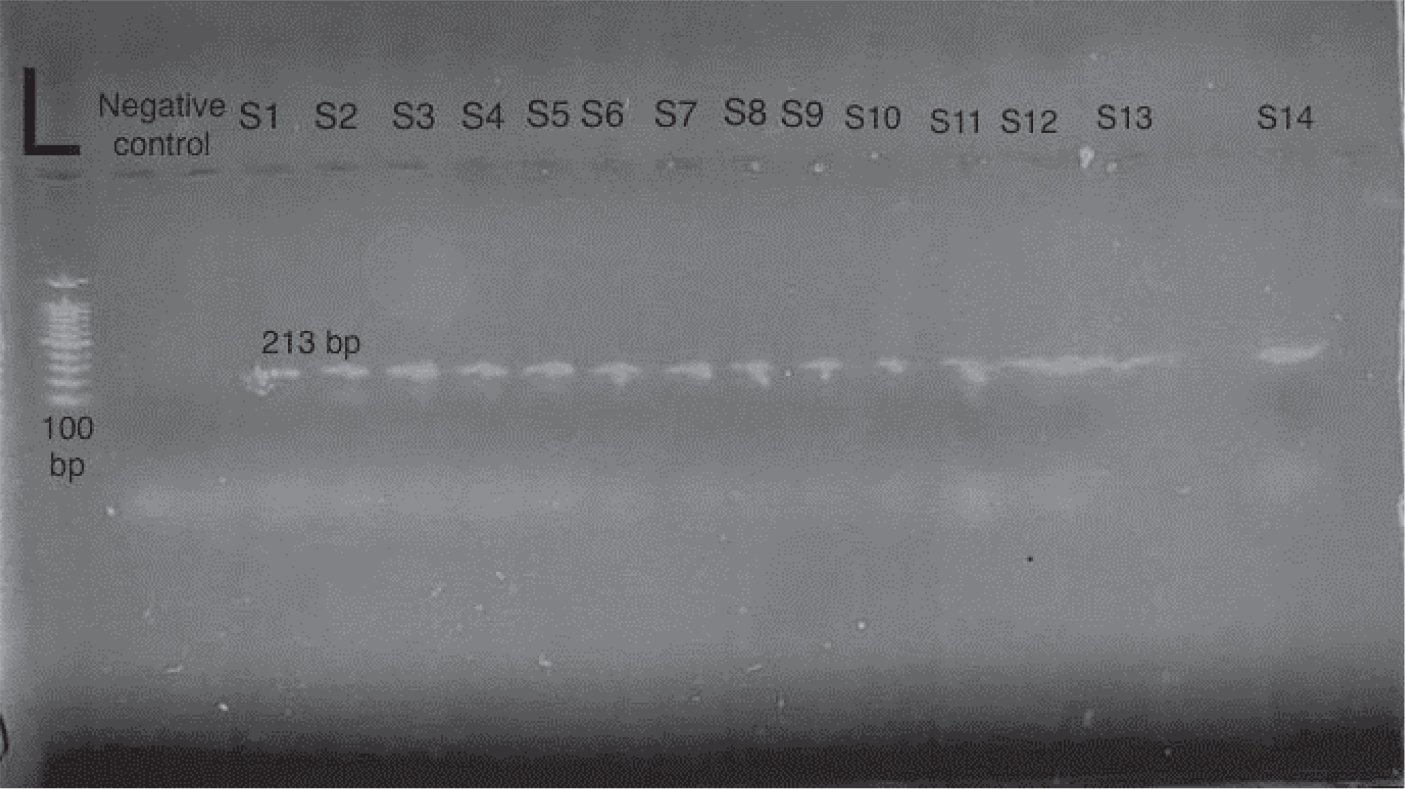
Fig. 4.
An agarose gel electrophoresis image showing PCR amplification of the mitochondrial cytochrome c oxidase subunit I (COI) gene of Echinococcus granulosus from human hydatid cyst samples, visualised under ultraviolet (UV) illumination. Lane L represents the 100 bp DNA molecular weight ladder. Lane negative control. Lanes S1–S14 correspond to human samples, with positive samples showing a distinct band at the expected size of 213 bp.
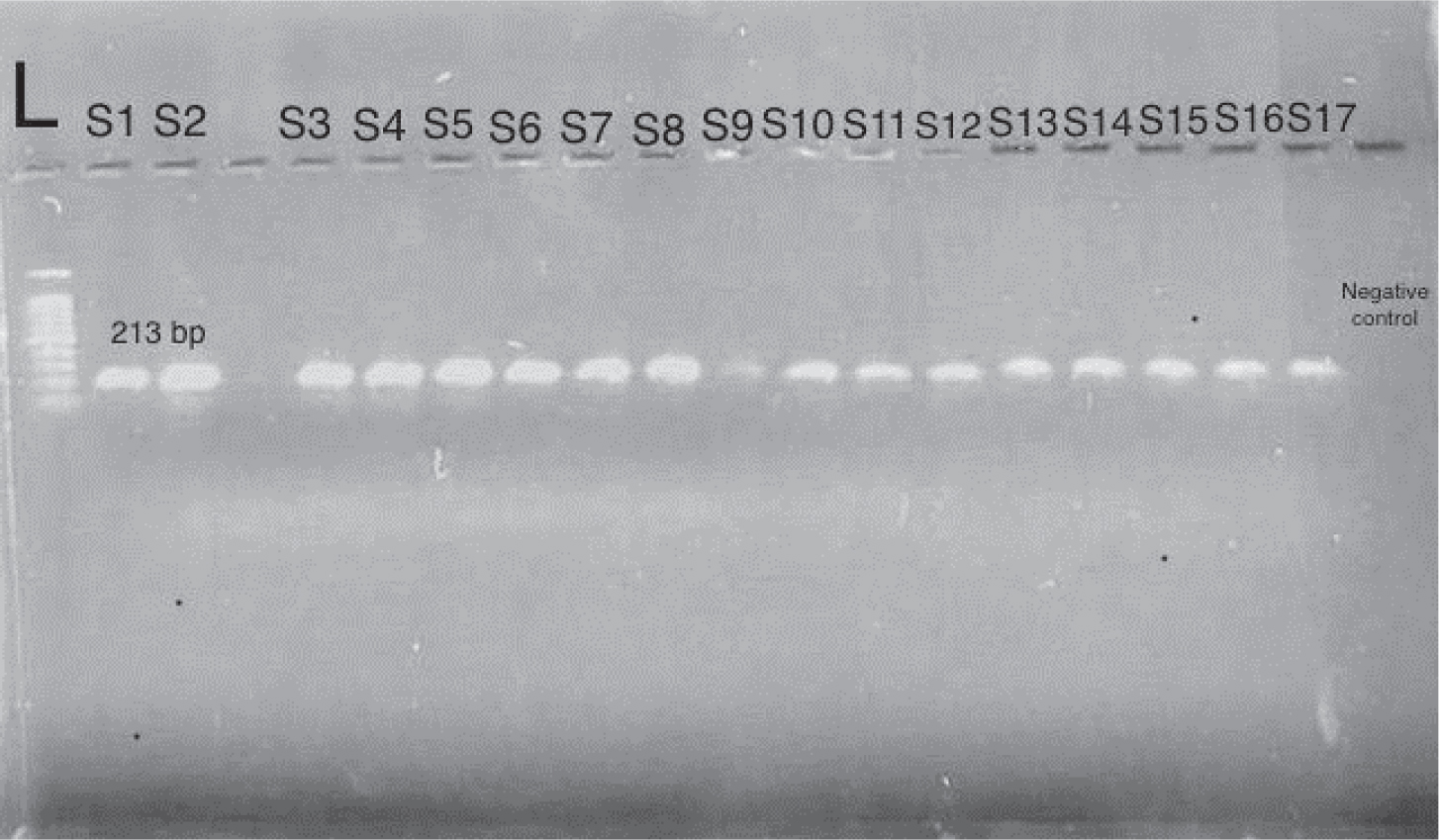
Fig. 5.
An agarose gel electrophoresis image showing PCR amplification of the mitochondrial cytochrome c oxidase subunit I (COI) gene of Echinococcus granulosus from sheep hydatid cyst samples, visualised under ultraviolet (UV) illumination. Lane L represents the 100 bp DNA molecular weight ladder. Lanes S1–S17 correspond to sheep samples, with positive samples showing a distinct band at the expected size of 213 bp. The negative control shows no amplification.
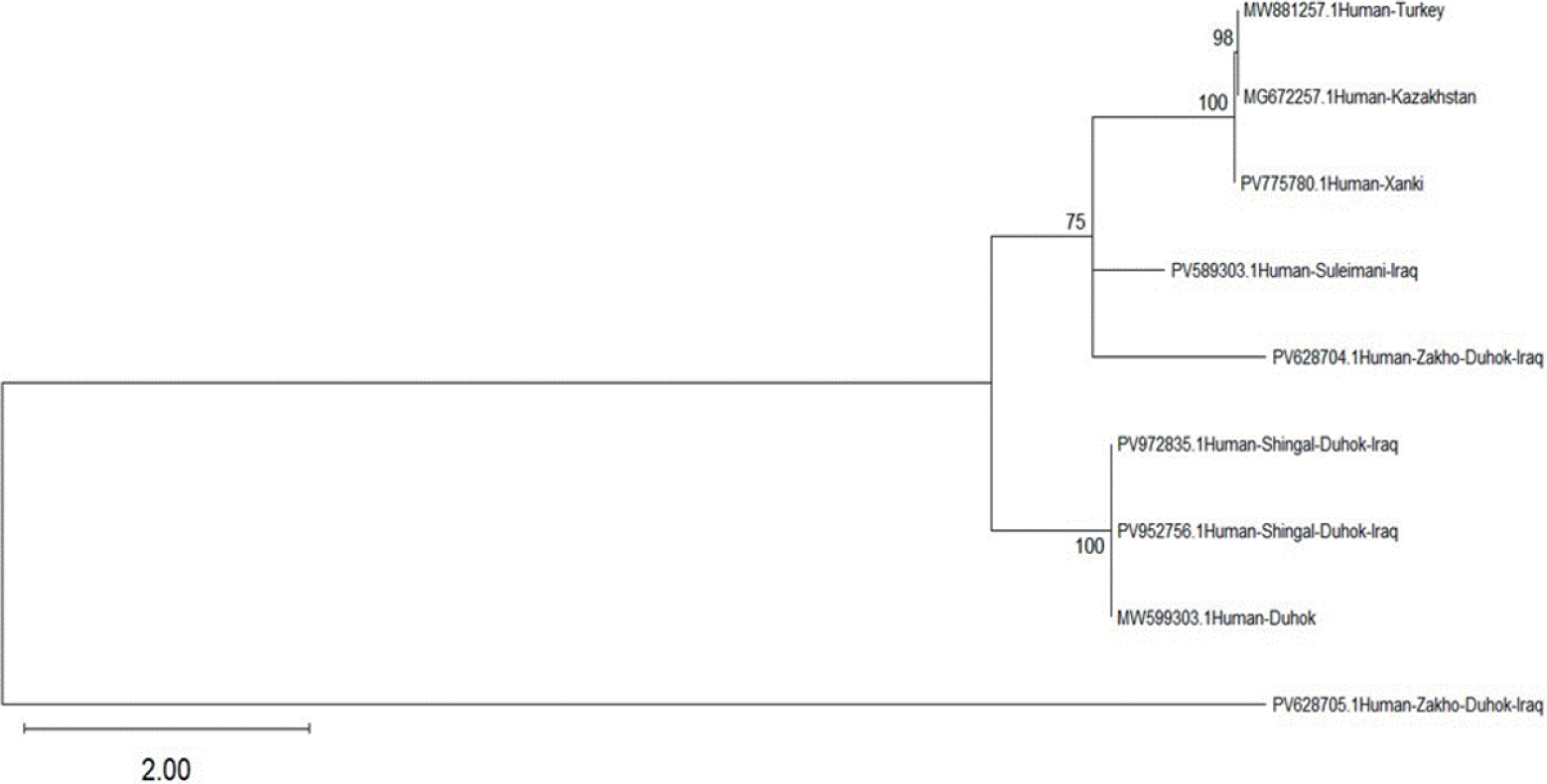
Fig. 6.
Phylogenetic tree based on partial mitochondrial COI gene sequences showing the genetic relationships among Echinococcus granulosus isolates obtained from human samples and reference sequences from different geographic regions. The tree was constructed using the Maximum Likelihood method.
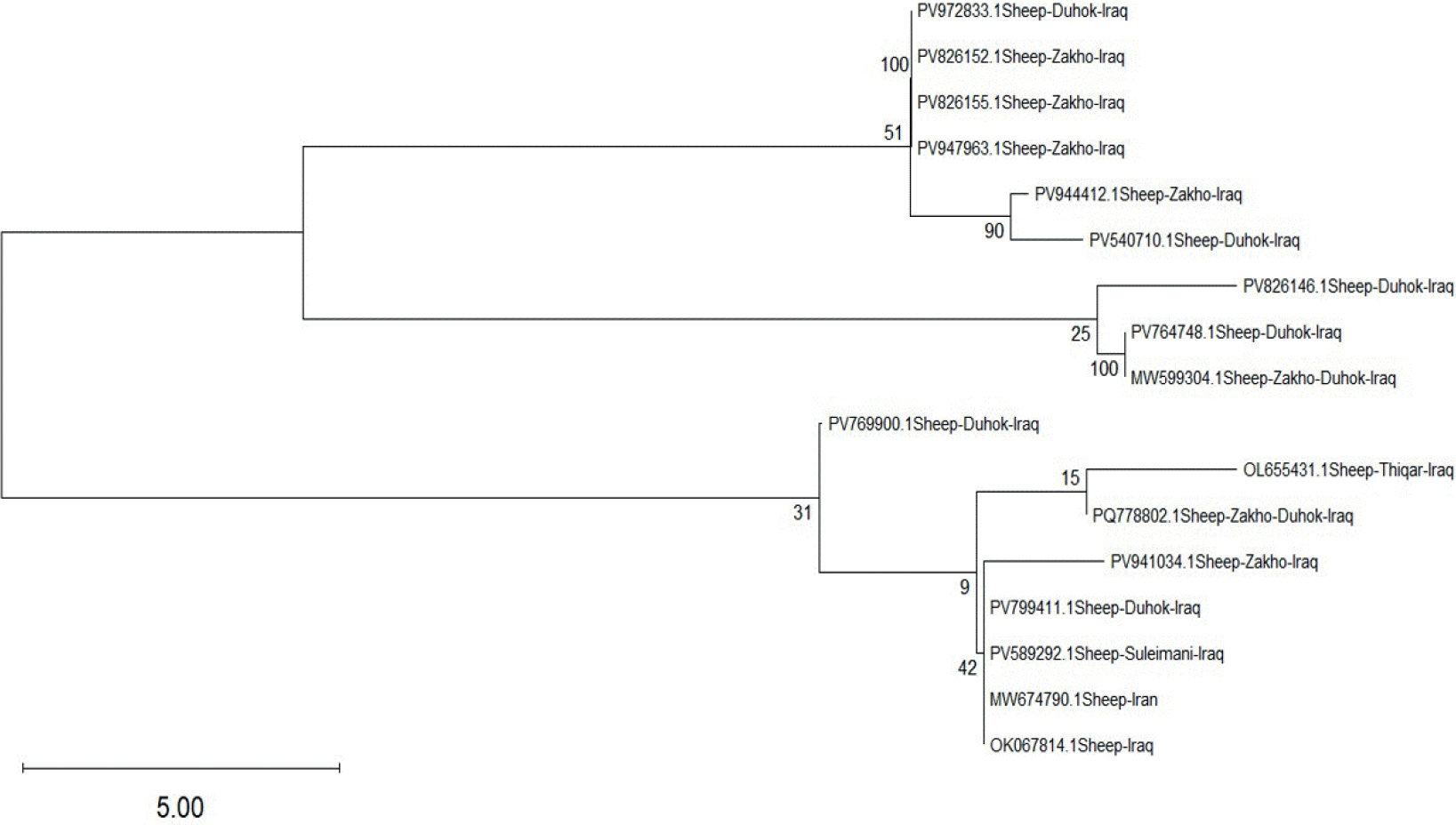
Fig. 7.
Phylogenetic tree based on partial mitochondrial COI gene sequences showing the genetic relationships among Echinococcus granulosus isolates obtained from sheep samples and reference sequences from different geographic regions. The tree was constructed using the Maximum Likelihood method.
Table 2.
Distribution of hydatid cysts by host, organ, and cyst type, showing predominance of liver involvement and fertile cysts in both sheep and human samples.
| Host | Sex | Organ | Fertile | Infertile | Calcified | Total |
|---|---|---|---|---|---|---|
| Animal | ||||||
| Sheep | Female | Liver | 13 | 6 | - | 19 |
| Sheep | Male | Liver | 11 | 2 | - | 13 |
| Sheep | Female | Lung | 4 | 1 | - | 5 |
| Sheep | Male | Lung | 3 | - | - | 3 |
| Sheep | Female | Kidney | - | - | 1 | 1 |
| Human | ||||||
| Human | Female | Liver | 7 | - | 1 | 8 |
| Human | Male | Liver | 6 | 1 | 1 | 8 |
| Human | Male | Spleen | 1 | - | - | 1 |
Table 3.
Illustrated Accession number recorded by NCBI GenBank in human and explain identified percentage with another accession number, (the accessions obtained in the present study and submitted to the Gene Bank are indicated in bold).
| Species | Accession No. | Region | Explain Identified % |
|---|---|---|---|
| E. granulosus | PV775780 | Khanke | Only PV775780 appeared similarity in NCBI with another accession no. 97%. But PV952756 & PV972835 appeared similarity in NCBI with another by 98-100%. |
| E. granulosus | PV952756 | Sinjar | |
| E. granulosus | PV972835 | Sinjar | |
| E. granulosus | MW881257 | Turkey | |
| E. granulosus | MG672257 | Kazakhstan | |
| E. granulosus | PV589303 | Sulaymaniyah | |
| E. granulosus | PV628705 | Zakho | |
| E. granulosus | MW599303 | Duhok | |
| E. granulosus | PV628704 | Zakho |
Table 4.
Illustrated Accession number recorded by NCBI GenBank in sheep and explain the identified percentage with another accession number (the accessions obtained in the present study and submitted to the Gene Bank are indicated in bold).
| Species | Accession no. | Isolated region | Similarity% |
|---|---|---|---|
| E. granulosus | PV764748 | Duhok | ------------ |
| E. granulosus | PV769900 | Duhok | ------------ |
| E. granulosus | PV826152 | Zakho | ------------ |
| E. granulosus | PV826155 | Zakho | ------------ |
| E. granulosus | PV799411 | Duhok | ------------ |
| E. granulosus | PV826146 | Duhok | ------------ |
| E. granulosus | PV941034 | Zakho | ------------ |
| E. granulosus | PV944412 | Zakho | ------------ |
| E. granulosus | PV947963 | Zakho | ------------ |
| E. granulosus | PV972833 | Duhok | ------------ |
| E. granulosus | PV540710 | Duhok | 100% |
| E. granulosus | OL655431 | Thi-qar | 100% |
| E. granulosus | OK067814 | Iraq | 100% |
| E. granulosus | PV589292 | Sulaymaniyah | 100% |
| E. granulosus | PQ778802 | Zakho | 100% |
| E. granulosus | MW599304 | Zakho | 98% |
| E. granulosus | MW674790 | Iran | 98% |