
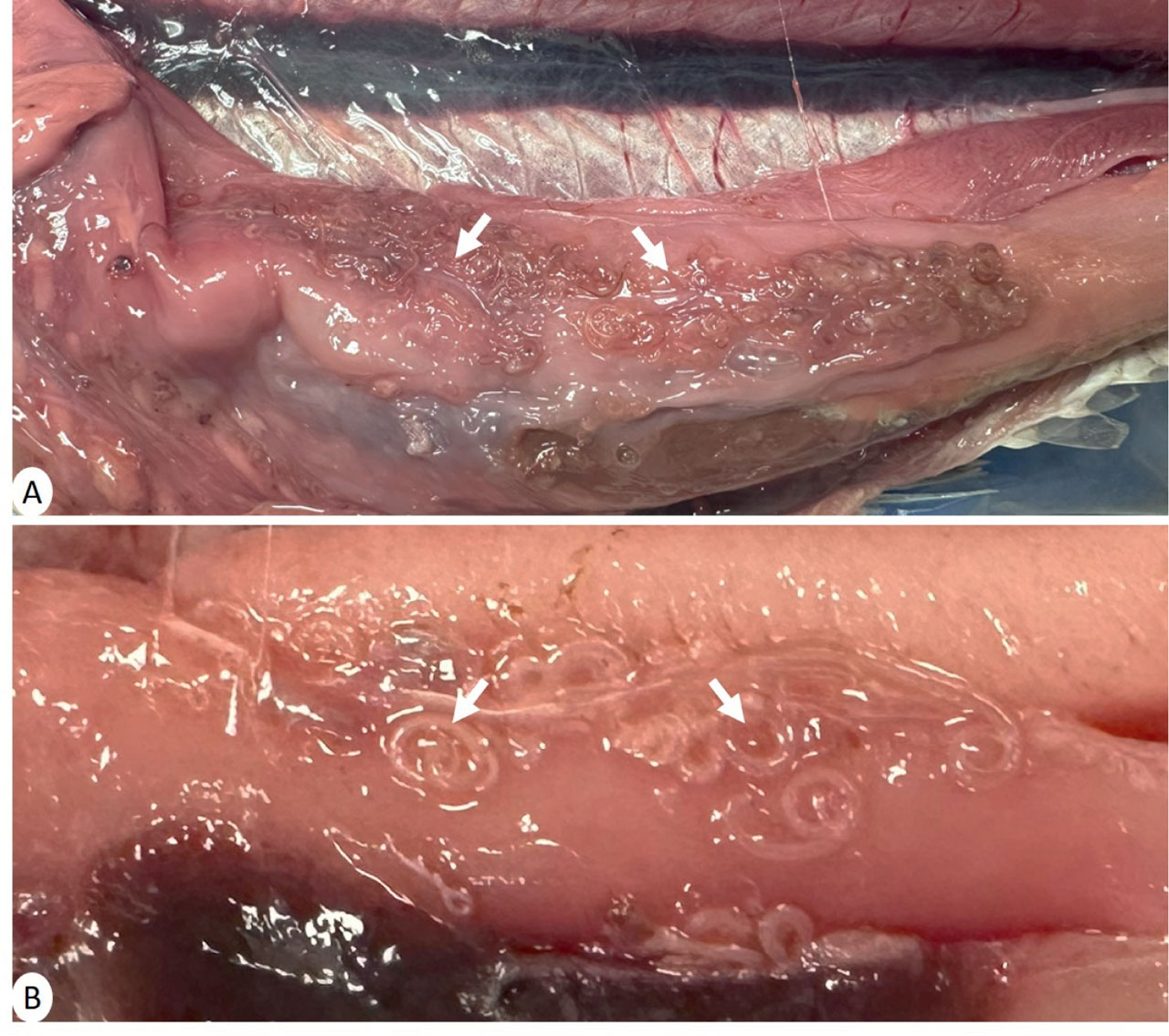
Fig. 1.
(A and B) Third-stage larvae (white arrow) for the nematode parasite, H. thalassini, in the peritoneal cavity of S. tumbil.
Table 1.
Oligonucleotide primer sequences for reverse transcription PCR amplification in the experiment.
| RNA target | Direction | Oligonucleotide sequence (5′–3′) | NCBI reference |
|---|---|---|---|
| Caspase-3 | Forward | CTAGCAGGATCCAGCAGTCC | NM_009810 |
| Reverse | CCCCTATTCCACCCAACTTT | ||
| β-actin | Forward | GCTACAGCTTCACCACCACA | NM_007393 |
| Reverse | AAGGAAGGCTGGAAAAGAGC |
Table 2.
Phytochemical composition and antioxidant activity of Terfezia claveryi extract (TCE), including FRAP, DPPH, and ABTS assays.
| Phytochemical | FRAP (μmol/g) | DPPH (%) | ABTS (μmol/g) |
|---|---|---|---|
| Qualitative | +++ | +++ | +++ |
| Quantitative | 87.15 ± 2.34 | 76.21 ± 1.37 | 97.20 ± 0.27 |
Table 3.
TCE caused changes in hematological parameters of mice's blood after L3 infection.
| Experimental mouse groups | Red blood cells (×106/l) | Hemoglobin(g/dl) | Hematocrit (%) | Platelets (×103/L) | White blood cells (×103/L) | |
|---|---|---|---|---|---|---|
| Control | 10.34 ± 0.86 | 13.24 ± 0.61 | 47.06 ± 5.32 | 328.67 ± 24.68 | 5.56 ± 0.64 | |
| TCE | 10.49 ± 0.90 | 13.22 ± 0.51 | 46.57 ± 4.37 | 345.67 ± 11.67 | 5.35 ± 0.72 | |
| Infected | Fresh L3 | 7.79 ± 0.27* | 8.86 ± 0.35* | 31.10 ± 1.15* | 858.33 ± 31.13* | 19.63 ± 1.01* |
| Thermal L3 | 8.78 ± 0.34* | 9.76 ± 0.35* | 36.90 ± 1.80* | 613.33 ± 46.32* | 10.43 ± 0.75* | |
| Frozen L3 | 8.35 ± 0.12* | 9.42 ± 0.28* | 35.36 ± 2.28* | 649.67 ± 18.61* | 10.96 ± 0.31* | |
| Infected-TCE | Fresh L3 | 8.67 ± 0.52*# | 9.90 ± 0.26*# | 38.47 ± 2.05*# | 558.67 ± 35.85*# | 9.03 ± 0.60*# |
| Thermal L3 | 9.80 ± 0.47*# | 11.90 ± 0.36*# | 42.46 ± 0.93*# | 453.67 ± 14.18*# | 7.83 ± 0.15*# | |
| Frozen L3 | 9.48 ± 0.32*# | 10.90 ± 0.30*# | 40.70 ± 1.41*# | 487.00 ± 18.52*# | 8.07 ± 0.25*# | |
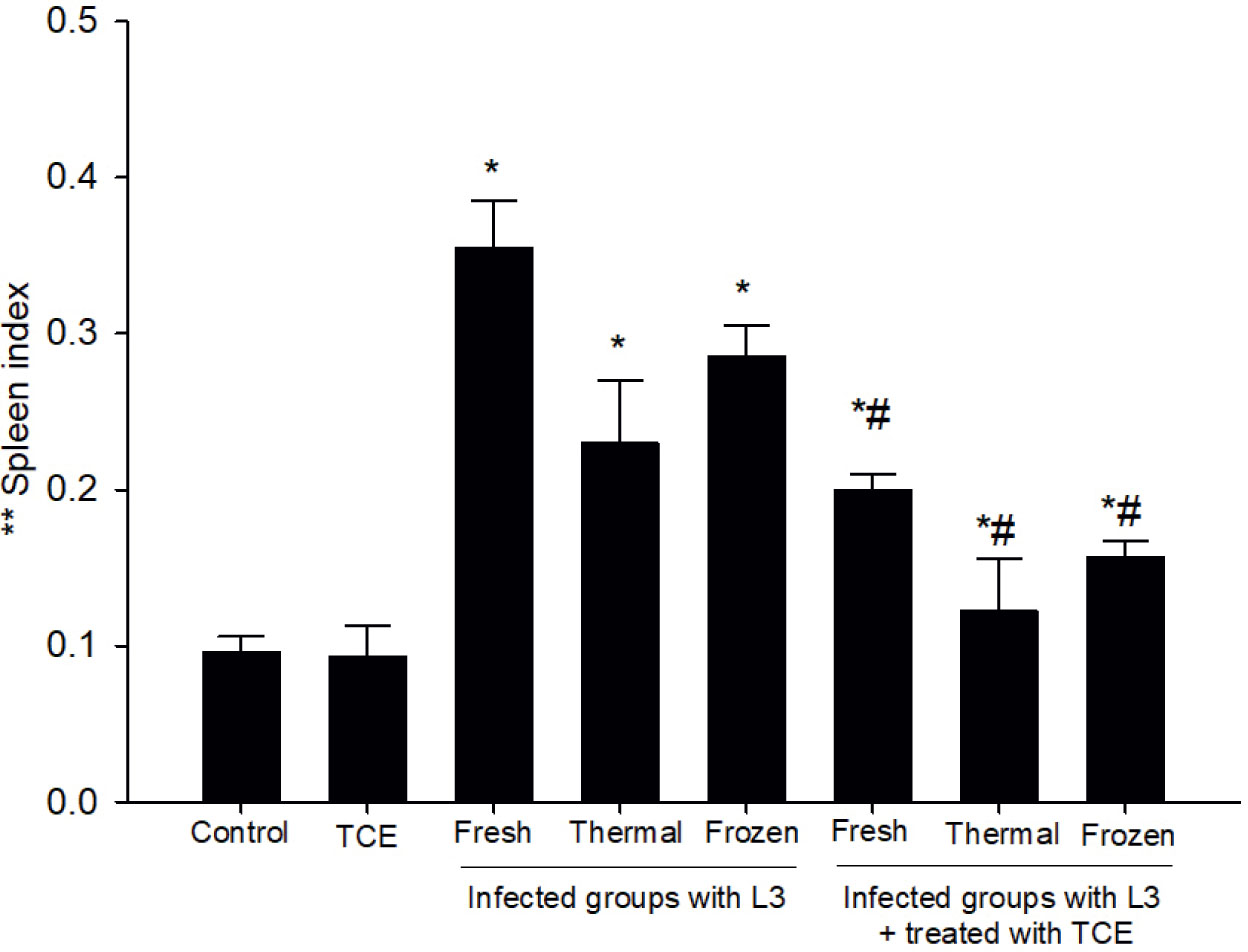
Fig. 2.
Changes in the spleen index of the spleen of uninfected, infected with fresh, thermally, and frozen L3 larvae, as well as in infected groups administered TCE (250 mg/kg).
* denotes a statistically significant difference relative to the control group; # denotes a statistically significant difference relative to the infected group.
** Ratio of spleen weight in mg/mouse to body weight in g/mouse.
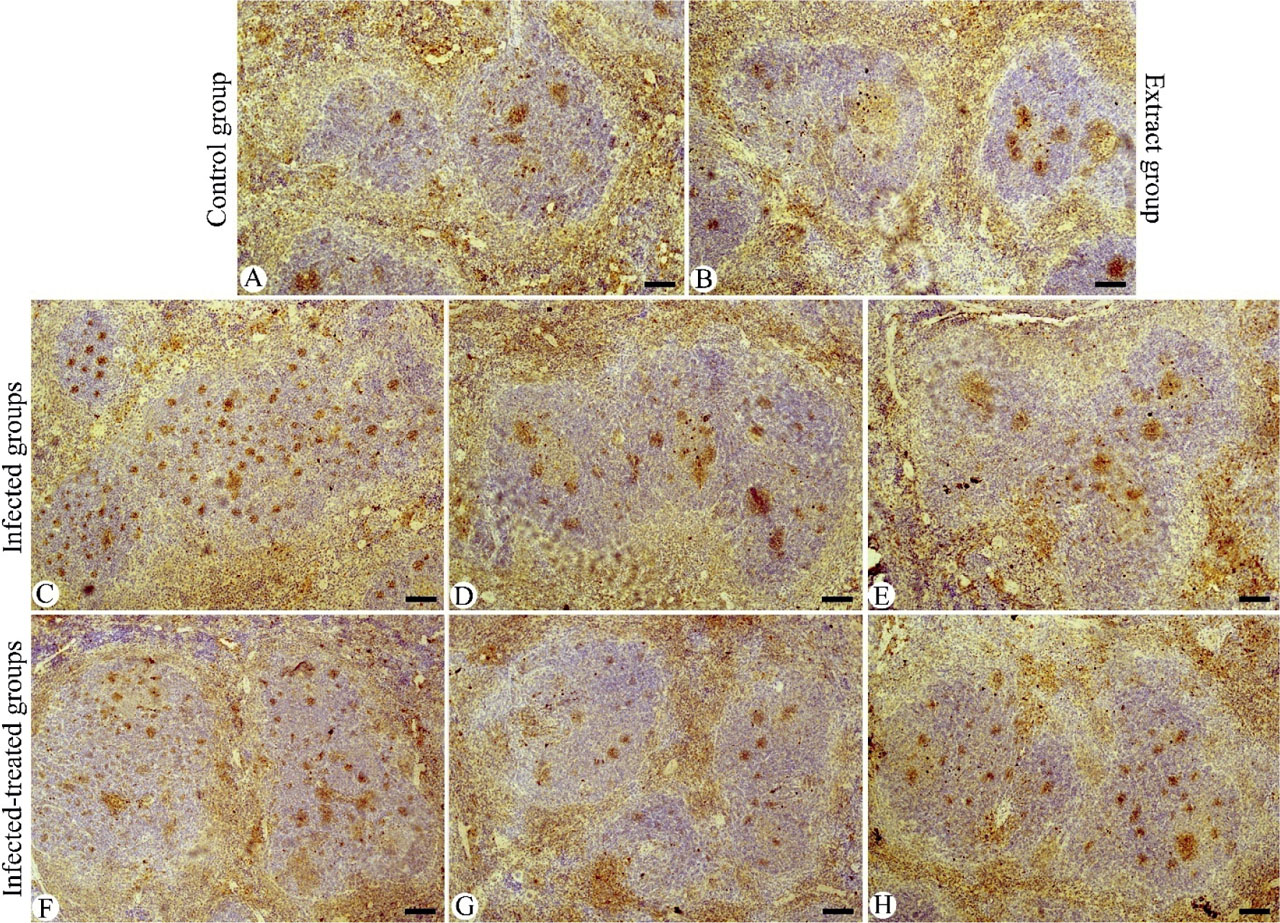
Fig. 3.
Immunohistochemical detection of caspase-3 in the spleen of mice. (A) control group. (B) Terfezia claveryi extract (TCE)-treated group. (C–E) infected groups with fresh, thermally, and frozen L3, respectively. (F–H) infected-treated groups with TCE (250 mg/kg) after inoculation with fresh, thermally, and frozen L3, respectively. Scale bar = 50 μm.
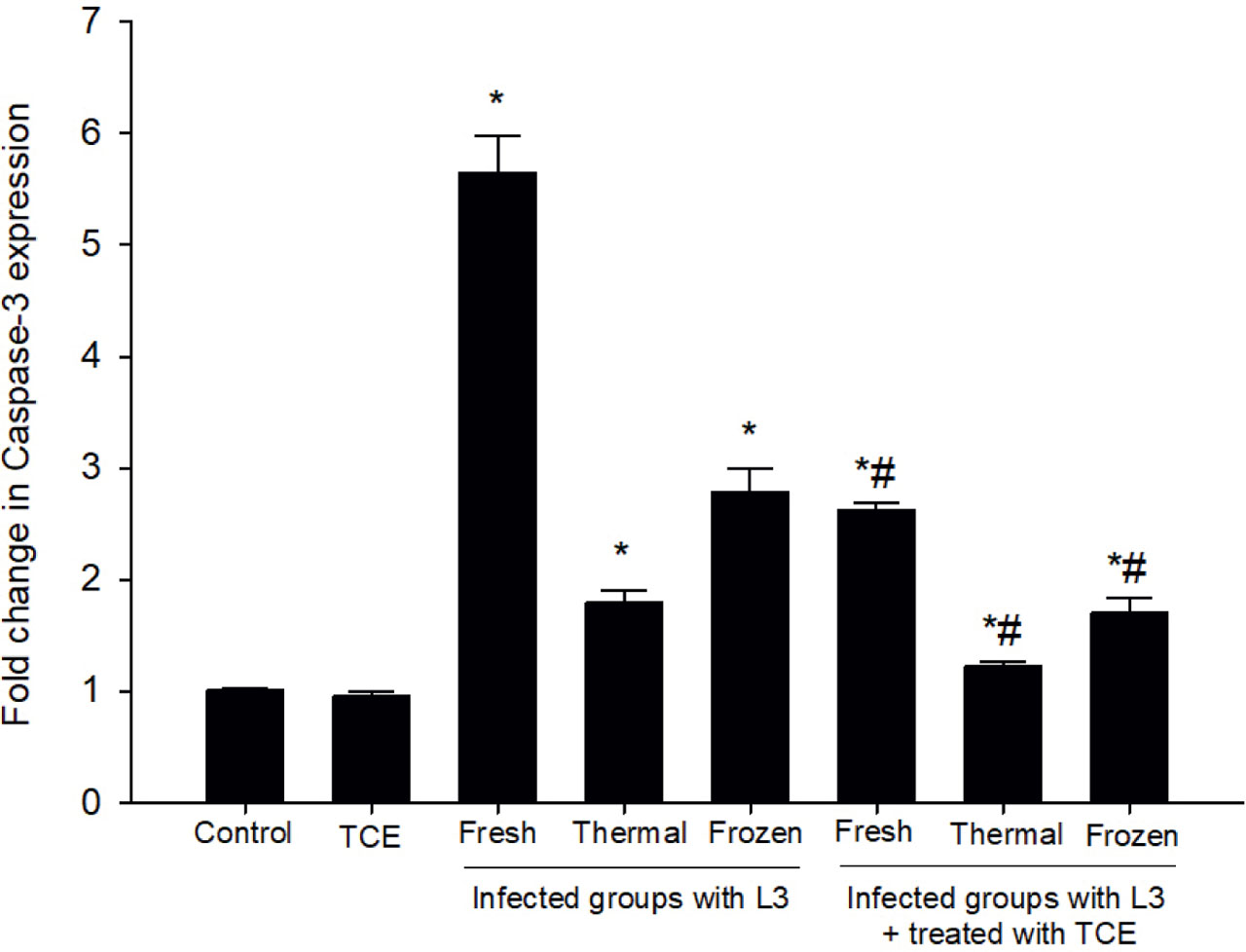
Fig. 4.
Effect of TCE on the mRNA expression of Caspase-3 in the spleen samples from L3-infected mice. The RT-PCR expression values were normalized to the reference gene β-actin and expressed as fold induction (log2 scale) relative to the control.
* denotes a statistically significant difference relative to the control group; # denotes a statistically significant difference relative to the infected group.
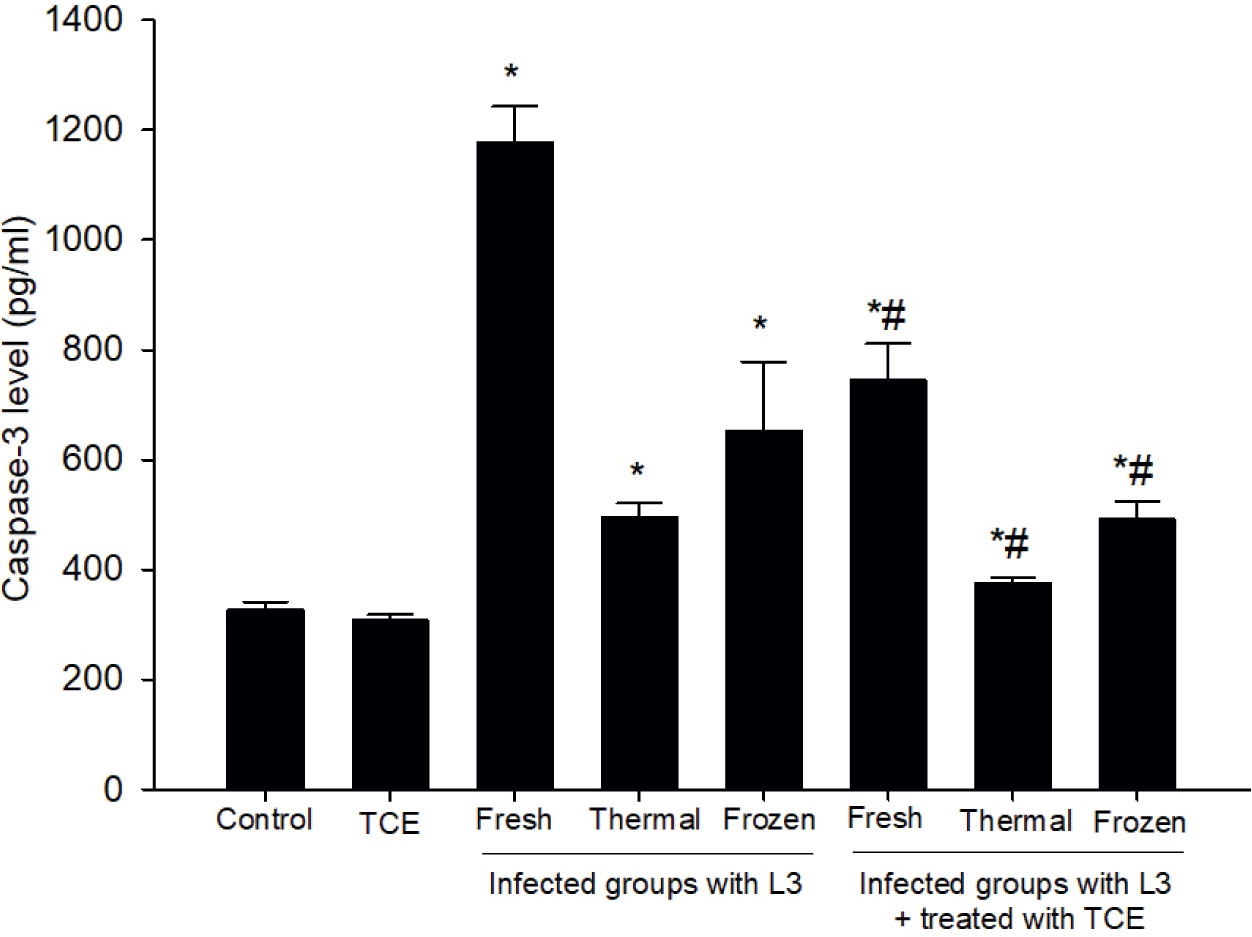
Fig. 5.
Caspase-3 level in the spleen samples from the different experimental mouse groups.
* denotes a statistically significant difference relative to the control group; # denotes a statistically significant difference relative to the infected group.