Have a personal or library account? Click to login
Ovarian balls (Floating ovaries) of Rhadinorhynchus niloticus Mohamadain, 1989 from the Nile perch Lates niloticus Linnaeus, 1758; an electron microscope study Cover

Ovarian balls (Floating ovaries) of Rhadinorhynchus niloticus Mohamadain, 1989 from the Nile perch Lates niloticus Linnaeus, 1758; an electron microscope study

Open Access
|Jul 2024

Figures & Tables

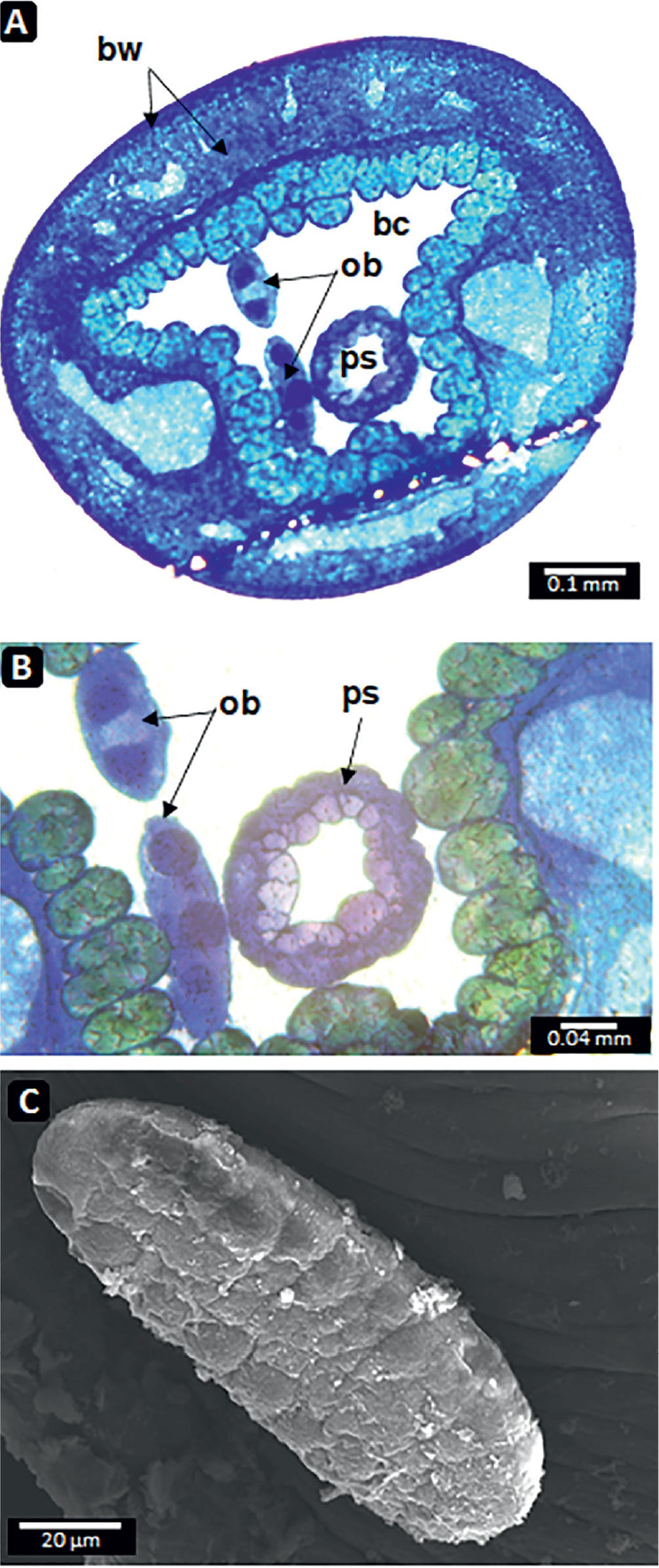
Fig. 1.

A – Photomicrograph of a semi-thin section of female R. niloticus at the end of the anterior third of the body. B – Enlarged portion of fig.1A showing two ovarian balls (ob). C – Scanning electron micrograph of an ovarian ball of R. niloticus showing a distinctively textured surface. bc – body cavity, bw – body wall, ps – proboscis sheth.
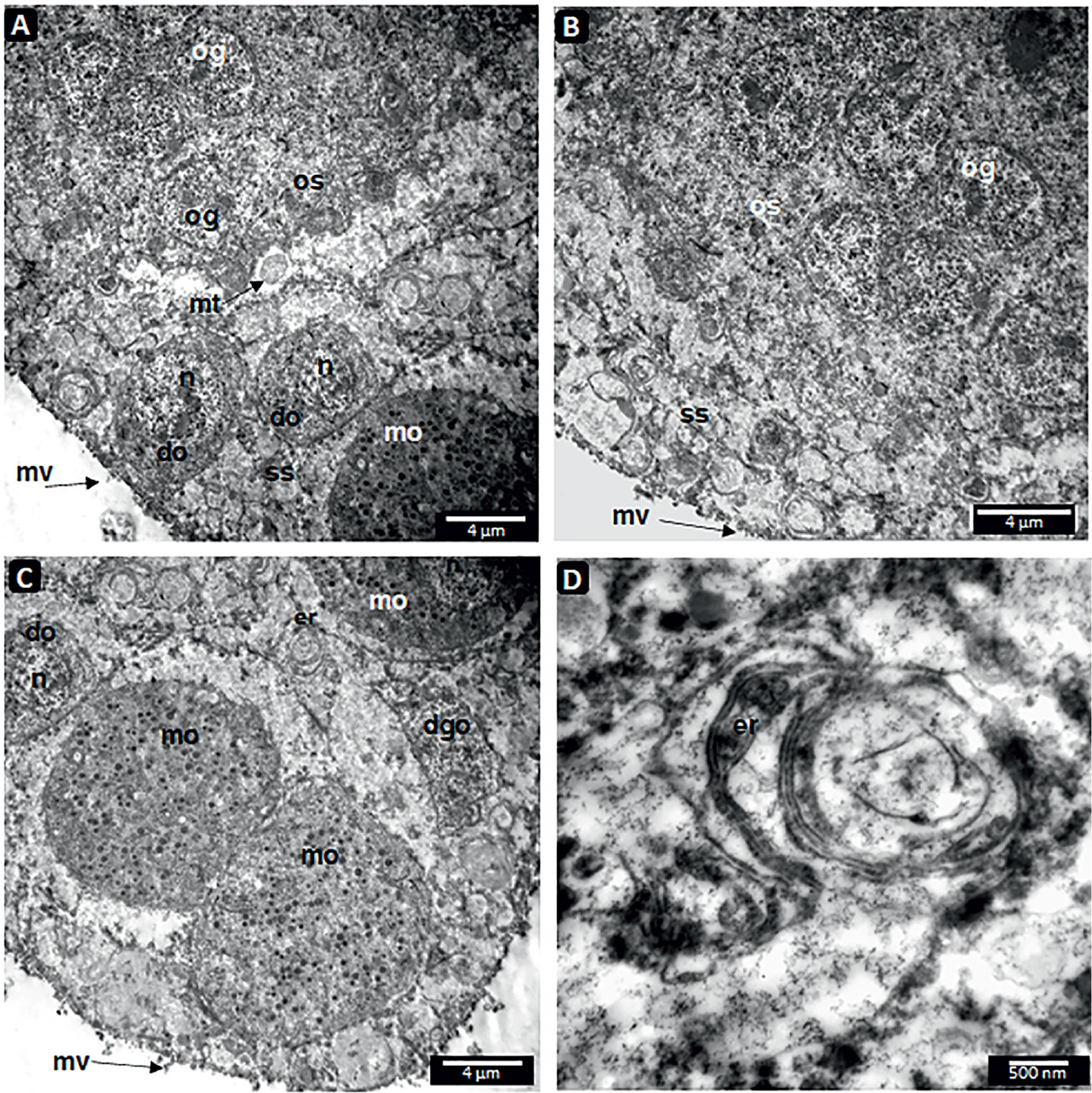

Fig. 2.

Transmission electron micrographs (TEM) of the ovarian ball of R. niloticus illustrating A – The primary areas of the ovarian ball; B – The oogonial syncytium (os) surrounded by the supporting syncytium (ss); C – Developing oocyte (do), mature oocyte (mo) and degenerated oocyte (dgo); D – Enlarged portion of fig. 2C showing the endoplasmic reticulum (er) of the supporting syncytium. mt mitochondria, mv microvilli, n nucleus, og oogonia.
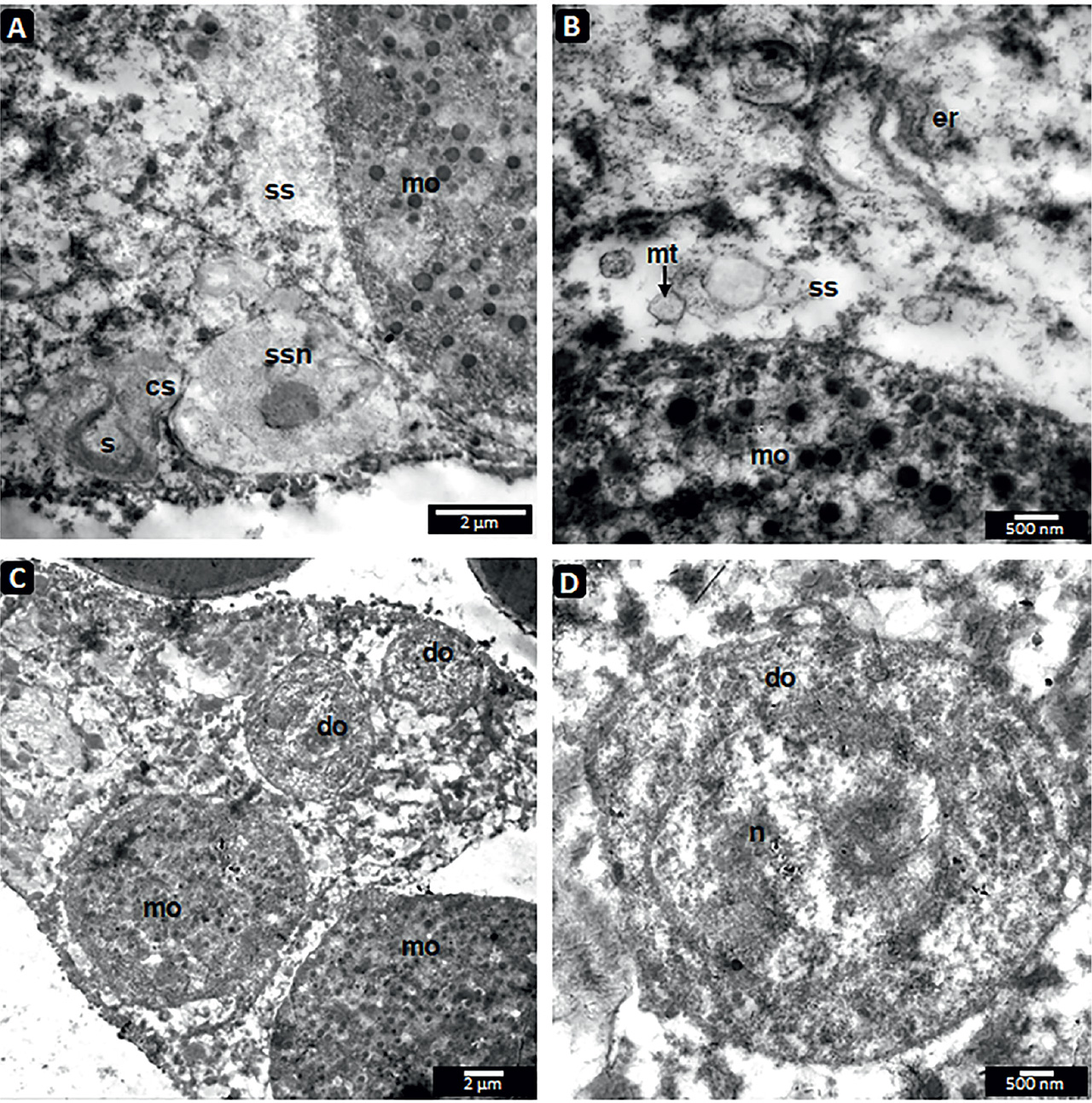

Fig. 3.

TEM of the ovarian ball of R. niloticus illustrating: A – Enlarged margin of the mature oocyte (mo) with the surrounding supporting cortical syncytium (ss). Note the presence of a spermatozoon (s) surrounded by cytoplasmic sheath (cs) and the large nucleus of the supporting syncytium (ssn). B – Enlarged part of supporting syncytium showing the presence of the mitochondria (mt) and the endoplasmic reticulum (er). C – Developing (do) and mature oocytes (mo). D – Enlarged portion of fig. 3C showing the details of developing oocyte.
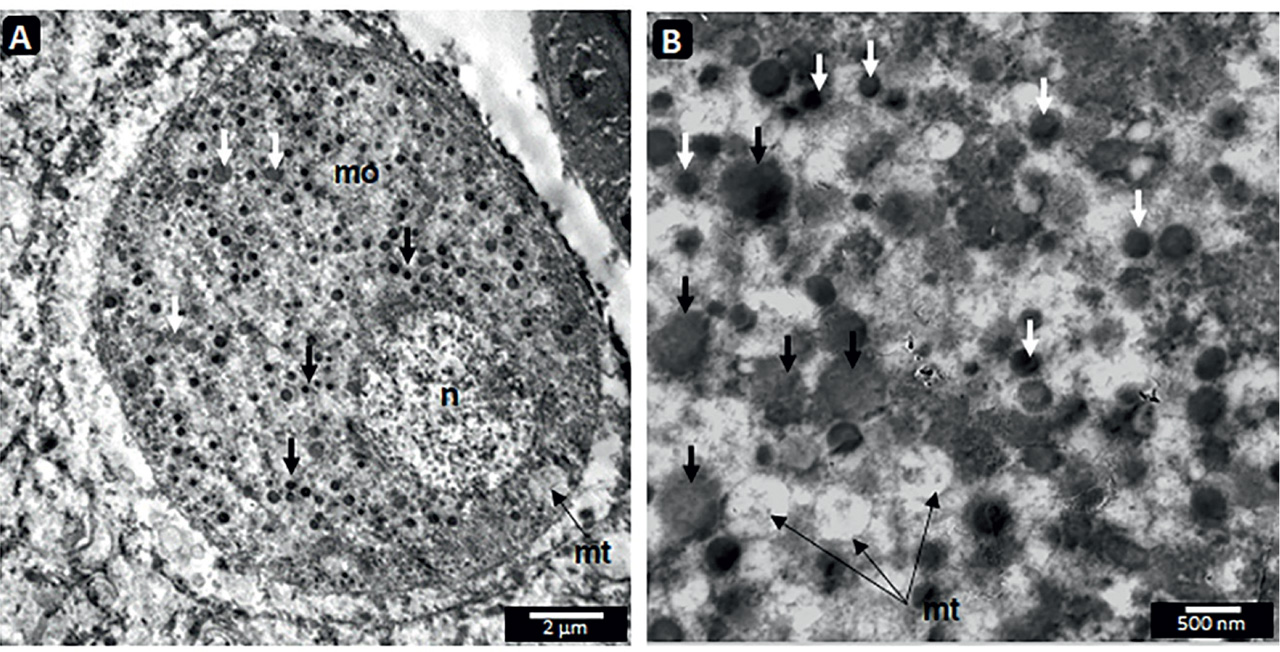

Fig. 4.

TEM of the ovarian ball of R. niloticus illustrating: A – The mature oocyte (mo) with eccentric nucleus (n), and mitochondria (mt); B – The mitochondria and the cytoplasmic inclusions (larger yolk granules (black arrows) and smaller, more electron dense egg-shell granules (white arrows) of the mature oocyte.
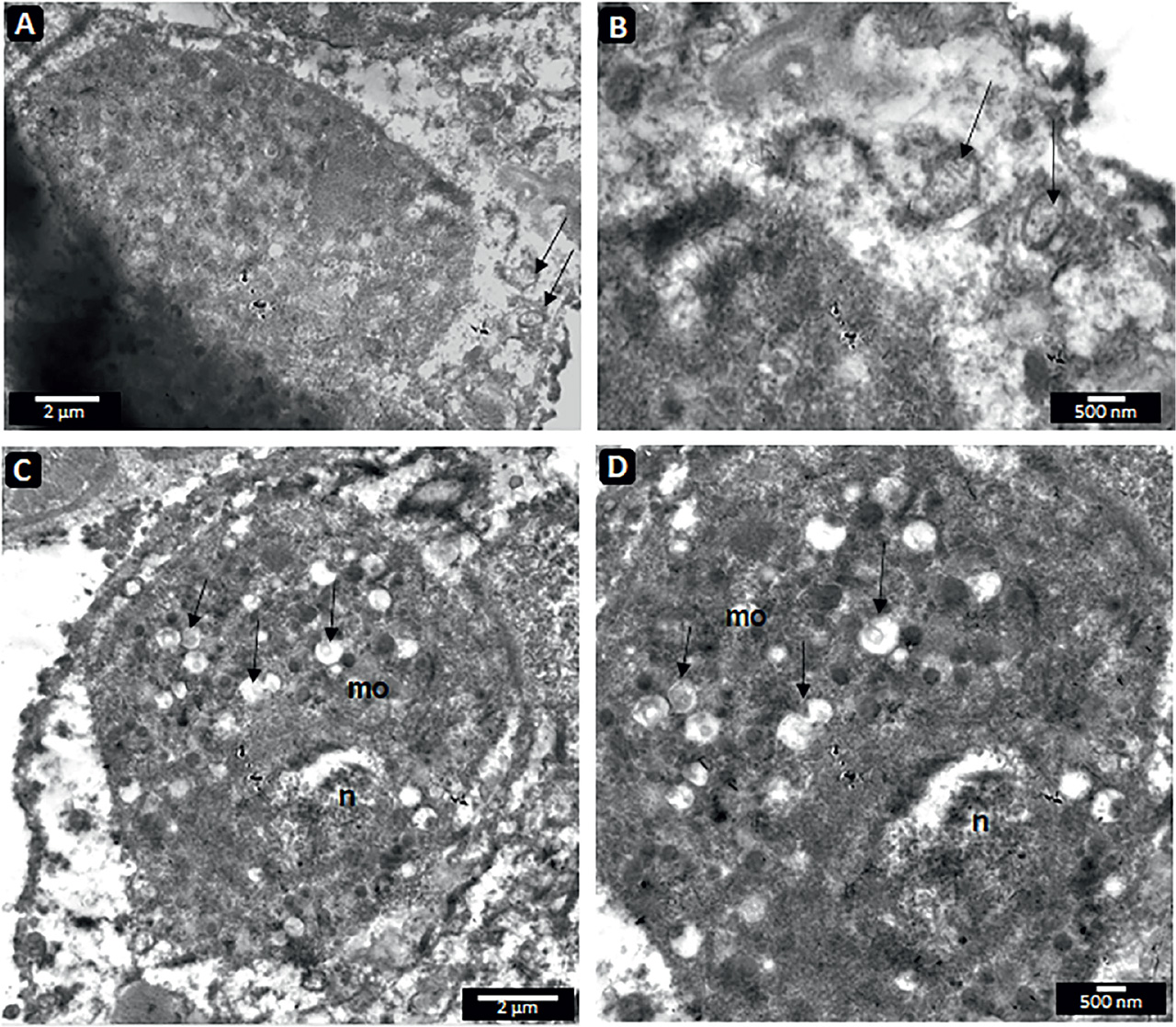

Fig. 5.

TEM of the mature oocyte of R. niloticus illustrating: A – A spermatozoon started to penetrate the mature oocyte (arrows); B – Enlarged portion of fig. 5A showing spermatozoon penetration site (arrows); C – The spermatozoon completely penetrated the oocyte (note the eccentric nucleus, the poorly-developed fertilization membrane, the presence of postfertilization space). D – Enlarged portion of fig. 5C showing cross sections of the folded spermatozoon (arrows). mo – mature oocyte, n – nucleus.
DOI: https://doi.org/10.2478/helm-2024-0014 | Journal eISSN: 1336-9083 | Journal ISSN: 0440-6605
Language: English
Page range: 194 - 200
Submitted on: Feb 7, 2024
|
Accepted on: Mar 25, 2024
|
Published on: Jul 16, 2024
In partnership with: Paradigm Publishing Services
Publication frequency: 4 issues per year

© 2024 A. M. El-Siefy, M. H. Ibraheem, S. G. Abd El-Kareem, published by Slovak Academy of Sciences, Institute of Parasitology
This work is licensed under the Creative Commons Attribution-NonCommercial-NoDerivatives 4.0 License.