
Have a personal or library account? Click to login
MMaJIC, an Experimental Chamber for Investigating Soldering and Brazing in Microgravity Cover

MMaJIC, an Experimental Chamber for Investigating Soldering and Brazing in Microgravity

Open Access
|Jul 2020

Figures & Tables

Figure 1

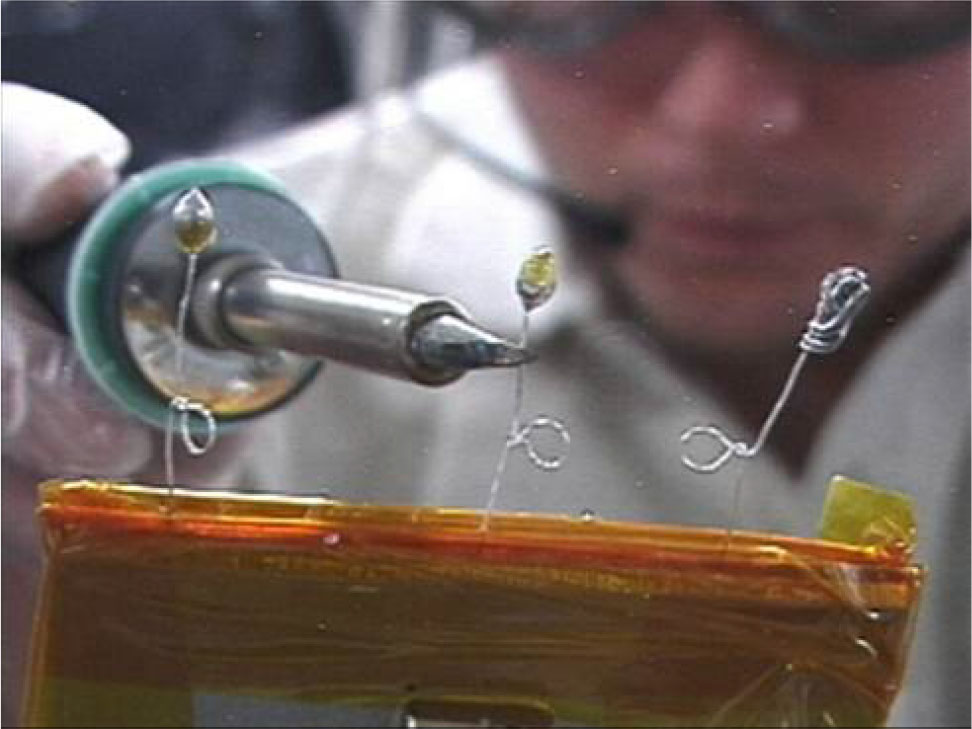
Photograph of ISS Science Officer, Mike Fincke, conducting a set of melting experiments within the Maintenance Work Area. The sample on the left was just completed, the central one is being melted, and the one on the right shows 10 cm of solder wrapped about the top of the wire prior to melting. The yellow material is rosin from the solder-wire core.
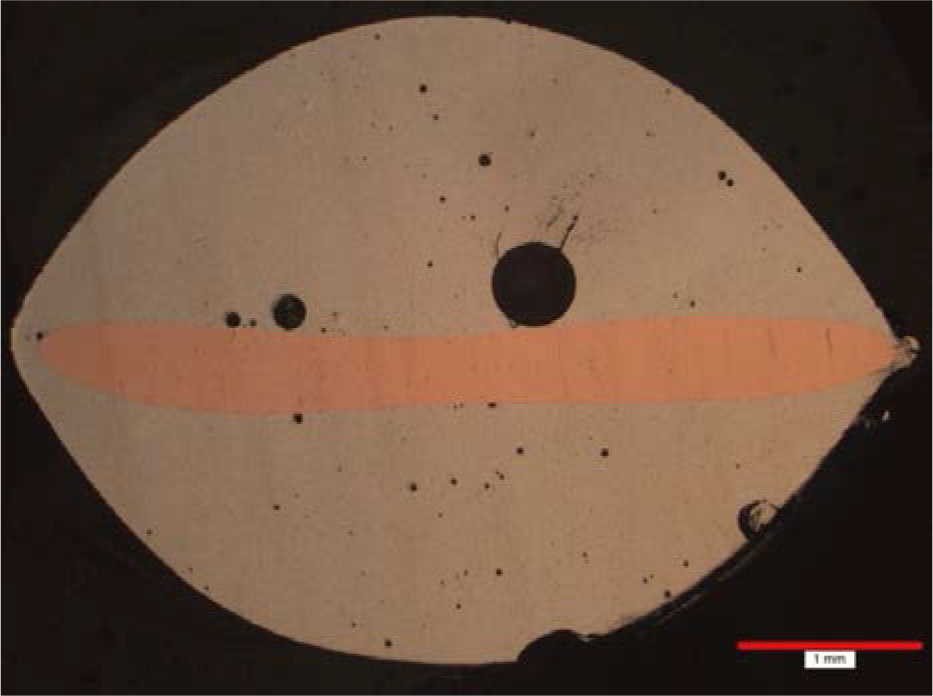

Figure 2

An optical micrograph from one of the ISSI samples processed in Figure 1. Flux bubbles (porosity) are seen at the solder/copper wire (joint) interface. This porosity compromises thermal and electrical conductivity as well as reduces mechanical strength.
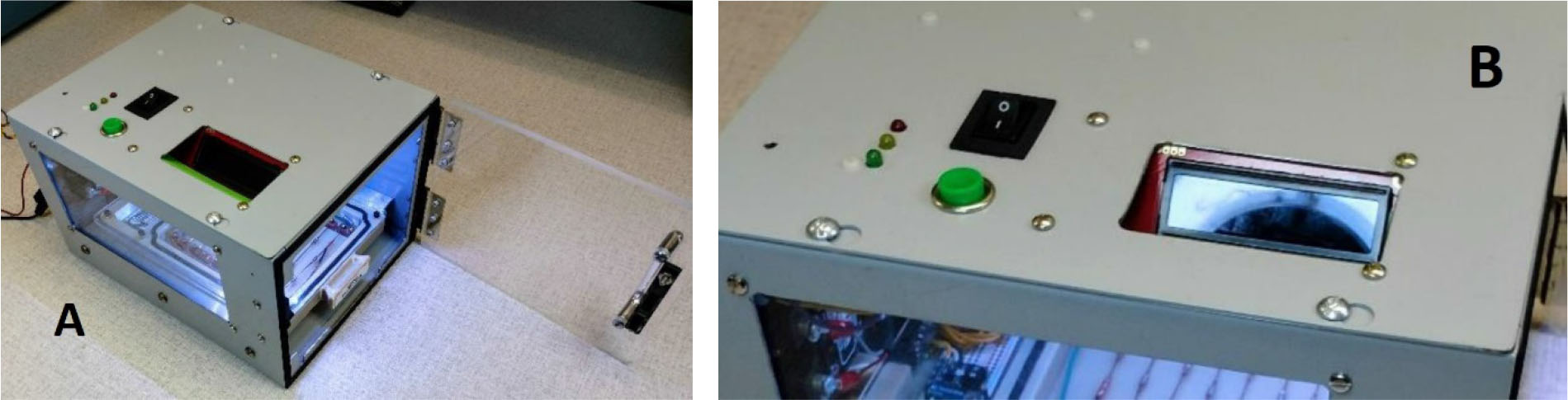

Figure 3

Photographs of the Microgravity Materials Joining Investigative Chamber (MMaJIC) containment box. 3A shows the box with an inserted sample tray and the door open. 3B is a close-up of the removable top showing the indicator LEDs, power switch, start button, and LCD panel.
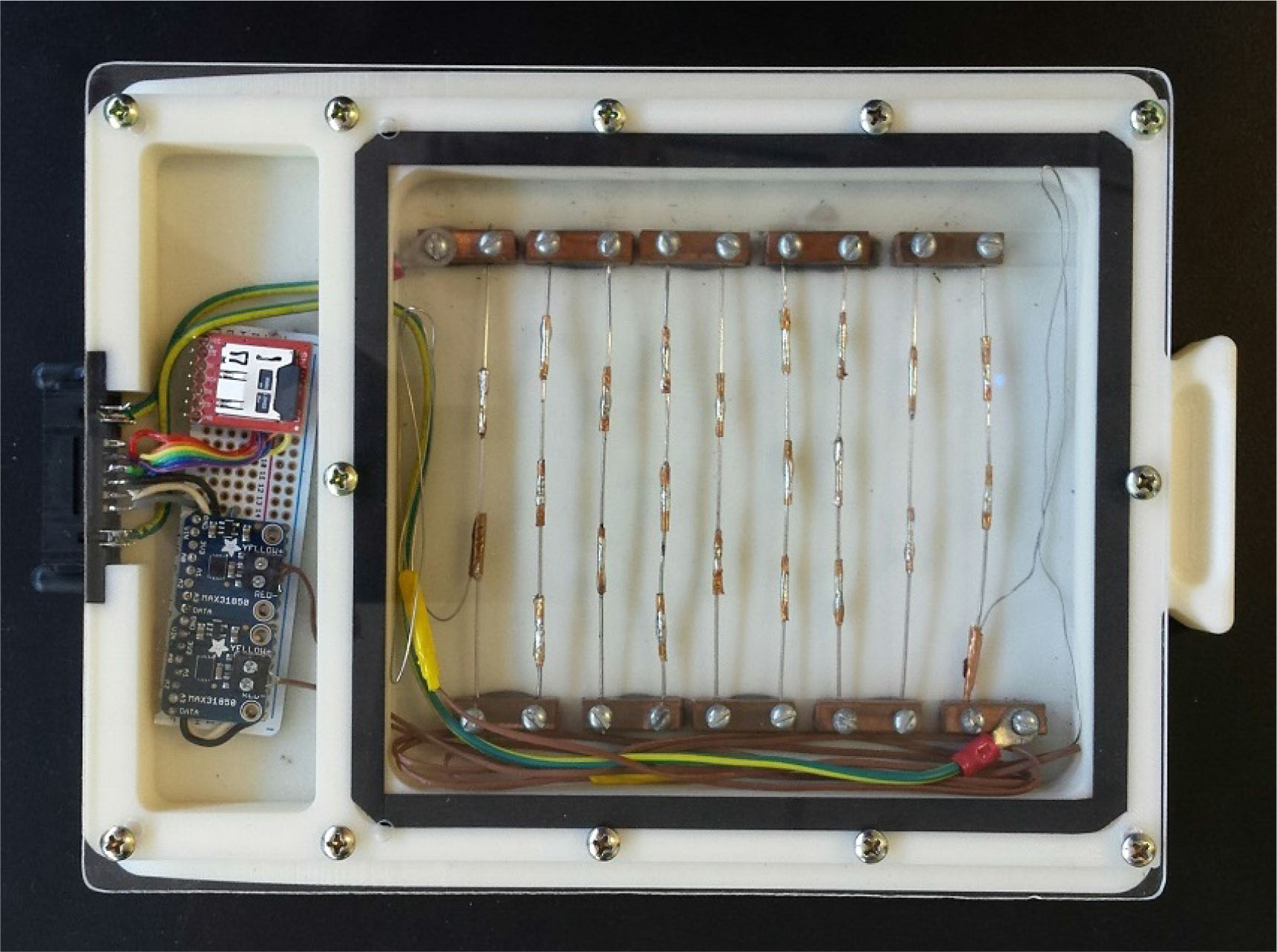

Figure 4

Photographs of the Microgravity Materials Joining Investigative Chamber (MMaJIC) sample tray. Dimensions of the tray are, including handle and plug, approximately 23 cm × 16 cm × 20 cm. The left, smaller chamber houses experiment-specific electronics, including the data acquisition card. The chamber on the right shows the kanthal heating wires. The 20 samples consist of a small copper foil, tightly wrapped around the wire, around which 10 cm of a lead-tin rosin-core solder was then added. Two control thermocouples are seen at the bottom of the left and right wires.
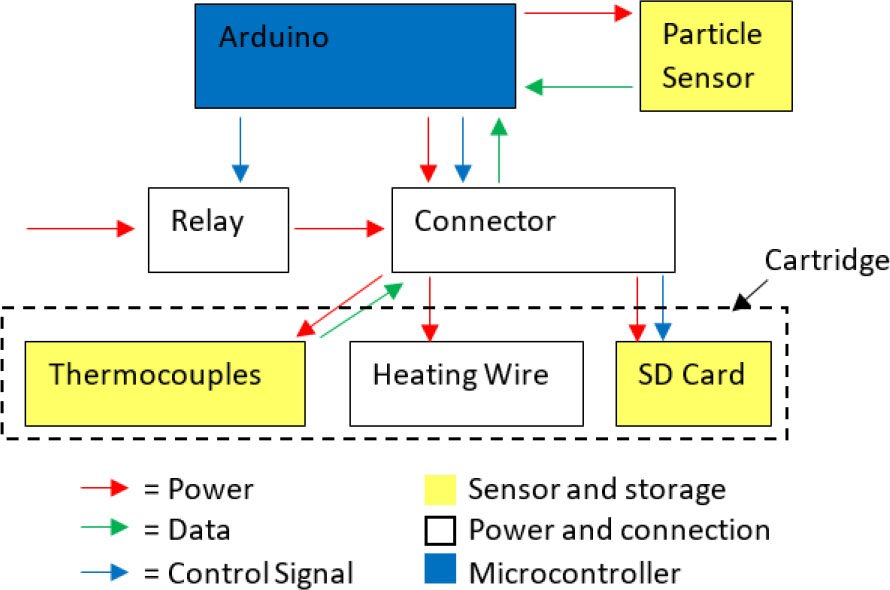

Figure 5

Microgravity Materials Joining Investigative Chamber (MMaJIC) system block diagram.
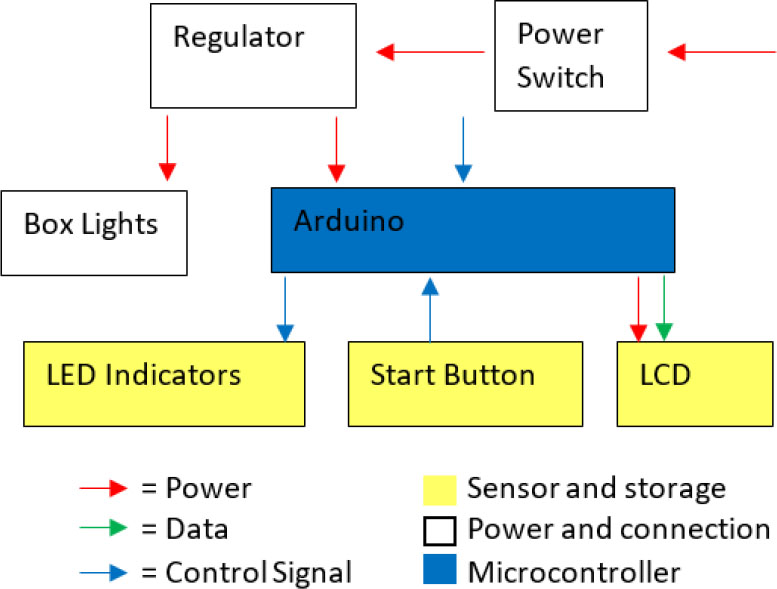

Figure 6

Microgravity Materials Joining Investigative Chamber (MMaJIC) user interface block diagram.
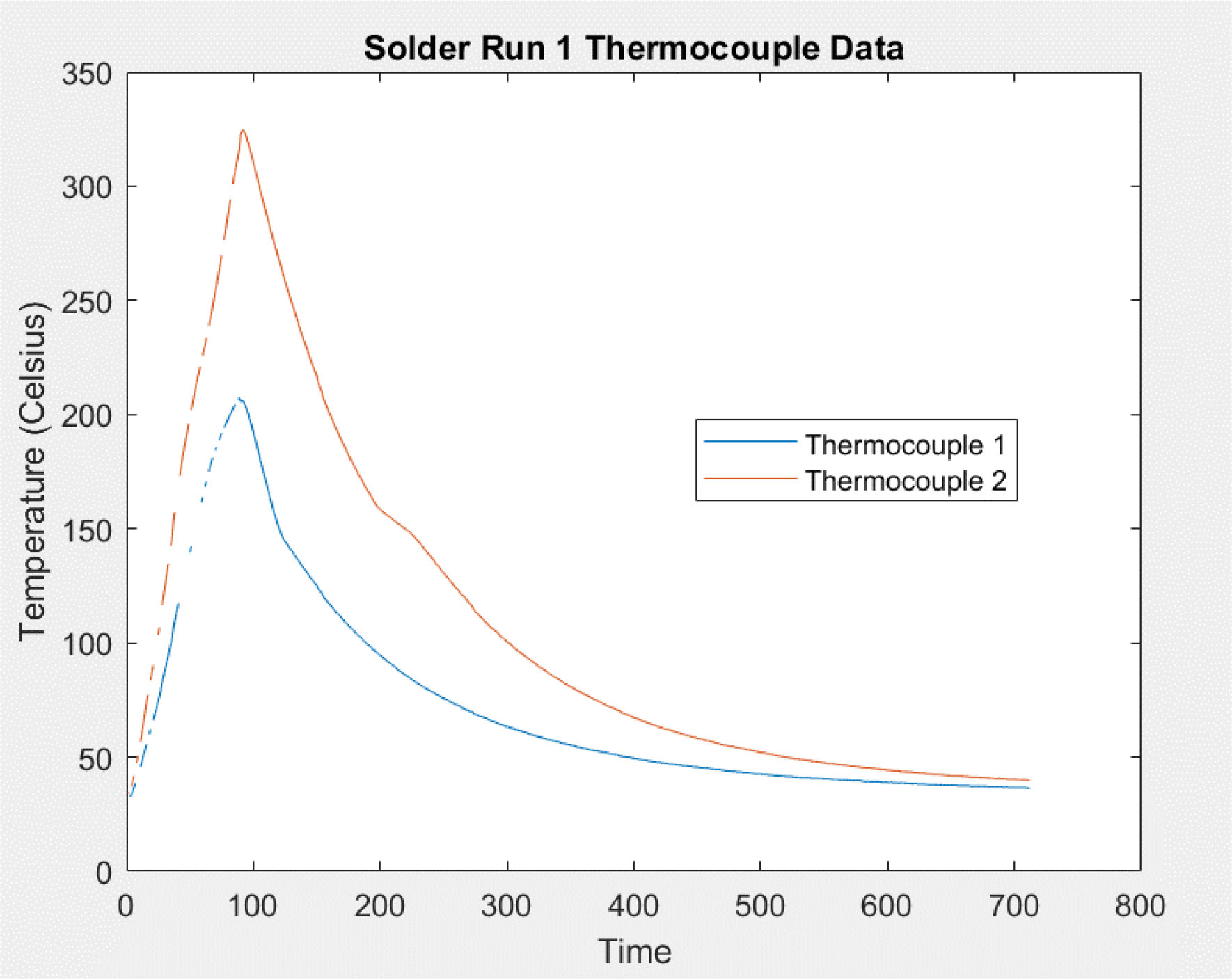

Figure 7

Plot of thermocouple data showing heating and cooling of the nichrome wires from which heat is conducted to melt the samples during the experiment. Note that the tip region of theromocouple 1 was not in contact with the heating wire.
Language: English
Page range: 28 - 34
Published on: Jul 21, 2020
Published by: American Society for Gravitational and Space Research
In partnership with: Paradigm Publishing Services
Publication frequency: 2 issues per year

© 2020 Shannen Daly, Micah Hardyman, James Ragan, Joseph Toombs, Tracie Prater, Richard N. Grugel, published by American Society for Gravitational and Space Research
This work is licensed under the Creative Commons Attribution-NonCommercial-NoDerivatives 3.0 License.