| DC-FDA | 2’,7’-dichlorodihydrofluorescein diacetate |
| DHE | Dihydroethidium |
| DMSO | Dimethyl sulfoxide |
| Em | Emission |
| Ex | Excitation |
| FRET | Fluorescence resonance energy transfer |
| GSH | Glutathione (reduced) |
| GSSH | Glutathione (oxidized) |
| GST | Glutathione S-transferase |
| HPLC | High performance liquid chromatography |
| mBCL | Monochlorobimane |
| mcf | mean channel fluorescence |
| Msn4Δ | Msn4 yeast deletion: Multicopy suppressor of SNF1 mutation (YKL062W) |
| NaOH | Sodium hydroxide |
| NDA | Naphthalene-2,3-dicarboxaldehyde |
| NEM | N-Ethylmaleimide |
| NMR | Nuclear magnetic resonance |
| PBS | Phosphate buffered saline |
| PI | Propidium iodide |
| PKC | Protein kinase C |
| ROS | Reactive oxygen species |
| SEM | Standard error of the mean |
| Sfp1Δ | Sfp1 yeast deletion: Split Finger Protein (YLR403W) |
| Sok2Δ | Sok2 yeast deletion: Suppressor of Kinase (YMR016C) |
| WT | Wild type |
| YE | Yeast extract |
| YPD | Yeast peptone dextrose |
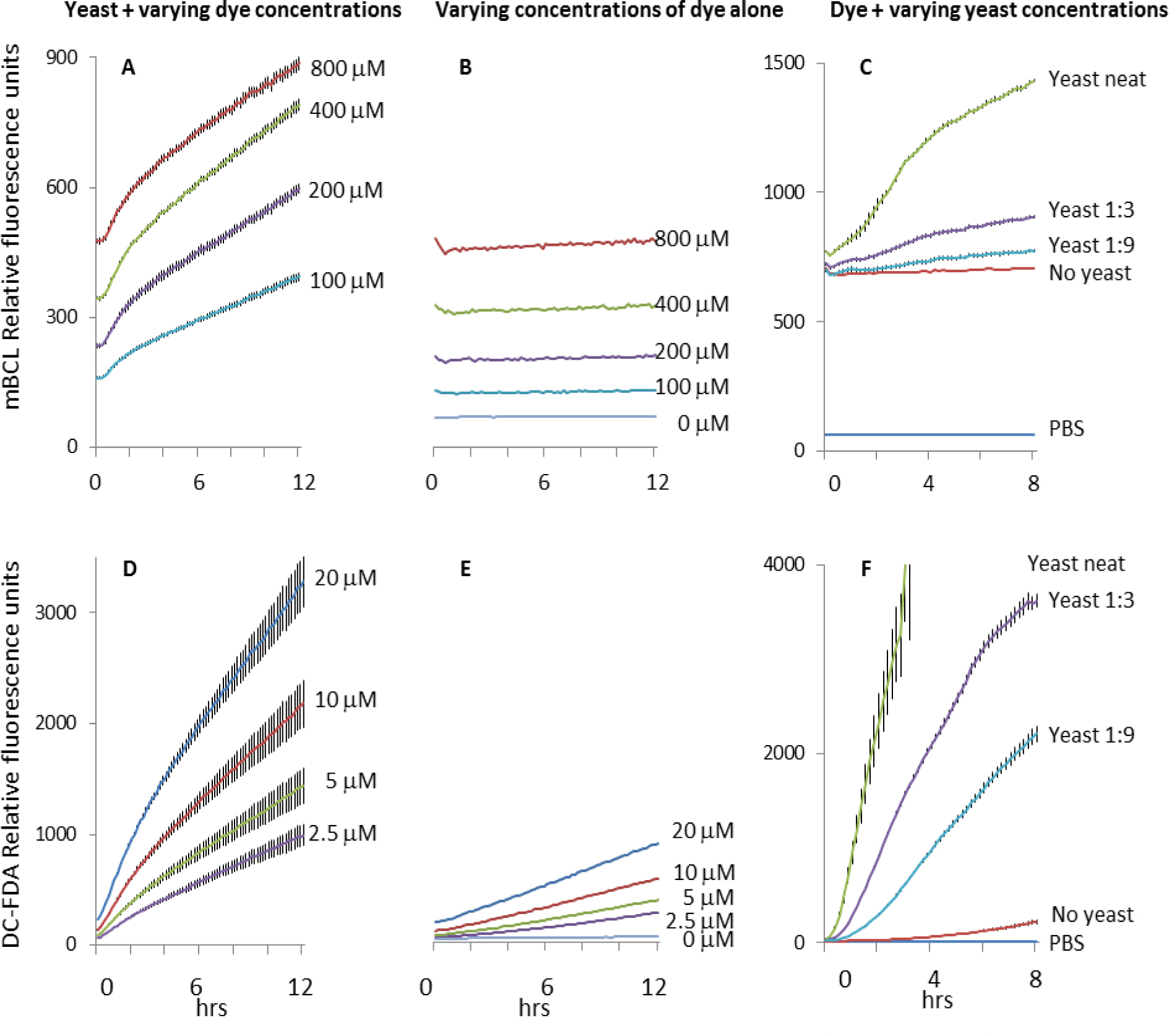
Figure 1.
Dose and time effects on staining with mBCL and DC-FDA. Giant WT yeast colonies harvested into PBS were mixed with dye in a 96 well plate, incubated at 30°C, and fluorescence measured with a microplate reader at 10-minute intervals for 8-12 hours. Values shown are the average total relative fluorescence units + SEM of 6-8 replicates. Figure 1A shows a constant amount of yeast mixed with monochlorobimane (mBCL) at 100, 200, 400, and 800 μM (final). Figure 1B shows the same dilutions of mBCL mixed with PBS and is on the same y-axis as Figure 1A. Figure 1C shows varying dilutions of yeast mixed with mBCL at 400 μM (final). Figure 1D shows a constant amount of yeast mixed with 2’,7’-dichlorodihydrofluorescein diacetate (DC-FDA) at 2.5, 5, 10, and 20 μM (final). Figure 1E shows the same dilutions of DC-FDA mixed with PBS and is on the same y-axis as Figure 1D. Figure 1E shows varying dilutions of yeast mixed with DC-FDA at 10 μM (final).
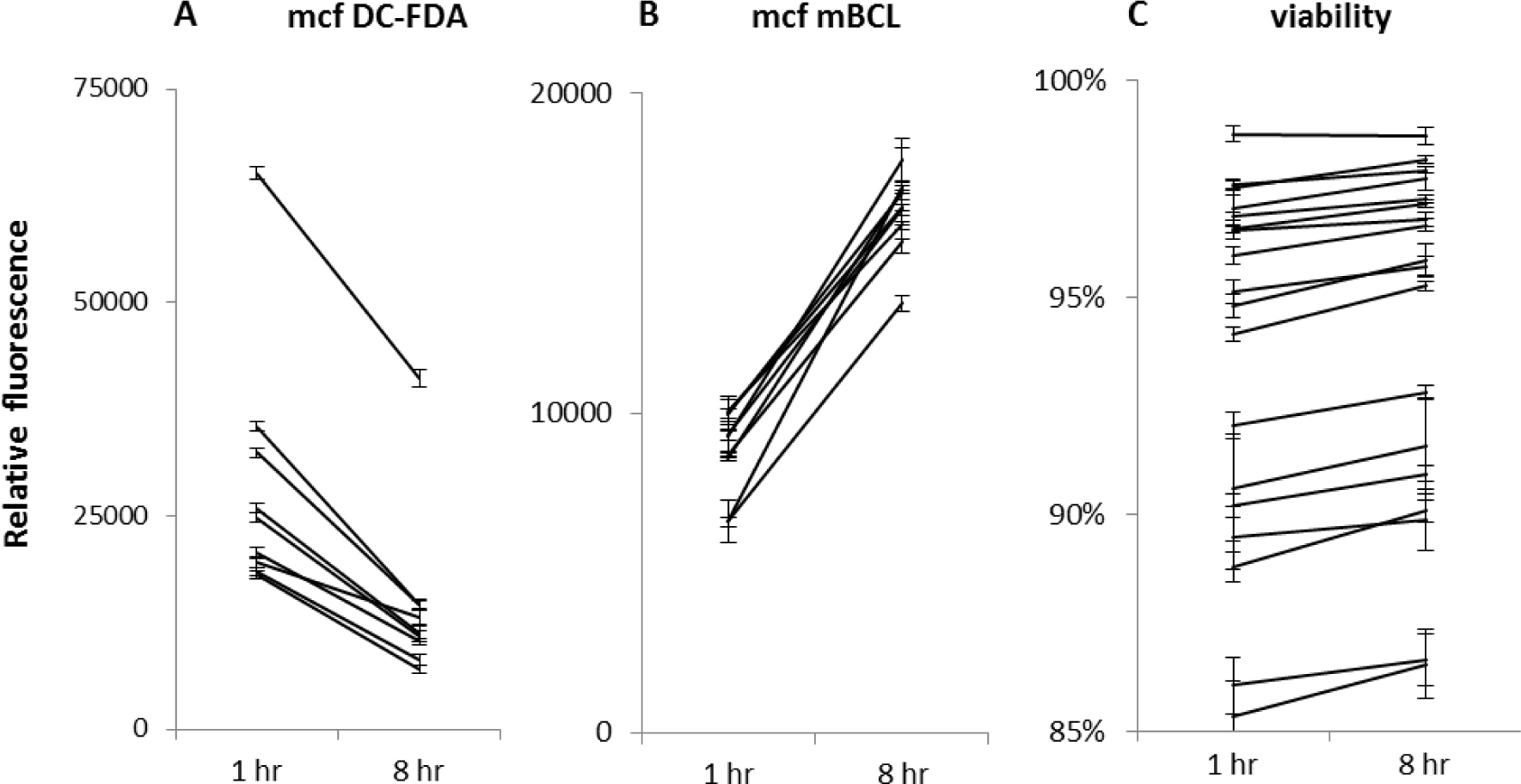
Figure 2.
Intracellular retention and toxicity of DC-FDA and mBCL. Various clones of giant yeast colonies were grown under different conditions and time intervals, harvested into PBS, mixed with mBCL or DC-FDA, incubated at 30°C, and assayed by flow cytometry at one hour and eight hours. Values shown are the mean units + SEM of 6 replicates for each different samples. Figure 2A shows the mean channel fluorescence for DC-FDA in nine different samples. Figure 2B shows the mean channel florescence for mBCL in nine different clones. Figure 2C shows the viability of the samples, as defined by exclusion of propidium iodide in 18 different samples.
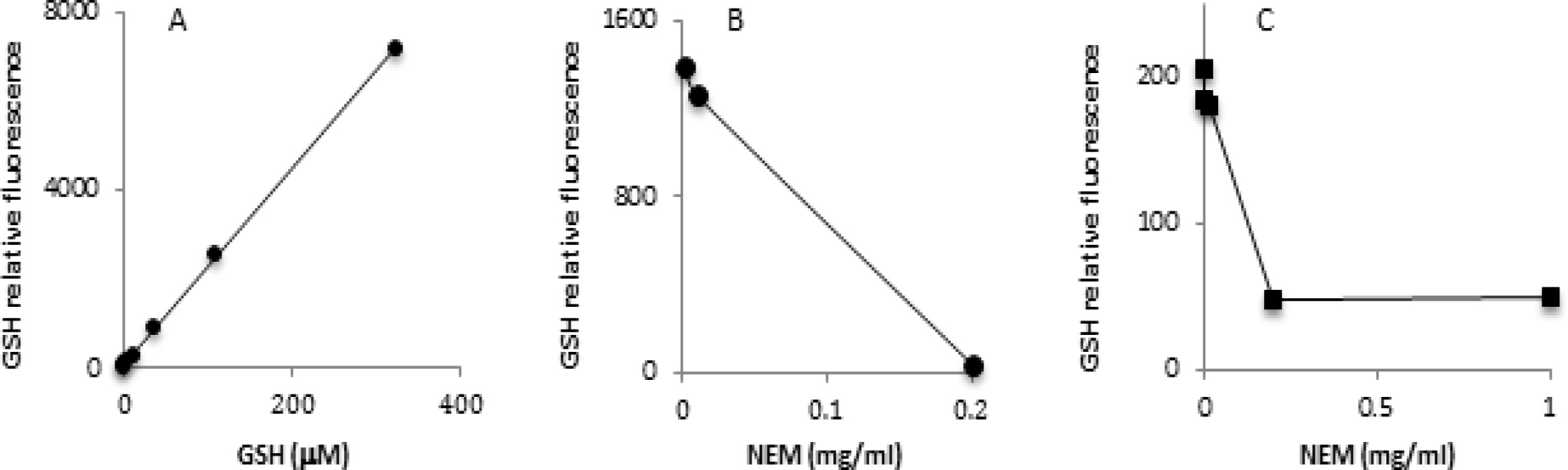
Figure 3.
Validation of the GSH biochemical assay. Figure 3A shows the fluorescence of naphthalene-2,3-dicarboxaldehyde (NDA) in an assay of purified glutathione (GSH) in doses of 0-325 μM. Values are the mean of triplicate determinations. Figure 3B shows that NEM inhibits the NDA-based detection of GSH in WT yeast perchloric acid cell extracts. A constant amount of GSH was mixed with serial dilution of NEM in doses of 0.2 to 0.002 mg/ml and assayed with NDA. Figure 3C shows that NEM inhibits 75% of the NDA-based detection of purified GSH. A constant amount of WT yeast perchloric acid extract was mixed with serial dilution of NEM in doses of 1 to 0.002 mg/ml and assayed with NDA. Results are the mean of triplicates.
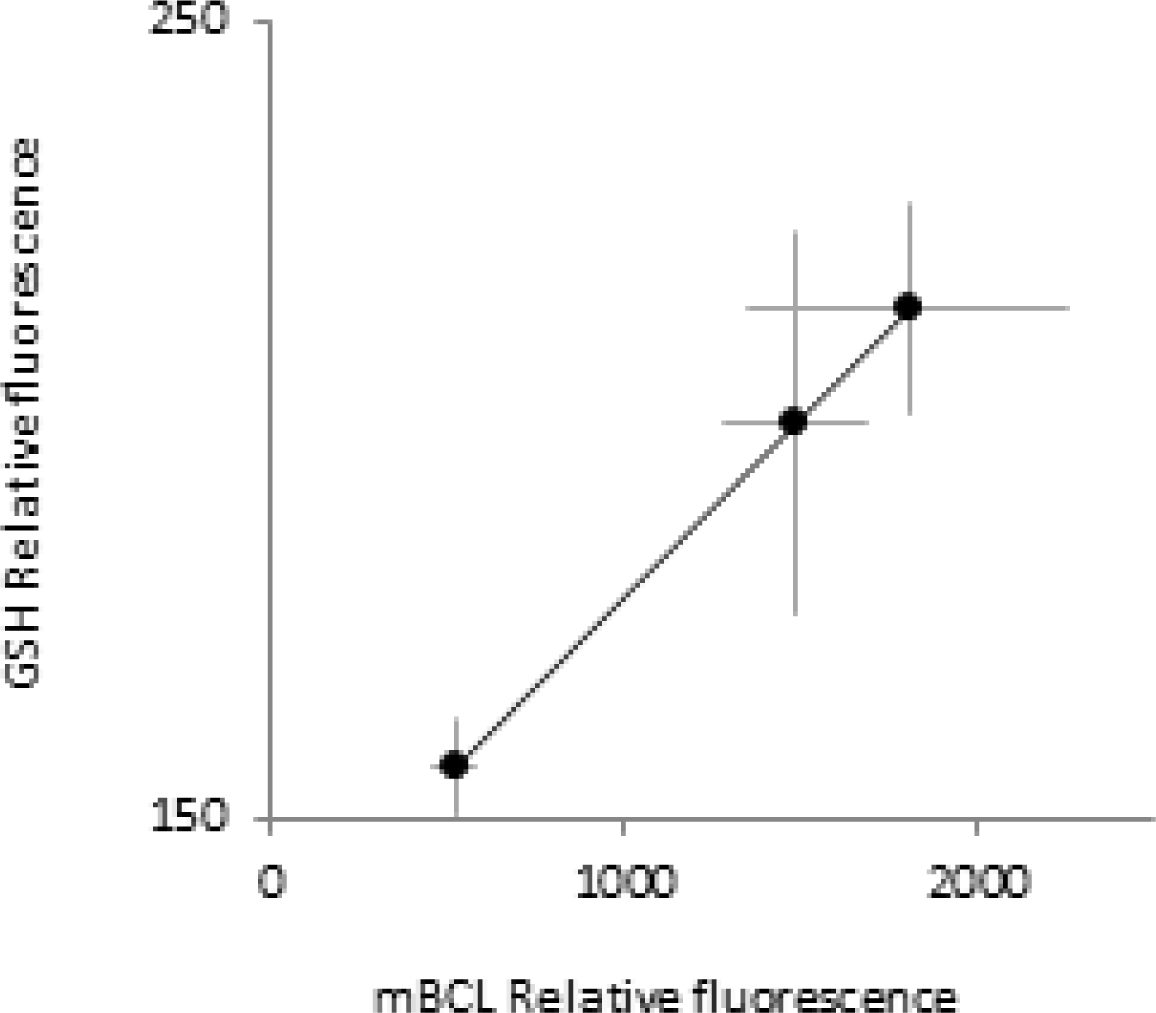
Figure 4.
Comparison of cell-based fluorescent assay and biochemical assays for GSH. The graph shows the net fluorescence for GSH in intact WT yeast, detected with monochlorobimane (mBCL) dye (horizontal axis), versus the net fluorescence in the biochemical assay for GSH in extracts from the same yeast samples (vertical axis). Values plotted are the geomean + SEM of three replicates for the biochemical GSH assay and six replicates for the mBCL assay. Note the different scales and baselines used to clarify the trend by exaggeration.
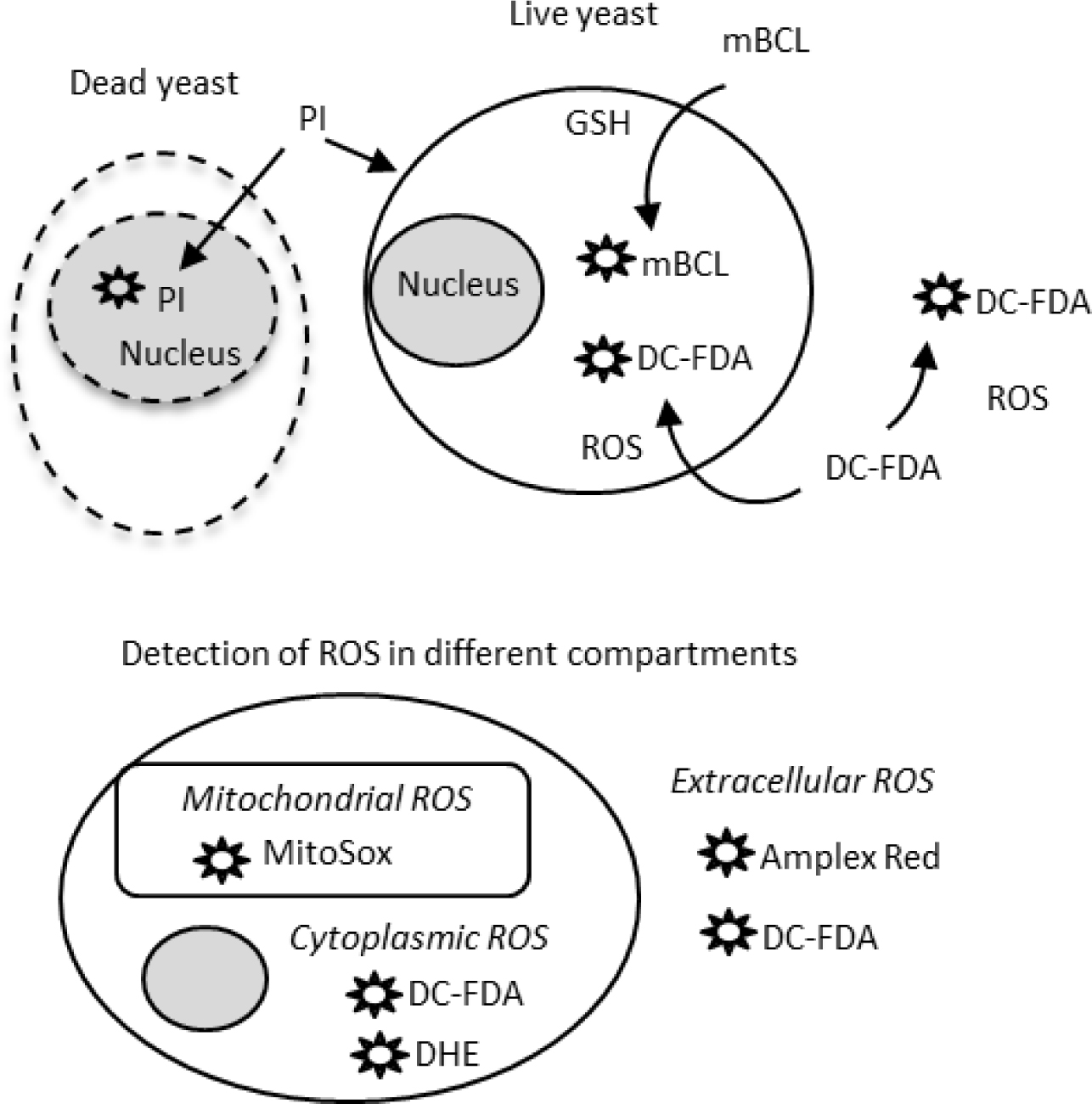
Figure 5.
Cellular locations of the targets of fluorescent dyes for detection of GSH and ROS. Asterisks are used to denote the fluorescent product. Propidium iodide (PI) enters the nuclei of dead cells (upper left) where it fluoresces when it intercalates into DNA. PI does not enter viable cells (upper right) and thus can be used to discriminate between live and dead yeast. mBCL (monochlorobimane) is converted to a fluorescent product by intercellular GSH. DC-FDA (2’,7’-dichlorodihydrofluorescein diacetate) detects both intracellular and extracellular ROS. Dihydroethidium (DHE) detects intracellular ROS, Amplex Red detects extracellular ROS, and MitoSOX detects mitochondrial ROS.
Table 1.
Correlations between different assays of yeast redox potential.
| Correlations (* denotes p<0.05) | ||||||
|---|---|---|---|---|---|---|
| Dye | Variable | MitoSOX | DHE | Amplex Red | mBCL | DC-FDA |
| MitoSOX | Mitochondrial superoxide production | 1.00 | 0.62* | -0.36 | -0.20 | 0.56* |
| DHE | Reactive oxygen species: superoxide | 1.00 | 0.67* | -0.23* | 0.34* | |
| Amplex Red | Release of hydrogen peroxide | 1.00 | 0.55* | -0.08 | ||
| mBCL | Low MW thiols, including glutathione | 1.00 | -0.28* | |||
| DC-FDA | Hydroxyl, peroxyl, and other ROS species | 1.00 | ||||
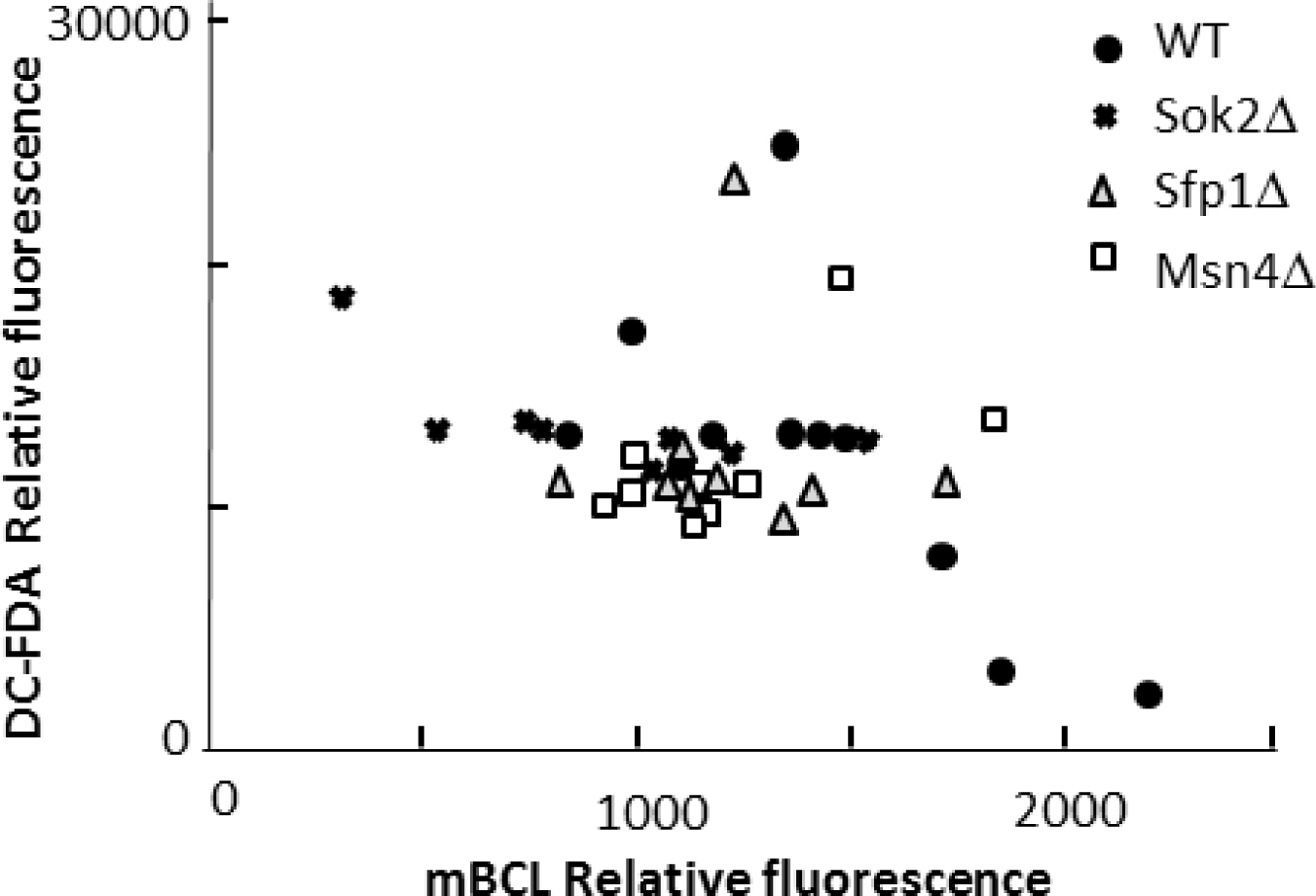
Figure 6.
Comparison of DC-FDA and mBCL signal in different clones of yeast. mBCL (400 μM final; horizontal axis) or DC-FDA (10 μM final; vertical axis) were used to stain a series of different yeast clones: WT, Sok2Δ (defective ammonia production), Sfp1Δ (deleted shear stress promoter), and Msn4Δ (deleted shear stress promoter), grown on YPD agar for 7 days. Values are the mean of six replicate determinations made by flow cytometry and are presented as arbitrary fluorescence units.