
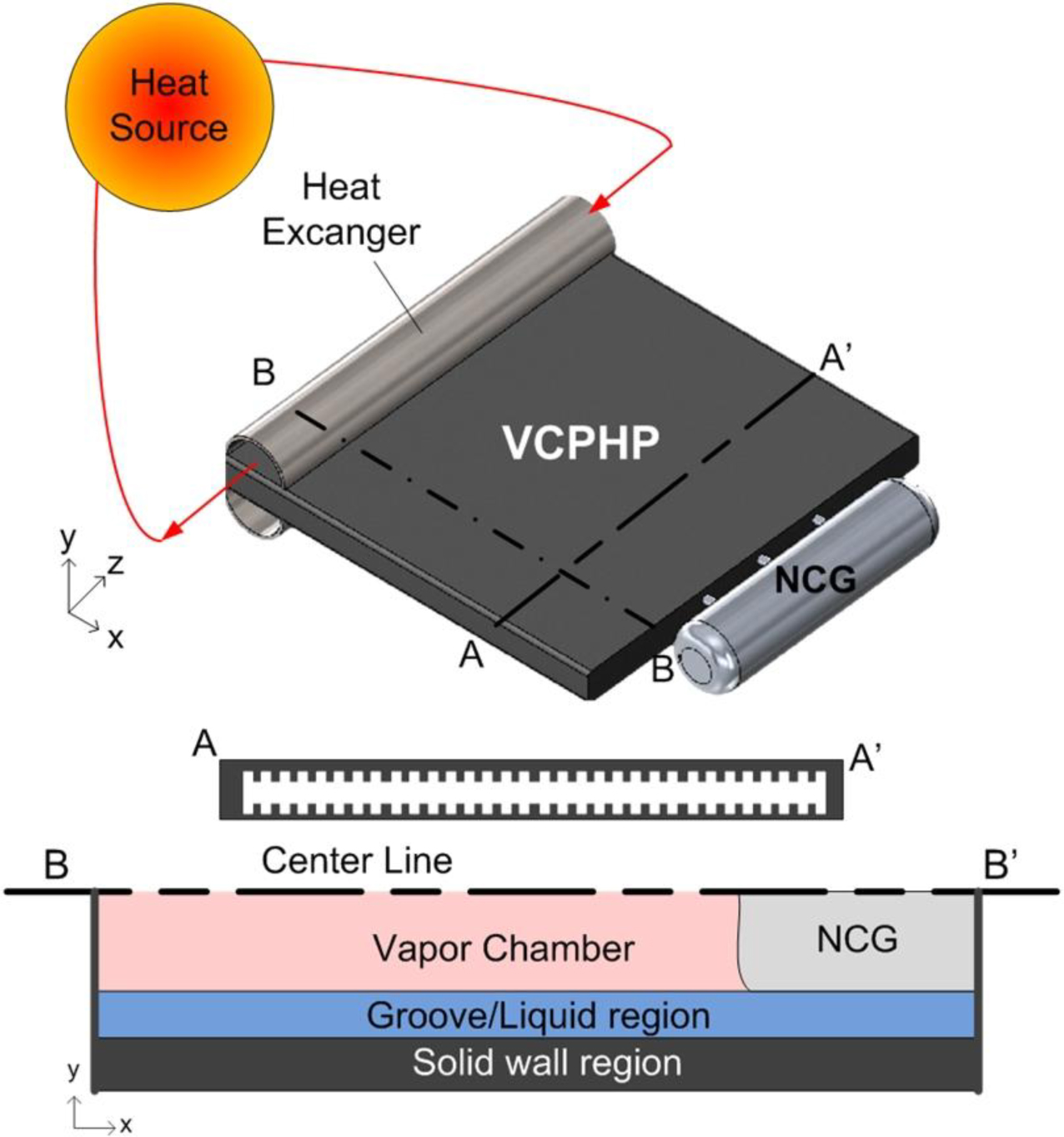
Figure 1.
Schematic of compact heat rejection with variable conductance planar heat pipe (VCPHP) radiator.
Table 1.
Properties of brass and CoolPoly® E2 Liquid Crystal Polymer.
| Brass | Liquid Crystal Polymer | |
|---|---|---|
| Density (g/cm3) | 8.7 | 1.6 |
| Thermal conductivity | 109 | 20 |
| (W/mK) | ||
| Tensile Modulus (Gpa) 100 | -125 | 24.3 |
| Tensile Strength (Mpa) | 200 | 80 |
| Flexural Modulus (Gpa) | 39 | 32.3 |
| Flexural Strength (Mpa) | 235 | 139 |
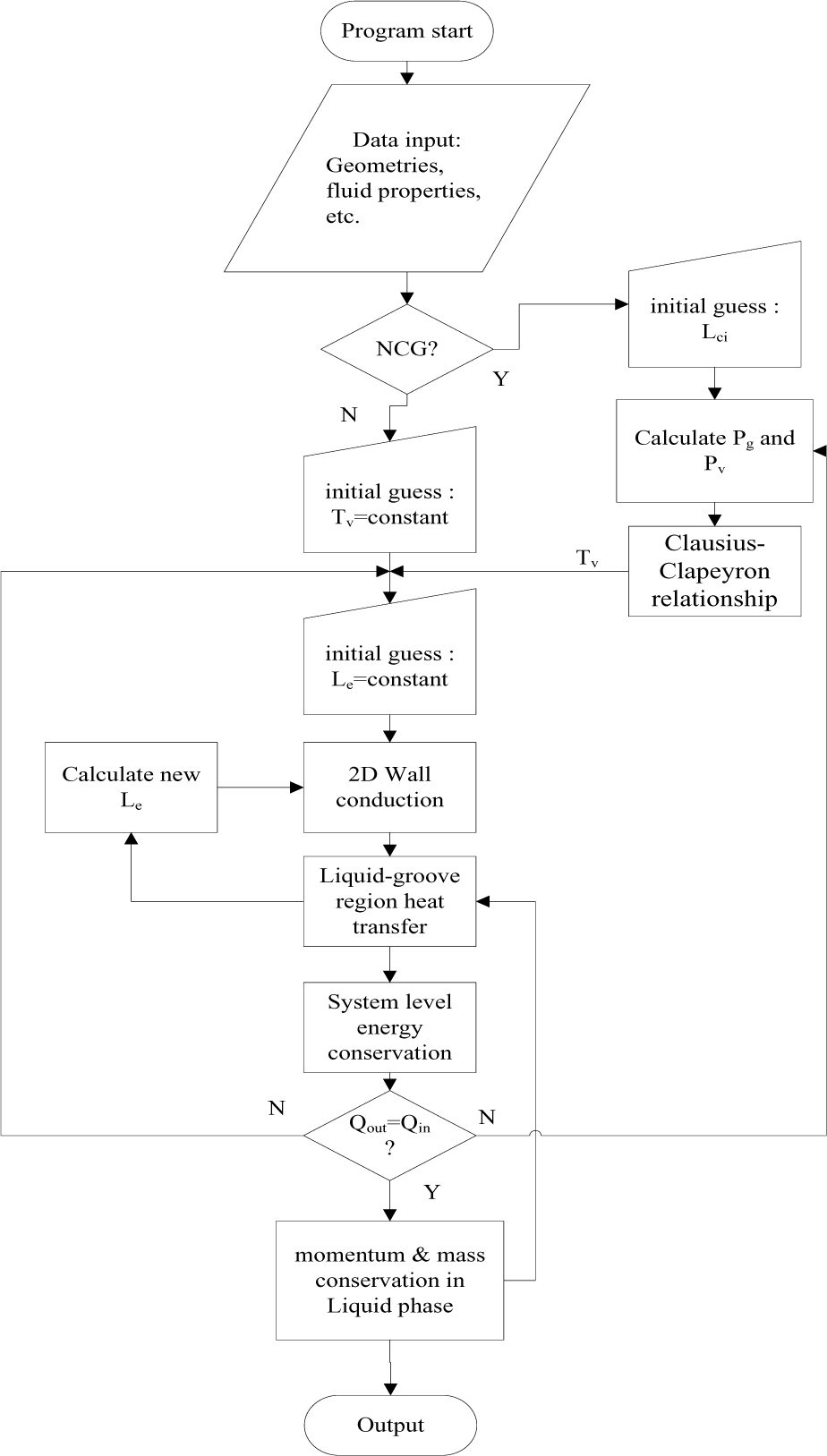
Figure 2.
Steady-state planar heat pipe operation calculation flow chart.
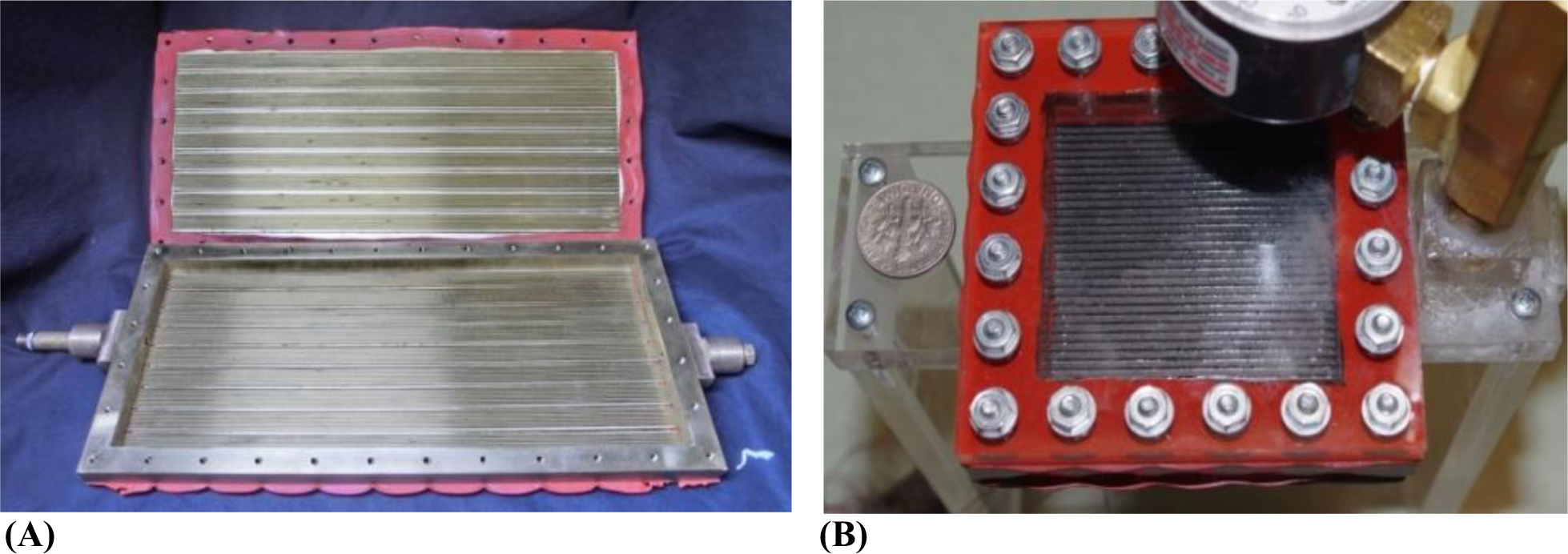
Figure 3.
(A) Brass planar heat pipe. (B) Liquid Crystal Polymer heat pipe (LCP-HP).
Table 2.
Specifications of the two planar heat pipes.
| Brass Heat Pipe (BHP) | Liquid Crystal Polymer Heat Pipe (LCP-HP) | |
|---|---|---|
| Length (cm) | 27.94 | 5.08 |
| Width (cm) | 13.97 | 5.08 |
| Thick (cm) | 1.27 | 0.8334 |
| Wall thickness (mm) | 3.175 | 3.175 |
| Grooves type | Triangular | Rectangular |
| Grooves dimensions | 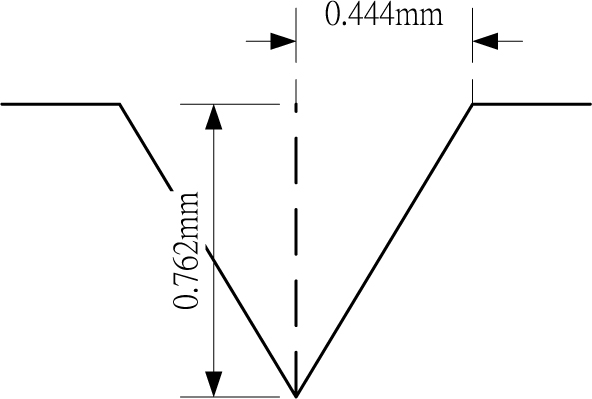 | 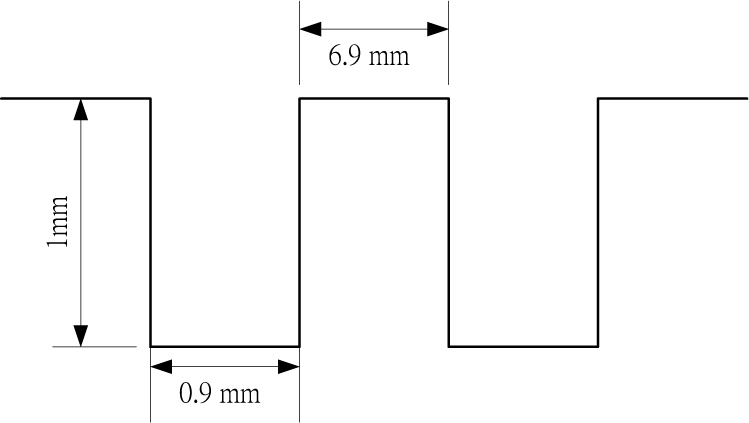 |
| 72 grooves per plate | 32 grooves per plate |
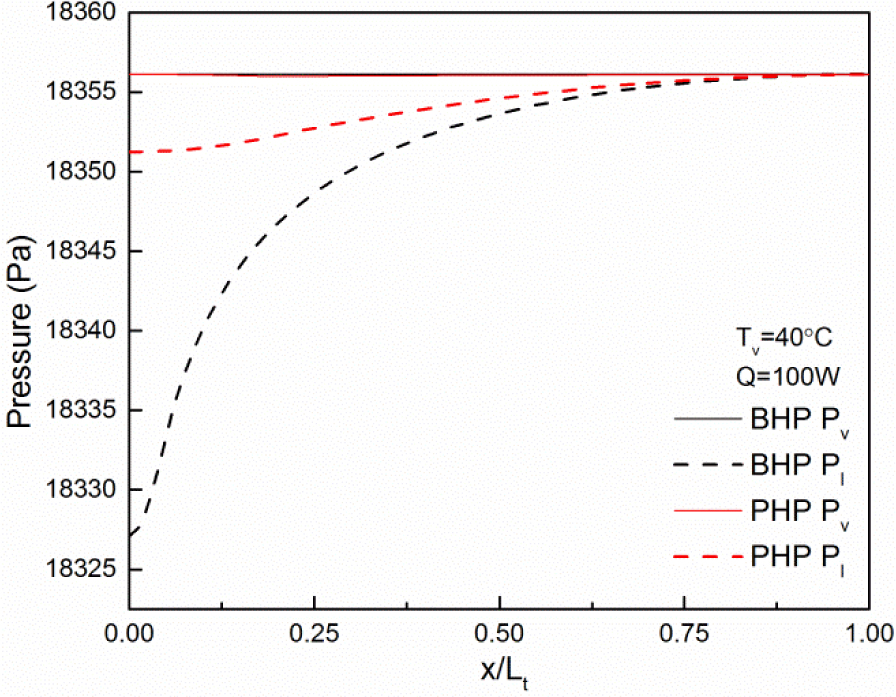
Figure 4.
Predicted vapor and liquid pressure drops of BHP and PHP during operation.
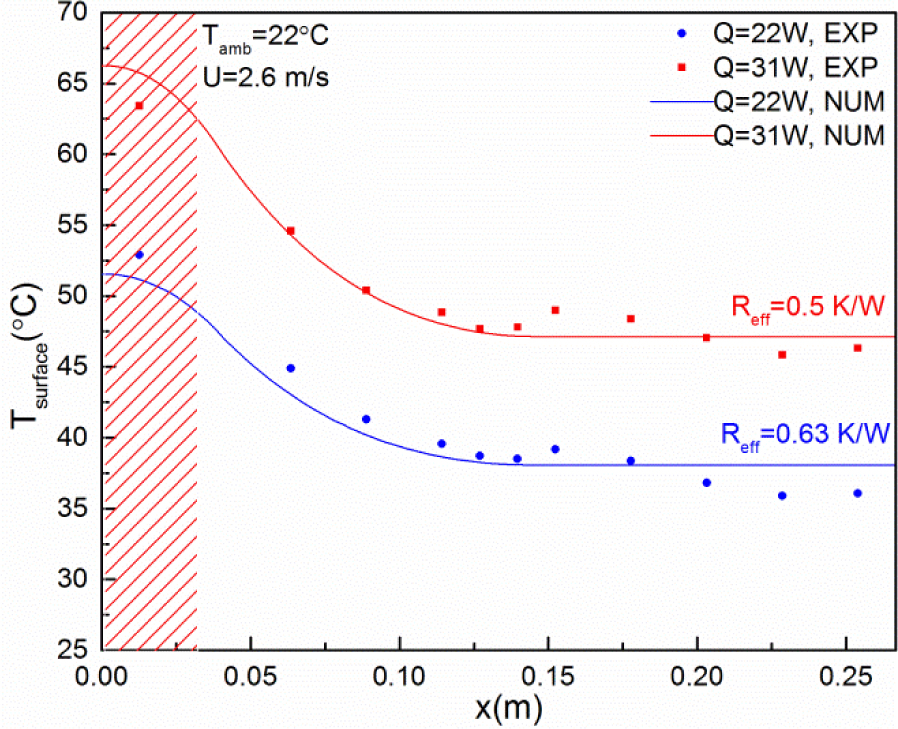
Figure 5.
BHP temperature distributions with different heat inputs.
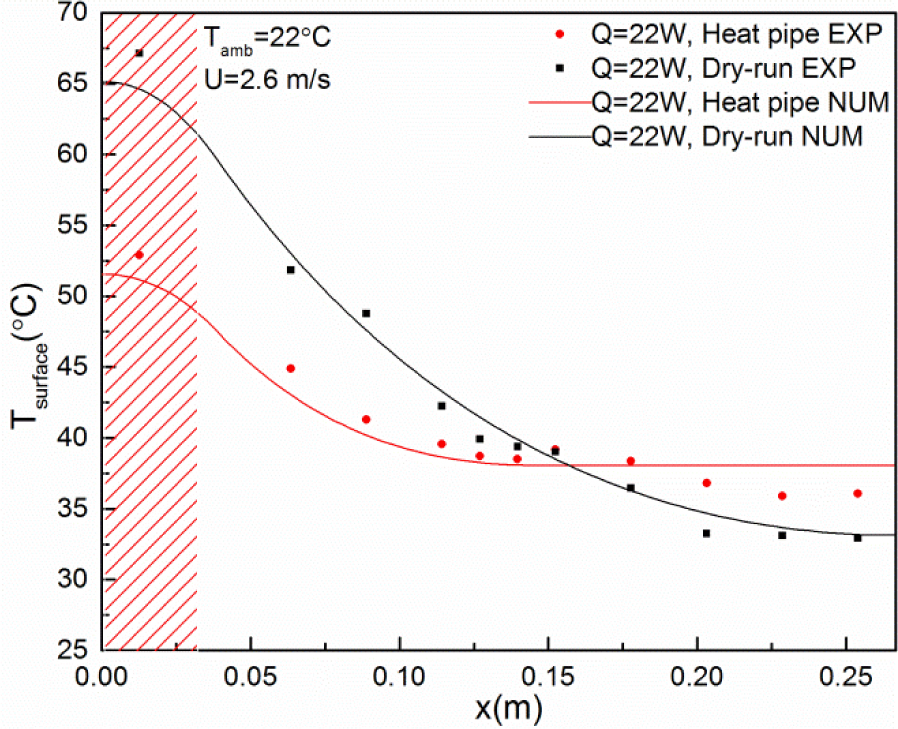
Figure 6.
Temperature distribution of BHP dry-run test.
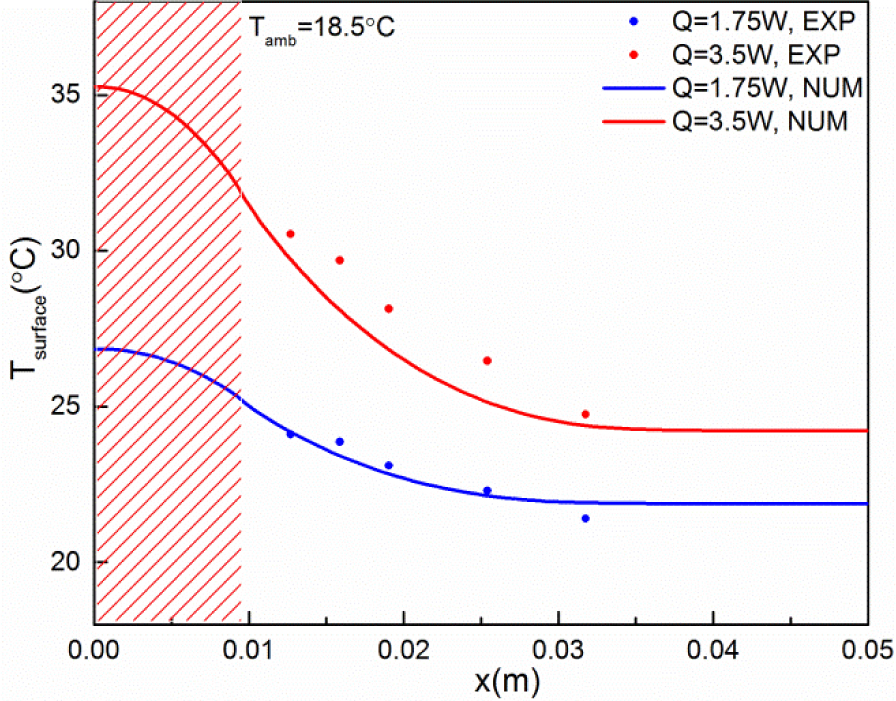
Figure 7.
Temperature distribution of LCP-HP.
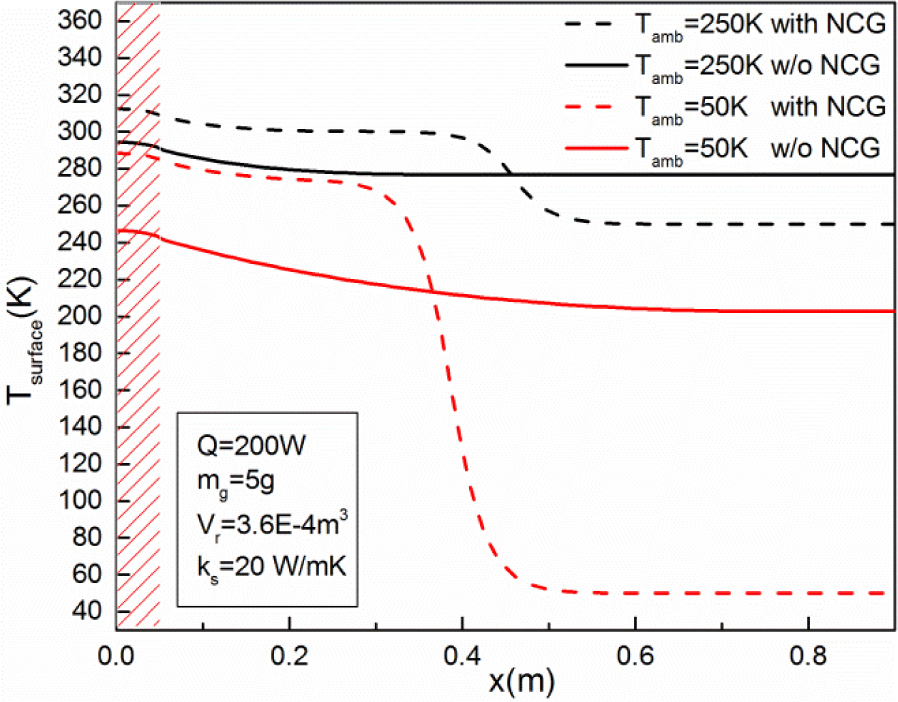
Figure 8.
Wall temperature distributions of VCPHP under different sink temperature fields (Q=200 W).
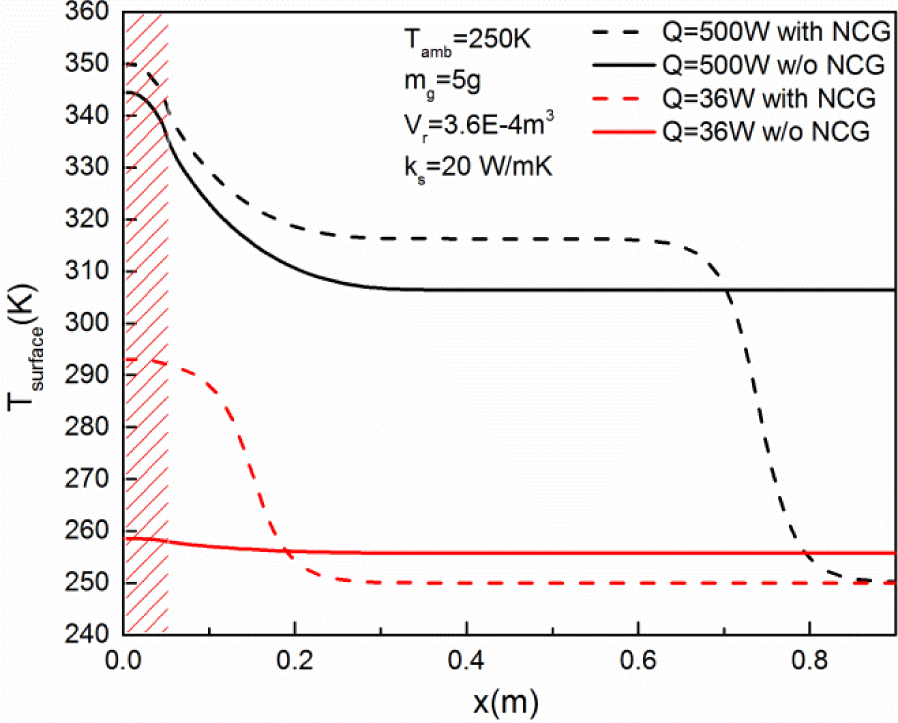
Figure 9.
Wall temperature distributions of VCPHP with different heat loads (Tamb=250 K).
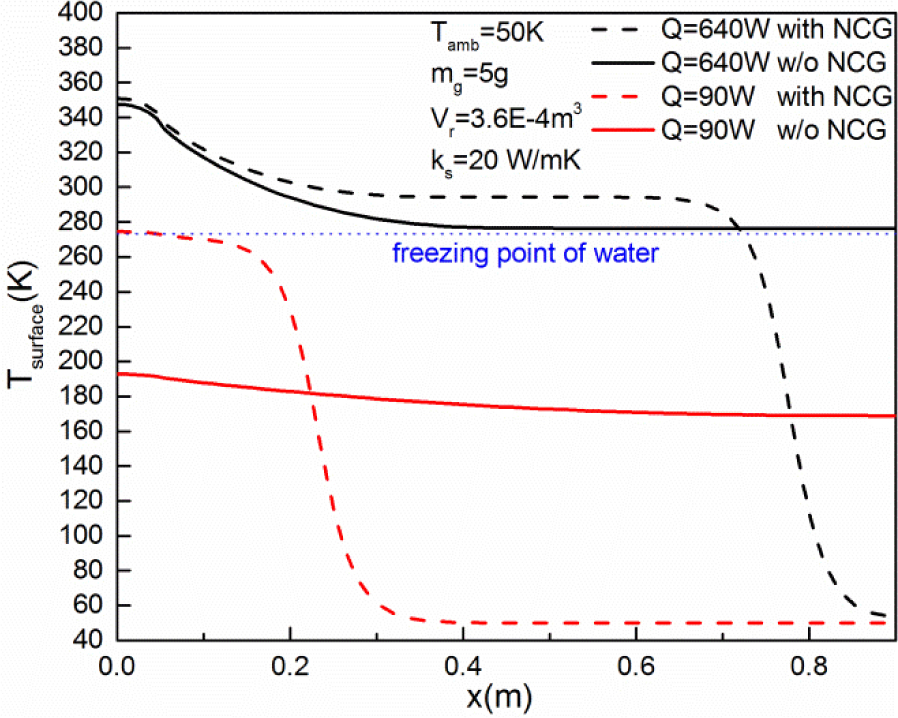
Figure 10.
Wall temperature distributions of VCPHP with different heat loads (Tamb=50 K).
| A | Area |
| Ac | Dispersion constant (for ethanol: 2.2x10⁻²¹ J) |
| c | Accommodation coefficient |
| Dh | Hydraulic diameter |
| f | Fin thickness |
| fRe | Poiseuille number |
| h | Heat transfer coefficient |
| hfg | Latent heat of vaporization |
| k | Thermal conductivity |
| L | Length |
| mj | Mass flux rate through liquid-vapor interface |
| M | Molecular weight |
| N | Number of the channels |
| P | Pressure |
| Q | Heat load |
| q | Heat flux |
| R | Gas constant |
| Reff | Effective thermal resistance |
| rc | Radius of meniscus |
| T | Temperature |
| TR | Turn-down ratio |
| u | Velocity in x-direction |
| U | Wind speed |
| V | Volume |
| W | Width |
| w | Half width of the channel |
| wr | Half meniscus surface area per unit length |