Have a personal or library account? Click to login
Over-Expression of FT1 in Plum (Prunus domestica) Results in Phenotypes Compatible with Spaceflight: A Potential New Candidate Crop for Bioregenerative Life Support Systems Cover

Over-Expression of FT1 in Plum (Prunus domestica) Results in Phenotypes Compatible with Spaceflight: A Potential New Candidate Crop for Bioregenerative Life Support Systems

Open Access
|Jul 2015

Figures & Tables

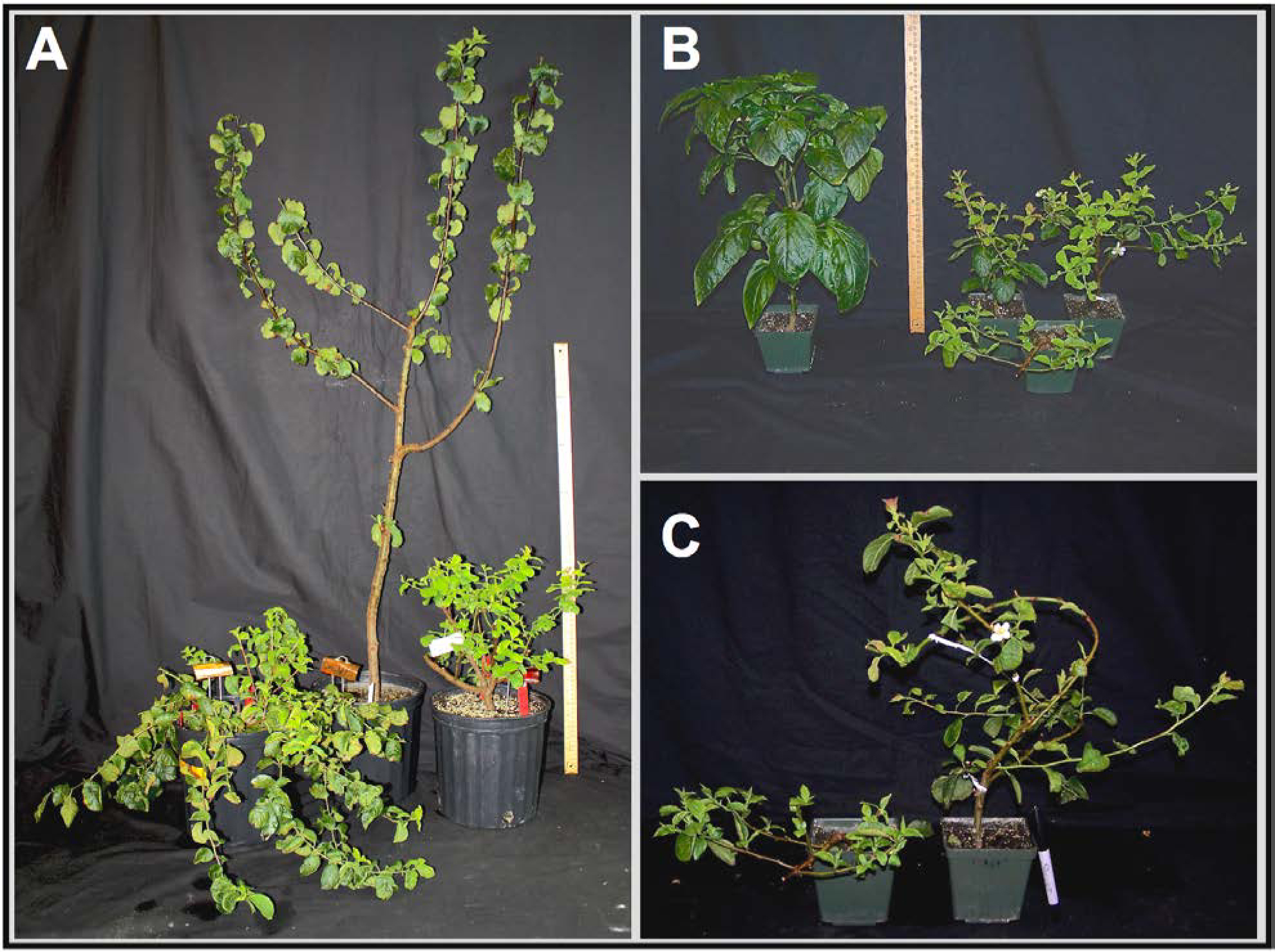
Figure 1.

Altered plant architecture in PtFT1 modified Prunus domestica. Panel (A) illustrates the bush and planar growth habit induced by PtFT1 expression, relative to the non-transformed control plant (center). Panel (B) compares the relative size/architecture of PtFT1 plum and standard sweet bell pepper (Capsicum annuum ‘California Wonder’), suggesting the FT1 plums are, in terms of architecture, compatible with spaceflight plant production systems. Panel (C) further illustrates the altered morphology as well as the trainability of branches, which are vine-like in many cases (right).
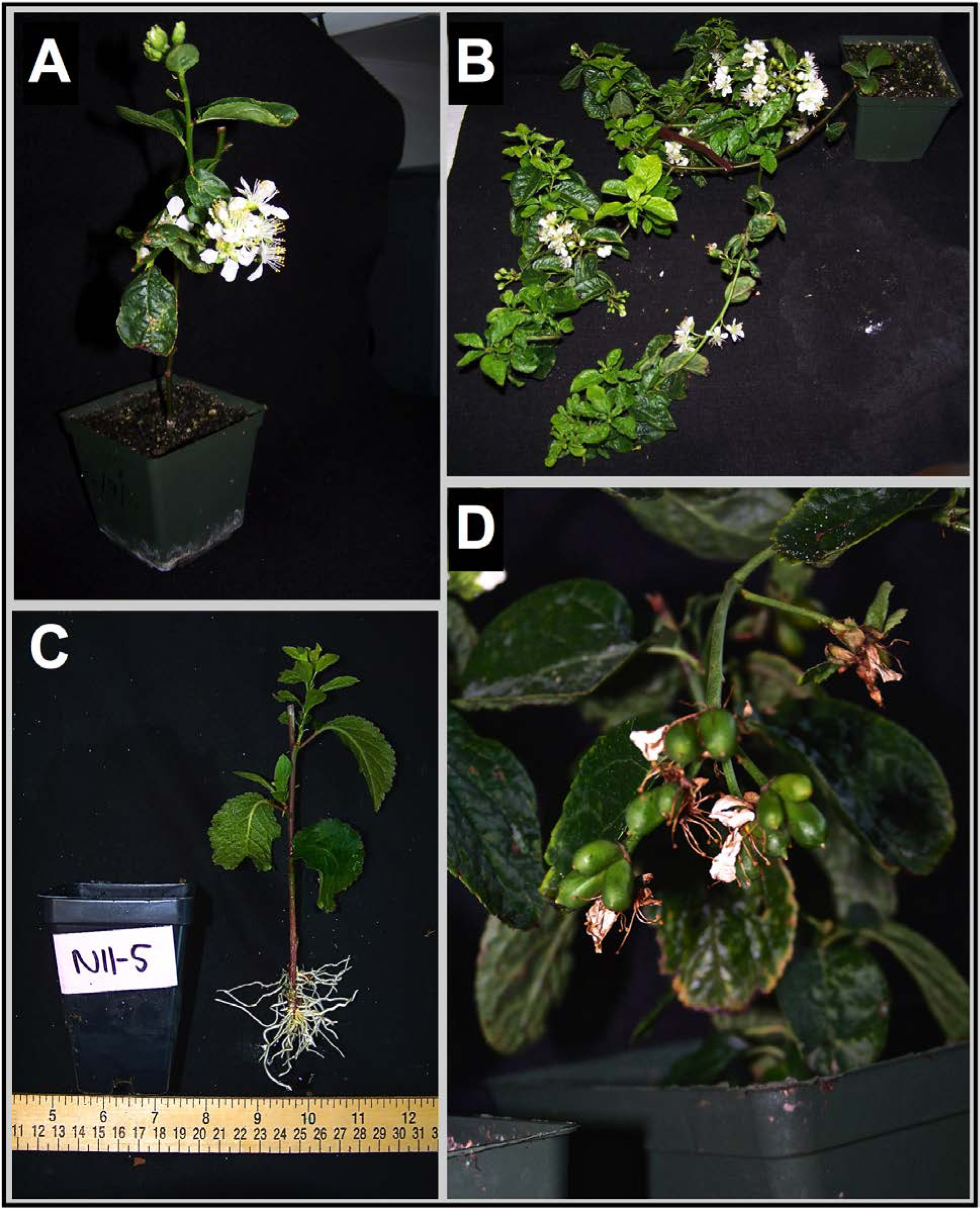

Figure 2.

Early flowering in plums propagated through cuttage. Panel (A): Eight-week old cutting shows early flowering. Panel (B): 14-week old cutting showing planar growth habit and abundant flower production. Panel (C): Four-week old rooted cutting ready for potting. Panel (D): Fruit set on a 12-week old cutting. Note the multiple fruit per flower.
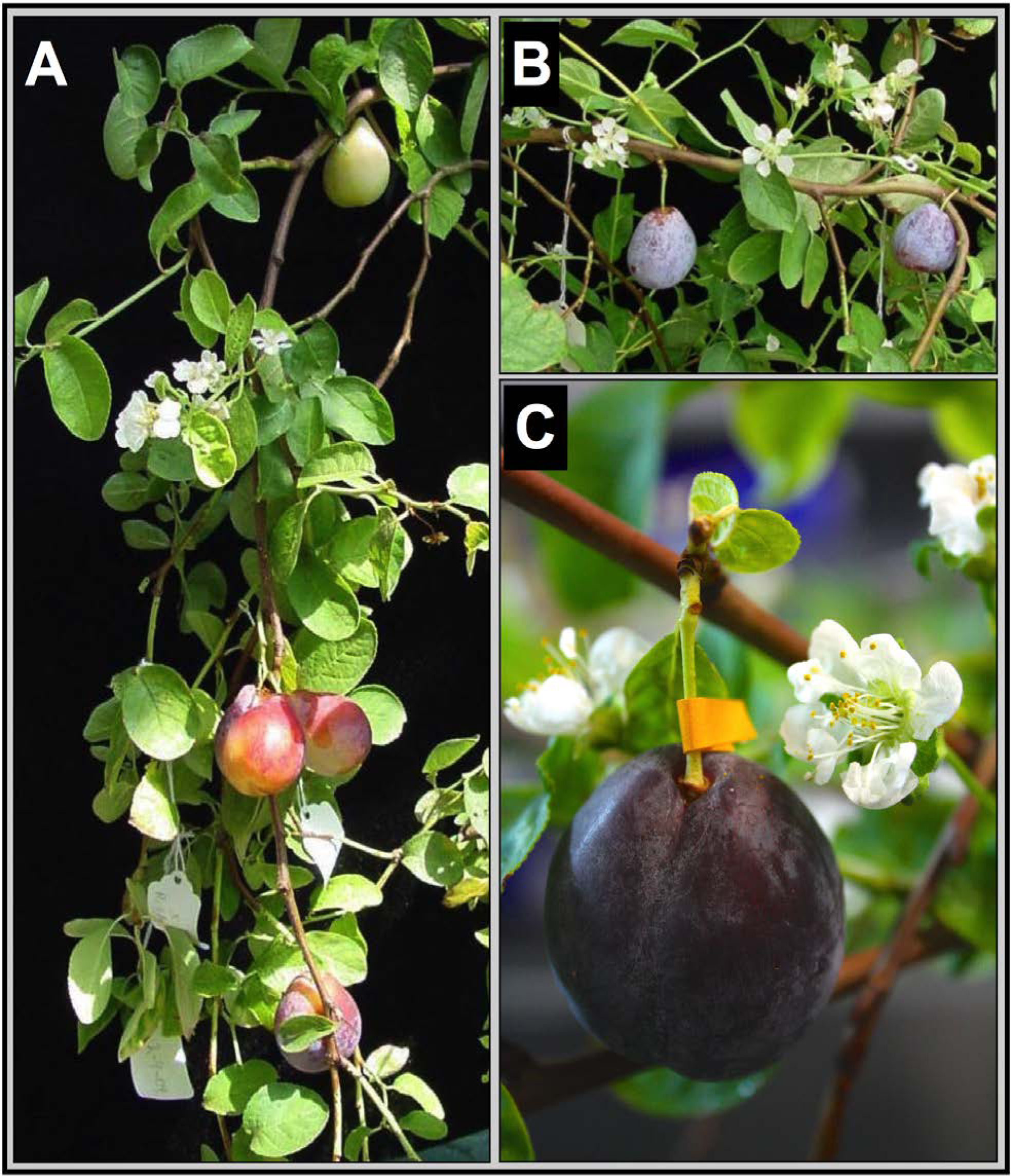

Figure 3.

Continuous fruit production in PtFT1 P. domestica. Panel (A) demonstrates the coexistence of flowers, immature, and mature fruit on a vine-like branch. Panel (B) is a further example of new flowers developing on the same branch that is supporting mature fruit. Panel (C) is a close-up view of a mature plum fruit next to newly emerged flowers.
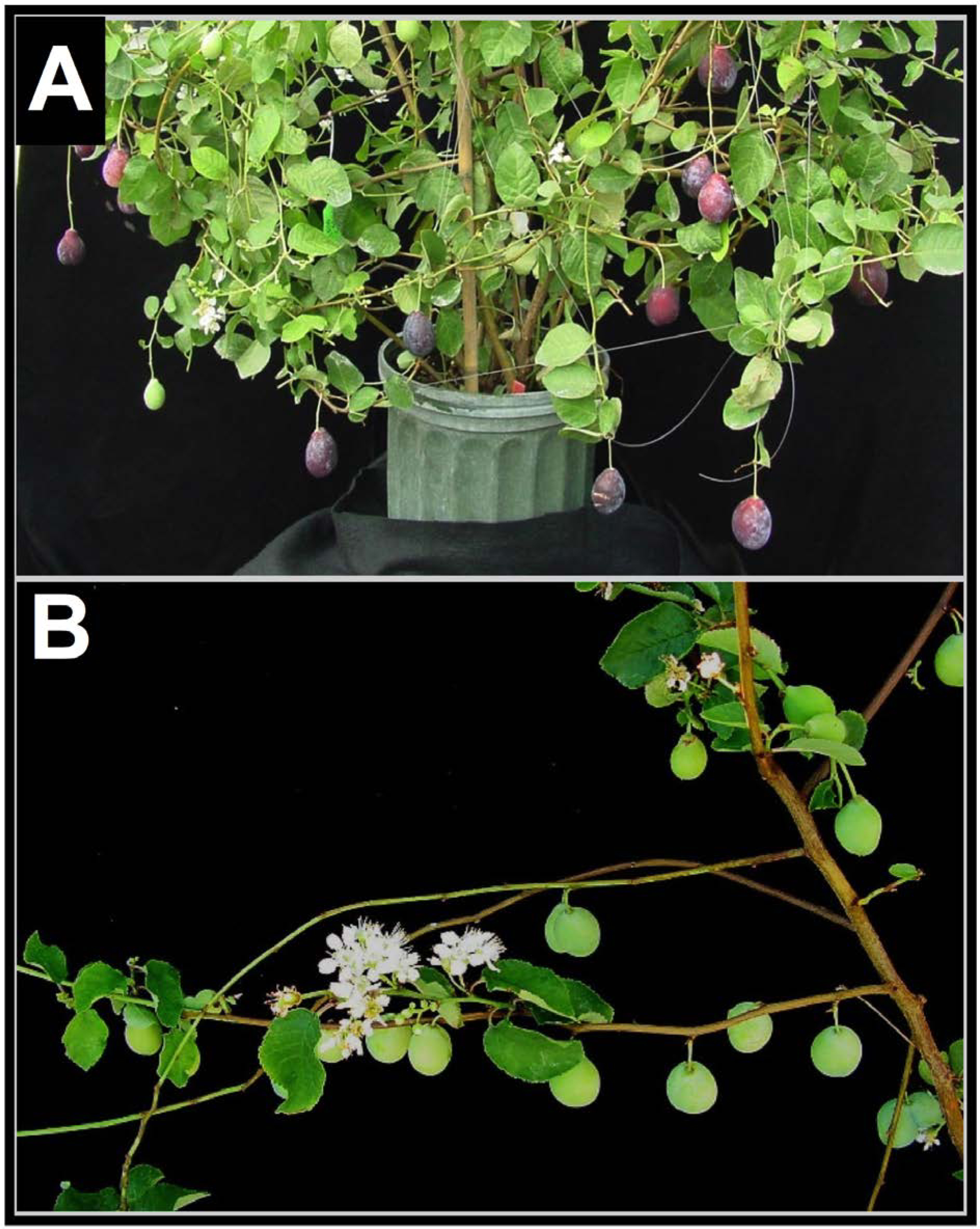

Figure 4.

Relative abundance of edible and inedible biomass in PtFT1 modified P. domestica. Panel (A) illustrates a bush phenotype with numerous mature and immature fruit and flowers. The vine-like growth habit and high fruit-to-leaf ratio of this particular example elevate the edible to inedible biomass ratio to levels comparable to some other herbaceous crops, such as pepper and tomato. Panel (B) is a further example of the high harvest index potential of the FT-plum line(s).
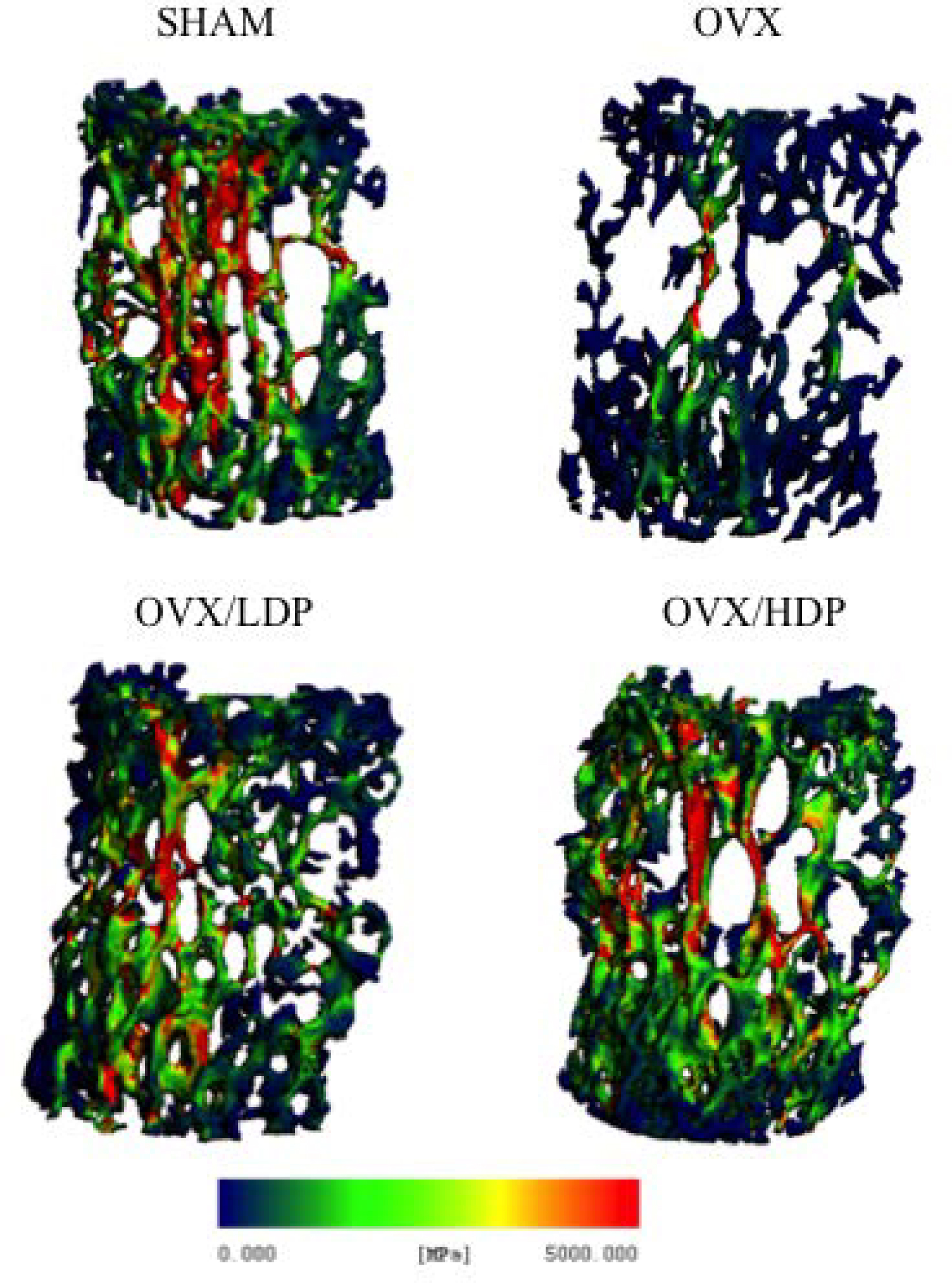

Figure 5.

MicroCT images of the lumbar vertebra of the spine subjected to finite element analyses. Mice were sham-operated (SHAM) or ovariectomized (OVX) and allowed to lose bone for two weeks prior to starting dietary treatments: control, low dried plum (OVX/LDP), or high dried plum (OVX/HDP) diet. The images show that both the LDP and HDP restored bone microstructure and bone strength in a dose-dependent manner (i.e., red regions represent stronger bone). Dietary supplementation with dried plum has been shown to reverse bone loss in aging and gonadal hormone deficient mice.
Language: English
Page range: 39 - 50
Published on: Jul 1, 2015
Published by: American Society for Gravitational and Space Research
In partnership with: Paradigm Publishing Services
Publication frequency: 2 issues per year

© 2015 Thomas Graham, Ralph Scorza, Raymond Wheeler, Brenda Smith, Chris Dardick, Anirudha Dixit, Doug Raines, Ann Callahan, Chinnathambi Srinivasan, Lashelle Spencer, Jeffrey Richards, Gary Stutte, published by American Society for Gravitational and Space Research
This work is licensed under the Creative Commons Attribution-NonCommercial-NoDerivatives 3.0 License.