Have a personal or library account? Click to login
The Effects of the Spaceflight Environment on the Vaginal Mucin Layer of the Mouse Cover

The Effects of the Spaceflight Environment on the Vaginal Mucin Layer of the Mouse

By: Camille Romer and  Allan Forsman  
Open Access
|Jul 2015

Figures & Tables

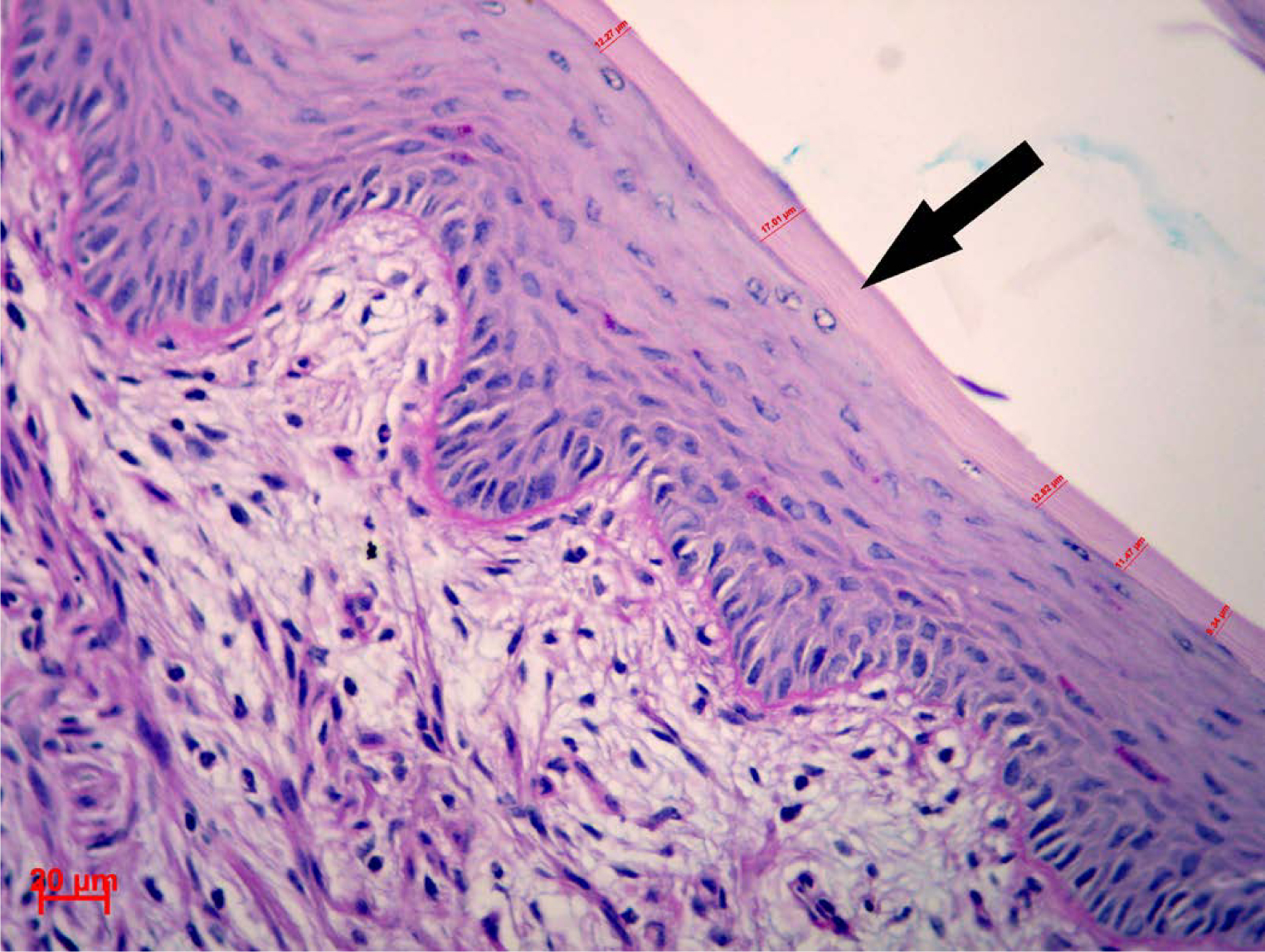
Figure 1.

Vaginal epithelium from Baseline tissue (400X). Mean mucin layer thickness for Baseline tissue = 6.5633 μm. Note the pale blue staining of the mucin layer indicative of an acidic mucin (arrow).
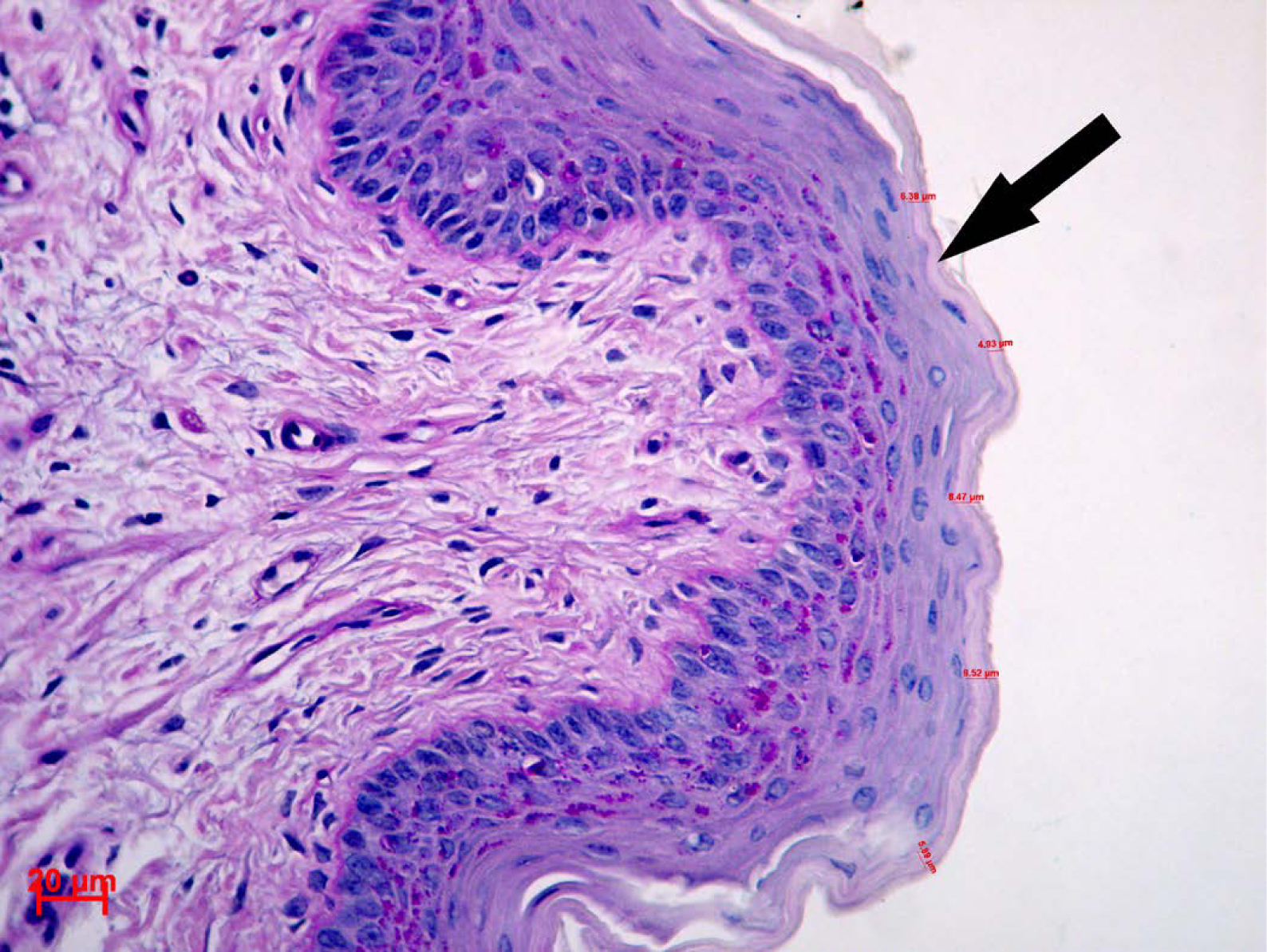

Figure 2.

Ground Control Tissue (400X). Mean mucin layer thickness for Ground Control tissue = 10.0310 μm. Note the pale blue staining of the mucin layer indicative of an acidic mucin (arrow).
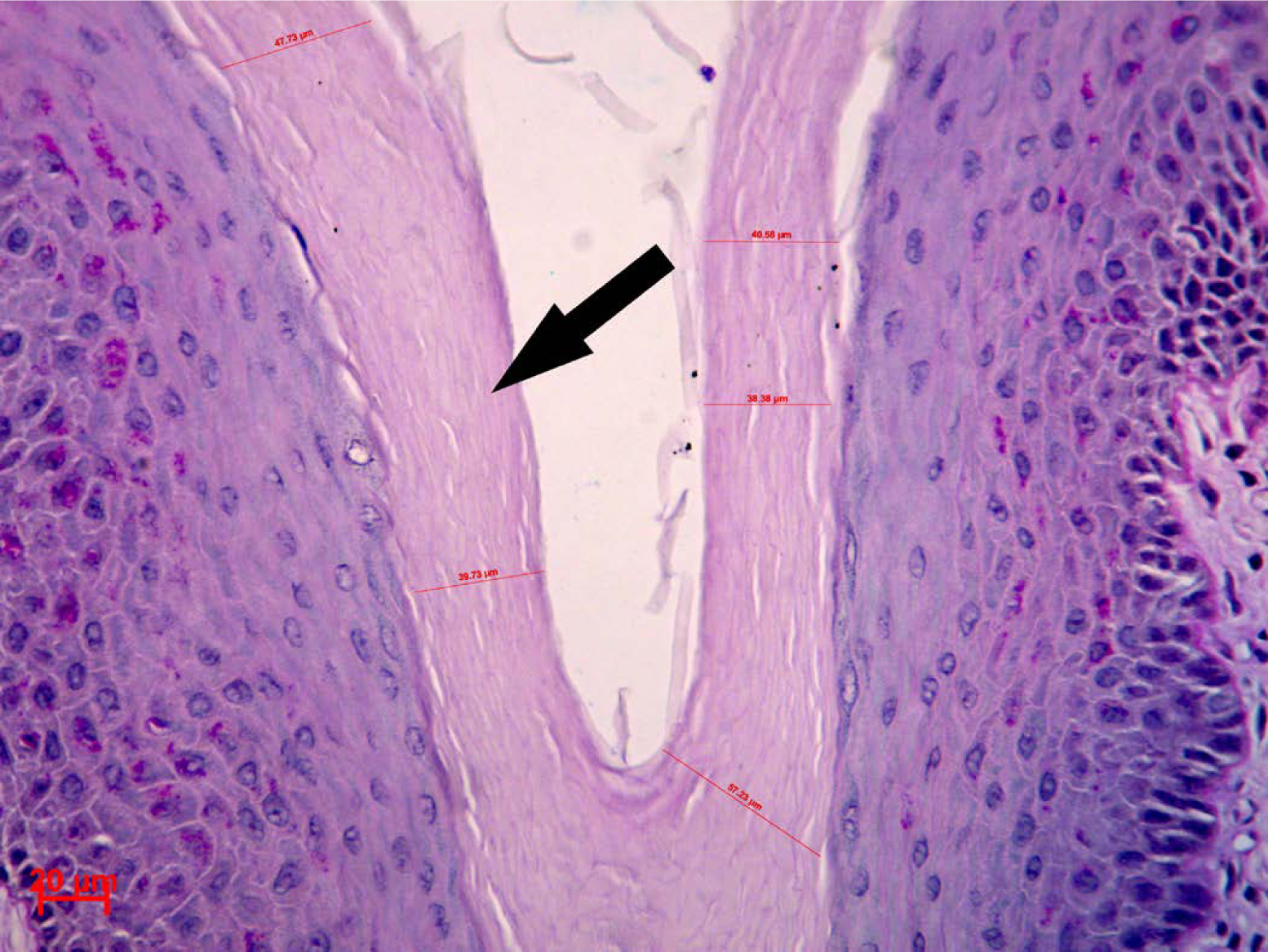

Figure 3.

Flight tissue (400X). Mean mucin layer thickness for Flight tissue = 17.3520 μm. Note the pale blue staining of the mucin layer indicative of an acidic mucin (arrow).
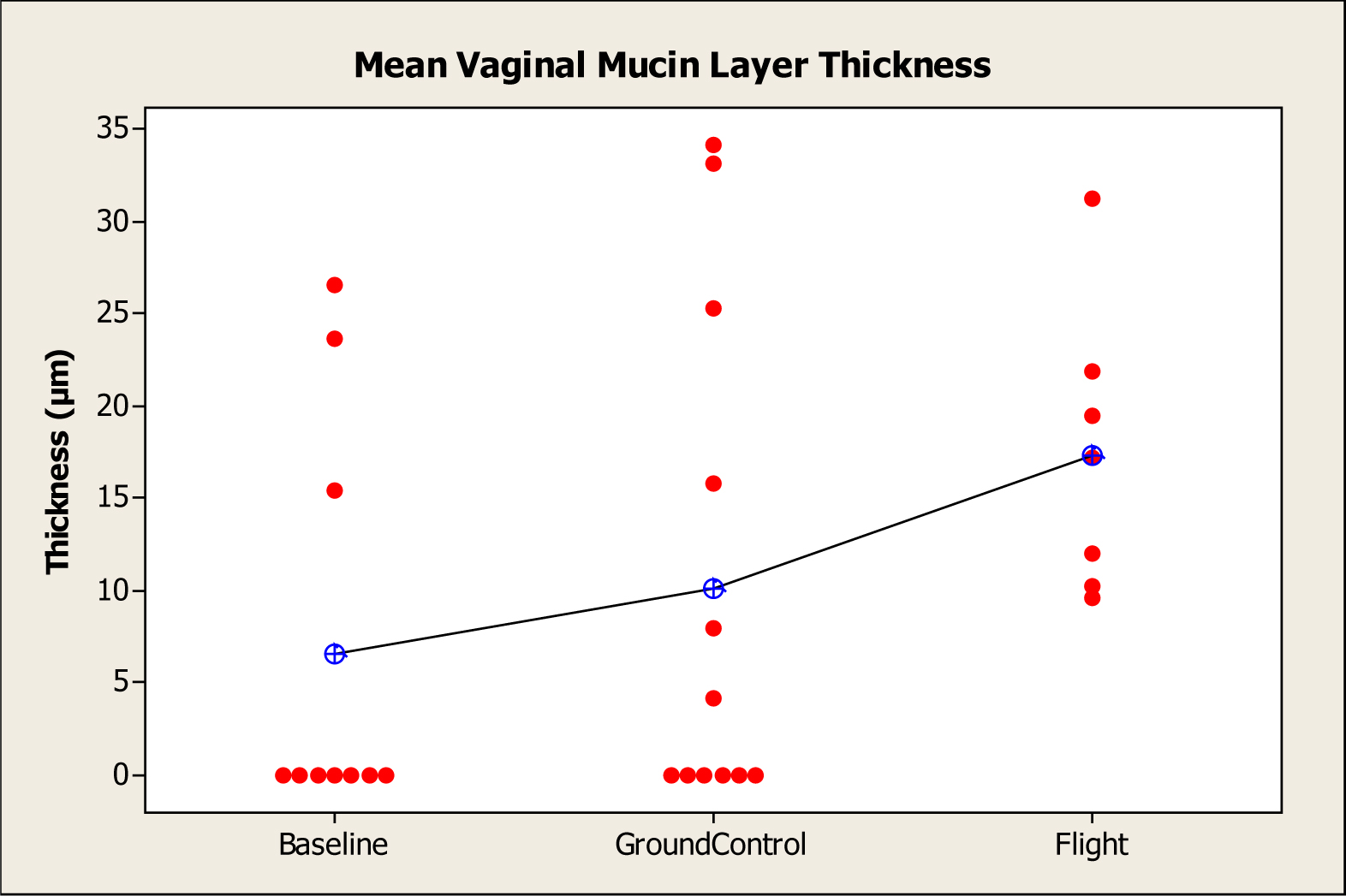

Figure 4.

Graph comparing the mean apical mucin thickness between the BL, GC, and FL animals
Language: English
Page range: 20 - 28
Published on: Jul 1, 2015
Published by: American Society for Gravitational and Space Research
In partnership with: Paradigm Publishing Services
Publication frequency: 2 issues per year

© 2015 Camille Romer, Allan Forsman, published by American Society for Gravitational and Space Research
This work is licensed under the Creative Commons Attribution-NonCommercial-NoDerivatives 3.0 License.