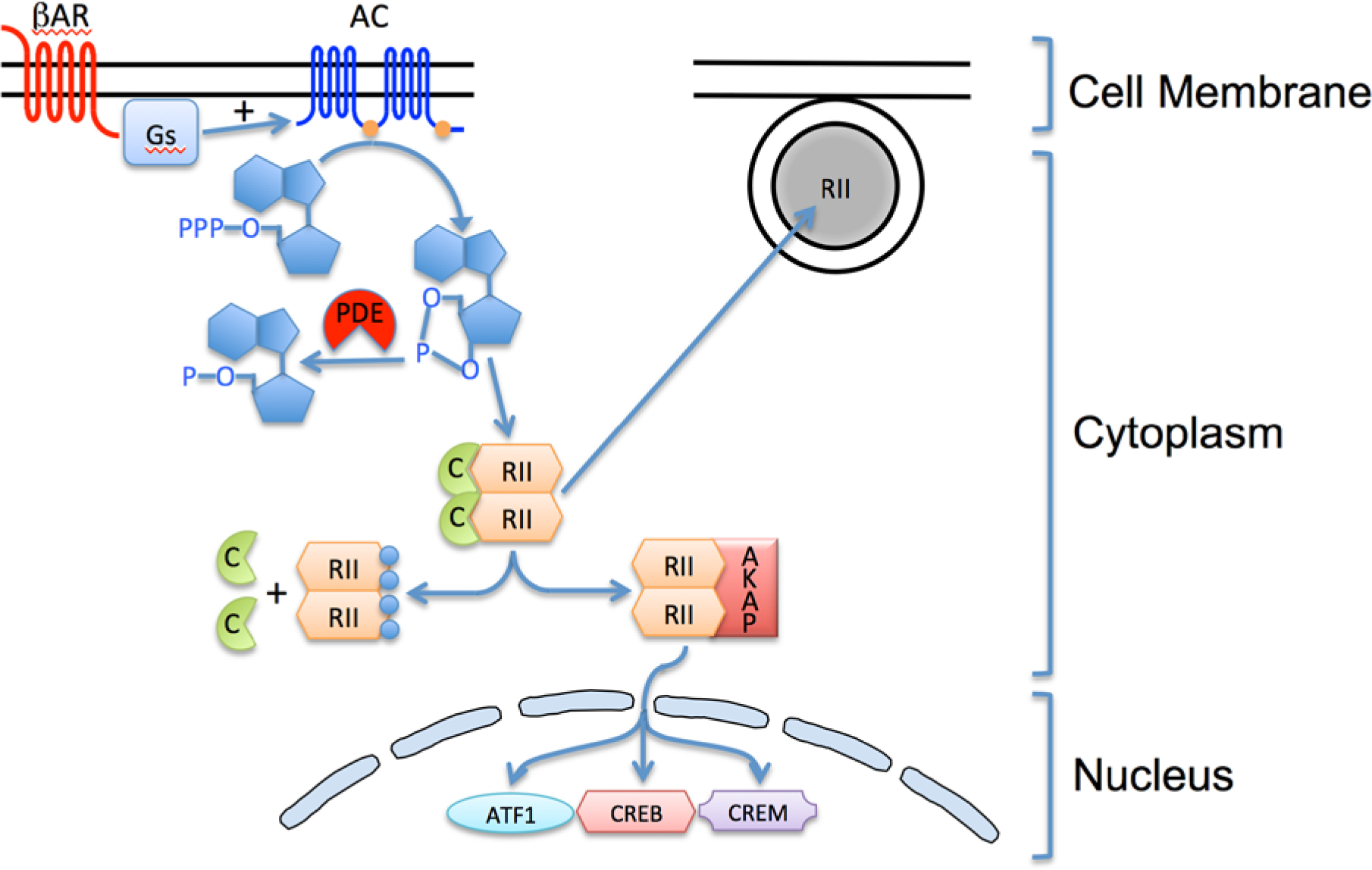
Figure 1.
Cyclic AMP-PKA signaling pathways of regulated exocytosis in cell compartments. Schematic representation of cell surface beta-adrenergic receptor stimulation, signal transduction, cyclic AMP second messenger cytoplasmic and nuclear response. βAR, beta-adrenergic receptor; Gs, heterotrimeric G protein; AC, adenylate cyclase; PDE, phosphodiesterase; AKAP, A-kinase anchor protein; RII, type II PKA regulatory subunit; C, PKA catalytic subunit; ATF1, activating transcription factor 1; CREB, cyclic AMP response element binding protein; CREM, cyclic AMP responsive element modulator. The large blue sphere represents a secretory granule along a path to fuse with the cell membrane and to empty its contents of secretory proteins into the lumen.
Table 1.
Body Weights of STS-135 and Bion-M1 Mice.
| Group | Initial Body Wt. (g) ± SEM (n) | Final Body Wt. (g) ± SEM (n) |
|---|---|---|
| STS-135 | ||
| Flight | 20.7 ± 0.40 (7) | 18.4 ± 0.52 (7) |
| AEM Ground Control | 20.7 ± 0.31 (15) | 19.4 ± 0.33 (15) |
| Vivarium Ground Control | --- | 19.7 ± 0.34 (15) |
| Bion-M1 | ||
| Flight | 26.8 ± 0.55 (6) | 29.4 ± 1.73 (6) |
| Synchronous Vivarium Ground Control | 29.2 ± 0.44 (8) | 28.7 ± 0.30 (8) |
| Asynchronous Habitat Ground Control | 27.3 ± 1.15 (7) | 29.7 ± 0.83 (7) |
| Asynchronous Vivarium Ground Control | 26.7 ± 0.78 (7) | 28.9 ± 1.03 (7) |
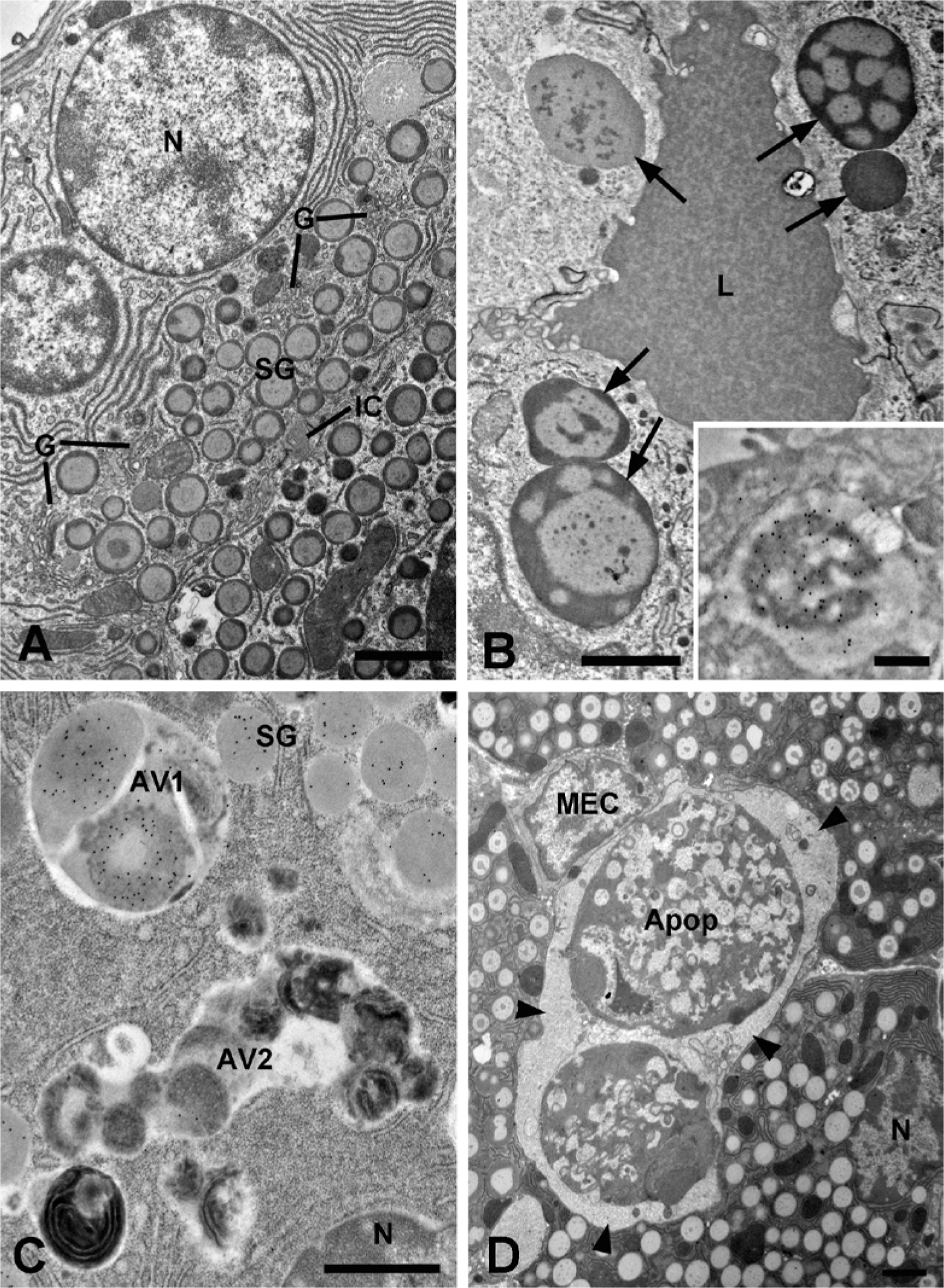
Figure 2.
Ultrastructure of parotid glands of flight mice. Panel A, STS-135: Acinar cells have basally located nuclei [N (binucleate cells are common)], a prominent Golgi complex (G), and abundant apically located secretory granules (SG). Intercellular canaliculus (IC). Scale bar = 2 μm. Panel B, STS-135: Intercalated duct. The duct cells have apical vacuoles (arrows) containing material endocytosed from the lumen (L). Scale bar = 2 μm. The inset shows a similar vacuole in a striated duct cell immunogold labeled for PSP, an acinar secretory protein. Scale bar = 0.5 μm. Panel C, Bion-M1: A recently formed autophagic vacuole (AV1) containing secretory proteins labeled for PSP is present in an acinar cell. An older autophagic vacuole (AV2) contains remnants of secretory granules and other organelles, but shows little labeling. Secretory granule (SG); nucleus (N). Scale bar = 1 μm. Panel D, Bion-M1: Apoptotic acinar cells (Apop) phagocytosed by a macrophage (arrowheads). Myoepithelial cell (MEC). Scale bar = 2 μm.
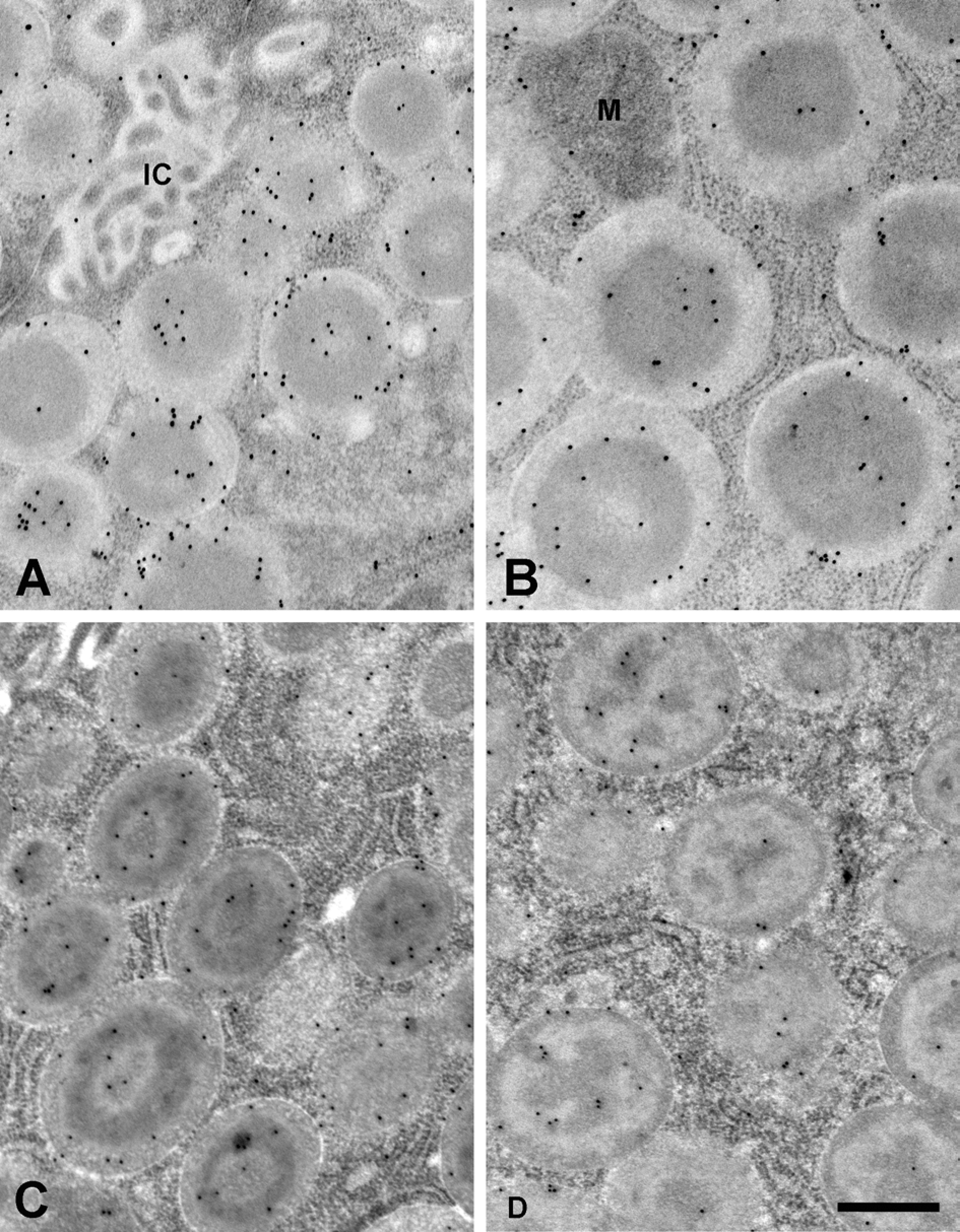
Figure 3.
Immunogold labeling of parotid acinar cell secretory granules. Panel A, STS-135: Flight, PRPs. Panel B, STS-135: AEM ground control, PRPs. Panel C, Bion-M1: Flight, amylase. Panel D, Bion-M1: Habitat ground control, amylase. Intercellular canaliculus (IC); mitochondrion (M). Scale bar = 0.5 μm.
Table 2.
Quantitative Immunogold Labeling of STS-135 and Bion-M1 Salivary Glands (Gold Particles/µm 2 ± SEM).
| Bion-M1 Parotid | Flight | Habitat |
|---|---|---|
| Amylase | 15.3 ± 1.11∞ | 10.3 ± 0.69 |
| RII | 10.1 ± 0.47 | 11.3 ± 0.49 |
| PSP | 37.4 ± 1.17§ | 30.6 ± 1.76 |
| PRP | 22.5 ± 1.61 | 24.8 ± 2.08 |
| DCPP | 23.1 ± 0.95 | 25.2 ± 1.27 |
| STS-135 Parotid | Flight | Habitat |
|---|---|---|
| Amylase | 13.9 ± 0.58§ | 17.0 ± 0.76 |
| RII | 11.9 ± 0.36 | 12.1 ± 0.47 |
| PSP | 16.5 ± 0.35* | 15.2 ± 0.51 |
| PRP | 21.2 ± 0.87∞ | 17.2 ± 0.67 |
| DCPP | 12.5 ± 0.45 | 14.1 ± 0.75 |
| Bion-M1 Submandibular | Flight | Habitat |
|---|---|---|
| SABPα | 5.30 ± 0.27∞ | 2.40 ± 0.13 |
| PRP | 6.36 ± 0.21∞ | 4.73 ± 0.35 |
| EGF | 32.5 ± 0.60∞ | 20.4 ± 1.09 |
| NGF | 8.78 ± 0.41∞ | 5.52 ± 0.37 |
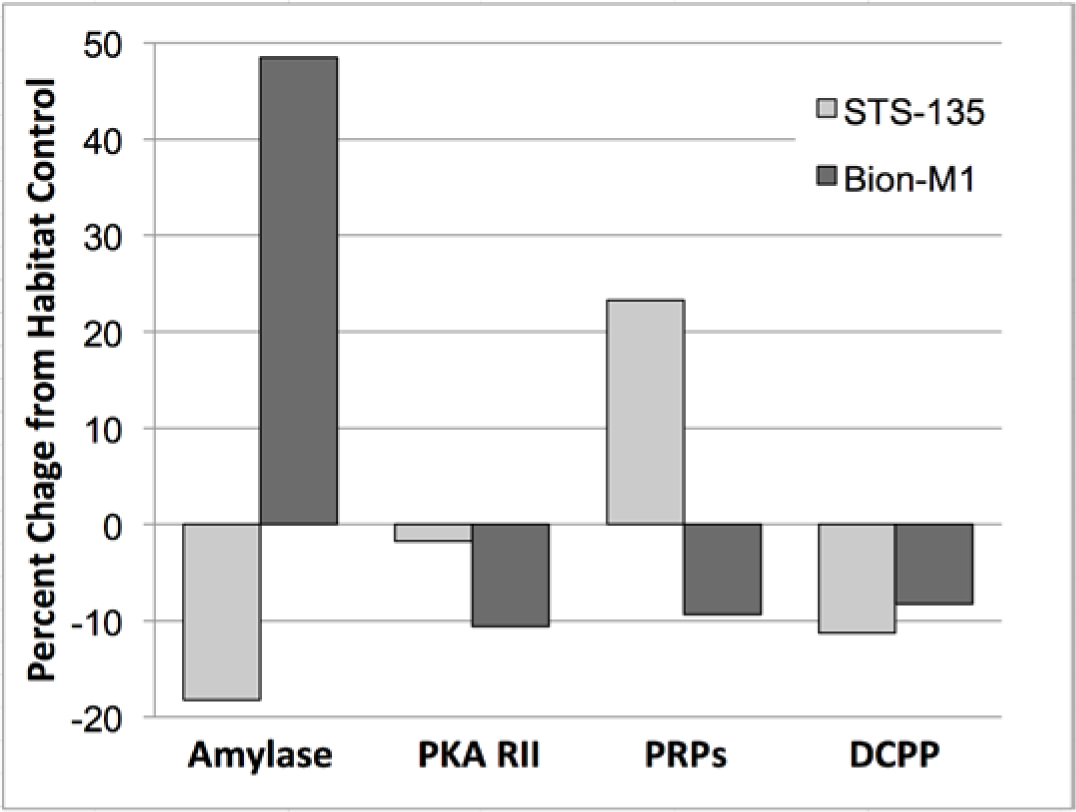
Figure 4.
Morphometric analysis of immunogold labeling of parotid secretory proteins. Percent change in STS-135 (light bars) and Bion-M1 (dark bars) flight mice from habitat controls.
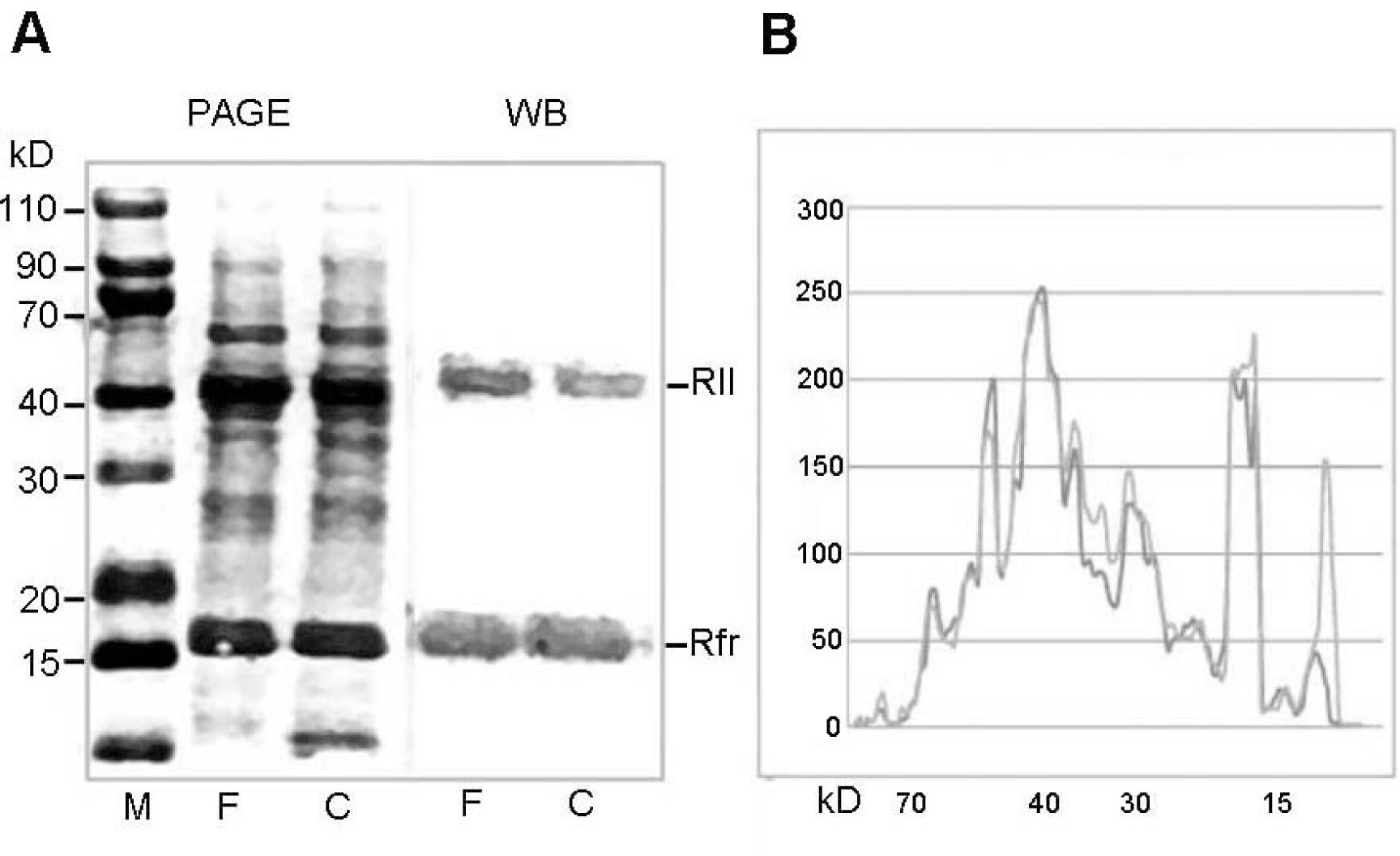
Figure 5.
Electrophoresis, Western blotting, and densitometry of parotid proteins. Panel A, Bion-M1 control and flight parotid soluble proteins. The lanes are molecular size marker (M), flight (F), and vivarium control (C). The two bands on the Western blot (WB) are at the mobility of RII and an RII fragment (Rfr), respectively. Panel B, Densitometry of the banding pattern profiles. Vivarium control (light gray curve) superimposed with the flight (darker curve) protein electrophoretic pattern. The ordinate shows integrated density (ID) values and the abscissa shows the calculated molecular size in kilo Dalton (kD) units.
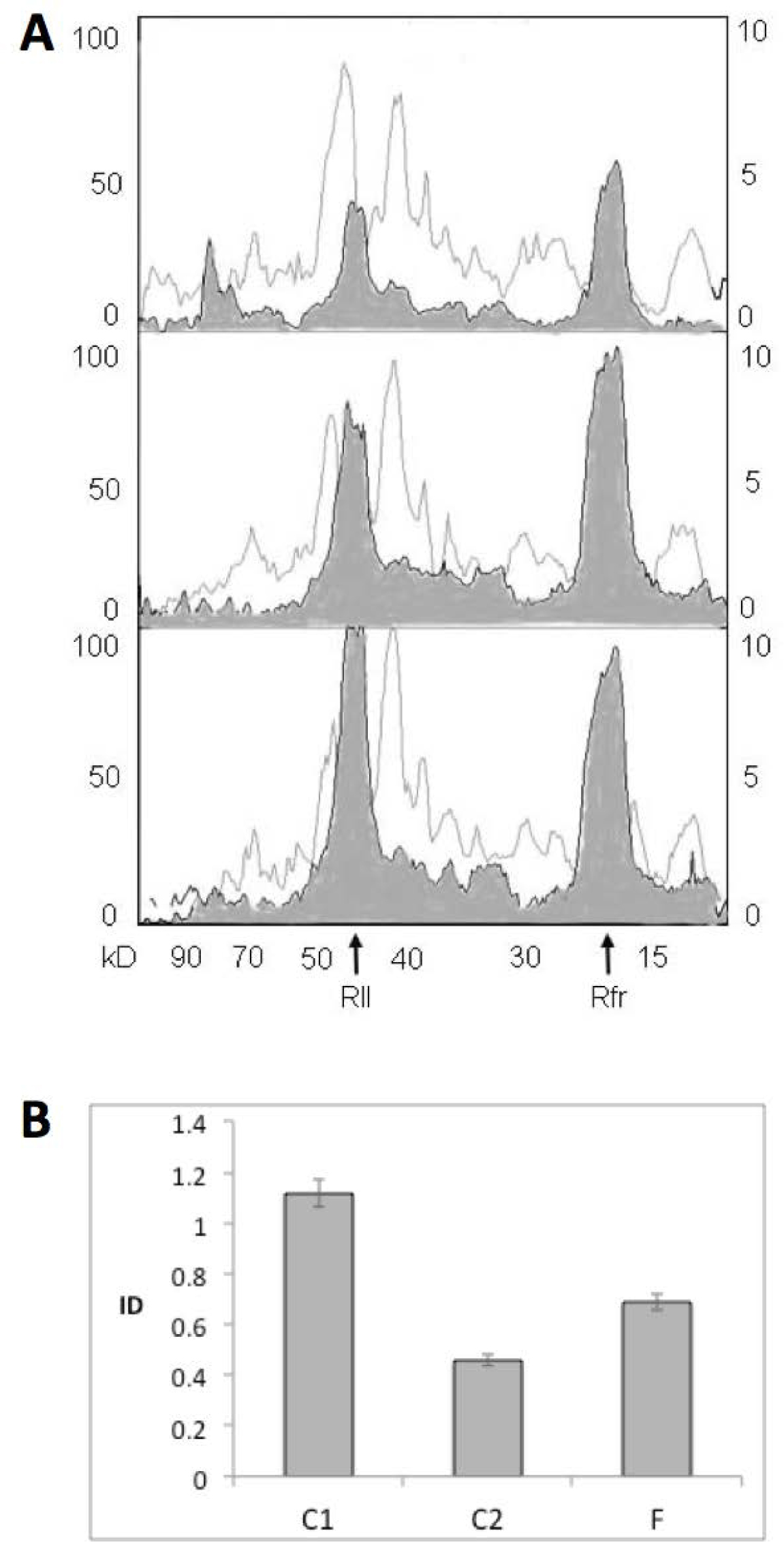
Figure 6.
Densitometric analysis of polyacrylamide gel electrophoretic protein separation and anti-RII and anti-α-amylase reactivity in STS-135 mice. Panel A: Top panel, flight; middle panel, vivarium; and bottom panel, habitat parotid gland samples. The lighter curve represents the protein profile; the shaded area is the reactivity to anti-RII antibody. The ordinate axes are integrated density values of the proteins on the left hand axis, and the integrated density values for RII and the reactivity of RII fragment (Rfr) on the right hand axis. Panel B shows parotid α-amylase Western blotting. The ordinate shows integrated density, and the error bars show ± 5% error. F, flight; C1, vivarium control; C2, habitat control.
Table 3.
Ratios of RII to Total Protein of STS-135 and Bion-M1 PAGE.
| F | C1 | C2 | ||
|---|---|---|---|---|
| STS-135 | PAGE | 70.8 | 69.28 | 69.99 |
| RII | 5.16 | 41.43 | 24.24 | |
| Ratio | 0.073 | 0.60 | 0.35 | |
| Bion-M1 | PAGE | 153.6 | 129.0 | --- |
| RII | 21.7 | 16.26 | --- | |
| Ratio | 0.14 | 0.13 | --- |
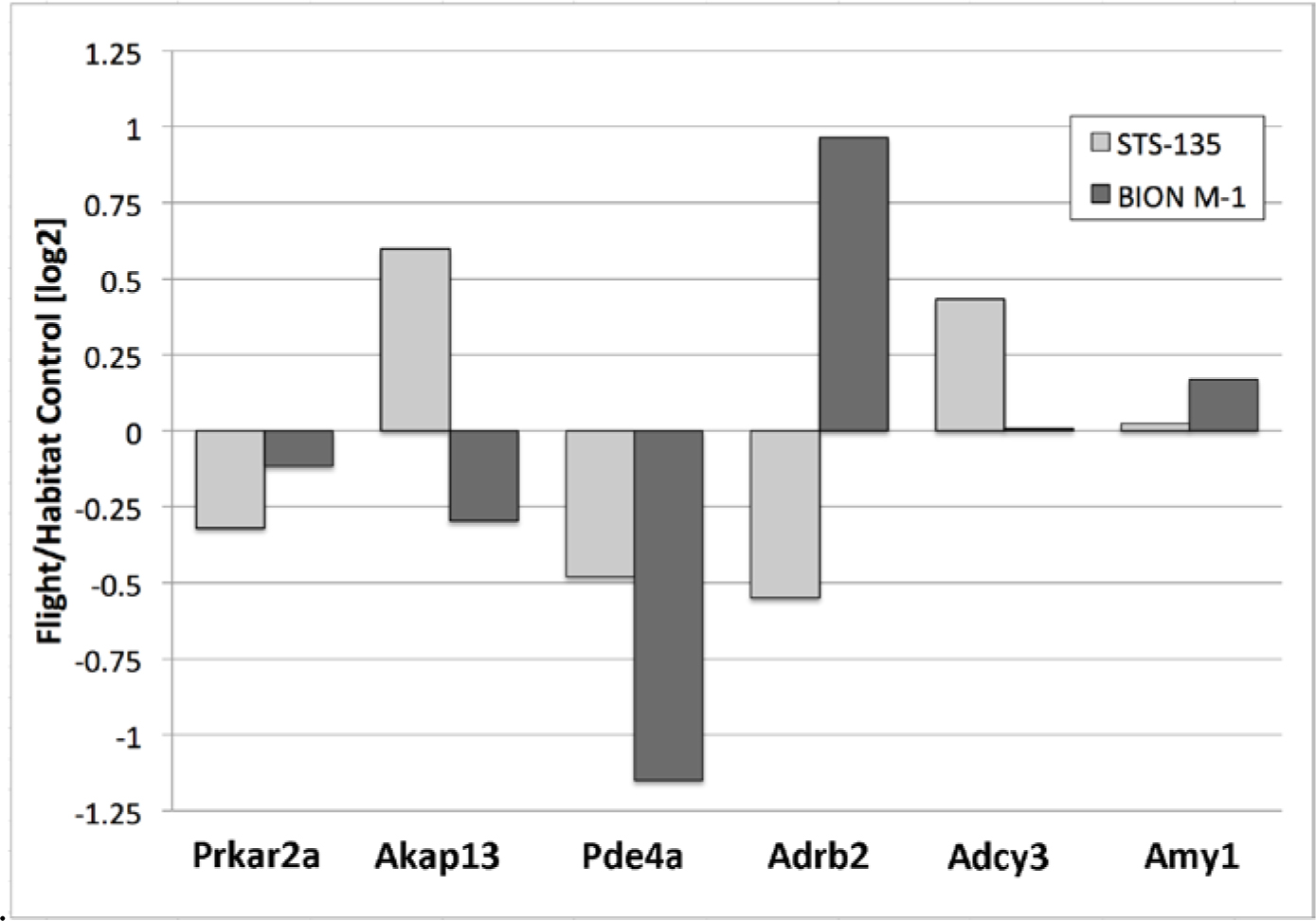
Figure 7.
Microarray analyses of selected parotid genes. The ordinate shows the log2 values of the ratio of the means of the normalized signal intensities determined for each gene for flight vs. habitat control. Prkar2a, protein kinase, cAMP dependent regulatory, type II alpha; Akap13, A-kinase anchor protein 13; Pde4a, phosphodiesterase 4a, cAMP specific; Adrb2, adrenergic receptor, beta 2; Adcy3, adenylate cyclase 3; Amy1, amylase 1, salivary.