
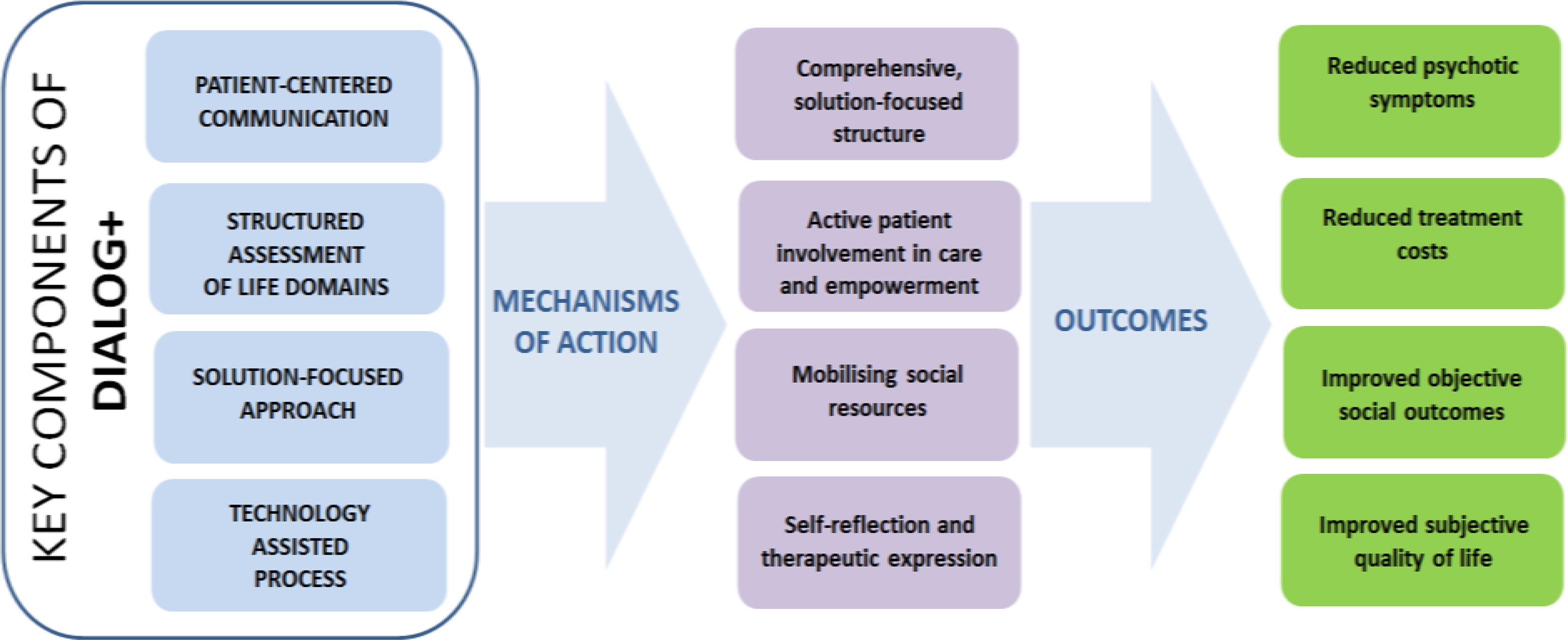
Figure 1
Key components, proposed mechanisms of action and outcomes of DIALOG+
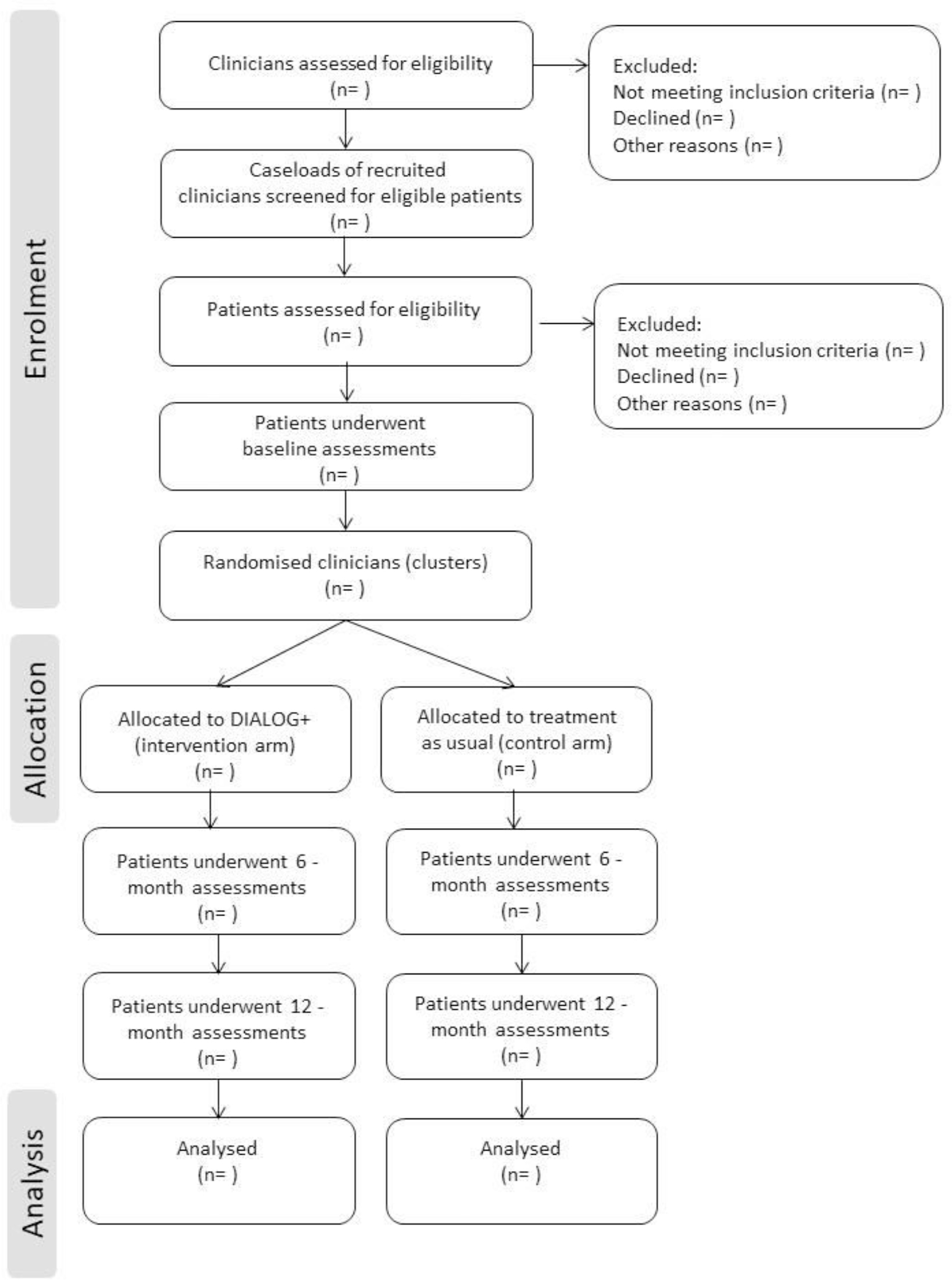
Figure 2
Study flow chart
Table 1
Inclusion and exclusion criteria for clinicians and patients
| Clinicians | Patients |
|---|---|
| Inclusion criteria | |
| Having a professional qualification in mental health care (e.g. psychiatrists, nurses and psychologists) More than 6 months’ experience of working in mental health care No plans to leave their post within the study period (12 months) | Primary diagnosis of psychosis or related disorder in remission (i.e. ICD-10 F20-29, F31) (ICD-10, 1990) Aged 18 years or older Attending the outpatient clinic or day hospital History of at least one hospital admission in their lifetime There should not be plans to leave mental health care services for the next 12 months Capacity to provide informed consent |
| Exclusion criteria | |
| N/A | Having a diagnosis of organic brain disorders Having severe cognitive deficits (unable to provide information to study instruments). This is based on the clinical judgement |
Table 2
Standard outpatient mental health care in recruited services
| Country | Description of routine outpatient mental health care |
|---|---|
| Bosnia and Herzegovina | Hospital-based outpatient services: patients are primarily seen by psychiatrists for every 1–3 months; the duration of routine meetings is 15–30 min. Other staffs include nurses, psychologists, social workers, occupational therapists and trainees. Interventions offered include medication, psychotherapy and occupational therapy. |
| Kosovo* | Community-based services: patients are primarily seen by nurses one to four times per month, the duration of routine meetings is 15–20 min. Psychiatrists see patients once per month or less frequently mainly to review medication or provide psychotherapy. Other professionals in services include psychologists, psychotherapists, social workers and trainees. Interventions offered include medication, family intervention, occupational therapy and home visits. |
| Republic of North Macedonia | Hospital-based services: patients are seen predominately by psychiatrists or psychologists once per month or less frequently; the duration of routine meetings is 30 min. Other staffs include nurses, social workers, psychotherapists, occupational therapists, pharmacists and psychiatric trainees. Interventions offered include medication, psychotherapy, occupational therapy, psychoeducation and supportive psychotherapy. |
| Montenegro | Hospital-based services: patients are seen predominately by psychiatrists once per month or less frequently; the duration of routine meetings 15–45 min. Other staffs include nurses, psychologists, social workers, occupational therapists, psychiatric trainees and defectologists. Interventions offered include medication, psychotherapy and occupational therapy. |
| Serbia | Hospital-based services: patients are seen predominately by psychiatrists and psychologists every 2–3 months; the duration of routine meetings is 20–40 min. Other staffs include nurses, social workers, occupational therapists and trainees. Interventions offered include medication, psychotherapy, occupational therapy and needs-based supportive psychotherapy. |
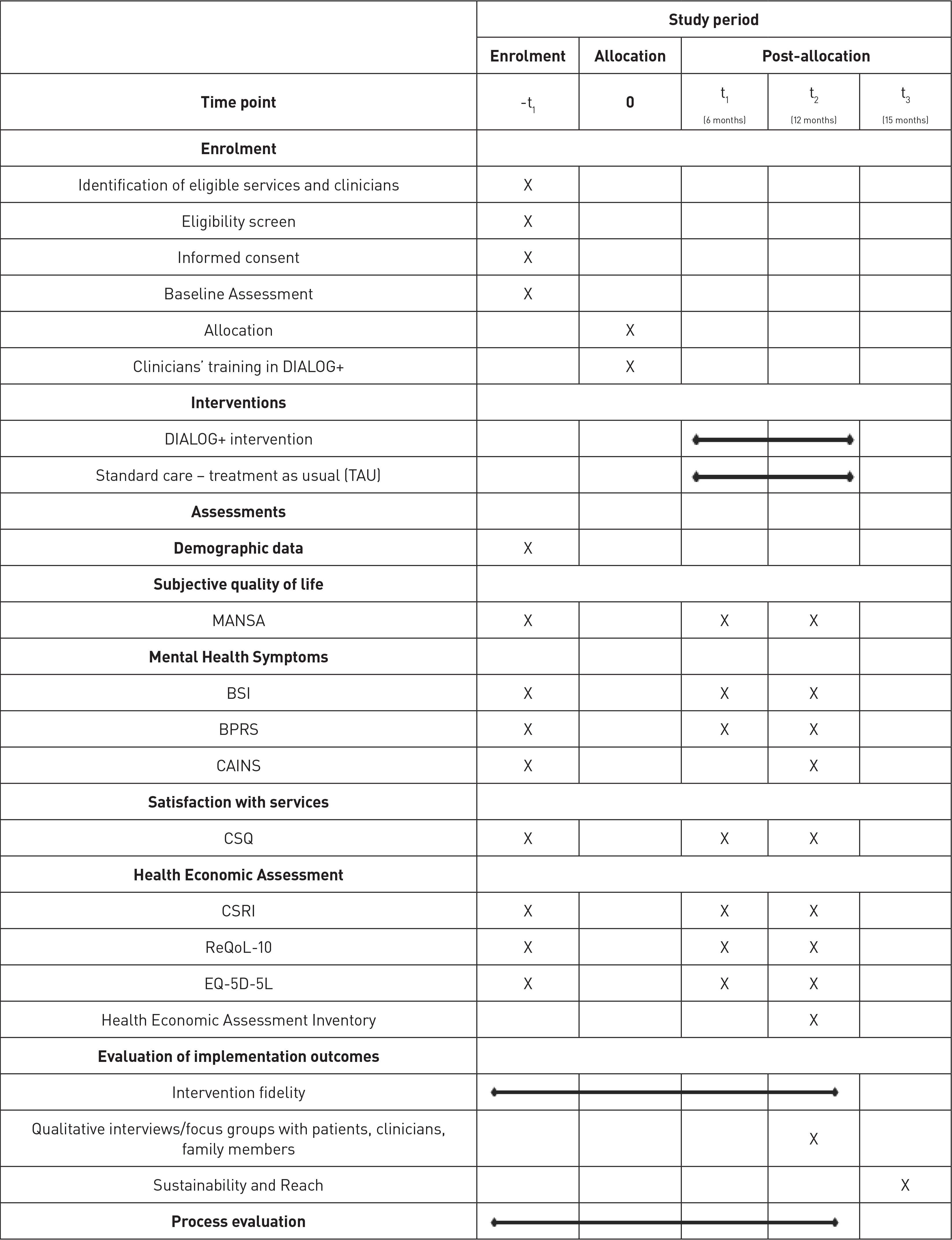
Table 4
Evaluation of implementation outcomes
| Outcome | Description | Data Source | Data collection |
|---|---|---|---|
| Intervention fidelity | Intervention fidelity framework: adherence to an intervention, exposure or dose, quality of delivery, participant responsiveness and programme differentiation (Carroll, 2007) | Staff interviews Researchers’ notes 20% of sessions are audiotaped and analysed using content analysis Content of DIALOG+ sessions is analysed from tablet computers | Throughout the study, end of the study |
| Clinicians’ and patients’ experience of using DIALOG+ | Acceptability and feasibility of the intervention, including acceptability of technology (e.g. using a computer tablet) to staffs and patients, participant responsiveness and engagement with the intervention and overall experience with the intervention | Patient and staff interviews/focus groups | End of the study |
| Sustainability and reach | Organisational level: Sustainability (infrastructure, clinical leadership engagement, monitoring, factors to promote maintenance) and reach (number of additional sites using DIALOG+) Individual level: Sustainability [number and characteristics of participants (staff and patients) who are using DIALOG+ after the competition of the active implementation, formative evaluations on reasons for using DIALOG+]; Reach (number of additional clinicians using DIALOG+) | Interviews with key informants at each site (site champion, medical director) based on the Dynamic Sustainability Framework 49 Staff and patient interviews Site visits | Throughout the study, end of the study |