
1. Introduction
Fit, ergonomics, and comfort tests are the most important from the point of view of determining the correctness of the design assumptions and the design process. They allow us to confirm the correctness of the structures adopted in the design process, the selection of materials, and their arrangements in connotation with the requirements related to ensuring the fitness of the product, comfort of use, and finally ergonomics.
In the context of ensuring absolute safety for motorcyclists [1,2,3,4,5,6,7], optimal thermal comfort and ergonomics should also be considered. Achieving an acceptable consensus between these two design aspects of a product is often trivialized or overlooked. However, it should be noted that failure to ensure thermal comfort and ergonomics increases the risk of injury and death, despite providing protection to the most vulnerable areas of the body. [8,9,10]. Grabowska et al. [11] described the process of personalization of personal protective equipment for firefighters aimed at achieving the best fit of the product to the user’s body, and thus maximizes comfort, especially when textile products are applied in critical conditions. The study evaluated the comfort of special firefighter clothing under real conditions of use. In the study by Grabowska [12], which is a continuation of the above research, the results of validation for 12 special clothing personalized for individual firefighters and 12 special clothing adapted to selected size subgroups were presented. It has been confirmed in studies that the design personalization of a protective product significantly affects the comfort, ergonomics of clothing, as well as the safety of the user. De Rome [13] confirmed in her research that currently produced motorcycle suits can affect (due to the establishment of a barrier between the body and the environment) the cognitive and psychophysical functioning of motorcyclists, contributing to the reduction in their performance and negatively affecting the safety of riding. In the study by Hurren et al. [8], it is explicitly indicated, in the form of guidelines, that in the design of protective clothing for motorcyclists, the aspects of thermal comfort, water vapor and air permeability, thermal barrier, and resistance to water penetration are the factors that are conducive for achieving the ergonomics of the personal protective equipment acceptable to the user.
The purpose of the validation processes, carried out in conditions similar to real and in real conditions, was to validate the correctness of the adopted design assumptions and the correctness of the selection of material systems in relation to the ergonomics and functionality of the newly designed motorcycle suits for traffic policemen.
The research thesis was adopted that the appropriate arrangement of materials in the textile systems and the design of the product will be conducive for ensuring ergonomics and functional functionality of the prototype of the motorcyclist’s suit. Validation tests will also allow for the verification of many areas of characteristics specifying the designed product to improve them in the provisions specifying specific parametric features and qualities of the designed product.
2. Materials and Methods
2.1. Materials
The prototype motorcyclist’s suit for policeman subjected to the validations in simulated and real conditions was consisted in summer jacket, winter jacket, and trousers. The innovation of the described prototype suit is described in previous studies [14,15,16,17].
The developed solution met the requirements of PN-EN 13595-1:2005 and methodological standards PN-EN 13595-2:2005, PN-EN 13595-3:2005, and PN-EN 13595-4:2005.
The shoulders and elbows protectors (complied with PN-EN 1621-1:2013 standard) as well as back protectors (complied with PN-EN 1621-2:2013 standard) were manufactured by SAS-TEC GmbH (Markgröningen, Germany).
2.2. Methods
2.2.1. Validation of the Prototype of the Motorcycle Suit in Simulated Conditions
The validation process of the prototype clothing for a motorcyclist – policeman – was carried out in accordance with the procedure described in the PN-EN 13595:1:2005 standard. The research was conducted in the following systems: summer jacket + trousers and winter jacket + trousers.
For the validation tests carried out for individual elements of the motorcyclist suit, elements of the sizes defined in Table 1 were used [18,19,20].
Table 1
Dimensions of the components of the motorcyclist suit (according to PN-EN 13595-1:2005 standard; formerly known as EN 340 standard) that has been subjected to a validation test under near-real conditions in accordance with the guidelines of PE-EN 13595-1:2005.
| Declared parameter/part of clothing | Summer jacket | Winter jacket | Trousers |
|---|---|---|---|
| Height (cm) | 190 | 190 | 190 |
| Chest circumference (cm) | 117 | 117 | — |
| Waist circumference (cm) | 92 | 92 | 92 |
| Declared size | L | L | L |
| Declared gender | Male | Male | Male |
Source: Author’s contribution.
The studies assessed:
whether the designed suit is free of rough, sharp, or hard structural elements;
whether the size complies with PN-EN 13595-1:2005 standard (formerly known as EN 340 standard);
whether it is possible to put on a suit and manipulate elements of suit in order to fit and whether it is possible to put on shoes;
whether typical activities (walking on a flat surface at a speed of 2 m/s ± 1 m/s, walking upstairs, leaning forward by 90°, crouching and lifting small objects) can be performed without difficulty;
whether typical activities performed on a motorcycle (sitting astride a motorcycle, taking a position while riding, giving a signal to turn left and right with an outstretched hand, turning the head back while holding the handlebars with both hands) can be performed without difficulty;
that the clothing is not too tight around the back, legs, hips, thighs, shins, ankles, and crotch.
The tests were performed in accredited laboratory of SATRA Technology Center Ltd (UK).
2.2.2. Prospective Validation of the Prototype of the Motorcycle Suits in Real Conditions
Prospective validation studies were carried out with the participation of professional motorcycle drivers – police officers carrying out activities related to road traffic. The developed suits were evaluated in four seasons: winter, spring, summer, and autumn. The validation was performed in the following variants of the suit content: summer jacket + trousers and winter jacket + trousers.
The survey assessment, based on the requirements of the PN-EN 13595:1:2005 standard and own validation procedures, was carried out based on an online survey system: http://www.ankietamundurowi.pl/ [accessed on: 17–07–2025].
The validation process, carried out in real use conditions, involved six police officers operating on motorcycles. After the testing process, five full surveys were obtained.
The size of the test group involved was a direct result of the limitations resulting from the implementation of prospective studies, in which the level of risk related to the safety of use of the designed product is validated. For this reason, and in relation to the high risk of using motorcycle clothing (in excess terms of operational activities carried out by police officers, e.g., chase activities), the test group was limited in the studies. This assessment is a requirement for the introduction of a new product into use and the verification of the data obtained in retrospective study on a significantly larger group of users.
3. Results and Discussion
3.1. Validation of the Prototype of the Motorcycle Suit in Simulated Conditions
The validation process in conditions similar to real conditions for individual parts of the developed suit for motorcyclists – police officers: winter and summer jackets and trousers indicated full compliance with the requirements of tests carried out in accordance with the PN-EN 13595-1:2005 standard.
The sizes of individual elements of protective clothing have been correctly marked in accordance with the requirements of PN-EN ISO 13688:2013-12. The clothing did not contain rough, sharp, or hard elements or other factors that could cause irritation or contribute to the risk of an accident. It is also possible to put on individual product components without any problems and manipulate the fastening elements and the fitting system. It is also possible to put on shoes. All declared anti-impact protectors have been correctly incorporated into the garment, providing proper protection for the shoulders, elbows, forearms, hips, knee, and shins.
The protectors do not adversely affect freedom of movement and movement of the limbs, and do not cause discomfort. Typical activities performed without a motorcycle, such as walking on a plane, stairs, leaning forward, crouching, and lifting small objects were not a problem.
In the case of tests conducted while riding a motorcycle, it was found that it was easy to sit astride the motorcycle and assume a standard position while riding, the ability to indicate the direction of travel to the left or right with a fully extended hand and the ability to turn the head, including looking back while holding the handlebars with both hands. There was no pressure around the back, legs, including knees, hips, thighs, shins, ankles, and crotches.
All elements of the developed motorcyclist suit met the requirements of the PN-EN 13595-1:2005 standard. The above tests confirmed the ergonomics of the developed protective solution in conditions similar to real ones, allowing the validation process to be carried out in real conditions of the activities performed by a police officer during traffic supervision.
3.2. Validation of the Prototype of the Motorcycle Suits in Real Conditions
The research was conducted on a group of six professional users – police officers performing operational activities on motorcycles – and the survey process considered each of the elements of the suit: winter jacket, summer jacket, and pants. The survey evaluation was carried out after use in all seasons: winter, spring, summer, and autumn.
3.2.1. Results of the Winter Jacket Survey
Figure 1 shows the assessment of the ergonomic properties and construction of a winter jacket.
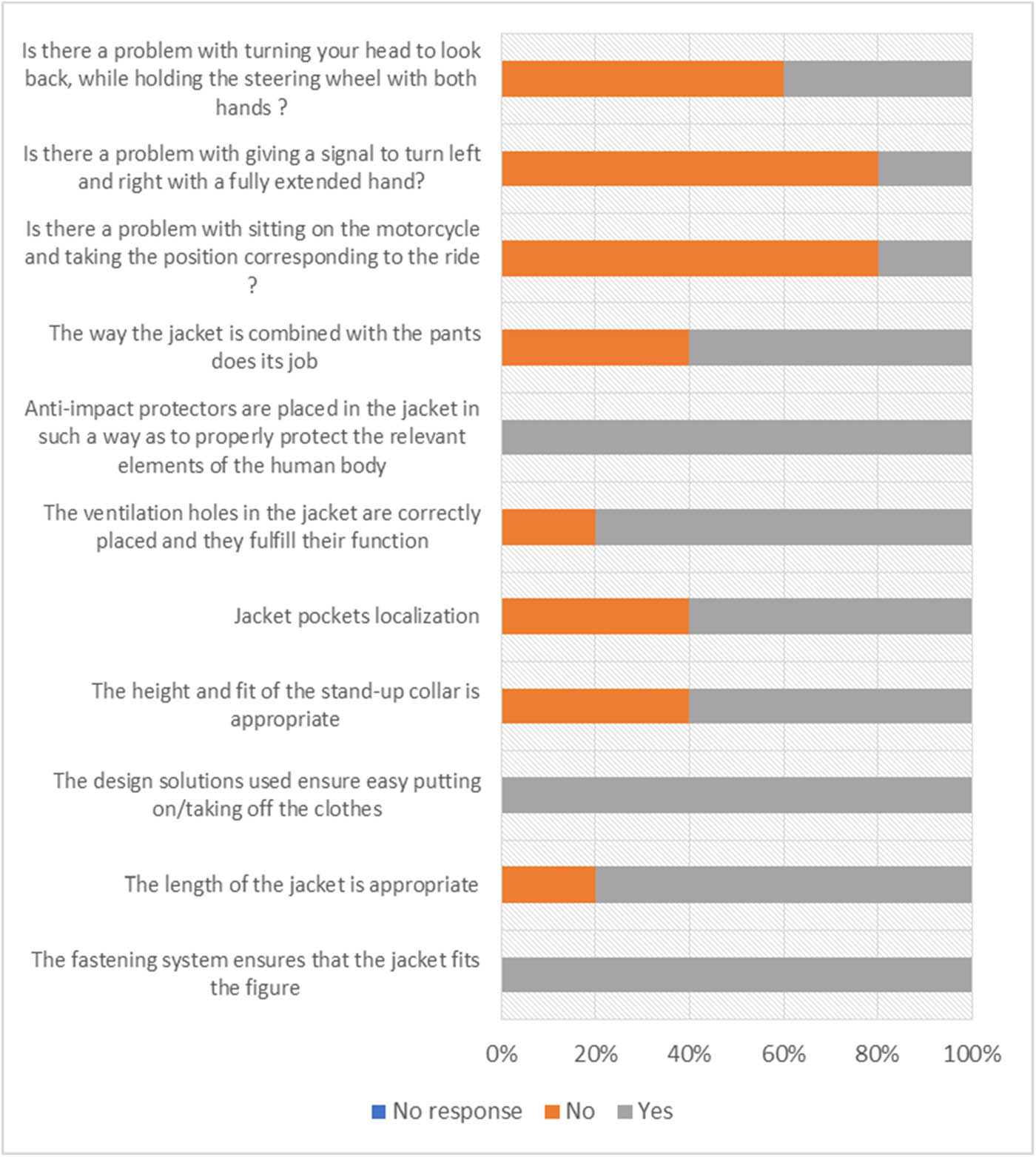
Figure 1
The assessment of the ergonomics and design of a winter jacket prototype.
Source: Author’s contribution.
As a result of the survey, five full questionnaires were received to evaluate the use of the winter jacket prototype. In most of the questions asked, the correctness of ergonomics and construction of the suit element was found. The position of the protectors in the jacket has been correctly evaluated by all users.
As additional areas related to the improvement, the design of the product in terms of facilitating the adoption of the position corresponding to driving and facilitating the straightening of the arm while driving should be improved. It is important when it is necessary to give signals about turning left or right (one of the users pointed out the need to remove the above aspects) and for difficulties when turning the head (two users pointed this out in the survey).
Figure 2 presents the results of the survey of the biophysical behavior of the winter jacket.
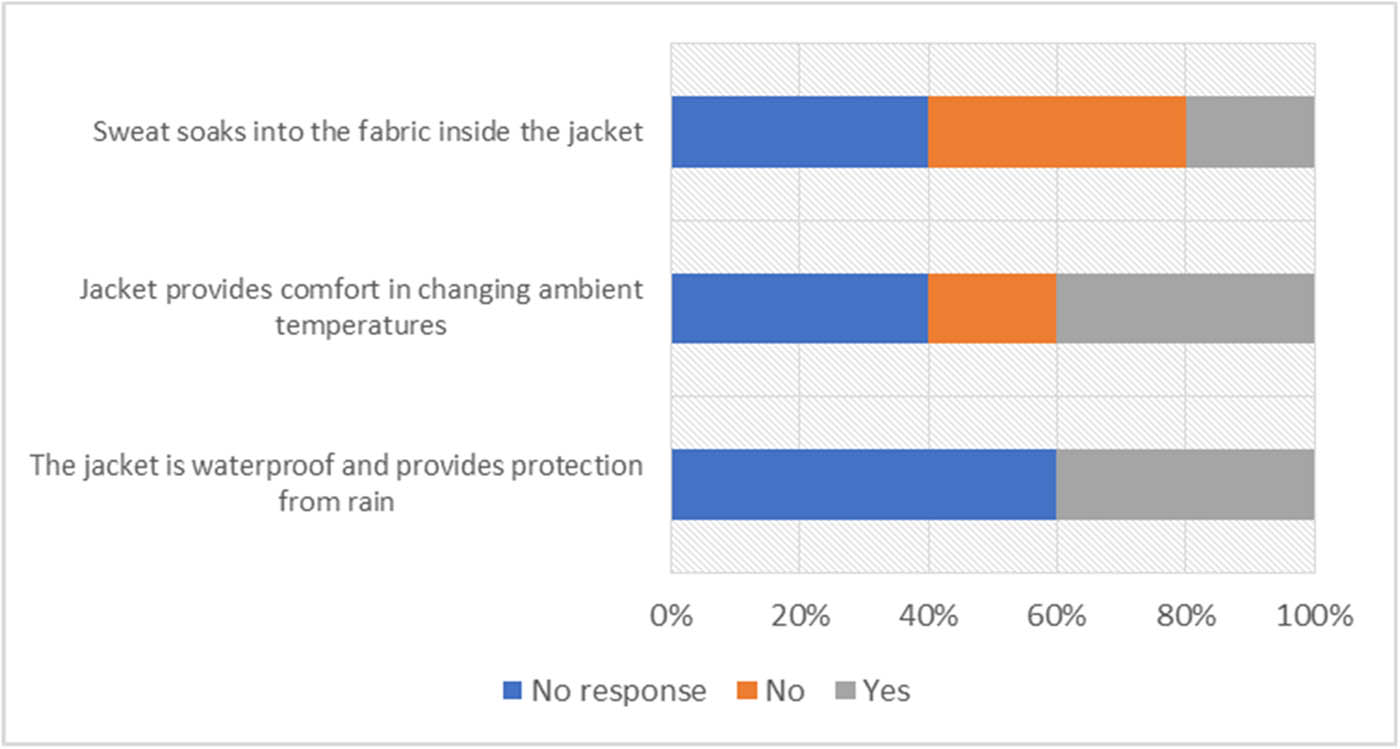
Figure 2
The assessment of the biophysical behavior of the winter jacket prototype.
Source: Author’s contribution.
In the case of the assessment of the biophysical properties of the prototype of the winter jacket, it was found that it was correct to ensure waterproofness (it should be noted that three users did not express an opinion in this aspect of the assessment). It allows to ensure comfort in changing ambient temperatures. Two out of five users have observed sweat penetrating the material inside the jacket.
All users who underwent the survey correctly assessed the exterior of the winter jacket prototype (Figure 3).
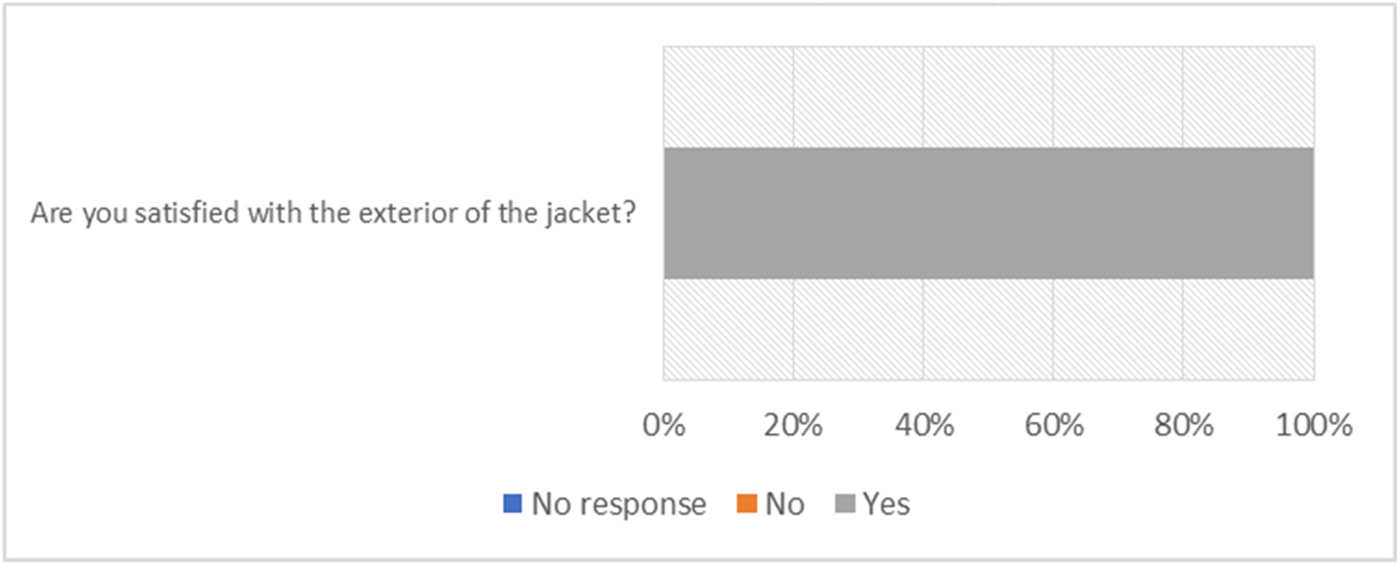
Figure 3
The assessment of the external appearance of the winter jacket prototype.
Source: Author’s contribution.
A similar situation occurred for the assessment of visibility (Figure 4), where all users assessed the correctness of the arrangement of the elements of the prototype responsible for ensuring visibility on the road.
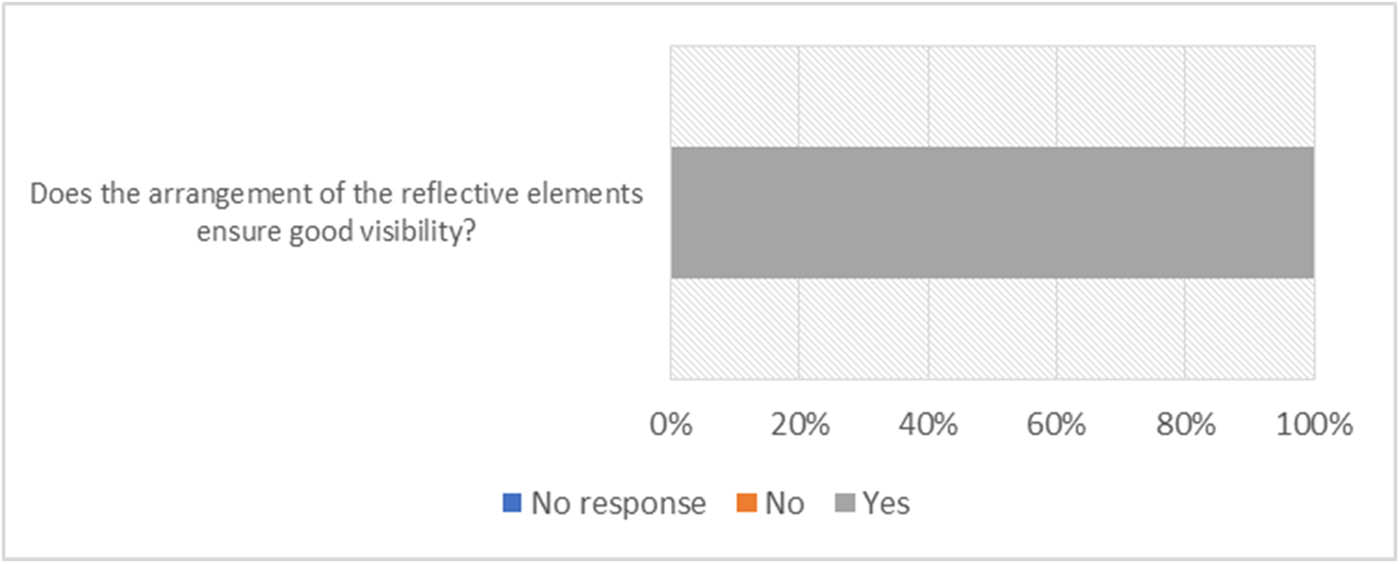
Figure 4
The assessment of the ensuring visibility of the winter jacket prototype.
Source: Author’s contribution.
The evaluation of the side effects of the prototype of winter jacket is shown in Figure 5.
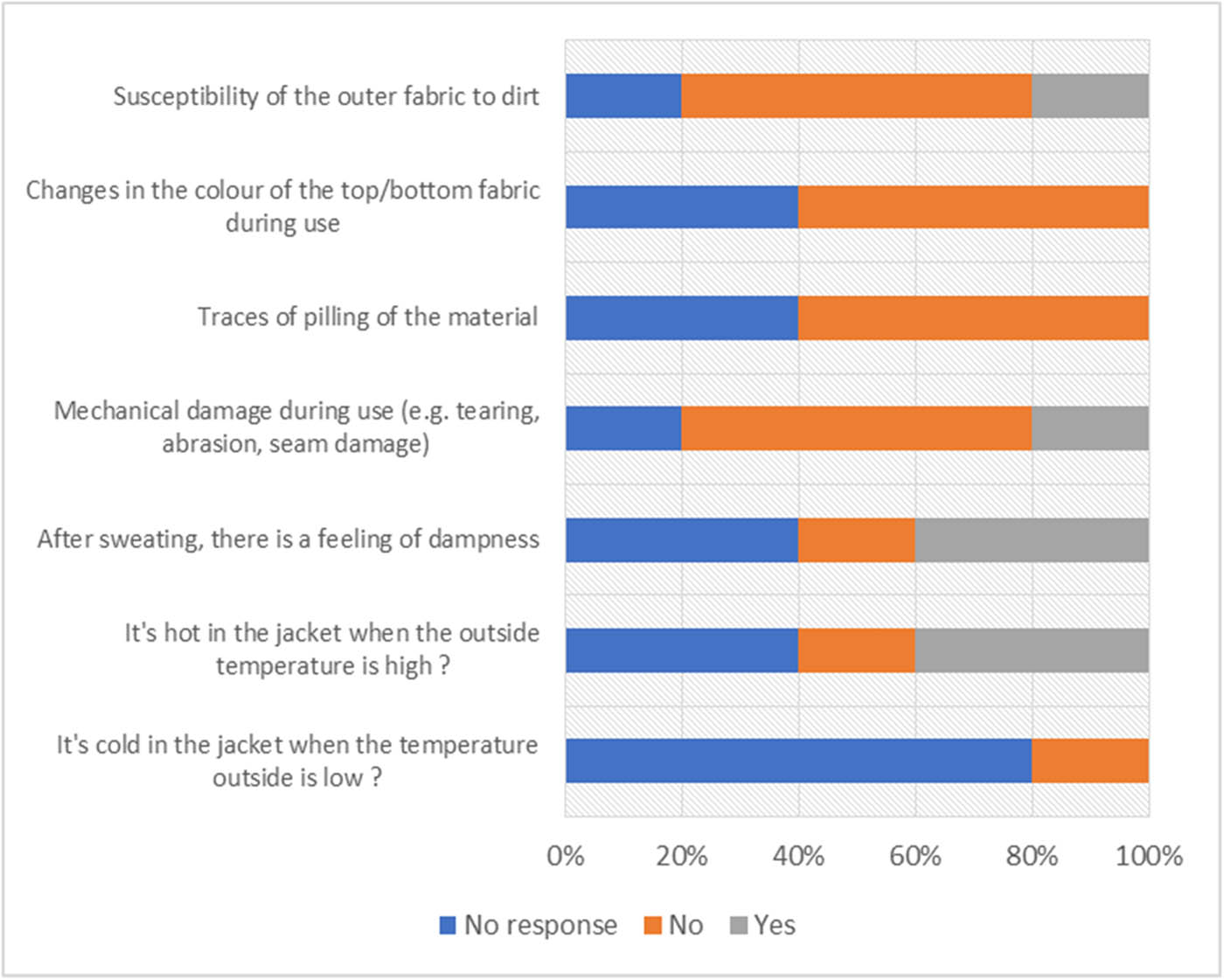
Figure 5
The assessment of the side effects of the winter jacket prototype.
Source: Author’s contribution.
The survey process indicated thermal discomfort in the case where the prototype jacket was used at a temperature higher than assumed in the instructions for use. In this case, a feeling of moisture has also been observed. In one case, the susceptibility of the outer fabric to dirt and mechanical damage during use was observed. No changes in the color of the fabrics used or the effect of pilling of the textile material were found.
3.2.2. Results of the Summer Jacket Survey
The evaluation of the ergonomics and design of a summer jacket prototype is presented in Figure 6.
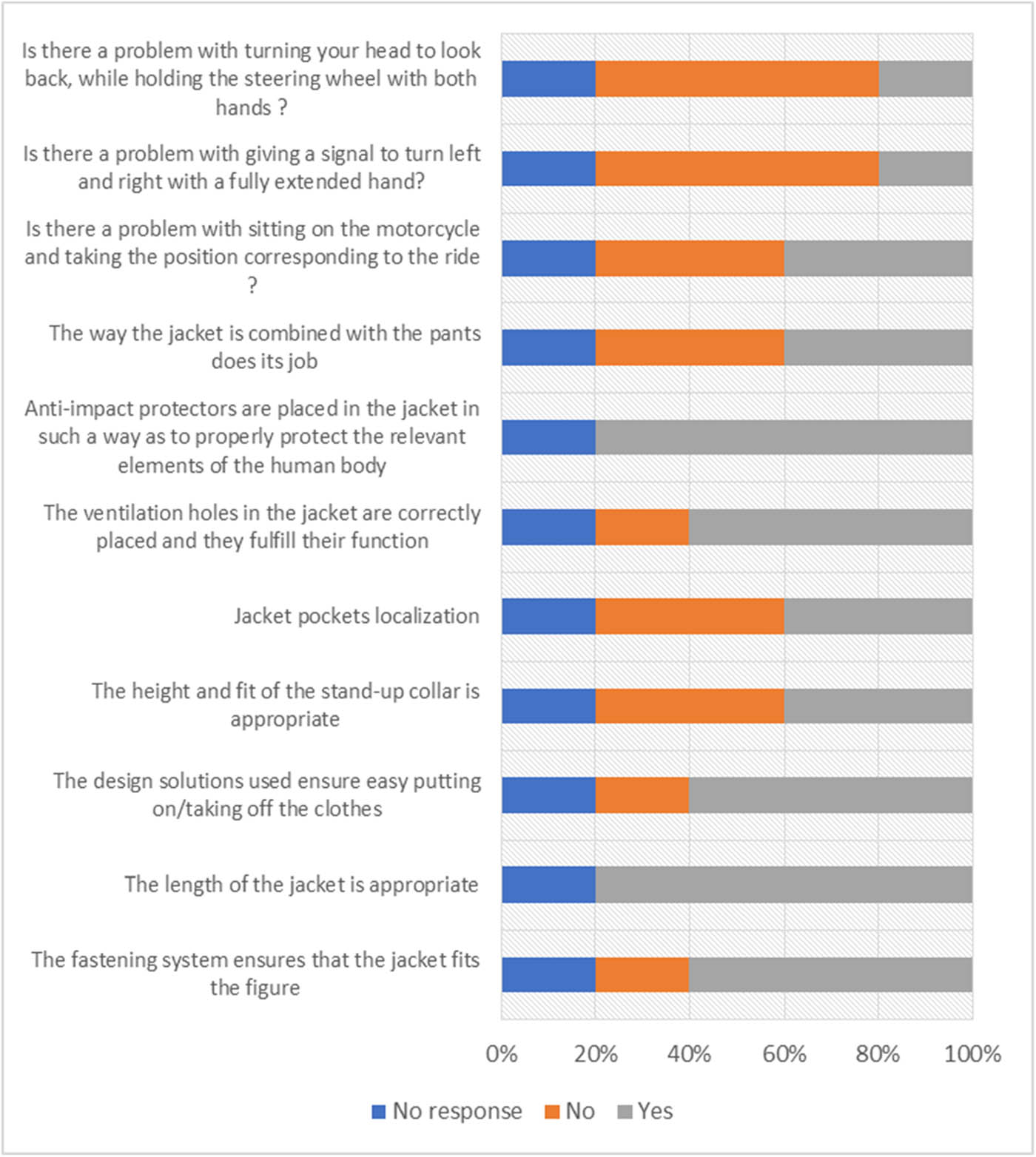
Figure 6
The assessment of the ergonomics and design of a summer jacket prototype.
Source: Author’s contribution.
The survey of the prototype of the summer jacket gave similar results as in the case of the winter version of the product. In general, the assessment was positive, but possible areas for improvement were indicated related to the fit of the stand-up collar, the arrangement of pockets, and the facilitation of taking a sitting position on the motorcycle (two users each submitted their comments). For other aspects related to ergonomics and design, the evaluation of the prototype was positive.
The evaluation of the biophysical behavior of the summer jacket prototype is shown in Figure 7.
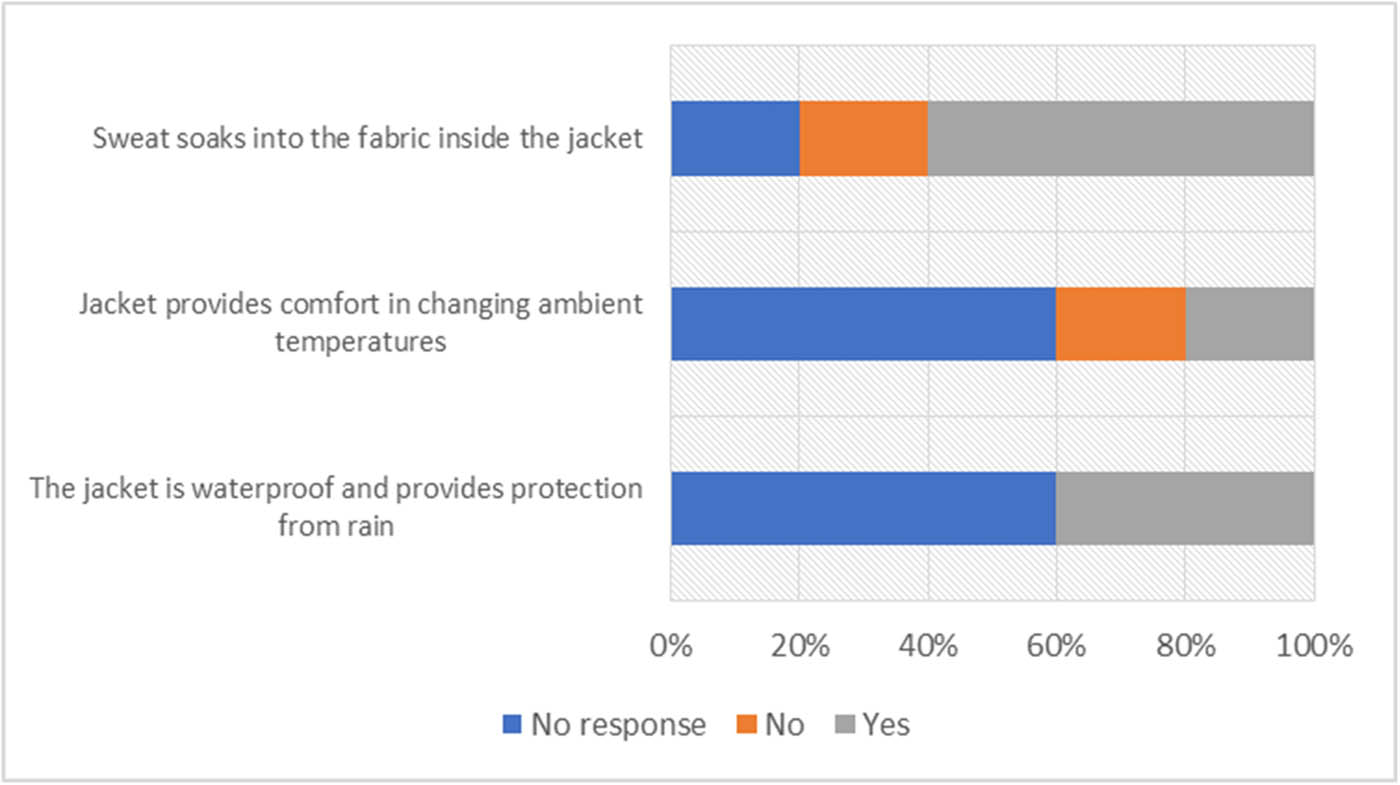
Figure 7
The assessment of the biophysical behavior of the summer jacket prototype.
Source: Author’s contribution.
In the survey, the waterproofness of the prototype jacket was confirmed, and only one of the users observed the presence of sweat on the inner surface of the jacket and the lack of comfort in changing ambient temperatures.
The outer aesthetics of the jacket were assessed positively by all users participating in the validation test (Figure 8).
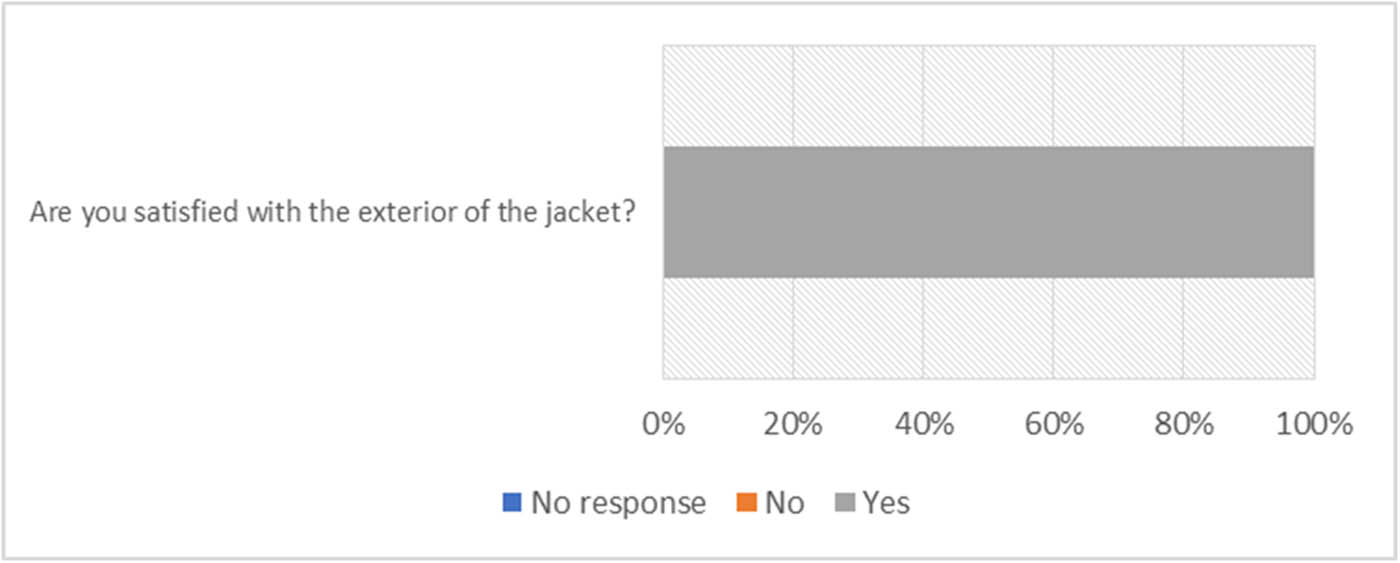
Figure 8
The assessment of the external appearance of the summer jacket prototype.
Source: Author’s contribution.
The visibility of the summer jacket prototype was similarly evaluated (Figure 9).
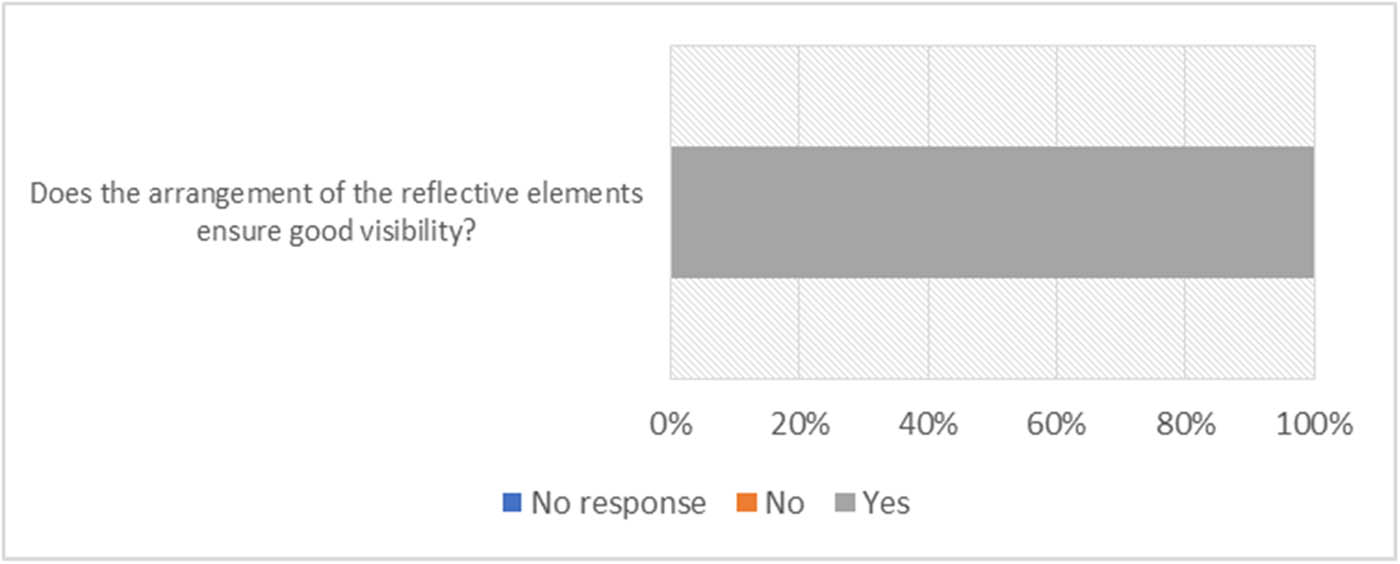
Figure 9
The assessment of the ensuring visibility of the summer jacket prototype.
Source: Author’s contribution.
The evaluation of the side effects of the tested summer jacket prototype is shown in Figure 10.
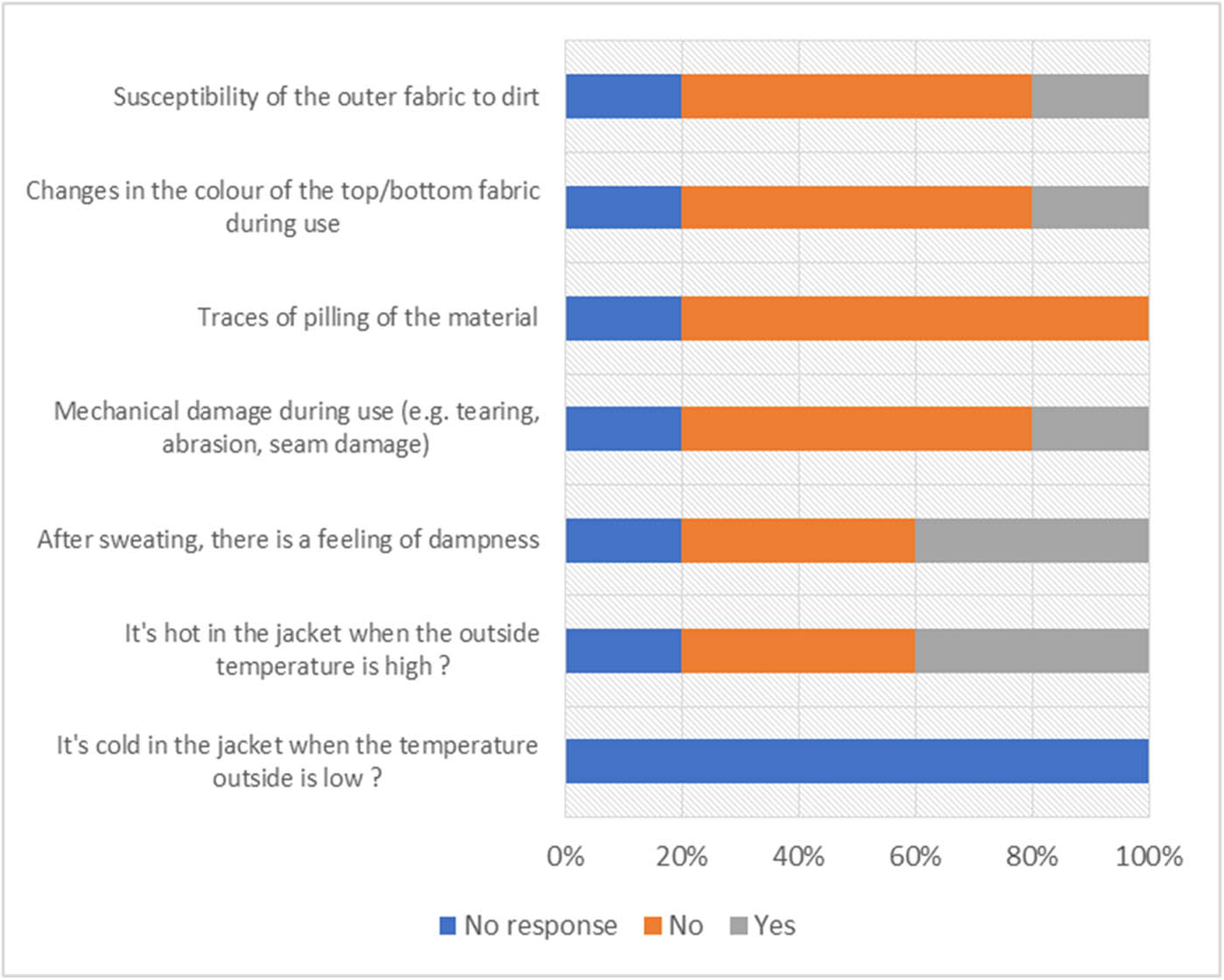
Figure 10
The assessment of the side effects of the summer jacket prototype.
Source: Author’s contribution.
In the case of assessing the feeling of cold in a summer jacket when the outside temperature is low, none of the participants gave their opinion. This was because the prototype of the summer jacket was tested in conditions where there was no such decrease in temperature that this effect was felt by the tester. Two users observed a feeling of thermal discomfort in the case of high temperatures outside and a feeling of moisture after sweating. One user found mechanical damage during use, discoloration of the fabric, and susceptibility of the woven fabric to dirt.
3.2.3. Results of the Trousers Survey
The survey assessment of the ergonomics and design of a prototype of trousers is presented in Figure 11.
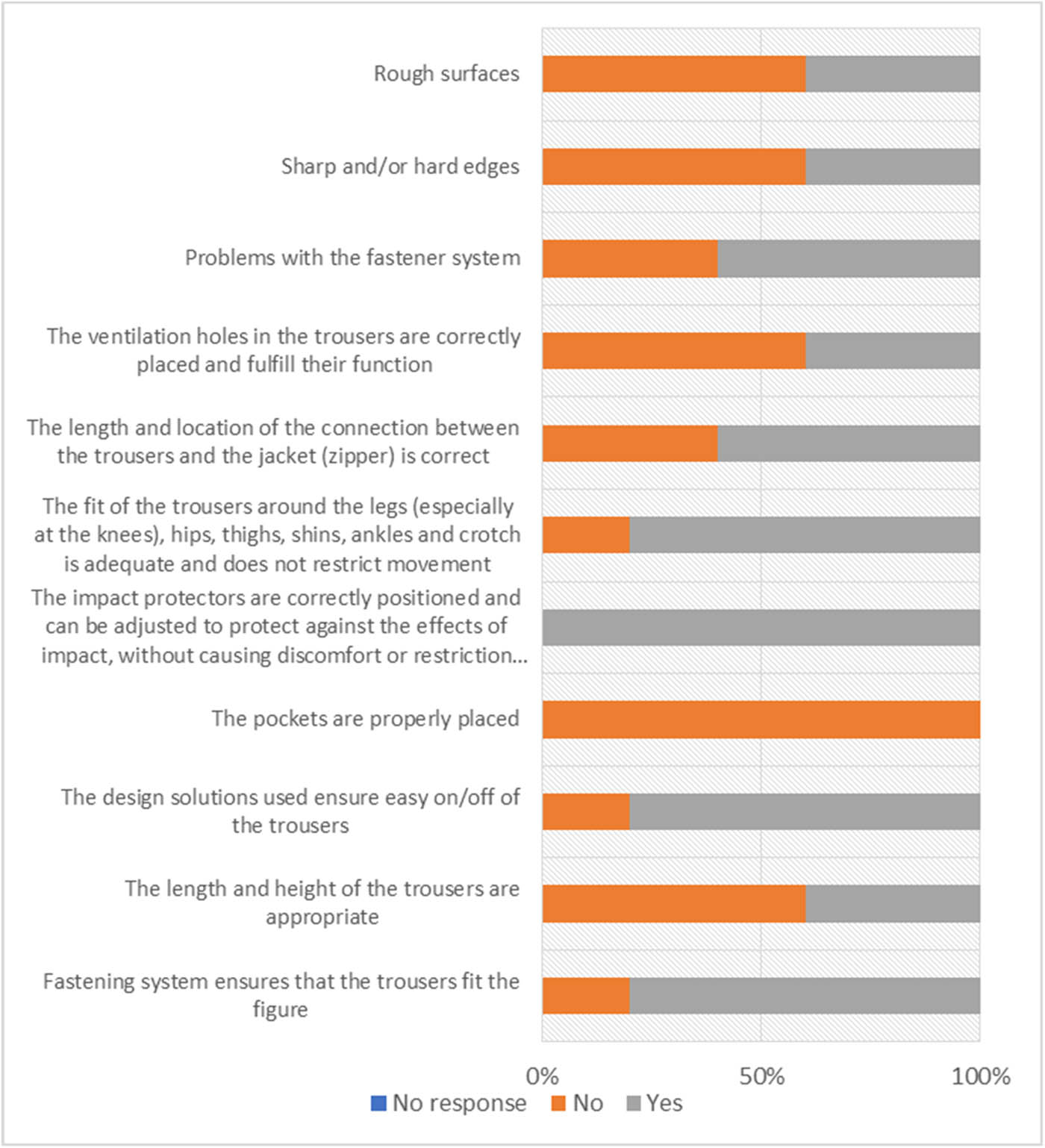
Figure 11
The assessment of the ergonomics and design of a trousers prototype.
Source: Author’s contribution.
For the pants prototype, users have paid attention to the incorrect location of the pockets, the length of the pants, and the location of the ventilation holes. In the remaining cases of the survey issues, the assessment was mostly correct. Attention was also paid to the improvement of the design in terms of facilitating the adoption of a sitting position on the motorcycle and the correction of the fastening system. The arrangement of the anti-impact protector system in the trouser prototype was correctly evaluated (Figure 12).
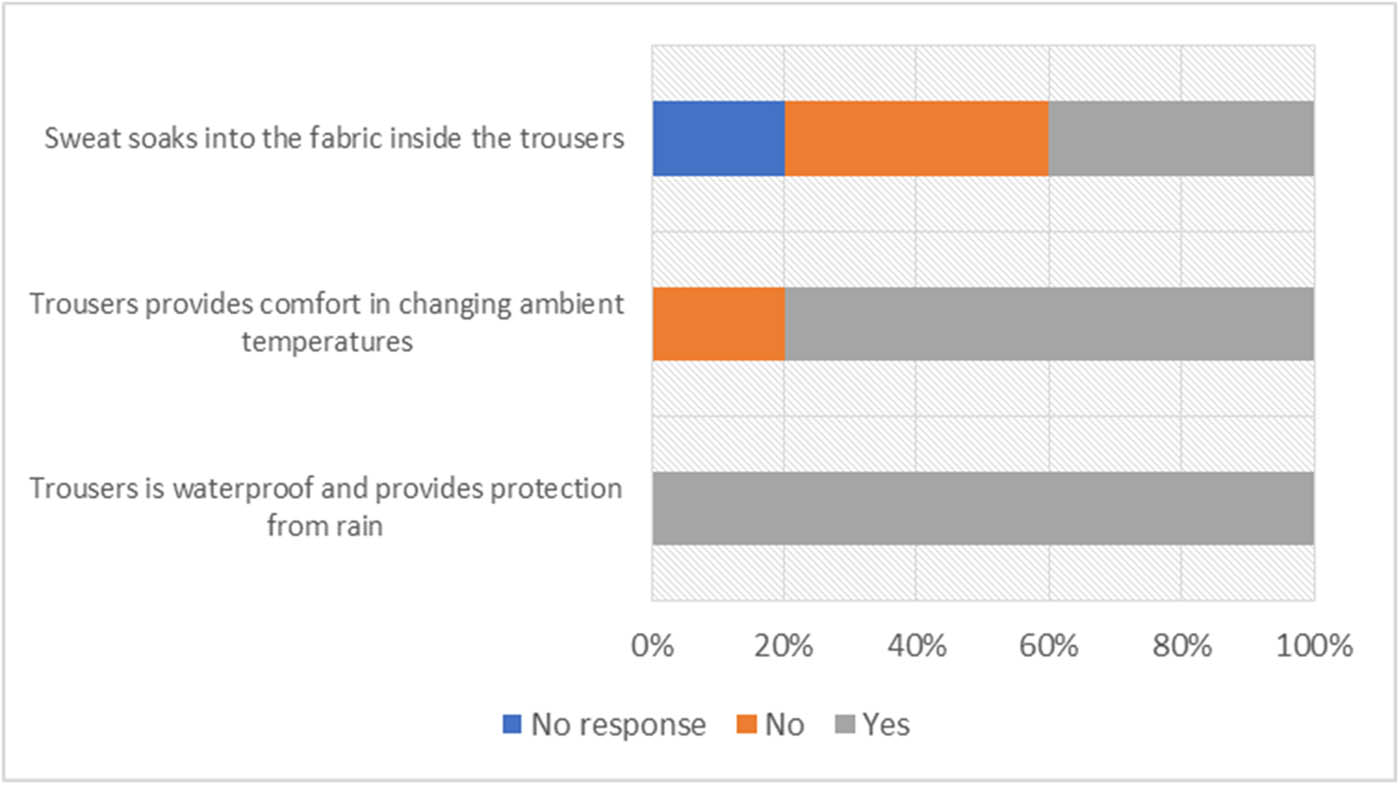
Figure 12
The assessment of the biophysical behavior of the trousers prototype.
Source: Author’s contribution.
All users confirmed the high-water resistance of the prototype of the pants. Only one of the testers negated the comfort in changing ambient temperatures. It should be noted that the designed pants are recommended for all-season use. Two users stated that sweat did not soak into the inner material of the pants.
None of the users of the trouser prototypes approved of the external aesthetics of the product (Figure 13), which could be due to previous experience with the use of leather-based products and the inability to adjust the product to the body figure.
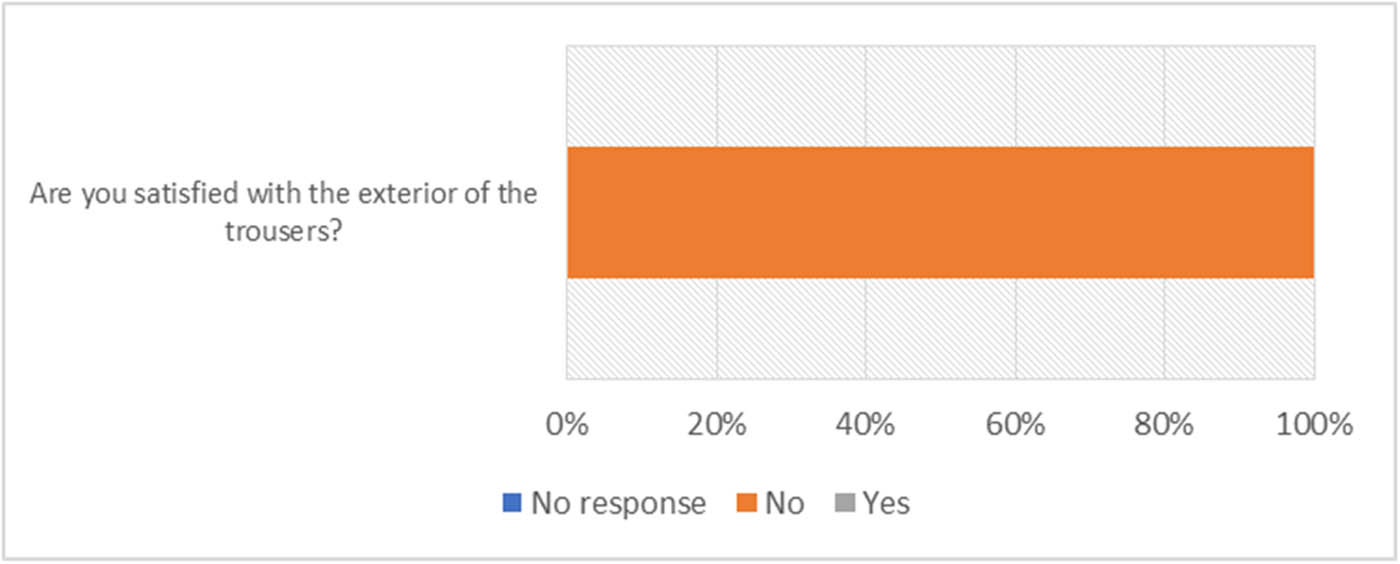
Figure 13
The assessment of the external appearance of trousers prototype.
Source: Author’s contribution.
In the case of assessing the correct visibility of the pants, the users did not express their opinion in the survey, which could be due to the small number of reflective/fluorescent materials introduced in the design of this product (Figure 14).
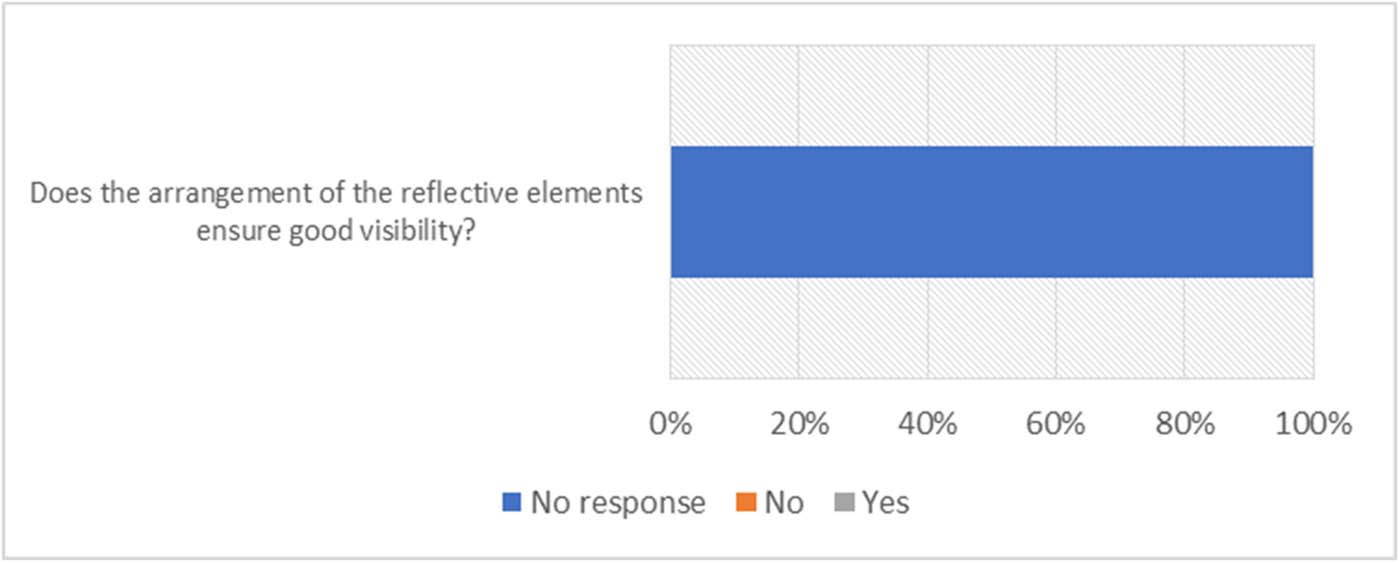
Figure 14
The assessment of the ensuring visibility of the trousers prototype.
Source: Author’s contribution.
Pants users indicated situations in which they felt thermal discomfort in the case of high temperatures outside, and in the case of low temperatures, opinions were divided or users did not express their opinion. After sweating, no feeling of moisture was indicated in significantly more cases. There was also no mechanical damage during use and indeed the outer fabric did not get dirty. On the other hand, users have noticed the discoloration of the outer fabric in the long term (Figure 15).
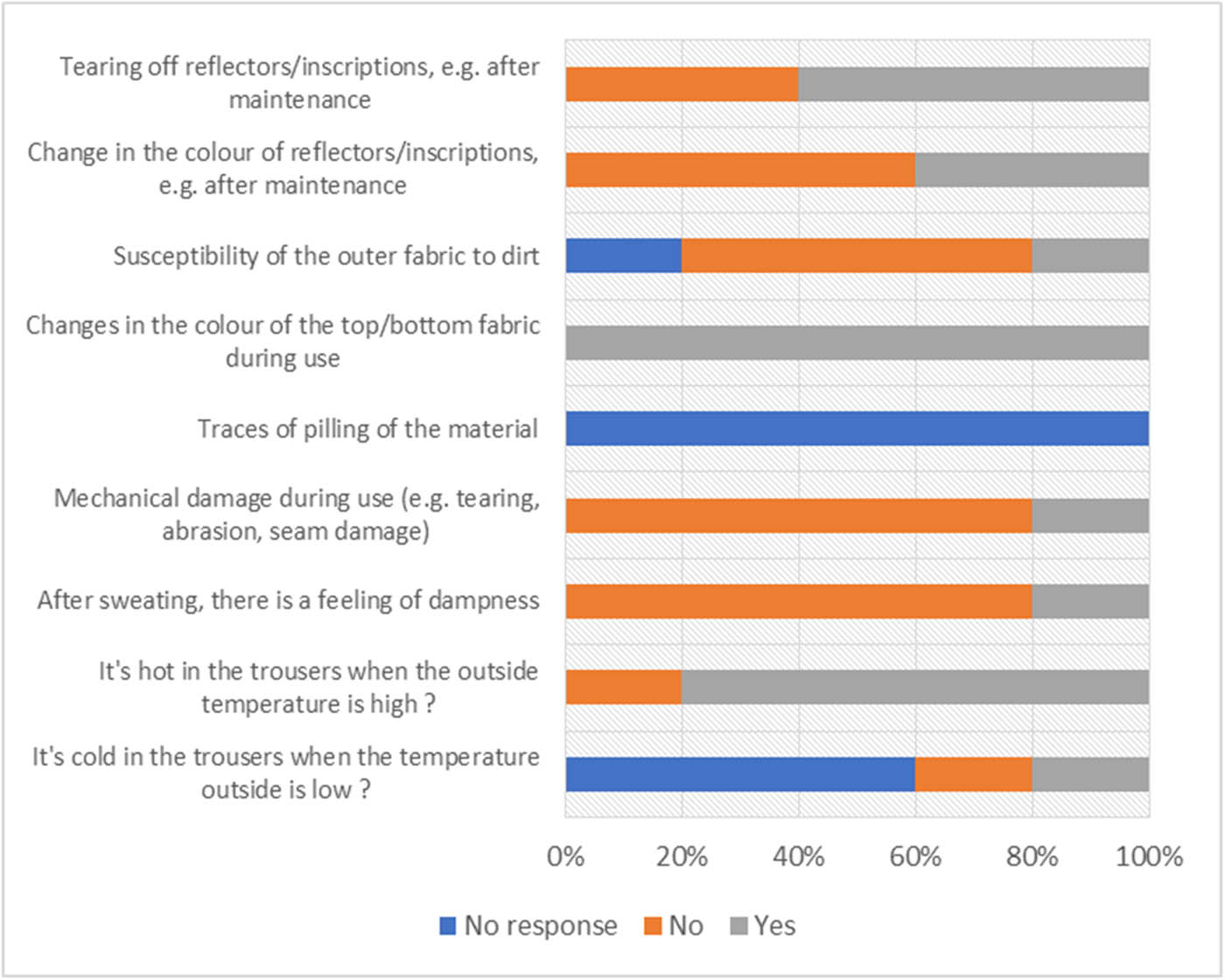
Figure 15
The assessment of the side effects of the trousers prototype.
Source: Author’s contribution.
The results of validation tests discussed above, carried out in real conditions of individual elements of the motorcycle suit prototype, indicated the need to change the design of summer and winter jackets, improve the method of attaching the service belt supporters, so as to facilitate its attachment on the jacket by introducing a maintenance (in the form of a belt loop) of the service belt.
The area of the velour knitted fabric on the stand-up collar flap of both jackets has also been increased by sewing in velour knitted fabric from the beginning of the stand-up collar flap and the height of the stand-up collar has been lowered by approximately 1 cm.
In the case of changes in the design of the trousers, oblique ventilation (as pockets) was introduced instead of slanted pockets at the top of the trousers. The ventilation was covered with a strip similar to the one used in the construction of the slanted pockets, which allowed air to enter the ventilation from the opposite direction to the entrance to the pockets.
The above-described changes, as a design element of protection product improvement, have been introduced to the final prototype of the motorcyclist’s suit – a policeman performing operational activities in road traffic.
Normative requirements define the necessary research methodologies in a limited way, in order to practically and measurably determine ergonomics and thermal comfort in real conditions. In literature, this problem is treated marginally. The analyzed research results come only from retrospective studies [21], carried out at various times of the year and for groups of users using various types of products originating from various manufacturers, varying in material systems and design. An important part of this research concerns safety risk assessment and accident analysis [1,2,3,4,5,6,7,8]. We are not aware of such complex studies in the field of comfort and ergonomics analysis carried out in a prospective manner.
Zwolińska [21] verified in retrospective studies the aspect of overheating and the feeling of discomfort among 242 active motorcyclists (using various types of motorcycle clothing). The problem of discomfort occurs regardless of the type of motorcycle clothing used, confirming the subjective feelings of users of motorcyclists’ clothes.
Previous studies [5,9,21,22] also point to the aspect of seasonality and changing weather conditions, which should be in the assessment of thermal comfort. For this reason, the assumption in our design research was to develop two clothing systems for motorcyclists: the “summer” system – used at temperatures above 15–20°C and the “winter” system (preferred for service at temperatures below 15°C, which allowed to reduce the risk of condensation of sweat under clothing and thermal discomfort, which translates into the effectiveness of operational activities.
4. Conclusion
The validation process in real use conditions, especially when carried out over a long period of time and in different conditions of preparation (seasons), allows for an in-depth and multi-area understanding of the advantages and potential shortcomings of the designed product. For this reason, organic only for ergonomics tests indicated in the PN-EN 13595-1:2005 standard allows only a superficial assessment of ergonomics and comfort. It is important, before placing the product into use, to carry out long-term tests considering the most unfavorable conditions for a given protective product, to carry out ergonomics tests in changing climatic conditions, taking into account their seasonality in the year. The participation of even a small group of users in such extended tests, due to climatic conditions, is necessary to get to know and verify the designed protective product, which is important for comfort, ergonomics, and thus also safety.
Data from such an in-depth study of ergonomics allow for the identification of structural and material areas of the designed product for the aimed improvement. This allows for full provision of a wide range of thermal comfort, ergonomics, and safety of the motorcycle user, especially in cases of excessive use, such as conducting operational activities in road traffic.
The next stage of the research will be a questionnaire of the designed product based on a significantly increased number of users of the product – at least 100 users. This will allow for an in-depth verification of the design and material changes implemented after the first operational validation of the developed suit for motorcyclists – police officers.
Funding information
The authors state no funding involved.
Author contributions
Struszczyk H. Marcin – Conceptualization, methodology, formal analysis, resources, writing – original draft, Writing – review & editing, supervision. Kudlińska Małgorzata – Investigations, formal analysis, writing – original draft. Miedzianowski Tomasz and Błaszczyk Joanna – Formal analysis. Fejdyś Marzena – Conceptualization, project administration. Gutowska Agnieszka – Formal analysis, project administration. Kulicka Paulina – Investigations, formal analysis. Kośla Katarzyna – Writing – review & editing.
Conflict of interests
The authors state no conflict of interest.
Data availability statement
The raw data supporting the conclusions of this article will be made available by the authors on request due to privacy/ethical.