
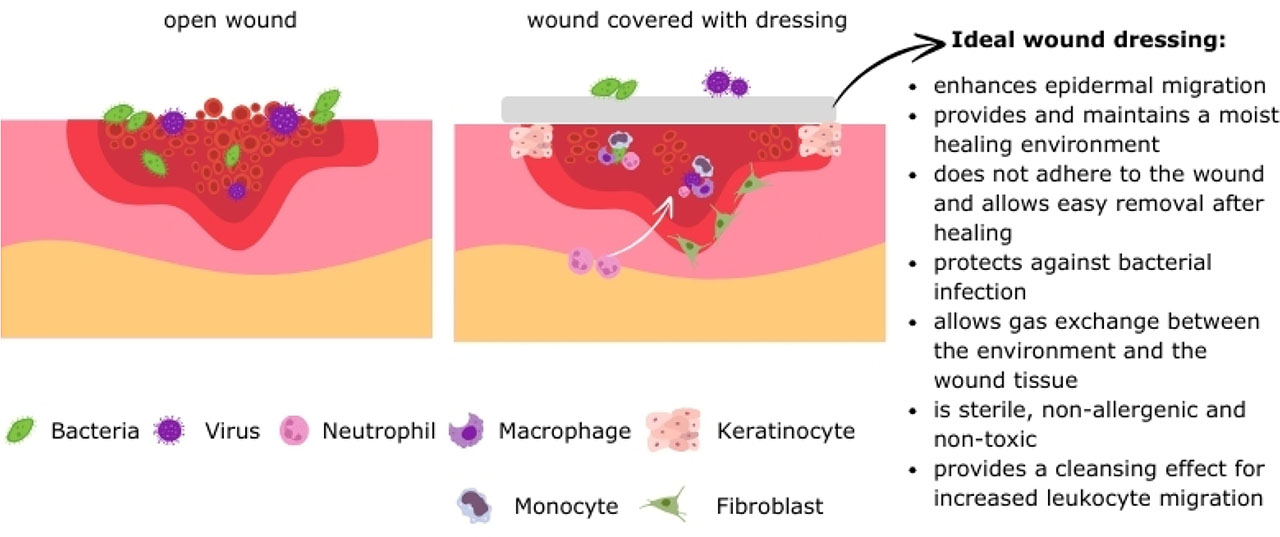
Fig. 1.
Wound healing process with an adequately fitted dressing. (figure based on [4])
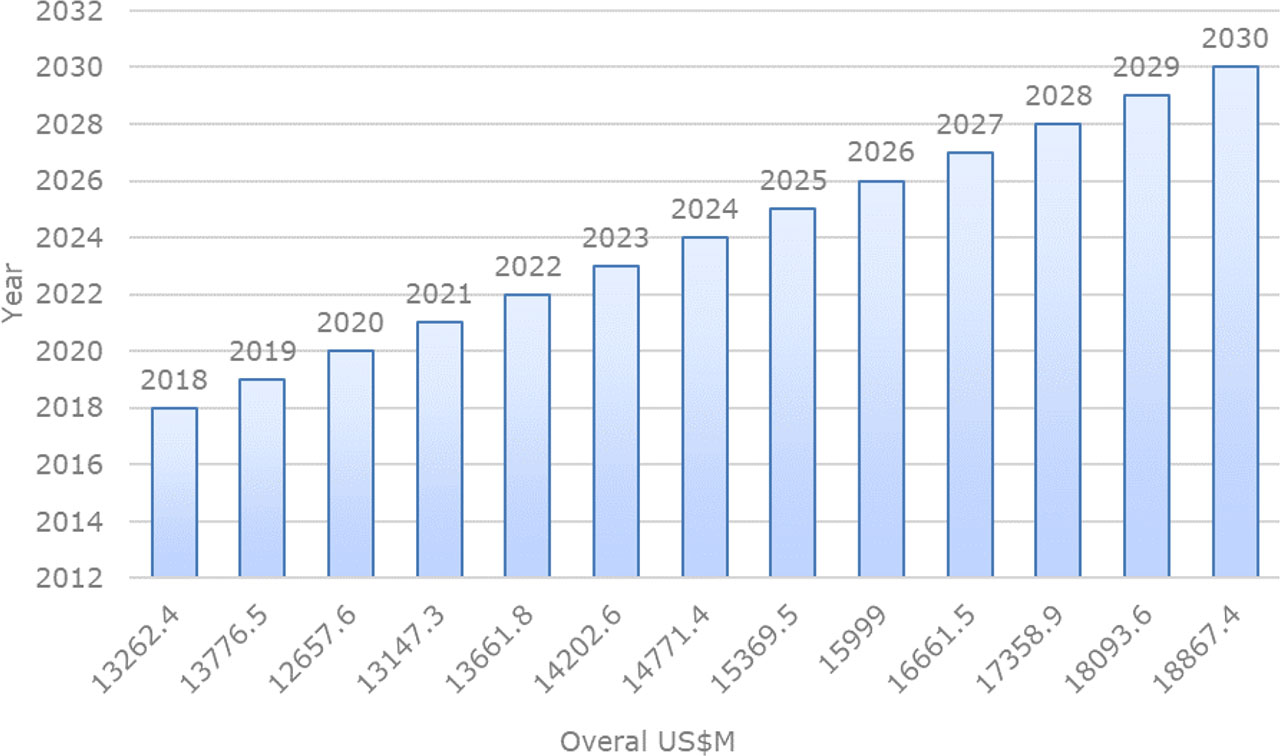
Fig. 2
Prospects for the global dressing market (figure based on [5])
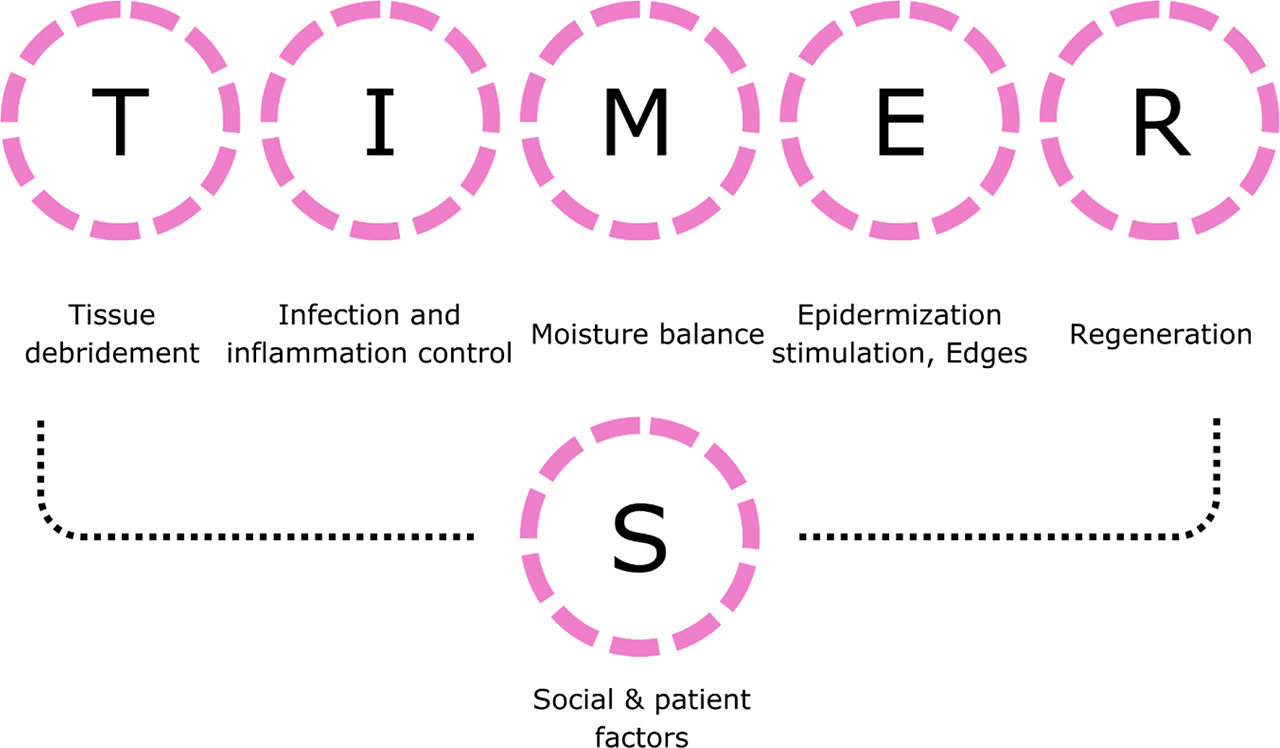
Fig. 3.
TIMERS concept (figure based on [29])
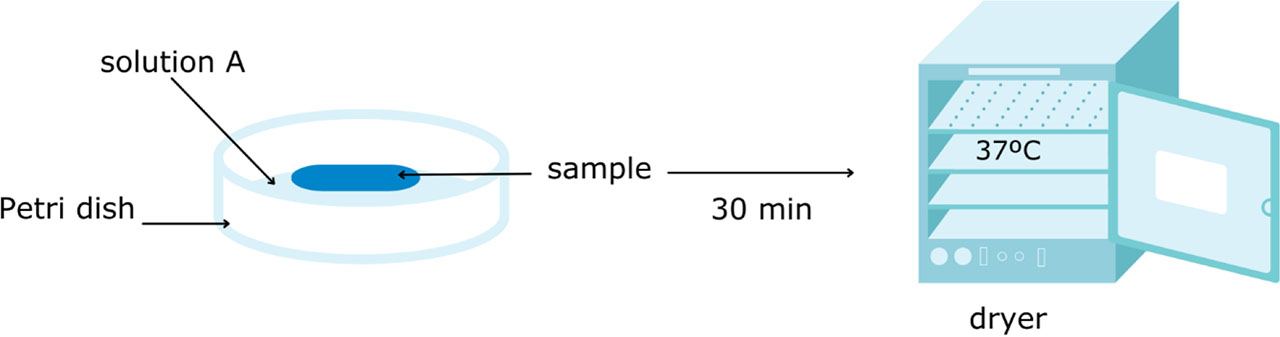
Fig. 4.
Scheme of free swell absorptive capacity (figure based on self-analysis)
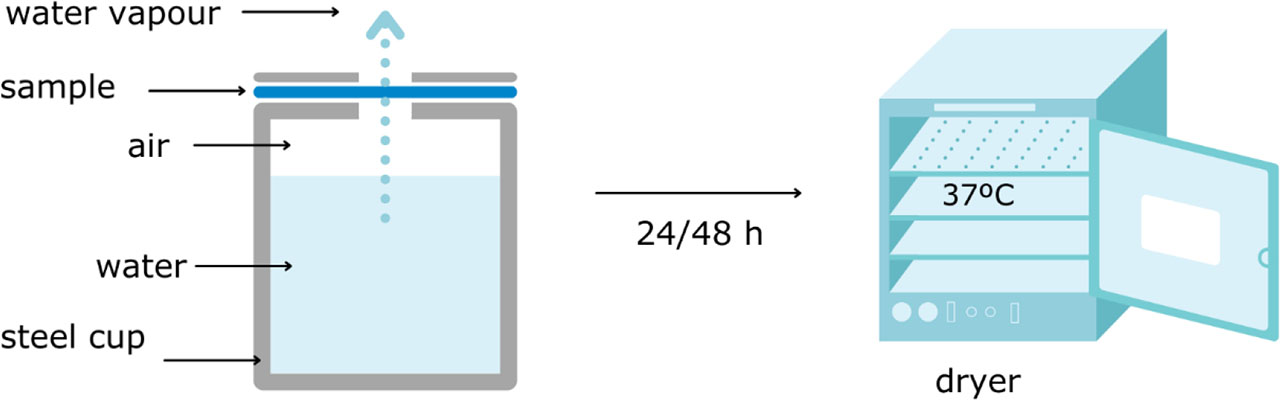
Fig. 5.
Scheme of moisture vapour transmission rate (figure based on self-analysis)
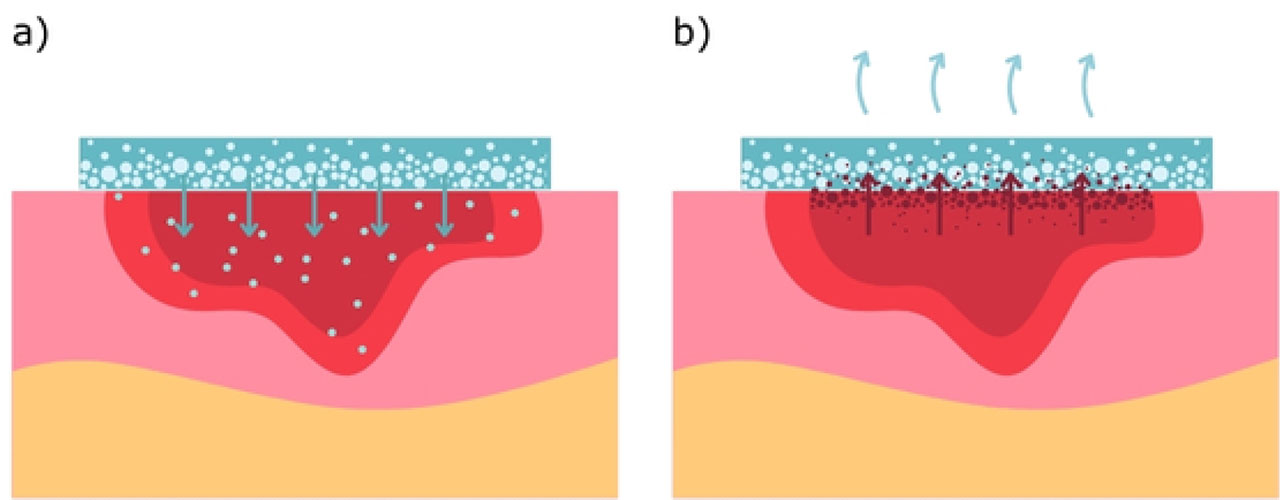
Fig. 6.
Mode of action of the hydrogel dressing in the case of- a) dry wounds, b) wounds with exudate (figure based on [34])
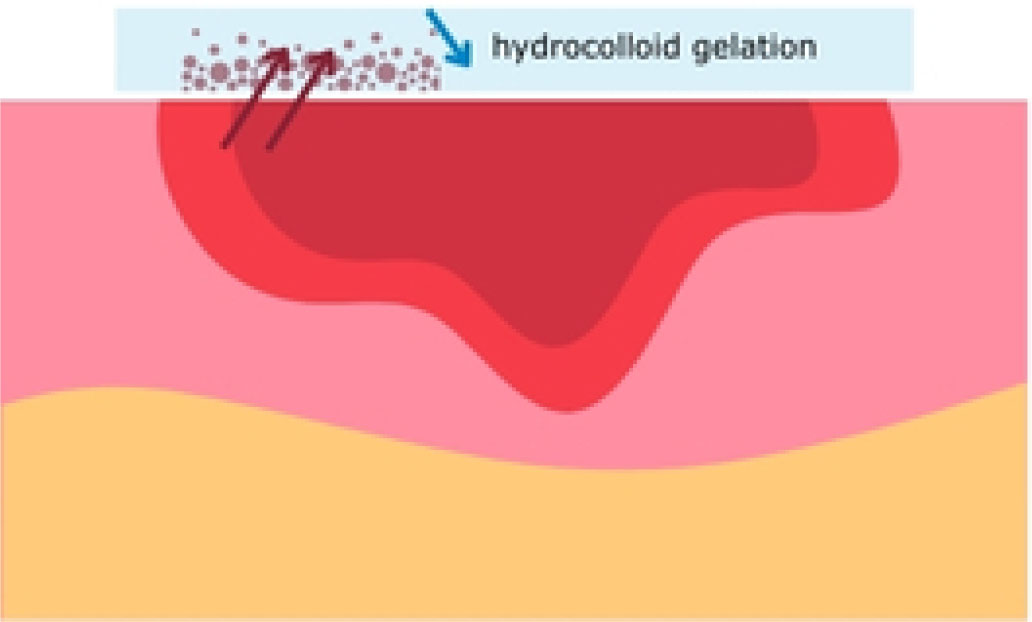
Fig. 7.
Mode of action of the hydrocolloid dressing (figure based on self-analysis)
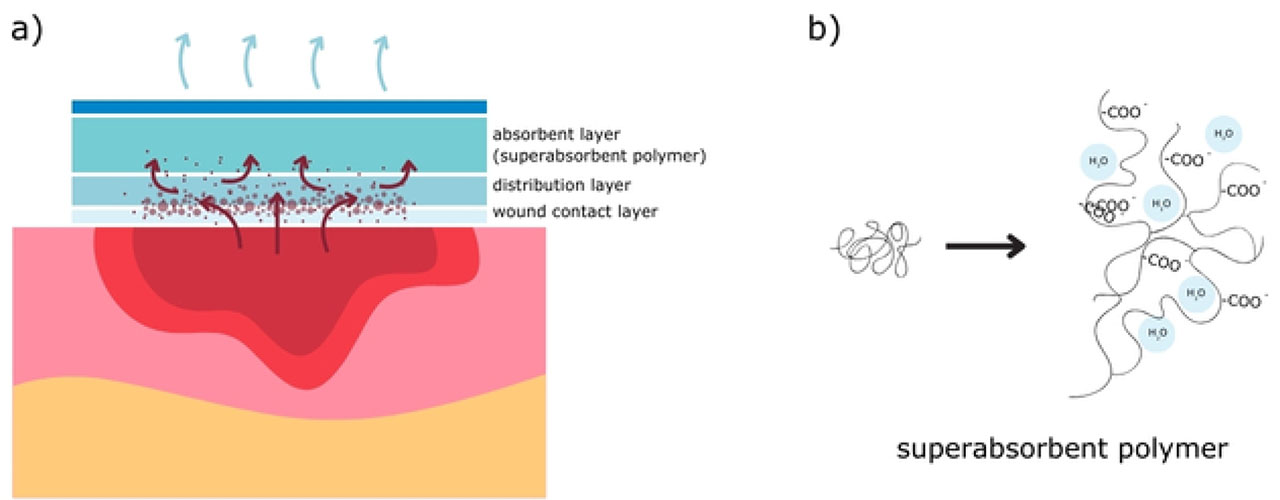
Fig. 8
Mode of action of the a) super absorption dressing and b) superabsorbent polymer (figure based on [36])
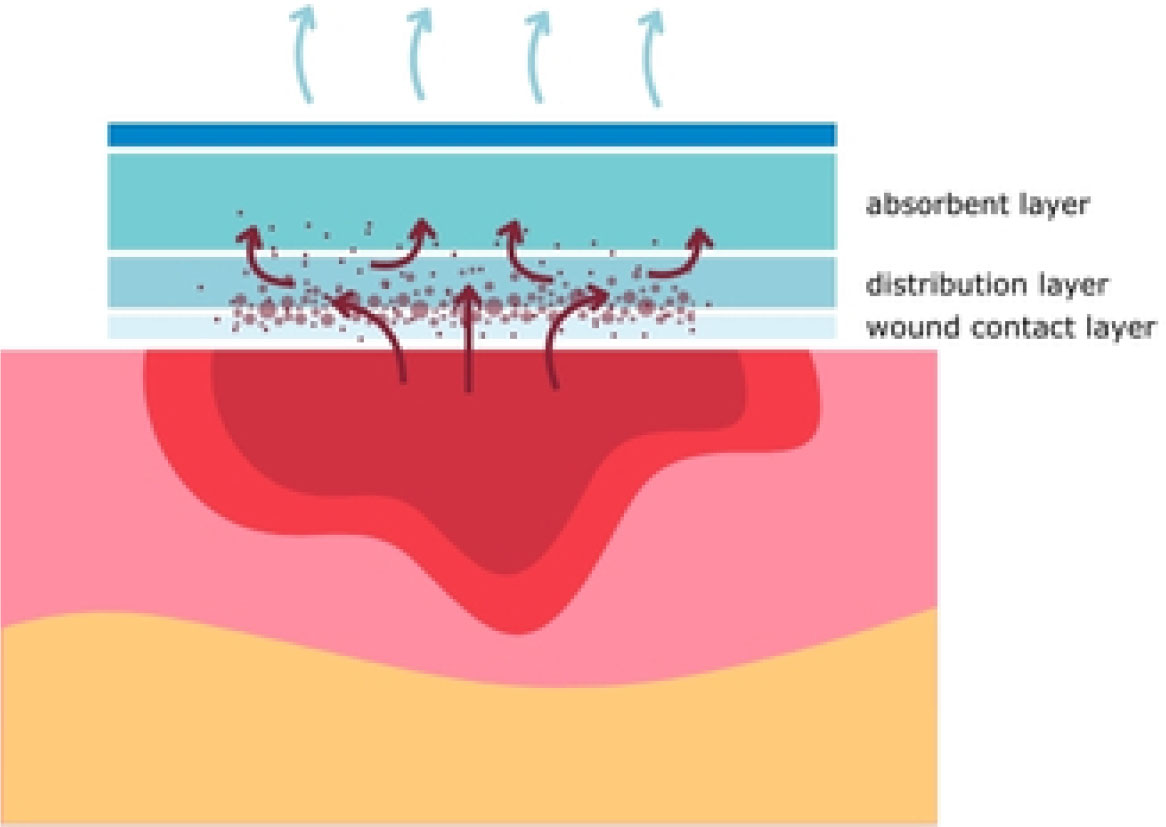
Fig. 9.
Mode of action of the absorption dressing (figure based on self-analysis)
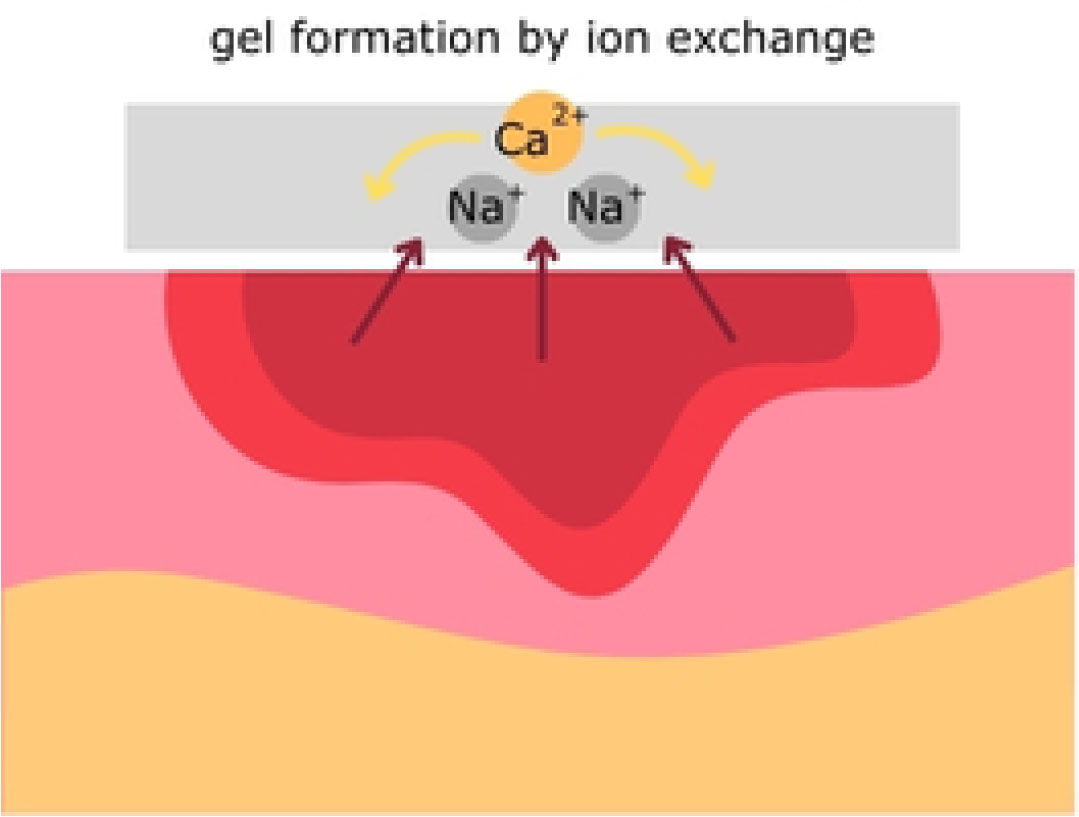
Fig. 10.
Mode of action of the alginate dressing (figure based on self-analysis)
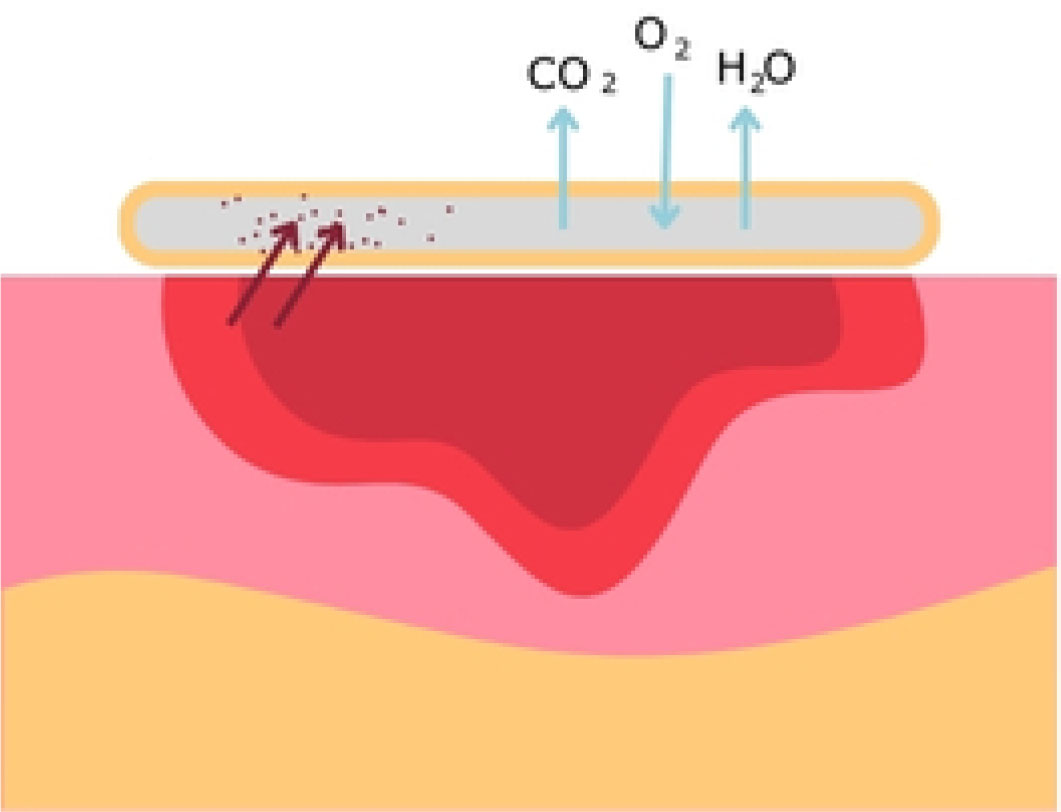
Fig. 11.
Mode of action of the foam dressing (figure based on self-analysis)
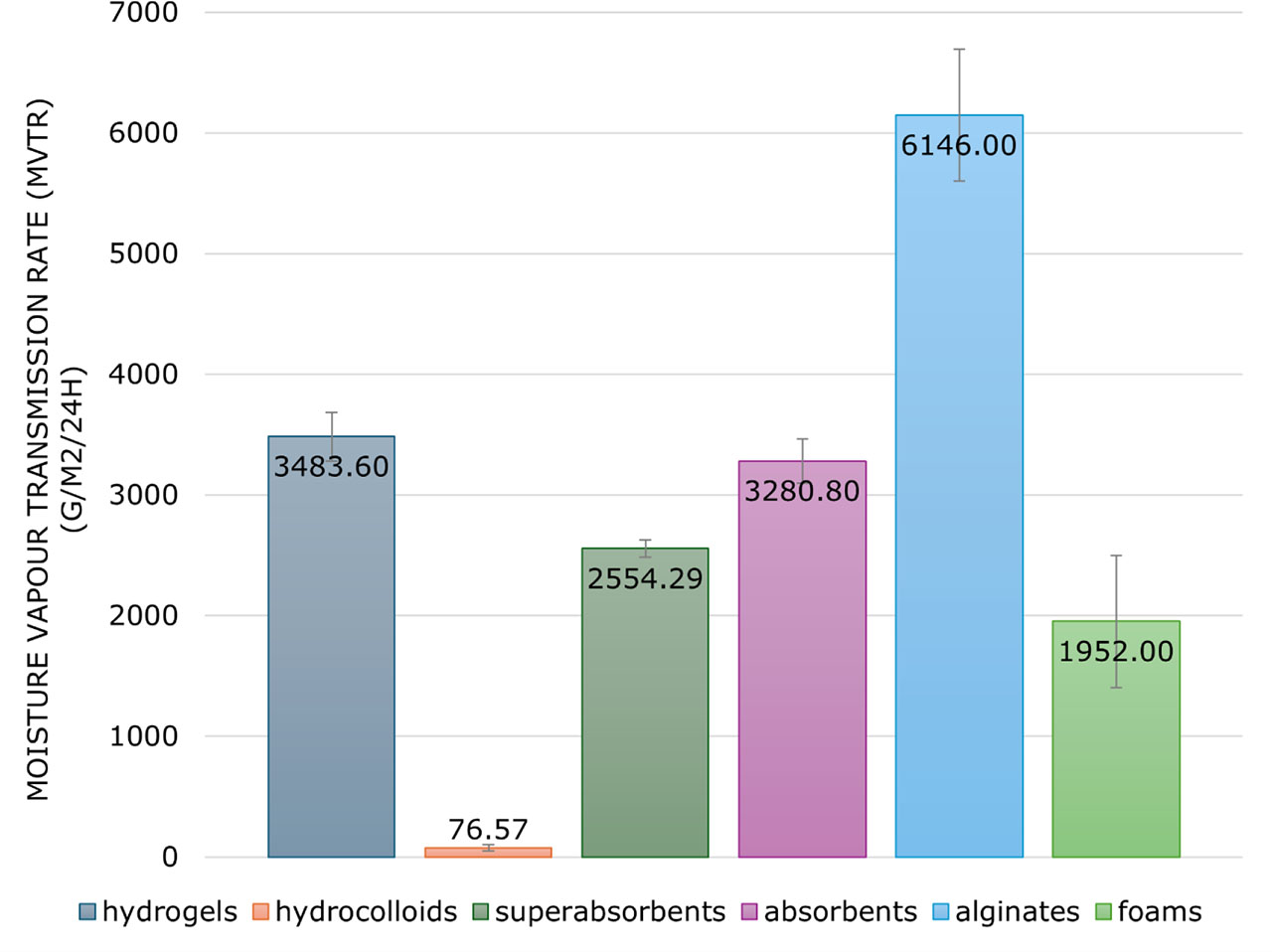
Fig. 12.
Moisture vapour transmission rate (MVTR) of wound dressing when in contact with vapour
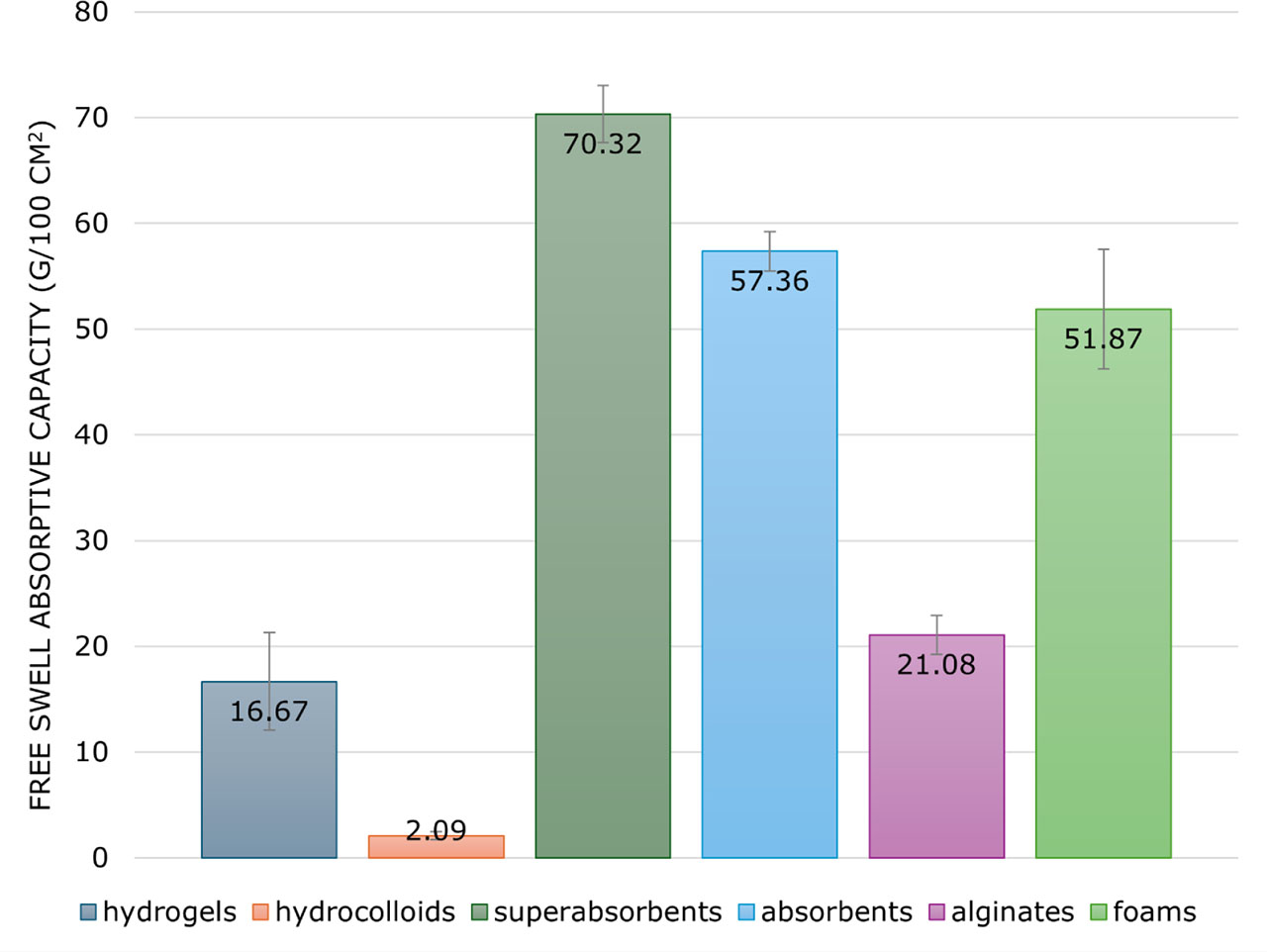
Fig. 13.
Free swell absorptive capacity of dressings
Table 1.
Type and properties of dressings (table based on [25])
| Type | Properties |
|---|---|
| Passive dressing | |
| – Foams | – Protection against dehydration |
| – Films | – Protection against infection and injury |
| – Silicones | – For wounds with little exudate and epithelial wounds |
| Occlusive dressings | |
| – Hydrocolloids | – Occlusive |
| – Completely protects the wound from the external environment | |
| Interactive dressings | |
| – Alginates | – For clean granulation wounds |
| – Hydrocolloids | – Protection against dehydration |
| – Hydrogels | – Promoting an optimal environment for wound healing |
| – Actively interacting with the wound surface by filling in tissue defects to stimulate granulation or protecting non-viable tissue to stimulate wound debridement. |
Table 2.
Mechanical properties of dressings
| Type of dressings | Max. strength, direction 1 (N) | Elongation at max. strength, direction 1 (%) | Max. strength, direction 2 (N) | Elongation at max. strength, direction 2 (%) |
|---|---|---|---|---|
| Hydrogels | 12.2 ± 2.6 | 629 ± 412 | 15.0 ± 5.5 | 498 ± 285 |
| Hydrocolloids | 19.4 ± 6.4 | 1653 ± 616 | 18.4 ± 6.2 | 1659 ± 593 |
| Superabsorbents | 61.8 ± 26.6 | 51 ± 37 | 43.1 ± 13.5 | 102 ± 48 |
| Absorbents | 62.2 ± 42.5 | 48 ± 26 | 60.7 ± 47.8 | 69 ± 26 |
| Alginates | 16.7 ± 6.9 | 22 ± 9 | 7.4 ± 3.5 | 35 ± 12 |
| Foams | 17.9 ± 7.3 | 769 ± 249 | 18.5 ± 7.5 | 762 ± 229 |
Table 3.
Types of dressing and their properties
| Type of dressing | Company (name of dressing) | Type of wound | Properties |
|---|---|---|---|
| Hydrogel | KIKGEL (Aqua-Gel®) | bedsores, diabetic foot, burns |
|
| Hartmann (HydroTac® Transparent Comfort) | burns | ||
| Lohamann & Rauscher (Suprasorb G) | bedsores, ulcers, burns | ||
| Derma Sciences (Medihoney® HCS, Medihoney® HCS with adhesive border) | bedsores, ulcers | ||
| Hydrocolloid | Convatec (Granuflex™ Extra Thin, Granuflex™, Granuflex™ Signal, Granuflex™ Bordered) | bedsores, ulcers, burns |
|
| Hartmann (Hydrocoll®, Hydrocoll® Thin) | bedsores, ulcers, burns | ||
| TZMO (Medisorb H) | bedsores, ulcers, burns | ||
| Superabsorbent | Hartmann (Zetuvit® Plus) | bedsores, ulcers |
|
| Mölnlycke (Mextra Superabsorbent®) | bedsores, ulcers | ||
| Lohmann & Rauscher (Vliwasorb® Pro, Vliwasorb® Adhesive) | bedsores, ulcers, burns, postoperative | ||
| Advancis Medica (Eclypse Adherent) | bedsores, ulcers | ||
| Abigo Medical (Sorbact® Superabsorbent) | bedsores, ulcers | ||
| Convatec (ConvaMax™ Superabsorber) | bedsores, ulcers | ||
| Absorbent | Lohmann & Rauscher (Vliwaktiv®) | bedsores, ulcers, burns |
|
| Zarys (Elastopor Steril) | postoperative, little to no exudate | ||
| Abigo Medical (Sorbact® Absorbtion Dressing) | ulcers, postoperative, infected | ||
| Coloplast (Biatain® Super Adhesive) | burns, ulcers, postoperative | ||
| Lohmann & Rauscher (Vliwazell®) | heavy exudate | ||
| Calcium alginate | Hartmann (Sorbalgon®) | bedsores, ulcers, burns |
|
| TZMO (Medisorb A) | bedsores, diabetic foot, ulcers | ||
| Convatec (Kaltostat™) | ulcers, bleeding heavily | ||
| Lohmann & Rauscher (Suprasorb® A) | bedsores | ||
| Foam | TZMO (Medisorb P Plus Adhesive) | bedsores, burns |
|
| Mölnlycke (Mepilex® Border EM, Mepilex® EM, Mepilex® Border) | bedsores, diabetic foot, burns, ulcers | ||
| Convatec (Aquacel™ Foam, Aquacel™ Foam Non Adhesive, Foam Lite™) | bedsores, diabetic foot, burns, ulcers | ||
| Smith & Nephew (Allevyn Adhesive) | bedsores, diabetic foot, burns, ulcers | ||
| Coloplast (Biatain® Non Adhesive) | bedsores, diabetic foot, burns, ulcers | ||
| Abigo Medical (Sorbact® Foam) | infected | ||
| Lohmann & Rauscher (Suprasorb® P, Suprasorb® P Sensitive Border) | bedsores, ulcers, burns | ||
| Hartmann (HydroTac, HydroTac® Transparent Comfort) | bedsores |