Have a personal or library account? Click to login
Footwear for Diabetics – Structural and Material Elements for the Prevention and Alleviation of Foot Lessions Cover

Footwear for Diabetics – Structural and Material Elements for the Prevention and Alleviation of Foot Lessions

Open Access
|Oct 2024

Figures & Tables

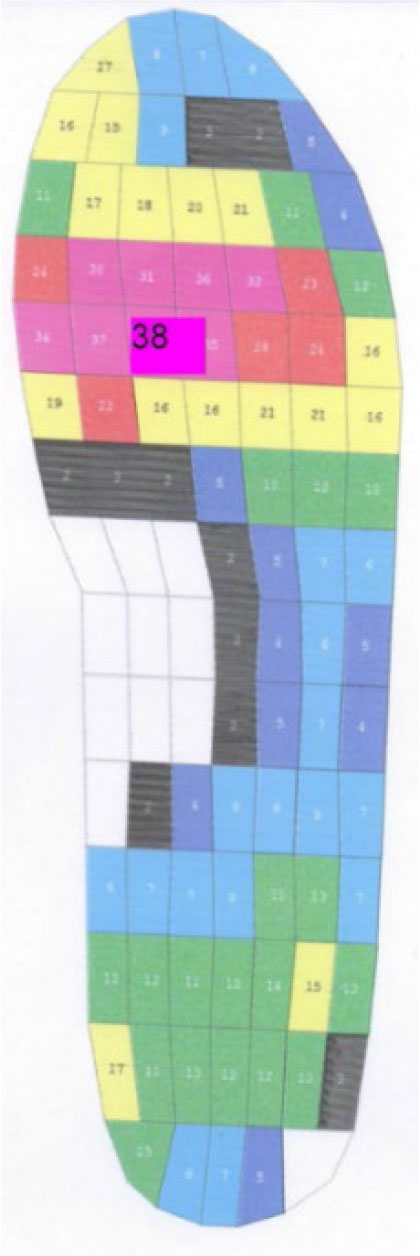
Fig. 1.

Plantar pressure in footwear without any insole (source: own research)
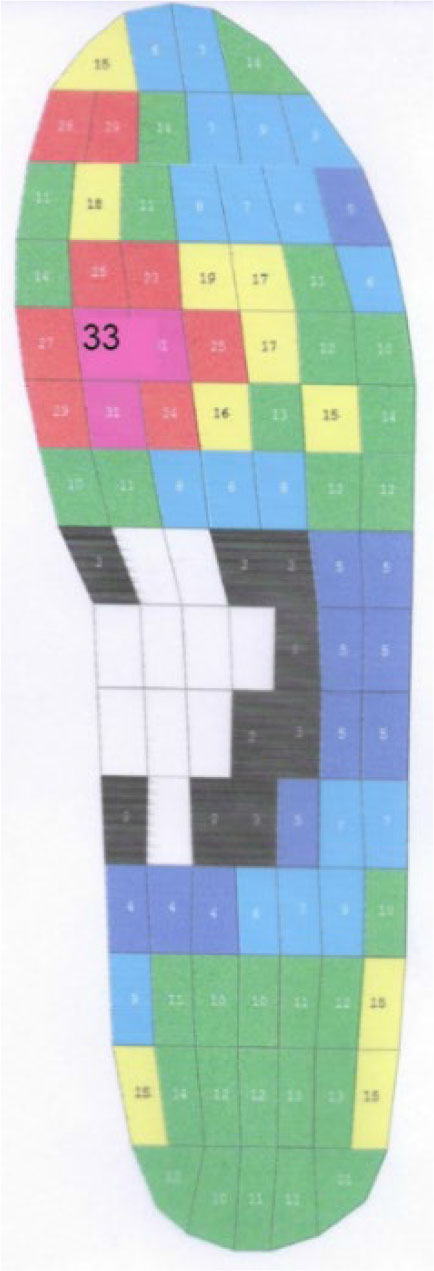

Fig. 2.

Plantar pressure in shoes with an insole made of 2 mm thick latex. (source: own research)
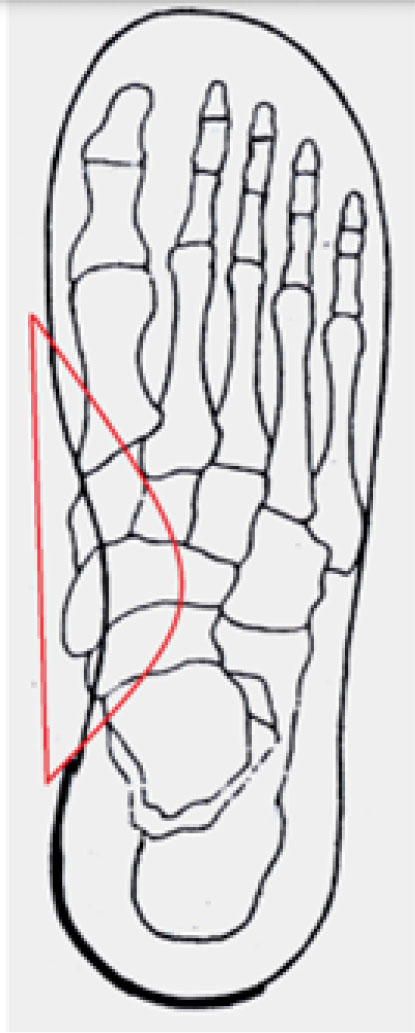

Fig. 3.

Longitudinal arch support. Source: RAJCHEL-CHYLA, B., GAJEWSKI, R. Selected corrective elements and their use in making orthotics for children and adults (in polish). Lecture at the Orthopaedic Footwear and Insoles Conference(in polish). Kraków, 2006.06.09. ISBN 83-922656-1-0. (with own modifications)
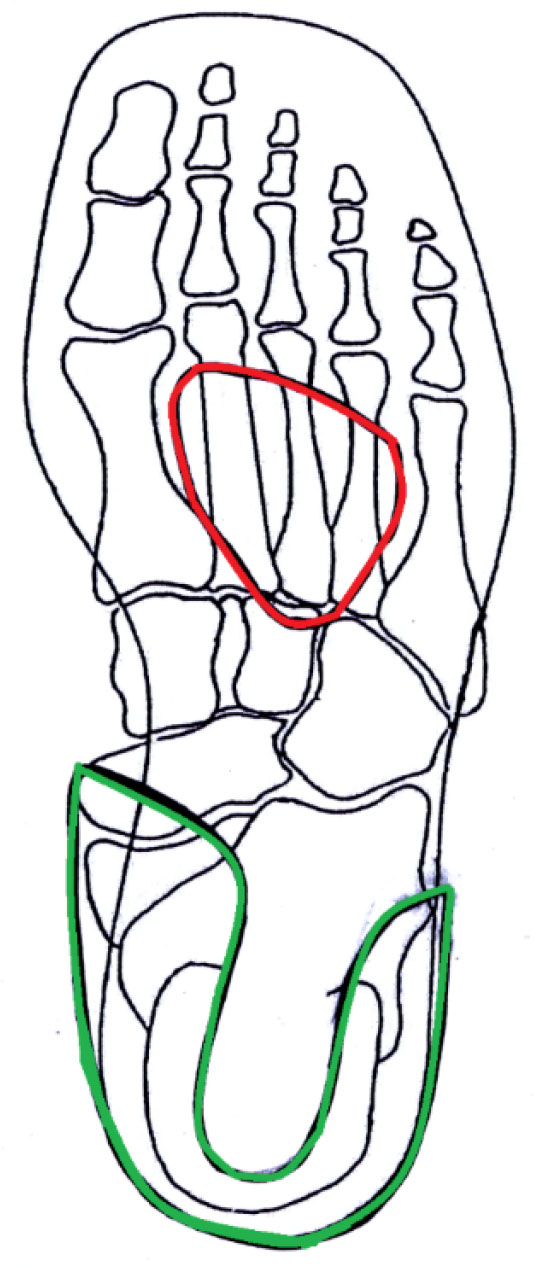

Fig. 4.

Metatarsal support (red), footbed (green) – (source: own research)
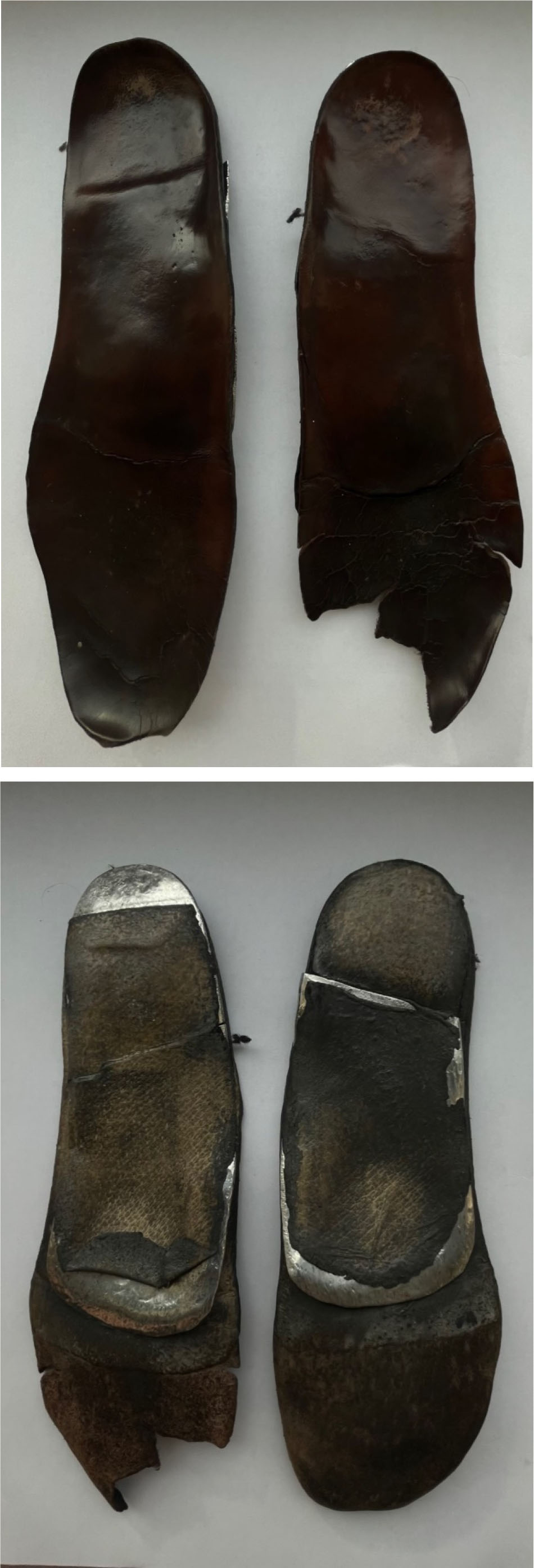

Fig. 5.

Individually designed insole for diabetics made in 90-ies. (source: own research)
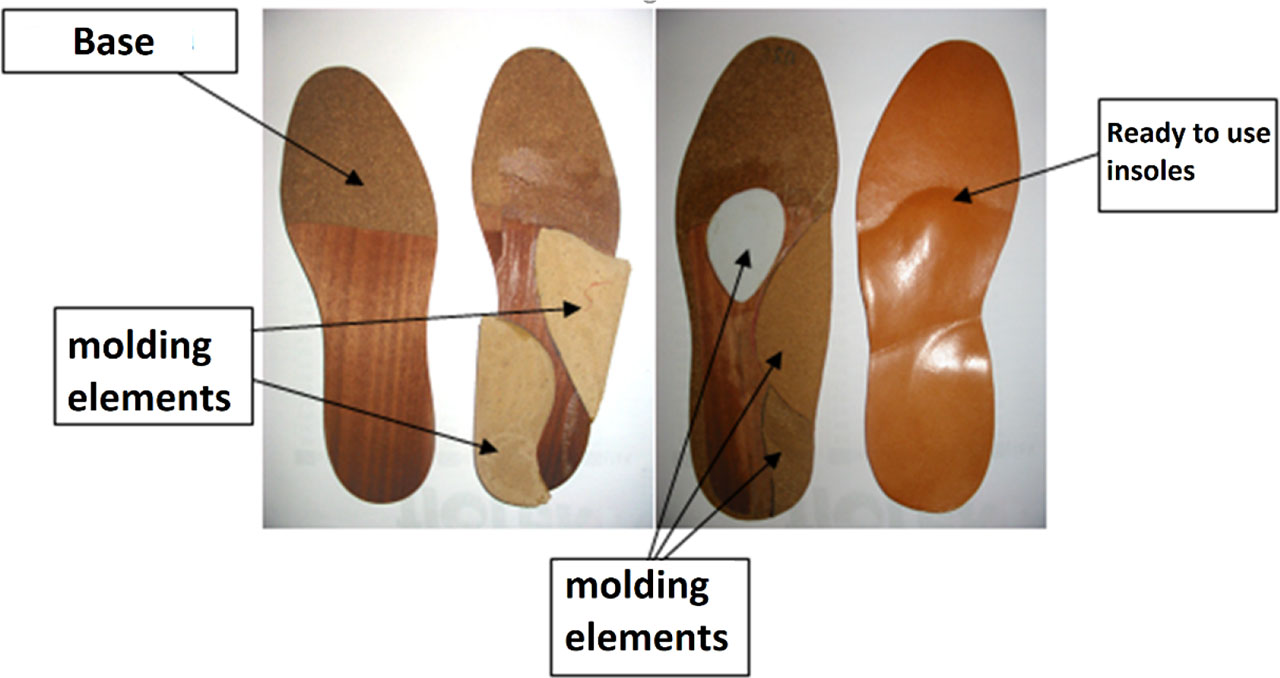

Fig. 6.

Examples of insoles made using the traditional method (source: own research)
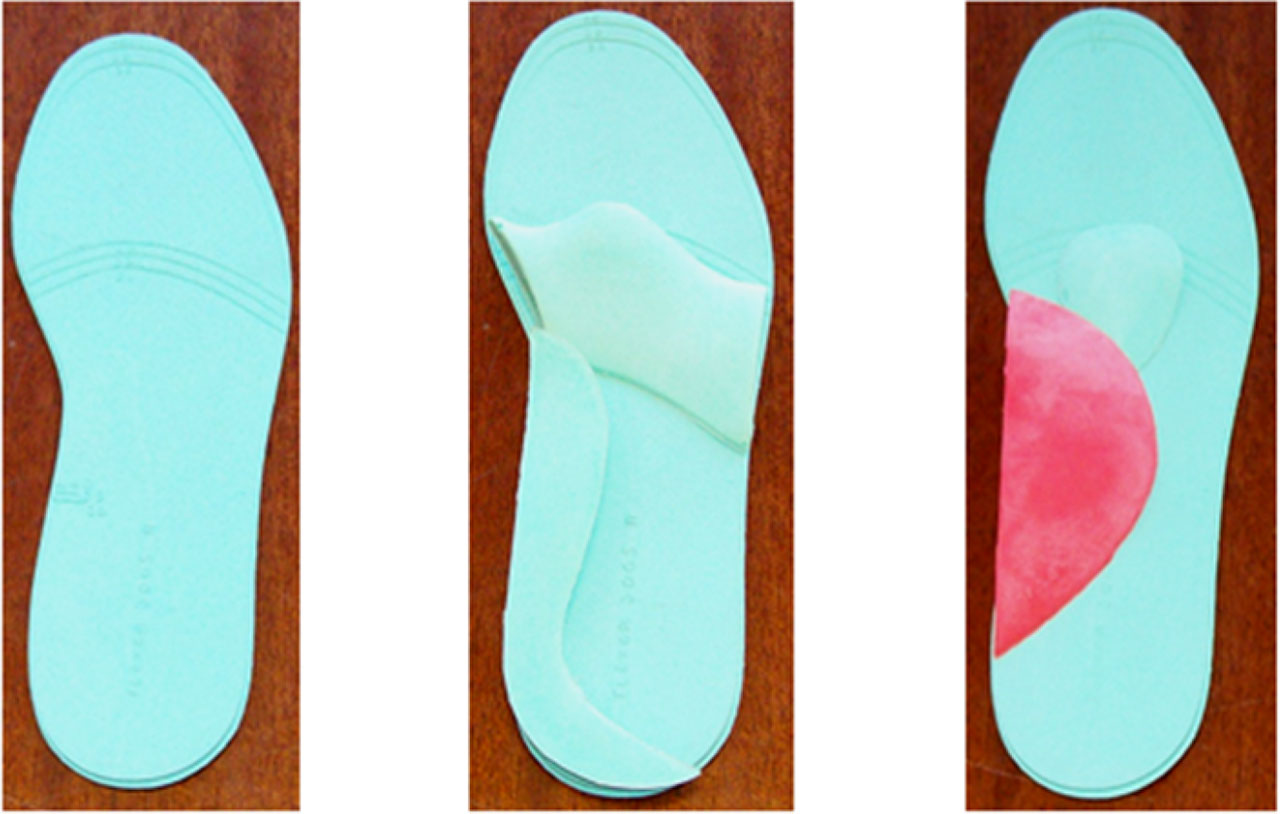

Fig. 7.

Elements for the construction of individual insoles based on various prefabricated elements (source: own research)
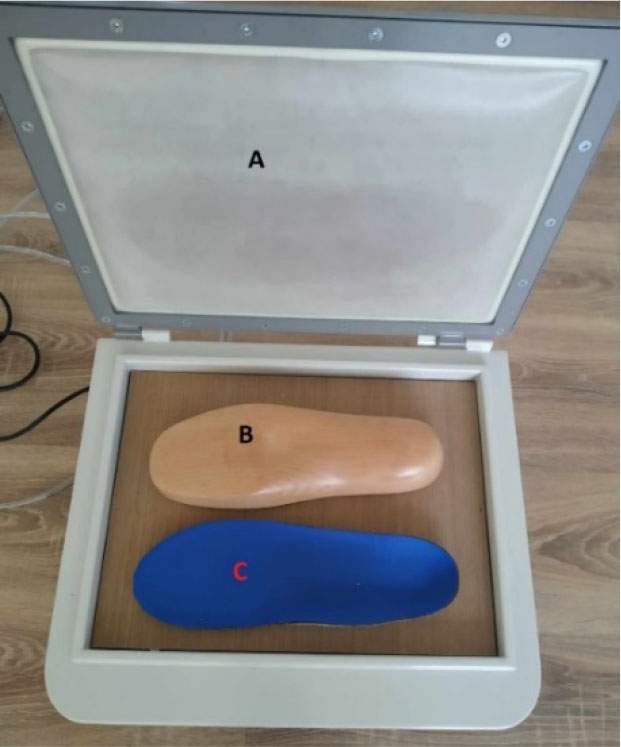

Fig. 8.

System for making thermoplastic insoles. A - vacuum pump, B - last, C - ready insole. (source: own research)
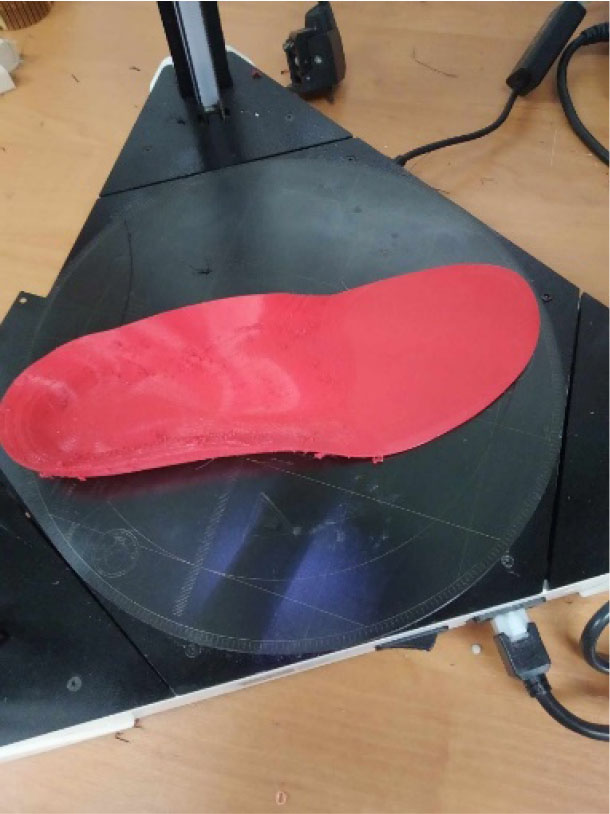

Fig. 9.

Insole printed on a 3D printer (source: own research)
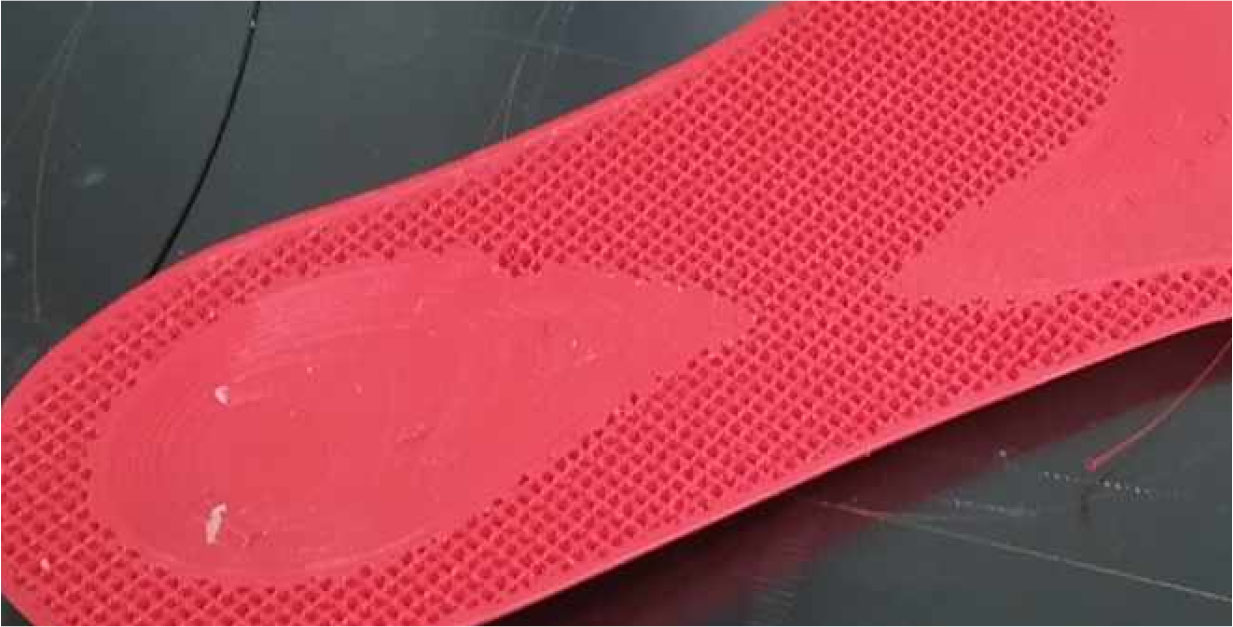

Fig. 10.

Cross-section through an insole printed on a 3D printer. Visible internal openwork structure ensuring the softness of the insole. (source: own research)
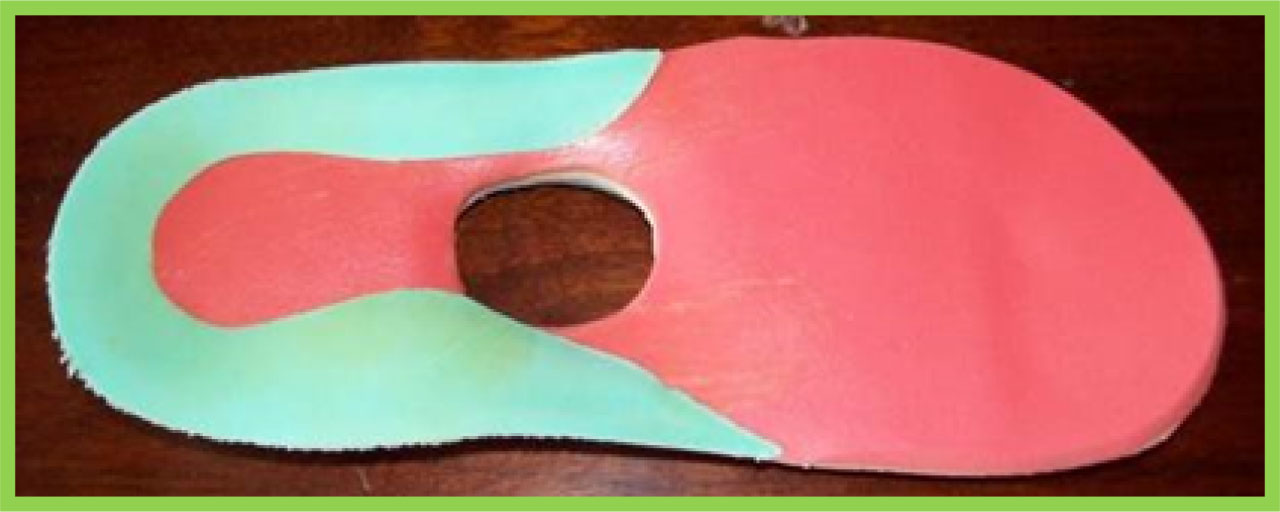

Fig. 11.

An insole individually adapted to a patient with a foot at risk of ulcer formation, made by gluing several layers of foam material together. A hole is provided in the area of high pressure (source: own research)

Fig. 12.

Preventive footwear, made in series (own research)
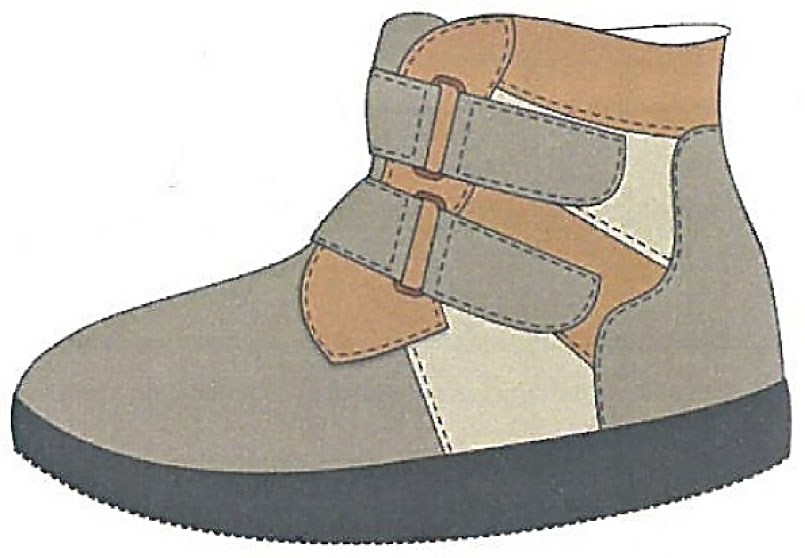

Fig. 13.

Orthopedic footwear manufactured in series - intended for people with diabetic foot syndrome (source: own research)
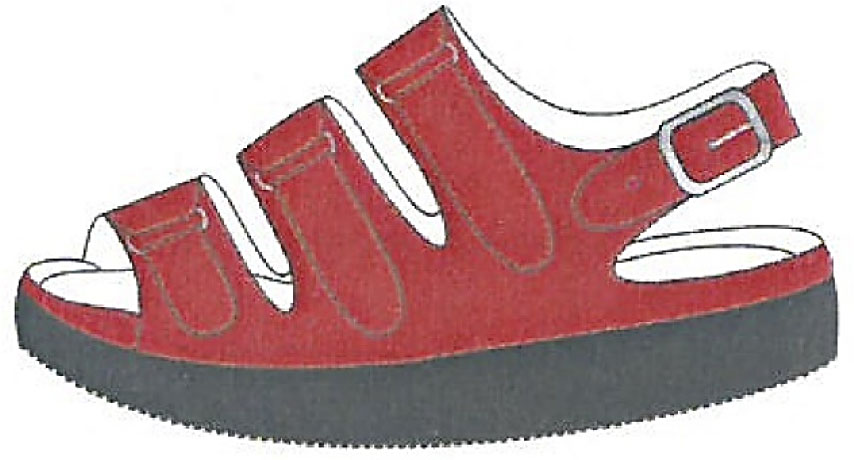

Fig. 14.

Orthopedic footwear manufactured in series - intended for people with diabetic foot syndrome (source: own research)
DOI: https://doi.org/10.2478/ftee-2024-0036 | Journal eISSN: 2300-7354 | Journal ISSN: 1230-3666
Language: English
Page range: 1 - 14
Published on: Oct 28, 2024
Published by: Łukasiewicz Research Network, Institute of Biopolymers and Chemical Fibres
In partnership with: Paradigm Publishing Services
Publication frequency: Volume open

© 2024 Iwona Masłowska-Lipowicz, Magda Adamczyk, Robert Gajewski, Tetiana Paruzel, Katarzyna Ławińska, Andrzej Rostocki, published by Łukasiewicz Research Network, Institute of Biopolymers and Chemical Fibres
This work is licensed under the Creative Commons Attribution-NonCommercial-NoDerivatives 3.0 License.