
Table 1.
The baby bibs from different museums
| Source | China National Silk Museum | Folk Art Museum of China Academy of Art | Hangzhou Museum of Arts and Crafts | Silk Museum of Zhejiang Sci-Tech University | Shanghai Textile and Apparel Museum | Suzhou Silk Museum | Total |
|---|---|---|---|---|---|---|---|
| Quantity | 13 | 15 | 1 | 1 | 2 | 1 | 33 |
Table 2.
Bibs in geometric shape
| No. | Style | Name and source | Picture | Illustration | Details |
|---|---|---|---|---|---|
| 1 | “Ruyi” shape | Satin bib with embroidered flowers and butterflies (from China National Silk Museum) | 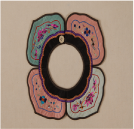 | 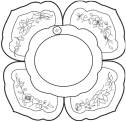 | The bib had four pieces and each piece was in a “Ruyi” shape. The two pink pieces were embroidered with magpie and plum blossom. The two green pieces were embroidered with butterflies and flowers. |
| 2 | Red and green Satin embroidered bib (from China National Silk Museum) | 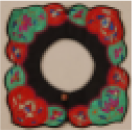 | 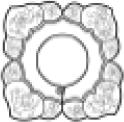 | The bib had four pieces and each piece was in a “Ruyi” shape. Each piece consisted of a big peach shape and two small round shapes. The big peach shapes were embroidered with Peony flower. | |
| 3 | Embroidered flower bib (from Folk Art Museum of China Academy of Art) | 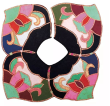 | 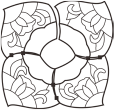 | The bib had four pieces. Each piece was patch embroidered with flower pattern. The diagonal pieces were the same in color. | |
| 4 | Red satin embroidered bib (from Folk Art Museum of China Academy of Art) | 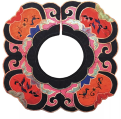 | 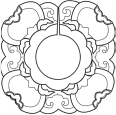 | The bib had four pieces in Ruyi shape. Each Ruyi was consisted of a big persimmon shape and two curled cloud patterns. The big persimmon shape was embroidered with flower and bird. | |
| 5 | Embroidered bib with pomegranate shape (from Folk Art Museum of China Academy of Art) | 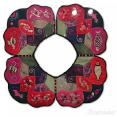 | 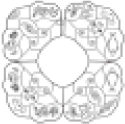 | The bib was a four pieced structure. Each piece was a pomegranate shape. Flower, fish, butterfly, phoenix and children were embroidered. | |
| 6 | White satin embroidered bib (from Folk Art Museum of China Academy of Art) | 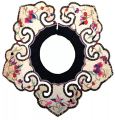 | 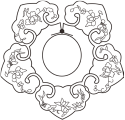 | The bib had five pieces in Ruyi shape. The adjacent pieces were connected by curled cloud patterns. Each piece was embroidered with butterfly and flower. | |
| 7 | Circular shape | Lock embroidery Flower bib (from China National Silk Museum) | 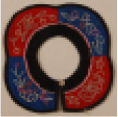 | 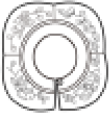 | The bib had four pieces and the four pieces were connected by a strip to form a round shape. The color and the pattern of the diagonal pieces was the same. |
| 8 | Colored satin embroidered bib (from China National Silk Museum) | 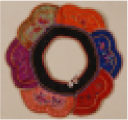 | 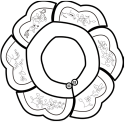 | The bib had six pieces and the six pieces were connected by a strip to form a round shape. The six piece had different colors. | |
| 9 | Colored satin embroidered bib (from China National Silk Museum) | 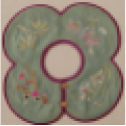 | 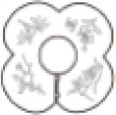 | The bib was cut in one piece with four semicircles. The four semicircles were embroidered with plum blossom, orchid, bamboo and chrysanthemum. | |
| 10 | Bib with fingered citron shape (from Folk Art Museum of China Academy) | 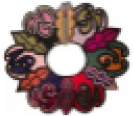 | 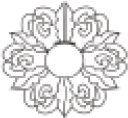 | The bib was a multi-pieced structure. Six fingered citron shaped pieces were connected by six leaf shaped pieces. Each fingered citron and each leaf had different color. | |
| 11 | Flower embroidered bib (from Folk Art Museum of China Academy) | 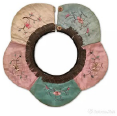 | 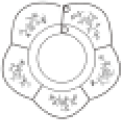 | The bib was a five pieced structure. Each piece was embroidered with flowers. Two pieces were pink and two pieces were green and one piece was light yellow. | |
| 12 | Bib with the Eight Diagrams (from Folk Art Museum of China Academy) | 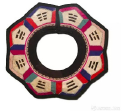 | 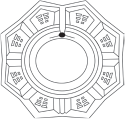 | The bib was an eight pieced structure. The eight pieces formed the Eight Diagrams shape. The Eight Diagrams were embroidered on them. The diagonal pieces had the same color. | |
| 13 | Embroidered bib (from Folk Art Museum of China Academy) | 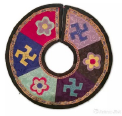 | 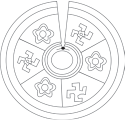 | The bib had six pieces and the six pieces were connected together by a strip to form a round shape. On the bib, flowers and “卐” were embroidered. | |
| 14 | Embroidered bib with “卐” character (from China National Silk Museum) | 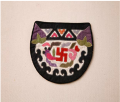 |  | The bib was cut in one piece and was close to a semicircle shape. It was patched embroidered with “卐” character and bat pattern. | |
| 15 | Heart shape | Pull and lock embroidered bib (from China National Silk Museum) | 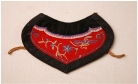 |  | The bib was one piece with red and black color and formed a heart shape. It was embroidered with flower pattern. |
| 16 | Pull and lock embroidery bib (from China National Silk Museum) | 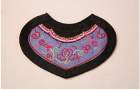 | 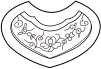 | The bib was one piece with purple and black color and formed a heart shape. It was embroidered with flower pattern. | |
| 17 | Blue satin embroidery bib (from China National Silk Museum) | 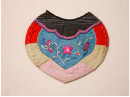 |  | The bib was made with satins of black, red, yellow, pink and blue. It had a heart shape. It was embroidered with flower and butterfly pattern. | |
| 18 | Embroidery bib with butterfly pattern (from China National Silk Museum) | 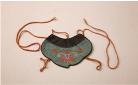 |  | The bib was made with black and green fabric. It was a heart shape and was embroidered with butterfly pattern. |
Table 3.
Bibs in plant shape
| No. | Style | Name and source | Picture | Illustration | Characteristic |
|---|---|---|---|---|---|
| 1 | Petal shape | White silk embroidered flower bib (from China National Silk Museum) | 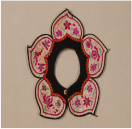 | 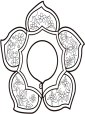 | The bib was five pieces of petal shape. Each petal was embroidered with flower and spider. |
| 2 | Colorful satin embroidered with flower and crab (from China National Silk Museum) | 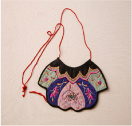 |  | The bib was in five petal shape. The color and the shape was bilateral symmetry. It was embroidered with flower and crab. | |
| 3 | Leaf shape | Embroidered bib with leaf shape (from the silk museum of Zhejiang Sci-Tech University) | 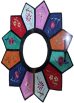 | 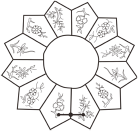 | The bib consisted of twelve piece with leaf shape. Each leaf was a willow leaf. The diagonal pieces were the same color and pattern. |
| 4 | Double layer willow shaped bib (from Suzhou Silk Museum) |  | 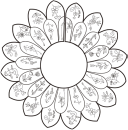 | The bib were two layers. Each layer was sixteen pieces of willow leaf. The diagonal pieces were the same color and pattern. |
Table 4.
Animal and child shaped bibs
| No. | Style | Name and source | Picture | Illustration | Characteristics |
|---|---|---|---|---|---|
| 1 | Tiger shape | Green tiger shaped bib (from Shanghai Textile and Apparel Museum) |  | 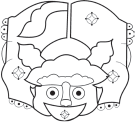 | The tiger’s ears stand upright above its head. The tail is located on the right leg. The same color was used for ears and mouth. |
| 2 | Green tiger shaped bib (from Folk Art Museum of China Academy) | 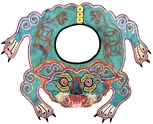 | 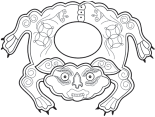 | The tiger’s head and body were cut separately. The body of a tiger is a circular shape. | |
| 3 | Orange tiger shaped bib (from Folk Art Museum of China Academy) | 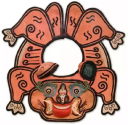 | 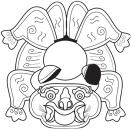 | The tiger’s head and limbs were cut separately. The tiger’s ears stand upright. The body of the tiger is a circular shape. | |
| 4 | Yellow tiger shaped bib (from Folk Art Museum of China Academy) | 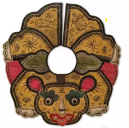 | 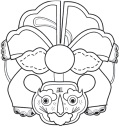 | The head, limbs, and buttocks of the tiger were cut separately. The tiger’s ears were erect. It was very realistic in color and styling. | |
| 5 | Tiger shaped bib (from Hangzhou Museum of Arts and Crafts) | 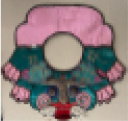 | 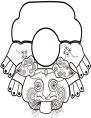 | The head and limbs of the tiger formed the front part of the bib. The buttocks formed the posterior part of the bib. The buttocks and the claws were made with pink silk fabric. | |
| 6 | Dog shape | Green dog shaped bib (from Shanghai Textile and Apparel Museum) | 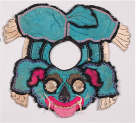 | 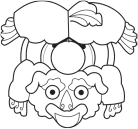 | The head, limbs, and body of the dog were cut separately and sewn together. The tail was located on the left leg. The same color were used for ears and mouth. |
| 7 | Red bib with two embroidered dogs (from Folk Art Museum of China Academy) | 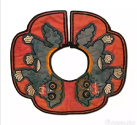 | 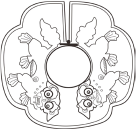 | The bib is a circular shape in one piece. Two dogs were embroidered in a bilateral symmetrical pattern. | |
| 8 | Embroidered dog bib (from Folk Art Museum of China Academy) | 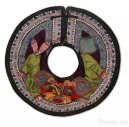 | 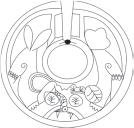 | The bib was a round shape. Two dogs were embroidered in the center and small flower pattern were embroidered in the outer rings of the bib. | |
| 9 | Mouse shape | Embroidered bib with mouse and lotus pattern (from Folk Art Museum of China Academy) | 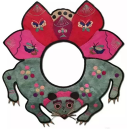 | 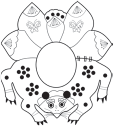 | The bib was a combination of mouse and lotus flowers. The mouse was a one-piece cutting structure. The Lotus was symmetrical in shape and color. |
| 10 | Pig shape | Embroidered bib with pig shape (from Folk Art Museum of China Academy) | 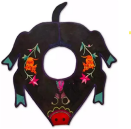 | 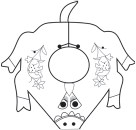 | The head, body, and limbs of the pig were cut in one piece. It was a symmetric design in color and pattern scheme. |
| 11 | Child shape | Embroidered bib with child shape (from Folk Art Museum of China Academy) | 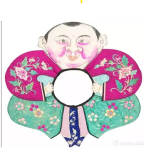 | 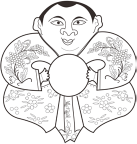 | The child was sitting cross legged. The head, arms, legs, and feet were cut separately. The overall structure was symmetrical in shape and color. Grape pattern was embroidered on the top clothes of the child. Plum blossom was embroidered on the pants of the child. The shoes were embroidered with bamboo and chrysanthemum pattern. |
Table 5.
The classification of the embroidered pattern of the bibs
| Style | Pattern | Illustration | Bib no. | Proportion (%) |
|---|---|---|---|---|
| Plant element | Peony |  | 1–7#, 11#, 15–17#, 1*, 2*, 3*, 4* | 48 |
| Plum blossom |  | 1#, 4#, 13#, 3*, 4*, 11+ | 18 | |
| Lotus |  | 6#, 8#, 2*, 9+ | 12 | |
| Bamboo |  | 9#, 3*, 11+ | 9 | |
| Orchid |  | 9#, 3* | 6 | |
| Chrysanthemum |  | 9#, 3* | 6 | |
| Grape |  | 4*, 11+ | 6 | |
| Animal element | Butterfly |  | 1#, 2#, 5#, 6#, 8#, 15#, 17#, 18#, 1*, 9+ | 30 |
| Tiger |  | 1+, 2+, 3+, 4+, 5+ | 15 | |
| Magpie |  | 1#, 4#, 8# | 9 | |
| Dog |  | 6+, 7+, 8+ | 9 | |
| Fish |  | 5#, 7# | 6 | |
| Phoenix |  | 4#, 5# | 6 | |
| Bat |  | 5#, 9# | 6 | |
| Dragonfly |  | 8# | 3 | |
| Spider |  | 1* | 3 | |
| Crab |  | 2* | 3 | |
| Mouse |  | 9+ | 3 | |
| Pig |  | 10+ | 3 | |
| Human related element | Copper coin |  | 17#, 1+, 2+, 5+ | 12 |
| 卐character |  | 13#, 14# | 6 | |
| Child |  | 11+ | 3 |
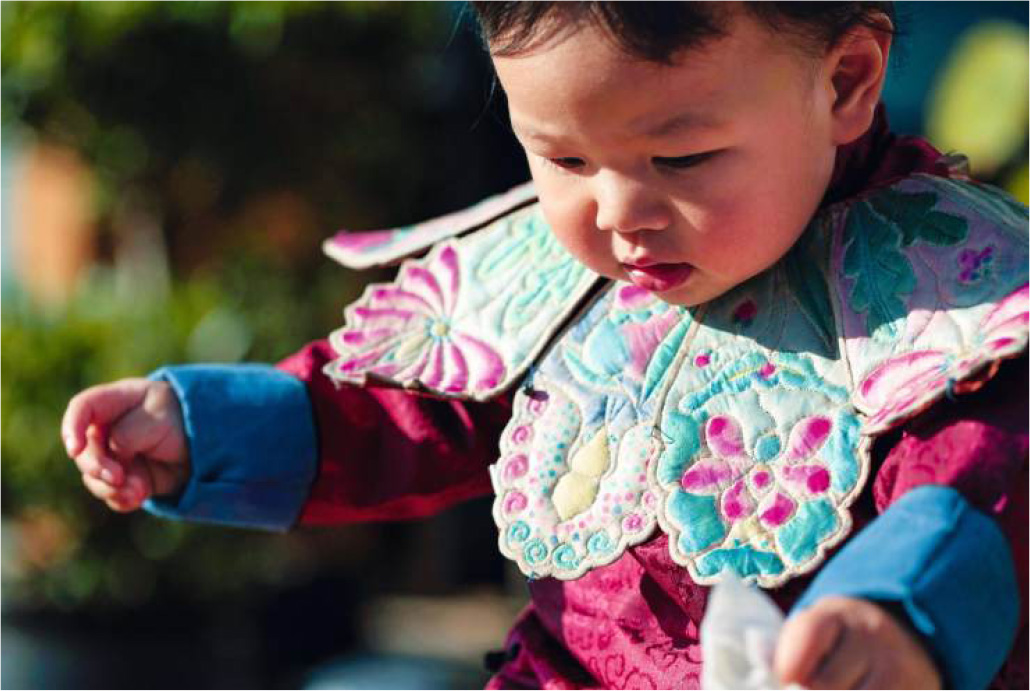
Fig. 1.
A baby wearing embroidery bib
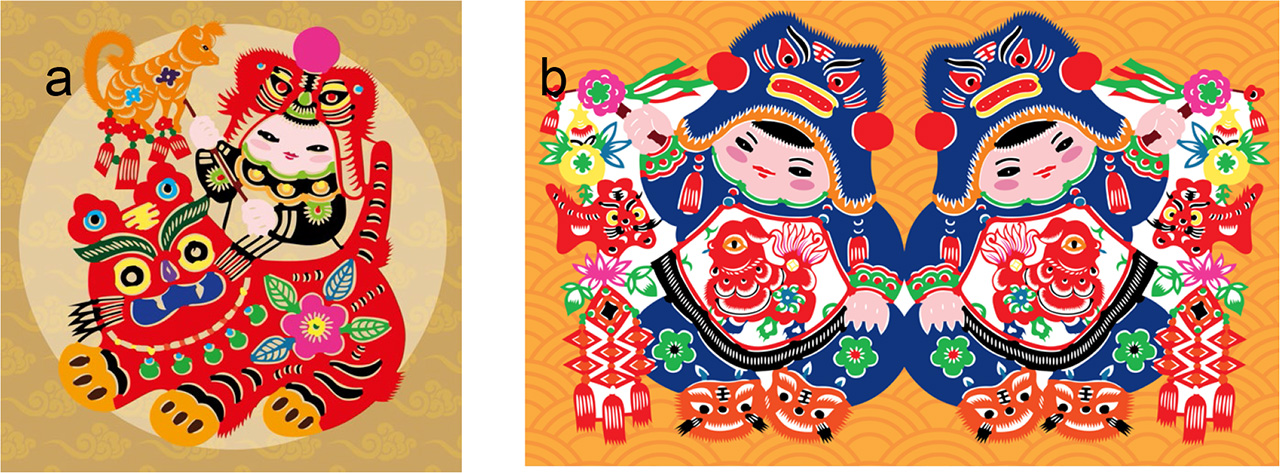
Fig. 2.
Spring Festival pictures. (a), a child celebrating the New Year; (b), two children celebrating the New Year