
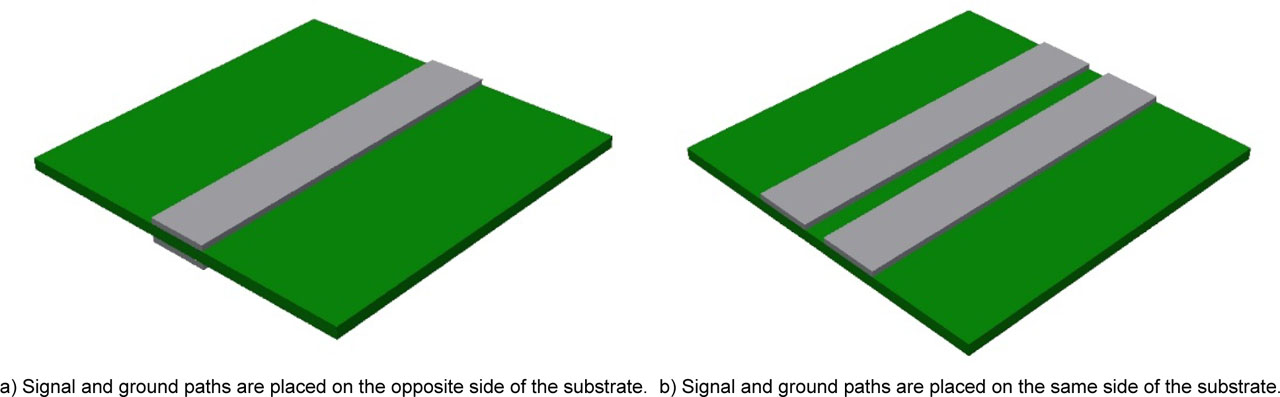
Fig. 1.
View of the simplest signal line created from fabric
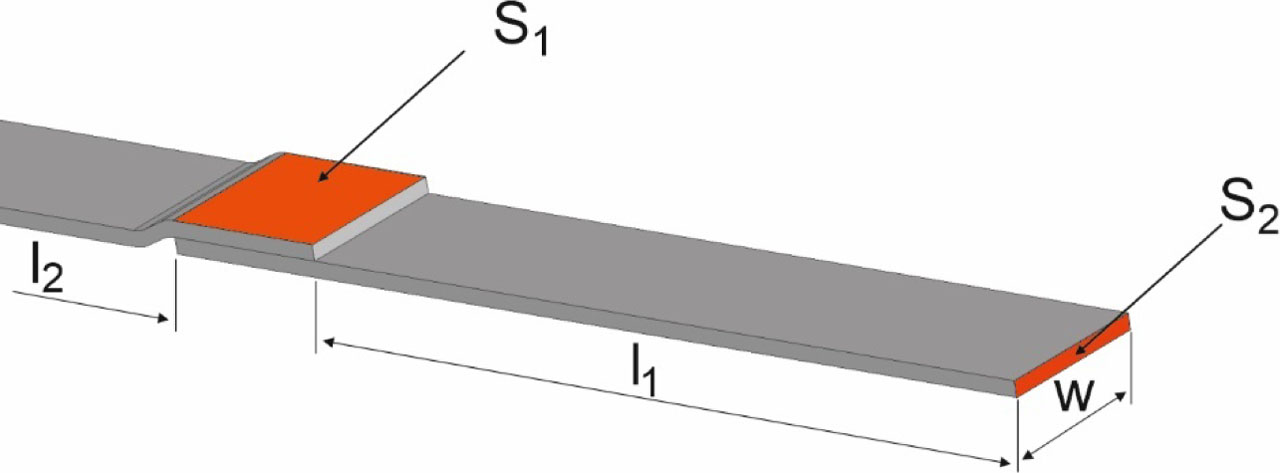
Fig. 2.
Connection between the two parts of connected paths
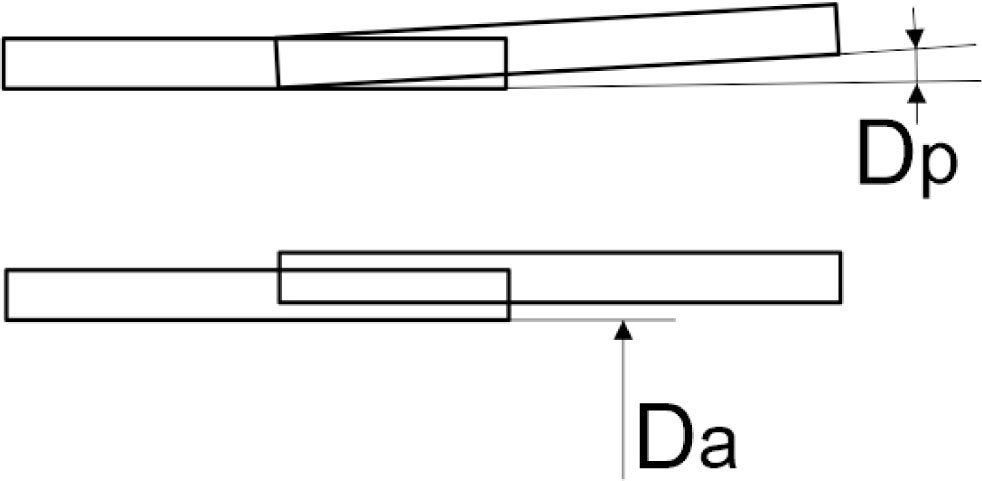
Fig. 3.
Main possible inaccuracies in the connection of electro-conductive paths in the textile connector: parallelism (Dp) and deviation from the axis (Da)
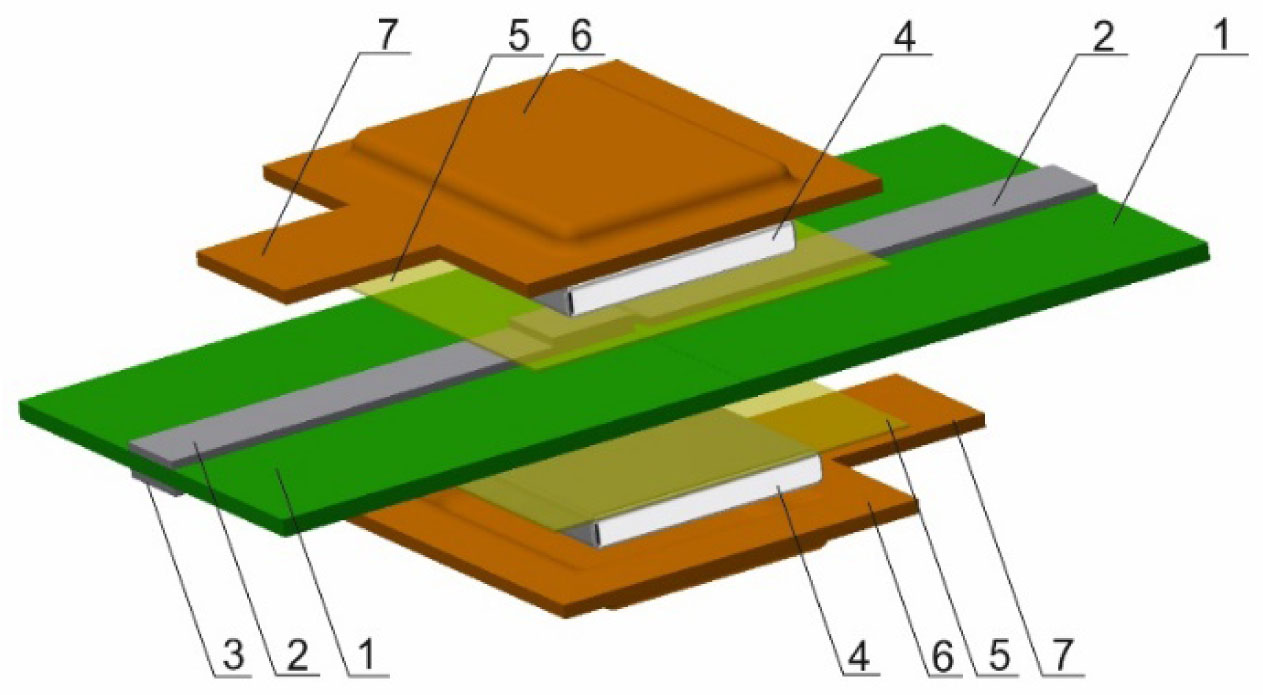
Fig. 4.
Textile connector with rectangular contacts
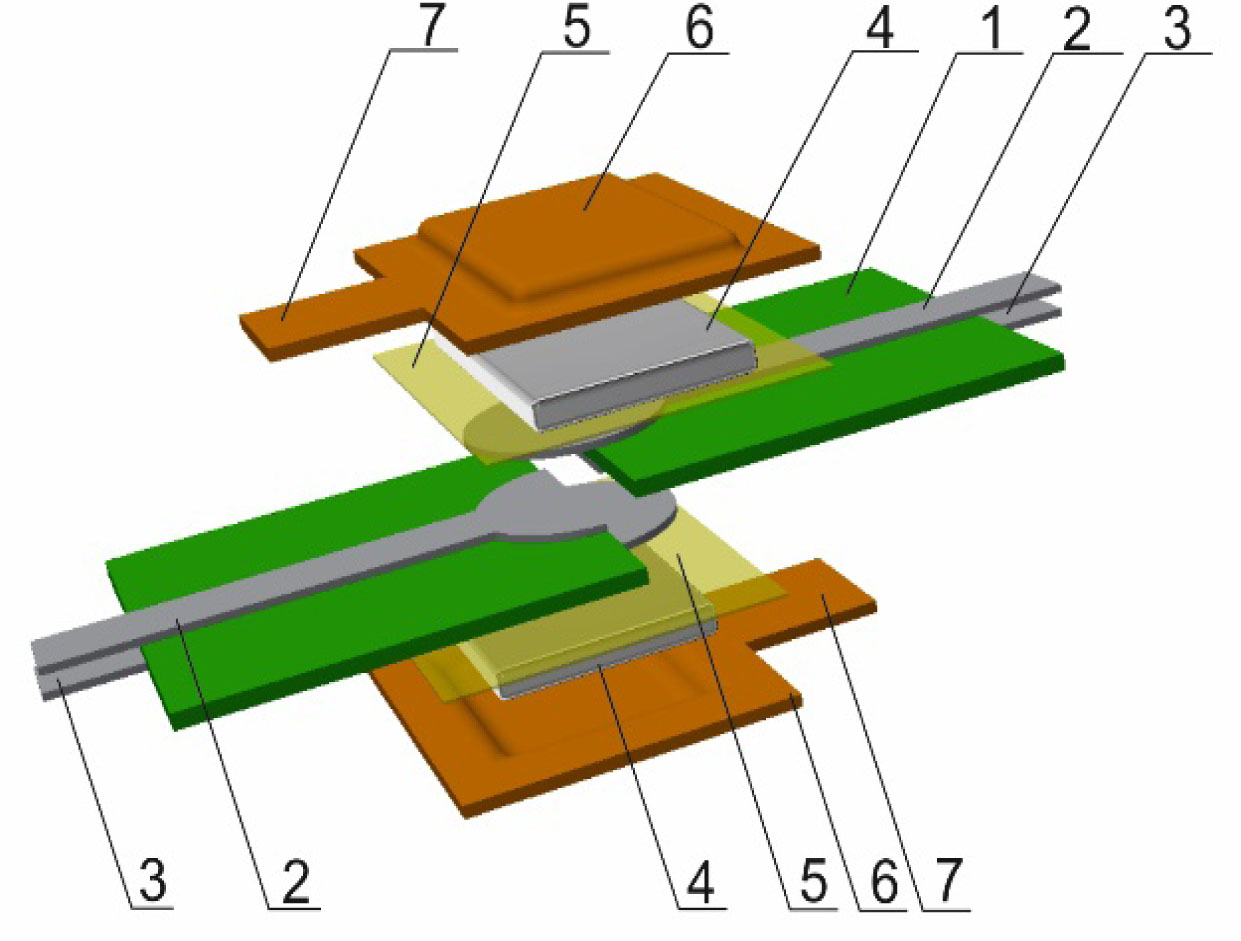
Fig. 5.
Textile connector with circular contacts

Fig. 6.
Example views of a part of the connector prototypes (substrate and electro-conductive paths only)
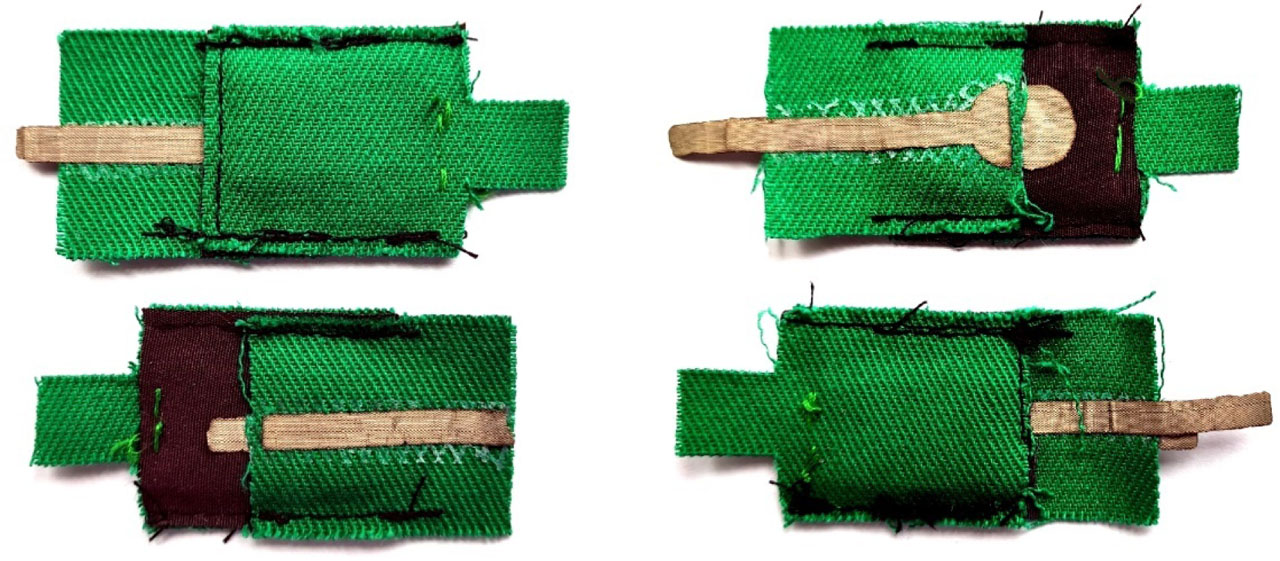
Fig. 7.
Example views of the bottom and upper side of the connector’s parts
Table 1.
Basic parameters of electroconductive fabric used in the research conducted
| Material | Trade name/Producer | Thickness | Surface resistivity | Metal amount | Surface mass | Weave | Warp density | Weft density |
|---|---|---|---|---|---|---|---|---|
| - | - | mm | Ohm/sq | g/m2 | g/m2 | - | Yarns/cm | Yarns/cm |
| Ni/Cu Nylon Ripstop | 3050-525/Laird | 0.127 | 0.07 | 27–39 | 71–92 | Twill | 55 | 40 |
Table 2.
Basic parameters of the neodymium magnets used in the connectors tested
| Magnetic material | Magnet length | Magnet width | Magnet thickness | Magnet weight | Maximum force of attraction |
|---|---|---|---|---|---|
| - | mm | mm | mm | g | N |
| N38 | 25 | 15 | 2 | 5,63 | 26.2 |
Table 3.
Basic parameters of fabrics used for non-conductive connector elements
| Fabric no. | Element no. (Fig.1) | Raw material | Weave | Thickness | Surface mass | Warp density | Weft density | Electro-conductive |
|---|---|---|---|---|---|---|---|---|
| - | - | - | mm | g/m2 | threads/cm | threads/cm | - | |
| F1 | 1, 6, 7 | cotton | twill | 0.62 | 287 | 30 | 19 | No |
| F2 | 5 | polyester | plain | 0.36 | 158 | 56 | 28 | No |
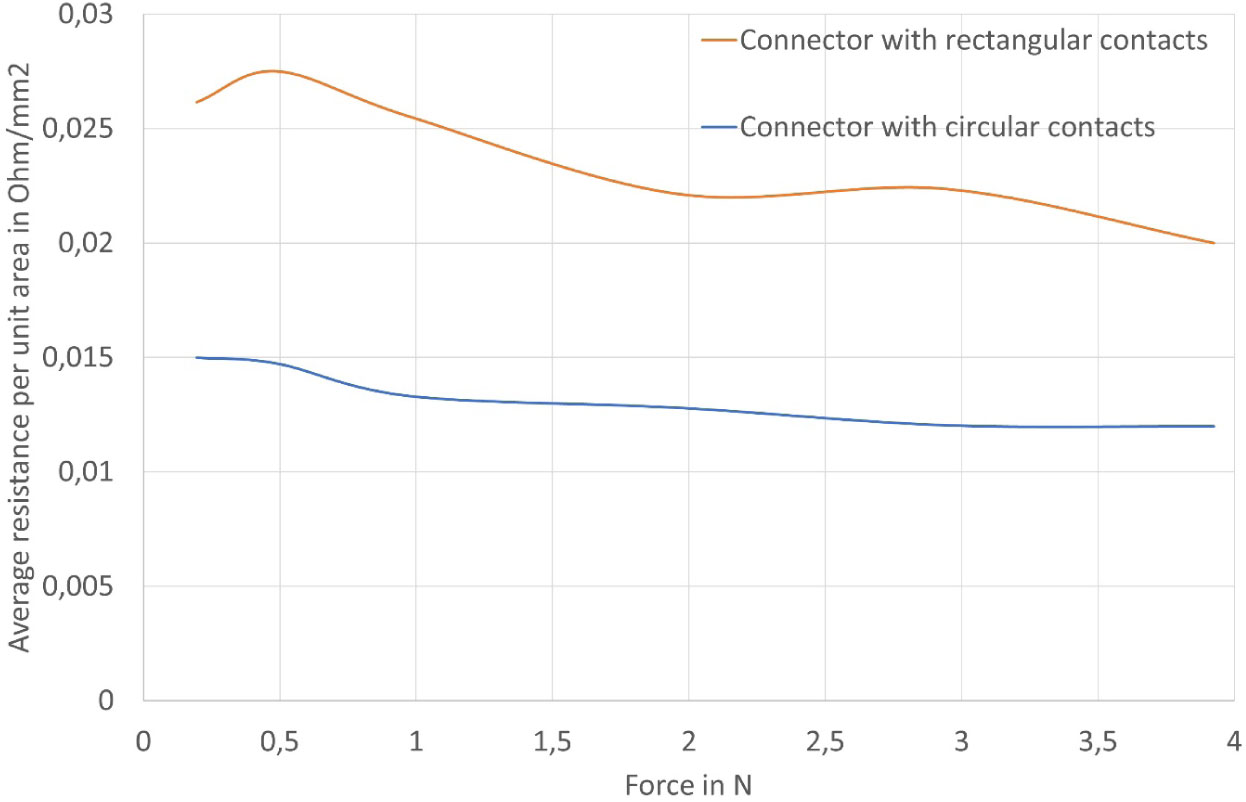
Fig. 8.
Comparison of changes in the average resistance per unit area of connectors with a rectangular and circular contact area versus the clamping force of both their parts
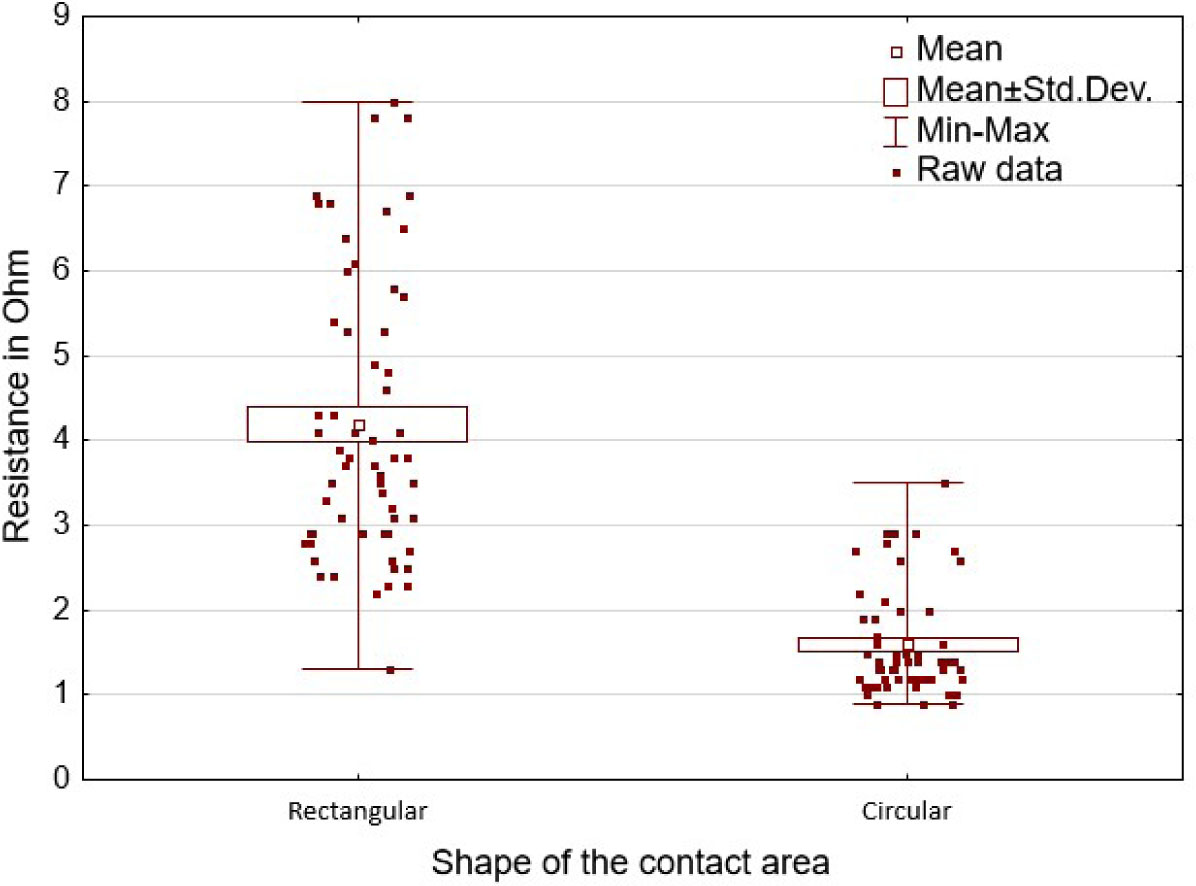
Fig. 10.
Dispersion of the resistance per unit area of the connectors tested due to repeated disconnection and connection
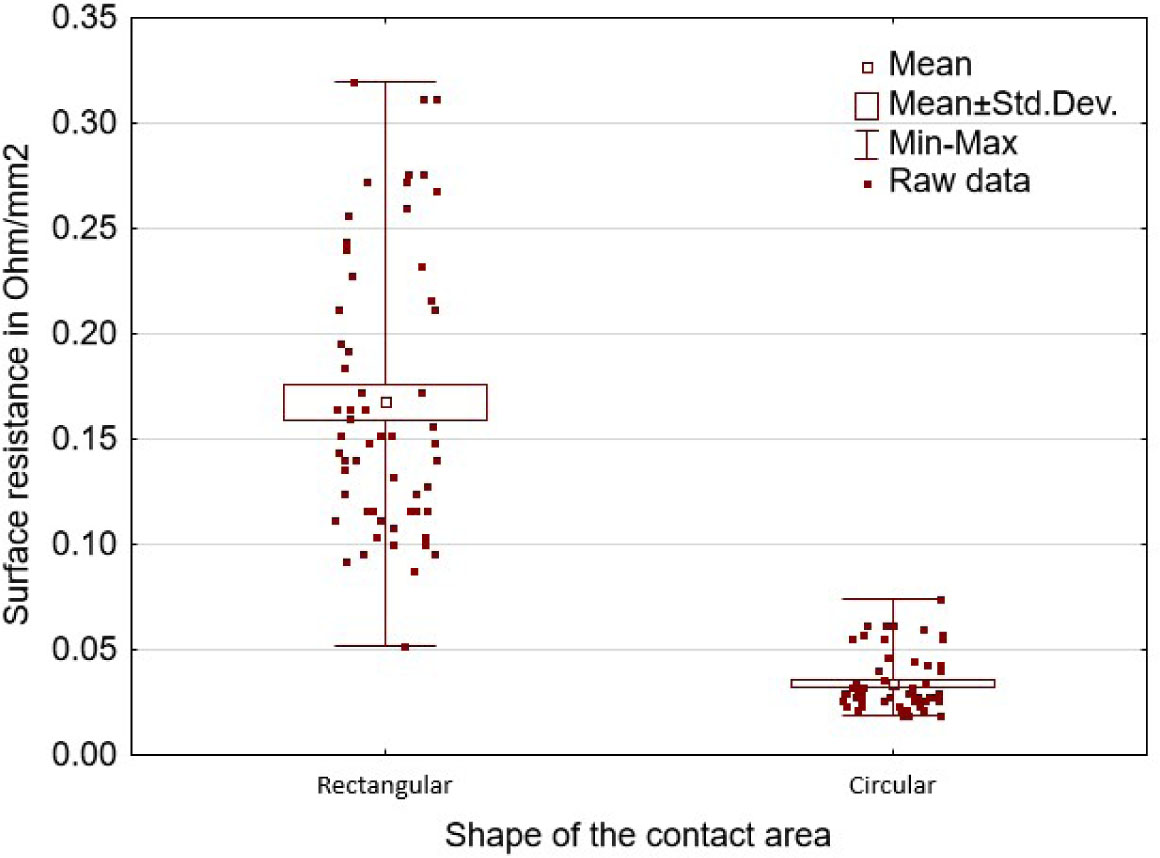
Fig.11.
Dispersion of the resistance per unit area of the connectors tested due to repeated disconnection and connection