
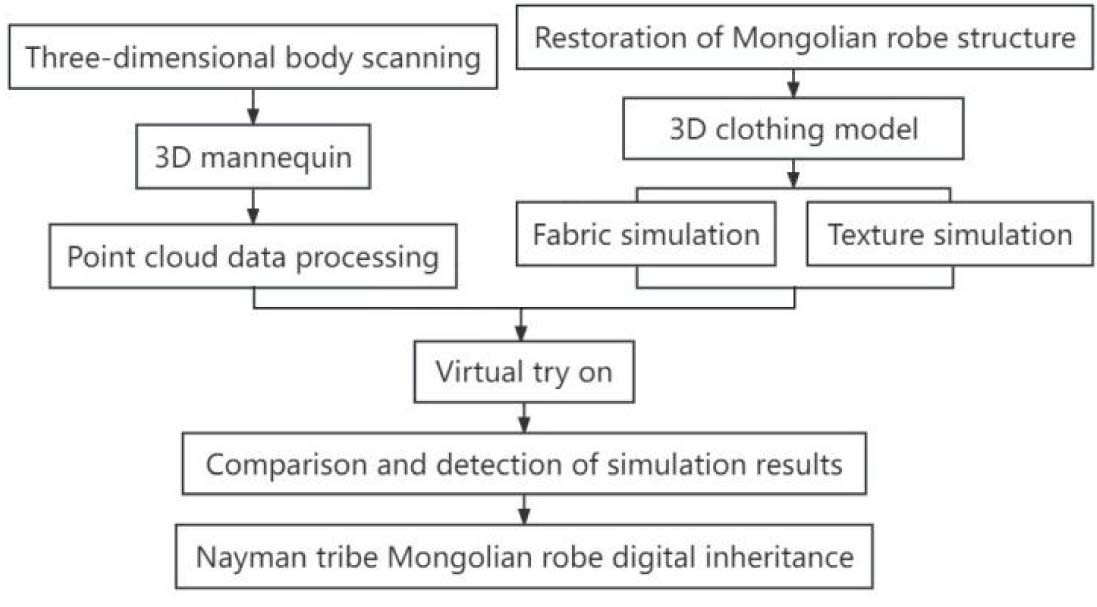
Fig. 1.
Technology roadmap
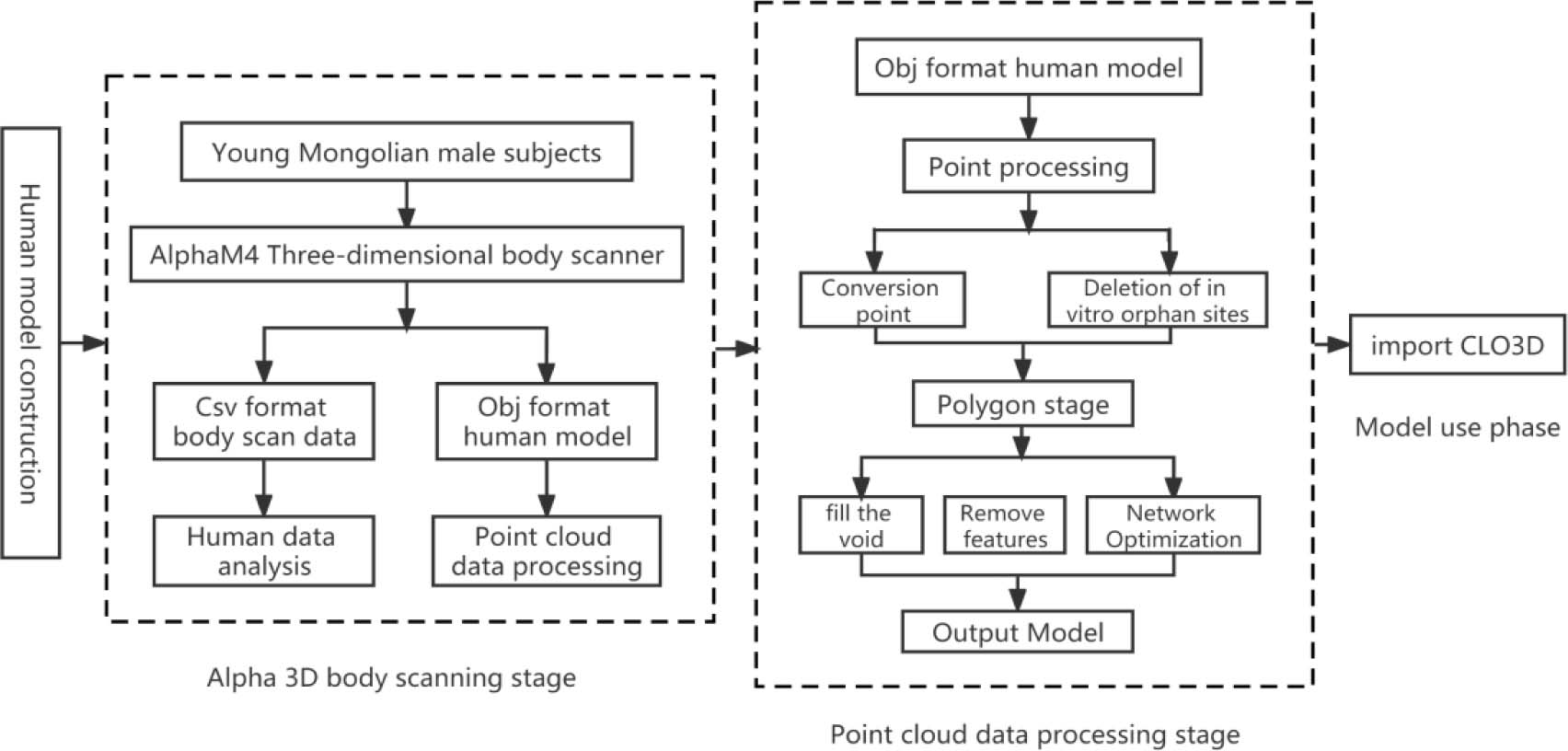
Fig. 2.
Flow chart of point cloud data processing
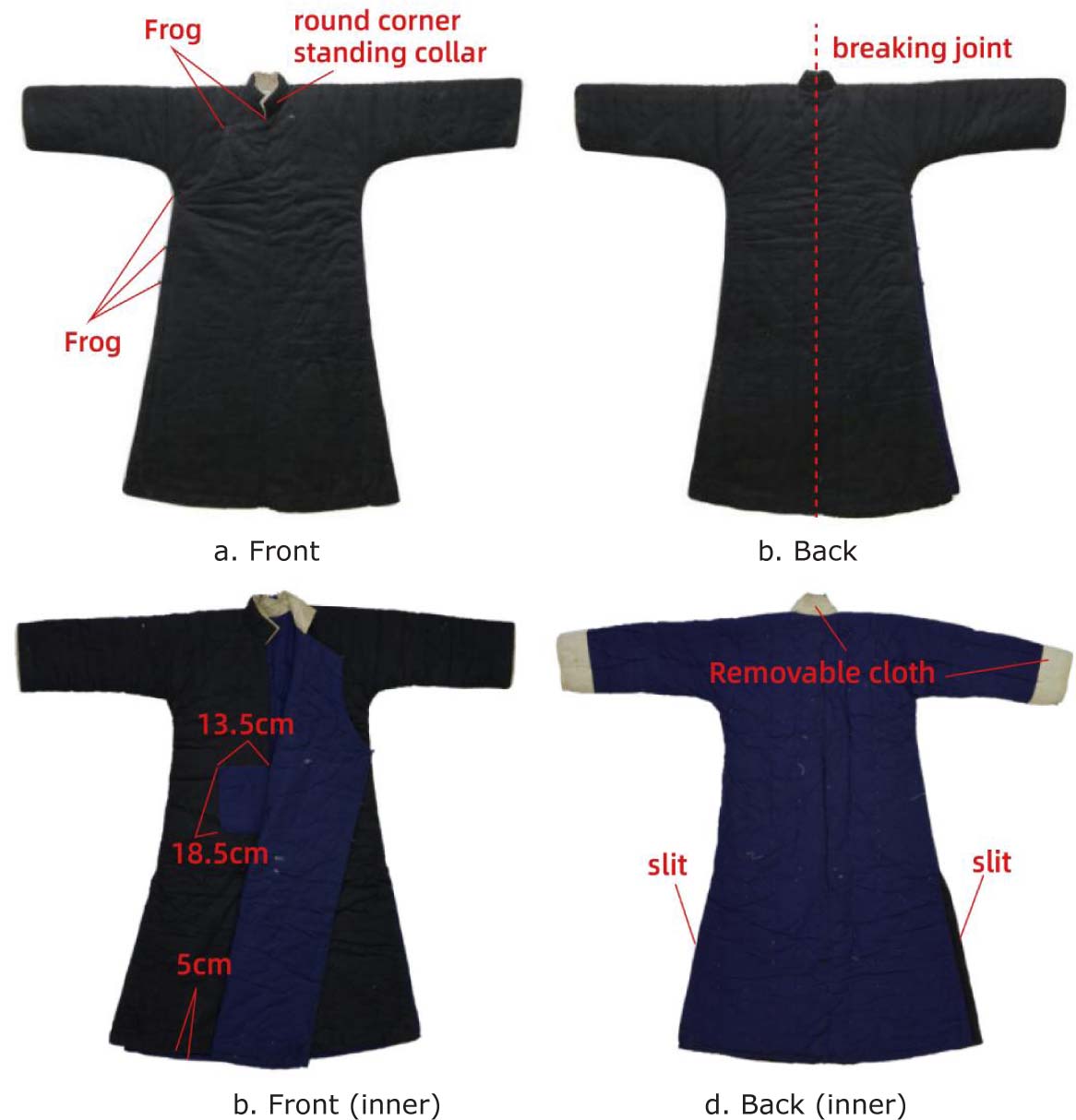
Fig. 3.
Physical picture of traditional Nayman tribe cotton robe
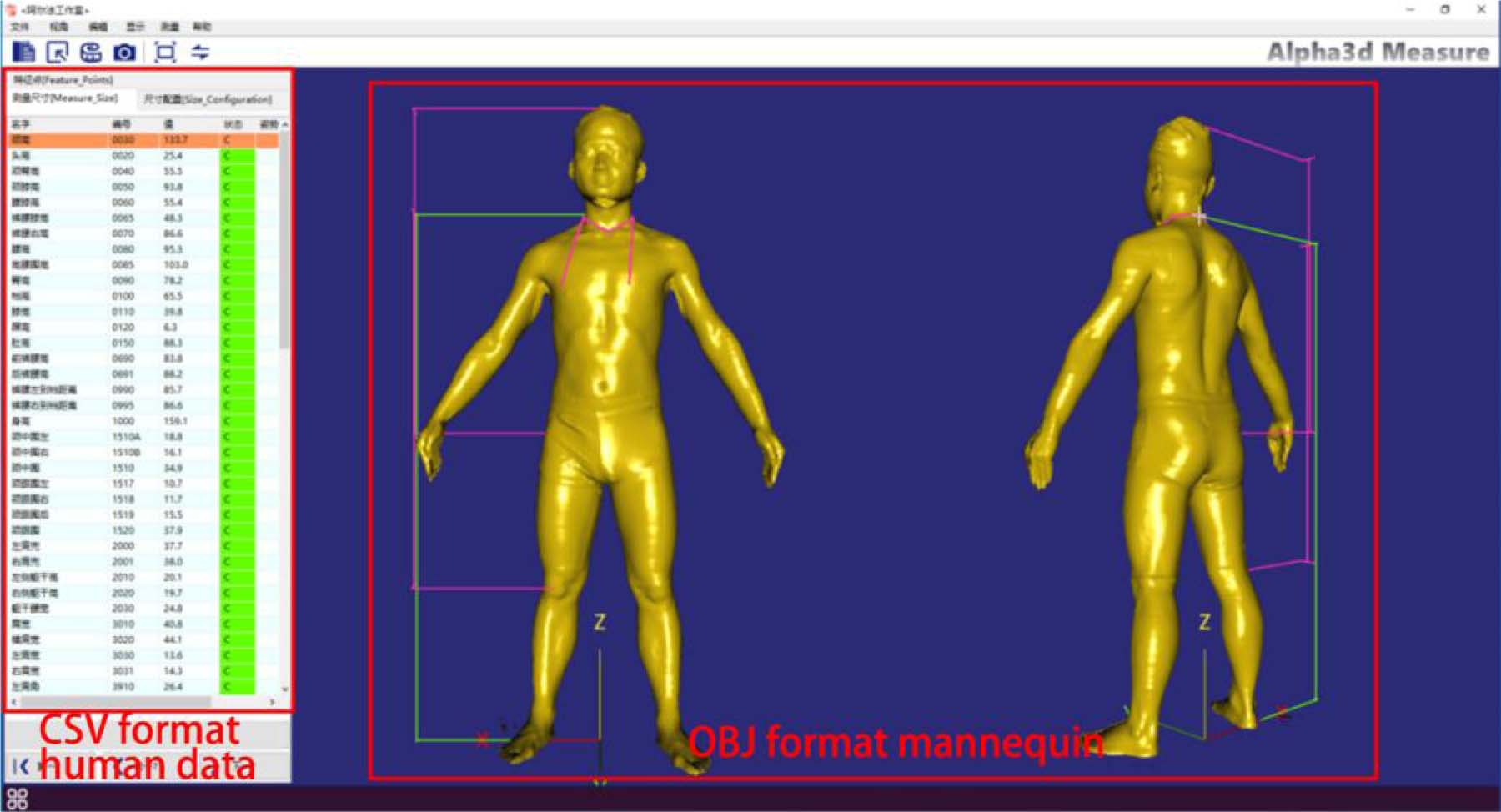
Fig. 4.
human body scan after the completion of the interface
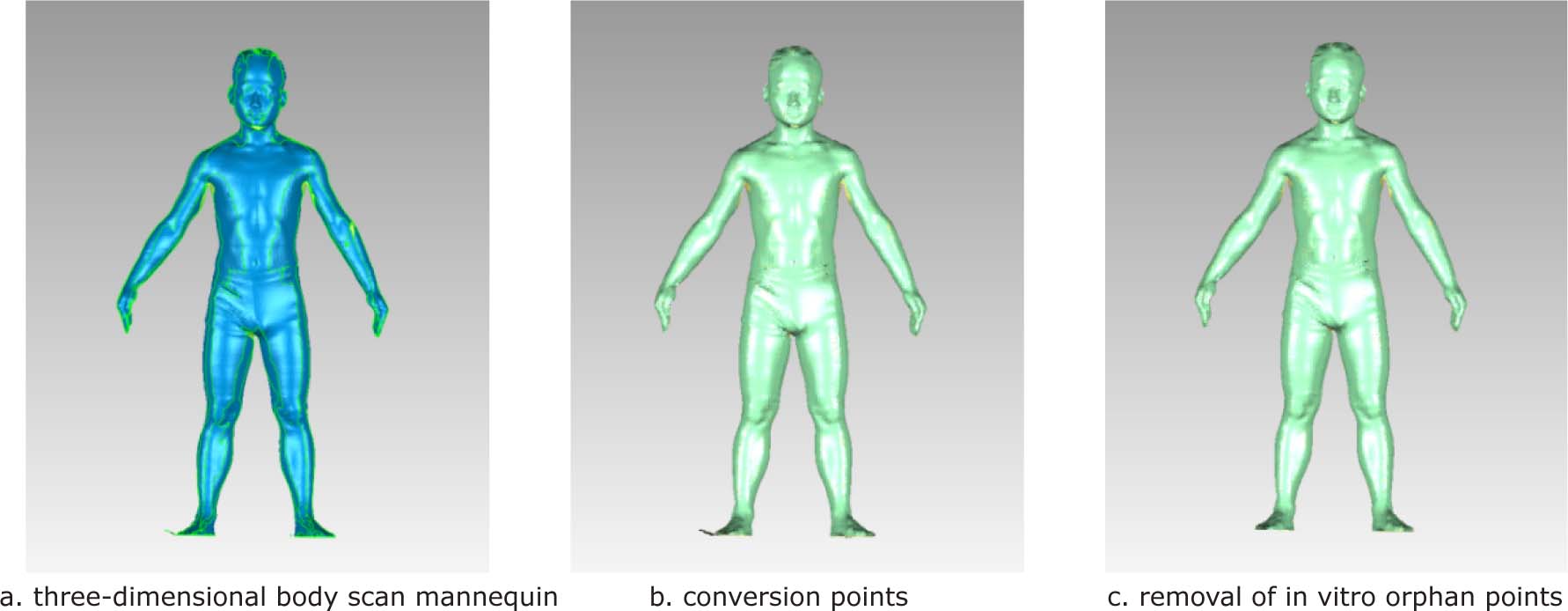
Fig. 5.
Point cloud data processing process
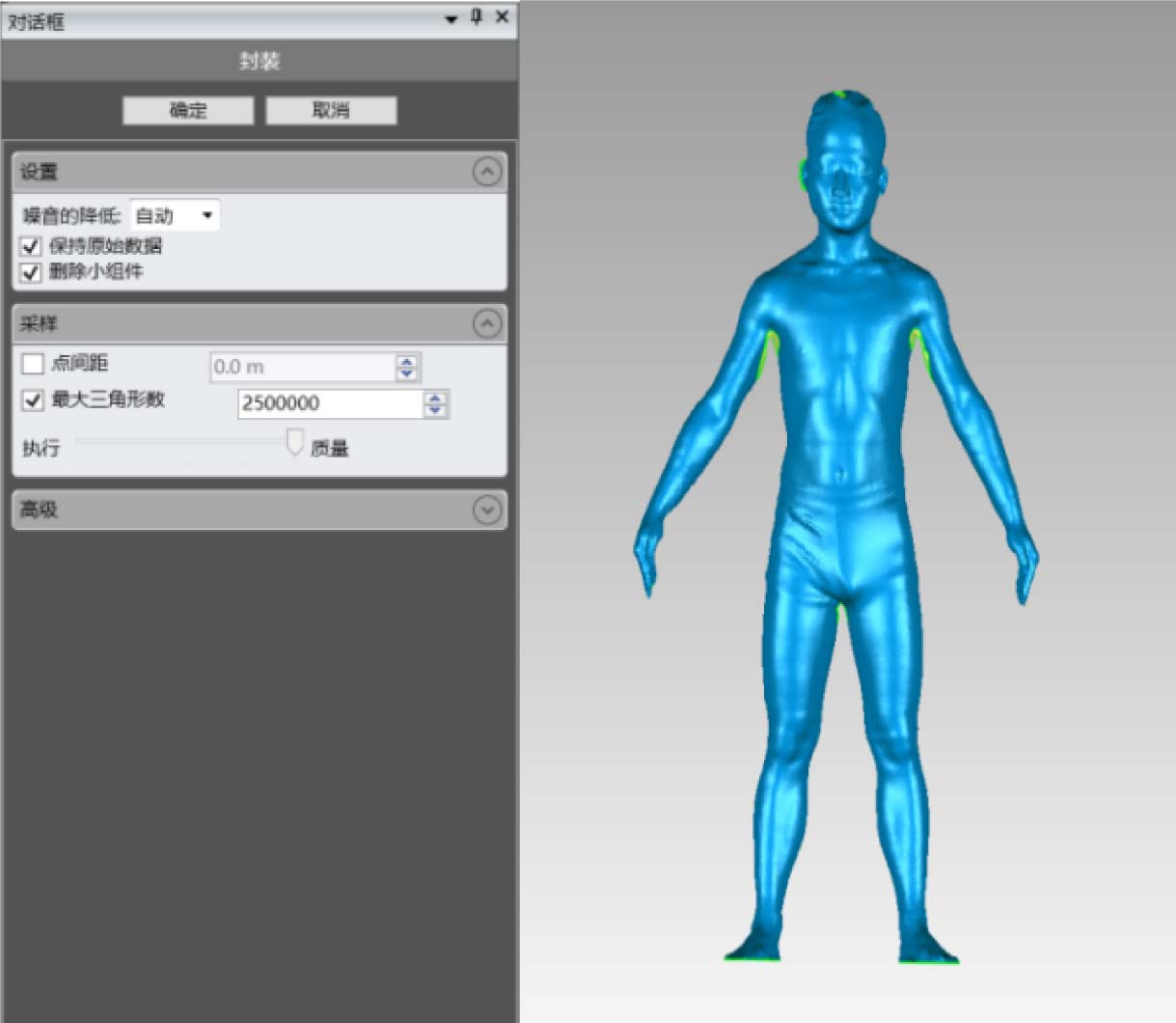
Fig. 6.
Encapsulated point cloud data for the human model
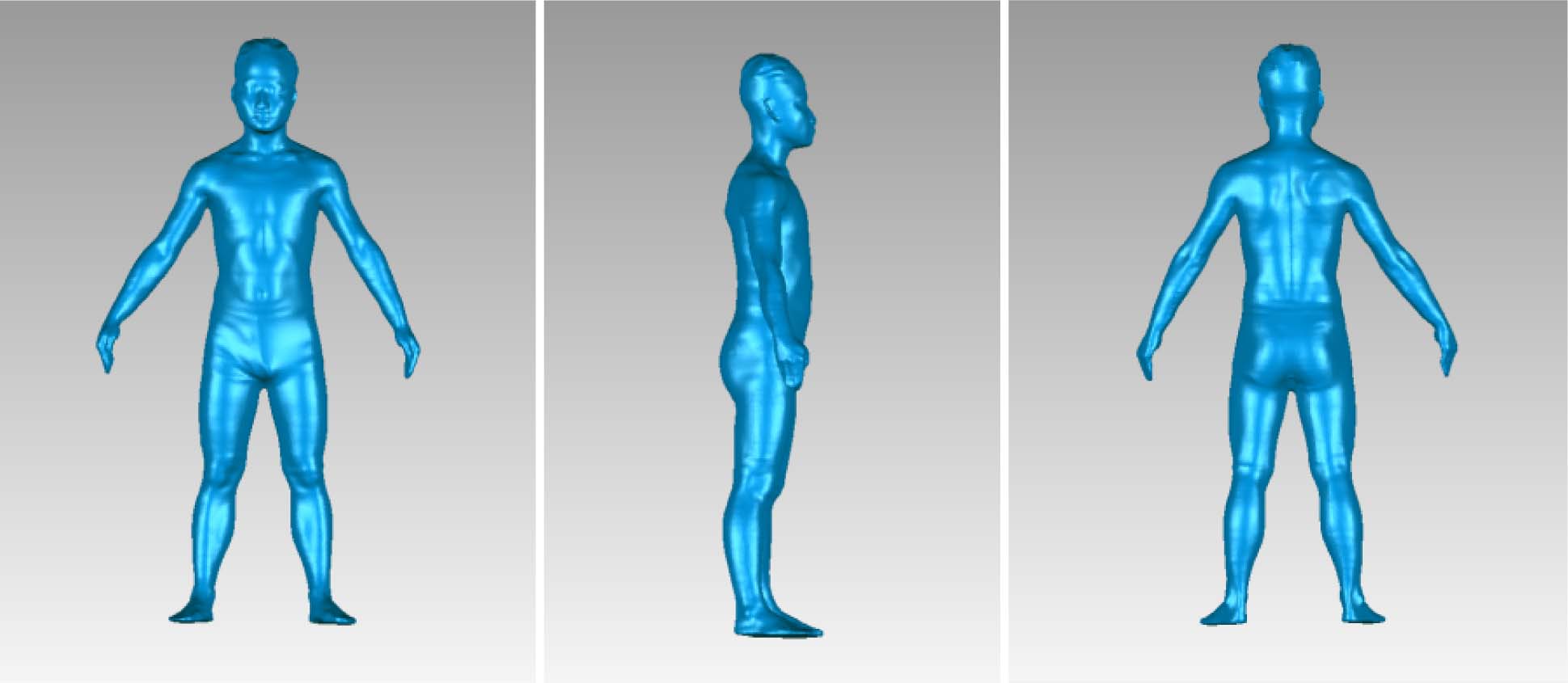
Fig. 7.
Processed human model
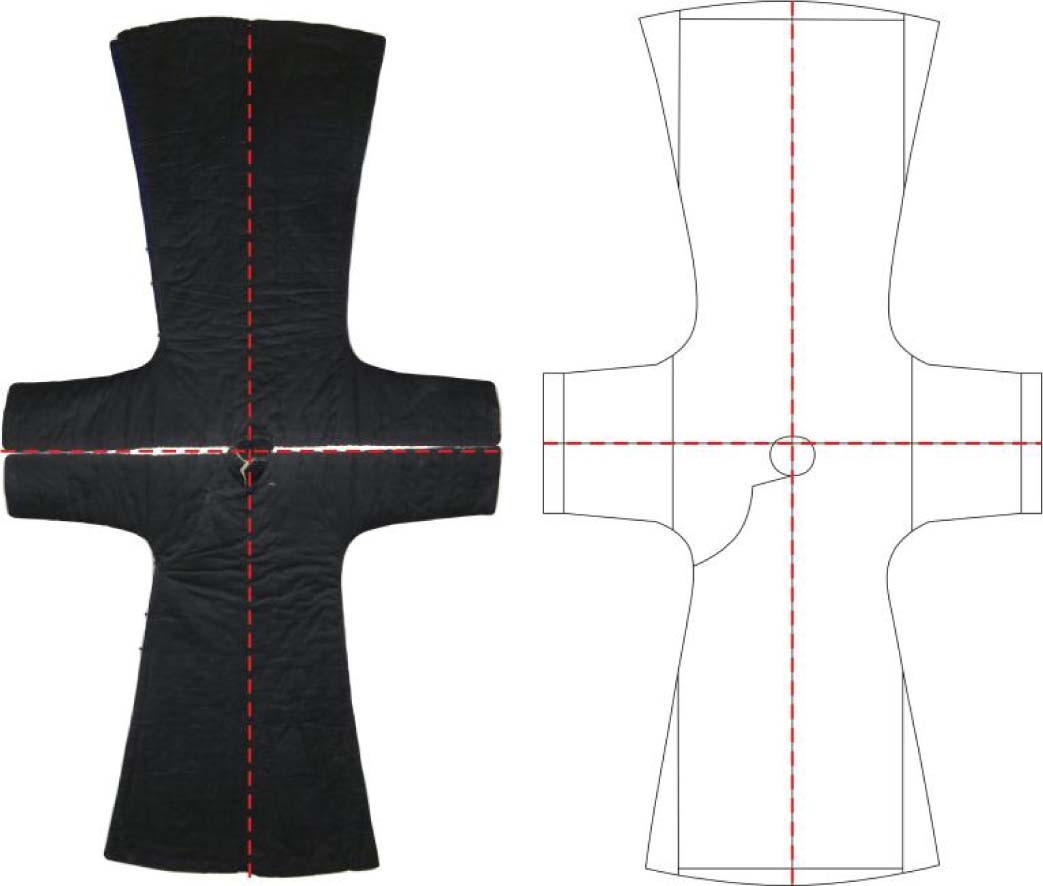
Fig. 8.
Cross-shaped plane structure
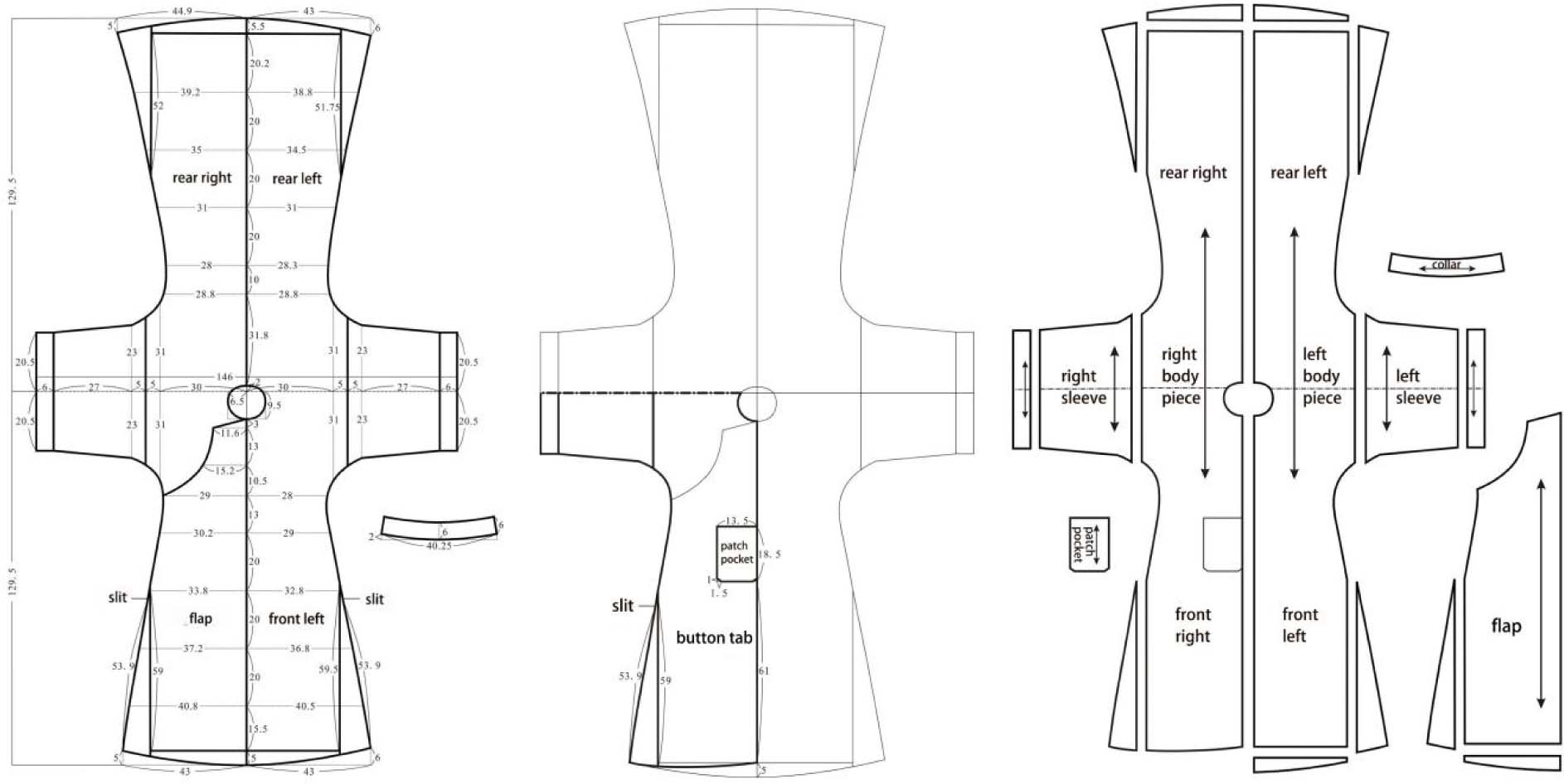
Fig. 9.
Traditional Nayman tribe cotton robe structure sample diagram. a. Nayman cotton robe primary structure diagram b. Nayman cotton robe fly piece structure diagram c. Nayman cotton robe sample separation diagram
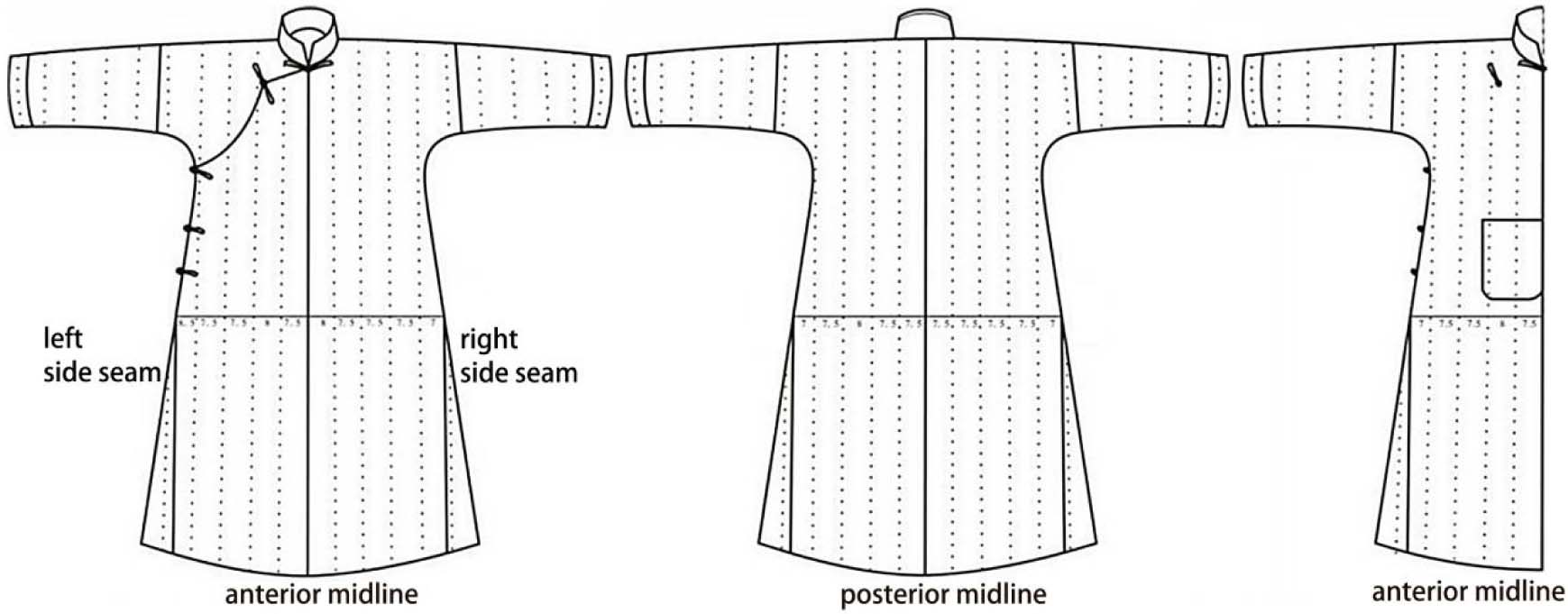
Fig. 10.
Quilting and stitching diagram of a traditional Nayman tribe cotton robe. a.front, b. back, c. inner lining
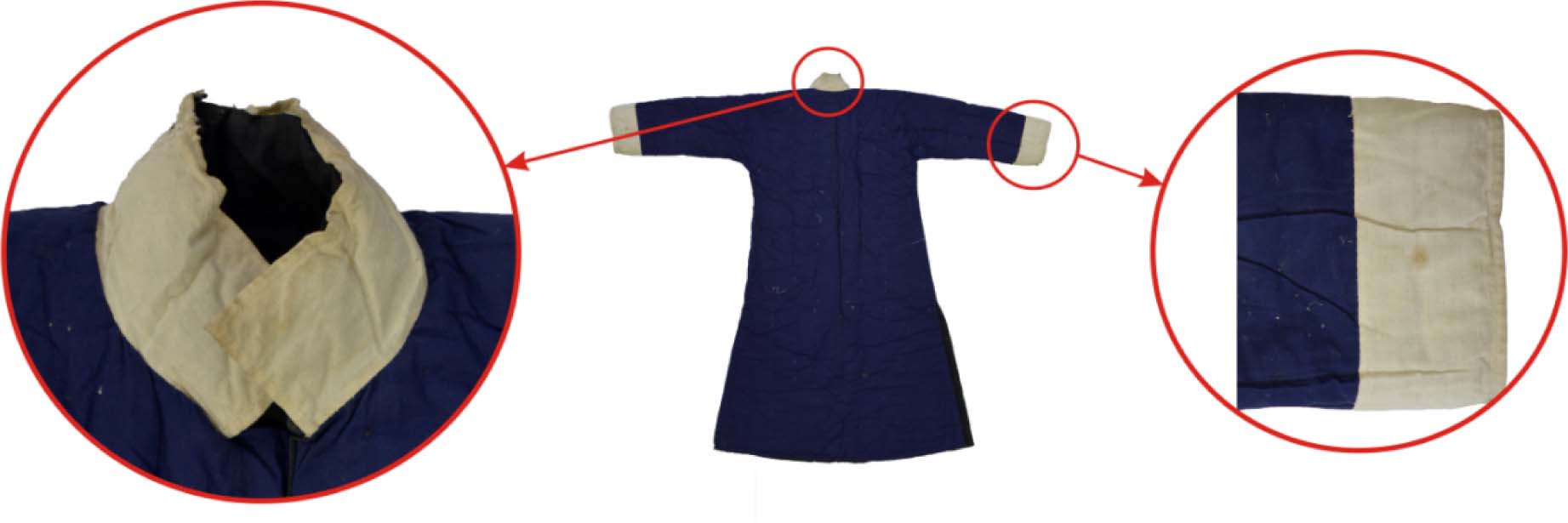
Fig. 11.
Traditional Nayman tribal cotton robe with removable cloth block
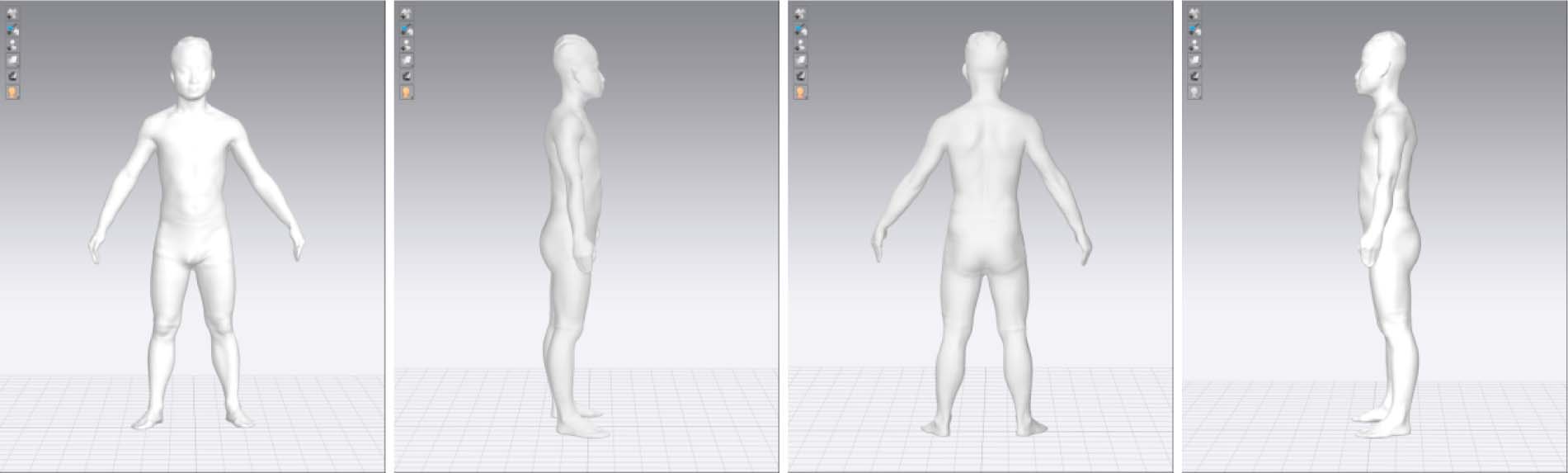
Fig. 12.
Nayman tribe virtual mannequin
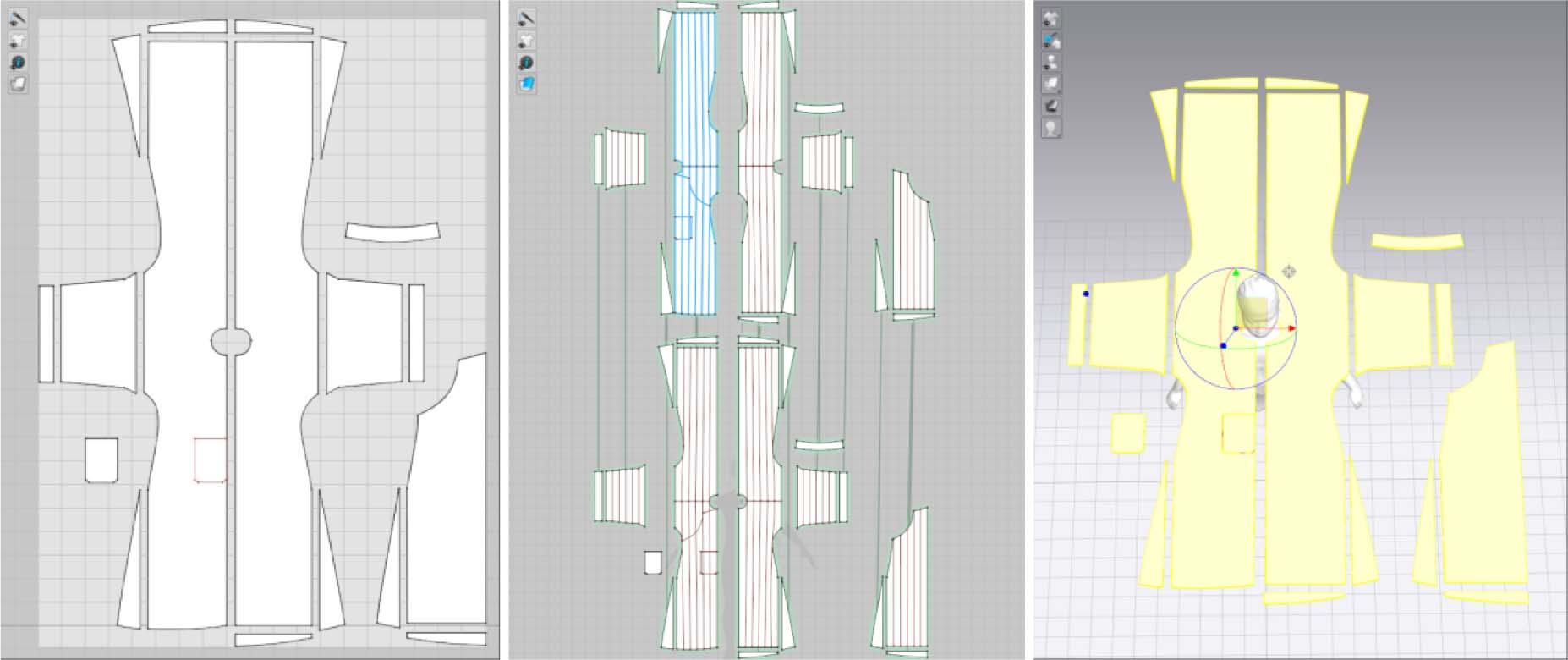
Fig. 13.
Cotton robe sample arrangement. a.two-dimensional sample of cotton robe, b. sample arrangement, c. sample arrangement results
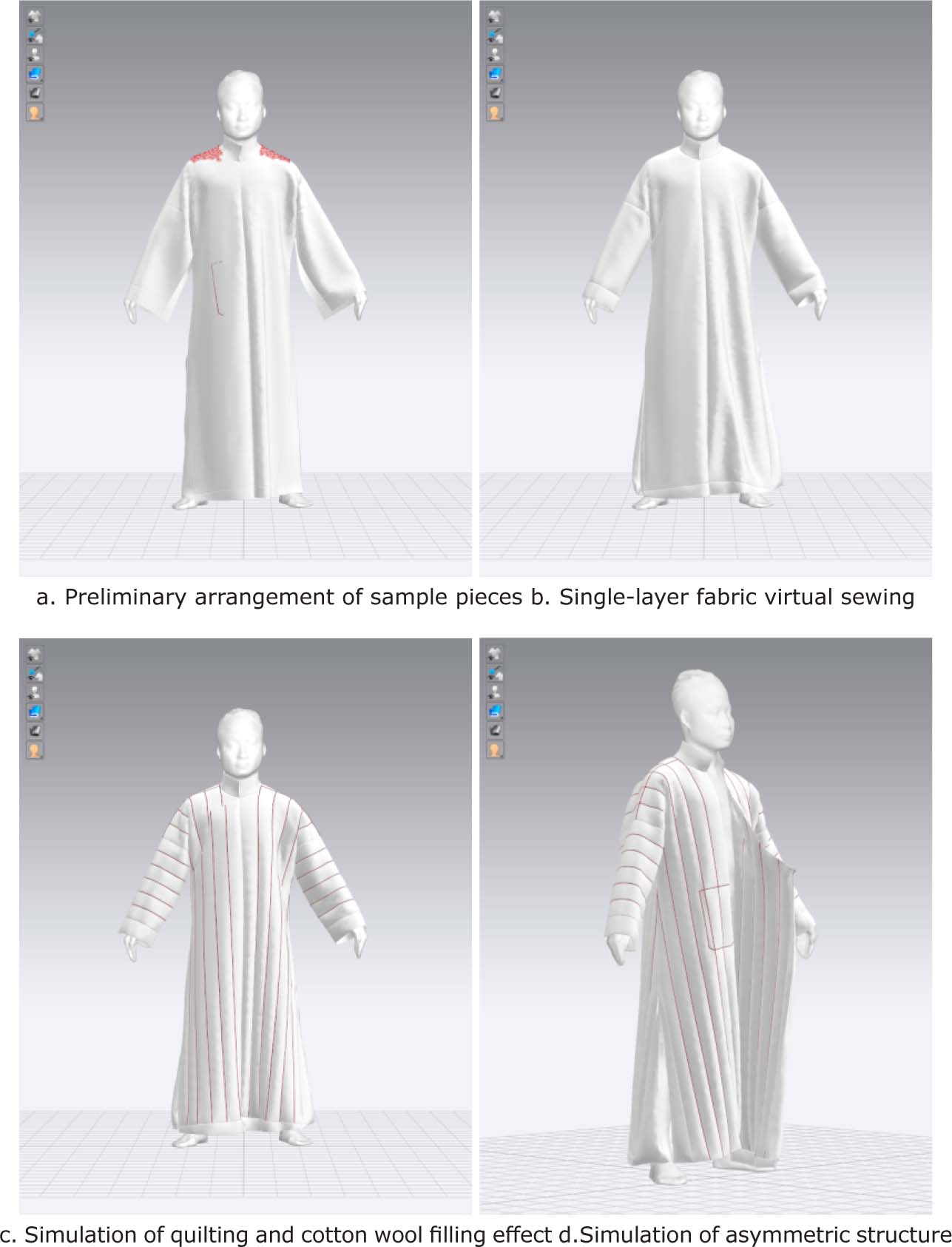
Fig. 14.
Cotton robe virtual sewing process
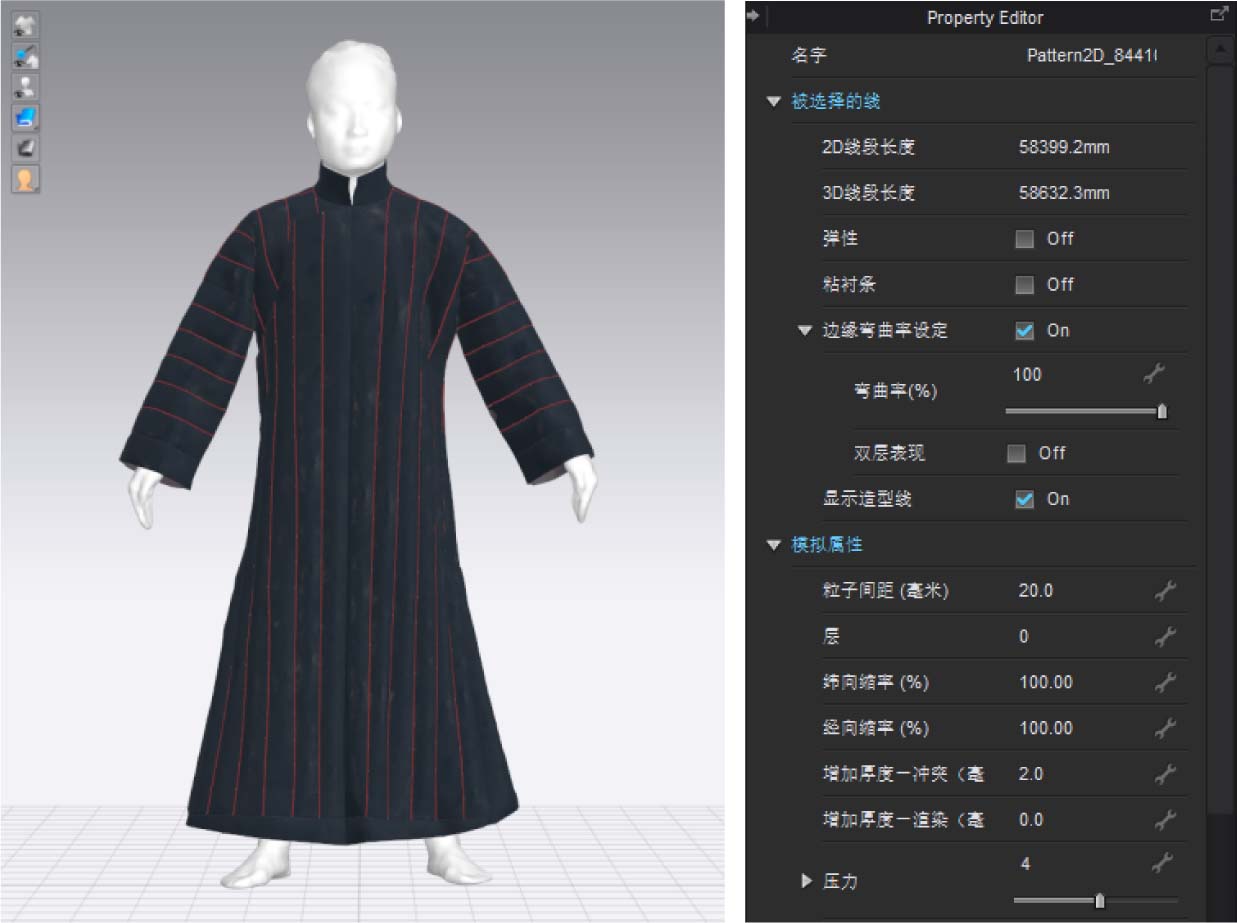
Fig. 15.
Lint filling simulation
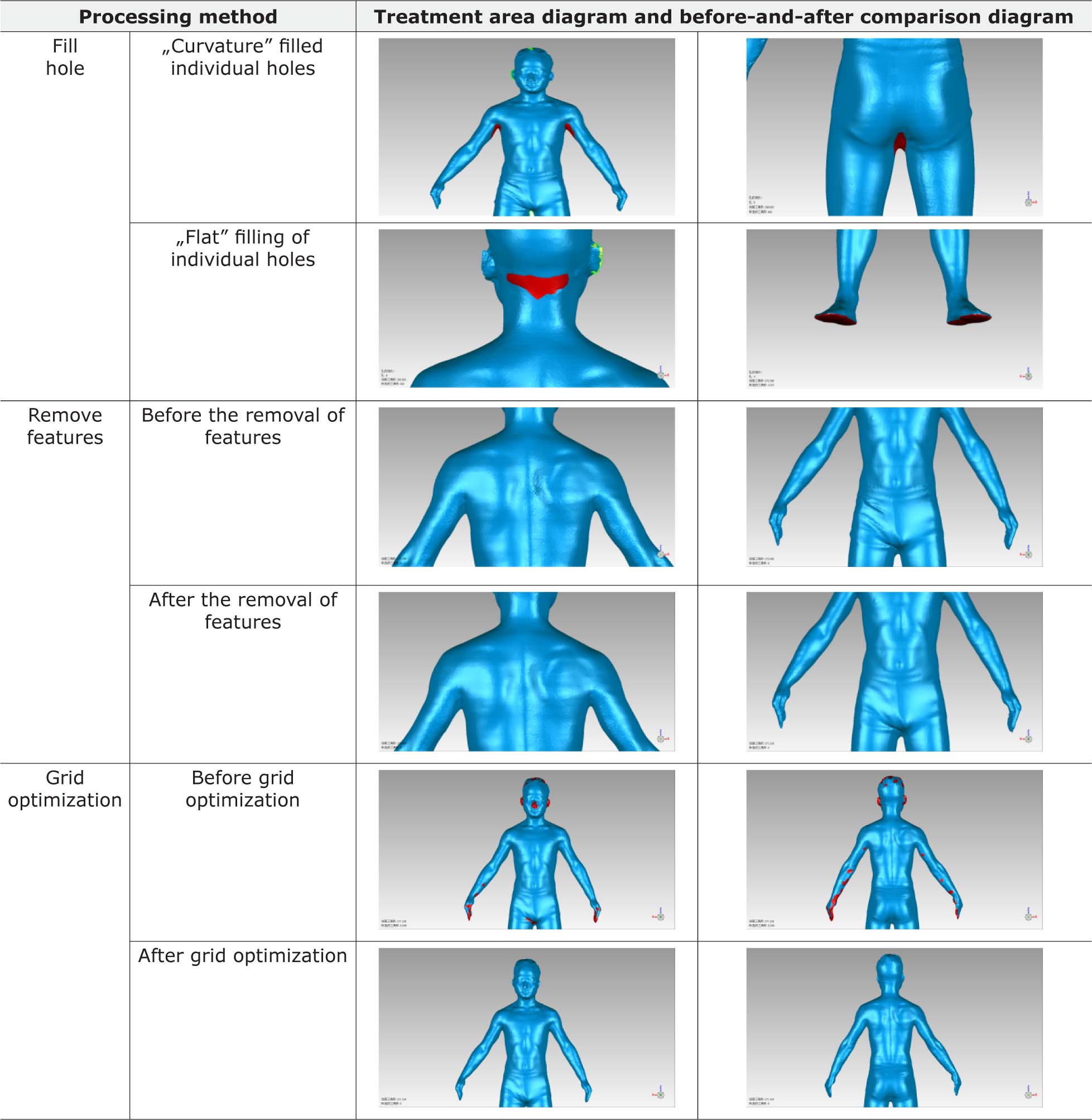
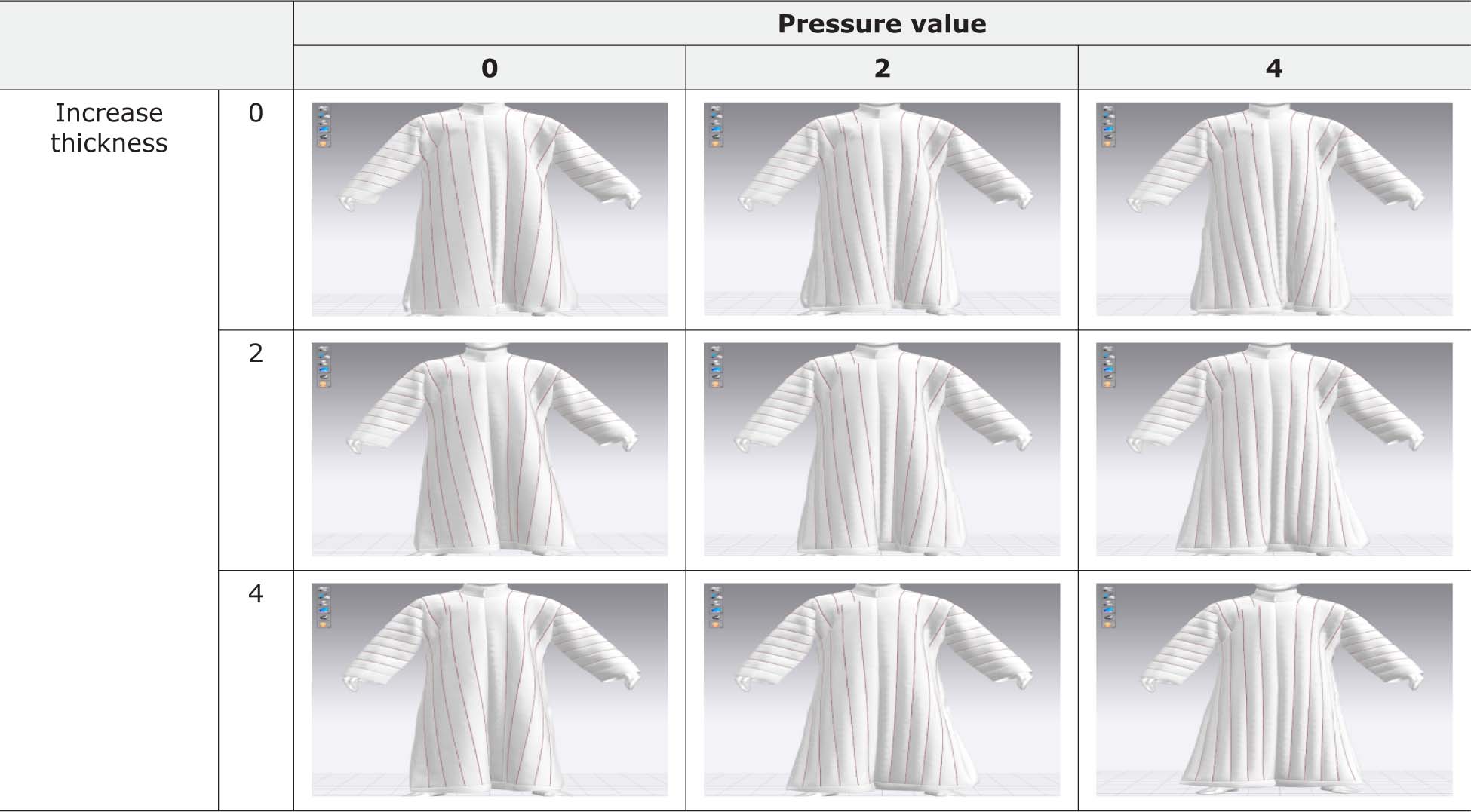
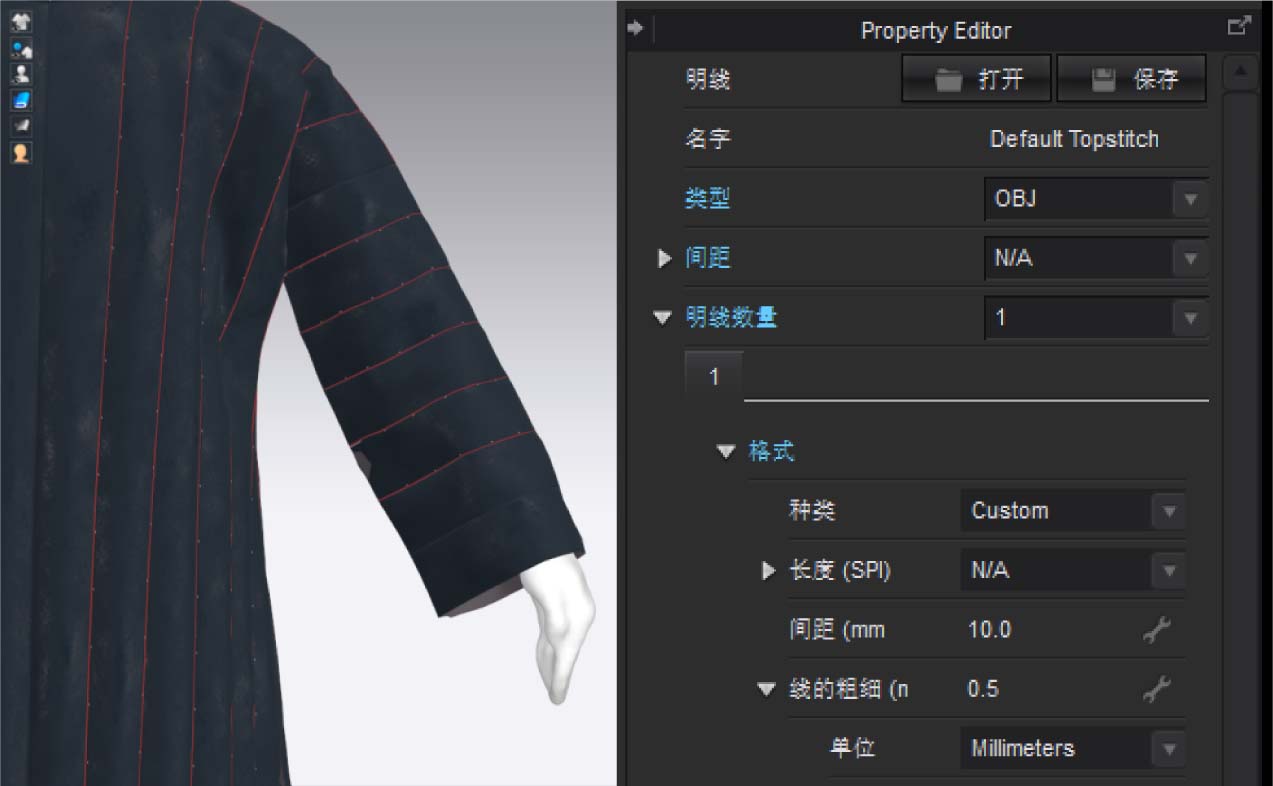
Fig. 16.
Quilting process simulation
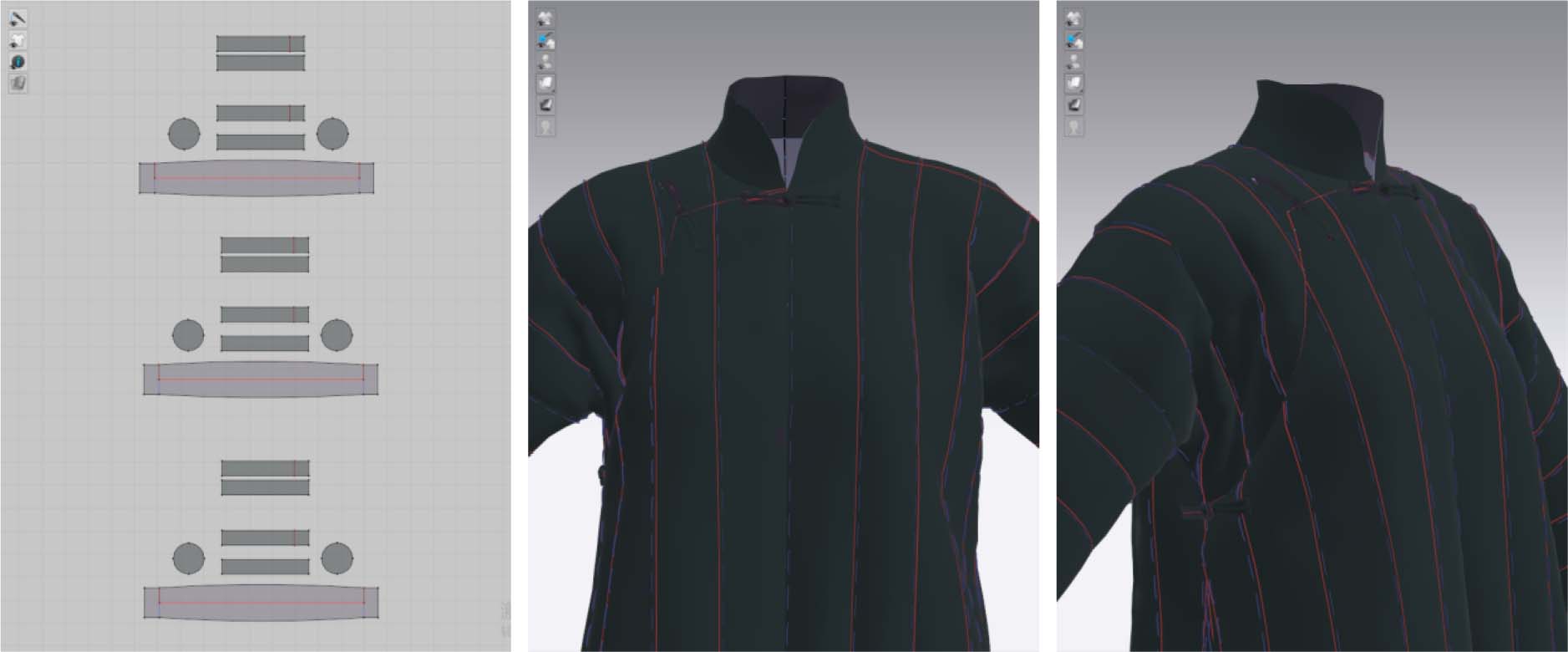
Fig. 17.
One-word button sample and simulation effect
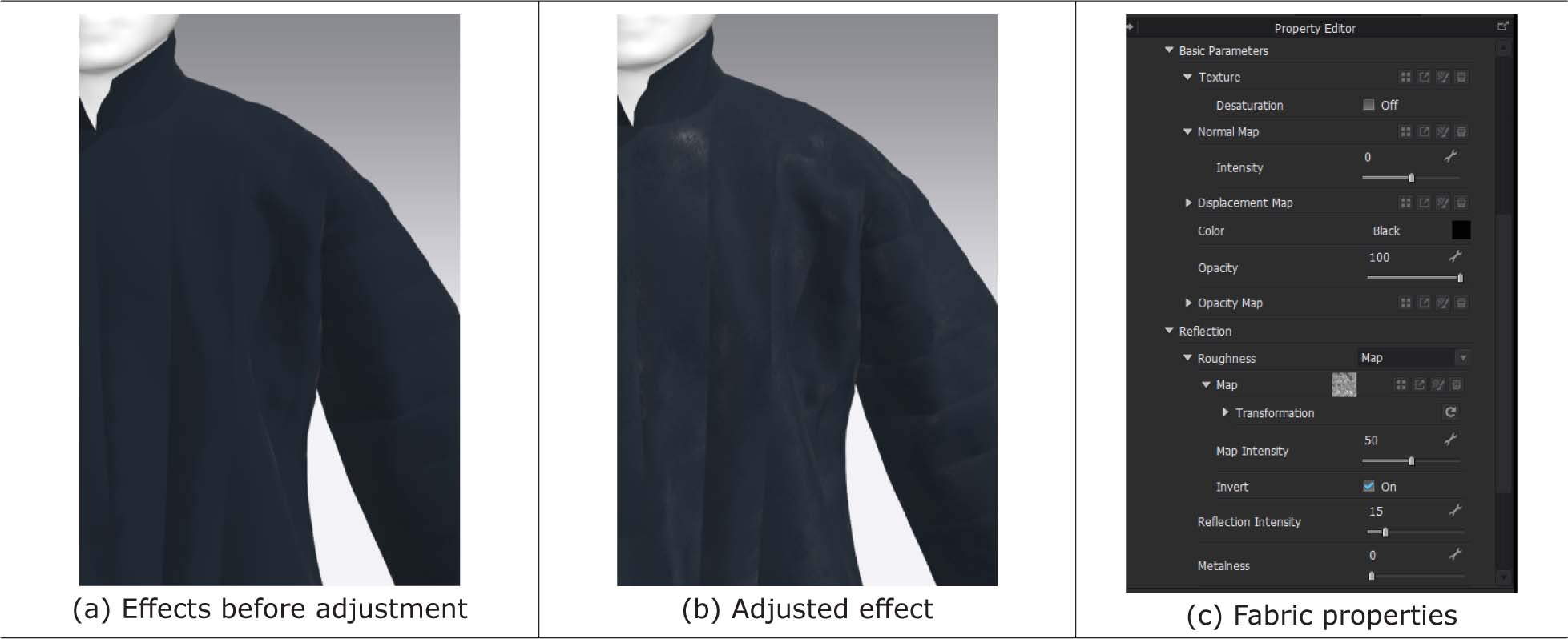
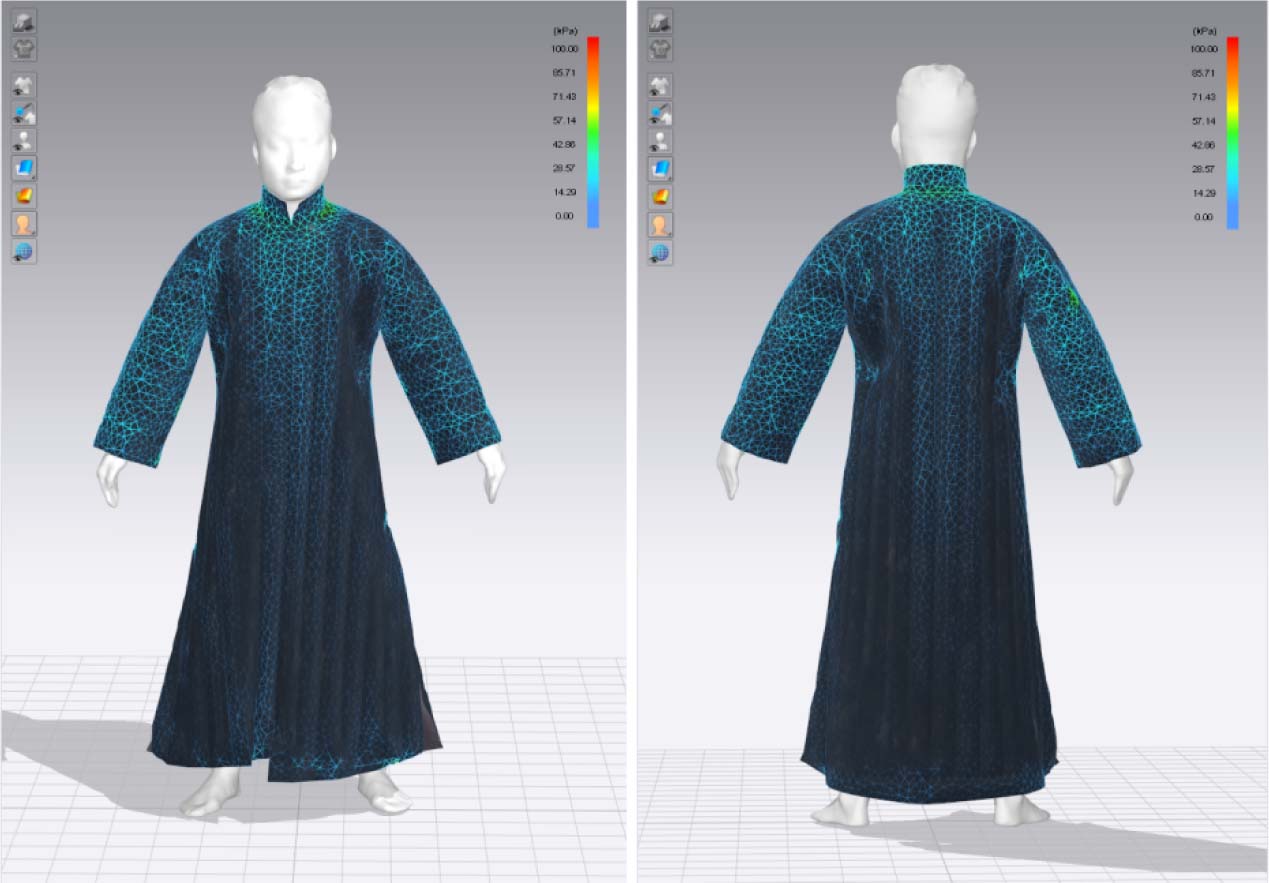
Fig. 18.
Simulated cotton robe pressure distribution
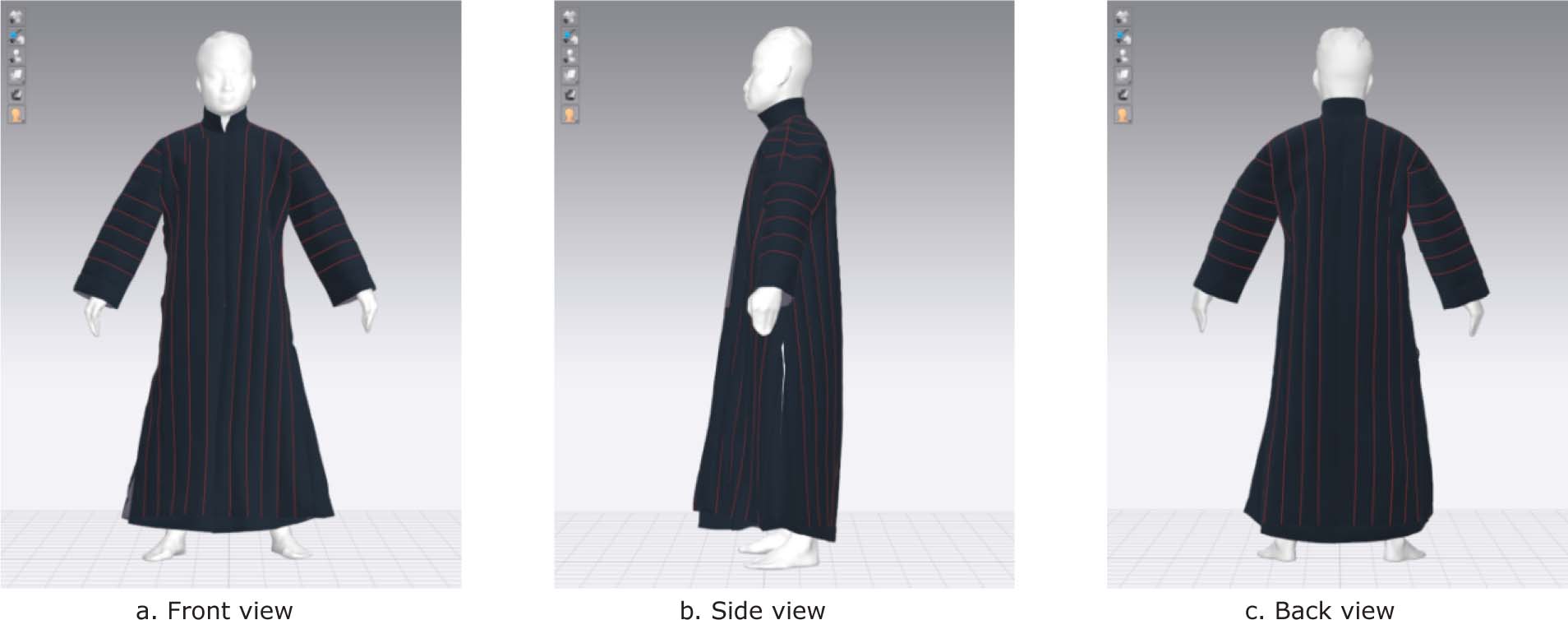
Fig. 19.
Traditional Nayman tribal cotton robe model diagram
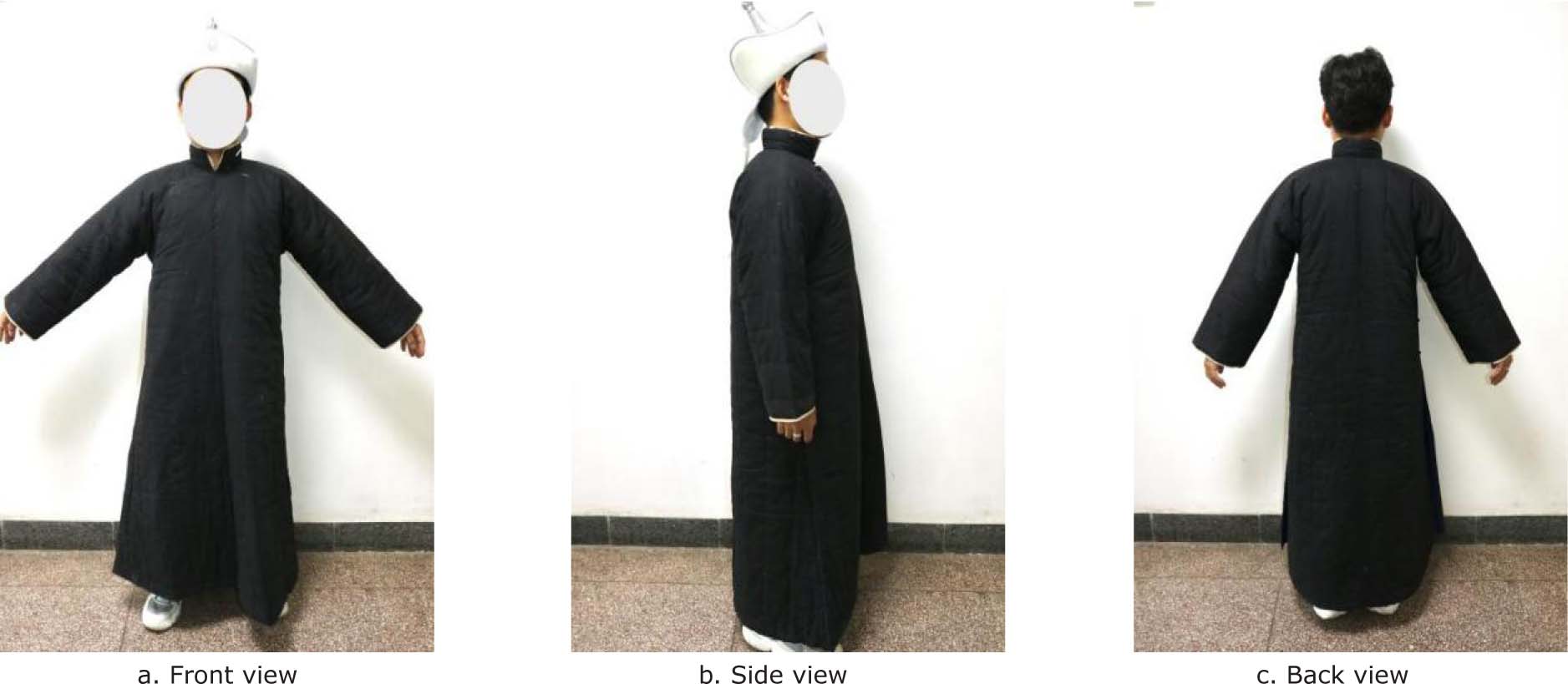
Fig. 20.
Nayman tribe’s traditional cotton robe physical try-on figure
Table 4.
Comparison results between the virtual model and actual clothes
| Garment construction | Process structure | Texture of fabrics | Fitting effect | |
|---|---|---|---|---|
| Actual clothes | Stretchy, criss-cross planar structure, one-piece with sleeves | The whole garment is quilted and has a one-word button closure. | The fabric is plain black cotton with a firm texture and a flat surface. | A-line silhouette for a more relaxed and comfortable fit, with less pressure between the garment and the body. |
| Virtual clothes | Complete restoration of the structure of the garment, cross-plane structure, one-piece with sleeves | The virtual effect of the quilting process and the cotton wool filling effect are realised, and the one-word button structure is restored. | The fabric is recovered from black plain cotton, adjusting the relevant properties and lustre so that it is infinitely close to the texture of the actual fabric. | The overall silhouette of the virtual fitting is consistent with the real thing, and the pressure test results are reasonable. |