Have a personal or library account? Click to login
Investigating the Functional and Comfort properties of a Face Mask Based on a Coolmax® Blended Cotton Fabric Cover

Investigating the Functional and Comfort properties of a Face Mask Based on a Coolmax® Blended Cotton Fabric

Open Access
|Oct 2022

Figures & Tables

Fig. 1

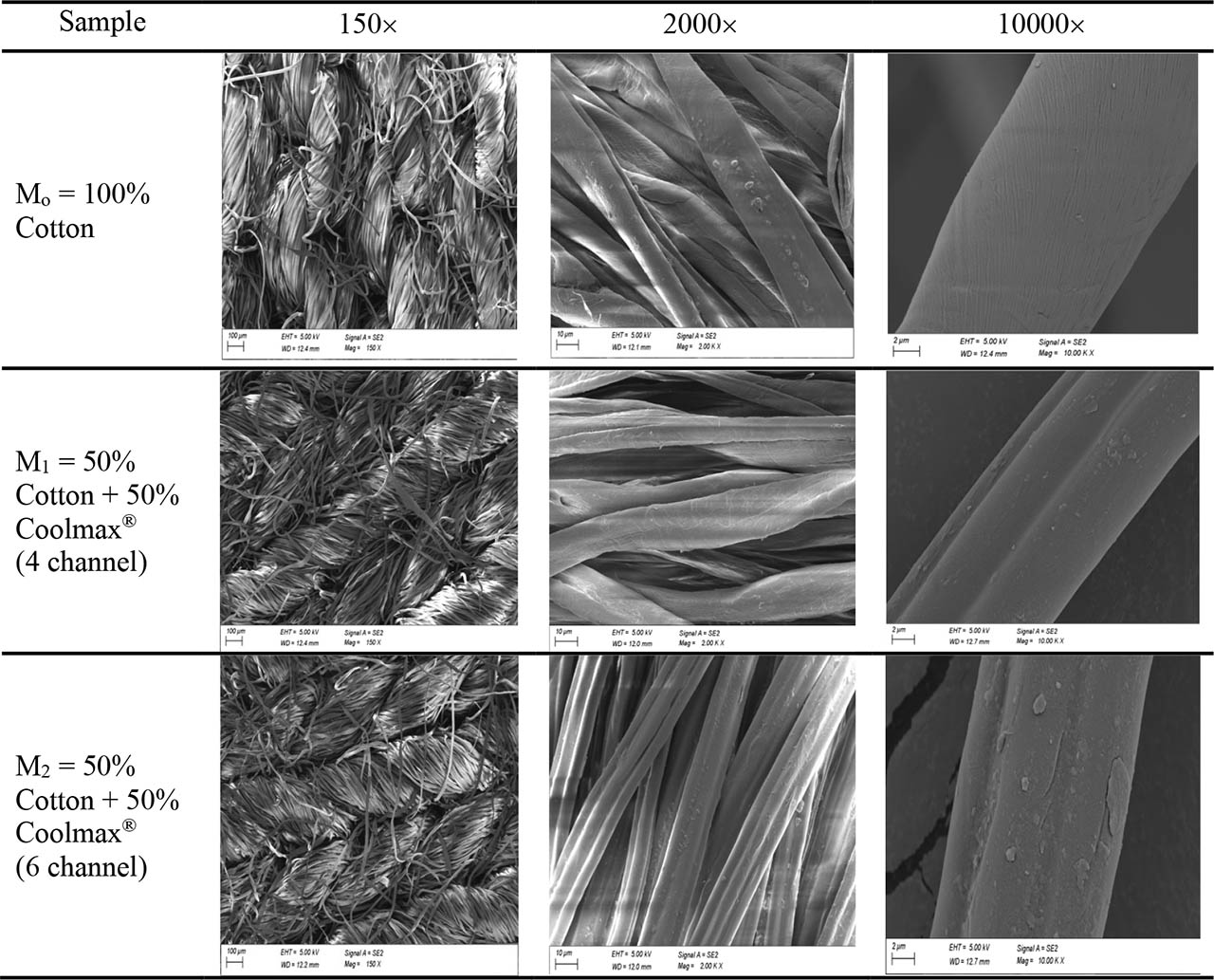
Microphotos of the different face mask knit fabrics
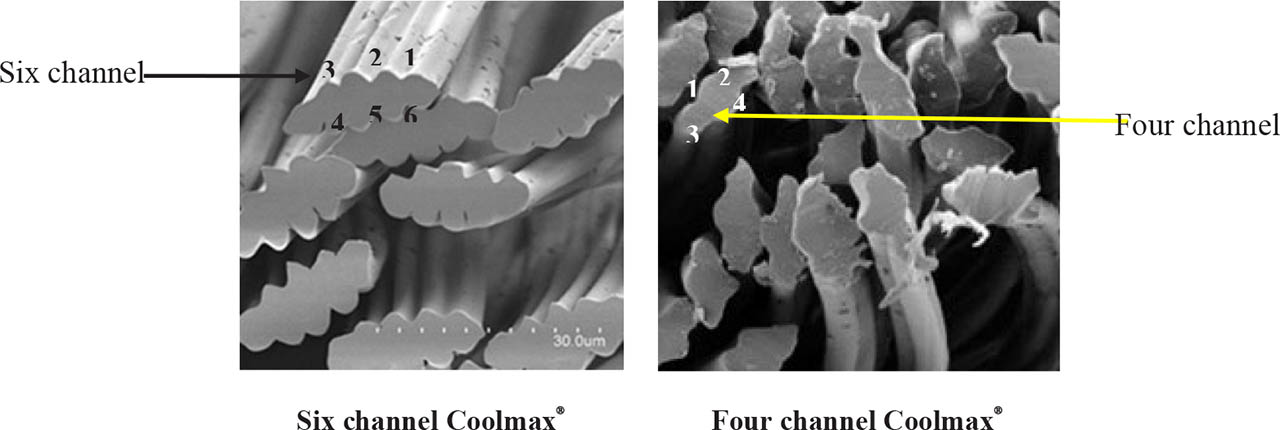

Fig. 2

Structure of Coolmax® fiber used to produce face mask knit fabrics

Fig. 3

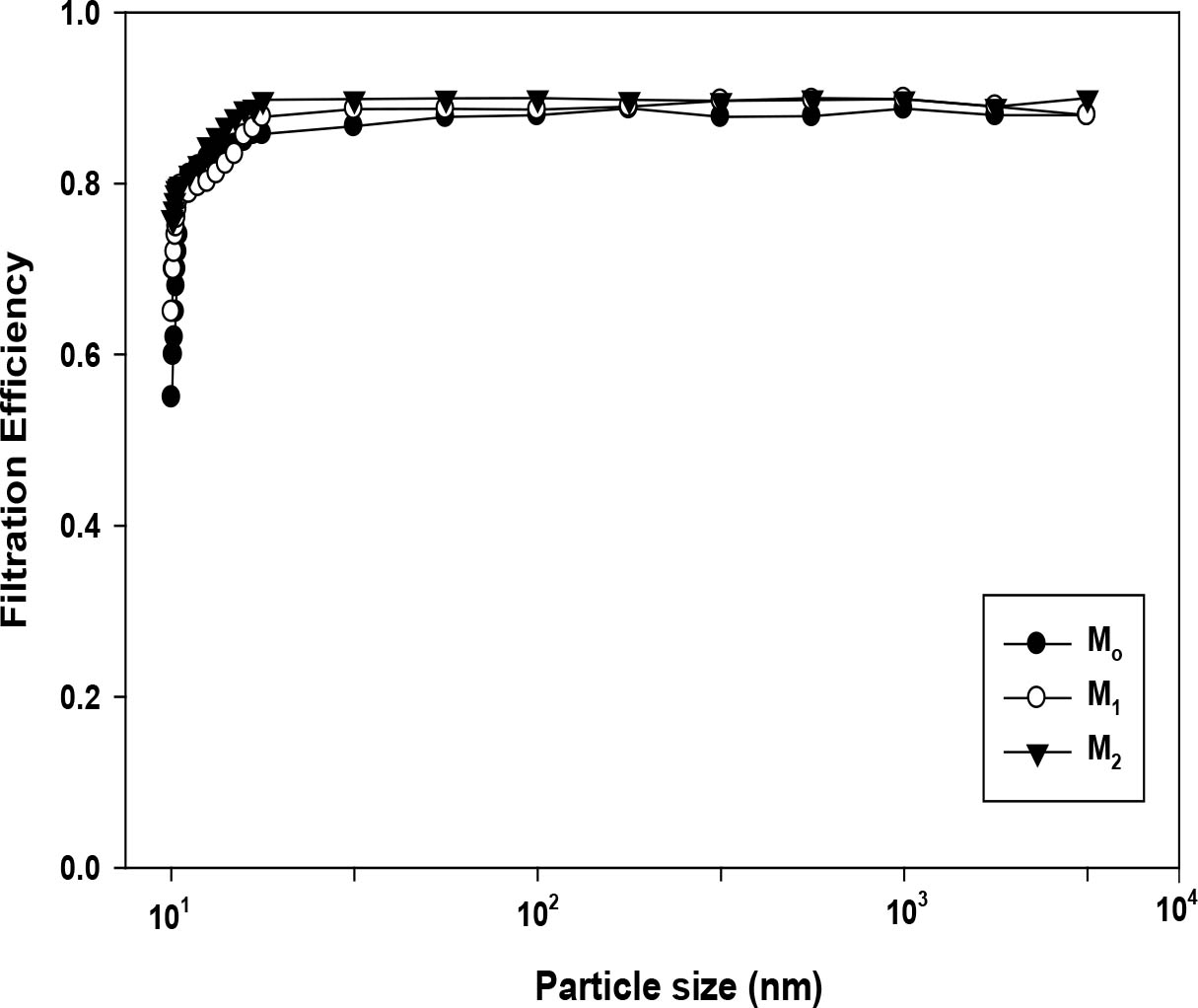
Filtration efficiency of the functional finished Coolmax® and cotton blended fabrics at a flow rate of 1.2 CFM (without gap)
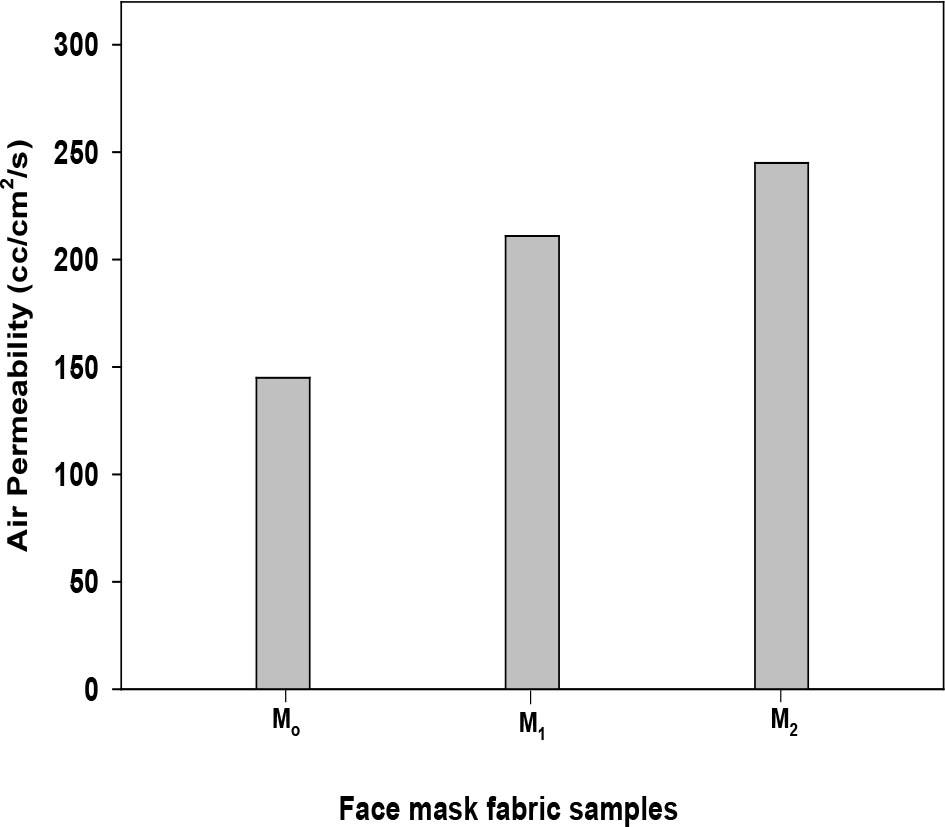

Fig. 4

Effect of Coolmax® fiber structure: M0 = 100% cotton, M1 = 50% cotton and 50% Coolmax® (4 channel), and M2 = 50% cotton and 50% Coolmax® (6 channel)) on the air
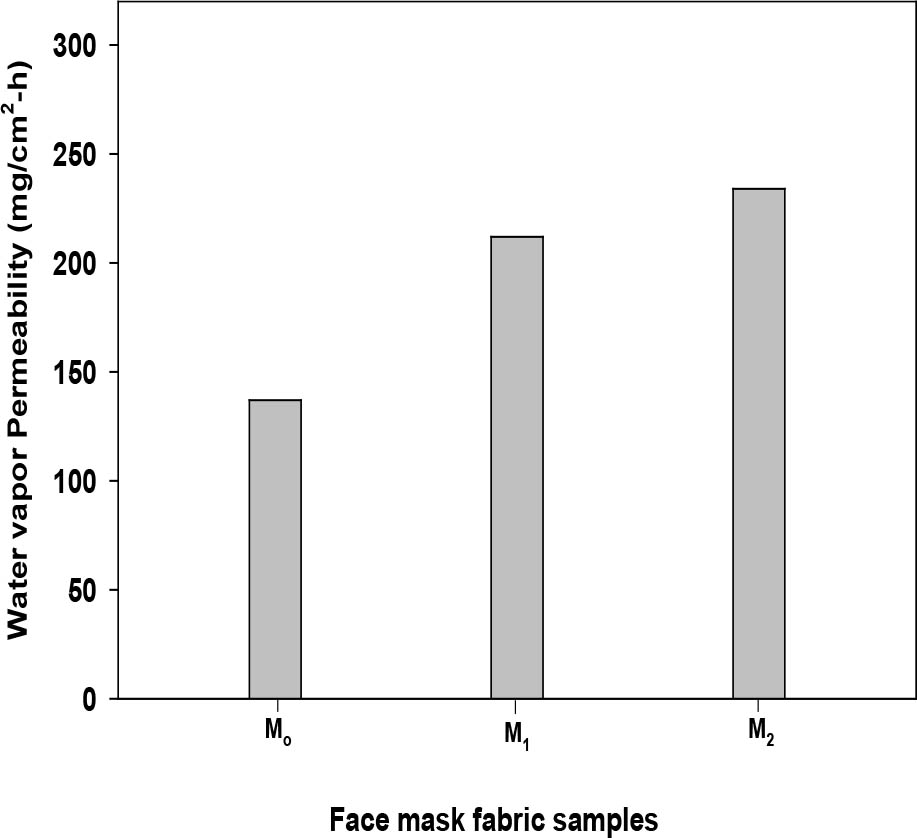

Fig. 5

Effect of fiber structure: M0 = 100% cotton, M1 = 50% cotton and 50% Coolmax® (4 channel), and M2 = 50% cotton and 50% Coolmax® (6 channel) on the water vapour permeability of the face mask fabrics
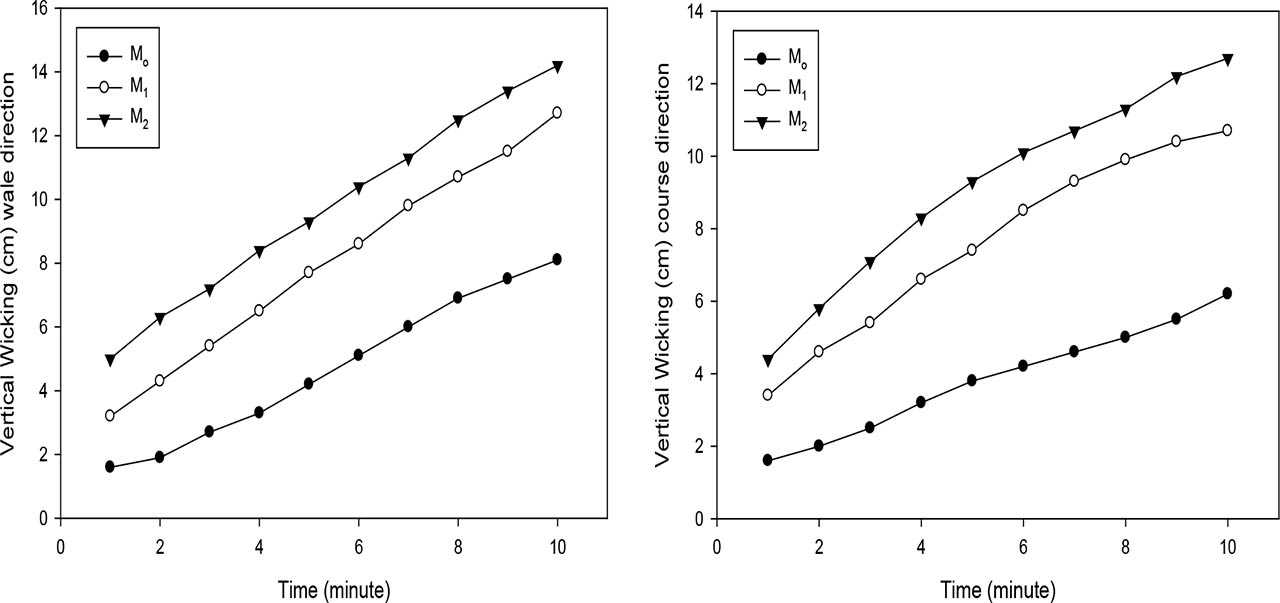

Fig. 6

Wicking property results of face mask knitted fabric: M0 = 100% cotton, M1 = 50% cotton and 50% Coolmax® (4 channel), and M2 = 50% cotton and 50% Coolmax® (6 channel)
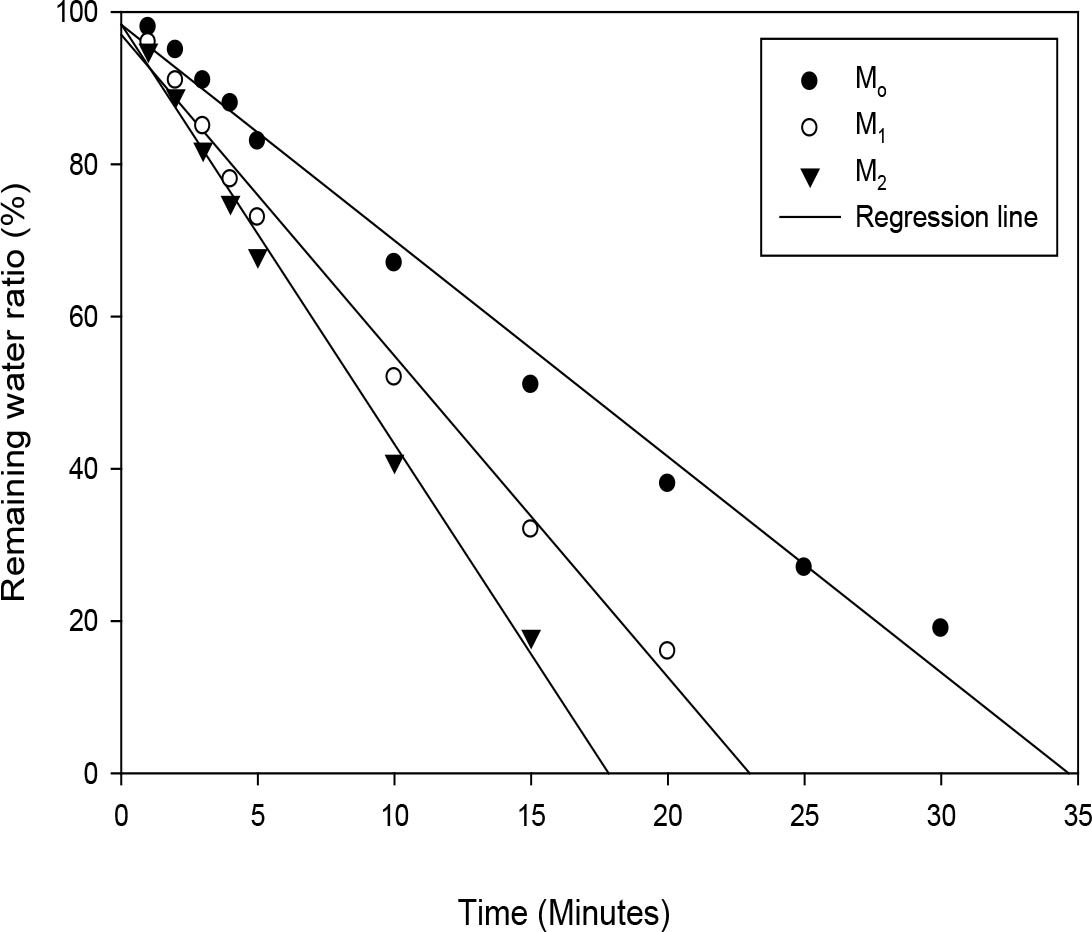
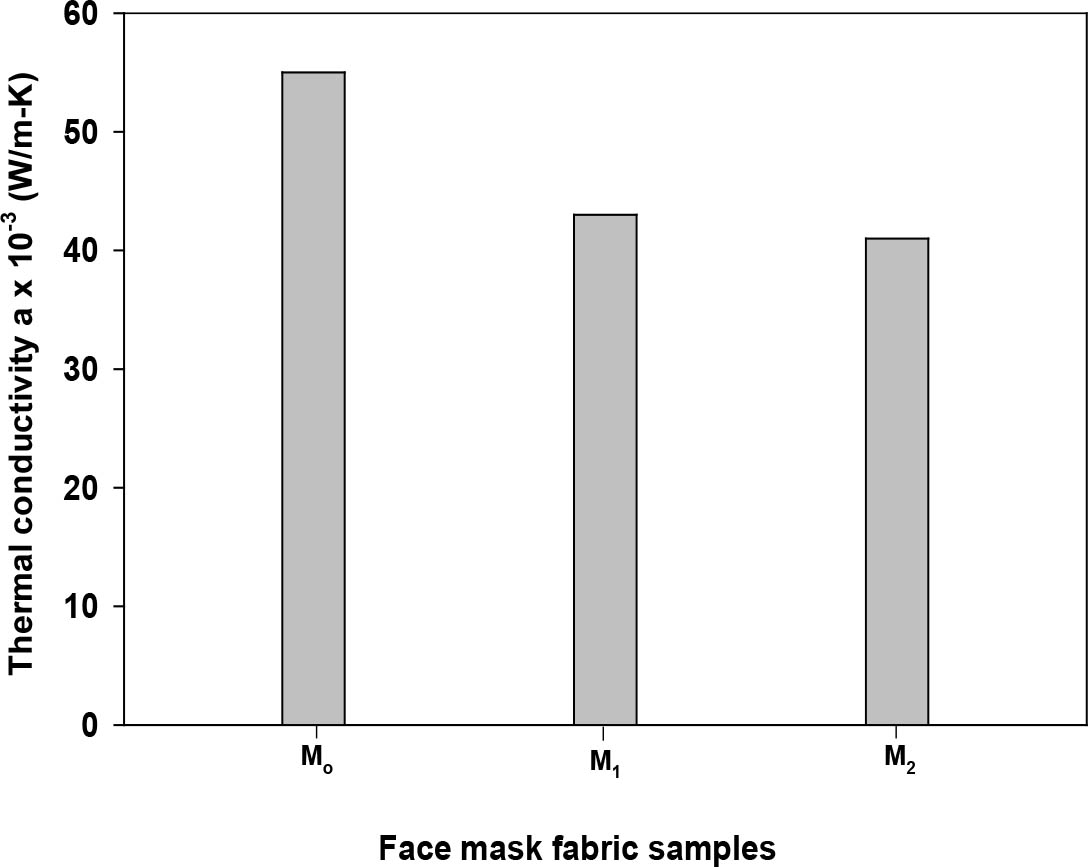
Fig. 7

Remaining water ratio values at 35° C of Coolmax® blended face mask fabric: M0 = 100% cotton, M1 = 50% cotton and 50% Coolmax® (4 channel), and M2 = 50% cotton and 50% Coolmax® (6 channel)

Fig. 8

Thermal conductivity of face mask fabric (M0 = 100% cotton, M1 = 50% cotton and 50% Coolmax® (4 channel), and M2 = 50% cotton and 50% Coolmax® (6 channel))
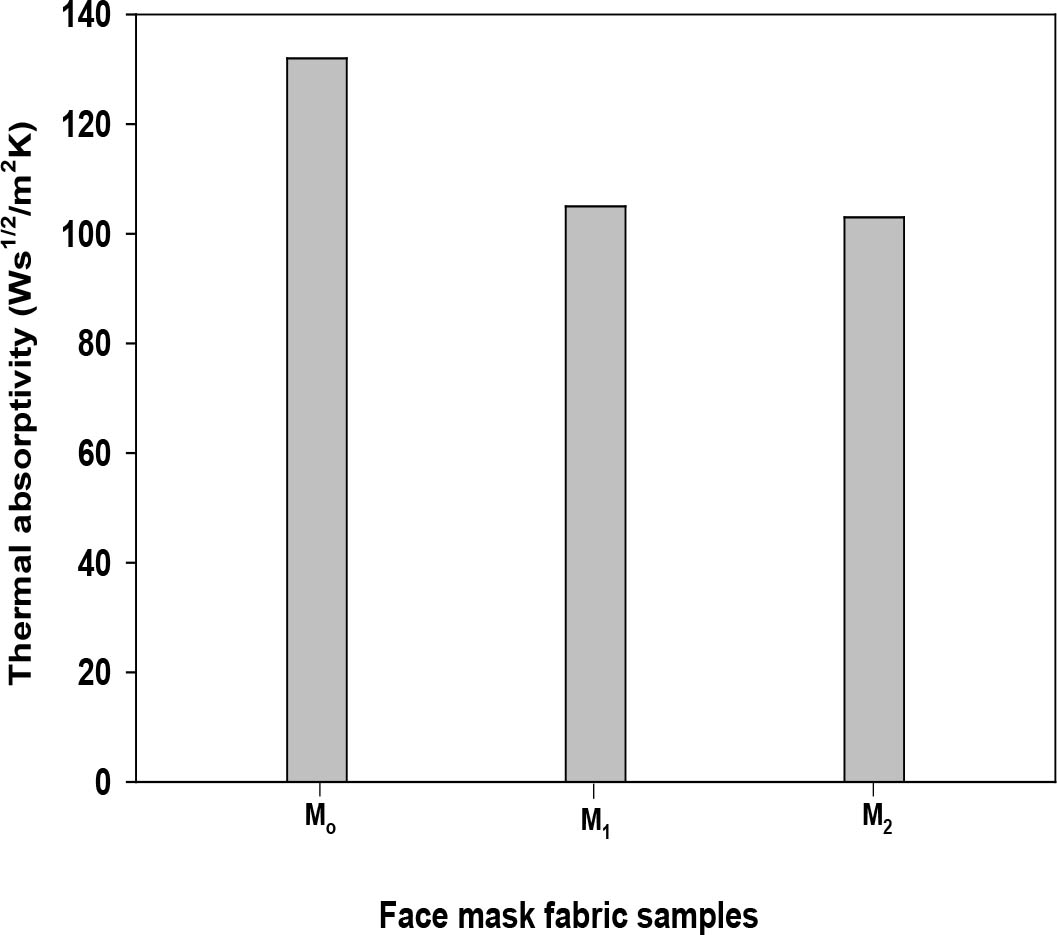

Fig. 9

Thermal absorptivity of face mask fabrics: M0 = 100% cotton, M1 = 50% cotton and 50% Coolmax® (4 channel), and M2 = 50% cotton and 50% Coolmax® (6 channel)
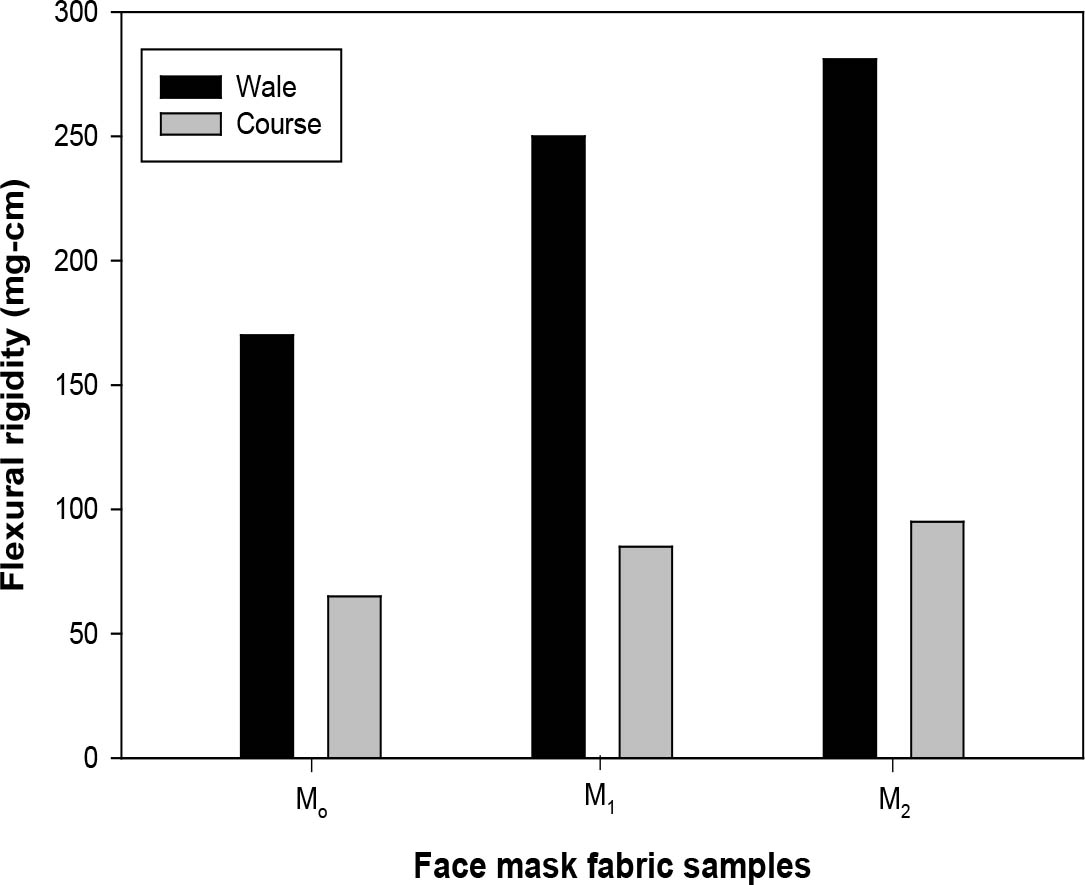

Fig. 10

Effect of Coolmax® fiber content on flexural rigidity properties of face mask fabric: M0 = 100% cotton, M1 = 50% cotton and 50% Coolmax® (4 channel), and M2 = 50% cotton and 50% Coolmax® (6 channel)

Comparison of structural difference of the various fabric masks

Fabric SampleFibre CompositionFabric StructureThickness (mm)GSM (g/m2)Pore size (m)
MeanMax
M0100% cottonSingle jersey fabric0.5217149.76031.7292.12
M150% cotton + 50% coolmax (4 channel)Single jersey fabric0.542150.23435.0687.74
M250% cotton + 50% coolmax (6 channel)Single jersey fabric0.5637150.86441.00106.60
DOI: https://doi.org/10.2478/ftee-2022-0028 | Journal eISSN: 2300-7354 | Journal ISSN: 1230-3666
Language: English
Page range: 102 - 110
Published on: Oct 12, 2022
In partnership with: Paradigm Publishing Services
Publication frequency: Volume open

© 2022 Shekh Md. Mamun Kabir, Md. Mahabub Hasan, AKM Mashud Alam, published by Łukasiewicz Research Network, Institute of Biopolymers and Chemical Fibres
This work is licensed under the Creative Commons Attribution 3.0 License.