
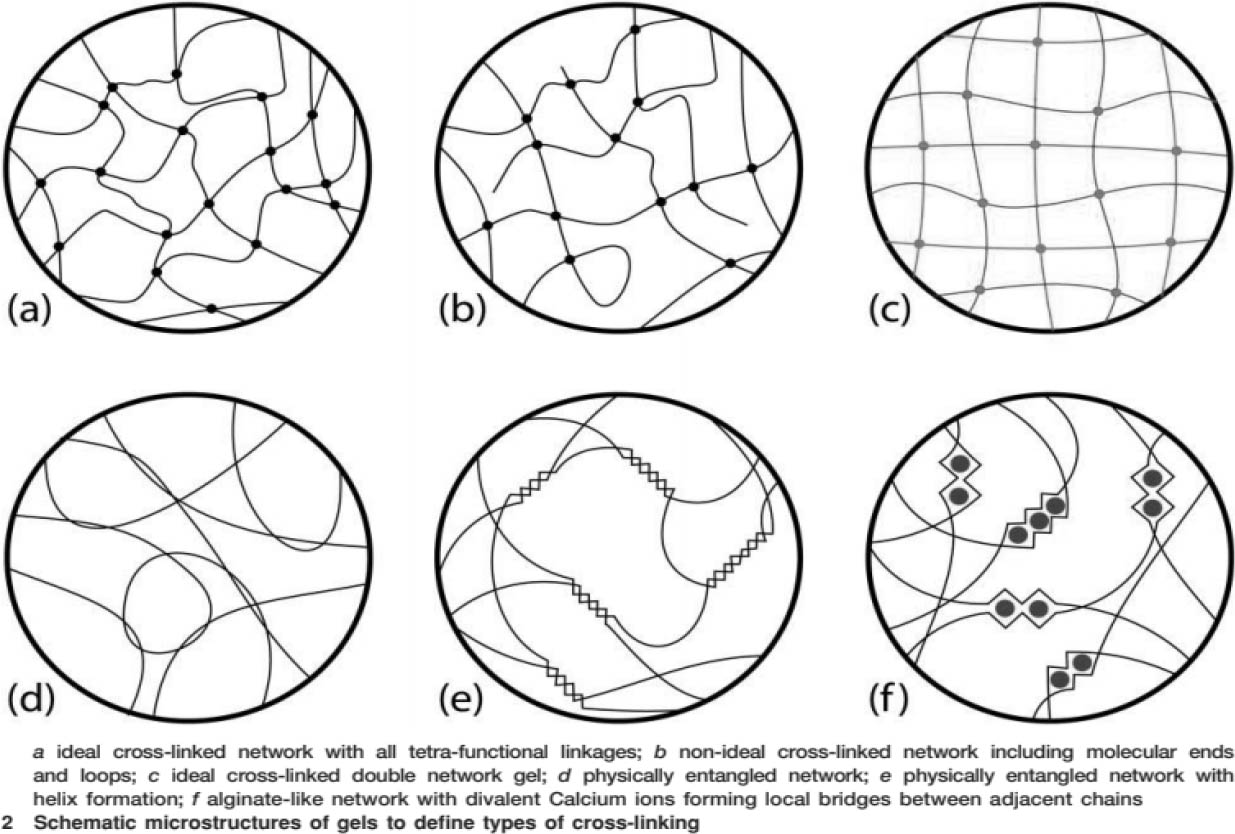
Fig. 1
Examples of chemically (a–c) and physically (d–f) crosslinked hydrogels [7]
Table 1
Classification of hydrogel types based on the network nature
| Type of hydrogel | Examples | References |
|---|---|---|
| Homopolymer | Poly(2-hydroxyethyl methacrylate) | [12] |
| 2-Hydroxyethyl methacrylate (HEMA) | [13] | |
| Poly(vinyl alcohol) (PVA) | [14] | |
| Polyacrylamide (PAAm) | [15] | |
| Polyetylene glycol (PEG) | [16] | |
| Copolymer | Methacrylic acid (MAA) | [17] |
| Carboxymethyl cellulose (CMC) | ||
| Polyvinylpyrrolidone (PVP) | ||
| Interpenetrating network | Poly(N-isopropylacrylamide) (PNIPAAm) | [18] |
| Polyacrylamide-grafted-gum ghatti (PAAm-g-GG) and sodium alginate | [19] | |
| Polyacrylamide-grafted-tamarind seed polysaccharide (PAAm-g-TSP) | ||
| Poli(vinyl alcohol)/chitosan | [20] | |
| Hyaluronic acid–methylcellulose (HA-MC) | [21] | |
| Double-network hydrogels | Poly(2-acrylamido-2-methylpropanesulfonic acid) (PAMPS) as the first network and polyacrylamide as the second network | [22] |
| Poly(2-acrylamido-2methylpropanesulfonic acid) as the first network and poly(N, N-dimethylacrylamide) (DMAA) or polyzwitterionic gels as the second network |
Table 2
Sub-classification of responsive hydrogels [23]
| Chemically responsive | Physically responsive | Biochemically responsive |
|---|---|---|
| pH | Temperature | Antigens responsive |
| Glucose | Electricity light | Enzymes responsive |
| Oxidant | Pressure | Ligands responsive |
| Solvent composition | Sound and magnetic field | |
| Ions and specific molecular recognition events |
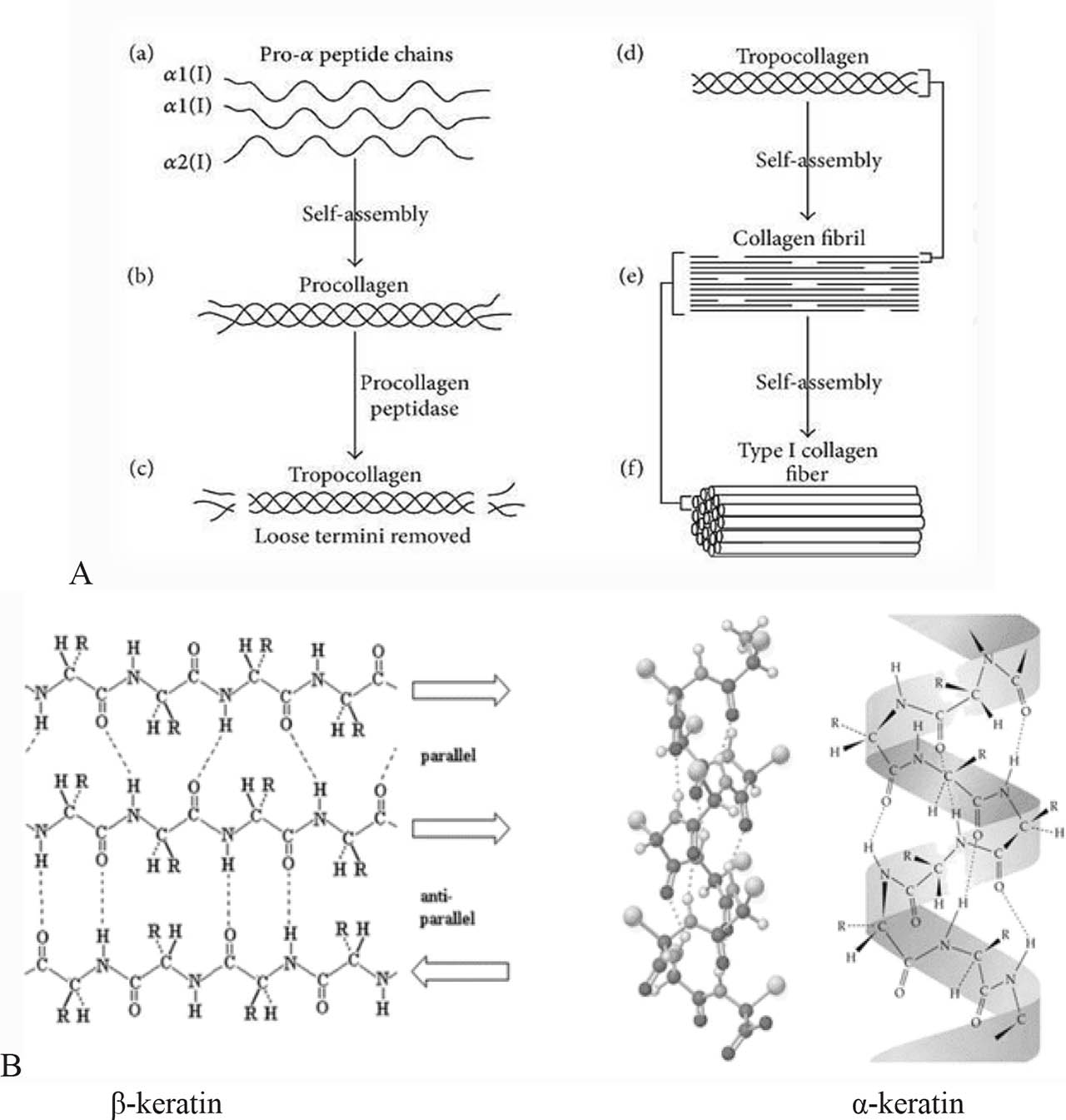
Fig. 2
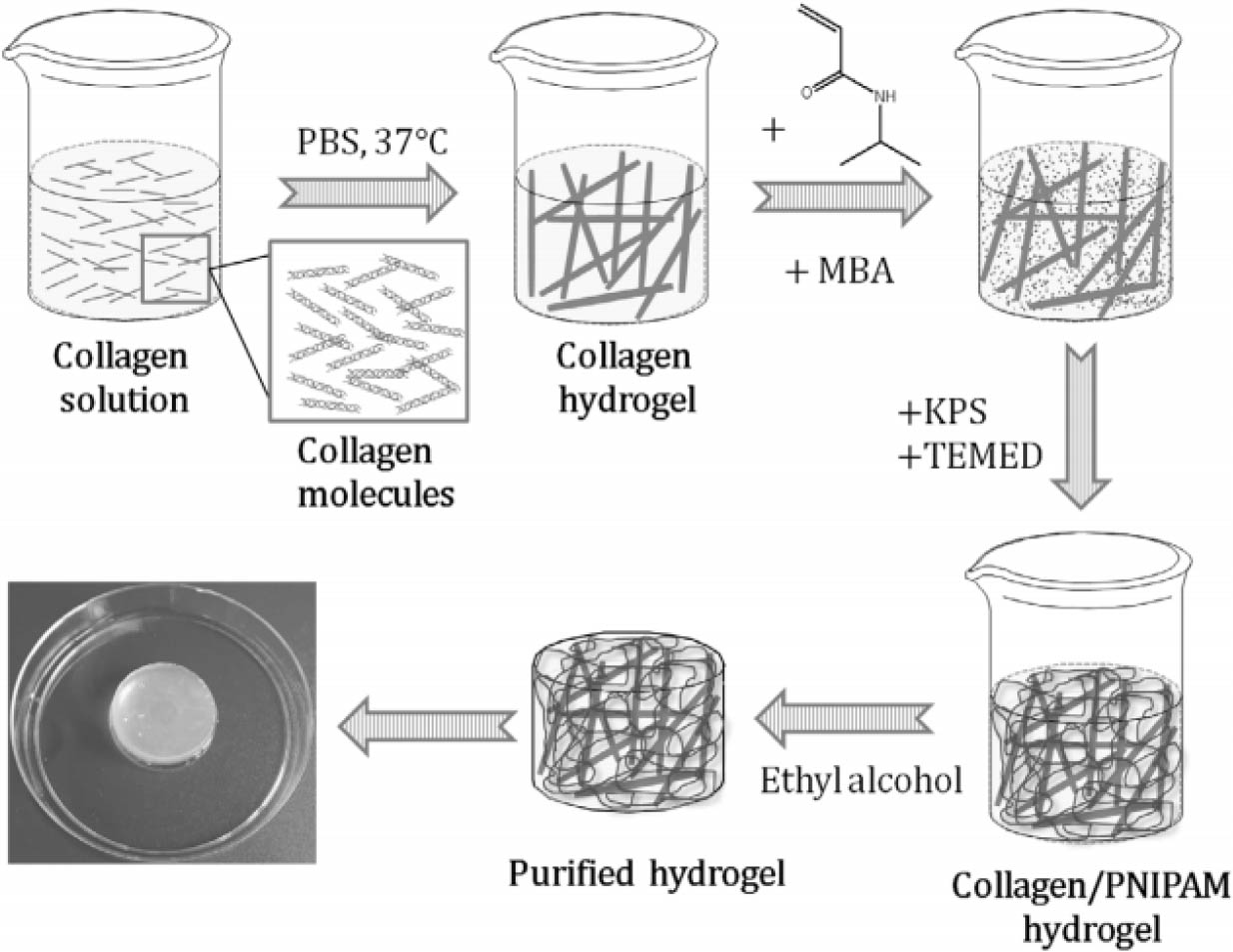
Fig. 3
Fabrication scheme of collagen/PNIPAAm hydrogel [67]