
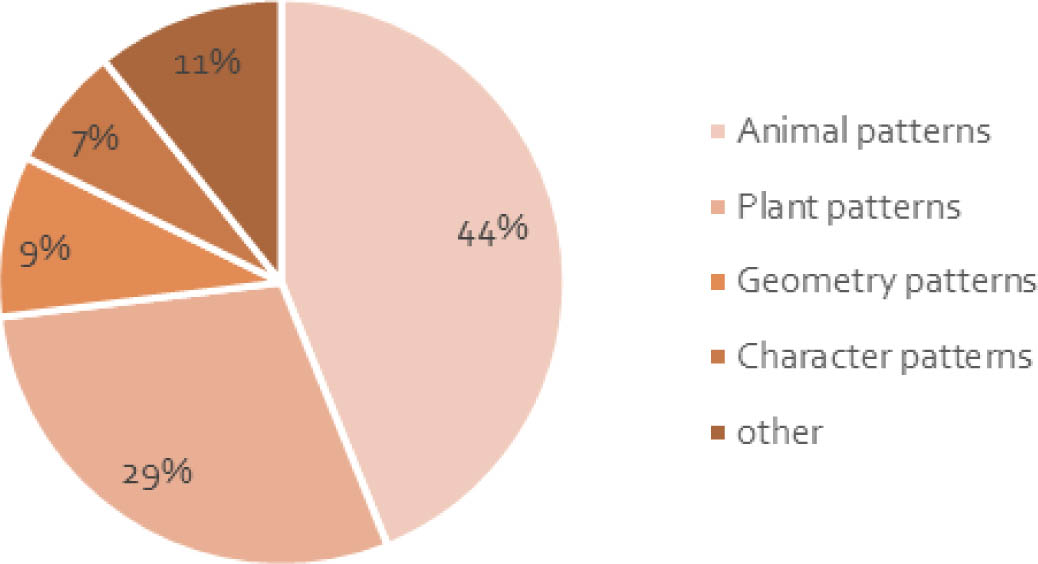
Fig. 1
Pattern design of Jinnan embroidery
Table 1
Animal patterns of Jinnan embroidery
| Animal | Implication | Diagram |
|---|---|---|
| Tiger# | Bless the children to be safe,, brave, and promising, as well as to grow healthily | 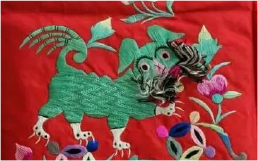 |
| Dragon | Peace and harvest | 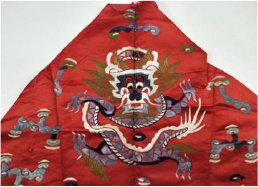 |
| Regarded as the God of Rain or Protection | ||
| Symbol of love and a happy life together with a phoenix | ||
| Phoenix | Truth, goodness and beauty, benevolent government | 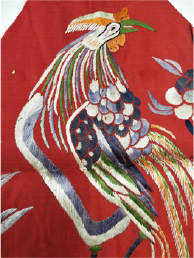 |
| Symbol of beautiful life and love together with a dragon | ||
| Phoenix with spreading wings means women’s desire for a better life | ||
| Fish | Like fish in water | 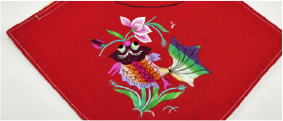 |
| Rich food and clothing, happy life | ||
| Abundant wealth | ||
| Butterfly | A firm and beautiful love and a perfect marriage together with a flower | 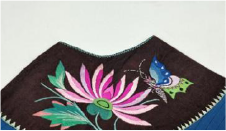 |
| Crane | Spirit and merit | 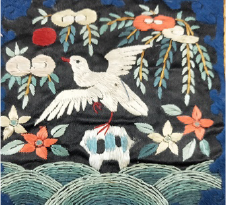 |
| Longevity and peace | ||
| Lion | Authority and supremacy | 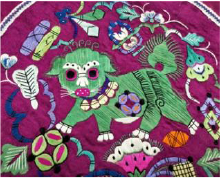 |
| Growth and prosperity |
# Image Source: https://www.sohu.com/a/317046436_782283
Table 2
Plant patterns of Jinnan embroidery
| Plant | Implication | Diagram |
|---|---|---|
| Peony | Prosperity and happiness | 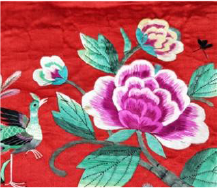 |
| Luck and wealth | ||
| Lotus | Noble moral character and sentiment | 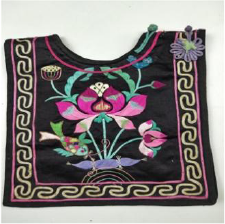 |
| Homonym ‘Lian’ implies prosperity of future generations | ||
| Gourd | Precious and lucky | 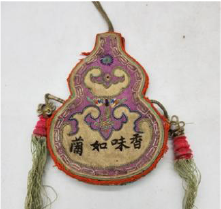 |
| Homonym ‘fulu’ means ‘fortune’, to express the hope for a high official position and wealth by taking its good omen of wealth and luck. Having seeds in the gourd means many children and many blessings for future generations |
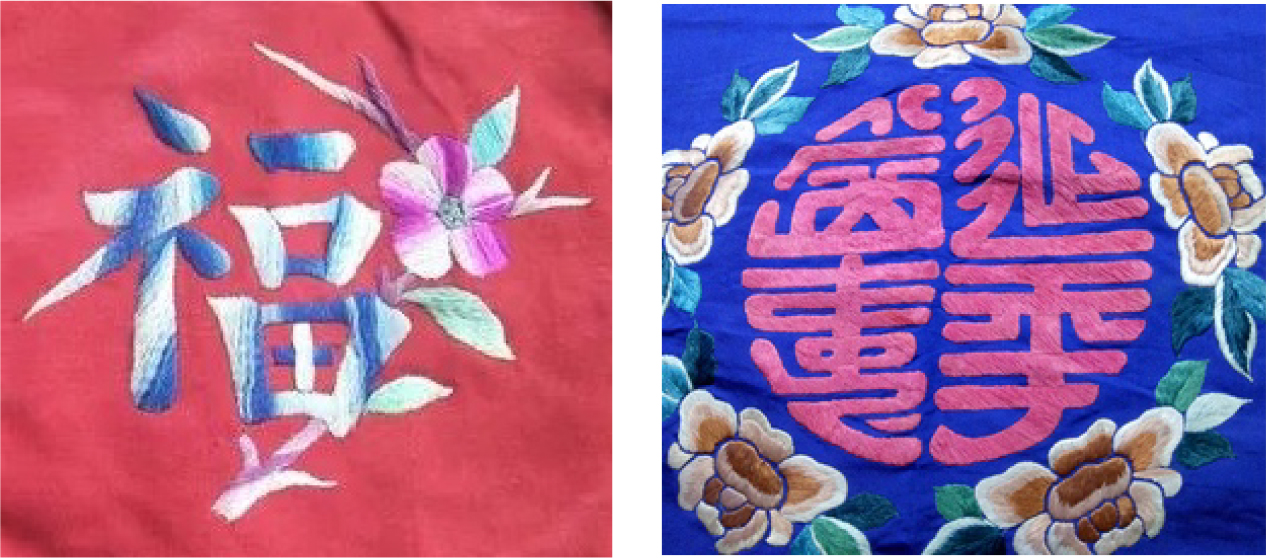
Fig. 2
Character patterns (‘福’ on the left and ‘夀’ on the right)
Image Source: https://www.sohu.com/a/317046436_782283
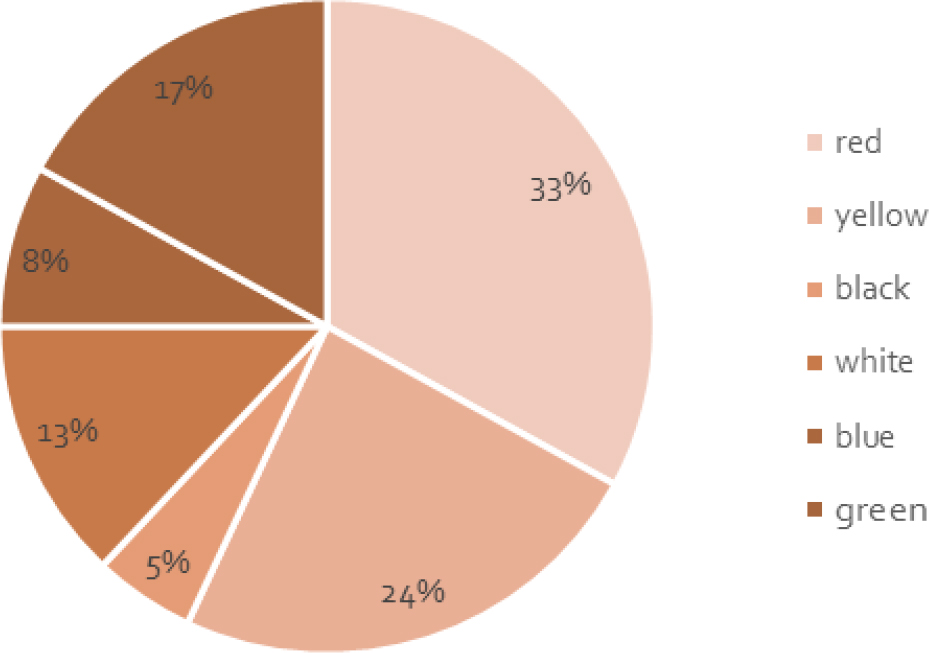
Fig. 3
Colours of Jinnan embroidery pattern
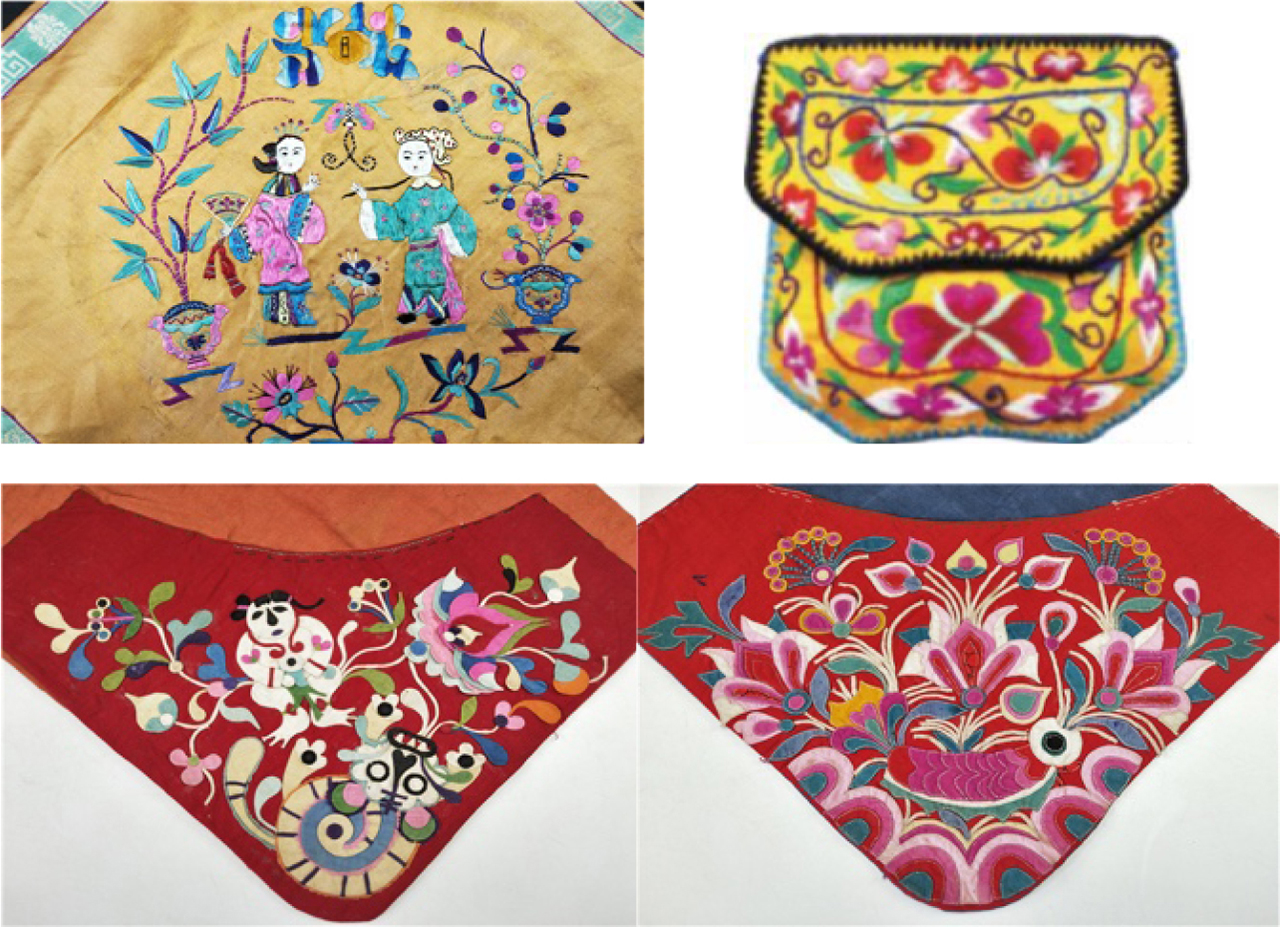
Fig. 4
Colour contrast of Jinnan embroidery pattern
Table 3
Auxiliary tools of Jinnan embroidery
| Name | Introduction | Diagram |
|---|---|---|
| Textile ground1 | Common fabrics in Jinnan embroidery are wool or cotton. Coarse and loose fabrics are best matched with thick threads, whereas fine fabrics are matched with fine threads. | 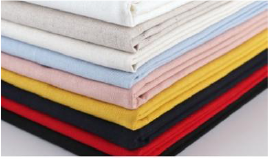 |
| Needle2 | As a tool to lead the line, the needle can be divided into different sizes catering to different needs to embroider different patterns. | 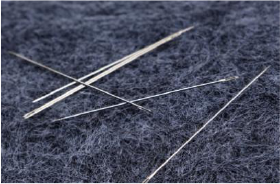 |
| Thimble3 | The small pinhole on the circular object can block the needle from twisting back and forth. It is usually worn on the middle finger, helping the needle pass quickly to fix and prevent wearing. | 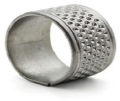 |
| Embroidery thread4 | Cotton thread is commonly used in Jinnan folk embroidery. Given its low cost, it often appears in the embroidery of daily necessities. | 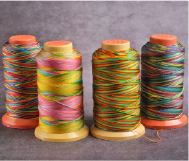 |
| Awl5 | An awl is used to drill holes in the insole to facilitate the shuttle of the needle and thread. | 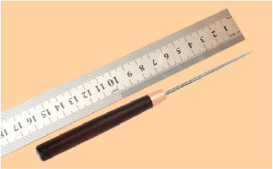 |
| Paste | Paste can be made by stirring water and powder with tools. It is used to attach Spring Festival couplets or window patterns. | 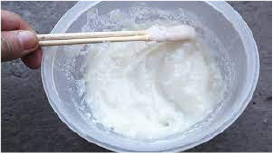 |
| Scissors6 | The tip of the embroidery scissors should be tilted to one side and tilted flat without erecting while cutting thread, instead of being tilted to the background cloth, which might scratch the embroidery. | 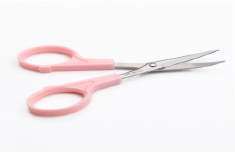 |
Table 4
Techniques of Jinnan embroidery
| Needling | Diagram | Characteristics | Scope of application |
|---|---|---|---|
| Flat embroidery | 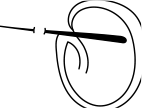 | The embroidery thread starts from one side of the outline and falls to the other side. The stitch should be flat, even, balanced and smooth. The trace should be parallel, even and straight, with its surface and edge flat and even, neither too heavy nor too exposed. | Mainly used in daily necessities and clothing accessories, such as necklines, cuffs, hats, shoes.quilt covers, pillows, wedding tents, longevity tents and table girths. |
| Seed embroidery | 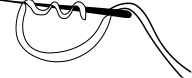 | With the knot in small lines, it is placed on the embroidered surface to form a line or a surface by a dense row of particles. It can increase the level of embroidery, showing a similar effect of relief works, with a sense of smoothness, delicacy and order. | Due to the small size and flexible combination, various patterns can be embroidered in this way, usually in flower stamens, the eyes of birds, animals, insects and fish, and patterns on a purse |
| Round stitch embroidery | 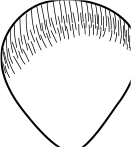 | This firm and even embroidery method is composed of a ring lock with embroidered thread. The scales between embroidered threads are complex, and the teeth are staggered. When embroidered to the end of the edge, the needle still needs to be flat. | Always used in pillowcases, bibs, insoles and others |
| Cross stitch | 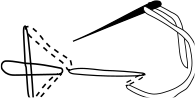 | Most of the embroidered patterns are traditional with some abstract deformation patterns of ancient totems. Before embroidering, warp and weft should be drawn first on the cloth surface, and then cross-shaped stitches are used to form exaggerated and deformed geometric patterns on the surface, which is beautiful and practical. | Always appearing in insoles |
| Na embroidery | 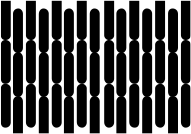 | Being extremely firm and dense, this embroidery method is relatively simple, with no excessive decorative elements in the pattern design, and embroidered fully without exposing the background. | More practical, more used in rural embroidery |
| Drawing embroidery | 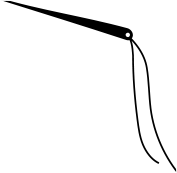 | According to the pattern design, the warp or weft of the pattern part should be removed while being connected to form a hollow decorative pattern. Limited by the yarn texture, the pattern shape is symmetrical longitudinally and bilaterally, mainly represented by eight knots, with diamonds, two diagonally overlapping squares and other geometric patterns. | Commonly used in tablecloths, curtains, handkerchiefs, armchairs and other daily necessities |
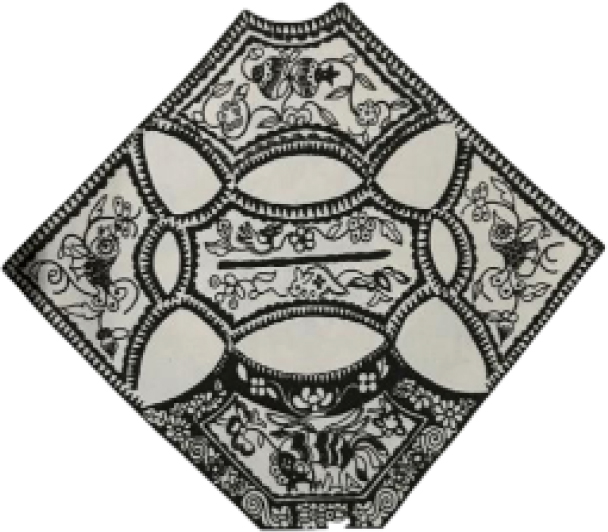
Fig. 5
‘Squirrel grape pattern
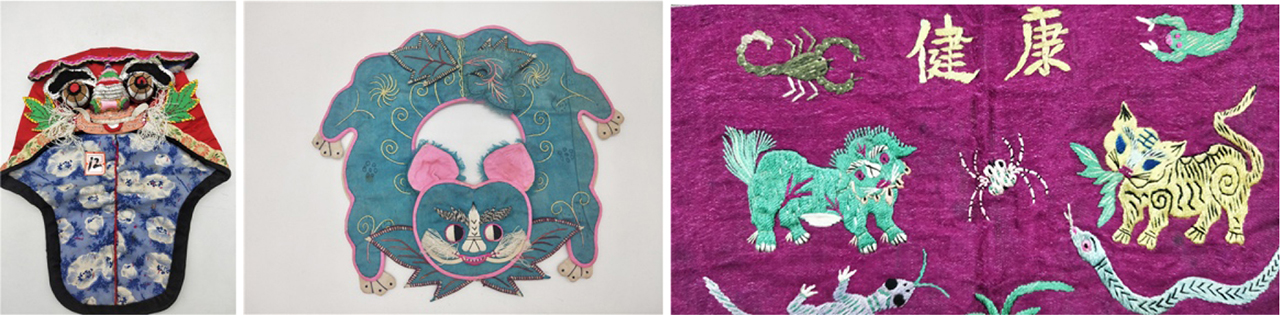
Fig. 6
Gift of a baby’s birth in Jinnan embroidery
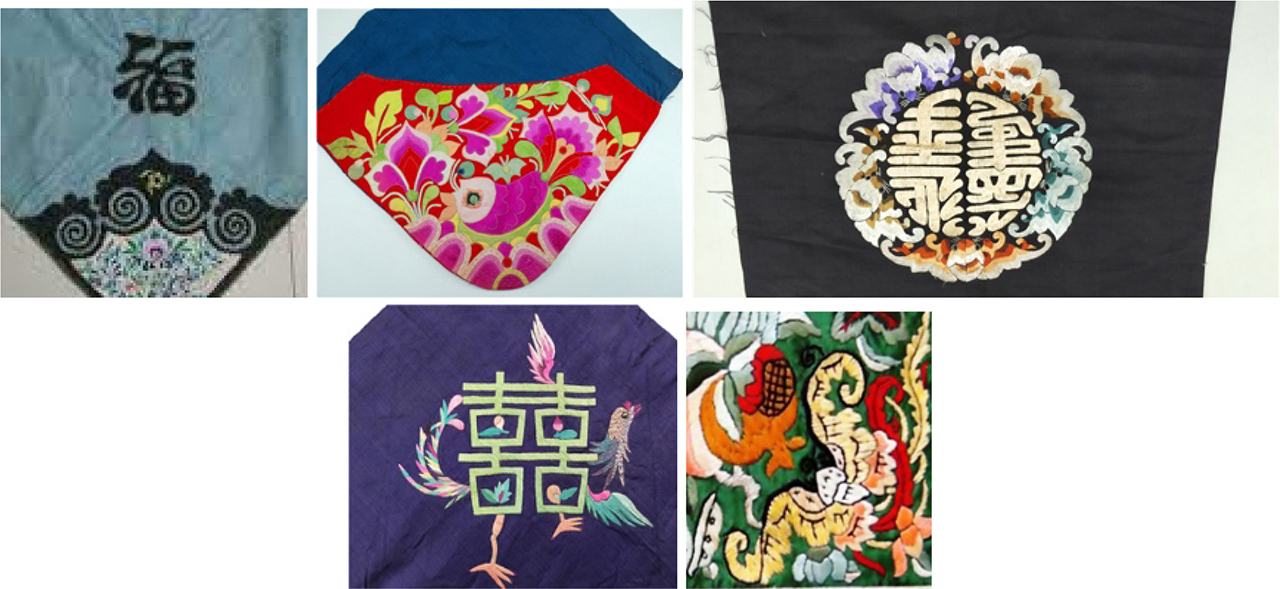
Fig. 7
Characters福 禄 夀 and 囍 (pronounced as ‘fu’, ‘lu’, ‘shou’ and ‘xi’, respectively) in Jinnan embroidery