Have a personal or library account? Click to login
Air pollution monitoring with Tradescantia hybrid and optical sensors in Curitiba and Araucária, Brazil Cover

Air pollution monitoring with Tradescantia hybrid and optical sensors in Curitiba and Araucária, Brazil

Open Access
|Nov 2023

Figures & Tables

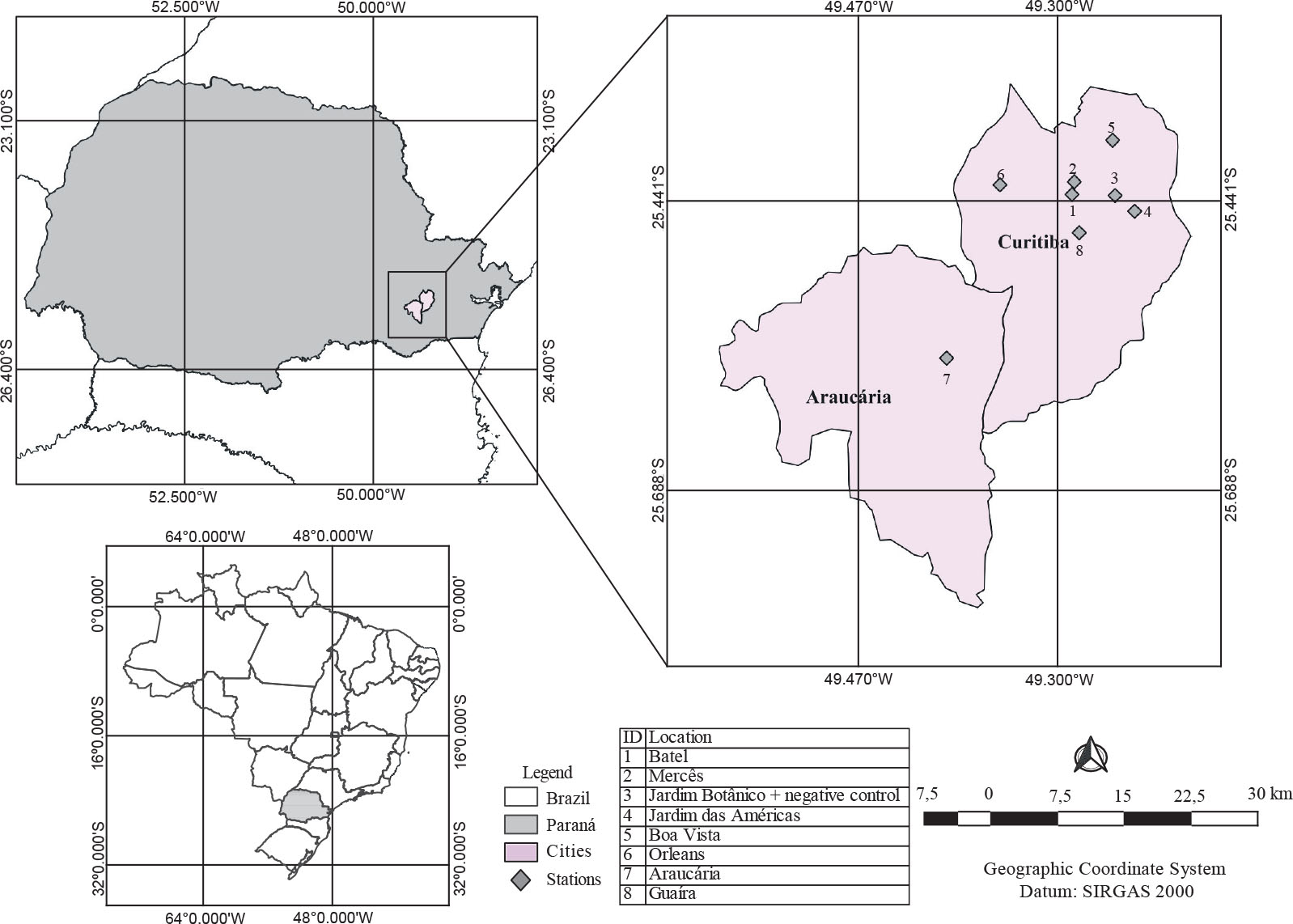
Figure 1.

Location of cities and points studied.
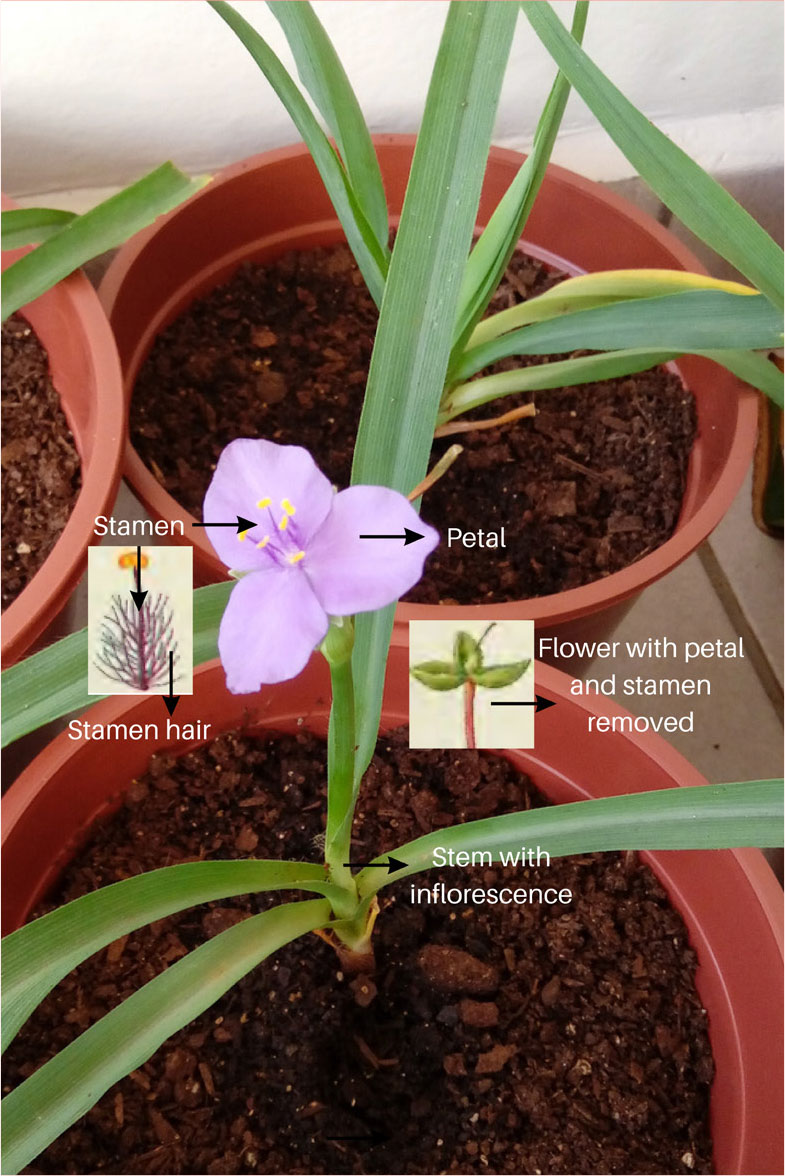

Figure 2.

Tradescantia sp. clone 4430 and its main parts, adapted from Small (1922).
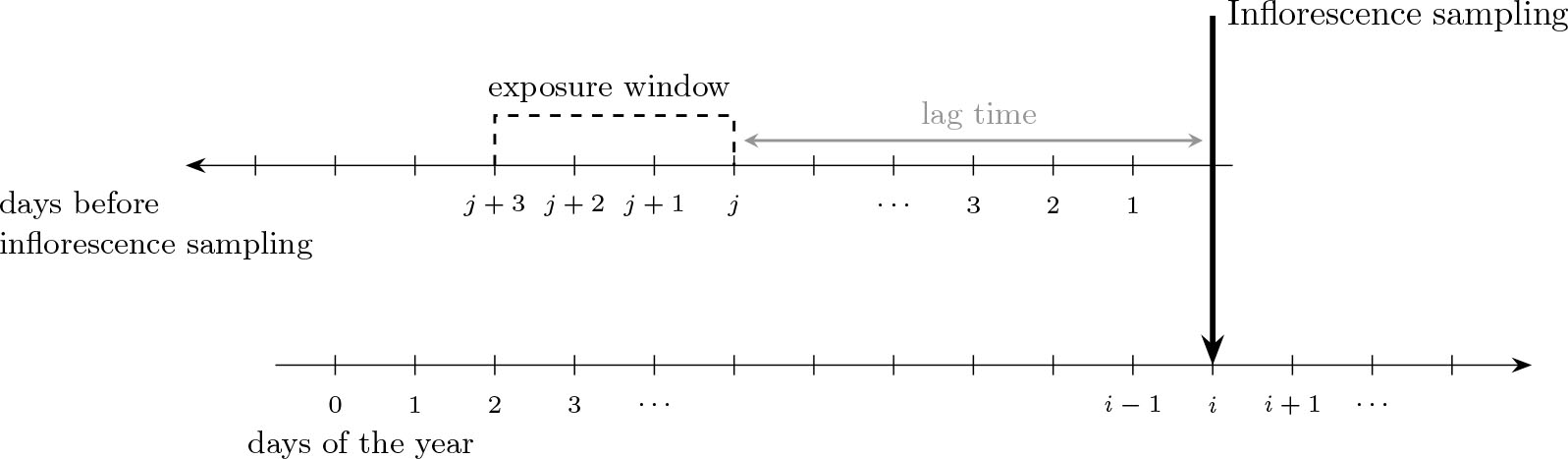

Figure 3.

Illustration of the Backward Sliding Window (BSW) Method for detecting possible exposure window size and lag time before inflorescence sampling.
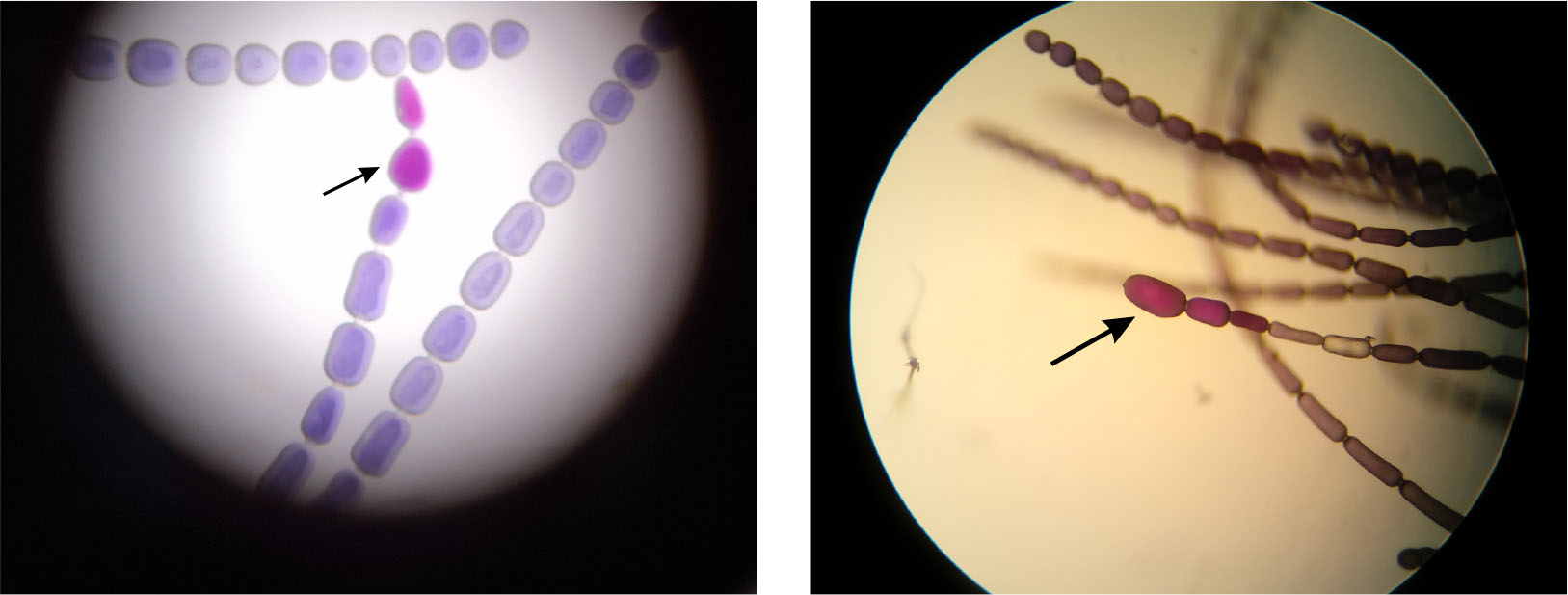

Figure 4.

Stamen hair mutations by the Trad-SHM bioassay, indicated by arrows.
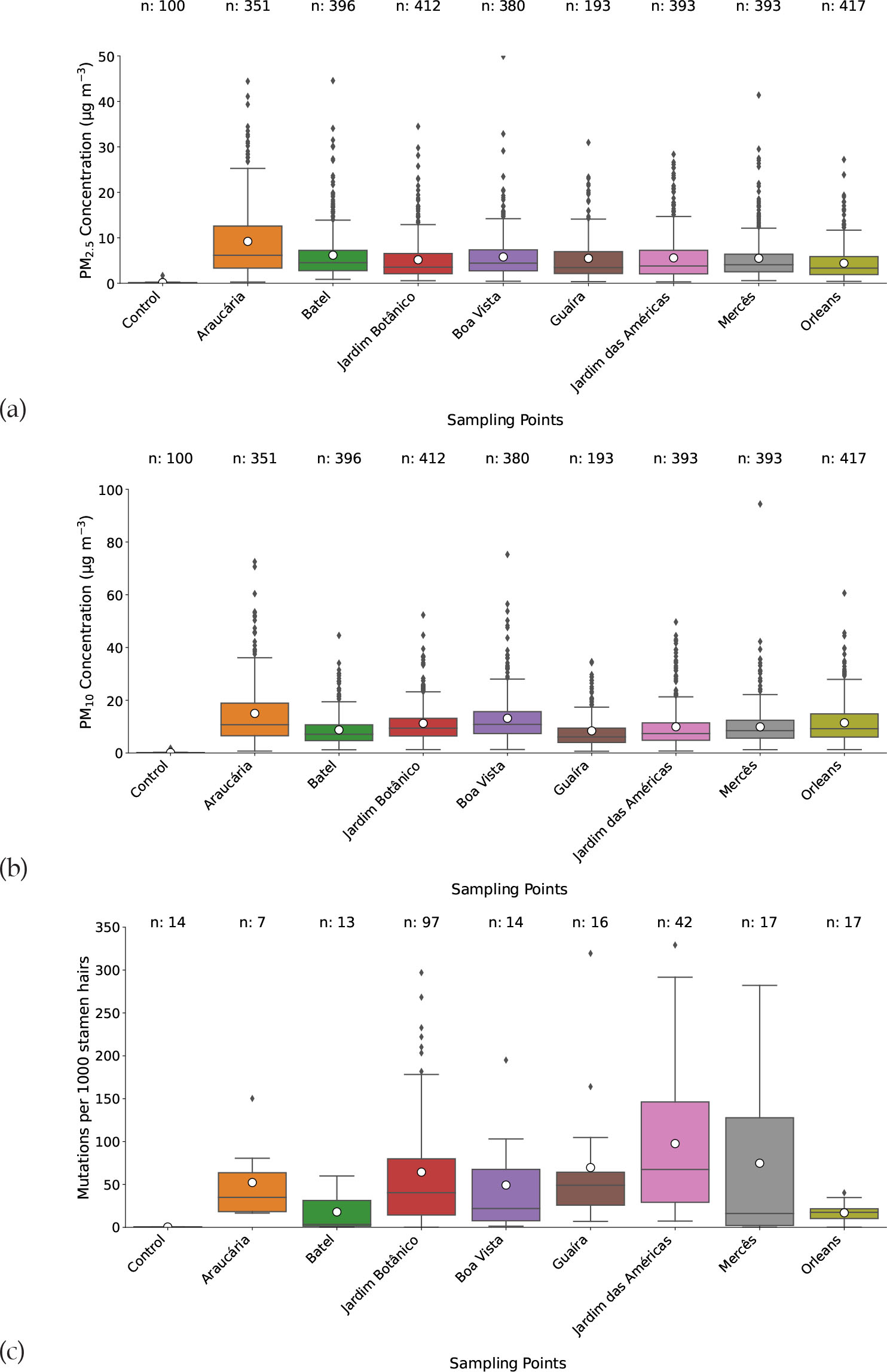

Figure 5.

Boxplots of (a) daily mean PM2.5 concentration, (b) daily mean PM10 concentration and (c) mutation frequencies in stamen hair for the sample points. The number of sampling days (n) is indicated for each station, averages are indicated as white circles.
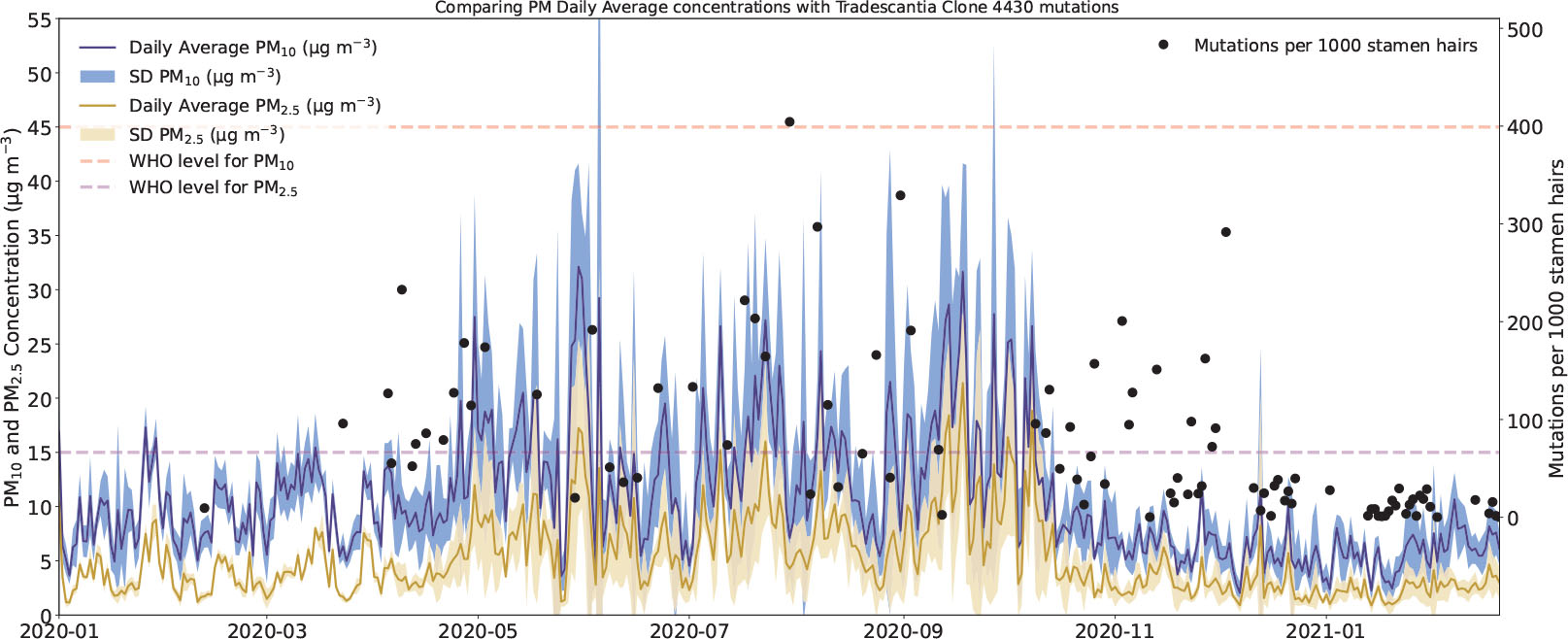

Figure 6.

Time series of PM10 and PM2.5 average daily concentration and Tradescantia sp. clone 4430 mutations per 1000 stamen hair according to the sampling day. SD is the standard deviation considering all sampling points, except the control.
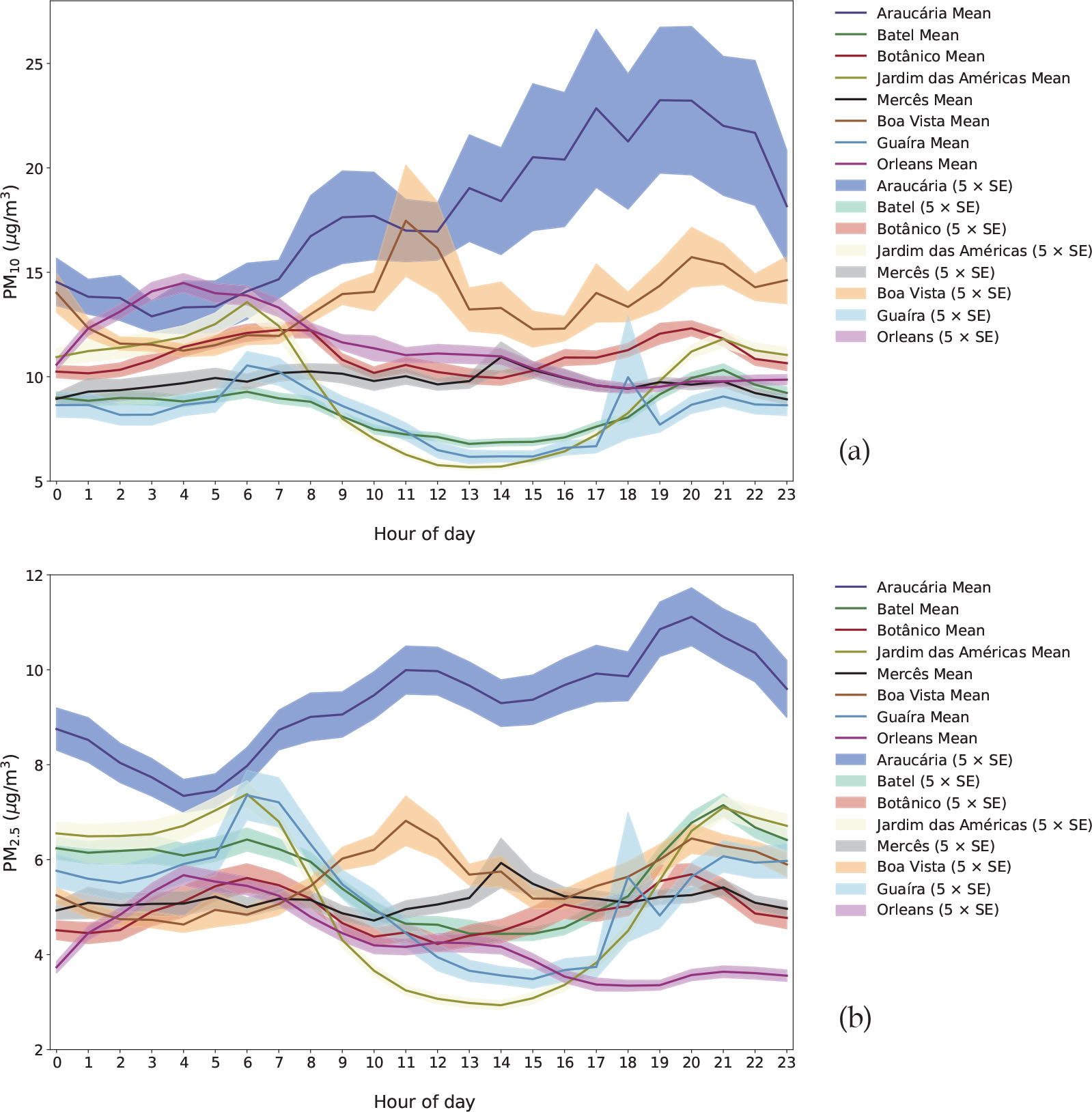

Figure 7.

Daily variation of (a) PM10 and (b) PM2.5 in sampling points, except the control point. Hourly means are depicted with 5 times the standard error (SE) colored shaded area.
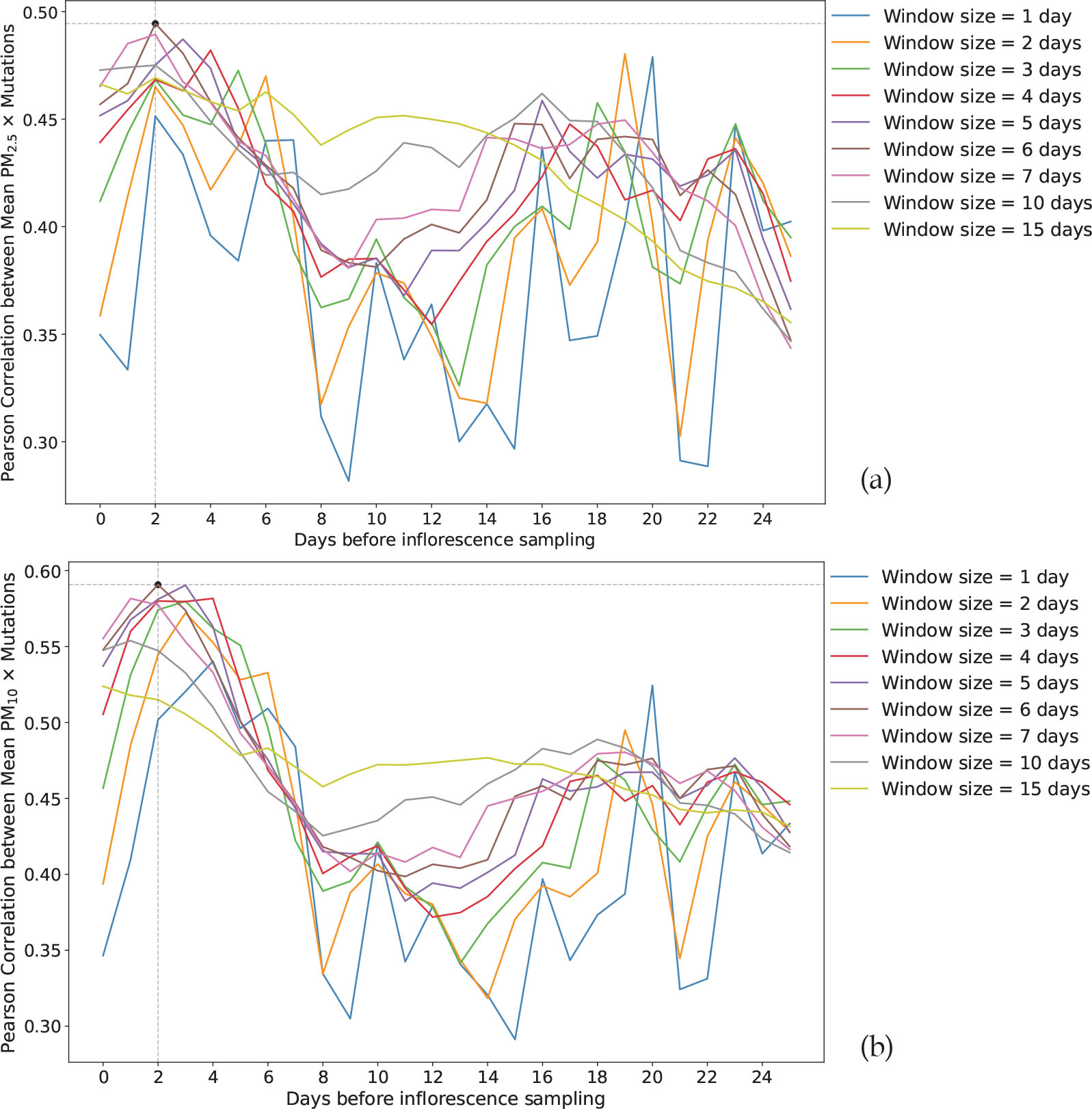

Figure 8.

BSW Method correlation analysis between PM and mutations for detecting lag time and window size of exposition (a) PM2.5 and (b) PM10.
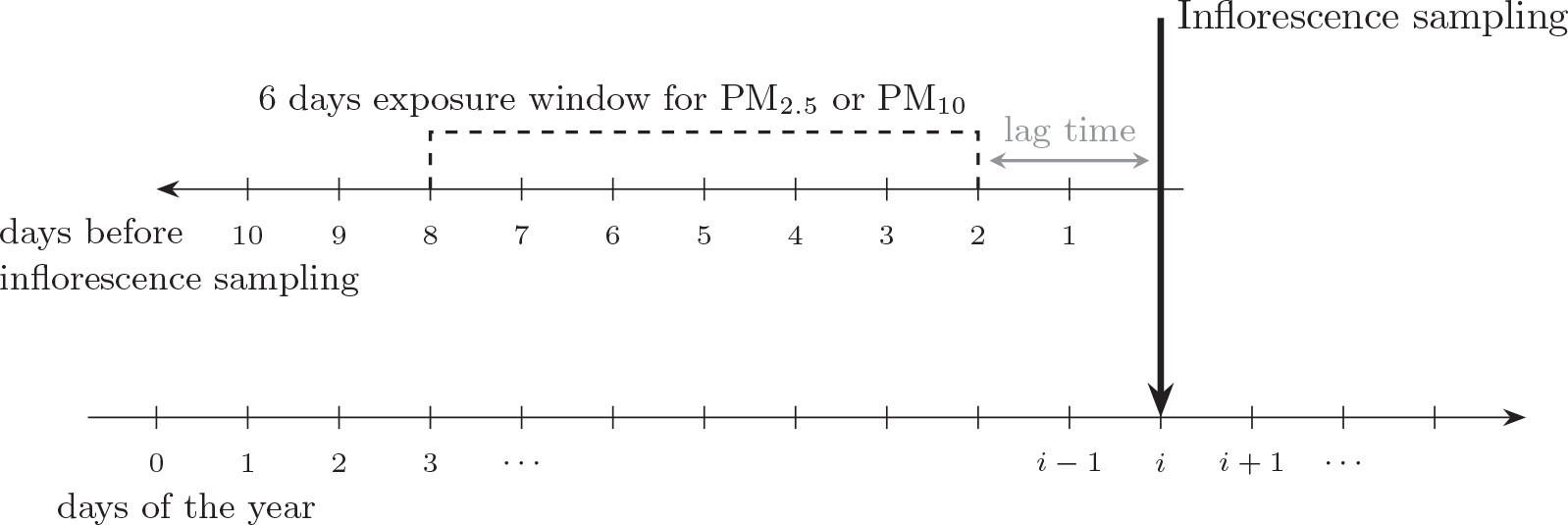

Figure 9.

Results of the BSW Method, showing the size of the exposure window and the lag time adopted for PM2.5 and PM10.
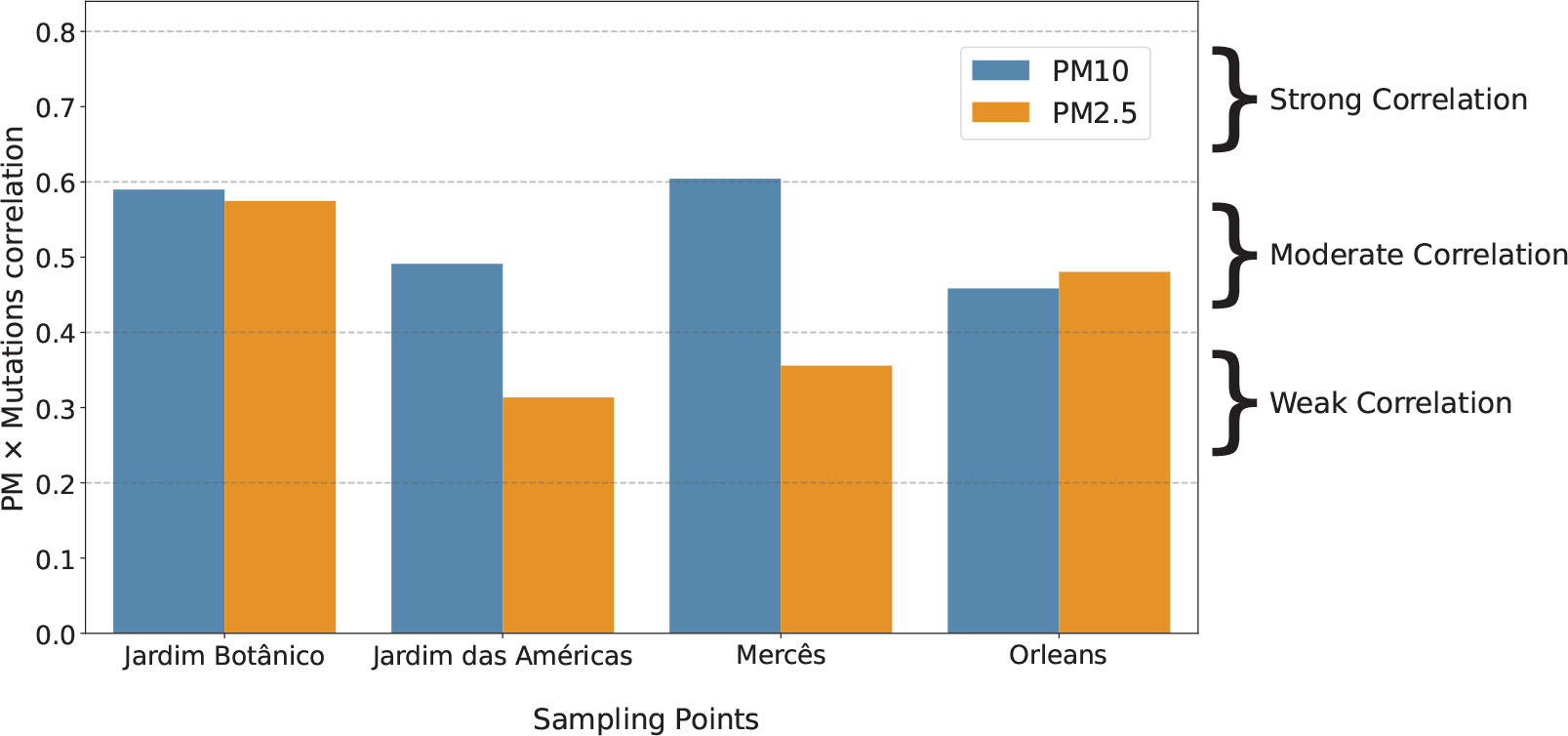

Figure 10.

Pearson’s correlation between PM10 and PM2.5 × mutations per 1000 stamen hairs of Tradescantia sp. clone 4430 for selected stations.
DOI: https://doi.org/10.2478/fsmu-2023-0005 | Journal eISSN: 1736-8723 | Journal ISSN: 1406-9954
Language: English
Page range: 57 - 71
Submitted on: Mar 31, 2023
Accepted on: May 30, 2023
Published on: Nov 9, 2023
Published by: Estonian University of Life Sciences
In partnership with: Paradigm Publishing Services
Publication frequency: 2 issues per year

© 2023 Leatrice Talita Rodrigues, Emílio Graciliano Ferreira Mercuri, Steffen Manfred Noe, published by Estonian University of Life Sciences
This work is licensed under the Creative Commons Attribution 4.0 License.