
Table 1.
Sentinel-1 images over Laeva test site. θ is the local incidence angle.
Sentinel-1 SAR pildid Laeva testalal. θ on lokaalne langemisnurk.
| Relative orbit Orbiidi number | θ (deg) | Time, UTC Aeg, UTC | Direction Suund | Images Pilte |
|---|---|---|---|---|
| 058 | 45.5 | 16:00 | W | 254 |
| 153 | 31.3 | 04:30 | E | 217 |
| 160 | 39.3 | 16:00 | W | 281 |
| 080 | 38.9 | 04:30 | E | 281 |
| 087 | 31.7 | 16:00 | W | 233 |
| 007 | 45.3 | 04:30 | E | 280 |
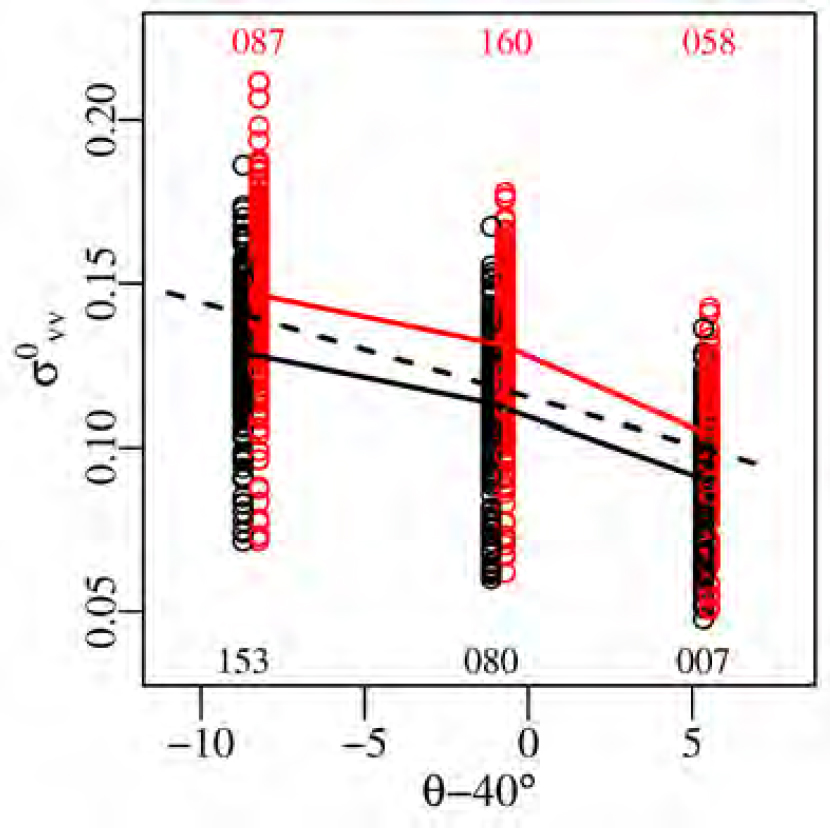
Figure 1.
A mixed species stand (ID=2499). The mean value of VV-polarized backscatter decreases more for orbit pairs 160–058 (daytime) or 080–007 (nighttime) compared to at smaller incidence angles. Daytime is greater compared to nighttime measurements.
VV-polarisatsiooniga tagasihajumine kahaneb rohkem orbiidipaaride 160–058 (päevane) või 080–007 (öine) korral, mille korral lokaalne langemisnurk on suurem. Päeval on tagasihajumine öisest suurem.
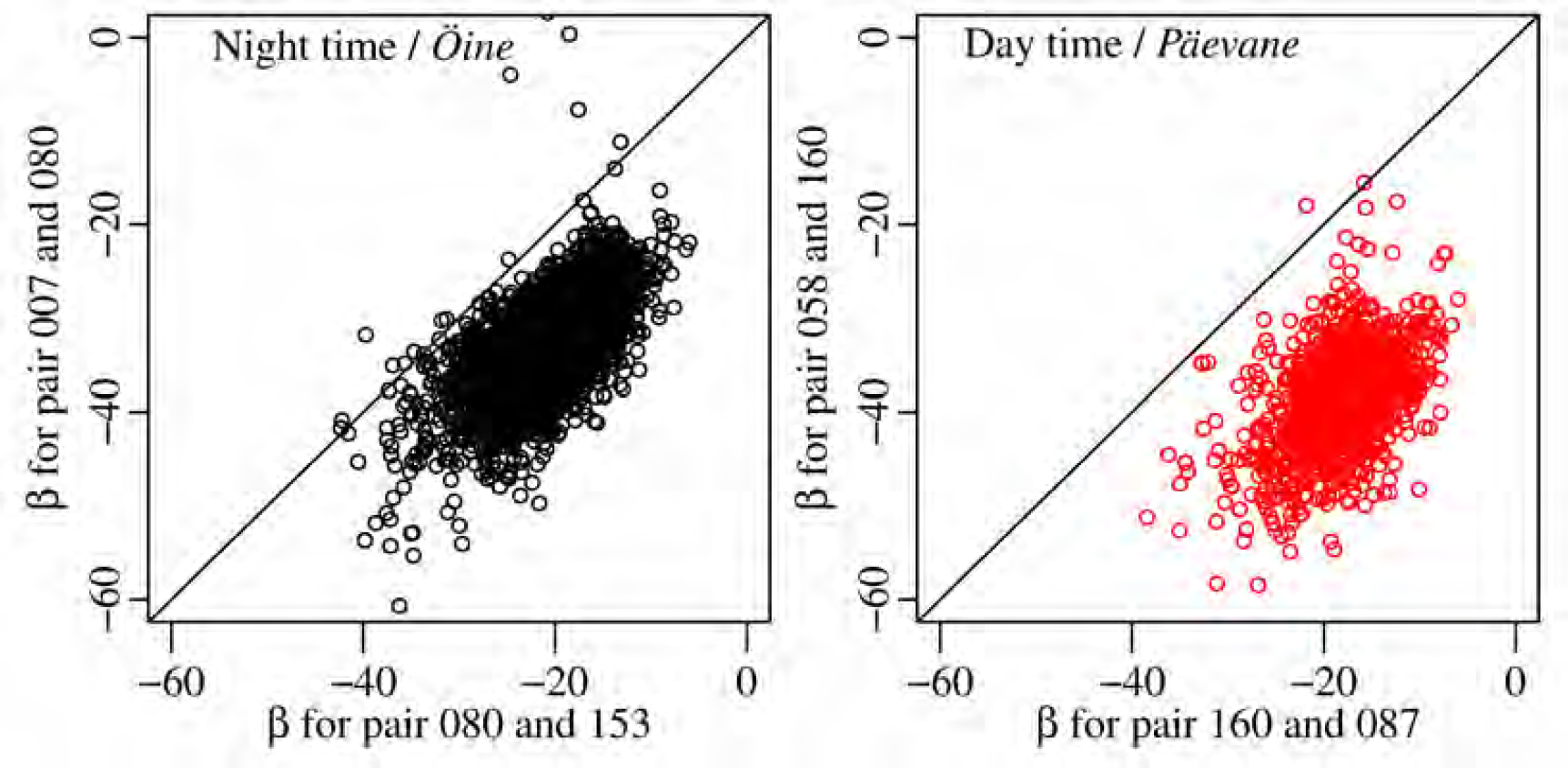
Figure 2.
Slope β×104 values for model (2) fitted on VV polarized backscatter time series. Each symbol represents a single stand.
Puistute aegridadele lähendatud mudeli (2) parameetri β×104 väärtused VV-polarisatsiooniga tagasihajumise korral.
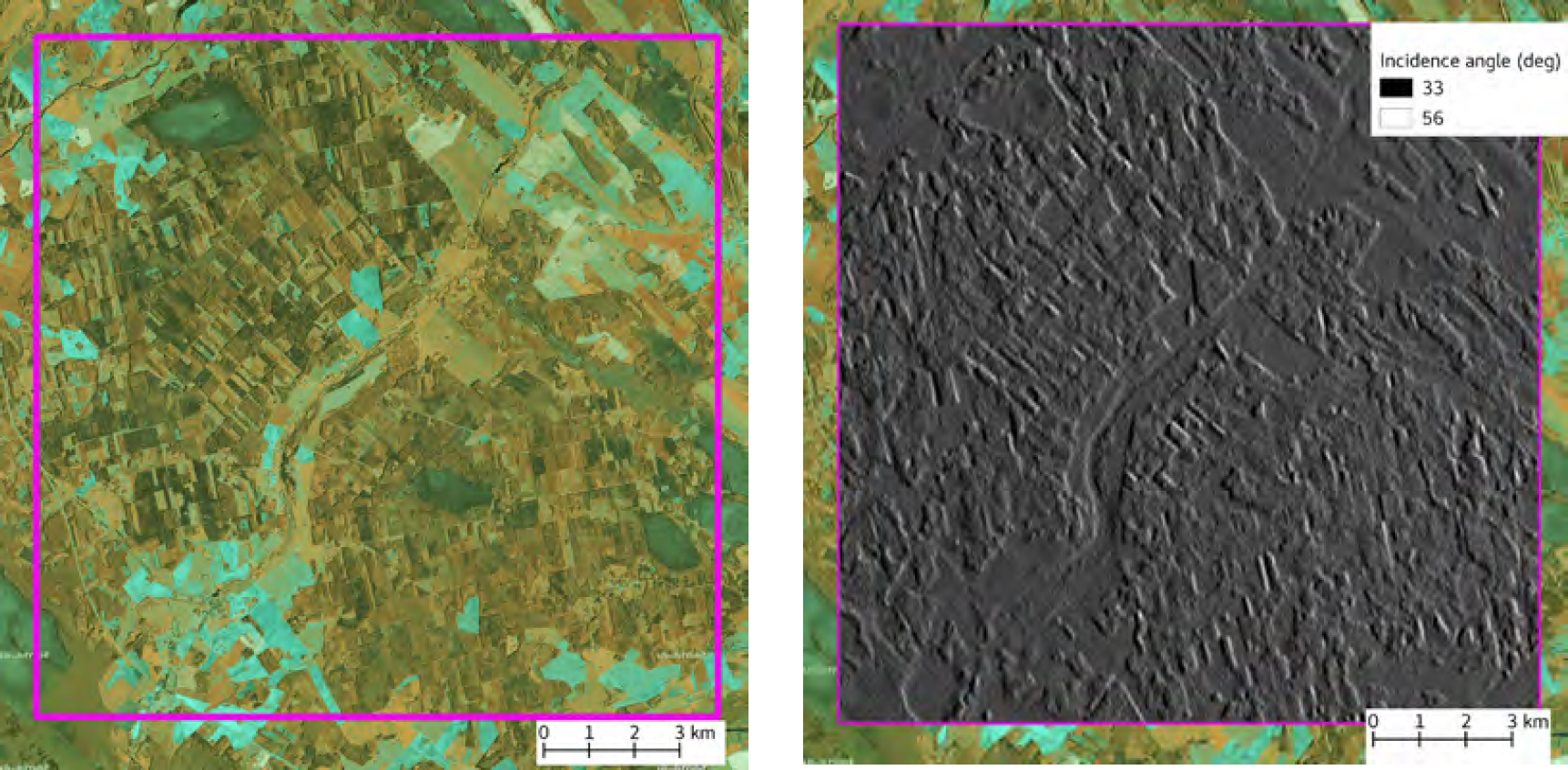
Lisa 1.
Testala ortofoto (Maa-amet) ja Sentinel-1 SAR lokaalse langemisnurga kaart Copernicus DEM järgi.
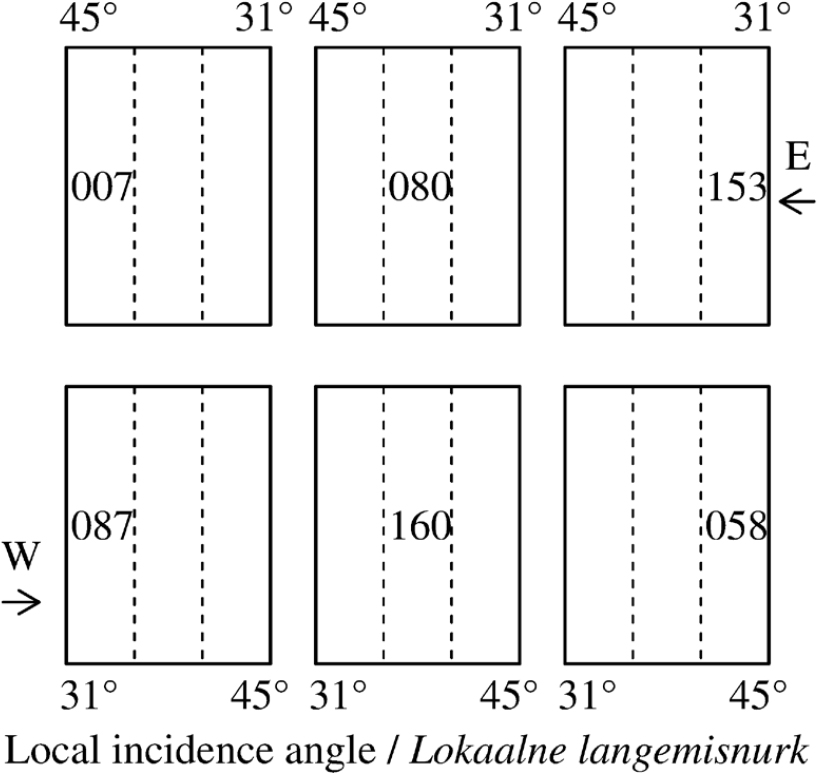
Lisa 2.
Laeva testala asukoht Sentinel-1 SAR pildil Interferometric Wide swath (IW) moodis pildil on näidatud suhtelise orbiidi numbriga. Nool näitab vaatesuunda.