Have a personal or library account? Click to login
The effect of planting, seeding and soil preparation on the regeneration success of Scots pine (Pinus sylvestris L.) on drained peatlands – 10-year results Cover

The effect of planting, seeding and soil preparation on the regeneration success of Scots pine (Pinus sylvestris L.) on drained peatlands – 10-year results

Open Access
|Sep 2020

Figures & Tables

Figure 1

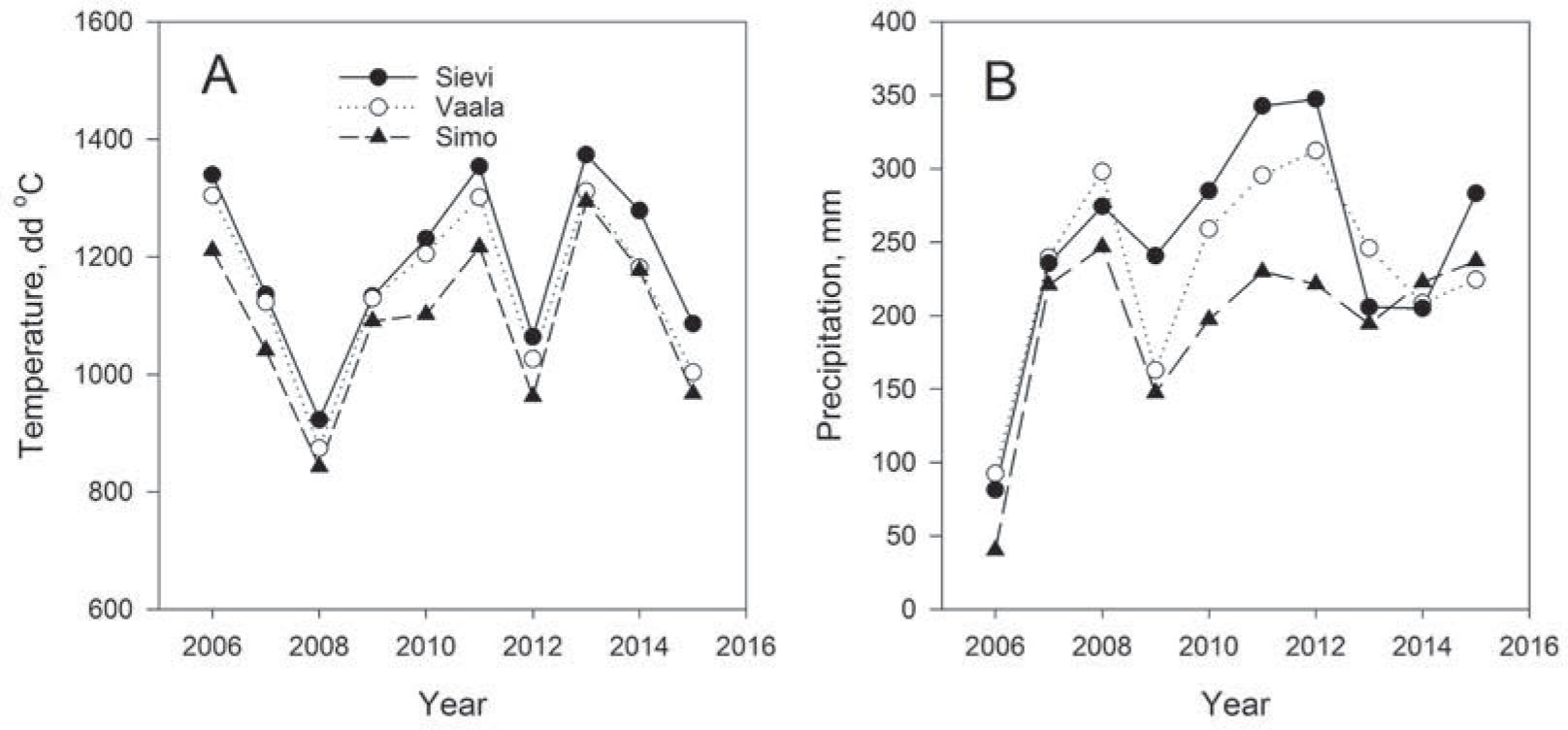
Annual temperature sum (A, dd threshold value 5°C) and precipitation (B) in June–August 2006–2015 at the Sievi, Vaala and Simo experimental sites.
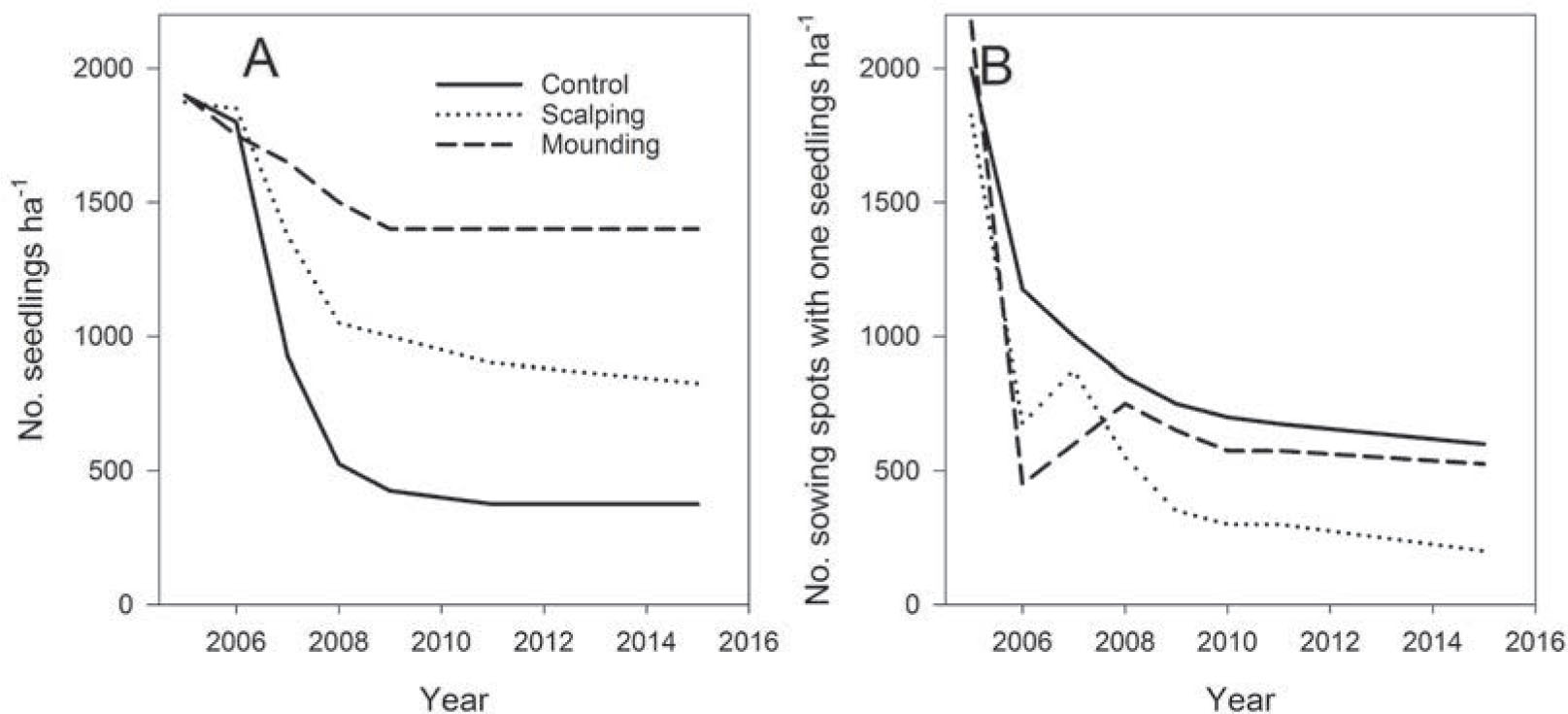

Figure 2

Development of the number of living planted Scots pine seedlings (A) and the number of sowing spots with at least one living seedling (B) at the Sievi experimental site.
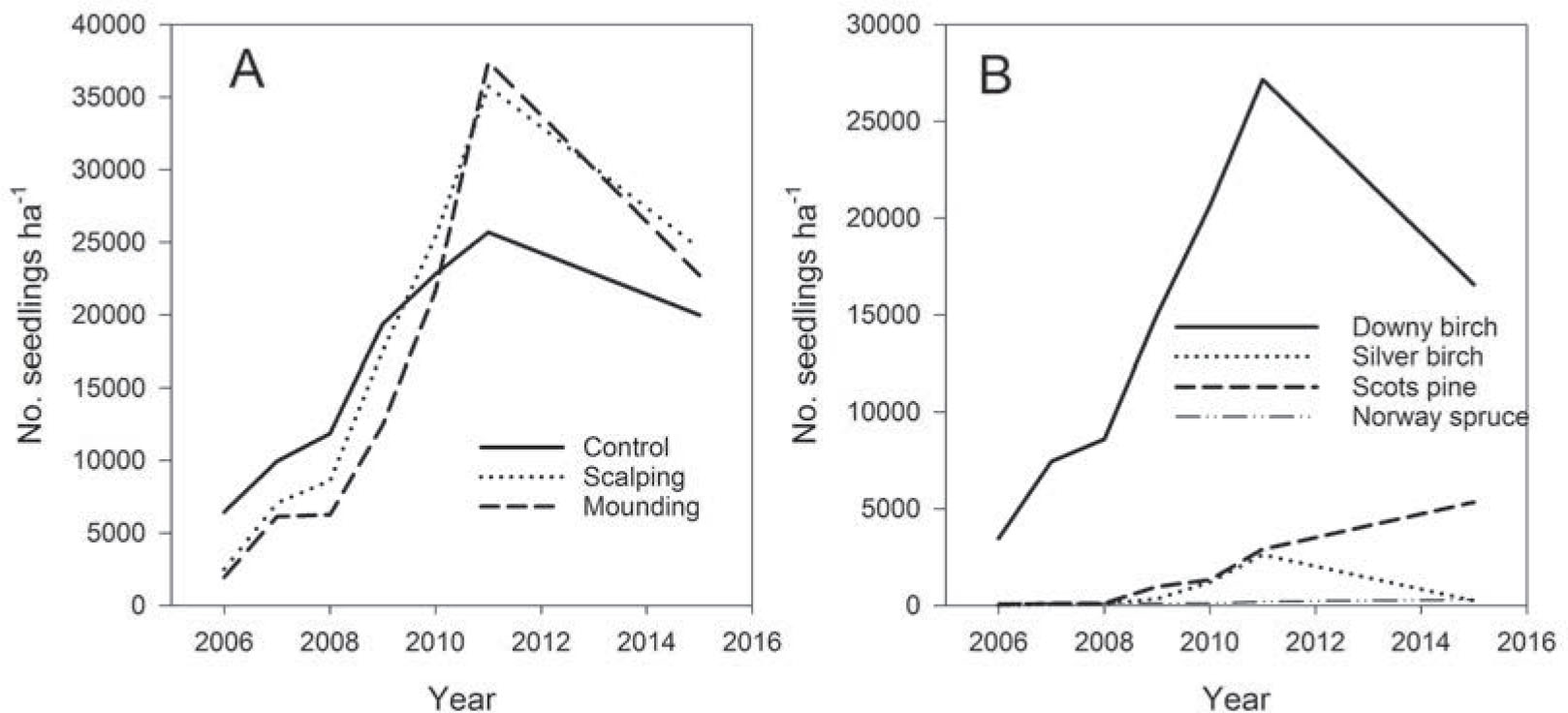

Figure 3

Development of the number of naturally regenerated seedlings according to soil preparation treatments (A) and by species (B) at the Sievi experimental site.
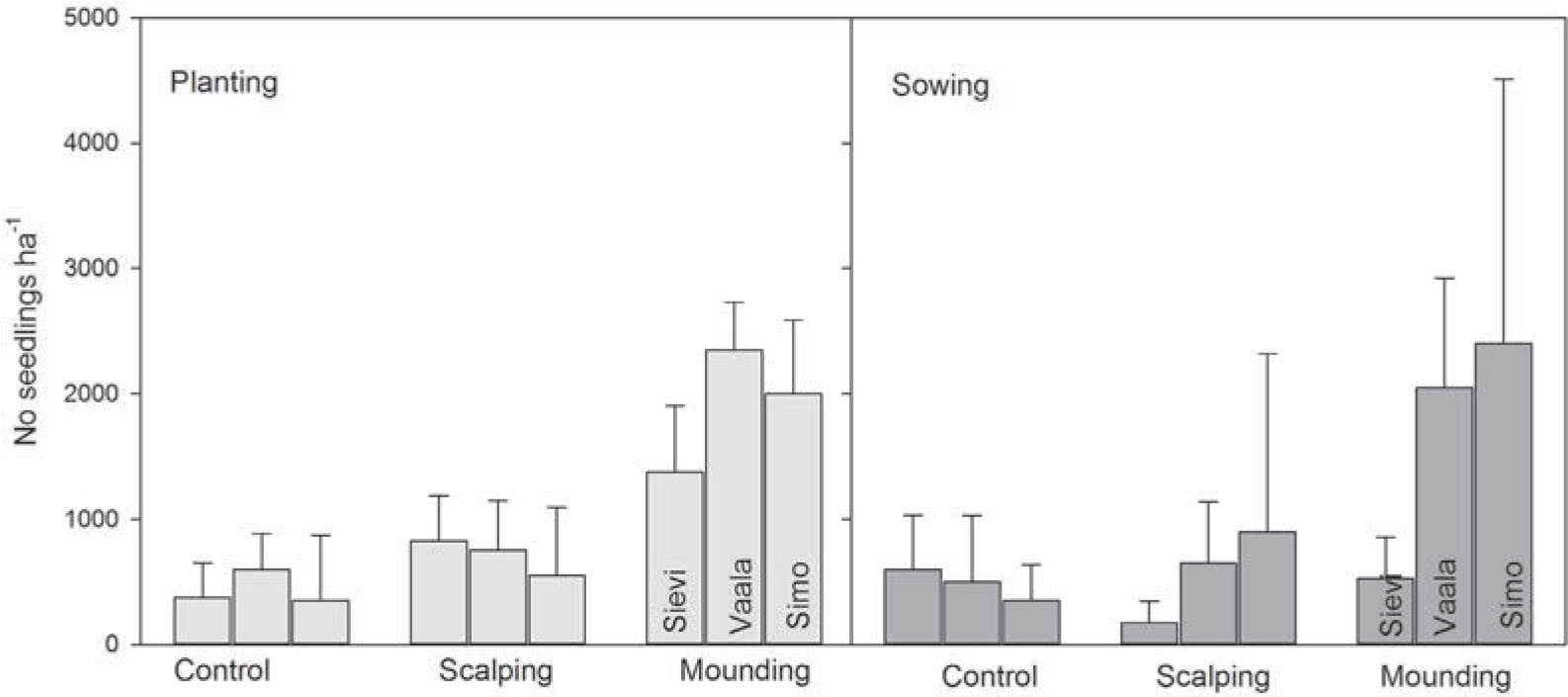

Figure 4

The number of planted and sown Scots pine seedlings in the study areas (at the Sievi, Vaala, and Simo sites). In each sowing spot only one seedling was accepted. The standard deviation is marked inside the bars.
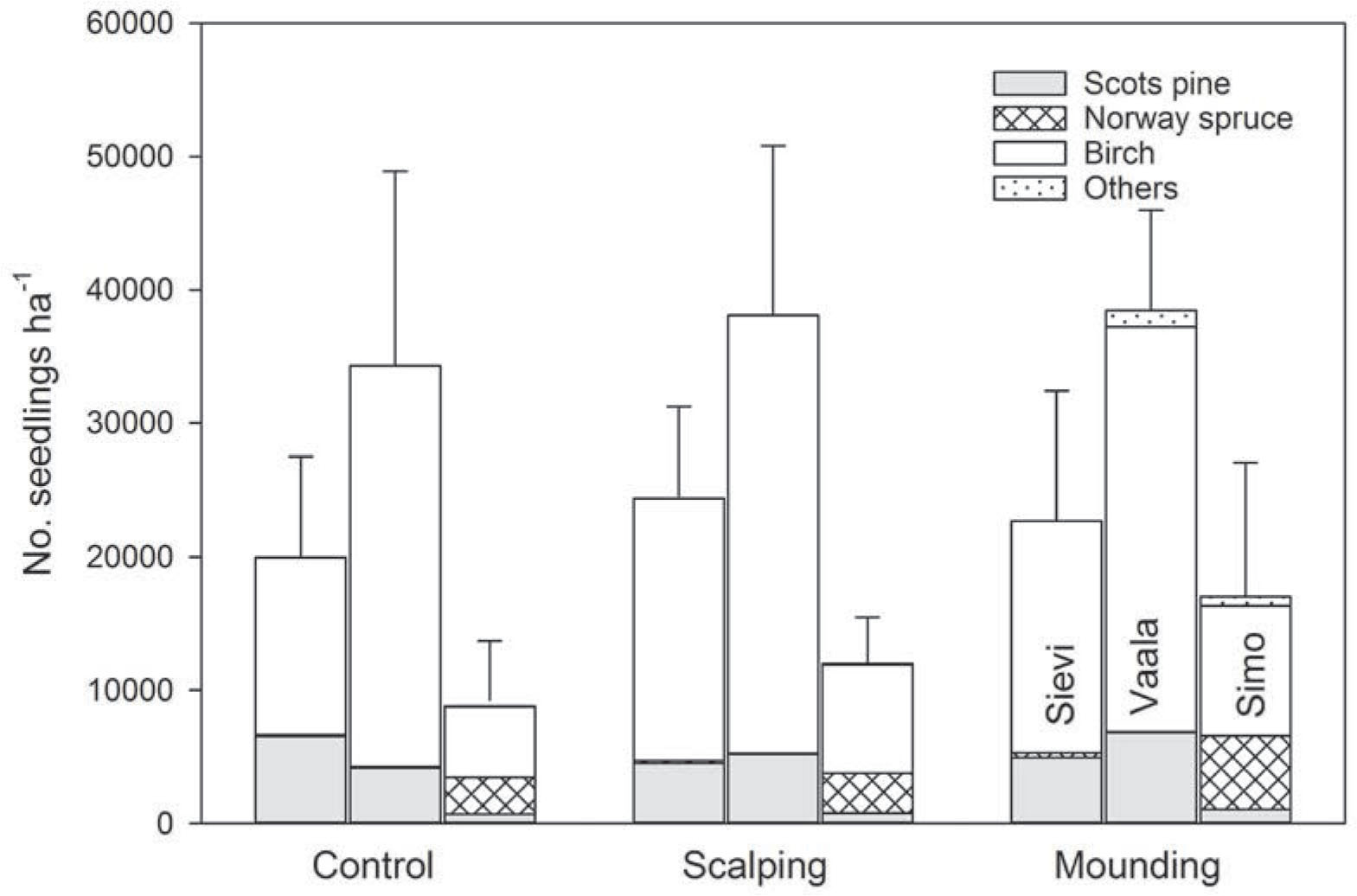

Figure 5

The number of naturally regenerated seedlings in the study areas (at the Sievi, Vaala, and Simo sites). The standard deviation is marked inside the bars.
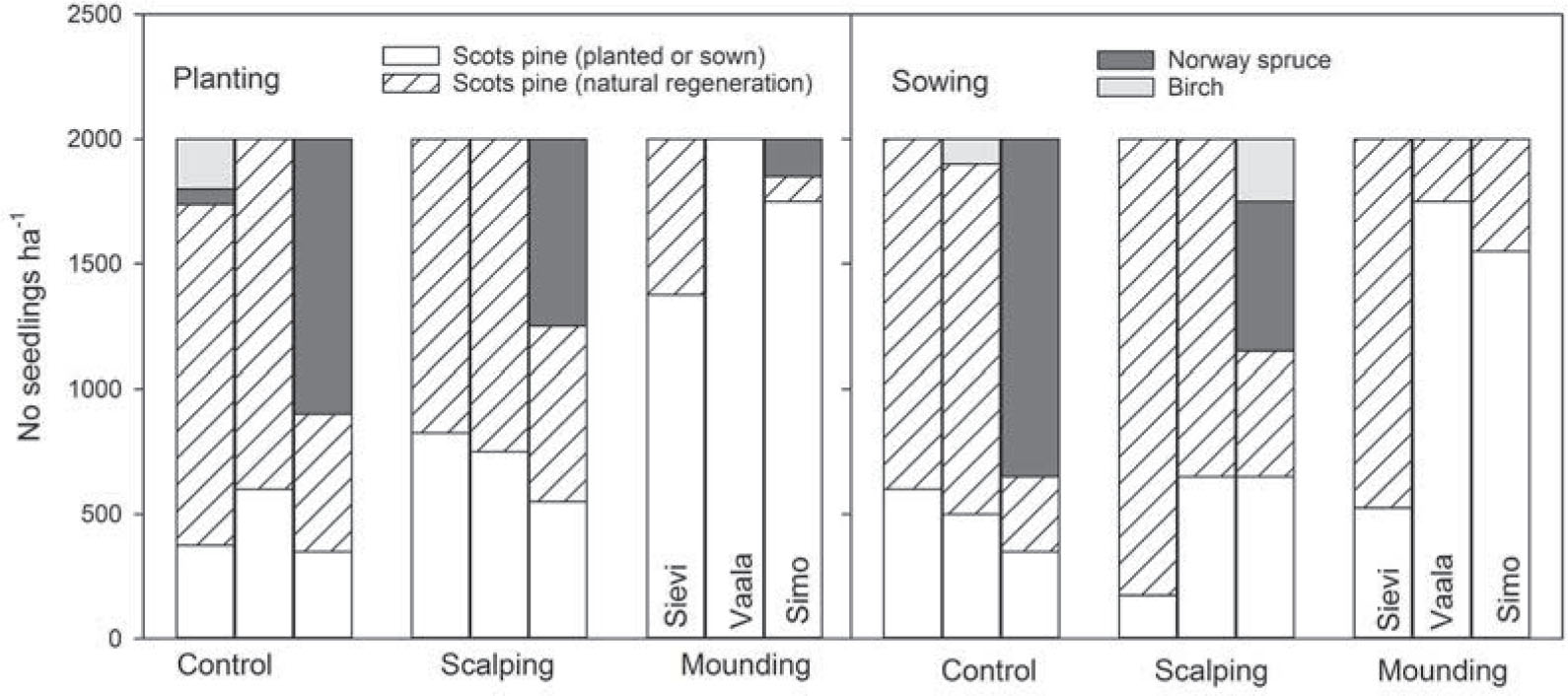

Figure 6

The number of crop seedlings in the study areas (at the Sievi, Vaala, and Simo sites).
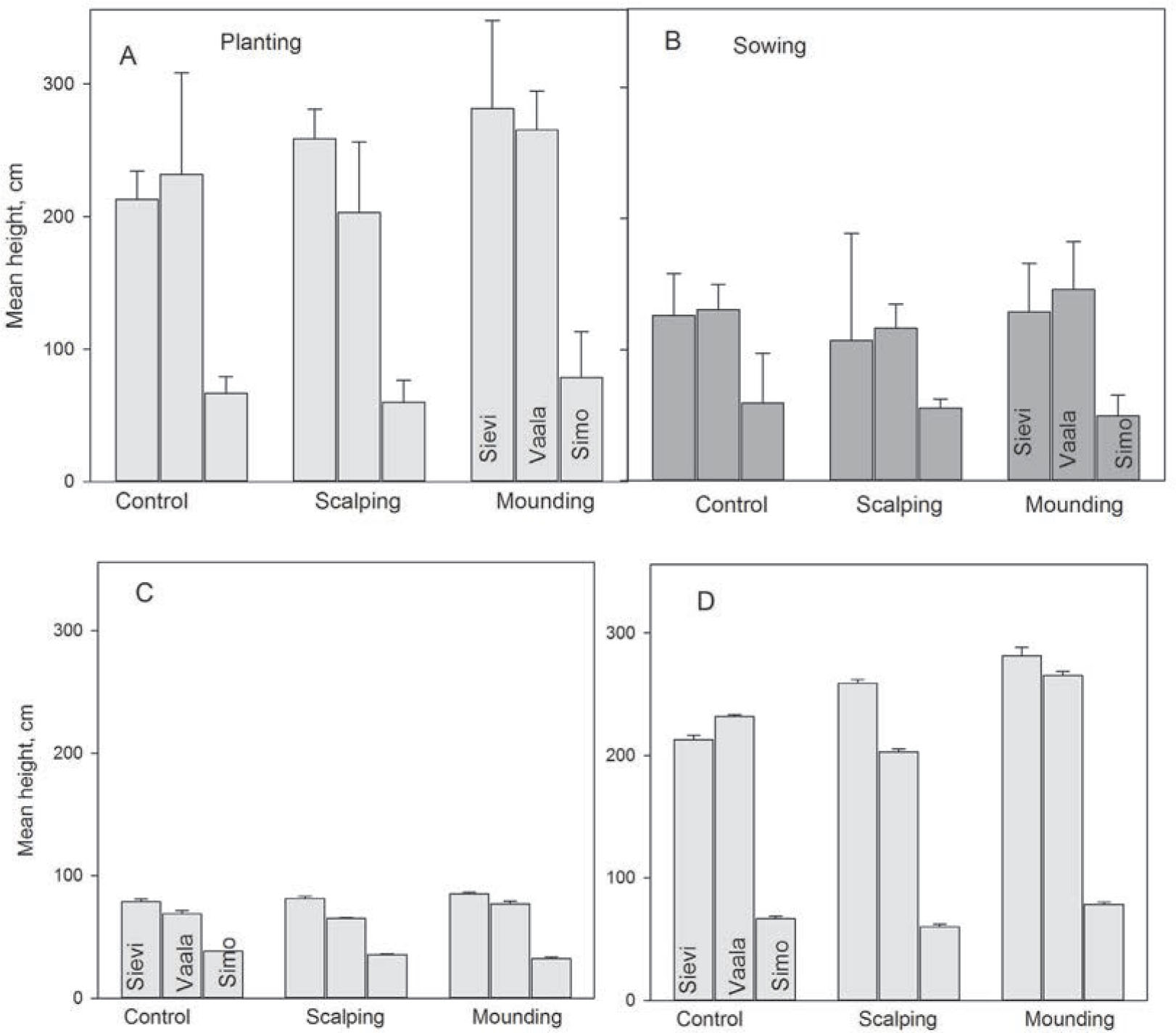

Figure 7

The mean height of planted (A), sown (B) and naturally regenerated (C) Scots pine seedlings and naturally regenerated downy birch seedlings (D). The standard deviation is marked inside the bars.
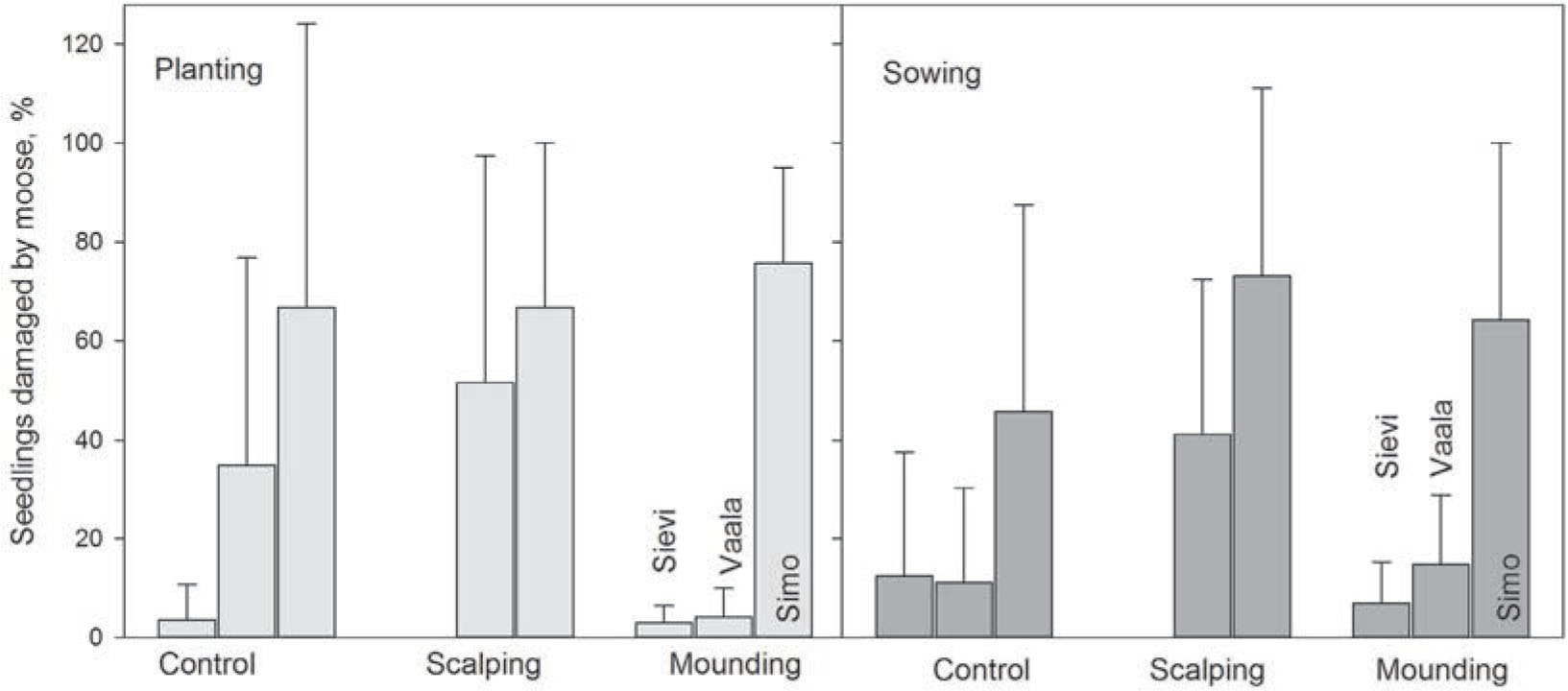

Figure 8

Share of Scots pine crop seedlings damaged by moose. The standard deviation is marked inside the bars.
DOI: https://doi.org/10.2478/fsmu-2020-0008 | Journal eISSN: 1736-8723 | Journal ISSN: 1406-9954
Language: English
Page range: 91 - 106
Submitted on: Mar 31, 2020
Accepted on: Jun 8, 2020
Published on: Sep 18, 2020
Published by: Estonian University of Life Sciences
In partnership with: Paradigm Publishing Services
Publication frequency: 2 issues per year

© 2020 Jyrki Hytönen, Hannu Hökkä, Markku Saarinen, published by Estonian University of Life Sciences
This work is licensed under the Creative Commons Attribution-NonCommercial-NoDerivatives 4.0 License.