
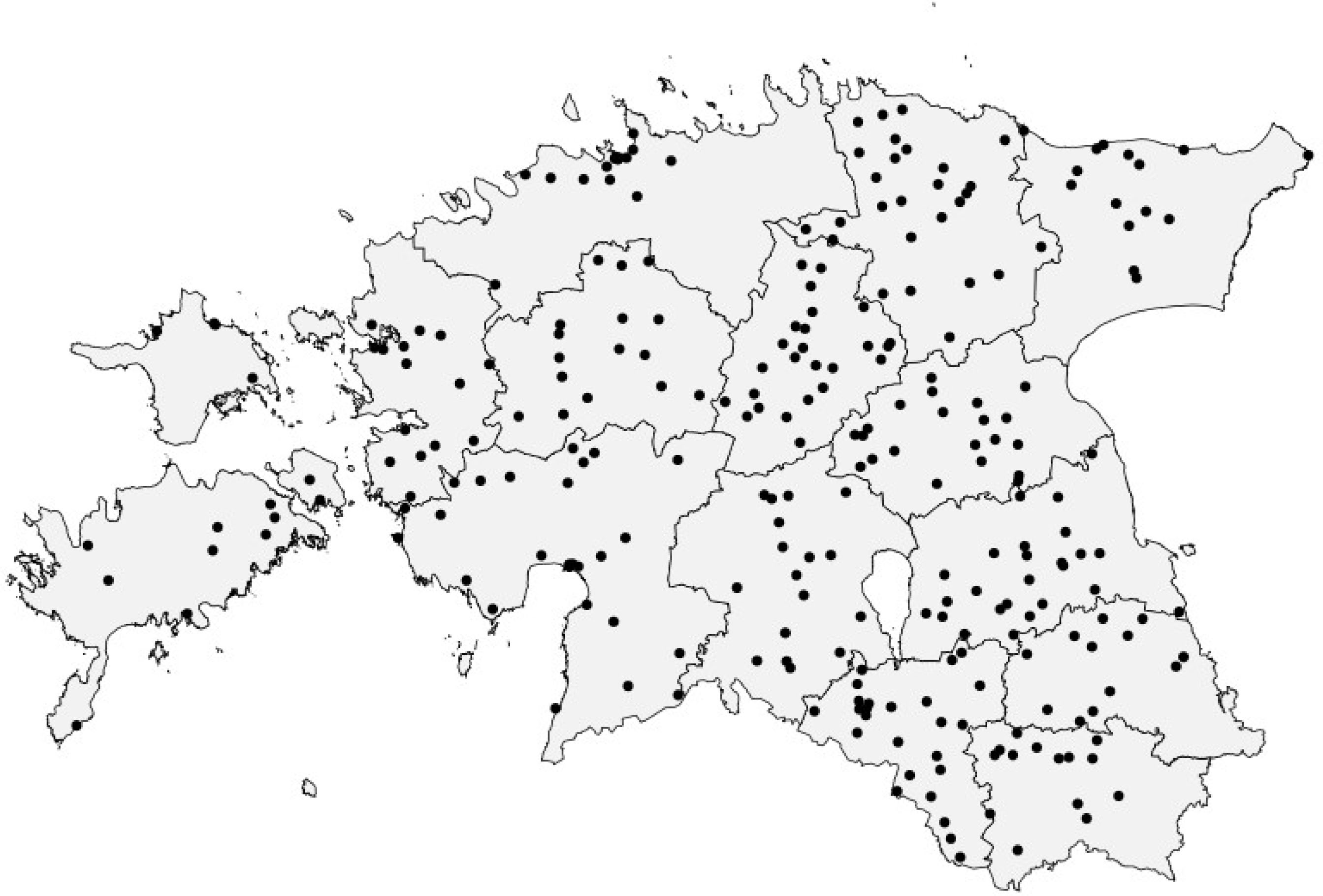
Figure 1
The location of parks in counties included in the research.
Table 1
Overview of inventories used in the research. The inventories are compiled by Artes Terrae Ltd.
| Name of the park | Year of the inventory | Name of the project |
|---|---|---|
| Hummuli manor park | 2008 | Reconstruction project of Hummuli manor park |
| Härgla manor park | 2007 | Dendrological inventory of Härgla manor park |
| Kiidjärve manor park | 2009 | Reconstruction project of Kiidjärve manor park |
| Kukruse manor park | 2009 | Reconstruction project of Kukruse manor park |
| Kuremaa manor park | 2006 | Reconstruction project of Kuremaa manor park |
| Lõhavere Hospital park | 2009 | Dendrological inventory of Lõhavere Hospital park |
| Mäetaguse manor park | 2004 | Reconstruction project of Mäetaguse manor park |
| Pagari manor park | 2007 | Reconstruction project of Pagari manor park |
| Puurmani manor park | 2007 | Reconstruction project of Puurmani manor park |
| Püssi manor park | 2007 | Reconstruction project of Püssi manor park |
| Riidaja manor park, I phase | 2006 | Reconstruction project of Riidaja manor park, I phase |
| Rõngu castle hill park | 2008 | Dendrological assessment of Rõngu castle hill park and recommendations for management |
| Saka manor park | 2008 | Reconstruction project of Saka manor park |
| Saku manor park | 2007 | Reconstruction project of Saku manor park |
| Sürgavere manor park | 2008 | Reconstruction project of Sürgavere manor park |
| Õisu manor park | 2008 | Reconstruction project of Õisu manor park |
| Rogosi manor park | 2003 | Dendrological inventory and assessment of Rogosi manor park |
Table 2
The occurrence of high-risk invasive tree and shrub species in parks by species (data of 304 parks).
| No | Species name | No of parks | % of parks |
|---|---|---|---|
| 1 | Caragana arborescens | 244 | 80 |
| 2 | Larix decidua | 194 | 64 |
| 3 | Sambucus racemosa | 192 | 63 |
| 4 | Sorbaria sorbifolia | 171 | 56 |
| 5 | Abies sibirica | 168 | 55 |
| 6 | Symphoricarpos albus | 167 | 55 |
| 7 | Abies balsamea | 117 | 38 |
| 8 | Cornus alba | 115 | 38 |
| 9 | Physocarpus opulifolius | 84 | 28 |
| 10 | Populus alba | 75 | 25 |
| 11 | Acer negundo | 71 | 23 |
| 12 | Rosa pimpinellifolia | 70 | 23 |
| 13 | Amelanchier spicata | 58 | 19 |
| 14 | Acer pseudoplatanus | 56 | 18 |
| 15 | Populus balsamifera | 42 | 14 |
| 16 | Acer saccharinum | 18 | 6 |
| 17 | Robinia pseudoacacia | 17 | 6 |
| 18 | Rubus odoratus | 15 | 5 |
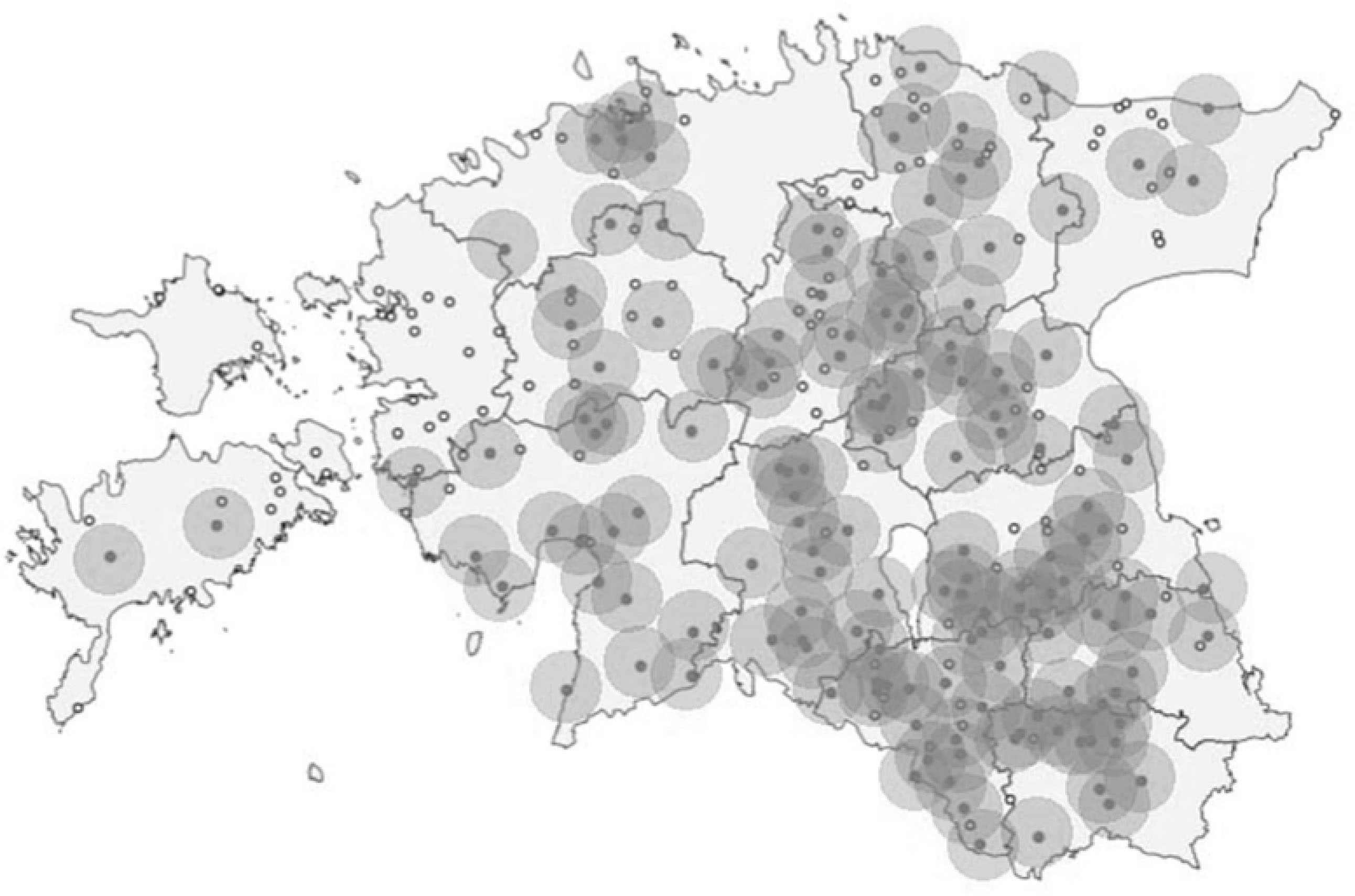
Figure 2
The distribution of an invasive species Abies sibirica (data of 304 parks). There was not a single Abies sibirica in the parks of the southwestern region. Circles mark the places where the species were found (in parks). The closer the circles are to each other, the more there are parks where the species were identified.
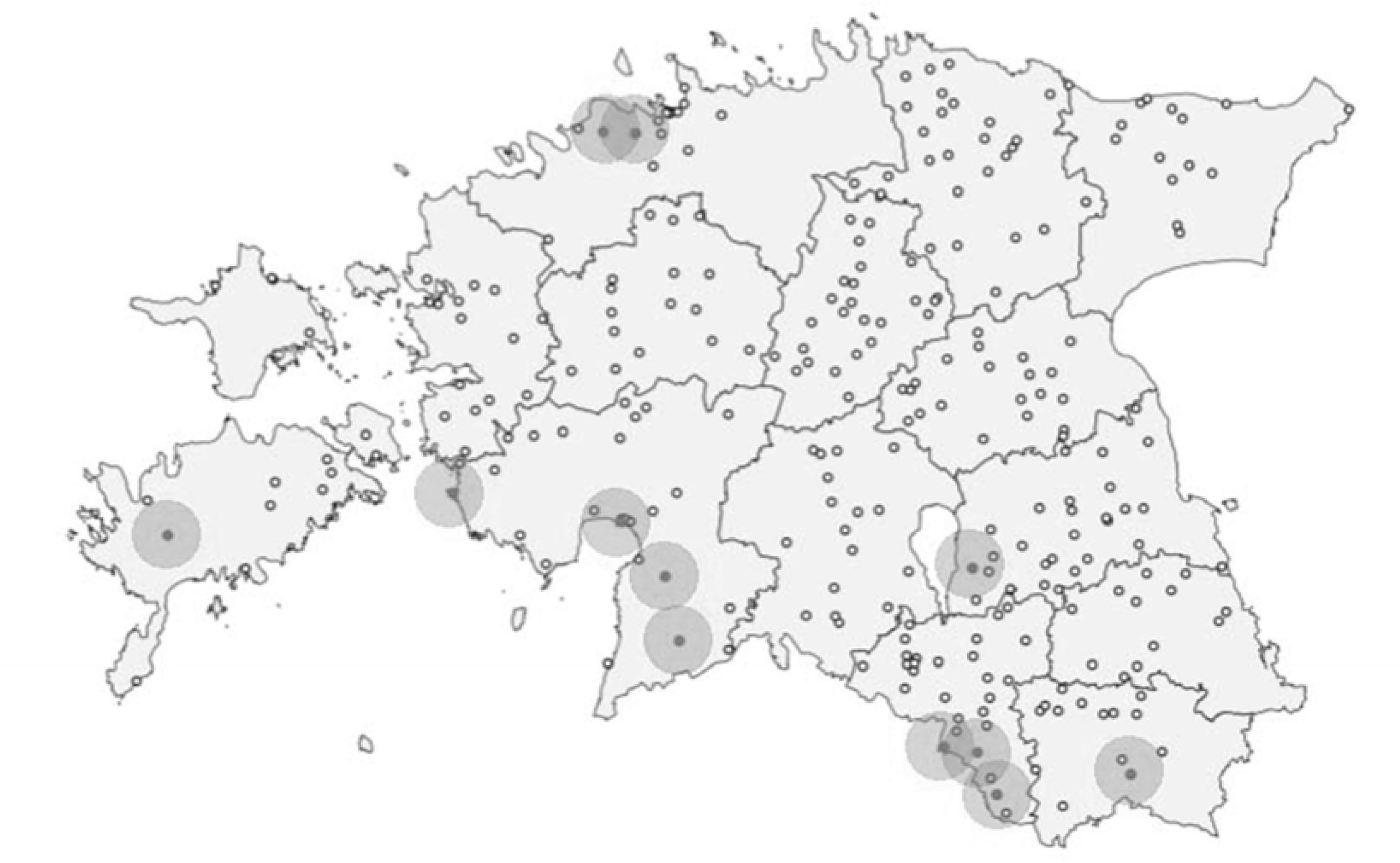
Figure 3
The distribution of an invasive species Robinia pseudoacacia. Only a few samples of Robinia pseudoacacia were found (data of 304 parks).
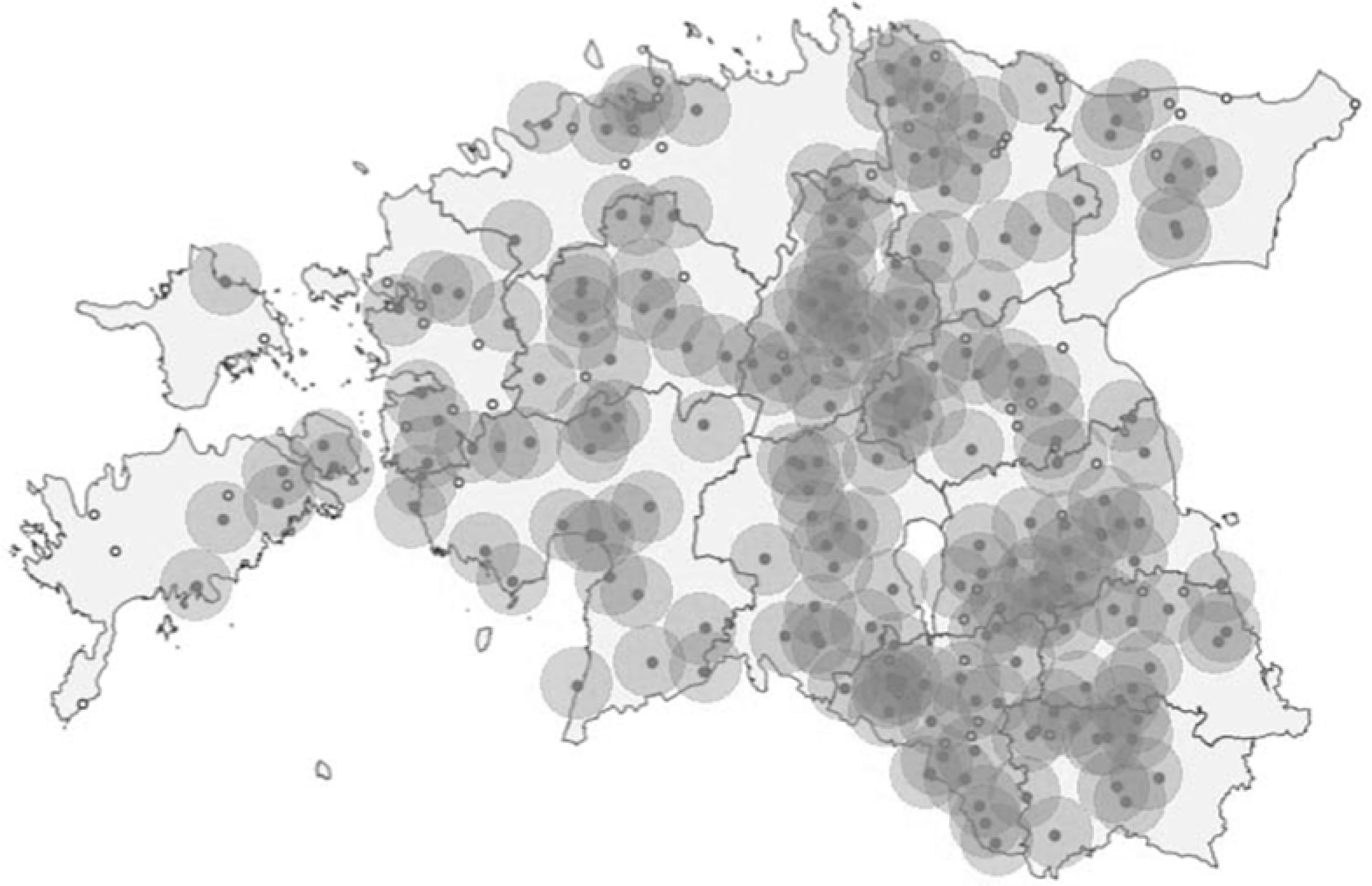
Figure 4
The distribution of an invasive shrub Caragana arborescens found in 80% of the parks (data of 304 parks).
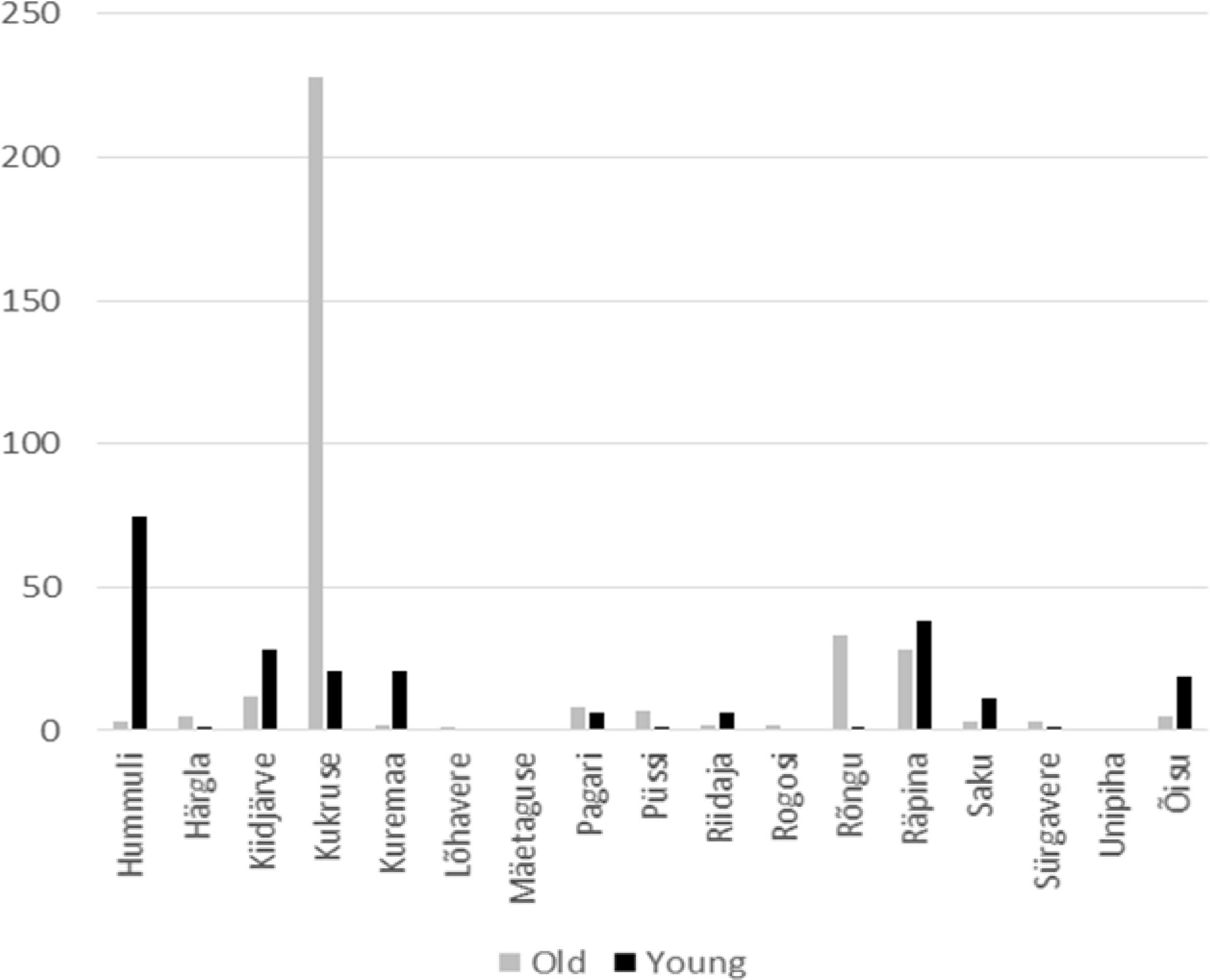
Figure 5
Number of invasive trees in parks, coniferous and deciduous. Old and young invasive trees in parks (data of 17 parks).
Table 3
The distribution and viability of invasive species (data of 304 parks).
| No | Species name | No of parks present | Remarks (viability) |
|---|---|---|---|
| 1 | Caragana arborescens | 8 | shrub |
| 2 | Larix decidua | 10 | was not present, except in Kukruse is present in large numbers |
| 3 | Sambucus racemosa | 2 | shrub |
| 4 | Sorbaria sorbifolia | 1 | shrub |
| 5 | Abies sibirica | 8 | present in large numbers |
| 6 | Symphoricarpos albus | 6 | shrub |
| 7 | Abies balsamea | 8 | present in large numbers |
| 8 | Cornus alba | 3 | shrub |
| 9 | Physocarpus opulifolius | 0 | - |
| 10 | Populus alba | 2 | was not present |
| 11 | Acer negundo | 3 | was not present |
| 12 | Rosa pimpinellifolia | 0 | - |
| 13 | Amelanchier spicata | 0 | - |
| 14 | Acer pseudoplatanus | 4 | a few individuals |
| 15 | Populus balsamifera | 0 | - |
| 16 | Acer saccharinum | 2 | was not present |
| 17 | Robinia pseudoacacia | 1 | was not present |
| 18 | Rubus odoratus | 0 | - |