
Introduction
Financial planning has long been conceptualised as a technical and analytical discipline grounded in optimisation, portfolio construction, and regulatory compliance (Alexander 2018). Within academic literature (Callahan, Frey & Imboden 2019; Mende & Doorn 2015; Lyles, White & Lavelle 2018; Richards, Robinson & Willows 2025), client behaviour has frequently been interpreted through the lens of behavioural finance, which emphasises cognitive biases, heuristics, and systematic deviations from rational choice theory. Foundational work in behavioural decision-making (Shi, Ali, & Leong 2025; Spreer 2024; Yeo, Lim & Yii 2024; Yeo 2024), has significantly advanced understanding of phenomena such as loss aversion, overconfidence, and framing effects. However, while these frameworks illuminate patterns of decision-making errors, they provide a comparatively narrow account of the emotional and relational dynamics that unfold in real-world financial advice interactions (Idris 2023; Neilson, Marty & Daley 2024).
In professional practice, financial advice is not delivered in isolation from emotion (Kulal et al. 2024; Miller & Koesten 2008; Samuel 2023; Trinh et al. 2025). Clients do not enter advisory relationships as neutral decision-makers; rather, they bring anxiety, aspiration, identity concerns, family histories, and prior financial experiences into structured conversations about risk, security, and the future (Gabhane, Sharma & Mukherjee 2023; Maman & Rosenhek 2020; Sathya & Gayathiri 2024). Emotions are not merely incidental by-products of decision-making but are often central to how trust is formed, strategies are accepted, and long-term adherence is sustained. Yet despite growing recognition of emotional intelligence within financial services (Coulter & Ligas 2004; Elanda & Rizki 2024; McCarthy 2020), empirical research has rarely sought to systematically classify the emotional expressions that occur within adviser–client interactions.
Existing research at the intersection of psychology and finance (Adepeju et al. 2024; Berkovi 2016; Wang 2025) has largely conceptualised emotion as an internal affective state influencing risk perception or as a background variable shaping aggregate market behaviour. Far less attention has been directed toward emotion as a relational, process-dependent phenomenon that emerges through structured professional dialogue. Within financial advice specifically, the vocabulary used to describe emotional dynamics remains underdeveloped. Although psychology offers sophisticated taxonomies distinguishing primary, secondary, and mixed emotions, these classifications have not been systematically adapted or validated within the staged context of financial planning conversations.
This absence of a structured emotional lexicon constrains both theoretical precision and practical application. Behavioural finance has traditionally explained investor behaviour through cognitive bias and decision error, emphasising deviations from rational choice and the influence of heuristics (Collins & Loughran 2017; Dennison 2024; Janocha et al. 2018; Molina Beltrán et al. 2019; Statharakos et al. 2022). While this body of work has generated valuable insights into why individuals make suboptimal decisions, it tends to underexamise the structured, interpersonal, and evolving role of emotion within professional advice settings. Emotions in financial planning are not incidental by-products of decision-making; they function as dynamic signals that shape client engagement, comprehension, confidence, and long-term adherence to recommended strategies.
A more complete account of financial decision-making, therefore, requires attention to how emotions emerge, evolve, and interact with adviser interventions across discrete stages of the advice process. To systematically explore these dynamics, this study adopts Plutchik’s conceptual framework, commonly known as Plutchik’s Wheel of Emotions (Mondal & Gokhale 2020). By categorising emotions into primary, secondary, and opposing dimensions, this model provides a structured, analytically robust taxonomy for identifying, coding, and interpreting emotional expressions in real-world financial planning interactions. This study addresses that gap by moving beyond behavioural bias toward developing a process-based taxonomy of client emotional expression in financial planning. Rather than examining isolated decision outcomes, the research analyses emotional expressions as they arise across four recognised stages of the advice process: Discovery, Strategy Development, Implementation, and Review. By anchoring emotional data to these stages, the study conceptualises financial advice as a dynamic psychological journey rather than a single decision event.
Drawing on 1,236 recorded client interactions collected over a four-year period within a defined Australian financial planning practice, this research applies a structured qualitative coding framework to classify emotional expressions. The methodology incorporates safeguards against bias, including inter-rater reliability checks and blinded coding procedures. Through this process, the study identifies recurring primary, secondary, and interactive emotional categories and maps their distribution and transition patterns across the advice lifecycle.
The findings demonstrate that client emotions are not episodic or idiosyncratic; rather, they cluster predictably by process stage and often follow identifiable transition pathways - for example, anxiety evolving into trust or confusion resolving into relief. Importantly, the analysis reveals relational emotions - such as conditional trust, reassurance, and identity affirmation - that are co-constructed within adviser–client dialogue and are not adequately captured within traditional behavioural finance models focused on individual cognitive bias.
By developing a structured taxonomy of emotional expression specific to financial advice, this study advances both behavioural finance and emotional intelligence research. It contributes a context-sensitive classification framework that enhances emotional granularity, supports replicable empirical investigation, and provides a foundation for training, professional standards, and future technological applications. In doing so, the paper reframes financial planning not merely as a technical optimisation exercise but as a staged emotional regulation process integral to durable client outcomes and sustained advisory relationships.
Literature Review
Research in behavioural economics and psychology has firmly established that emotions play a central role in financial decision-making (Altman 2012; Baddeley 2018; Howard 2012; Zaleskiewicz & Traczyk 2020; Zik-Rullahi, Jide & Onuh 2023). Challenging the assumption of fully rational agents embedded in traditional financial theory (Crotty 2011; Neilson, Marty & Daley 2024), empirical studies demonstrate that affective states systematically influence risk perception, intertemporal choice, and investment behaviour (Kusev et al. 2017; Suriyanti et al. 2024; Vacondio 2023; Verma et al. 2026). Emotions such as fear, regret, and overconfidence have been shown to generate persistent deviations from rational choice models (Livet 2010), contributing not only to individual financial misjudgements but also to broader market inefficiencies (Aggarwal 2012).
While this body of work has been instrumental in legitimising the study of emotion within finance, it has predominantly framed emotion as an internal cognitive distortion - something that biases otherwise rational judgement. The dominant focus has therefore been on correcting emotional error rather than understanding emotional process. In personal financial planning contexts, however, decisions frequently concern retirement security, family wellbeing, mortality, legacy, and identity - domains that are inherently emotionally charged (Downey 2017; Fosha 2002; Johnson 2019). In such environments, emotion is not simply a biasing factor; it is an organising force within the advisory relationship itself.
Thus, although behavioural finance has demonstrated that emotions matter, it has not fully theorised how emotional expressions unfold, interact, and transition within structured professional advice conversations. The absence of a classification framework specific to financial planning limits the ability to move beyond general claims about “fear” or “overconfidence” toward a structured understanding of emotional dynamics in practice.
In parallel with developments in behavioural finance, research on financial planning and service relationships has increasingly emphasised the importance of the quality of adviser–client relationships (Clarke 2024; Hunt, Brimble & Freudenberg 2011; Van Tonder 2016). Trust, empathy, and communication competence have been consistently linked to client satisfaction, adherence to recommendations, and long-term engagement (Cull 2015; Neilson 2023). Emotional expressions during advice meetings often signal deeper relational dynamics, including trust or mistrust, comprehension or confusion, and openness or resistance (Gray 2021; Hlae 2024; Maister, Galford, & Green 2021; Sandua 2024).
High-performing advisers are frequently characterised not only by technical proficiency but also by emotional perceptiveness (Lara 2011). The capacity to identify subtle affective cues and respond constructively has been shown to strengthen relational bonds and improve professional outcomes (Angus & Kagan 2007; Chang et al. 2021). However, despite acknowledgement of the importance of emotional responsiveness, empirical research has rarely mapped the specific types, intensities, and trajectories of emotional expressions that arise across the financial planning process (Li 2024).
Existing studies (Feng et al. 2025; Levy 2025; Potter & Wesselmann 2022) tend to reference emotion in broad terms - such as “client anxiety” or “trust-building” - without providing a structured vocabulary or taxonomy that distinguishes between primary emotions, derivative emotions, and interactive or relational emotional states. Consequently, the field lacks a systematic framework for analysing emotional expressions as patterned phenomena rather than anecdotal occurrences.
Psychology offers a rich foundation for addressing this limitation through established models of emotion classification (Barrett et al. 2019). Among the most influential is Plutchik’s Wheel of Emotions, which identifies eight core emotions - joy, trust, fear, surprise, sadness, disgust, anger, and anticipation - organised by intensity and capable of combining into more complex affective states (Mondal & Gokhale 2020; Pirisingula 2025). This framework has been widely applied in counselling, organisational behaviour, and consumer research, where a nuanced understanding of emotional dynamics is essential to effective practice (Butler 2016; Leedy 2024; Sengoz 2021).
Plutchik’s model provides two important contributions relevant to financial planning. First, it recognises that emotions vary in intensity and can blend into secondary states, allowing for greater emotional granularity. Second, it conceptualises emotion as dynamic and combinatory rather than static. These features are particularly relevant to financial advice conversations, where clients may simultaneously experience anxiety and anticipation, or where fear may evolve into relief as understanding increases.
Despite the availability of such frameworks, their structured application within financial planning remains limited (Neilson, Marty & Daley 2024; Taiwo 2022). Emotional references in finance research are often broad and undifferentiated, lacking systematic categorisation. Moreover, little attention has been given to relational or interactive emotions - such as conditional trust, reassurance, or identity affirmation - that emerge through dialogue rather than existing solely as internal states. The development of a context-specific emotional lexicon for financial advice, therefore, represents a necessary theoretical advancement.
Closely connected to emotion classification is the concept of emotional intelligence (EI), defined as the capacity to perceive, understand, manage, and influence emotions in oneself and others (Kanesan & Fauzan 2019; Laird 2007; Singh, Prabhakar & Kiran 2022). Across service professions, EI has been associated with stronger client relationships, improved communication, and enhanced performance outcomes (Dawson 2012; Kearney et al. 2017; Zijlmans et al. 2015).
Within financial planning, advisers with higher levels of EI are better positioned to manage client anxiety, diffuse interpersonal tension, and translate complex technical information into emotionally accessible narratives (Baker 2018; Blazys 2025; Lloyd 2017; McCarthy 2020). Training programs aimed at strengthening EI competencies have therefore been proposed as mechanisms for embedding emotional responsiveness into professional advice (Ali et al. 2025; Bradley et al. 2024; Bouzguenda 2018; Hughes & Terrell 2011).
However, the practical implementation of EI within financial advice is constrained by the absence of a structured framework for identifying and classifying client emotional expressions. Without a clear taxonomy, advisers may recognise that emotion is present but lack a systematic method for distinguishing between, for example, anticipatory anxiety, identity-based insecurity, or conditional trust. Emotional intelligence training, therefore, risks remaining abstract unless grounded in a context-specific classification system.
Although behavioural finance has established that emotions influence financial decisions, and psychology has developed robust models for classifying emotional states, the integration of these domains within staged financial planning practice remains underdeveloped (Noel, Mason & Spinios 2022; Padmavathy 2024; Zik-Rullahi, Jide & Onuh 2023). Specifically, little research has systematically mapped the emotional trajectory of clients across distinct phases of the financial planning process (Neilson 2023), nor examined how emotional expressions cluster or transition over time. Additionally, there is limited empirical evidence regarding how advisers respond to and regulate these emotional dynamics within structured meetings (Snyder-Duch 2018).
This gap is both theoretical and methodological. Theoretically, financial planning has yet to incorporate a structured taxonomy of client emotional expression that moves beyond isolated references to fear or confidence. Methodologically, few studies have analysed large-scale, longitudinal datasets of real adviser–client interactions to develop replicable classification systems. The present study addresses this deficiency by applying established psychological frameworks for emotion classification to a substantial dataset of adviser-client interactions. By anchoring emotional expressions to recognised stages of the financial planning process and distinguishing between primary, secondary, and interactive emotional states, the research advances a structured taxonomy of client emotional expression. In doing so, it extends behavioural finance beyond cognitive bias, contributes to the refinement of emotional vocabulary within applied finance, and provides a foundation for systematic empirical investigation and emotionally informed professional practice.
Methodology
This study employed a longitudinal qualitative content analysis to develop and validate a structured taxonomy of client emotional expression within professional financial advice. The primary objective was not merely to identify emotional references, but to construct a process-based classification system capable of distinguishing between primary, secondary, and interactive emotional states across distinct stages of the financial planning process.
The dataset comprised 1,236 transcribed financial planning appointments conducted over a four-year period within a defined Australian professional practice. Appointments were randomly selected from a broader pool of recorded meetings to ensure representativeness across client demographics, life stages, financial complexity, and advice objectives. This sampling approach enhanced ecological validity by capturing a wide range of real-world advisory interactions, rather than relying on simulated or self-reported accounts.
All transcripts were fully anonymised prior to analysis. Identifying information relating to clients, advisers, and associated entities was removed to ensure confidentiality and compliance with institutional ethical research standards. Ethical approval was obtained from the relevant institutional review body, and informed consent was secured for the academic use of recorded appointments.
Development of the Taxonomic Framework
The study adopted an iterative, theory-informed approach to taxonomy construction. A structured analytical framework was developed through a comprehensive review of literature concerning emotional dynamics in decision-making, behavioural finance, and adviser–client relationships (Cruciani 2017; Kulal et al. 2024; McCarthy 2020; Reitsamber 2021).
To ensure conceptual rigour and emotional granularity, this literature was integrated with Plutchik’s (1980) Wheel of Emotions, which identifies eight core emotions - joy, trust, fear, surprise, sadness, disgust, anger, and anticipation - organised by intensity and capable of forming secondary or blended emotional states (Mondal & Gokhale 2020). Plutchik’s model provided a structured vocabulary for distinguishing between primary affective categories and more complex emotional combinations.
Building on this foundation, the research team developed a context-specific classification schema tailored to financial planning conversations. The taxonomy distinguished between:
Primary emotions (e.g, fear, trust, anticipation),
Secondary or blended emotions (e.g, relief, frustration, conditional confidence), and
Interactive or relational emotions that emerged through adviser–client dialogue (e.g, reassurance, identity affirmation, conditional trust).
The schema was refined through multiple coding rounds until conceptual clarity, parsimony, and contextual applicability were achieved. The aim was to balance theoretical alignment with psychological models and empirical sensitivity to the nuances of financial advice discourse.
Each transcript was subjected to detailed qualitative examination. Emotional expressions were identified in both explicit statements (e.g, “I’m worried about retiring”) and implicit cues embedded within language patterns, tone indicators recorded in transcripts, and contextual phrasing. All identified emotional expressions were coded according to the developed taxonomy and anchored to one of four recognised stages of the financial planning process:
Discovery and Fact-Finding
Strategy Development and Presentation
Implementation of Recommendations
Ongoing Review and Engagement
Anchoring emotions to the process stage enabled the analysis of stage-contingent clustering and emotional transitions over time. This process-based anchoring represents a core methodological contribution of the study, conceptualising emotion as dynamic and context-dependent rather than static.
Following qualitative classification, emotional codes were translated into numerical form to facilitate systematic comparison and structural validation of the taxonomy. Frequency counts were calculated for each emotional category to determine relative prevalence across the full dataset.
To examine structural relationships within the taxonomy, cross-tabulations were conducted to identify recurring co-occurrence patterns between emotional categories (e.g, fear–anticipation, confusion–relief, anxiety–trust). These patterns were analysed as potential pathways for emotional transitions, offering insight into how affective states evolved across successive stages of engagement. The study further employed thematic clustering to explore whether emotional constellations differed across financial contexts (e.g, retirement planning, debt restructuring, wealth accumulation). This contextual analysis ensured that classification remained grounded in qualitative dialogue rather than detached numerical abstraction. This approach provides a replicable foundation for future empirical testing, cross-cultural comparison, and the refinement of emotionally informed advisory practice.
Results
Discovery and Fact-Finding Stage
Analysis of the 1,236 transcribed appointments revealed anxiety as the most prevalent emotional expression, accounting for approximately 38% of coded instances during the discovery stage. Anxiety appeared early in client-adviser interactions, often within the first ten minutes, coinciding with disclosures of personal financial histories, perceived past mistakes, and concerns about financial competence. Linguistic markers included verbal hesitations (“I’m not sure,” “maybe”), self-deprecating statements (“I should have done this years ago”), and expressions of regret. Secondary emotions of vulnerability (22%) and uncertainty (18%) frequently accompanied anxiety, reflecting admissions of financial dependence, lack of understanding, or difficulty articulating goals.
Figure one demonstrates that anxiety is the dominant emotional state during initial client engagement, followed by vulnerability and uncertainty. The concentration of these emotions at the outset of the advice process suggests that disclosure of financial history and perceived past mistakes functions as a psychologically sensitive entry point. The prominence of these affective states supports the study’s contention that early-stage emotional regulation is foundational to trust formation and effective adviser–client engagement.
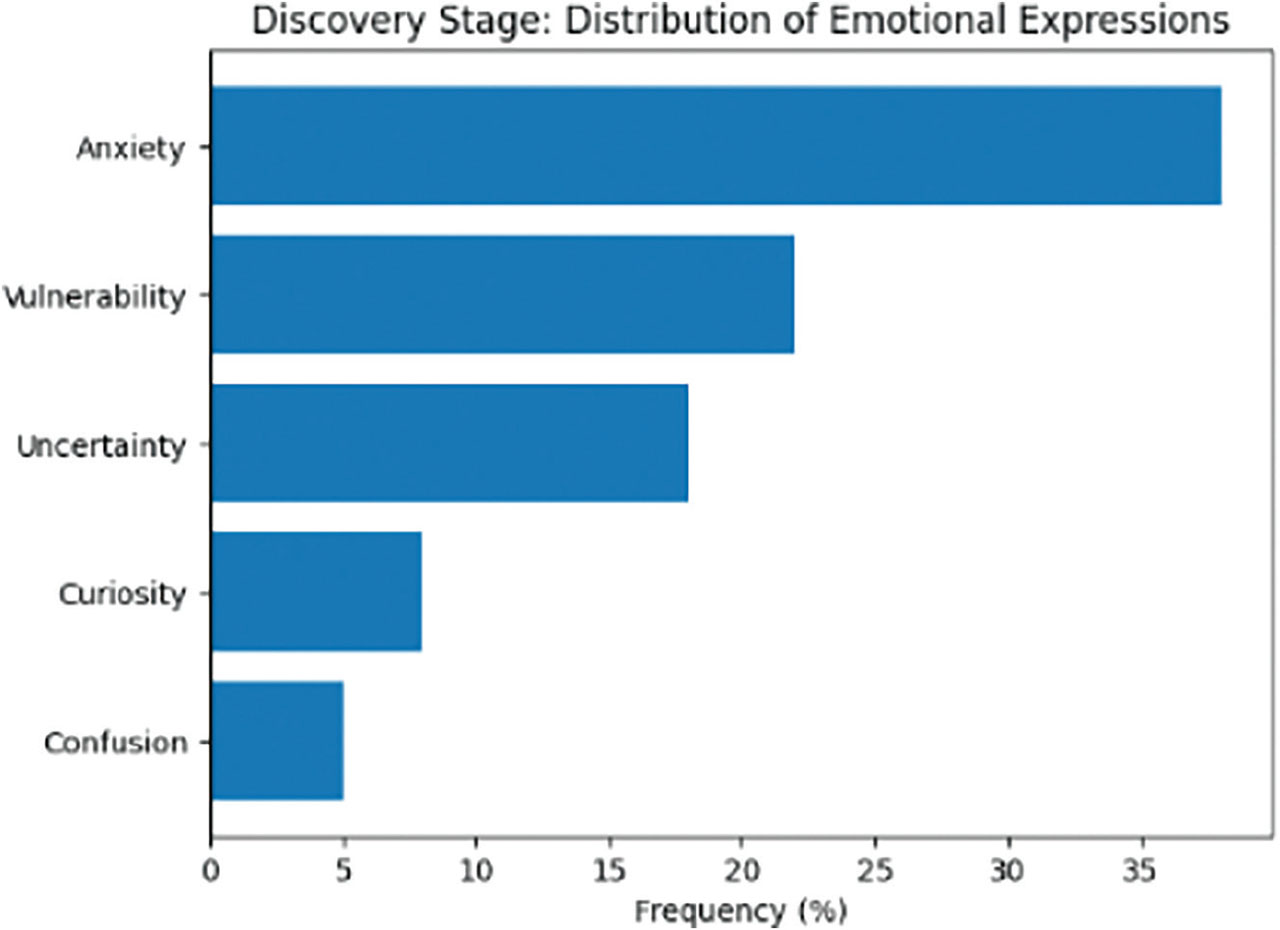
Figure 1.
Discovery Phase.
These patterns highlight a psychological entry point into the advice process: early negative emotions serve as critical indicators of clients’ readiness for engagement. The study confirms that anxiety and vulnerability, when acknowledged and managed, can function as precursors to trust formation. Advisers who employed active listening, empathetic mirroring, and normalisation of past financial errors facilitated emotional transitions toward relief and curiosity. This finding extends existing behavioural finance literature by framing negative emotions not merely as impediments to rational decision-making but as functional signals that, if navigated with emotional intelligence, enhance relational commitment. Practically, this underscores the necessity for advisers to cultivate skills in emotional recognition, validation, and regulation at the outset of client engagement.
Strategy Development and Presentation Stage
During strategy development, 312 emotional instances were identified, with confusion and relief emerging as dominant states. Confusion arose from cognitive overload when clients encountered technical explanations or multiple strategic options, as evidenced by hesitations, repeated clarification requests, and selective attention. Relief followed effective explanation, simplification of complex information, and clear alignment of strategies with client goals. Relief was frequently accompanied by curiosity and trust, suggesting that emotional resolution fosters deeper cognitive engagement and understanding.
Figure two illustrates a marked transition from confusion and mild anxiety at the beginning of strategy discussions toward relief and curiosity as explanations progress. The shift highlights the role of structured communication, clarification, and scenario modelling in reducing cognitive overload. The pattern underscores the interdependence of emotional regulation and comprehension, demonstrating how adviser interventions can transform cognitive stress into constructive engagement.
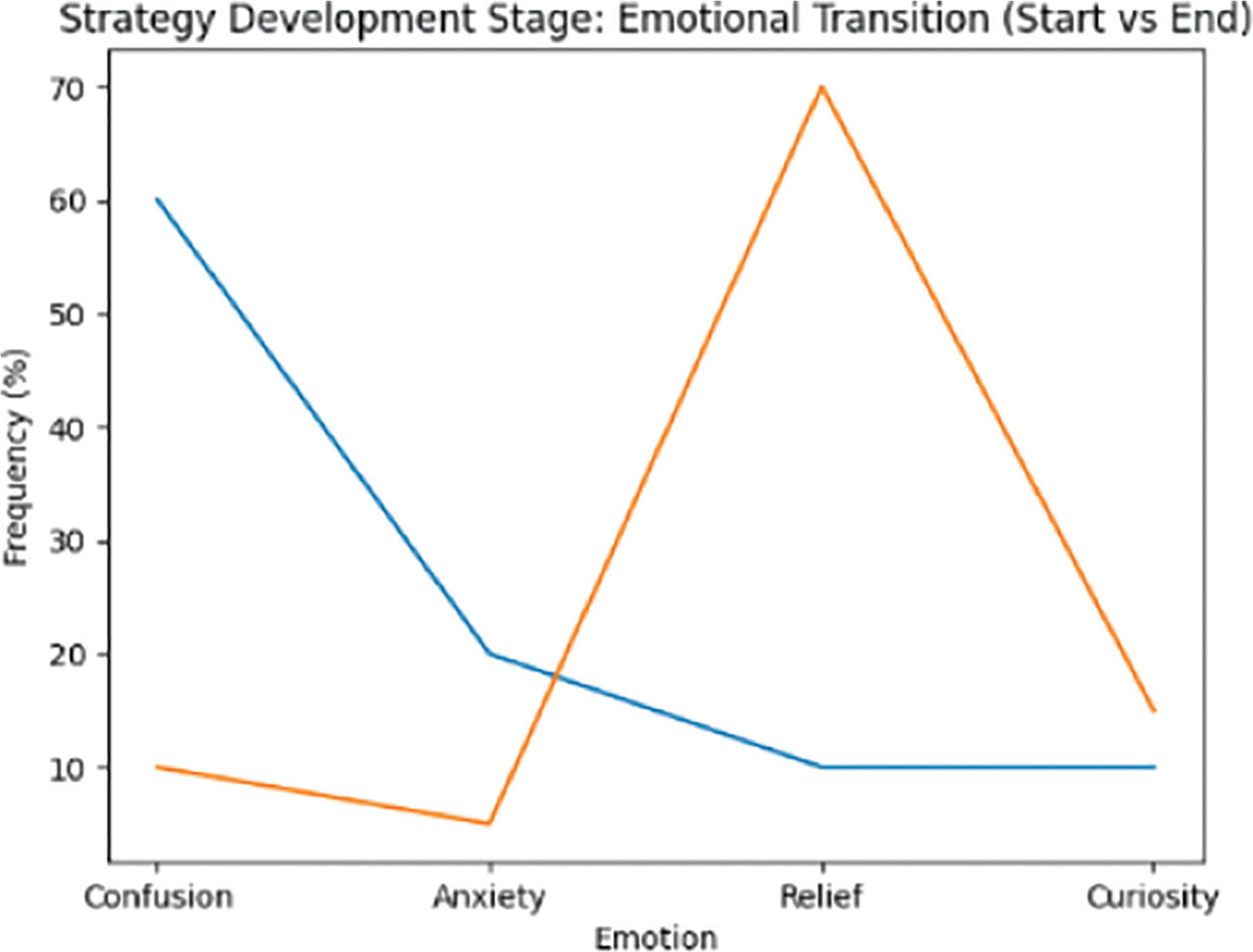
Figure 2.
Strategy Development Stage.
Transition pathways from confusion to relief were facilitated by structured explanations, scenario-based examples, and visual aids, demonstrating that adviser communication techniques directly shape emotional trajectories. This contributes to the literature by illustrating dynamic affective shifts in response to cognitive interventions, highlighting the interdependence of emotion and understanding in decision-making. For practitioners, the findings reinforce the importance of employing clear, structured, and client-centred communication to convert cognitive stress into engagement and adherence.
Implementation Stage
The implementation stage featured a nuanced interplay of confidence (162 instances) and hesitation (127 instances). Confidence arose when clients perceived tangible benefits from strategies and from the trustworthiness of the adviser, expressed through decisive language and affirmative body language. Hesitation occurred in response to trade-offs, risk perception, or uncertainty, often co-occurring with anxiety or uncertainty. Effective advisers mitigated hesitation through decision-support tools, scenario modelling, and stepwise implementation guidance, converting emotional tension into actionable commitment.
Figure three depicts the inverse relationship between confidence and hesitation as clients move toward implementation decisions. Hesitation, associated with perceived trade-offs and risk evaluation, declines as confidence increases through decision-support tools and structured guidance. The pattern reinforces the finding that emotional states at the point of execution directly influence commitment and adherence to recommended strategies.
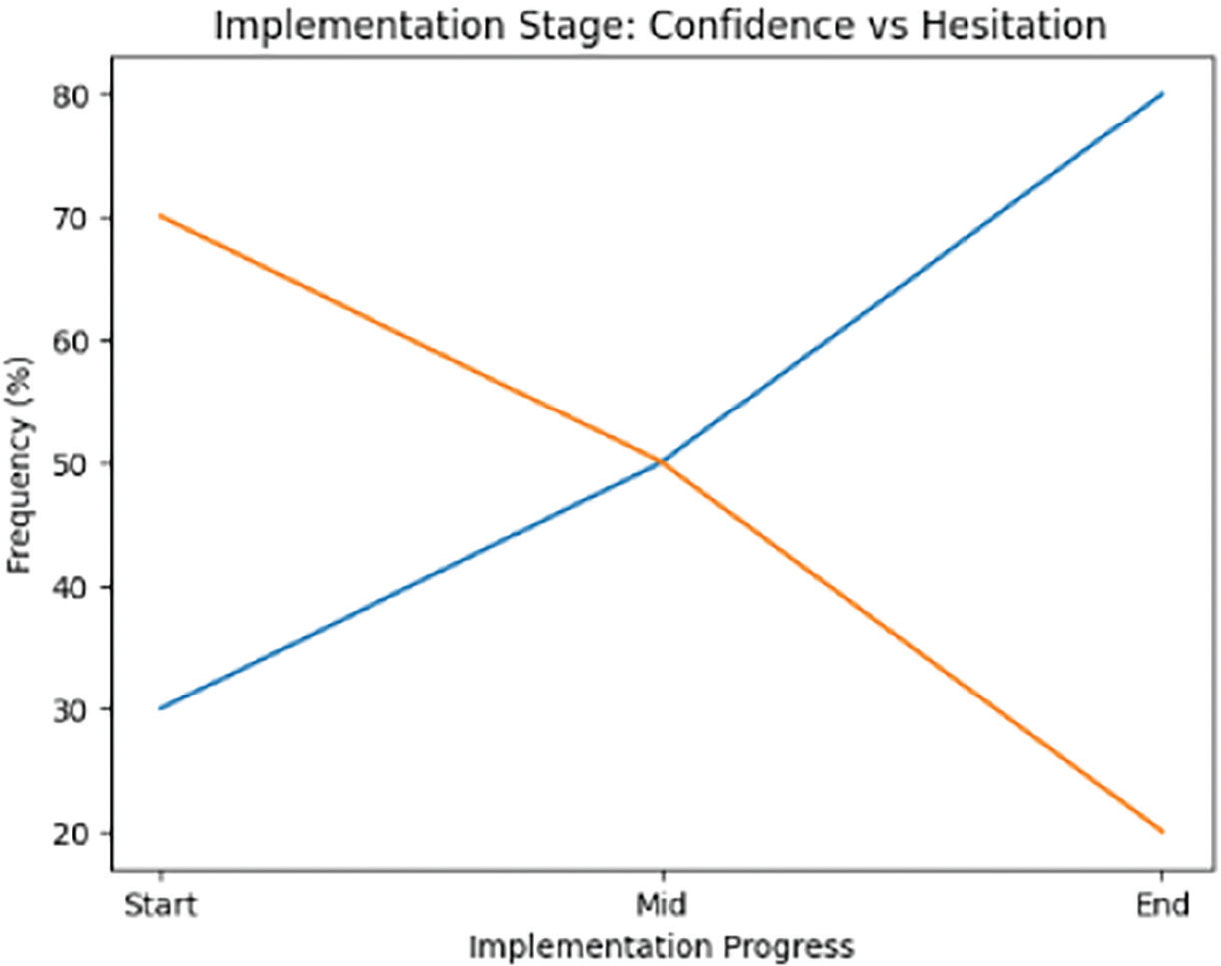
Figure 3.
Implementation Stage.
These findings reinforce the relational and instrumental role of emotion in the execution of financial strategies. Practically, they demonstrate that advisers’ ability to provide concrete, transparent, and structured support can accelerate client adoption and adherence, while persistent hesitation signals the need for additional reassurance and engagement. Theoretically, this stage illustrates the interplay of affect and behavioural commitment, extending current models of financial decision-making by integrating process-specific emotional dynamics.
Review and Ongoing Engagement Stage
The review stage was predominantly characterised by reassurance (164 instances) and trust (98 instances), reflecting clients’ cumulative experiences throughout the advice process. Reassurance emerged from transparent progress reviews, recognition of achievements, and responsive strategy adjustments, while trust developed through sustained empathy, validation, and clarity in prior stages. Less frequent emotions, such as disappointment (14 instances), highlighted the need for expectation management and adaptive interventions.
Figure four demonstrates that reassurance and trust dominate the review phase, reflecting cumulative relational outcomes built across prior stages. While disappointment is infrequent, its presence highlights moments that require expectation management and adaptive guidance. Overall, the visual confirms that sustained emotional validation and transparency contribute to long-term relational stability and ongoing engagement.
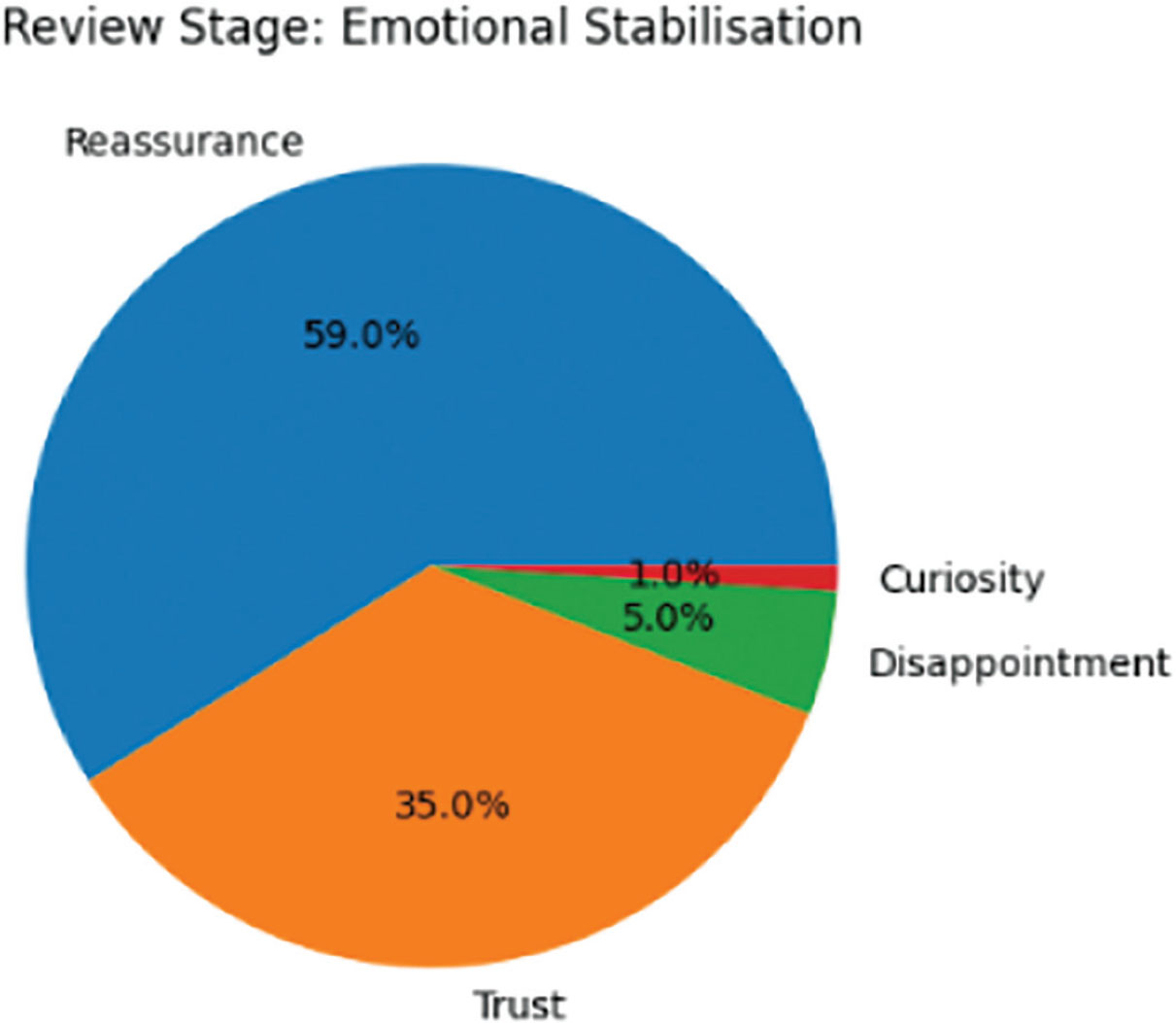
Figure 4.
Review Stage.
The review stage illustrates the longitudinal consolidation of emotional outcomes, with sustained reassurance and trust supporting ongoing client engagement and adherence. For advisers, this highlights the value of iterative feedback, transparency, and proactive emotional management, demonstrating that emotions are not isolated to discrete stages but flow cumulatively across the client journey. For research, the findings extend behavioural finance frameworks by situating emotion as a relational and temporal construct, co-constructed within adviser-client interactions rather than merely as an individual cognitive bias.
Across all stages, client emotions exhibited predictable clustering and transition pathways, revealing structured affective patterns within the advice process. Negative emotions such as anxiety and confusion functioned as entry points that, when navigated effectively, enabled positive relational outcomes, while positive emotions such as relief, confidence, and trust reinforced engagement, decision-making, and adherence. These findings provide a practical roadmap for advisers to integrate emotional literacy and process-sensitive strategies into their practice and contribute to the literature by offering a taxonomy of emotional expression tied to the staged financial planning process.
The distribution and frequency of key emotions observed across the 1,236 appointments reveal a predictable trajectory of client emotional expression. Anxiety dominated the early discovery phase, often accompanied by vulnerability and uncertainty, which intensified as clients disclosed personal financial histories and perceived past mistakes. As adviser engagement deepened, secondary emotions - including confusion, curiosity, and emerging confidence-began to appear, reflecting the client’s gradual cognitive and emotional acclimation to the advice process.
Visual analysis of the emotional trajectory demonstrates that initial anxiety and uncertainty transition through a dynamic intermediate phase, where confusion and curiosity are prominent, into later stages characterised by clarity, confidence, and reassurance. Trust emerges progressively, stabilising alongside reassurance in the review and ongoing engagement stages. Notably, self-directed disappointment was most pronounced during the review phase, linked to clients’ reflection on past inaction or delayed financial decisions. This trajectory illustrates how effective adviser interventions transform early apprehension and self-criticism into enduring confidence, optimism, and trust, highlighting the relational and regulatory function of emotion in the financial planning context.
To systematically capture these dynamics, researchers developed a hierarchical framework for emotional presence that maps both primary and secondary emotions across the advice lifecycle. This approach identified not only the prominence of emotions at each stage but also their transitional pathways and susceptibility to the influence of advisers. Advisers were observed to employ several strategies that shaped these trajectories, including:
Active listening and validation – acknowledging client concerns before delivering technical explanations to build trust and reduce anxiety.
Reframing and normalisation – contextualising past financial errors as learning experiences to mitigate regret and vulnerability.
Visualisation and scenario modelling – using cashflow projections or strategic simulations to clarify complex information, reduce confusion, and foster confidence.
Structured guidance through cognitive load – sequencing explanations to align with client understanding, supporting transitions from confusion to relief and curiosity.
The hierarchical analysis reveals a clear emotional progression: initial anxiety and uncertainty give way to relief, clarity, and growing confidence as strategy development and implementation unfold. In the review and ongoing engagement stages, trust and reassurance dominate, providing a stabilising foundation for sustained commitment. Secondary emotions - including curiosity, vulnerability, and occasional disappointment - act as transitional states, either reinforcing or undermining primary emotions depending on the adviser’s responsiveness.
Figure five presents the structured emotional trajectory observed across the advice lifecycle, beginning with anxiety and uncertainty, progressing through clarity and confidence, and stabilising in trust and reassurance. The linear progression illustrates that emotions are not episodic but stage-specific and predictive. This visual encapsulates the study’s central contribution: that financial planning operates as a staged emotional-regulation process, with adviser interventions shaping the direction and quality of clients’ emotional outcomes.
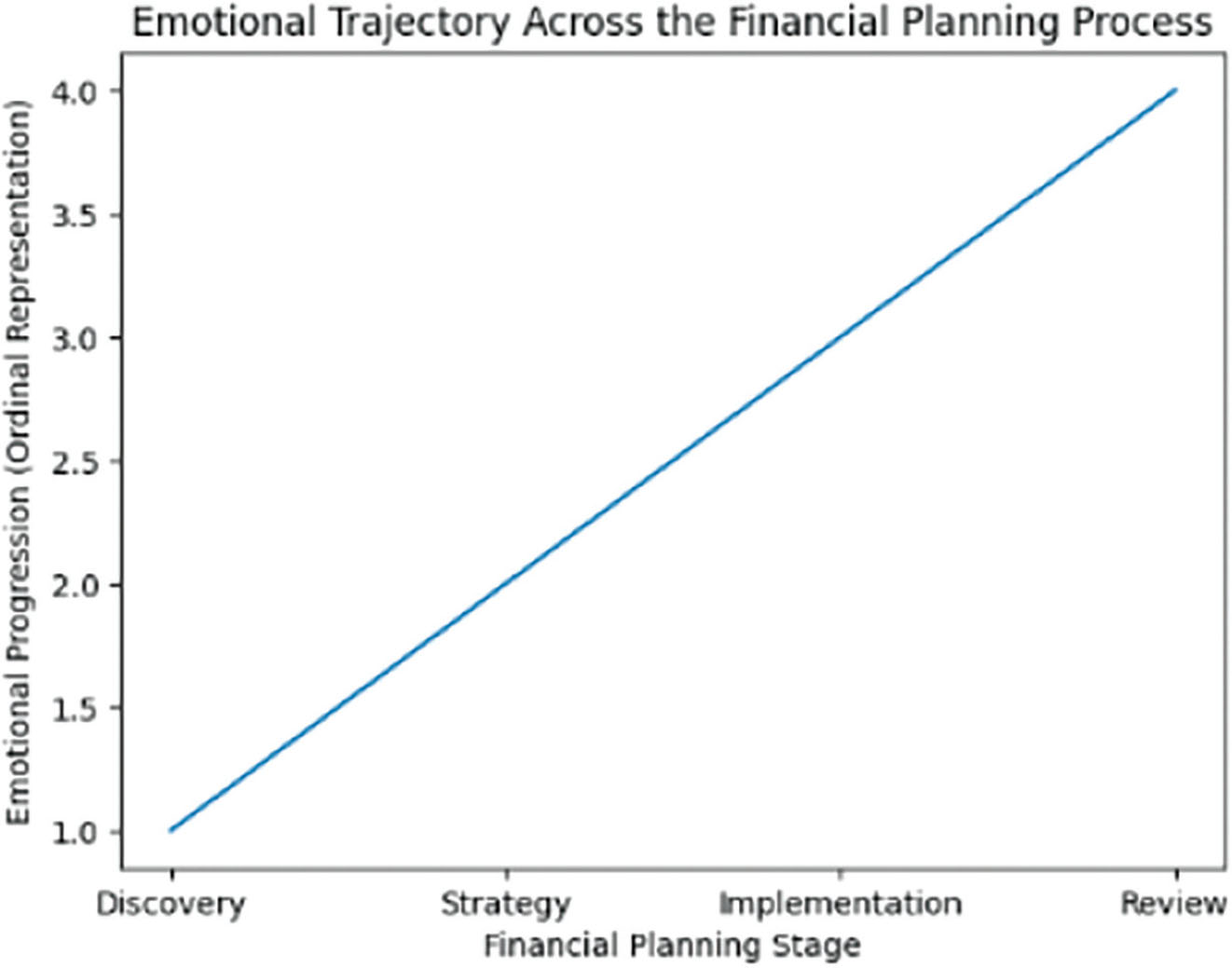
Figure 5.
Emotional Trajectory.
Practically, these findings demonstrate that deliberate emotional management is integral to effective financial planning. Advisers who recognise and respond to emotional presence can reduce client stress, build trust, facilitate transparency, and improve engagement, leading to more accurate fact-finding and better-informed decision-making. For the literature, this research advances the understanding of emotion in financial advice by:
Demonstrating that emotions follow structured, stage-specific trajectories rather than occurring randomly.
Highlighting the co-constructed and relational nature of trust, reassurance, and emotional regulation within adviser-client interactions.
Providing a replicable taxonomy and hierarchy of client emotions, offering a framework for both empirical testing and practical application in training, process design, and engagement strategy.
Overall, mapping the hierarchy of emotions provides a unique lens for understanding the financial planning process. By recognising where and how emotions arise and evolve, advisers can deliver emotionally attuned advice, while clients experience a process that actively supports psychological comfort, decision confidence, and long-term financial adherence.
Discussion
A key refinement in the current study is the explicit differentiation among emotions, related states of being, cognitive appraisals, and skills. Consistent with Plutchik’s (1980) framework, only primary emotions and their derivatives are classified as emotional expressions. Terms previously described as “emotions,” such as confidence, overconfidence, uncertainty, and hesitation, are instead framed as states of being or skills that interact with emotional processes. This distinction enhances conceptual clarity and ensures alignment with established theories of emotion. For instance, client confidence may increase in response to adviser interventions but is not coded as an emotion; rather, it represents a cognitive-affective state influenced by prior emotional experiences and interactions. Similarly, moments of uncertainty or hesitation indicate deliberative cognitive processing that co-occurs with emotional expressions such as fear, surprise, or sadness.
Figure six shows clients’ emotional and cognitive states across the four advice stages. Each stacked bar combines three emotions (anxiety, relief, sadness) and three cognitive states (confidence, overconfidence, uncertainty), highlighting how these states co-occur and evolve. The figure identifies stages where advisers may need to manage uncertainty or overconfidence while supporting clients’ emotional experience.
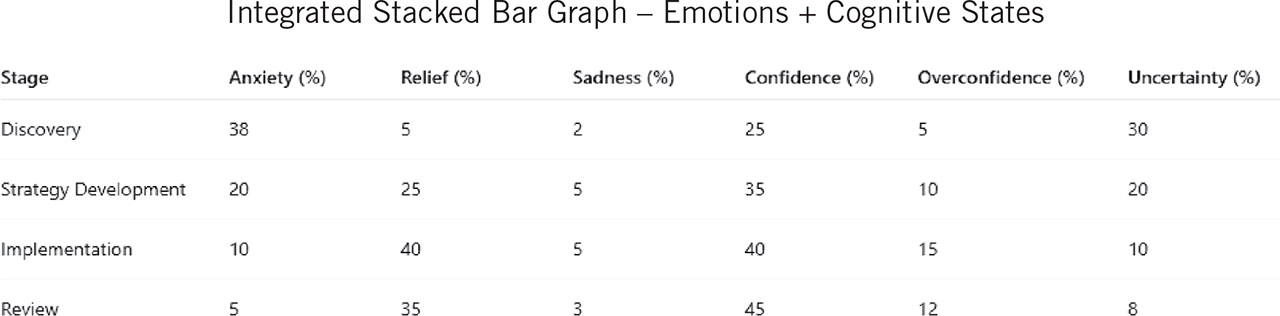
Figure 6.
Analysis Across Phases.
While the study identifies dominant emotions - anxiety, relief, and sadness - less frequent emotional expressions, such as disappointment in themselves (observed in approximately 1% of the sample), are considered for their functional significance rather than their frequency. Although infrequent, these emotions provide insight into clients’ self-reflection and evaluation, particularly during review phases, and illustrate the nuanced ways in which clients engage with financial advice.
The longitudinal dataset spans four years, during which clients experienced varying macroeconomic conditions, including periods of market growth, volatility, and interest rate changes. These external factors likely shaped baseline emotional predispositions, amplifying or attenuating client expressions of anxiety, relief, or other emotions. While the focus of this study remains on the internal dynamics of the adviser-client interaction, acknowledging the influence of the broader economic environment situates emotional expression within a real-world context and highlights the interplay between external and interpersonal factors.
Observed correlations between adviser tools - such as visual aids, scenario modelling, and active listening - and transitions in client emotional states are interpreted cautiously. The qualitative content analysis identifies temporal associations between specific interventions and emotional shifts, but causality cannot be definitively established. Emotional transitions may reflect the natural structure of the advice process or the sequential unfolding of discussions. Future research could explore these relationships using inferential statistical methods or experimental designs to determine causal mechanisms.
Finally, the study recognises the challenges of cultivating emotional awareness and intelligence in financial planning. Developing the skills to recognise, validate, and respond to clients’ emotions requires substantial expertise and sensitivity, particularly in populations affected by cognitive biases, overconfidence, or complex psychosocial factors. Additional considerations include workplace dynamics, gender differences in emotional intelligence, and personality traits such as narcissism, which may influence both advisers and clients. By clarifying emotional terminology, situating emotional expression within external and relational contexts, and acknowledging practical challenges, this study provides a robust framework for understanding clients’ psychological journey throughout the financial advice process.
Conclusion
This study demonstrates that financial planning is not merely a technical or cognitive exercise, but a structured emotional process unfolding across identifiable stages. Through analysis of 1,236 transcribed appointments and systematic classification using Plutchik’s Wheel of Emotions, the findings reveal that clients’ emotions are dynamic, hierarchical, and predictably clustered by phase of engagement. Anxiety, uncertainty, and confusion dominate early interactions; these give way to clarity, relief, and confidence during strategy formation and implementation; and ultimately stabilise into reassurance and trust in ongoing review. Secondary emotions - including vulnerability, curiosity, hesitation, and self-directed disappointment - act as transitional states that either reinforce or redirect primary emotions depending on adviser responsiveness.
Crucially, emotions were shown to be interdependent and directional. They follow identifiable transition pathways rather than appearing randomly or episodically. Early negative affect does not represent dysfunction; instead, it signals psychological entry points. When advisers apply structured interventions - such as emotional validation, reframing, staged explanation, and scenario-based modelling - anxiety can evolve into trust, confusion into relief, and hesitation into confident commitment. In this way, financial advice operates as a staged process of emotional regulation, co-constructed within adviser–client interaction.
This research advances the literature by extending beyond traditional behavioural finance models that emphasise cognitive bias and decision error. While those frameworks illuminate why individuals deviate from rational choice, they do not sufficiently account for the real-time relational emotions that shape comprehension, engagement, and adherence. By introducing a hierarchical taxonomy of emotional expression specific to financial planning, this study provides a replicable framework for examining affective trajectories across advisory contexts. It positions emotion not as peripheral to decision-making, but as structurally embedded within it.
For professional practice, the implications are direct and consequential. Emotional literacy emerges not as a soft skill but as a core technical competency. Advisers who can recognise stage-specific emotional cues are better positioned to:
Structure discovery conversations to reduce anxiety and build psychological safety.
Translate technical complexity into clarity, reducing confusion and accelerating relief.
Use visual modelling and decision-support tools to convert hesitation into commitment.
Manage review conversations to consolidate reassurance, address disappointment, and reinforce trust.
These capabilities have measurable downstream effects: improved client engagement, stronger adherence to strategy, greater retention, and more durable relational trust. Firms can operationalise these insights by embedding emotional awareness into training programs, communication protocols, and advice process design. Incorporating emotional mapping into client journeys allows practices to intentionally shape the affective experience at key decision points, strengthening both client outcomes and business sustainability.
Importantly, the findings also demonstrate that emotions can be strategically harnessed. Curiosity can be leveraged to deepen engagement; anticipation can motivate goal-setting; and even self-directed disappointment can be reframed as proactive commitment. By aligning emotional trajectories with decision architecture, advisers can amplify constructive emotional states at pivotal moments, supporting informed and confident financial behaviour.
Ultimately, this study reframes financial planning as a profession of guided emotional progression. When emotions are acknowledged, structured, and skilfully navigated, they become powerful instruments for clarity, commitment, and long-term trust. In doing so, financial advice moves beyond correcting bias toward cultivating emotionally intelligent, enduring client outcomes.