Have a personal or library account? Click to login
A Review of Ethics Education in Financial Planning Courses in Australia Cover

A Review of Ethics Education in Financial Planning Courses in Australia

Open Access
|Mar 2024

Figures & Tables

Figure 1:

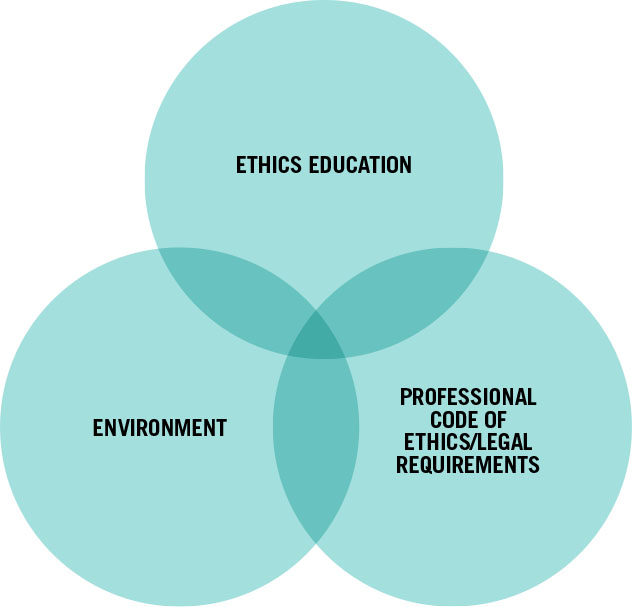
Factors that contribute to producing an ethical financial planner.

Figure 2:

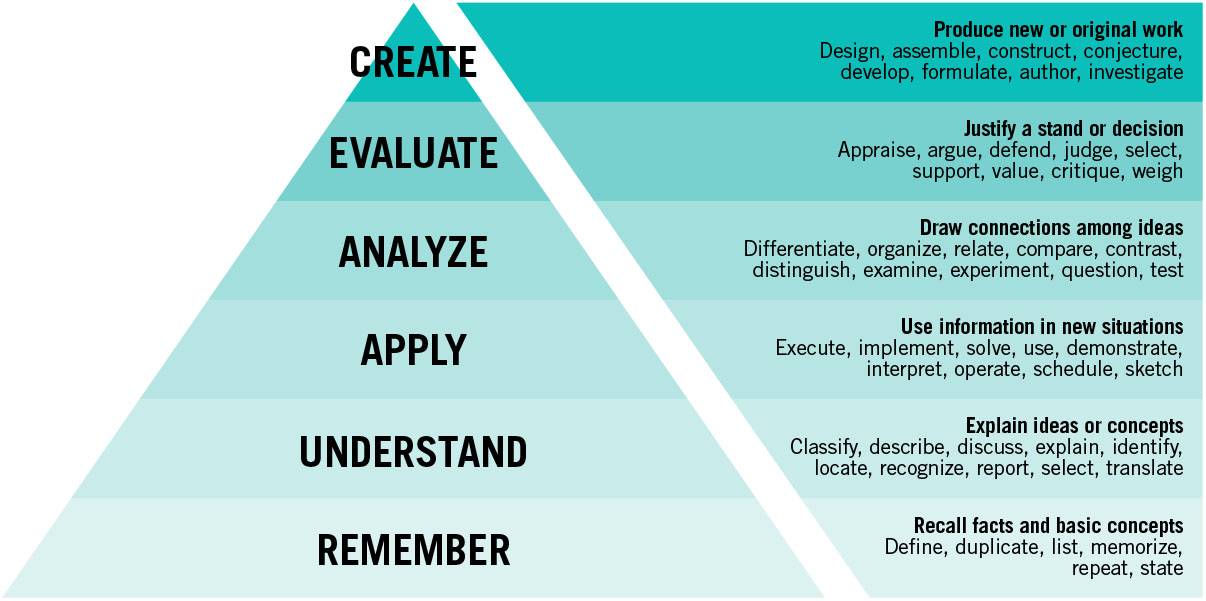
Bloom’s Taxonomy
Bloom’s Taxonomy

Figure 3:

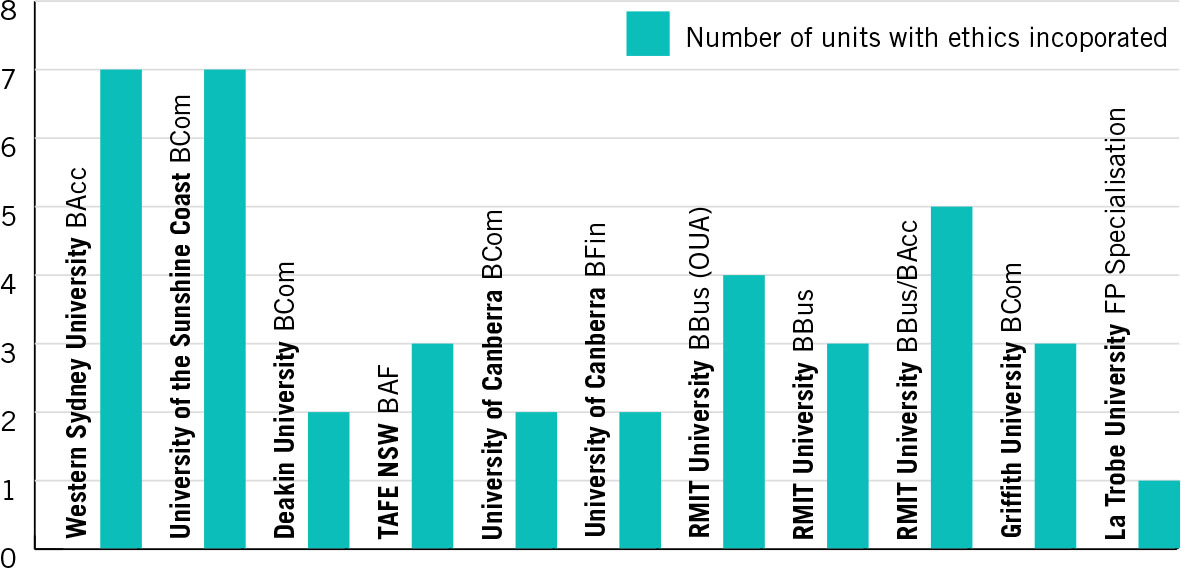
Comparison of the presence of ethics in FPA accredited bachelor degrees (2016/17)
Note: based on publicly available information
Comparison of the presence of ethics in FPA accredited bachelor degrees (2016/17) Note: based on publicly available information

Figure 4:

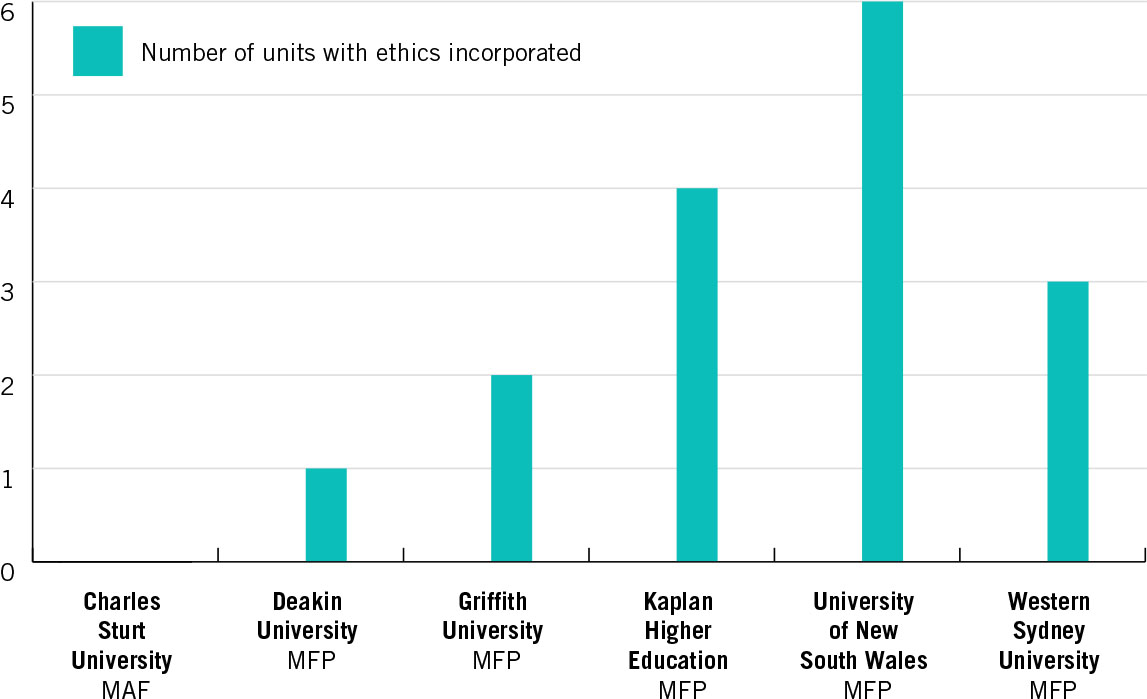
Comparison of the presence of ethics in FPA accredited postgraduate degrees (2016/17)
Note: based on publicly available information
Comparison of the presence of ethics in FPA accredited postgraduate degrees (2016/17) Note: based on publicly available information

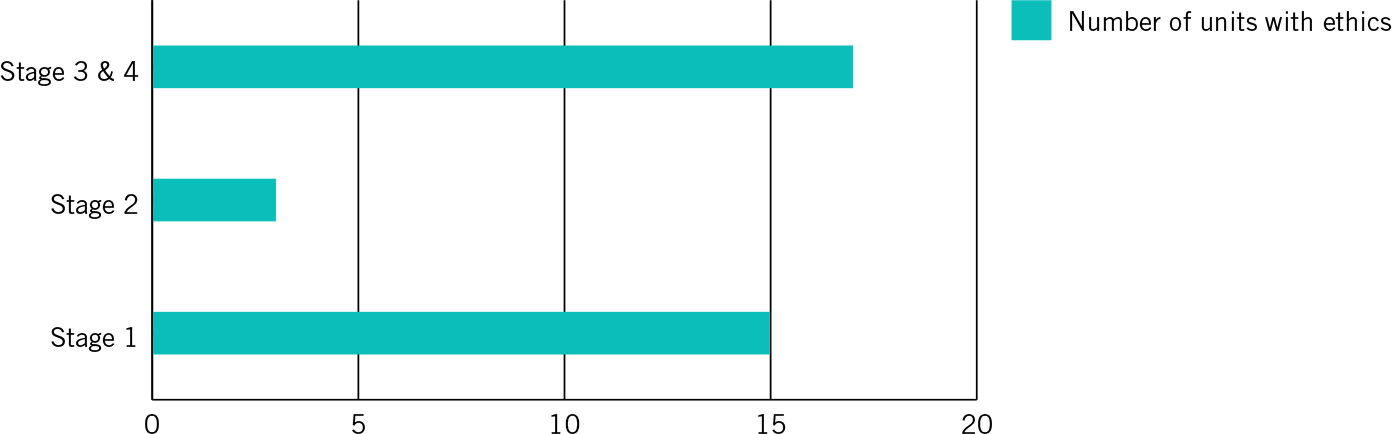
Figure 5:

Number of units within FPA approved bachelor degrees with ethics by stage.
Note: Four units that were undefined were omitted from this graph. Postgraduate data excluded as data was unavailable.
Number of units within FPA approved bachelor degrees with ethics by stage. Note: Four units that were undefined were omitted from this graph. Postgraduate data excluded as data was unavailable.

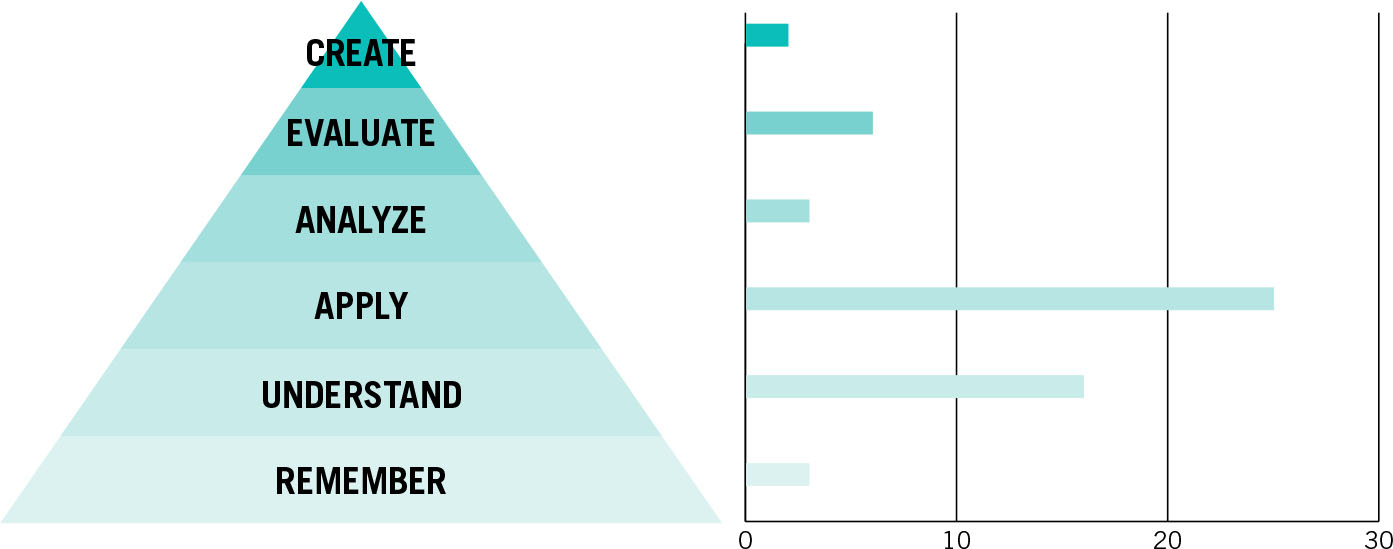
Figure 6:

Bloom’s Taxonomy analysis for FPA approved degrees

Approaches for implementation, challenges and opportunities in ethics education

Approach of implementationExamplesChallenges or opportunities
Piggy backing
  • Inclusion of visiting lectures by leading business people about CSR

  • Curriculum content on Business Ethics devised by ethics specialists

  • Add subject-specific financial planning knowledge to an existing module

  • May be viewed as supplementary

  • Relatively seamless integration

  • Focus on teaching students ‘soft-skills’ (Truscheit and Otte, 2007)

Digging Deep
  • No change in the existing structure required

  • Use optional modules with a focus on financial planning

  • Unlikely to be selected (Baden, 2013)

  • May be perceived as an add-on (Holt, 2003)

Mainstreaming
  • Integrate financial planning into common core requirements

  • Offering students placements within social enterprises or charities

  • Approach should go along with emphasis on a broader cross-curricular perspective (‘soft skills’) (Godemann, Herzig and Moon, 2011, Stibbe, 2009)

  • Provides a capacity to act on this knowledge (Campbell and Zegawaard, 2012)

Focusing
  • Set up a new programme

  • New transdisciplinary module in all programmes

  • Can be included across the whole curriculum, adding interdisciplinary perspectives (Roome, 2005)

  • Business schools are too much focused on well-designed problems rather than ‘messy’ real-world problems (Schoemaker, 2008).

  • Internships would be beneficial to counter this

Stand alone
  • Unit solely focused on ethics education

  • Lack of time (Maxwell et al. 2016;)

  • Educators unsure of their own morals

  • Perceived completion of ethics education (McCarthy, 1997), cited in Slocum, Rohlfer and Gonzalez-Canton, (2014); Mcdonald and Donleavy, (1995), cited in Jonson, McGuire and O’Neill, (2015)

  • Jonson, McGuire and O’Neill (2014) showed that those completing a stand-alone course were more pragmatic and realistic than those undertaking integrated learning – attributed to its condensed nature

Results of perceived ‘institutional obstacles to implementation’ of ethics education

ObstaclesSupporting scholars
Lack of time in program schedulesMaxwell et al. (2016); Gandz and Hayes (1998); Golub (1993), cited in Moeller, (2005); Ketz (2006); Strong, Connelly and Forrow (1992); Diekema and Shugerman (1997)
Faculty members unavailableMaxwell et al. (2016)
Financial resources unavailable to hire qualified instructorsMaxwell et al. (2016)
No established curriculum to followMaxwell et al. (2016); Mintz (1990), cited in Baetz and Sharp, (2004)
No financial resources available to develop new courses or curriculumMaxwell et al. (2016)
Resistance from facultyMaxwell et al. (2016); Strong, Connelly and Forrow (1992); Diekema and Shugerman (1997)
Resistance from administrationMaxwell et al. (2016)
Resistance from third-party trustee institutions (e.g. professional association)Maxwell et al. (2016)
Resistance from studentsMaxwell et al. (2016); Baden (2013), cited in Painter-Morland, (2016); Sims and Felton (2006)
Faculty members not qualified or confident in teaching ethicsBaetz and Sharp (2004); Gandz and Hayes (1998); Langenderfer and Rockness (1989); Park (1998); Ketz (2006); Strong, Connelly and Forrow (1992); Diekema and Shugerman (1997)
Lack of educational material available to educatorsBaetz and Sharp (2004); Ketz (2006)

Learning outcomes from FPEC requirements of an accredited financial planning degree that involve ethics_

Learning outcomes
1Describe the Australian legal framework within which financial planners operate and their legal, social and ethical responsibilities.
2Undertake research, construct and present a limited scope Statement of Advice (SOA) to meet client requirements in an ethical and professional manner.
3Identify and understand ethical considerations and professional conduct requirements in the giving of financial planning advice
4Use sound judgment when engaging in ethical practice and display professional standards reflecting responsible and sustainable practices.
5Act with integrity and ethical practice in communicating risk management strategies through the provision of comprehensive and appropriate advice to clients.
6Apply the 6-step financial planning process in accordance with Financial Planning Standards Board (FPSB) standards and ethical practices.
7Develop strategies and provide recommendations to advise clients on investment planning, reflecting socially responsible and ethical practice.
DOI: https://doi.org/10.2478/fprj-2018-0001 | Journal eISSN: 2206-1355 | Journal ISSN: 2206-1347
Language: English
Page range: 11 - 32
Submitted on: Aug 2, 2017
Accepted on: Oct 31, 2017
Published on: Mar 19, 2024
Published by: Financial Advice Association of Australia
In partnership with: Paradigm Publishing Services
Publication frequency: 2 issues per year

© 2024 Michelle Cull, Briana Melville, published by Financial Advice Association of Australia
This work is licensed under the Creative Commons Attribution 4.0 License.