
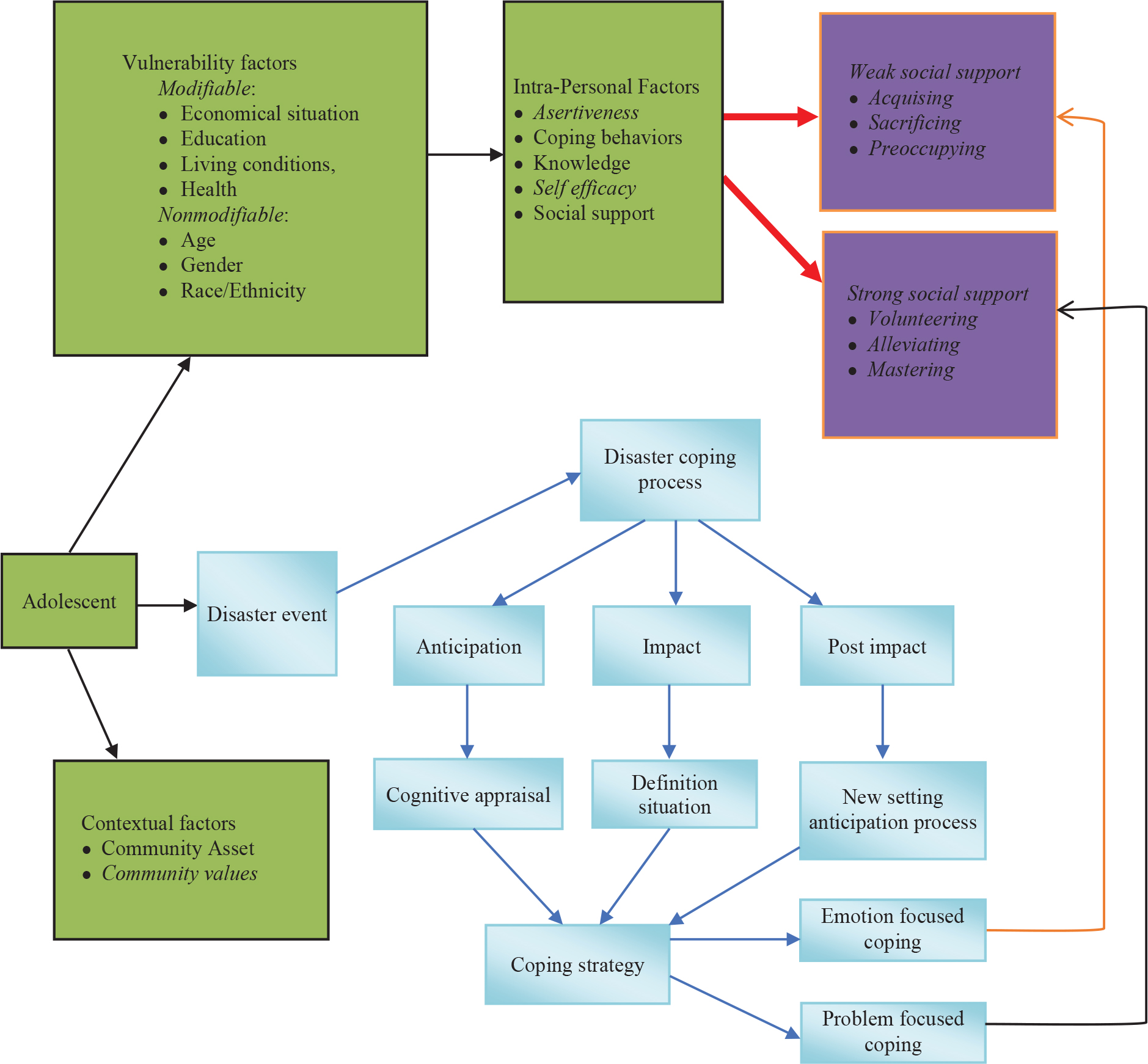
Figure 1.
The development of a coping model for children in flood-prone areas uses the self-care management theory approach of Dorsey and Murdaugh (2003) for vulnerable populations, Johansson et al.’s12 coping approach, and Lazarus and Folkman’s14 disaster coping process.
Table 1.
Characteristics of the participants.
| ID | Gender | Age (years) |
|---|---|---|
| P1 | M | 16 |
| P2 | F | 17 |
| P3 | F | 17 |
| P4 | F | 15 |
| P5 | F | 16 |
| P6 | M | 14 |
| P7 | F | 15 |
| P8 | M | 18 |
| P9 | F | 13 |
| P10 | F | 13 |
| P11 | F | 15 |
| P12 | F | 13 |
| P13 | M | 14 |
| P14 | F | 17 |
| P15 | M | 16 |
Table 2.
Content analysis: adolescents’ experiences in seasonal flood-prone areas.
| Category | Subcategory |
|---|---|
| Coping process post-disaster | Uncomfortable feeling of having a place to live floods easily Feelings of anxiety about having a place to live that is prone to flooding Help parents to evacuate goods at home Post-flood community service |
| Coping approach | Surrender without effort to the existing situation Let feelings of sadness go away on their own Trying to bear the problem alone Positive activities to divert problems |
| Community power | Cooperation between citizens Togetherness General thoughts Always the same situation |
| Vulnerability | Physical and psychological health problems Limited sources of income The environment is prone to flooding because it is near a river Educational level Inherent characteristics |
| Self-potential | Know the causes of flooding Know how to prevent flooding Know what to do during a flood Able to express opinions about living conditions State what is the right Focus on the problem Focus on emotions Face the challenges as much as possible Carry out obligations according to circumstances Confidence in yourself based on previous experience Parents provide support Support from neighbors and religious leaders |
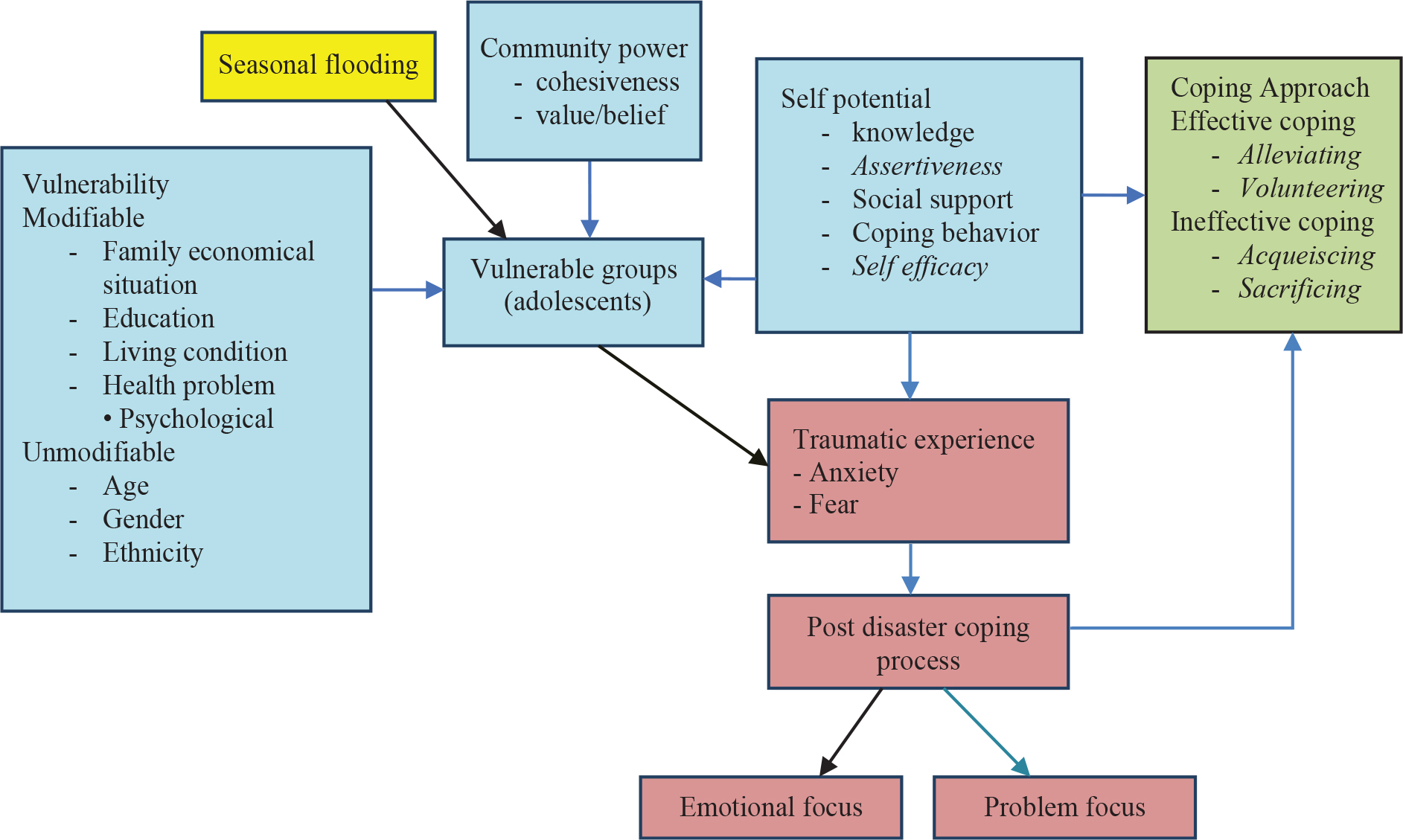
Figure 2.
Coping model for adolescents in flooding prone areas.