
Table 1
Factor analysis of the Competency Assessment Tool-Mental Health (the section on importance of skills and knowledge).
| Items | Factor loading |
|---|---|
| 1. Knowing the symptoms/characteristics of mental illnesses | 0.51 |
| 2. Knowing the uses and side effects of psychiatric medications | 0.59 |
| 3. Knowing the biological nature of mental illnesses | 0.42 |
| 4. Knowing and using the best types of therapy for general mental illnesses | 0.58 |
| 5. Knowing and using the best types of therapy for people with a forensic status | 0.57 |
| 6. Knowing and using the best types of therapy for people with a substance abuse/mental illness diagnosis | 0.71 |
| 7. Knowing and using the best types of therapy for people with a mental illness/mentally retarded diagnosis | 0.71 |
| 8. Knowing and using the best types of therapy for children/adolescents affected by severe emotional disorders | 0.66 |
| 9. Knowing and using crisis interventions | 0.69 |
| 10. Knowing and using recovery principles | 0.73 |
| 11. Developing and putting into practice individual service plans and individual treatment plans | 0.55 |
| 12. Using community resources effectively | 0.50 |
| 13. Knowing about legal issues, client rights, and ethical issues | 0.57 |
| 14. Working well as a member of an interdisciplinary team | 0.60 |
| 15. Working in a professional way | 0.65 |
| 16. Evaluating one's own work performance | 0.63 |
| 17. Keeping accurate work records | 0.53 |
| 18. Knowing and being able to use first aid, cardiopulmonary resuscitation (CPR), and other ways to keep clients and workers safe | 0.47 |
| 19. Providing basic nursing care, including taking vital signs and helping clients use the bathroom | 0.43 |
| 20. Using different ways to reduce worker stress | 0.51 |
| 21. Knowing basic facts of good nutrition | 0.54 |
| Eigenvalue | 12.15 |
| % of variance | 57.87 |
| % of cumulative | 57.87 |
| Cronbach's α | 0.96 |
Table 2
Factor analysis of the Competency Assessment Tool-Mental Health (the section on benefits of additional education).
| Items | Factor loading |
|---|---|
| 1. Treating clients with respect and dignity, and as equal partners in their treatment | 0.48 |
| 2. Including family members and other supportive people/groups in the client's treatment | 0.42 |
| 3. Knowing the uses and side effects of psychiatric medications | 0.50 |
| 4. Knowing the biological nature of mental illnesses | 0.50 |
| 5. Knowing and using the best types of therapy for general mental illnesses | 0.58 |
| 6. Knowing and using the best types of therapy for people with a forensic status | 0.57 |
| 7. Knowing and using the best types of therapy for people with a substance abuse/mental illness diagnosis | 0.69 |
| 8. Knowing and using the best types of therapy for people with a mental illness/mentally retarded diagnosis | 0.66 |
| 9. Knowing and using the best types of therapy for children/adolescents affected by severe emotional disorders | 0.64 |
| 10. Knowing and using crisis interventions | 0.64 |
| 11. Knowing and using recovery principles | 0.57 |
| 12. Developing and putting into practice individual service plans and individual treatment plans | 0.54 |
| 13. Using community resources effectively | 0.50 |
| 14. Knowing about legal issues, client rights, and ethical issues | 0.52 |
| 15. Working well as a member of an interdisciplinary team | 0.58 |
| 16. Working in a professional way | 0.66 |
| 17. Evaluating one's own work performance | 0.54 |
| 18. Keeping accurate work records | 0.57 |
| 19. Knowing and being able to use first aid, CPR, and other ways to keep clients and workers safe | 0.54 |
| 20. Providing basic nursing care, including taking vital signs and helping clients use the bathroom | 0.50 |
| 21. Using different ways to reduce worker stress | 0.51 |
| 22. Knowing basic facts of good nutrition | 0.44 |
| Eigenvalue | 12.16 |
| % of variance | 55.27 |
| % of cumulative | 55.27 |
| Cronbach's α | 0.96 |
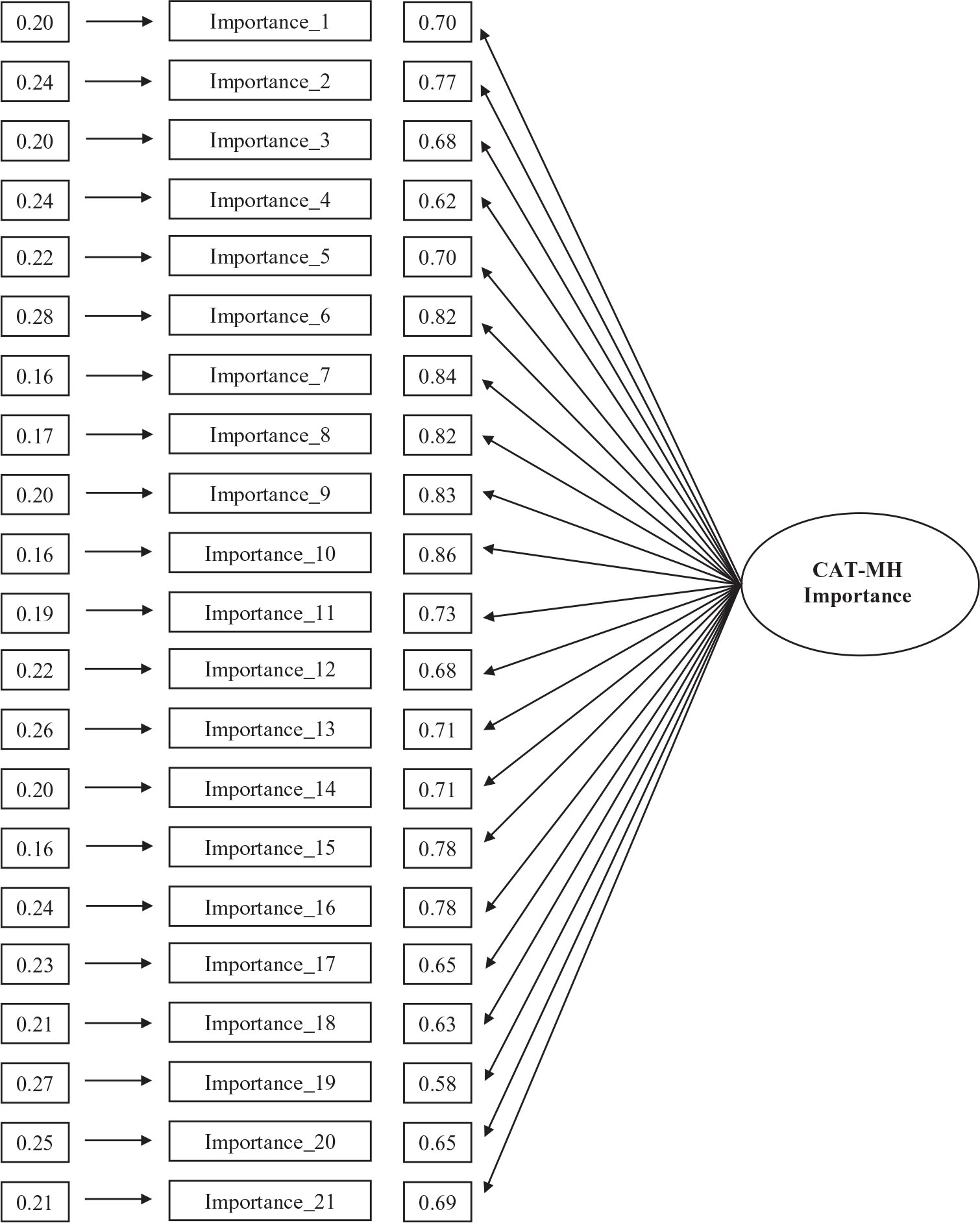
Figure 1
Confirmatory factor analysis (The Section on Importance of Skills and Knowledge).
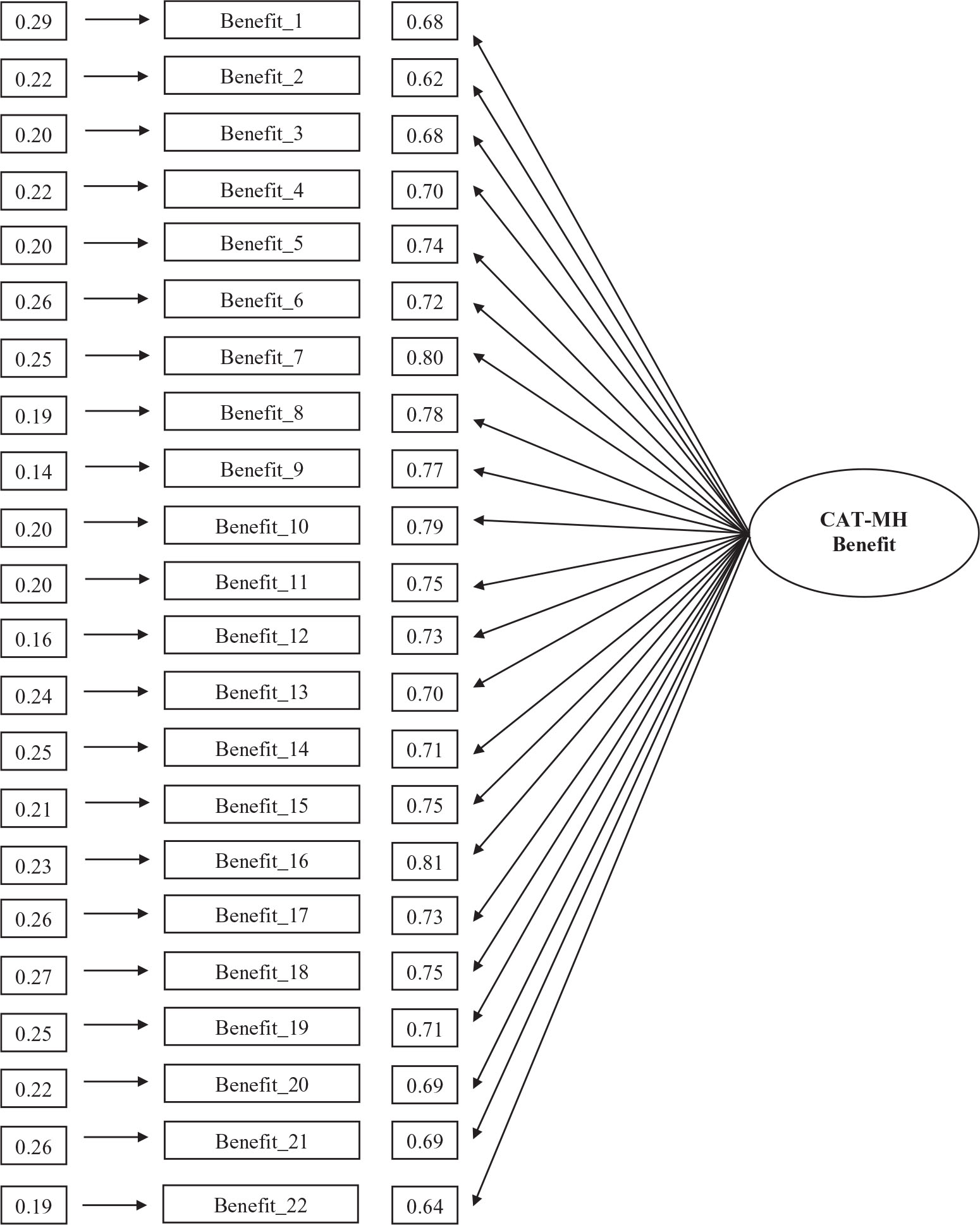
Figure 2
Confirmatory factor analysis (The Section on Benefits of Additional Education).
Table 3
Correlation among variable.