
INTRODUCTION
Strawberry (Fragaria ananassa Duch.) is a well-known non-climacteric fruit that is popular due to its pleasant taste and nutritional benefits. However, they cannot be stored for long due to various metabolic processes, higher susceptibility to mechanical damage, water loss, and microbial contamination (Dong and Wang, 2017). They are frequently associated with the presence of postharvest fungi in storage (Dwiastuti et al., 2021). The worldwide postharvest loss rate of strawberries can reach as high as 25%–30% and the infection by fungal pathogens has been reported among the prime causes of this loss (Aljawasim et al., 2023). Losses in strawberry crop generally vary with the nature of the fruit, number of harvests per unit area, frequency of water applications, and distribution from a central hub to the consumers (Rhouma et al., 2022). Postharvest losses are exacerbated in areas such as Saudi Arabia, which have a favourable climate that supports the development of pathogens, including B. cinerea and Rhizopus stolonifer, which further contribute to economic losses in the fruit industry (Feliziani and Romanazzi, 2016).
Strawberries are highly susceptible to fungal pathogens, with B. cinerea being the major postharvest threat responsible for grey mould that results in rapid decay and significant economic losses (Rhouma et al., 2022). Synthetic fungicides are mainly used as control methods, but they often result in the development of resistant fungal strains and trigger health and environmental issues (El-Baky and Amara, 2021). Natural plant extracts, especially essential oils have been considered as environmentally friendly options due to their demonstrated antifungal effect against B. cinerea and other fungal agents (Yan et al., 2021). Essential oils are thought to damage fungal membranes and can be used for postharvest decay control when applied as vapours in controlled-release packaging, thereby minimising residue and limiting physical damage to soft fruits (Magri et al., 2023). Several studies, including vapour treatments of essential oils, have confirmed their efficacy against B. cinerea, Rhizopus, and Penicillium on strawberries, melons, and other soft fruits (Remolif et al., 2024). Pre and postharvest applications of potassium phosphite have also been shown to suppress the incidence and severity of postharvest green and blue moulds in clementine oranges stored at low temperatures without affecting fruit quality or phytotoxicity (Strano et al., 2015).
Postharvest physiology of strawberry fruit is a topic of great scientific interest because of metabolic and molecular changes that take place during ripening and senescence and their relations to fruit quality (Sirangelo et al., 2022). A set of vital conditions that promote the quality of strawberry fruit and shelf life depends on a complex of key factors, such as cultivar properties, preharvest management, storage temperature and atmosphere, and various other postharvest interventions (Zhang et al., 2023). To increase shelf life and quality assurance, several postharvest interventions have been studied. Some of the preharvest and postharvest interventions which have provided positive results include prohexadione, calcium chloride (CaCl2), methyl jasmonate, UV-C light, and indole 3 acetic acid in strawberry fruit (Lara Ayala, 2013).
Prohexadione-calcium (prohexadione-Ca, Pro-Ca) is a growth regulator of plants that alters the production of gibberellin (GA) by blocking the synthesis of kaurenoic acid to kaurene. As a result, it inhibits vegetative development without interfering with early flowering and pollination (Çetinbaş et al., 2015). Pro-Ca has been applied to numerous horticultural crops, such as cherry, pear, apple, grape, peach, and strawberry. In strawberry, it has proven to inhibit vegetative development, promote flowering, and fruit set (Alsaiari et al., 2024; Li et al., 2025a, 2025b). Pro-Ca is regarded as being particularly beneficial to strawberry production due to its environmental friendliness, low persistence, and low impact on fruit quality (Zhang et al., 2023).
Calcium chloride (CaCl2) treatment significantly increases the market quality and storability of different fresh-cut fruits. Postharvest application of calcium lactate accompanied by an integrated growing system and refrigerated modified atmosphere storage can have a strong impact on the postharvest qualities of ‘Camarosa’ strawberry (Harris et al., 2017). Calcium plays a central role in maintaining postharvest quality as well as disease resistance in strawberries. It produces calcium-pectin complexes that enhance cell-wall strength, thus alleviating the breakdown of pectic substrates by pectolytic enzymes (Kabir and Díaz-Pérez, 2025). Calcium treatments, such as calcium lactate dips at harvest, improve fruit firmness and enable an increase of approximately 2 days in the storage period, regardless of temperature. Strawberry quality parameters in relation to fresh-cut treatment are influenced not only by calcium applications at harvest but also by growing systems (Chen et al., 2024). Greenhouse and soil cultivation in open fields affect organoleptic and nutritional qualities differently. In relation to postharvest treatment, fruits stored in controlled atmospheres at low temperatures retain a notably higher nutritional quality, while calcium treatments help preserve firmness during storage. Postharvest calcium chloride treatments greatly extend market life by delaying the ripening process, reducing weight loss, and improving fruit colour of fresh-cut papaya stored at 13°C (Erogul et al., 2024).
The objectives of this study are (1) to examine the effects of various levels of prohexadione-Ca and calcium chloride on the prevention of mould disease (in this case grey mould) and the quality traits of strawberry fruits through the shelf life, and (2) to determine the effects of these treatments on the routine quality attributes of strawberry fruits, such as weight loss, colour, and decay. The outcomes will give an understanding of how these treatments can be used as an environmentally friendly and efficient method of enhancing the storability and mould resistance of strawberries.
MATERIALS AND METHODS
Source of chemicals and fruits
Prohexadione-calcium (prohexadione-Ca, Pro-Ca) of analytical grade (PESTANAL, analytical standard) was Sigma-Aldrich, St. Louis, MO, USA. All the concentrations are as active ingredients (ppm). The solutions were prepared by mixing an appropriate amount of Pro-Ca in distilled water with continuous stirring. Calcium chloride (CaCl2) was sourced from S.D Fine-Chem Ltd., Mumbai, India.
Fresh strawberries (Festival cv) were harvested at physiological maturity stage from a local farm in Taif, Saudi Arabia. Uniform-sized fruits with no visible defects were selected. After harvest, the fruits were immediately packed in commercial ventilated clamshell containers and kept in ice boxes for low temperature. The temperature of the fruit boxes at the departure and arrival was recorded as 4°C. The fruits reached the postharvest technology laboratory in about 2 hr and were treated on the same day.
Experimental design and fruit treatments
The experiment involved six treatments, three levels of prohexadione-Ca (Pro-Ca) and three levels of calcium chloride (CaCl2), and were compared to the control group, which was treated with distilled water. Each treatment was replicated thrice, having 30 fruits per replicate. Pro-Ca treatments included 10, 15, and 20 ppm, and CaCl2 treatments included 1%, 2%, and 3% g per 100 mL (w/v).
The experiment was arranged in a completely randomised design (CRD) with a factorial structure of treatments and storage times. Data were subjected to two-way analysis of variance (ANOVA) with treatment and storage time as fixed factors, including their interaction. When ANOVA indicated significant effects, mean comparisons were performed using the least significant difference (LSD) test at p ≤ 0.05. Statistical analyses were carried out using the statistical package software SAS (SAS Institute Inc., 2000, Cary, NC., USA).
After almost 2 hr of harvesting, treatments were applied by dipping the fruits for 30 min with manual agitation every 5 min. A quantity of 2 L of fresh solution was used for 30 fruits. After dipping, fruits were air dried for about 30 min at ambient lab airflow conditions and then packed in perforated clamshell boxes. The 30 fruits in each replication were kept in three different clamshell boxes and were treated as one replication. The containers were randomly assigned to treatments. After treatments, the fruits were kept in cold storage at 4°C with ambient conditions of relative humidity. New and independent sets of fruits were taken at each sampling time for both destructive and non-destructive parameters.
Measurement of physical and biochemical properties
Weight loss
Weight was measured at each sampling date, and the weight loss percentage was calculated as the difference between initial and final weight by using the following formula (Youssef and Roberto, 2014):
Where W0 is the initial weight and Wt is the weight at a given storage time.
Briefly, at each sampling date, packages were weighted prior to fruit sampling, and after the removal of sample fruits for quality, biochemical, and disease assessment, the remaining fruits were weighed again. This weight was then used as the initial weight (W0) for the subsequent sampling date. Weighing was carried out using a calibrated digital balance with a precision of 0.01 g. The fruits were immediately returned to the cold storage after weighing and taking samples.
Grey mould severity %
The severity of naturally occurring rot caused by grey mould was evaluated, and was expressed as the percentage of rotten area of fruits according to Junior et al. (2019). The pathogen was identified by morphological study. The severity of the disease was determined using the following formula:
Microbial counts
Surface bacterial and fungal populations were determined using a fruit wash method (Liu et al., 2016). Briefly, 10 g of strawberry fruit were placed in sterile stomacher bags containing 90 mL of sterile 0.1% distilled water and gently shaken for 2 min to detach surface microorganisms. Serial tenfold dilutions were prepared, and 0.1 mL aliquots were spread onto nutrient sucrose agar for total aerobic bacteria and potato dextrose agar for fungi. Bacterial plates were incubated at 37°C for 24 hr, while fungal plates were incubated at 25°C for 7 days. Plates containing 30–300 colonies were counted, and results were expressed as log10CFU · g−1 FW.
Colour measurements
Fruit colour was measured using a Chroma meter CR-410, Konica Minolta Sensing, Inc., Tokyo, Japan. The colorimeter was calibrated before each measurement session using the white calibration standard. Measurements were performed using a D65 illuminant and a 10° standard observer (or manufacturer default settings). The colour was recorded as L, with a, and b values from two different locations on the centre of each fruit. Data were taken from six fruits in each replication, and the mean value was calculated.
Determination of biochemical properties
Total soluble solids (TSS) were determined using a digital refractometer (Abbemat 200, Anton Paar, Graz, Austria) at 20°C and expressed as °Brix. For each replicate, juice was extracted by pooling fruit from six strawberries, filtered through cheesecloth, and a single refractometer reading was taken per replicate. The mean value for each replicate was used for statistical analysis.
Titratable acidity (TA) was determined by titration of fresh strawberry juice with 0.1 N NaOH using phenolphthalein as an indicator. Briefly, 1 mL of undiluted juice was titrated with NaOH until the appearance of a persistent light pink colour (pH ≈ 8.1). Titratable acidity was calculated using the following equation:
where V is the volume of NaOH used (mL), N is the normality of NaOH (0.1), E is the milliequivalent factor for citric acid (0.064), and S is the juice sample volume (mL). Results were expressed as a percentage of citric acid equivalents.
Vitamin C was measured by the titration method using 2,6-dichlorophenolindophenol (DCPIP). A quantity 1 mL of fresh extracted juice was titrated with standardised DCPIP until a persistent light pink colour was observed. The DCPIP solution was standardised by a fresh standard ascorbic acid solution. Vitamin C content was calculated from the consumed dye volume during titration and expressed as milligram ascorbic acid per 100 g FW.
Estimation of phenol and flavonoid contents
For the estimation of total phenols and flavonoids, a methanol extract was first prepared by adding 2 g of strawberry, which was kept in –80°C, to 20 mL of 80% methanol. The mixture was shaken at 150 rpm in the dark for 24 hr at room temperature to ensure sufficient extraction while minimising degradation. The extract was then filtered and used further.
Total phenol content was then evaluated according to Hoff and Singleton (1977) by adding 100 μL of Folin–Ciocalteu reagent and 850 μL of methanol to 50 μL of the methanol extract. The mixture was incubated at room temperature for 30 min. After, 500 μL of 20% sodium carbonate was added. The samples were measured using absorbance at a wavelength of 750 nm. Total phenol content was measured using the calibration curve of the absorbance of known concentrations of gallic acid, expressed as milligram gallic acid equivalents (GAE) · kg of FW.
The total flavonoid content was measured using the method by Zhishen et al. (1999), which involved mixing 75 μL of NaNO2 solution with 250 μL of methanol extract and 1.25 μL of distilled water (5%). After 6 min, 150 μL of AlCl3 (10%), 0.5 mL of NaOH (1 M), and 275 μL of distilled water were added. The mixture was allowed to sit for 5 min. At 510 nm, the sample absorbance was measured. The calibration curve of the absorbance of a known concentration of catechin was used to calculate the total flavonoid content, which is measured as milligram catechin equivalents (CE) · kg-1 FW.
Measurements of enzymes (POD and polyphenol oxidase)
Enzyme extraction
Strawberry fruit samples intended for enzyme analysis were immediately stored at –80°C until analysis. For extraction, 2 g of frozen samples were homogenised in 10 mL of ice-cold 0.02 M Tris–HCl buffer (pH 7.2). The homogenate was filtered through muslin cloth and centrifuged at 10000 × g for 10 min at 4°C. The resulting supernatant was used immediately for enzyme assays. Each extract was prepared fresh and used only once.
Peroxidase activity
Peroxidase (POD) activity was determined using 1 mL of the reaction mixture [0.008 mL of 0.97 M H2O2, 0.08 mL of 0.5 M guaiacol, 0.25 mL of 0.2 M sodium acetate buffer (pH 5.5) and 10 μL of enzyme preparation], according to Miranda et al. (1995). The blank contained all the reaction reagents without the enzyme extract. Oxidation was determined at a 470 nm change in absorbance for 1 min (referring to guaiacol). Under standard assay conditions, 1 unit of enzyme activity is defined as the amount of enzyme that increases the absorbance at 470 nm by 1.0 unit per minute.
Polyphenol oxidase activity
The activity of polyphenol oxidase (PPO) was measured according to the method described by Jiang et al. (2002). A total of 0.2 mL extract was quickly combined with 2.8 mL 20 mM catechol solution produced in 0.01 M sodium phosphate buffer (pH 6.8). The rise in absorbance was measured at 400 nm for 3 min at room temperature in a quartz cuvette with 1 cm path length. The number of enzymes generating a change of 0.1 in absorbance per minute was defined as 1 unit of PPO activity. Enzyme activity was expressed as units per gram of fresh weight (g FW).
Statistical analysis
Data was statistically analysed as a CRD with three replicates by ANOVA using the statistical package software SAS (SAS Institute Inc., 2000, Cary, NC., USA). Comparisons between means were made using the F-test and the LSD at p = 0.05.
RESULTS
Effect of different treatments on
Weight loss
All treatments lost weight gradually during the storage period. Generally, weight loss was significantly faster in the control, reaching 14.28% by day 20, compared with the treated fruits (Figure 1A). Fruits treated with prohexadione-Ca and calcium chloride, especially in higher concentrations, exhibited a slow decline in weight. On day 20, Pro-Ca at 20 ppm had lost 8.86% of weight while it was 11.03% for CaCl2 at 3% concentration.
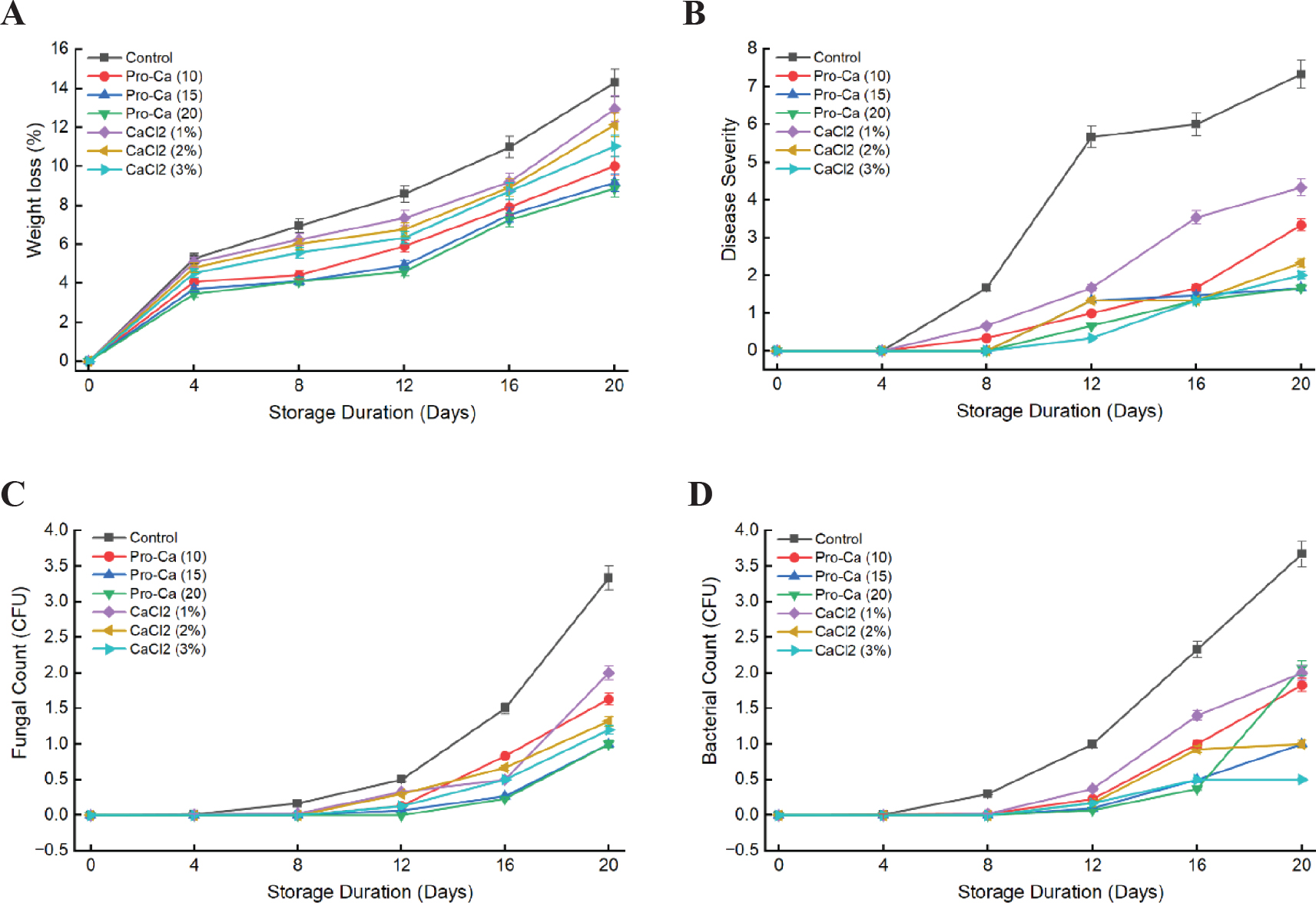
Figure 1.
The effect of different concentrations of prohexadione-Ca and calcium chloride on (A) weight loss, (B) disease severity, (C) fungal count, and (D) bacterial count of strawberries stored at 4°C for 20 days. Values are means of three replicates. Statistical analysis was performed using LSD test at p ≤ 5%. LSD, least significant difference.
Disease severity
The control group exhibited a high prevalence of grey mould within the storage period, with the highest disease severity of 7.33 observed on the 20th day (Figure 1B). Conversely, Pro-Ca and CaCl2 treatments were very effective in the inhibition of disease severity. Notably, the prohexadione-Ca at 20 ppm treatment produced the strongest inhibition of the disease. Likewise, the 3% calcium chloride treatment was also effective in lowering the severity of the disease, but marginally higher than the prohexadione-Ca 20 ppm. These findings indicate the effectiveness of prohexadione-Ca and calcium chloride in reducing the occurrence of grey mould with prohexadione-Ca at 20 ppm exhibiting the strongest effect compared to all the tests.
Fungal count
All treatments recorded an increase in the number of fungi during the 20 days of cold storage (Figure 1C). In the control, however, the number of fungi increased more rapidly, reaching 3.33 by the 20th day. The prohexadione-Ca 20 ppm treatment, on the other hand, had a much slower increase, with the end result of 0.25. The calcium chloride (3%) had also inhibited fungal growth, albeit to a lesser degree, where the result was 1.2. These findings show that although fungal growth did occur in all treatments, the control group was the most prone to it, and both prohexadione-Ca and calcium chloride were effective in reducing fungal growth.
Bacterial count
The bacterial growth was the most evident in the control group because it ascended sharply between 0 and 3.67 on 20th day (Figure 1D). The prohexadione-Ca treatments were effective in inhibiting the growth of bacteria, and the 15 ppm concentration had the least number of bacteria at the end of the storage time. Similarly, the 3% concentration of calcium chloride also reduced the bacterial growth throughout the storage time, with a final count of 0.50. These findings suggest that untreated strawberries are very prone to bacterial infestation, thus resulting in spoilage and lower quality compared to treated fruits.
Lightness
L* values, which indicate the brightness and visual quality of the fruits, need to be steady to be attractive in the market. The control group exhibited a noticeable decrease in L* during the 20-day storage period, indicating that oxidative browning was occurring at a higher rate (Figure 2A). Prohexadione-Ca treatments maintained the lightness, especially the 15 ppm concentration, which had the highest value of 37.57 by day 20. Lightness was also preserved satisfactorily by calcium chloride, especially the CaCl2 treatment having a value of 38.88 by the 20th day.
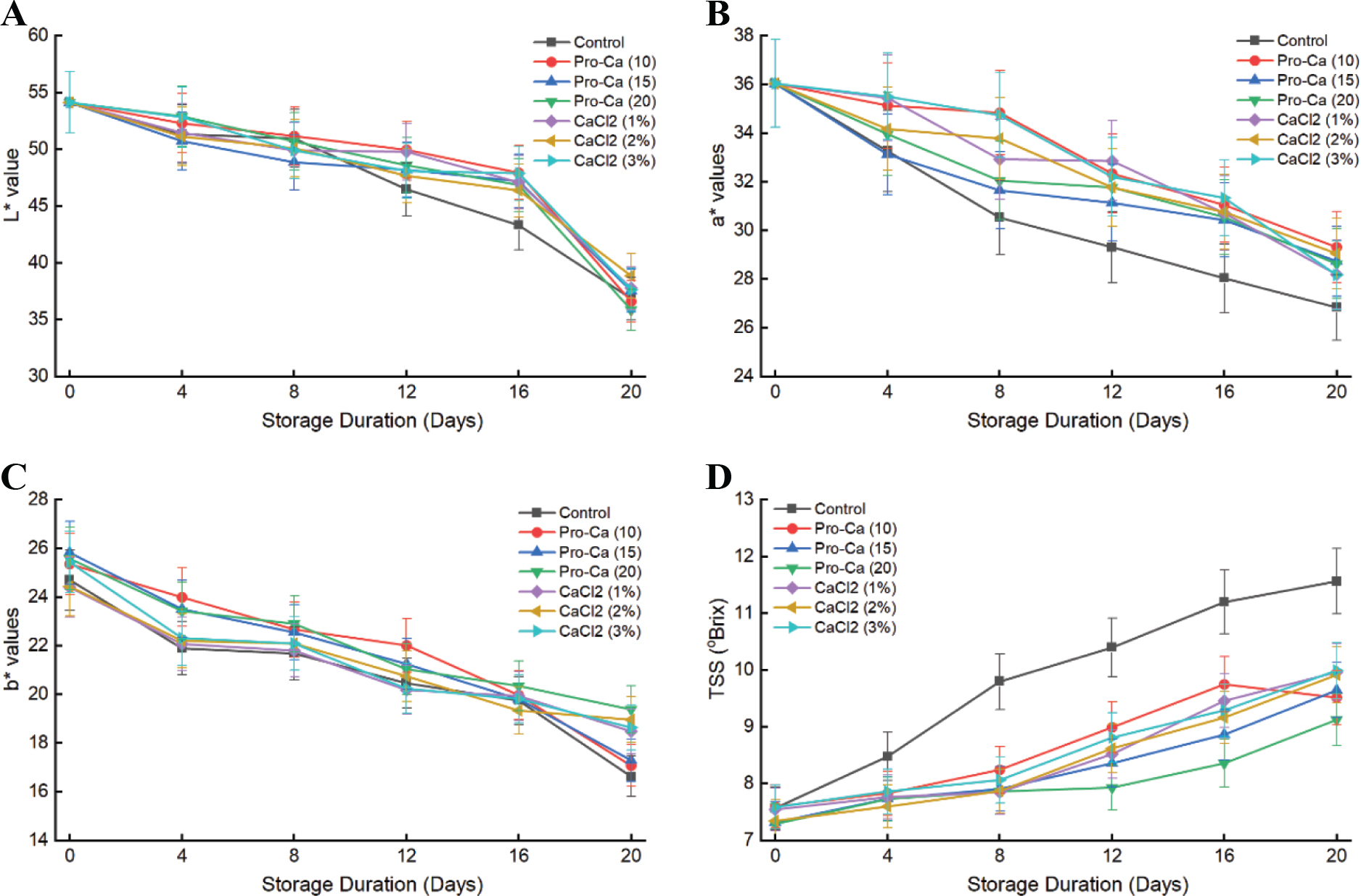
Figure 2.
The effect of different concentrations of prohexadione-Ca and calcium chloride on colour indices of (A) L*, (B) a*, (C) b*, and (D) TSS content of strawberries stored at 4°C for 20 days. Values are means of three replicates. Statistical analysis was performed using LSD test at p ≤ 5%. LSD, least significant difference.
Redness
The degree of red colouration dropped in all the fruits, but prohexadione-Ca and calcium chloride both successfully slowed the rapid depletion of the a* value (Figure 2B). The untreated fruits showed a steep decline in the redness, reaching a minimum value of 26.84 by day 20. Among the treatments, Pro-Ca at 10 ppm and CaCl2 at 2% slowed down the pigment degradation more effectively, having values of 29.32 and 29.06, respectively.
Yellowness
The reduction in b* was observed in all treatments, confirming loss of colour with time (Figure 2C). The control group had the fastest loss, plummeting to 16.63 on the 20th day. Treatments with prohexadione-Ca delayed the decrease of b*, with 20 ppm concentration having the highest degree of brightness retention (19.39) at the end of the storage duration. Calcium chloride treatments also retarded the brightness decrease, with 2% concentration retaining a b* value of 18.97.
TSS
The TSS in the control group increased to a maximum value of 11.57 by day 20, while it was maintained in the treated fruits (Figure 2D). The 20 ppm concentration of prohexadione-Ca showed the least increase, while the low concentrations followed closely. Calcium chloride treatments also stabilised the TSS values, where the 2% concentration was found to be more effective but not significantly different from 1% to 3% concentrations, as well as the prohexadione-Ca treatments.
Titratable acidity (TA)
Titratable acidity decreased progressively during the storage but the treatments of prohexadione-Ca and calcium chloride slowed down the decline (Figure 3A). The control group showed a considerable change in TA, falling to 0.93 (day 20), which is the natural degradation of organic acids while ripening. All three concentrations of both treatments exhibited a significantly the same effect. A 20 ppm concentration of prohexadione-Ca maintained TA at 1.28 while CaCl2 (3%) had a value of 1.25 by the last day.
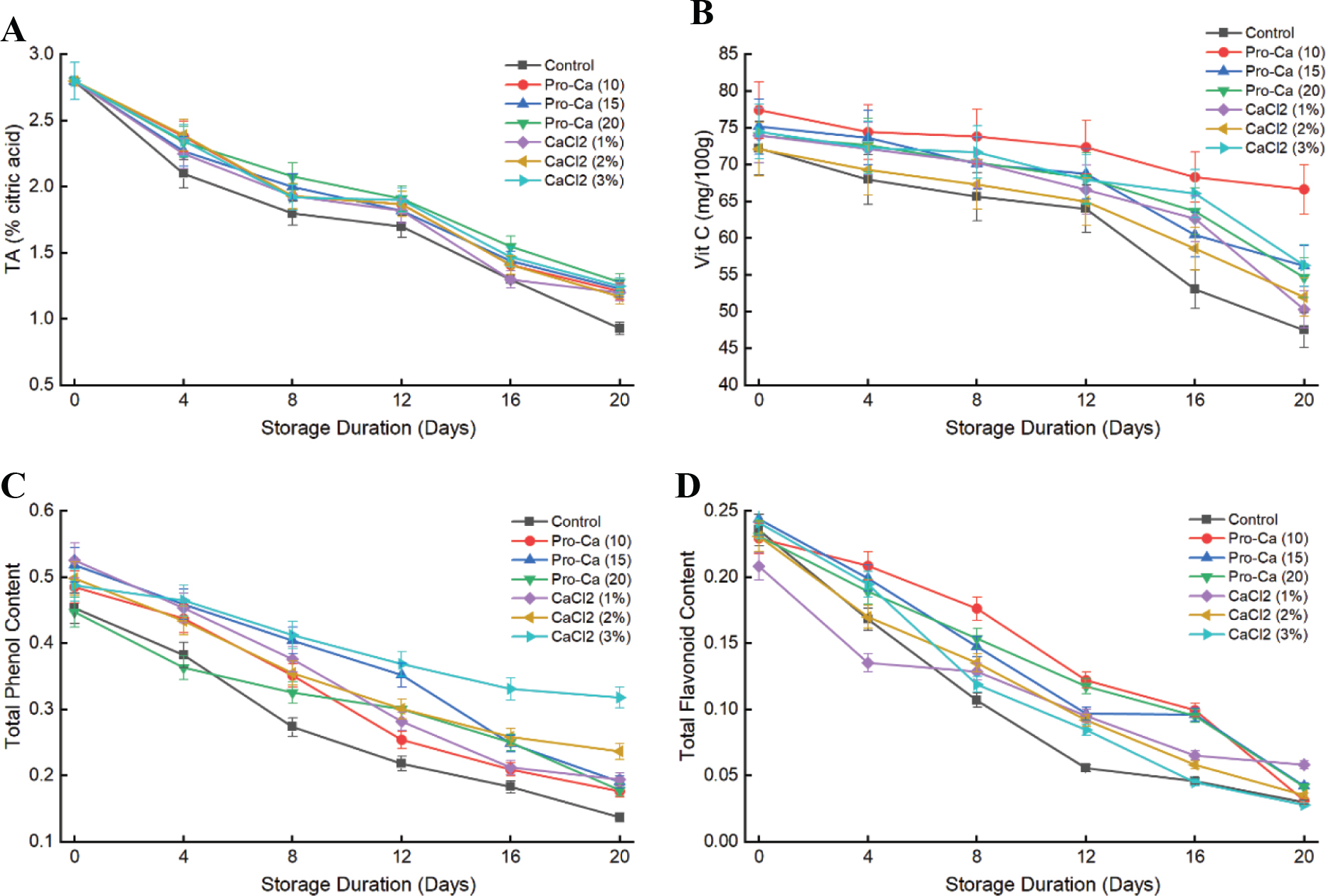
Figure 3.
The effect of different concentrations of prohexadione-Ca and calcium chloride on (A) titratable acidity (TA), (B) vitamin C, (C) total phenols, and (D) total flavonoids content of strawberries stored at 4°C for 20 days. Values are means of three replicates. Statistical analysis was performed using LSD test at p ≤ 5%. LSD, least significant difference.
Vitamin C
All the treatments retained vitamin C content during the storage period, but there was also a significant difference between the treatments (Figure 3B). The highest loss was observed in control fruits which had 47.51 vitamin C content, while the prohexadion-Ca (10 ppm) had the highest retention rate (66.67 mg · 100 g-1) by day 20. It was followed by CaCl2 3% (56.33 mg · 100 g−1) and then other lower concentration treatments, illustrating the dose-dependent effect of the treatments.
Total phenols
The control group showed a gradual reduction in the levels of phenol, decreasing from 0.33 to 0.14 by day 20, which suggests normal enzymatic activity and oxidative degradation (Figure 3C). Prohexadione-Ca treatments prevented the loss of phenol; concentration of 20 ppm sustained increased levels of phenols throughout storage. 10 ppm and 15 ppm treatments also gave positive results. Treatments of calcium chloride also maintained phenol content in a dose-dependent pattern with the highest content of 0.32 recorded in 3%, followed by 2% and 1%, respectively.
Total flavonoids
The total flavonoid content declined gradually during storage (Figure 3D). In the control, the flavonoids were lost quickly, dropping from 0.168 mg · g−1 to 0.03 mg · g−1 on the 20th day, indicating natural degradation. Prohexadione-Ca positively influenced flavonoid retention, with the highest retention by 15 ppm (0.042 mg · g−1 on day 20), followed by 20 ppm (0.041 mg · g−1). Treatments with calcium chloride also preserved more flavonoids, the 1% treatment being the most effective, as it retained 0.058 mg · g−1 of flavonoids by day 20, which is much higher than the control.
PPO
PPO activity is directly related to enzymatic browning, which plays a major role in maintaining colour of fruit and its acceptability to consumers. PPO activity was at a significantly high level in the control group, starting with an initial value of 1.43 and going down to 1.00 at the end of the storage period (Figure 4A). This trend shows rapid browning in untreated strawberries that can be explained by enzymatic activity. Use of prohexadione-Ca led to significant reduction of PPO activity with the highest suppressive effect being observed at 10 ppm. Calcium chloride treatments also showed positive effects; the 2% solution of CaCl2 was most effective followed by 1% and 3%. The overall indication of these findings is that both the prohexadione-Ca and calcium chloride treatments are effective in inhibiting the PPO-mediated browning pathway.
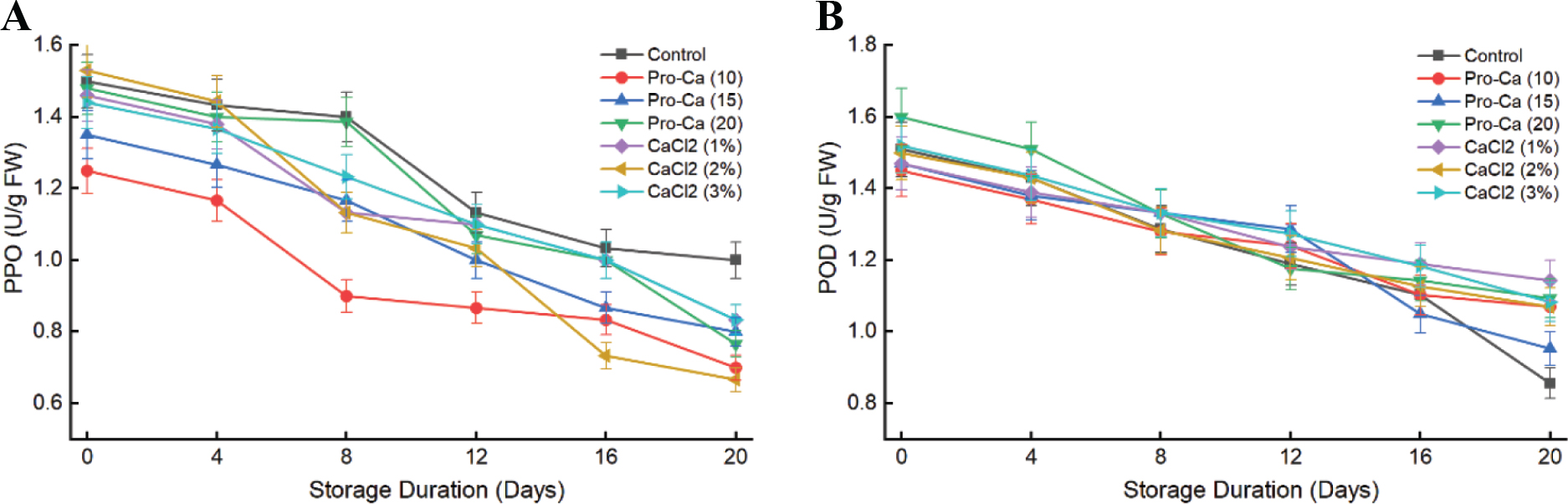
Figure 4.
The effect of different concentrations of prohexadione-Ca and calcium chloride on (A) PPO, and (B) POD of strawberries stored at 4°C for 20 days. Values are means of three replicates. Statistical analysis was performed using LSD test at p ≤ 5%. LSD, least significant difference; PPO, polyphenol oxidase.
POD
The peroxidase (POD) activity of the control sample showed a strong decrease with an initial value of 1.577 decreasing to 0.857 by day 20 (Figure 4B). Such degradation impairs inherent defense against oxidative stress and pathogenic pressures of the fruit. Treatment with both prohexadione-Ca and calcium chloride showed significant ability to conserve the POD activity, with the most consistent retention was observed at 10 ppm prohexadione-Ca and 1% CaCl2. This indicates that Pro-Ca (10 ppm) and CaCl2 (1%) may be an optimal balance between cost and efficacy.
DISCUSSION
The growing demand of fresh fruit globally has been the impetus behind extensive research efforts to improve the quality and storability of these commodities during the postharvest storage. One of the main challenges facing strawberry growers is that the fruit has very low shelf life making it highly perishable and subject to various postharvest disorders, especially moulds caused by fungal pathogens including B. cinerea. This mould growth in storage negatively affects the physical appearance and flavour profile of strawberries, as well as triggers serious financial losses among growers and increases wastage across the entire supply chain (Dsouza et al., 2023). As a result, careful maintenance of mould disease is of primary importance, both in the perspective of commercial feasibility and in keeping with the growing demands of consumers on fresh products (Chavonet et al., 2022; Gaur et al., 2023; Majumder et al., 2024).
Weight loss is a critical postharvest parameter which significantly affect the visual appearance as well as marketability of the fruit. It is mainly caused by transpiration and respiration, and too much loss of weight may cause a shrivelled look and subsequent loss of consumer acceptance. The percentage of weight loss of strawberries in the treatment conditions was significantly decreased by using prohexadione-Ca and calcium chloride. The control group demonstrated the most weight loss, characteristic of quick dehydration and metabolic processes of untreated fruits (Gosch et al., 2003). Prohexadione-Ca disrupts GA biosynthesis and, therefore, slows down growth-related metabolism, hence reducing respiration and water loss (Li et al., 2025a, 2025b). The minimum weight loss occurred in fruits treated with prohexadione-Ca (15 ppm), presumably attributable to its ability to delay ripening and senescence, leading to reduced respiration and water loss (Kim et al., 2007). Other similar findings have been reported on nectarine and apricot, where prohexadione-Ca was successful in reducing weight loss during storage (Al-Soufi et al., 2022; Basyony et al., 2023). Similar effects were observed in the calcium chloride treatments; the 3% concentration was the most effective in reducing the weight loss. These results are in agreement with Mahajan et al. (2010), who underlined the effects of calcium in reducing the loss of water by promoting cell membrane stability. Calcium enhances the strength of the cell wall, reducing cellular leakage, dehydration, and maintaining the quality of fruits.
Grey mould incidence and total microbial count significantly reduced in both treatments. Prohexadione-Ca concentration of 20 ppm was found to be the most effective in reducing the severity of the disease. This may be due to the balancing of phenolic metabolism and defence-associated molecular pathways (Li et al., 2024). It can stimulate the expression of pathogenesis-related genes through an abscisic acid signal transduction pathway via reactive oxygen species (ROS) to improve host resistance against B. cinerea (Badmi et al., 2022). Simultaneously, CaCl2 solution at 3% showed strong antimicrobial effects, probably by improving cell wall integrity, decreasing membrane permeability, and pathogen penetration (Langer et al., 2019; Gad El-Rab et al., 2025). Other studies have also concluded that these postharvest treatments control disease occurrence and maintain fruit quality (Erogul et al., 2024; Li et al., 2025a, 2025b).
Colour traits, such as lightness (L), redness (a*), and brightness (b*) are very important factors of strawberry quality in postharvest storage. These parameters are directly associated with the appeal of the consumer since they manifest the visual freshness of the fruit and its marketability. It is important to ensure that the colour values do not change during the time of storage since the changes are usually an indicator of oxidative stress, anthocyanin degradation, and other processes that lead to deterioration of the fruit quality.
Control group showed a significant deterioration of the colour parameters, which is representative of colour distortion and loss of freshness as the storage time passed by. This could be because of the oxidation of pigments and the degradation of anthocyanins and flavonoids. The enhanced retention of the colour parameters (L, a*, and b*) supports the idea that the two treatments decreased the oxidative browning (Rehman et al., 2018; Shah et al., 2025). Prohexadione-Ca changes phenylpropanoid metabolism and the expression of oxidative enzymes, subsequently stabilising anthocyanins and delaying senescence (Li et al., 2024). Prohexadione-Ca also keeps the redness, and CaCl2 keeps the brightness. Such a difference in behaviour might be an indication of the different physiological events of the treatments, with prohexadione-Ca essentially acting on pigment biosynthesis, and CaCl2 maintaining tissue translucency through the strengthening of epidermal integrity.
Other important fruit quality measures are total soluble solids (TSS) and titratable acidity (TA), which form one of the main elements of the taste perception and consumer preference (Demes et al., 2021). Treatment with Prohexadione-Ca and calcium chloride aided in stabilising TSS and TA percentage in strawberries during storage. In the control group, TSS increased sharply, while TA decreased more rapidly, indicating that the sugars and organic acids underwent metabolic conversion during respiration (Rademacher et al., 2004). Organic acid and low sugar accumulation in treated fruits demonstrate metabolic inhibition and delayed senescence, which are similar to findings of reduced activity of ethylene in prohexadione-Ca-treated fruits (Javeed, 2017). The evidence is in line with the biochemical paradigm in which prohexadione-Ca acts as a growth retardant, which improves shelf life by inhibiting GA-regulated gene expression and carbohydrate breakdown as reported in other fruits (Lal et al., 2022). Likewise, TSS was stabilised by CaCl2 at 3%, implying its part in the inhibition of sugar metabolism. These results indicate that calcium chloride may improve cell wall strength and slow down the enzymatic breakdown, resulting in sugar retention during storage. These findings are consistent with previous studies, which found the same effects of calcium treatments in lowering the metabolic activity of stored fruits (Akhtar et al., 2010).
Prohexadione-Ca and calcium chloride treatments were effective in preserving the nutritional quality of the strawberry by preserving higher levels of vitamin C, phenols, and flavonoids. The degradation of vitamin C was reduced in treated fruits, with prohexadione-Ca at 10 ppm exhibiting the highest level, probably because of its ability to minimise oxidative stress and enzymatic oxidation (Mditshwa et al., 2017). Calcium conserves ascorbic acid by lowering the effects of ascorbate oxidase, whereas prohexadione-Ca tends to mitigate oxidative stress by increasing endogenous antioxidant enzyme activity (Devi et al., 2018). These results are in line with previous literature, which has shown that calcium treatment enhances the antioxidant enzyme activities and consequently mitigates oxidative damage during storage (Li et al., 2023).
The phenolic and flavonoid compounds play a vital role in antioxidant properties, defence systems, and nutritional value of fruits. The maintenance of these compounds also contributes to the improved antioxidant condition of treated fruits. They also play a part in scavenging ROS and prevent the establishment of pathogens (Hasanuzzaman et al., 2013; Baskar et al., 2018). Strawberries treated with Pro-Ca and CaCl2 retained more of these metabolites, which meant less oxidative activity of the enzymes and an induced defensive mechanism. These findings are consistent with previous experiments, which concluded that calcium treatments enhance the activity of antioxidant enzymes, hence limiting oxidative damage (Li et al., 2023). Significant growth in phenolic biosynthesis and antioxidant properties in fruits treated with prohexadione-Ca and similar compounds is also reported (Bizjak et al., 2012). Likewise, postharvest treatment of fruits with calcium chloride enhances total phenolics and flavonoids, thus maintaining functions and nutritional quality through regulation of phenylalanine ammonia lyase activity. All these treatments promote the antioxidant action, increase shelf life, and elevate the health value of the strawberries in storage (Liu et al., 2024).
Both Pro-Ca and CaCl2 had an impact on the actions of PPO and peroxidase (POD), which increased the oxidative stability and defence system of treated fruits. PPO, the browning enzyme of fruits, was significantly inhibited by both compounds, causing delay in the oxidation of pigments and hence preserving visual quality. This inhibition is reasonably explainable by the decrease in enzyme-substrate interaction and enhancement of cell membrane stability (Temiz and Ayhan, 2017; Alsaiari et al., 2024). On the contrary, both compounds significantly maintained POD activity, essential for pathogen defence and ROS regulation. This sustained POD activity could be explained by the improved antioxidant potential and maintenance of the structural integrity. Prohexadione-Ca and calcium chloride have been reported to modify the phenolic metabolic process and preserve the activity of enzymes during storage (Zhang et al., 2019; Li et al., 2024). Overall, these treatments balance PPO inhibition with POD stabilisation, leading to reduced oxidative browning and extended shelf life.
CONCLUSIONS
From the research work, it can be concluded that Pro-Ca and CaCl2 treatments could effectively prevent mould decay and maintain the weight and colour of strawberry fruits without compromising the nutritional content, showing the potential application for the marketing of the fruits. Different doses of both treatments were optimal for different quality, biochemical, disease related parameters which not only extend shelf life but also preserve fruit quality. This eco-friendly approach offers a promising alternative to traditional chemical treatments, aligning with consumer preferences for safe, natural products. It may be recommended to use Pro-Ca and CaCl2 for postharvest treatment to control grey mould, retain quality, and enhance the shelf life of strawberry fruits. It is also recommended that further research be conducted to find out the synergistic effects of Pro-Ca and CaCl2 on the shelf life of the fruit.
ACKNOWLEDGMENTS
This project was funded by the Deanship of Scientific Research (DSR) at King Abdulaziz University, Jeddah, Saudi Arabia under grant No. (IPP:20-155-2025). The authors, therefore, acknowledge with thanks DSR for technical and financial support.
Notes
[1] Contributed by AUTHOR CONTRIBUTIONS
A.D.A. methodology, software, supervision, resources, investigation, project administration, writing – original draft, and writing – review and editing. K.A.M.A. data curation, methodology, resources, investigation, project administration, visualization, writing – original draft, and writing – review and editing. Z.A. formal analysis, visualization, writing – original draft, and writing – review and editing. A.A. methodology, resources, investigation, project administration, visualization, writing – original draft, and writing – review and editing. M.I.E. methodology, investigation, formal analysis, and writing – review and editing. N.M.A. data curation, formal analysis, and visualization.
[2] Conflicts of interest CONFLICT OF INTEREST
The authors declare no conflict of interest.