
INTRODUCTION
The genus Acer L.—maple—is one of the most taxonomically diverse genera of woody plants in the world, comprising 159 species and 72 infraspecies botanical taxa (Crowley, 2020b; Accepted Species List for Acer - Maple Society, 2021). It occurs naturally in North America, Europe, North Africa and Asia, predominantly in temperate, Mediterranean and subtropical climate zones. Approximately 72% of taxa with known frost hardiness are assigned to USDA hardiness zone 7 or lower and can potentially be cultivated in Poland.
This is one of the most important groups of trees used in landscape architecture—in urban greenery, parks and gardens, especially those with an oriental character.
Maples are large (up to 30 m), medium (up to 15 m) or small (up to 10 m) trees, often multi-stemmed, less frequently large, spreading shrubs. Most species are mesophilic, requiring fresh, moderately fertile to fertile soils (van Gelderen et al., 1994). Taxa that grow into small or medium trees and shrubs are usually shade-tolerant, or even prefer partial shade. A group of Mediterranean, Middle Eastern and Central Asian taxa exhibit xerothermic traits to varying degrees—they tolerate heat, periodic drought and stony, poor soils (Yaltırık, 1971; Muñoz Garmendia et al., 2015; Dumé et al., 2018). This diversity of habitat preferences creates extensive opportunities for landscape architecture, as it allows for the selection of appropriate species for a wide range of extremely varied soil and microclimatic conditions.
The decorative value of maples results primarily from their foliage—the unique shape of the leaves, their regular mosaic forming interesting textures, and most of all, the vivid autumn colouration (AuC). Most species display intense yellow, orange or red hues in various shades. Particularly valuable are the species that turn red, as this colour is rarely found among native trees in Central Europe.
Many maples have a distinctive, ornamental habit—usually umbrella-like and vase-shaped (A. amoenum and A. palmatum), occasionally compact and ovoid (A. rubrum) or broadly columnar (A. lobelii). The bark of the trunk is decorative in species belonging to the Macranta section and in A. griseum. Maple flowers are ornamental in only a few cases (A. platanoides, A. rubrum and A. saccharum). Fruits are even more rarely considered decorative.
Cultivars are usually selected for their uniform, compact or unique (columnar, weeping, etc.) growth habit, dwarf stature, leaves of unusual shapes and colours (yellow, purple), either uniformly coloured or with various patterns, including variegation.
In Poland, approximately 58 taxa are used and recommended in horticulture to varying extents. These are primarily cultivars of native species and several well-established North American species: A. negundo, A. rubrum, A. saccharinum, A. × freemanii, A. circinatum and A. pensylvanicum. Among Far Eastern species, numerous cultivars of A. palmatum (including A. amoenum) and a few of A. japonicum, A. shirasawanum and A. truncatum, as well as A. tataricum subsp. ginnala and A. griseum are popular in cultivation (Filipczak, 2024). Some nurseries offer a much broader range of species and cultivars (e.g., Szmit Nursery—147 taxa (Szkółka Szmit, 2023); Szkółka Kałuzińscy—70 taxa (A&M Kałuzińscy Szkółka Polskie Korzenie, 2024)).
The principal sources of information on the acclimatisation and cultivation of lesser-known maple species in Poland, along with general observational results, are basic dendrology textbooks (Seneta, 1991; Bugała, 2000; Seneta and Dolatowski, 2025). Due to the limited number of specimens of most taxa growing in dendrological collections, their cultivation and ornamental features are often little known in the landscape architecture and nursery industries, and they are rarely utilised. In view of the above, there is a need for a practical, up-to-date and reliable assessment of the decorative and cultivation value of lesser-known species, especially given the constantly changing climate and the associated new cultivation conditions for trees and shrubs.
No field evaluation studies of maples under cultivation have yet been carried out in Europe. In the USA, where such work is conducted regularly, assessments have mainly focused on cultivars of red maple (A. rubrum) and Freeman maple (A. × freemanii), as well as sugar maple (A. saccharum), silver maple (A. saccharinum) and Norway maple (A. platanoides) (Townsend, 1977; Pellett et al., 1985; Hensley et al., 1991; Sibley et al., 1995, 1998; Pair and Yuza, 1996; Ruter and Sibley, 2000). Among Far Eastern species, A. truncatum has been tested due to its heat and drought resistance—a valuable trait in the warmer US states (Pair et al., 1996). Similar field experiments are conducted in other parts of the world (China and Canada) (Richer-Leclerc et al., 1994; Zhao et al., 2016; Tan et al., 2019; Yang et al., 2020; Sun et al., 2021; Zhai et al., 2023). In Poland, as in much of Europe, such studies focus almost exclusively on ornamental shrub species due to the relative ease of establishing trials, maintenance requirements, and the smaller space taken up by research plots (Hoffman and Hop, 2008; Monder, 2011, 2012; Marosz, 2014, 2015).
It is worth noting that nearly all trials are conducted over several years and examine recently planted, juvenile specimens. This precludes the evaluation of mature tree forms and other adult morphological features.
This study aims to assess the growth, ornamental qualities and cultivation suitability of selected Acer species under common garden conditions in Central Poland, based on mature specimens. The objective is to develop a ranking of the most important decorative characteristics for the group of maple species under study and a ranking of species with the most valuable combination of features.
METHODS
Study site
The study was conducted at the Rogów Arboretum of Warsaw University of Life Sciences (51°49′N 19°53′E, 185–196 m a.s.l.). The site is located in a transitional zone between USDA hardiness zones 6b and 7a (Wulff and Bouillon, 2024), with an average annual minimum temperature for the years 2003–2023 of –17.9 °C (Ożga, unpublished data), corresponding to zone 6b (–20,6 °C to –17,8 °C). The mean annual temperature for the period 1991–2020 is 8.39°C (January –1.7°C, July 18.8°C), and the mean annual precipitation is 574 mm (Chojnacka-Ożga and Ożga, 2025). The growing season for the years 1951–2020 lasts 220 days (Chojnacka-Ożga and Ożga, 2023).
The area where the studied trees grow is flat or slight undulations, consisting of Albic luvisol and brown soils—cambisol, with some areas showing features of Gleyic Podzolic soils. It has a semi-natural forest-park character, with numerous scattered pines in the uppermost layer forming a semi-shaded canopy over the lower-growing trees and shrubs. The habitat is classified as a mixed forest of the Tilio-Carpinetum association (Zielony et al., 1993). The homogeneity of site conditions throughout the entire arboretum meets the requirements of a common garden experiment (Schwinning et al., 2022).
Research material
The study encompassed 318 trees representing 33 non-native species of the genus Acer. For each species, a minimum of eight specimens of at least 20 years of age were selected. The primary taxonomic unit was the species; thus, taxa represented in the collection by more than one subspecies or varietas (e.g. A. opalus ssp. opalus and A. opalus ssp. obtusatum) were treated jointly. The study focused on botanical taxa that are rarely cultivated or not cultivated at all in Poland and are generally not included in standard tree and shrub selections (Borowski and Latocha, 2006; Borowski, 2012; Bąbelewski and Pancerz, 2015; Borowski et al., 2016). For comparative purposes, the research also included species recognised for their ornamental and horticultural value, such as A. rubrum and A. palmatum. The selected species represent a wide range of morphological characteristics, taxonomic sections and geographical origins.
The maple collection at the Rogów Arboretum constitutes the National Collection of the genus Acer. All specimens included in the study had previously been taxonomically verified based on regional floras and monographs.
The trees were propagated generatively from seeds originating from other botanical gardens or from natural sites within their native range. Following an initial 2–4-year period of cultivation in container nurseries, the trees were planted in their permanent locations either in spring or autumn. They were arranged singly or in groups, dispersed throughout the Arboretum in sites with varying degrees of shade, and, for comparison, sometimes in sunny locations. No mineral or organic fertilisers were applied, but the trees were watered during the first few years, particularly in dry periods. The soil around the young plants was weeded during the initial years, after which the ground vegetation was mown several times per season. Only minimal pruning was conducted, primarily involving cleaning and raising—removal of the lowest branches.
The study was conducted between 2023 and 2024. Measurements of tree dimensions were taken in 2023— specifically, height and crown width. Height was measured using a Suunto PM-5 clinometer (Suunto Oy, Vantaa, Finland), with results rounded to the nearest 0.5 m. Crown width was measured using a measuring tape in two perpendicular directions to the nearest 10 cm, and the mean of the two values was calculated. The crown slenderness ratio (CSR) was calculated as the ratio of crown width to tree height. Trunk girths and diameters were not measured due to the multi-stemmed or shrub-like growth habit of most specimens. The extent of frost damage was assessed using an 11-point scale developed by Łukasiewicz (1987).
Ornamental characteristics were assessed in 2023–2024. The most important decorative features—flowering and autumn leaf colouration—were evaluated using a five-point scale (0–4) (Table 1). Flowering was observed during spring as individual species came into bloom, from April to the end of May. Autumn foliage colour was assessed from late September to the end of October. These features were evaluated twice over two consecutive years, due to the alternating flowering pattern observed in many Acer species and the variability in AuC depending on weather conditions and individual plant characteristics. Other traits contributing to ornamental value were assessed using a three-point scale (0–2) (Table 2). These included: colourful young fruits, decorative or distinctive leaves and/or bark, uniform and regular crown foliage texture, attractive and regular growth habit and absence of disease or pest symptoms. This assessment was conducted once, in the summer of 2024. Examples of each evaluated feature are shown in Figure 1.
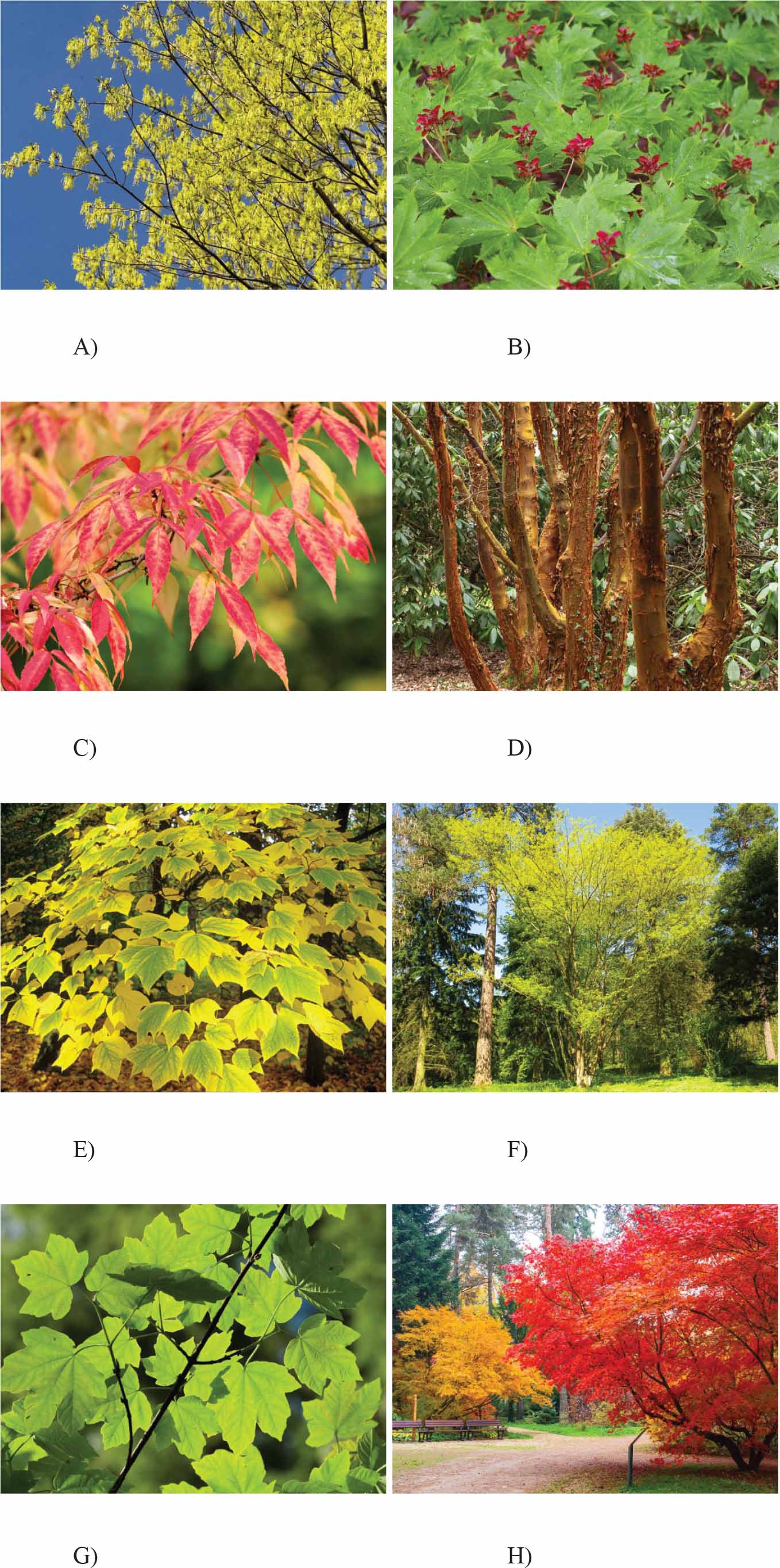
Figure 1.
Overview of the ornamental features of the studied maple species: (A) flowers (A. saccharum), (B) fruits (A. shirasawanum), (C) leaves (A. mandshuricum), (D) bark (A. griseum), (E) foliage texture (A. pensylvanicum), (F) growth habit (A. cissifolium), (G) plant health (A. opalus), (H) autumn colouration (A. amoenum).
Table 1.
Five-point scale for evaluating flowering and autumn discolouration.
| Flowering | Autumn discolouration | |
|---|---|---|
| 4 | Flowers clearly visible, coverage >50%, colour different from green | Intense discolouration (red, orange, bright yellow) throughout the entire crown |
| 3 | Flowers clearly visible, coverage <50%, colour different from green | Discolouration of moderate or variable intensity (yellow, dull orange) throughout the entire crown |
| 2 | Flowers poorly visible, sparse, colour different from green | Uneven discolouration affecting 30%–80% of the crown volume |
| 1 | Flowers poorly visible or not noticeable, green | Only a few leaves changing colour (up to 30%), with low intensity |
| 0 | No flowering | No discolouration |
Table 2.
Three-point scale for evaluating ornamental features of maples.
| Fruits | Foliage texture | Leaves | Bark and/or shoots | Habit | Overall tree health | |
|---|---|---|---|---|---|---|
| 2 | Numerous colourful or otherwise distinctive fruits covering the entire crown | Even regular foliage pattern throughout the crown | Decorative, distinctive leaves | Shoots and/or bark with distinctive colouring or an interesting texture | A distinctive, regular habit (umbrella-shaped, ovoid, columnar, etc.) | No signs of disease or pests |
| 1 | Colourful or distinctive fruits scattered or only visible at close range | Regular foliage pattern visible only in parts of the crown | Partially interesting leaves | Moderately conspicuous shoots and/or bark | A moderately regular habit of limited ornamental value | Scattered or minor disease symptoms, or limited to part of the crown |
| 0 | No fruits or fruits not distinctive, blending into the background | Chaotic foliage arrangement, unclear foliage texture | Inconspicuous leaves | Indistinct shoots and/or bark | An irregular, asymmetrical habit | Widespread disease symptoms (e.g. discolouration, leaf deformation) across the entire crown |
For each tree, the degree of sunlight exposure was recorded on a five-point scale: 0 (fully sun-exposed site) to 4 (fully shaded site).
Statistical analysis
The field observations concerning ornamental value were treated as ordinal variables; therefore, statistical procedures appropriate for this type of data were applied. The overall ornamental value of the analysed taxa was expressed using a cumulative ornamental value index. As different features were assessed using different scales (3-or 5-point), the influence of individual traits on the calculated index varied. To address this, the data were standardised. The standardised variable was calculated by subtracting the arithmetic mean from the field-recorded value and dividing the result by the SD. For each taxon, the mean of each standardised trait was then computed. These means were subsequently summed and presented in Table 3 as the standardised sum.
Table 3.
Overview of growth performance and ornamental features of 33 Acer species.
| Species name | CSR (width/height) | Flowers (max = 4) | Fruits (max = 2) | Leaves (max = 2) | Bark/shoots (max = 2) | Foliage pattern (max = 2) | Habit (max = 2) | Health (max = 2) | Autumn discoloration (max = 4) | Standardised sum (SD) |
|---|---|---|---|---|---|---|---|---|---|---|
| Section Palmata | ||||||||||
| A. amoenum | 1.12 | 2.47 | 0.87 | 1.93 | 0.00 | 2.00 | 2.00 | 2.00 | 3.87 | 5.05 (0.47) |
| A. circinatum | 0.87 | 2.30 | 0.00 | 2.00 | 0.00 | 1.00 | 0.80 | 1.50 | 2.30 | –1.57 (0.87) |
| A. japonicum | 0.72 | 2.50 | 0.00 | 2.00 | 0.00 | 1.25 | 1.00 | 2.00 | 3.00 | 0.65 (0.63) |
| A. oliverianum | 0.69 | 2.00 | 0.00 | 2.00 | 0.00 | 1.00 | 1.00 | 1.63 | 1.38 | –2.33 (1.00) |
| A. palmatum | 0.58 | 2.00 | 0.00 | 2.00 | 0.00 | 2.00 | 2.00 | 2.00 | 3.10 | 2.32 (0.17) |
| A. pseudosieboldianum | 0.84 | 2.00 | 0.00 | 2.00 | 0.00 | 1.40 | 1.60 | 1.60 | 2.60 | 0.02 (0.68) |
| A. shirasawanum | 0.58 | 2.38 | 1.13 | 2.00 | 0.00 | 1.63 | 2.00 | 2.00 | 2.13 | 3.43 (0.88) |
| A. sieboldianum | 0.66 | 1.00 | 0.00 | 2.00 | 0.00 | 1.80 | 2.00 | 1.80 | 2.50 | 0.12 (0.39) |
| Section Macrantha | ||||||||||
| A. davidii | 0.70 | 2.25 | 0.25 | 2.00 | 1.13 | 2.00 | 1.50 | 1.75 | 2.13 | 2.76 (0.72) |
| A. pensylvanicum | 0.55 | 2.33 | 0.00 | 2.00 | 1.89 | 1.78 | 2.00 | 2.00 | 3.44 | 5.60 (0.49) |
| A. rufinerve | 0.55 | 2.00 | 0.50 | 2.00 | 1.63 | 1.75 | 1.88 | 2.00 | 2.88 | 5.01 (0.81) |
| A. tegmentosum | 0.60 | 1.30 | 0.00 | 1.70 | 1.80 | 1.20 | 1.30 | 1.40 | 3.70 | 1.66(1.39) |
| Section Platanoidea | ||||||||||
| A. cappadocicum | 0.55 | 2.11 | 0.00 | 0.44 | 0.00 | 0.67 | 0.78 | 2.00 | 1.56 | –4.26 (0.53) |
| A. divergens | 0.33 | 0.88 | 0.00 | 0.25 | 0.00 | 0.00 | 1.75 | 1.50 | 0.50 | –7.18 (0.68) |
| A. lobelii | 0.46 | 2.13 | 0.00 | 1.13 | 0.00 | 1.63 | 2.00 | 2.00 | 1.75 | –0.47 (0.75) |
| A. pictum | 0.60 | 2.12 | 0.06 | 1.53 | 0.00 | 1.00 | 1.65 | 1.65 | 1.88 | –1.40 (0.67) |
| Section Trifoliata | ||||||||||
| A. griseum | 0.69 | 2.58 | 0.50 | 1.00 | 2.00 | 1.17 | 1.58 | 1.67 | 2.50 | 2.90 (0.57) |
| A. mandshuricum | 0.56 | 2.13 | 0.50 | 2.00 | 0.00 | 2.00 | 1.63 | 2.00 | 3.50 | 3.27 (0.97) |
| A. maximowiczianum | 0.65 | 1.00 | 0.00 | 1.63 | 0.00 | 1.13 | 1.50 | 1.75 | 2.38 | –2.00 (0.97) |
| A. triflorum | 0.83 | 1.13 | 0.50 | 1.75 | 1.00 | 1.25 | 1.88 | 2.00 | 4.00 | 3.30 (0.94) |
| Section Arguta | ||||||||||
| A. argutum | 0.84 | 1.00 | 0.55 | 0.91 | 0.00 | 0.00 | 1.45 | 1.00 | 1.82 | –5.05 (0.54) |
| A. barbinerve | 0.86 | 1.00 | 0.00 | 0.90 | 0.10 | 0.20 | 1.20 | 1.20 | 1.50 | –5.99 (0.69) |
| A. stachyophyllum | 0.88 | 1.13 | 0.00 | 1.63 | 0.75 | 0.25 | 2.00 | 1.40 | 1.38 | –2.83 (1.13) |
| Section Cissifolia | ||||||||||
| A. cissifolium | 0.85 | 3.38 | 1.13 | 1.88 | 0.00 | 1.75 | 1.88 | 2.00 | 2.50 | 4.68 (0.93) |
| A. henryi | 1.07 | 2.56 | 0.67 | 2.00 | 0.00 | 0.89 | 2.00 | 1.44 | 1.56 | 0.54 (0.69) |
| Section Acer series Monspessulana | ||||||||||
| A. monspessulanum | 0.73 | 2.36 | 0.00 | 1.09 | 0.00 | 1.09 | 0.82 | 2.00 | 1.55 | –2.57 (0.99) |
| A. opalus | 0.62 | 2.36 | 0.00 | 0.55 | 0.00 | 1.09 | 1.09 | 1.82 | 2.00 | –2.83 (0.51) |
| Section Acer series Saccharodendron | ||||||||||
| A. saccharum | 0.46 | 3.00 | 0.00 | 2.00 | 0.00 | 1.60 | 2.00 | 2.00 | 2.80 | 2.68 (0.33) |
| Section Indivisa | ||||||||||
| A. carpinifolium | 0.94 | 2.30 | 0.00 | 2.00 | 0.00 | 2.00 | 2.00 | 2.00 | 3.30 | 2.84 (0.42) |
| Section Lithocarpa | ||||||||||
| A. tsinglingense | 0.65 | 0.88 | 0.00 | 0.38 | 0.00 | 0.75 | 0.25 | 2.00 | 3.63 | –4.31 (0.84) |
| Section Pentaphylla series Trifida | ||||||||||
| A. buergerianum | 0.62 | 1.13 | 0.00 | 1.63 | 0.00 | 0.75 | 0.75 | 1.50 | 1.63 | –4.37(1.07) |
| Section Rubra | ||||||||||
| A. rubrum | 0.38 | 2.79 | 0.57 | 1.00 | 0.00 | 0.86 | 1.71 | 1.57 | 3.29 | 0.68 (1.11) |
| Section Spicata | ||||||||||
| A. ukurunduense | 0.77 | 2.50 | 0.00 | 0.38 | 0.75 | 1.00 | 1.50 | 1.50 | 1.88 | –2.00 (1.02) |
To determine the relationships between the variables describing ornamental value and the contribution of each trait to overall ornamental quality, principal component analysis (PCA) was performed. The results were presented as a diagram illustrating the position of each tree, the centroid representing each taxon, and the vectors of the assessed traits. Spearman’s rank correlation coefficient was used to analyse the relationship between ornamental traits and the principal component axes.
The Kruskal–Wallis test was used to test the relationship between site insolation and the ornamental value of flowers and fruit. Post hoc comparisons were conducted using the Mann–Whitney multiple comparison test. All analyses were performed using the P.A.S.T. software package, version 4.01. (Natural History Museum, University of Oslo, Norway).
RESULTS
Growth
The growth vigour and growth habits of each species varied considerably. A full summary of tree heights is presented in Figure 2. The average tree height was 10.24 m. The tallest species were Acer saccharum (mean height 20.95 m) and A. rubrum (mean height 20.79 m). The tallest individual specimen was a 55-year-old A. rubrum reaching 30 m. This tree, like six other individuals of a similar age exceeding 20 m in height, grew in high-density conditions with lateral shading, which led to pronounced height growth and narrow crowns, with an average CSR of approximately 0.31. In contrast, specimens growing in sunnier locations were noticeably shorter—under 20 m—and broader (CSR = 0.54), even though some were 22 years older. A similar pattern was observed in A. saccharum; however, lateral shading did not result in such a strong reduction of lateral branching, and in trees exceeding 20 m, the average CSR was 0.45.
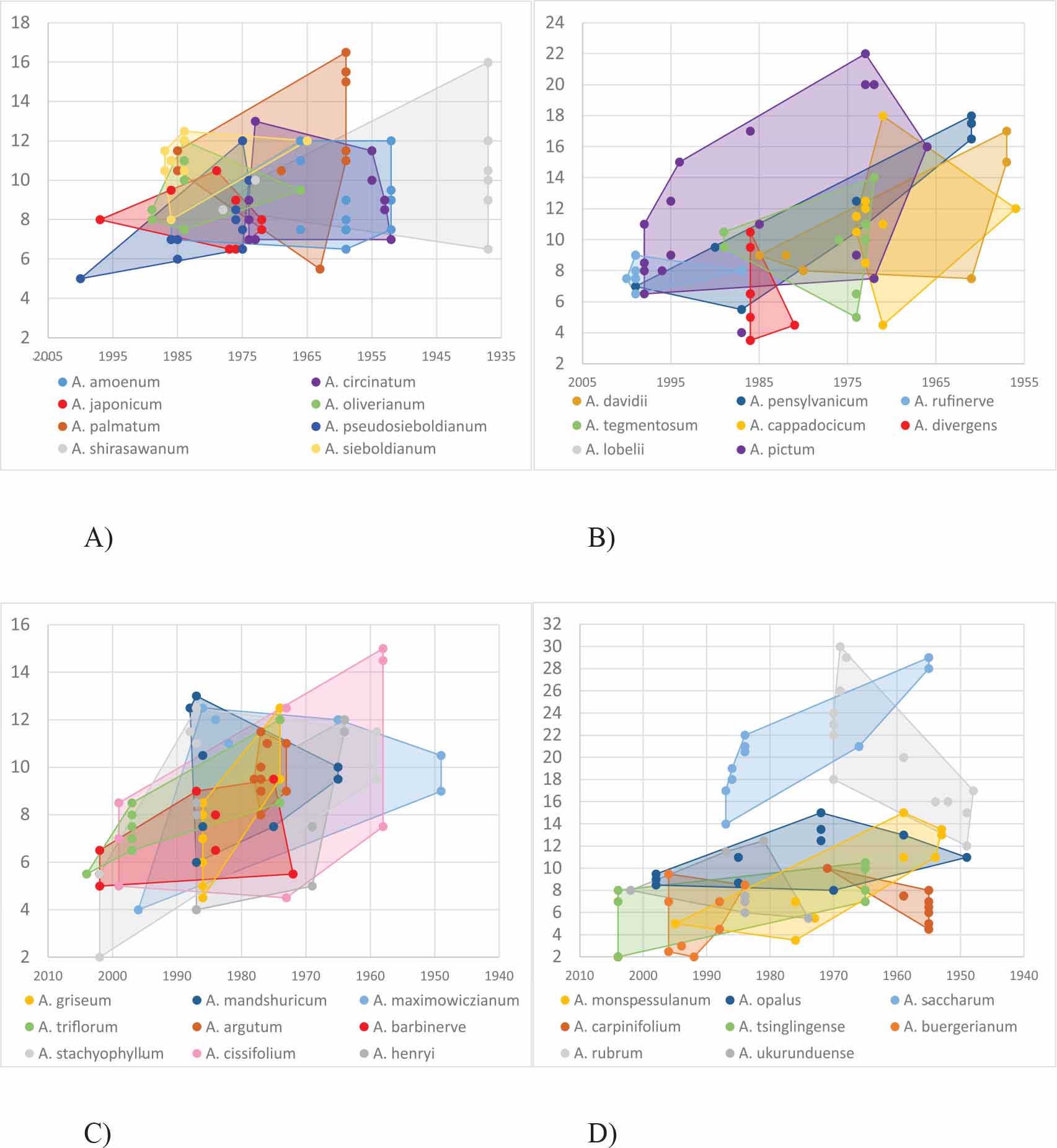
Figure 2.
A summary of tree heights in relation to their age, including a visual representation of height ranges depending on age. The X-axis shows the year of seed germination and the Y-axis indicates height in metres: (A) Section Palmata, (B) Sections Platanoidea and Macrantha, (C) Sections Trifoliata, Arguta and Cissifolia, (D) Sections Acer, Indivisa, Lithocarpa, Pentaphylla, Rubra and Spicata.
The weakest growth vigour and lowest height (under 7 m) were recorded for A. buergerianum (5.5 m), A. divergens (6.19 m), A. carpinifolium (6.4 m) and A. barbinerve (6.9 m). The first two are very slow-growing, single-stemmed trees, while the latter are shrubby species with broad crowns (CSR = 0.94 and 0.86, respectively). The species with the broadest crown—wider than it is tall—was A. amoenum (CSR = 1.12). Similarly, broad crowns were observed in A. henryi (CSR = 1.07) and A. carpinifolium (CSR = 0.94). The widest, most horizontal crowns were mainly found in representatives of the sections Cissifolia, Indivisa, Palmata and Arguta. Unlike A. amoenum, the Japanese maple sensu stricto—A. palmatum, which until recently was considered conspecific with the former—had a distinctly narrower crown with more upright branches, the narrowest in section Palmata (CSR = 0.58). This value was accentuated by the growth form of a group of four densely spaced, laterally shaded individuals that were exceptionally tall and slender, measuring 15–16.5 m. The narrowest crowns were observed in A. divergens (CSR = 0.33) and A. rubrum (CSR = 0.38).
Ornamental characteristics
The ornamental value of individual species varied greatly. Standardised sums of rankings for specific ornamental features ranged from –7.18 to 5.6. The highest scores and greatest ornamental value were recorded for A. pensylvanicum (5.60), while the lowest were observed in A. divergens (–7.18). A complete summary of ornamental traits is presented in Table 3 and Figure 3.
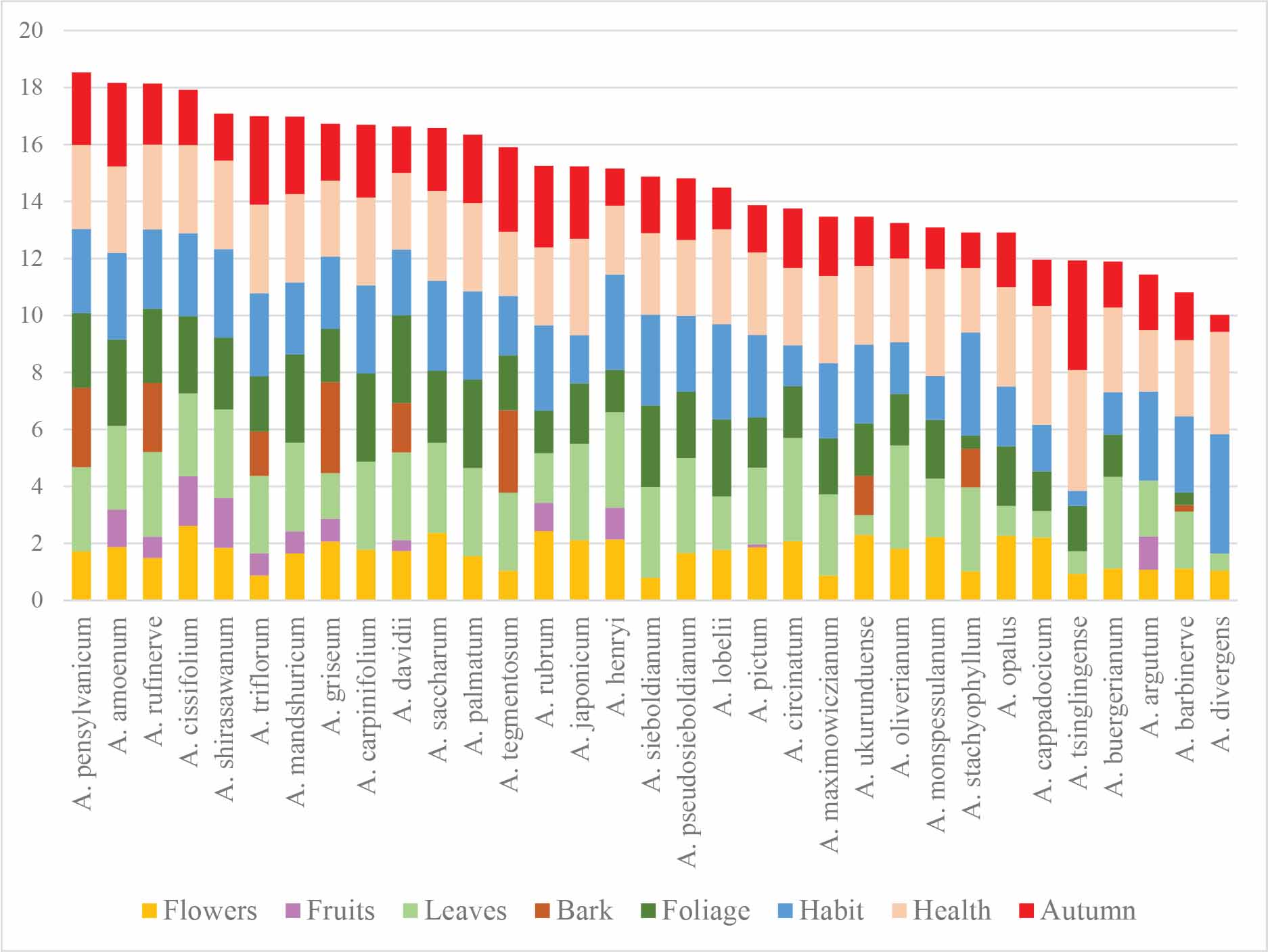
Figure 3.
Ranking of 33 maple species based on their ornamental characteristics.
These results are confirmed by the principal component analysis (PCA) shown in Figure 4. The first principal component, which accounts for 28.3% of the variance, is associated with overall ornamental value. Spearman’s rank correlation coefficient between the position of trees along the first component and the standardised sum was 0.92. The vectors of all ornamental traits point to the right. Taxa with higher ornamental value are located on the right-hand side of the diagram, while those with the lowest are on the left. The traits with the strongest influence on ornamental value are autumn leaf colour and leaf texture (the longest vectors), whereas bark and fruit have the weakest influence (shortest vectors). The second principal component explains 14.8% of the variance and is mainly related to growth habit (upper part of the diagram) and flowers (lower part).
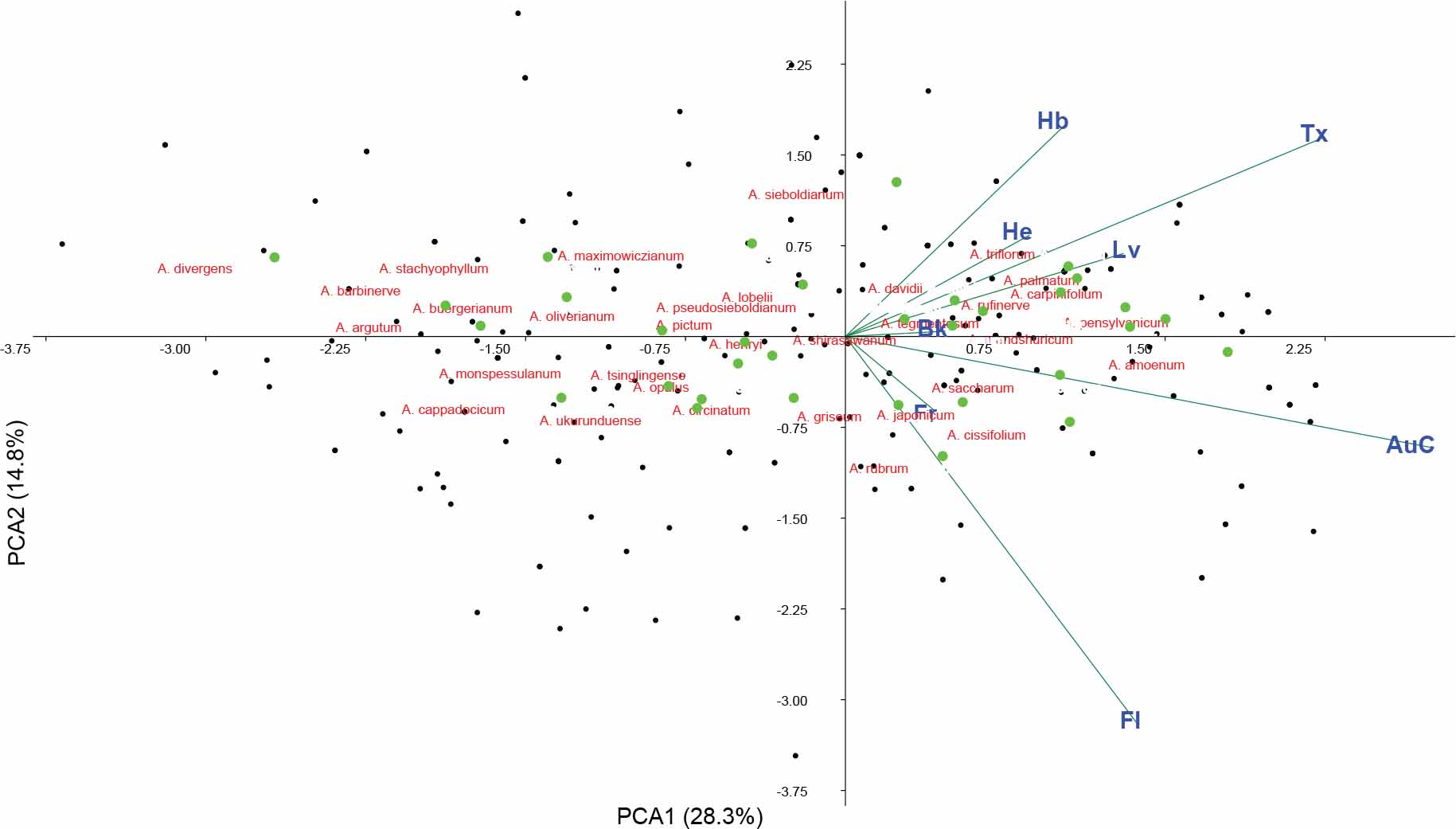
Figure 4.
PCA ordination diagram of individual specimens and analysed taxa in relation to vectors representing ornamental traits. AuC, autumn colouration; Bk, bark; Fl, flowering; Fr, fruit; Hb, habit; He, overall tree health; Lv, leaves; PCA, principal component analysis; Tx, texture/foliage.
Flowers
Flowers represent a notable ornamental feature (scoring more than 2.5 out of 4) in four species. Among the maples that flower profusely, the most abundant flowering was observed in specimens growing in full sun or light shade, although this relationship is not significant when considering all species. A Kruskal–Wallis test did not confirm a statistically significant relationship between site insolation and the ornamental value of flowers (Chisquare = 814; p = 0.056).
Particularly outstanding are A. saccharum (3.0/4 pts) and A. rubrum (2.79 pts), bearing pale yellow and red flowers, respectively, in early spring before leaf emergence. However, flowering intensity varies between individuals and years and tends to decrease under increased shading. Of special value is A. cissifolium (3.38 pts), whose exceptionally long, pendulous racemes of yellowish flowers provide a valuable ornamental display in May. These are later replaced by abundant fruit, which is also visually appealing. A similar, though slightly less attractive, flowering habit is seen in A. henryi (2.56 pts). The flowers of A. ukurunduense (2.5 pts) offer an unusual decorative effect, forming upright racemes of yellowish flowers that emerge above the rosettes of leaves. Profuse flowering was also recorded in well-sunlit specimens of A. monspessulanum, A. opalus (both 2.36 pts) and A. griseum (2.58 pts). In these species, flowers appear before or with the leaves, making them clearly visible despite their small size. Flowers may also offer some ornamental value in red-flowering species from section Palmata, although this varies by individual and growing season. The most prominent among them are the largest and most intensely purple flowers of A. japonicum (2.5 pts).
Fruits
Fruits provide some ornamental value in A. cissifolium (1.13/2 pts), some individuals of A. amoenum (0.87 pts), and A. shirasawanum (1.13 pts), particularly in sunnier locations, where the fruit turns red prior to ripening. In the latter species, fruit also protrudes above the leaf rosettes. The relationship between fruit ornamental value and sunlight exposure was shown to be statistically significant (Figure 5). A Mann–Whitney multiple comparison test indicated that fruit ornamental value in sunlit sites was significantly higher than in other conditions (p < 0.05).
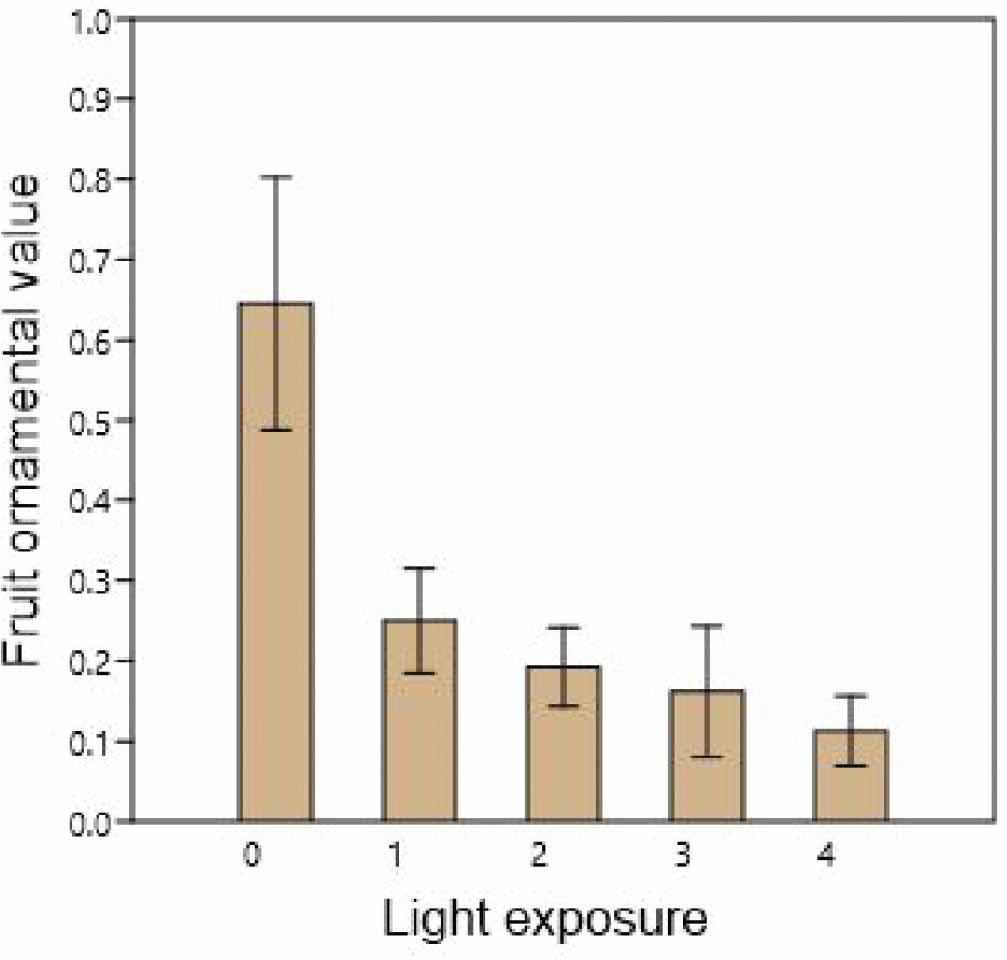
Figure 5.
Relationship between fruit ornamental value and light exposure (0—full sun, 4—full shade) (Kruskal–Wallis test: Chi-square = 7.26; p = 0.001).
Leaves
The distinctive shape of leaves is an important ornamental trait in most species (mean score: 1.51/2 pts). Leaf ornamental value was rated particularly high in all species of section Palmata (mean 1.99 pts), Cissifolia (1.94 pts), Macrantha (1.93 pts) and Trifoliata (1.59 pts), as well as in A. carpinifolium (2 pts), A. saccharum (2 pts) and A. buergerianum (1.63 pts). The least ornamental leaves were recorded in A. divergens (0.25 pts), A. tsinglingense and A. ukurunduense (both 0.38 pts).
Bark
The bark of tree trunks is one of the key ornamental features in section Macrantha, characterised by its distinctive smooth, green-and-white vertically striped texture. The most vivid and long-lasting bark colouration was observed in A. pensylvanicum (1.89/2 pts), slightly less in A. tegmentosum (1.8 pts), followed by A. rufinerve (1.63 pts), with the weakest expression in A. davidii (1.13 pts). A highly important decorative trait is the intensively peeling, brick-brown bark of A. griseum (2 pts) and, to a lesser extent, A. triflorum (1.75 pts). Most of the remaining species exhibit dark grey bark that is more or less smooth or slightly peeling, with no particularly distinctive features.
Crown texture
Regular leaf arrangement and crown texture—understood here as the overall appearance of the crown structure—are variable features, particularly important in species belonging to sections Palmata (1.51/2 pts), Macrantha (1.68 pts), Trifoliata (1.39 pts) and in A. cissifolium (1.75 pts), A. carpinifolium (2 pts), A. rubrum (1.71 pts), A. saccharum (1.6 pts) and A. lobelii (1.63 pts). The least ornamental crown texture was observed in species from section Arguta (0.15 pts).
Growth habit
The growth habit of trees and shrubs is a significant and prominent ornamental element in most maples, with an average score of 1.53/2 pts. Notable here are some species from section Palmata (average 1.55 pts; excluding A. japonicum, A. circinatum and A. oliverianum, the average rises to 1.92 pts), the entire section Cissifolia (1.94 pts), as well as Macrantha (1.67 pts) and Trifoliata (1.65 pts). These trees—typically multi-stemmed or large shrubs—have a spreading habit with a broadly rounded or umbrella-shaped or vase-shaped crown, with a horizontal branch arrangement. A similar growth form characterises A. carpinifolium (2 pts). Species in sections Macrantha and Trifoliata usually exhibit a regular, oval to broadly oval crown with upward-slanting branches. A. rubrum (1.71 pts), A. lobelii (2 pts) and A. saccharum (2 pts) are single-stemmed trees with relatively narrow, symmetrical and regular crowns.
Plant health
The health condition of the studied maples was generally high, with an average score of 1.74/2 pts. The lowest health ratings were observed among representatives of section Arguta (notably leaf discolouration and premature autumn leaf drop). Disease symptoms were recorded in most specimens of A. argutum (1.0 pts), and in some specimens of A. barbinerve (1.2 pts) and A. stachyophyllum (1.4 pts). In some specimens, signs of dieback were observed, likely linked to the short lifespan of certain species (A. ukurunduense, species from section Macrantha). Many A. rubrum trees were infested with mistletoe.
Autumn colouration
Autumn colouration is the most important ornamental feature of maples. The average score for this parameter was 2.42 out of 4 pts. The most intense and uniform colouration were recorded in A. triflorum (4/4 pts), A. amoenum (3.87 pts), A. tegmentosum (3.7 pts), A. tsinglingense (3.63 pts) and A. mandshuricum (3.5 pts). All specimens of A. triflorum exhibited intense yellow colouration throughout the entire crown, turning dark orange on the sun-exposed side. Individual trees of A. amoenum ranged in colour from yellow to deep crimson, without reddish hues on sunlit sides. A. tegmentosum, like most species in section Macrantha, turned a vibrant yellow. A. divergens was the only species with virtually no observed turning colours. Rather weak and uneven colouration was found in maples from section Arguta, as well as in A. stachyophyllum, A. oliverianum, A. monspessulanum, A. cappadocicum and A. henryi. The earliest species to show discoloration—by late September and early October—were A. rubrum, A. saccharum and A. mandshuricum, with A. japonicum occasionally following in mid-October. Peak colouration generally occurred from the second half of October to early November.
Frost damage
No frost damage was observed on the studied specimens.
DISCUSSION
The results of this study confirm numerous previous publications that classify A. pensylvanicum, A. amoenum (A. palmatum sensu lato) and A. rufinerve, among the most valuable ornamental species within the genus (van Gelderen et al., 1994; Dirr, 1998; Bugała, 2000; Vertrees and Gregory, 2001; Dirr and Warren, 2019). It is worth noting that these findings are applicable under the assumption of relatively high site requirements, particularly for species belonging to sections Palmata and Macrantha.
Notably high scores were also recorded for trifoliate species (sections Trifoliata and Cissifolia), especially A. cissifolium, A. triflorum and A. mandshuricum. These trees remain uncommon in the nursery trade and landscape architecture. Their ornamental value is not particularly emphasised in Polish dendrological literature (Seneta, 1991), and most are not mentioned at all (Bugała, 2000; Seneta and Dolatowski, 2025), although Western European and American authors do recognise their merits (Gelderen and van Gelderen, 1999; Dirr and Warren, 2019). The main obstacle to their wider use—particularly for species in the Trifoliata section—is the considerable difficulty in propagation, which hinders large-scale production (Dirr and Heuser, 2009; Dirr and Warren, 2019).
In several cases, the maximum heights of individual specimens exceeded values reported in the literature (Seneta, 1991; van Gelderen et al., 1994) (Table 4), indicating highly favourable, or even optimal, site conditions.
Table 4.
Summary of average and maximum tree heights, along with the corresponding values reported in key dendrological literature sources: SEN—Seneta (1991); GEL—van Gelderen et al. (1994).
| Taxon name | Mean height | Maximum height | SEN | GEL |
|---|---|---|---|---|
| Section Palmata | ||||
| A. amoenum | 8.73 | 12 | 10 (15) | 10 |
| A. circinatum | 9.00 | 13 | 10 (12) | 10 |
| A. japonicum | 8.19 | 10.5 | 10 (15) | 8–10 |
| A. oliverianum | 9.63 | 12 | – | 8–10 |
| A. palmatum | 12.30 | 16.5 | 10 (15) | 10 |
| A. pseudosieboldianum | 7.75 | 12 | 8 | 8 |
| A. shirasawanum | 10.31 | 16 | 10 (15) | 7.5 (15) |
| A. sieboldianum | 11.00 | 12.5 | 10 (15) | 10 |
| Section Macrantha | ||||
| A. davidii | 10.31 | 17 | 15 | 10–15 |
| A. pensylvanicum | 12.72 | 18 | 12 | 10–12 |
| A. rufinerve | 7.88 | 9 | 15 (20) | 15 |
| A. tegmentosum | 9.55 | 14 | 15 | 10 |
| Section Platanoidea | ||||
| A. cappadocicum | 11.17 | 18 | 20 (25) | 25–30 |
| A. divergens | 6.19 | 10.5 | … | 10 |
| A. lobelii | 14.63 | 20.5 | 20 (30) | 20 |
| A. pictum | 12.06 | 22 | 15 (20) | 15 |
| Section Trifoliata | ||||
| A. griseum | 8.29 | 12.5 | 12 | 15 |
| A. mandshuricum | 9.56 | 13 | 10 (20) | 5–6 |
| A. maximowiczianum | 10.25 | 12.5 | 20 (25) | 15 |
| A. triflorum | 7.94 | 12 | 8 | 10 |
| Section Arguta | ||||
| A. argutum | 9.86 | 11.5 | 8 | 6 |
| A. barbinerve | 6.90 | 9.5 | 12 | 10 |
| A. stachyophyllum | 9.50 | 12.5 | 10 | … |
| Section Cissifolia | ||||
| A. cissifolium | 9.31 | 15 | 10 | 12 |
| A. henryi | 8.06 | 12 | 10 | 10 |
| Section Acer Series Monspessulana | ||||
| A. monspessulanum | 8.77 | 15 | 15 | 6–12 |
| A. opalus | 10.88 | 15 | 15 (20) | 10–13 |
| Section Acer Series Saccharodendron | ||||
| A. saccharum | 20.95 | 29 | 40 | 40 |
| Section Indivisa | ||||
| A. carpinifolium | 6.40 | 10 | 15 (20) | 10 |
| Section Lithocarpa | ||||
| A. tsinglingense | 7.88 | 10.5 | - | 15* |
| Section Pentaphylla Series Trifida | ||||
| A. buergerianum | 5.50 | 9.5 | 10 | 25 |
| Section Rubra | ||||
| A. rubrum | 20.79 | 30 | 40 | 20–40 |
| Section Spicata | ||||
| A. ukurunduense | 8.19 | 12.5 | 10 (14) | 7–10 |
With climate warming and increasing droughts, attention should shift towards drought and heat-tolerant species. Among the maples studied, Mediterranean species such as A. monspessulanum, A. opalus, A. lobelii (Pignatti et al., 2004) and the Turkish A. divergens (Yaltırık, 1971) may meet these requirements. Studies by various authors have demonstrated high drought tolerance in the first two species (Tissier et al., 2004; Oravec et al., 2023). A. monspessulanum is occasionally used in urban greenery in Western Europe. However, the present study found that these species had relatively low ornamental value (A. monspessulanum –2.57, A. opalus –2.83). Their sometimes decorative flowering and healthy foliage deserve mention, although their autumn colouration was weak.
A. divergens, a species threatened with extinction (Crowley et al., 2020), is rarely found in dendrological collections and absent from nurseries. This study found that the ornamental value of this species was the lowest among all evaluated species. However, it should be noted that all specimens were growing in semi-shaded or shaded locations (shade score 2–4), while the species is described as xerothermic (Yaltırık, 1971; van Gelderen et al., 1994). Some specimens of A. monspessulanum and A. opalus also grew in shaded locations, which may have negatively affected their ornamental characteristics.
The narrow growth habit (CSR = 0.46) and relatively high ratings for ornamental traits and habitat tolerance make A. lobelii a promising candidate for street tree planting, as suggested in Western literature (Mitchell, 1985; Gelderen and van Gelderen, 1999; Crowley, 2020a). However, this issue requires further investigation under urban conditions. Contrary to earlier concerns (Seneta, 1991), no frost sensitivity was observed.
An interesting maple examined in this study was A. tsinglingense. Discovered and described only in 1966 (Fang, 1966), it is an extremely rare and endangered species (Crowley et al., 2020). The studied trees, some of which are the oldest specimens in Europe, proved to be completely frost-resistant, and also exhibited good health and intense autumn colouration (3.63/4 pts), although with a somewhat irregular crown structure.
An important aspect of tree and shrub acclimatisation is their ability to self-seed naturally. Earlier studies conducted in the Arboretum (Tumiłowicz, 1992; Banaszczak and Tumiłowicz, 2009) recorded spontaneous regeneration of 17 species included in the present study. For four of these (A. davidii, A. palmatum, A. pensylvanicum and A. ukurunduense), seed production was also observed in spontaneously regenerated individuals (the second spontaneous generation). Recently, a small number of seedlings of A. tsinglingense have also been observed.
Some species displayed clear signs of short-livedness, as evidenced by progressive dieback of branches. These included A. ukurunduense and most taxa from section Macrantha. Several species were excluded from the study for this reason (premature dieback), including A. micranthum, A. spicatum and A. tschonoskii. Frequent infestation of A. rubrum by mistletoe was also observed, reducing tree vitality.
Previous observations made in Rogów in 2003 and 2006 indicated varying levels of frost sensitivity among the species studied (Banaszczak and Tumiłowicz, 2004, 2007). However, due to an increase in minimum temperatures (Figure 6), no frost damage was observed. Only some specimens of A. tegmentosum showed leaf deformation caused by spring frosts due to their very early leaf development. It was not scored using the adopted Frost scale.
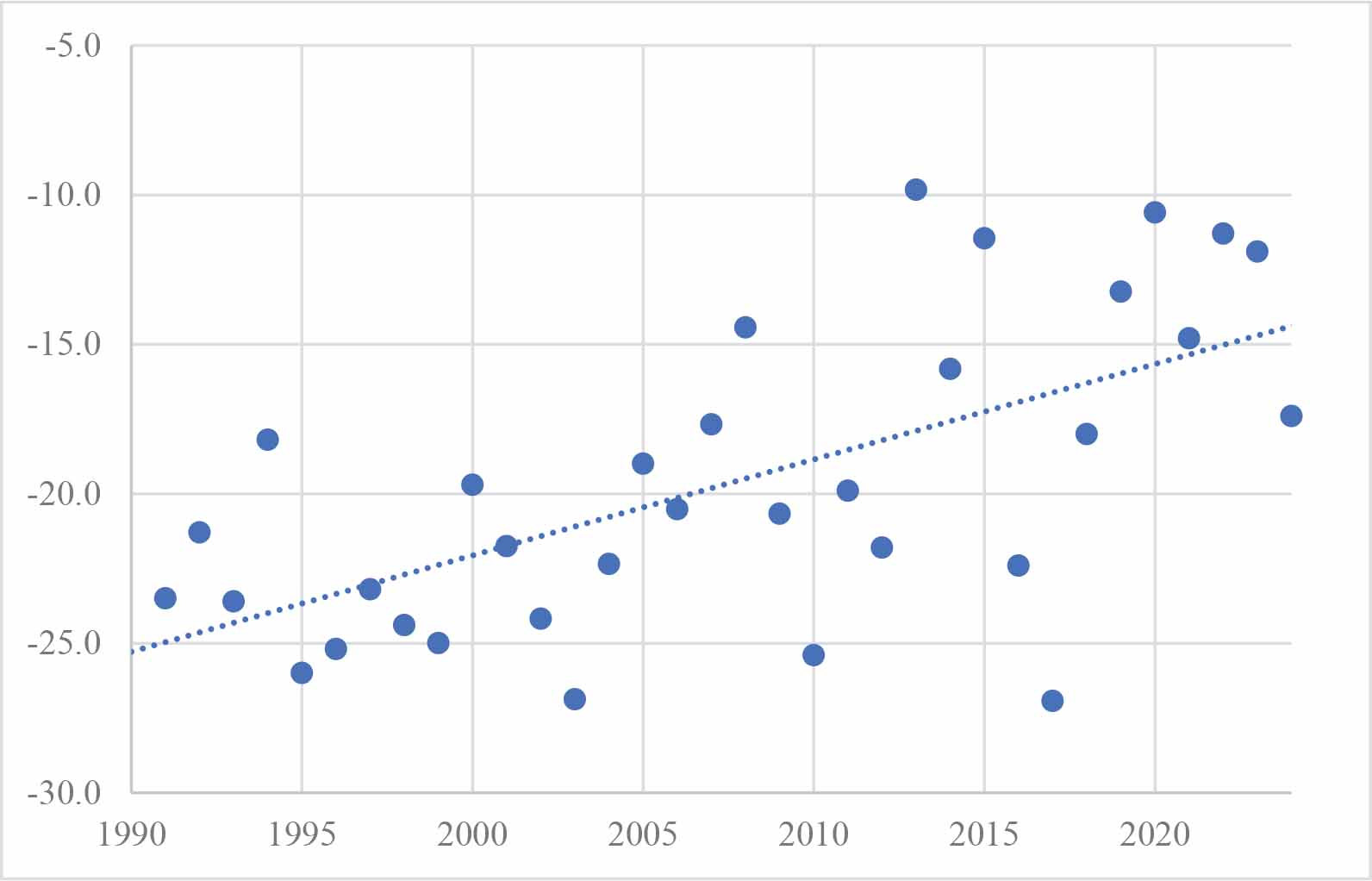
Figure 6.
Distribution of minimum temperatures in Rogów in the years 1991–2024, based on data from the meteorological station in Rogów (Ożga, unpublished data).
While the evaluation method used here may involve subjective elements, the findings are valuable and novel. As the first European study of its kind, future research should apply more objective methods—such as digital image and colorimetric analysis—though these are limited in field conditions like Rogów, where background vegetation may affect results, especially for species with open or sparse crowns. Extending the study to additional Acer species is recommended, but according to the authors’ knowledge, no other collection of this scale includes such a large number of mature individuals per species.
CONCLUSIONS
The study demonstrated that several rarely cultivated or previously unknown maple species possess valuable ornamental and horticultural traits and exhibit full acclimation to the climate of central Poland under garden conditions. The high ornamental value of most commonly cultivated species from section Macrantha, as well as A. amoenum, A. palmatum, A. japonicum, A. shirasawanum and A. rubrum, was confirmed.
In addition, high ornamental value was found in representatives of sections Trifoliata (excluding A. maximowiczianum) and Cissifolia, as well as in A. saccharum and A. carpinifolium. The main aesthetic assets of the studied maples include vivid autumn leaf colouration and a regular, distinctive crown structure. Most species are characterised by uniquely shaped leaves and a consistent leaf arrangement within the crown. A few species feature ornamental bark (section Macrantha, A. griseum, A. triflorum) or attractive flowers (A. saccharum, A. rubrum, A. cissifolium).
The studied species also exhibited high overall health and full frost resistance.
Abbreviations
- AuC
autumn colouration
- Bk
bark
- CSR
crown slenderness ratio
- Fl
flowering
- Fr
fruit
- Hb
habit
- He
overall tree health
- Lv
leaves
- ns
statistically non-significant
- PCA
principal component analysis
- SD
standard deviation
- Tx
texture/foliage
Notes
[3] Contributed by AUTHOR CONTRIBUTIONS
P.B. designed the experiment, performed field measurement and wrote the paper. M.S. analysed the data and performed statistical analysis. M.S. and J.B. contributed to the design of the experiment, editing and improving the manuscript.
[4] Conflicts of interest CONFLICT OF INTEREST
The authors declares no conflict of interest.