
Table 1
Main differences between TG, HT and TH.
| TG | HT | TH | |
|---|---|---|---|
| Client engagement | Active and/or passive interaction with a garden | Horticultural-related activities | Active and/or passive horticultural-related activities |
| Participants | Anyone who feels they may benefit from the involvement | Identified disability, illness or life circumstance requiring services | Identified disability, illness or life circumstance requiring services |
| Facilitator | Professional or non-professional with training in horticulture | Horticultural therapist | Horticultural therapist or professional with training in horticulture |
| Aims and outcomes | Not documented, general | Documented, specific (an agreed treatment, rehabilitation, or vocational plan) | Not documented, specific |
[i] Developed based on AHTA (2017).
[ii] AHTA, American Horticultural Therapy Association; HT, horticultural therapy; TG, therapeutic gardening; TH, therapeutic horticulture.
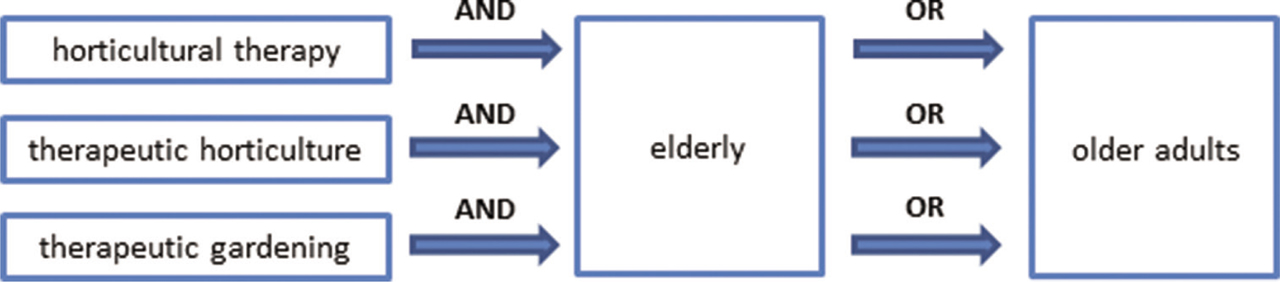
Figure 1
Diagram showing combinations of terms and keywords used during the search process.
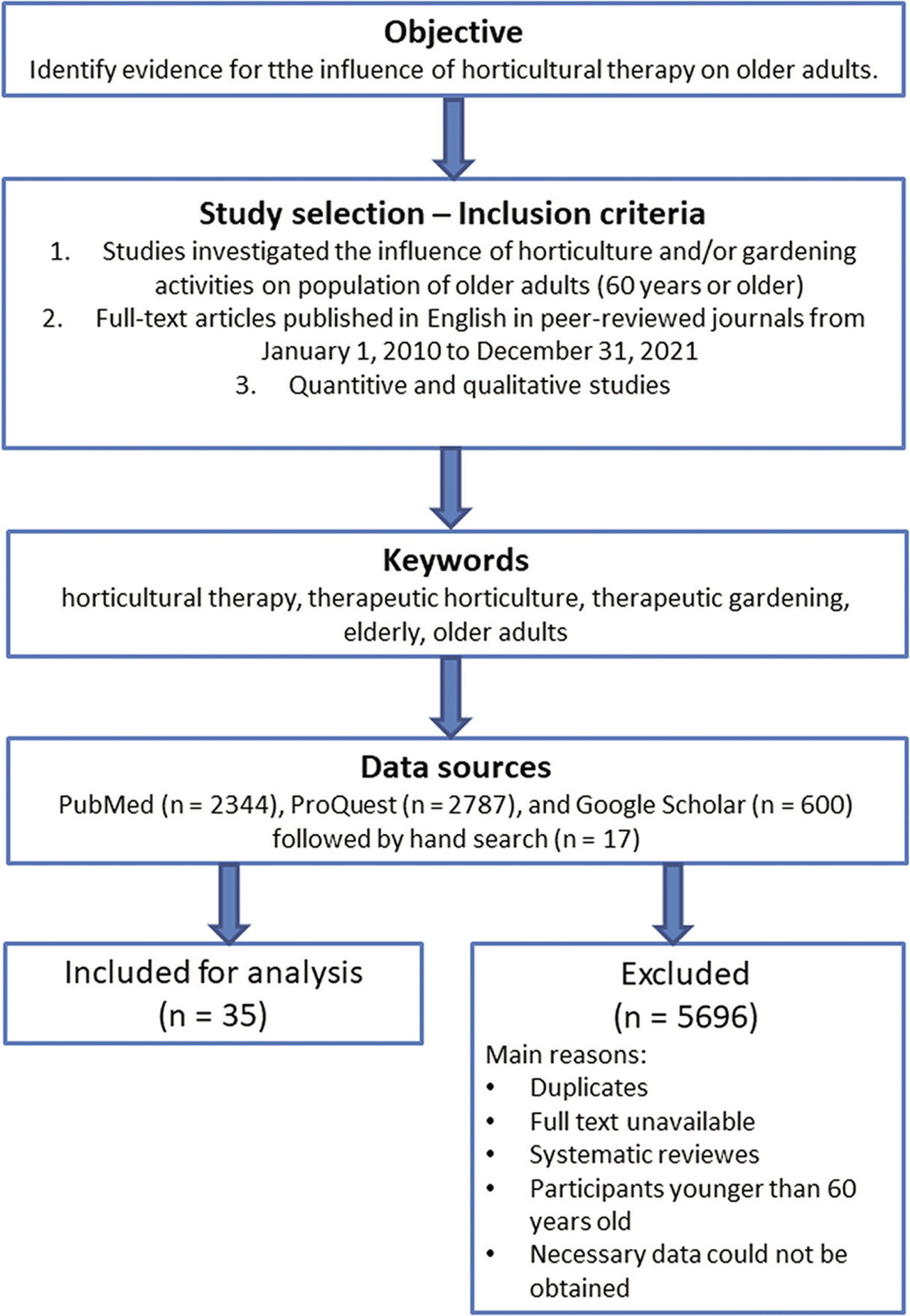
Figure 2
Flow diagram of literature search and study selection process – diagram showing process of literature search.
Table 2
Characteristics of included studies.
| Author | Country | Participants (intervention group, control group) | Study design and treatment regimen | Outcome measurements | Results | |
|---|---|---|---|---|---|---|
| Active people–plant interactions | ||||||
| 1. | Bassi et al. (2018) | Italy | 11 residents of a nursing home (both occupational activities and HT | Crossover study with a baseline measure Two cycles, 6 weeks × 1 × 60 min each | Psychological tests | Increase of cognitive and motivational variables, during both activities, and improved self-satisfaction in comparison with occupational therapy treatment. Horticulture was recognised as more challenging than occupational therapy treatment |
| 2. | Chen and Janke (2012) | USA | 3237 seniors (clients gardeners, control nongardeners) | At least 1 h per week | Physiological and functional tests Self-reported measure of health status | Significantly better balance and improved gait were reported by gardeners, they also had fewer functional limitations and chronic conditions than nongardeners Falls in the past 2 years were rarer in the gardeners group than in the nongardeners group |
| 3. | Chen and Ji (2015) | Taiwan | 10 residents of a nursing home (clients with indoor HT program) | Preliminary study, combined quantitative and qualitative design 10 weeks × 1 × 90 min | Background data sheet Psychological tests | HT program resulted in encouragement of social connections and companionship, hope, anticipation and a sense of achievement. Levels of depression and loneliness significantly increased |
| 4. | Chu et al. (2021) | Taiwan | 88 residents of nursing homes (clients horticultural activities, control leisure activities) | Quasi-experimental, nonequivalent pretest-posttest control group design 8 weeks × 1 × 120 min each | Sociodemographic questioner Psychological tests Physiological and functional tests | ‘Attitudes toward ageing’ and ‘sense of hope’ increased after the intervention. The experimental group significantly improved the time required to complete the cup stacking test |
| 5. | Freeman et al. (2019) | New Zealand | 72 seniors | In-depth, qualitative interviews Not stated | Individual interviews | Older adults highly value the direct engagement with nature, even when limited by health |
| 6. | Han (2017) | Korea | 40 female members of I Church (clients with HT program, control no intervention) | Quasi-experimental, nonequivalent pretest-posttest control group design 8 weeks × 1 × 90–120 min | Psychological tests Physiological and functional tests | Significant pre-post improvement in all sub-factors of self-respect and in all sub-factors of personality and talent in the experimental group |
| 7. | Kim et al. (2021) | South Korea | 58 seniors (both horticultural and non-horticultural activities) | Cross-over experimental design 1 day × 8 × 2 min | Psychological tests Physiological and functional tests | The results of the POMS showed that during horticultural activities the total mood disorder score was lowered. Brain activity of older adults may be increased by activities such as washing leaves, transplanting, and reading news and that has a positive effect on their cognitive function |
| 8. | Lai et al. (2018) | China | 111 residents of nursing homes (clients with HT program, control no intervention) | RCT 8 weeks × 1 × 60 min | Psychological tests Physiological and functional tests | Significant increase in the subjective happiness after the HT program |
| 9. | Lee (2019) | Korea | 58 residents of a nursing home (clients with HT program, control no intervention) | Quasi-experimental, pretest-posttest control group design 10 weeks × 1 × 50 min | Physiological and functional tests | Significant pre-post decrease in the positive domain in the control group and non-significant in the experimental group Significant pre-post decrease in mean score of neuroticism and physiological domain in the experimental group |
| 10. | Lo et al. (2019) | China | 22 residents of nursing homes (clients with HT program) | RCT with a qualitative descriptive approach 8 weeks × 1 × 60 min | Individual semi-structured interviews | Clients of nursing homes saw HT as an enjoyable activity and a good pastime, which made them happier. Horticultural activities resulted in socialisation among the residents |
| 11. | Masuya et al. (2014) | Japan | 18 residents of a nursing home (clients with HT program, control no intervention) | Quasi-experimental, nonequivalent pretest-posttest control group design 6 weeks × 1 × 30–40 min | Psychological tests Physiological and functional tests | Significant improvement in satisfaction with life and a significant decrease in GDS score after the intervention No significant pre-post change in vitality Index, Activities of Daily Living Scale, and MMSE scores in both groups |
| 12. | Ng et al. (2018) | Singapore | 59 seniors recruited from the neighbourhood (clients with HT program, control no intervention) | RCT Stage 1 3 months × 1 × 60 min Stage 2 3 months × once a month × 60 min | Physiological and functional tests Psychological tests | A significant reduction in plasma IL-6 level in the HT intervention group Social connectedness significantly improved in the HT group Significant reductions in plasma CXCL12 (SDF-1), CXCL5 (RANTES) and BDNF in the control group |
| 13. | Ng et al. (2021) | Singapore | 59 seniors (clients HT intervention, control waitlist) | Secondary analysis of an RCT Stage 1 3 months × 1 × 60 min Stage 2 3 months × once a month × 60 min | Psychological tests Physiological and functional tests | Social connectedness significantly increased and Log10 IL-6 levels significantly decreased after HT. |
| 14. | Park et al. (2016) | South Korea | 50 seniors recruited from senior community centres (clients with gardening intervention, control no intervention) | Quasi-experimental, nonequivalent pretest-posttest control group design 3 months × 2 × 50 min | Physiological and functional tests Sociality survey Psychological tests | Significant pre-post improvement in hand dexterity, aerobic endurance, muscle mass, cognitive ability, and decreased waist circumference in the gardening group. Significant pre-post decrease in agility and muscle mass, and a significant increase in depression in the control group. |
| 15. | Park et al. (2019) | South Korea | 41 seniors recruited from community and welfare centres (clients with gardening intervention) | Quasi-experimental, one group pretest-posttest design 1 day × 1 × 20 min | Physiological and functional tests | Significant increase in levels of PDGF and BDNF after the gardening activity |
| 16. | Park et al. (2020) | South Korea | 40 seniors recruited from the senior welfare centre (clients with gardening intervention, control no intervention) | Quasi-experimental, nonequivalent pretest-posttest control group design 12 weeks × 2 × 60 min | Physiological and functional tests Psychological tests | Significant pre-post improvements in BDNF levels, hand dexterity, better cognitive ability and improvements in cognitive health in the gardening group Significantly higher scores in MMSE of the gardening group after the program None of the groups showed significant differences in the pre-/post-scores of all SFT items |
| 17. | Perkins (2012) | USA | 31 seniors recruited from independent, community-based, age-restricted residences (clients with HT program, control no intervention) | Quasi-experimental, pretest-posttest control group design 6 weeks × 1 × 90 min | Psychological tests Garden Questionnaire developed by the investigator | Significant variance in self-esteem and garden knowledge between the groups No significant differences in psychological well-being, garden experience, or social connectedness between the treatment group and the control group Most helpful parts of classes were learning about herbs and their uses, growing and using herbs, participating in the class (the social aspect) |
| 18. | Robbins and Seibel (2019) | USA | 27 older African Americans | In-depth, qualitative interviews Not stated | Individual interviews | Gardening lay a part in the well-being of older adults. Plants and gardening practices provided perspectives on the transformations of social dimensions |
| 19. | Scott et al. (2014) | Australia | 331 senior gardeners | A self-administered survey Median time per week – 8 h | Gardening benefits questionnaire Gardening activity inventory Psychological tests | Participants felt that gardening was more than a casual leisure activity, they emphasised it as crucial to their psychological and physical wellbeing They reported that gardening has numerous psychological, physiological and tangible benefits |
| 20. | Scott et al. (2016) | Australia | 331 senior gardeners | A self-administered survey Median time per week – 8 h | Gardening benefits questionnaire Gardening activity inventory Psychological tests | Leisure gardening derived numerous benefits for the participants. Gardening was seen as a crucial activity to their well-being and to ageing positively |
| 21. | Scott et al. (2019) | Australia | 331 senior gardeners | A self-administered survey Median time per week – 8 h | Gardening benefits questionnaire Gardening activity inventory Psychological tests | Positive ageing self-perceptions were mostly influenced by restoration and physical benefits of gardening More physical and social benefits were reported by gardening group members than non-members |
| 22. | Sia et al. (2020) | Singapore | 47 seniors recruited from senior day care centres (clients with HT program) | Experimental, one group pretest-posttest design 24 weeks × 1 × 60 min | Psychological tests Physiological and functional tests | Significant increase in cognitive functions and mean happiness. Reduction in anxiety. Sustained psychological health and sleep patterns |
| 23. | Tse (2010) | China | 53 residents of a nursing home (clients with indoor gardening program, control no intervention) | Quasi-experimental, nonequivalent pretest-posttest control group design 8 weeks × not stated | Psychological tests Physiological and functional tests | Life satisfaction and social network significantly improved and perception of loneliness significantly decreased in the experimental group after the intervention |
| 24. | Tu et al. (2020) | Taiwan | 27 seniors who attended Fooyin University Senior Citizens Learning Camp (clients with HT program) | One group pretest-posttest design 2 weeks × 2 × 60 min | Physiological and functional tests Psychological tests | Significantly lower SAA and pulse rate after activities Mood states significantly improved for Rocky Leaf Prints and Herb Tasting and Smelling |
| 25. | Widodo et al. (2019) | Indonesia | 14 senior residents of Batu City (clients with the gardening program, control no intervention) | Quasi-experimental, pretest-posttest control group design 6 months × daily × not stated | Physiological and functional tests | Pre-post improvement in anxiety and stress levels in the experimental group (42.9%) and in the control group (28.6%) |
| 26. | Wong et al. (2021) | Singapore | 59 seniors (clients HT intervention, control waitlist) | RCT Stage 1 3 months × 1 × 60 min Stage 2 3 months × once a month × 60 min | Sociodemographic questioner Physiological and functional tests | Reduction in the levels of biomarkers that indicates the extent of T-cell exhaustion and inflammation in older adults is associated with HT. Pre-post reduction of IL-6 levels |
| 27. | Wu et al. (2020) | Taiwan | 17 seniors recruited from a community care centre for the elderly (clients with HT program) | Quasi-experimental, one group pretest-posttest design 12 weeks × 1 × 120 min | Psychological tests Semi-structured interviews | Immediate and significant improvement in overall cognitive function after the HT program. Interviews revealed that: ‘the HT program was meaningful and encouraged the elderly to be engaged in the activities and recall the past, improved enjoyment and learning motivation and ensured new planting experience’ |
| 28. | Yao and Chen (2017) | Taiwan | 85 senior residents of nursing homes (clients with HT program, control no intervention) | Quasi-experimental, pretest-posttest control group design 8 weeks × 1 × 60 min | Psychological tests Physiological and functional tests | Significant pre-post improvement in physical abilities, happiness, meaning of life, and interpersonal intimacy in the experimental group |
| Passive people–plant interactions | ||||||
| 29. | Dahlkvist et al. (2016) | Sweden | 290 residents of nursing homes (self-motivated garden visits) | Multi-level, cross-sectional, correlational design Not stated | Psychological tests | Positive and significant effect of greenery on self-perceived health Health appears to be affected by garden greenery by providing possibilities to experience the outdoor environment as interesting and encouraging and enhancing a sense of being away |
| 30. | Finlay et al. (2015) | Canada | 141 community-dwelling older adults (everyday experiences with green spaces) | In-depth, qualitative interviews Not stated | Individual interviews | Green and blue spaces have an influence on physical wellbeing (motivation for physical activity), mental wellbeing (sense of improvement, feelings of renewal, restoration, rejuvenation, relaxation and stress reduction) and social wellbeing (social interactions, multi-generation enjoyment) |
| 31. | Gagliardi et al. (2020) | Italy | 19 seniors who joined the environmental volunteering and socialising activities in a city park program (park restoration and social activities) | Quasi-experimental, one group pretest-posttest design 1 year × 2 × depends on participants | Physiological and functional tests Psychological tests Individual interviews | Volunteers increased their weekly engagement in gardening activities and time spent performing voluntary work. They also cared for other people more and had better life satisfaction |
| 32. | Hassan et al. (2019) | China | 50 women residents of a nursing care facility (clients with visual stimulation with a money plant, control visual stimulation without any plant) | Quasi-experimental, pretest-posttest control group design 2 days × 2 × 5 min | Physiological and functional tests Psychological tests | Significant pre-post decrease of systolic blood pressure and total state-trait anxiety scores in the experimental group No change in diastolic blood pressure between conditions. Variations in both high alpha and high beta brainwaves in the experimental group |
| 33. | Irvine et al. (2020) | UK | 13 seniors recruited from Group Outdoor Health Walk Program (outdoor walks) | Observational pretest–posttest study with convergent mixed methods design 12 weeks × depends on the route | Physiological and functional tests Psychological tests Individual interviews | Self-reported physical activity improved during the study. Participants experienced more positive emotions and felt they had more energy Clinically relevant changes in experiencing vibrant senses, feeling energised, focused, joyful and calm, as well as sleeping well |
| 34. | Reynolds (2016) | USA | 32 residents of facilities (independent living, assisted living, personal care) (garden use) | A qualitative study of participant observations with behaviour mapping and individual and focus-group interviews, using a grounded theory methodology Depends on participants | Participant observations Individual interviews | High value for nature reported by all participants (essential to their well-being) Nature was valued as an affinity for life, and plants almost as people |
| 35. | Wood and Smyth (2020) | UK | 45 healthy participants recruited from the University of the Third Age (Green exercise) | Pilot study 24 h | Physiological and functional tests Psychological tests | Nature exposure and Green Exercise in childhood significantly predicted nature exposure and Green Exercise in adulthood CN was negatively linked to stress and positive linked to HRV during sleep Higher CN was correlated with less stress reactions and higher rate variability during sleep which both are indicators of health |
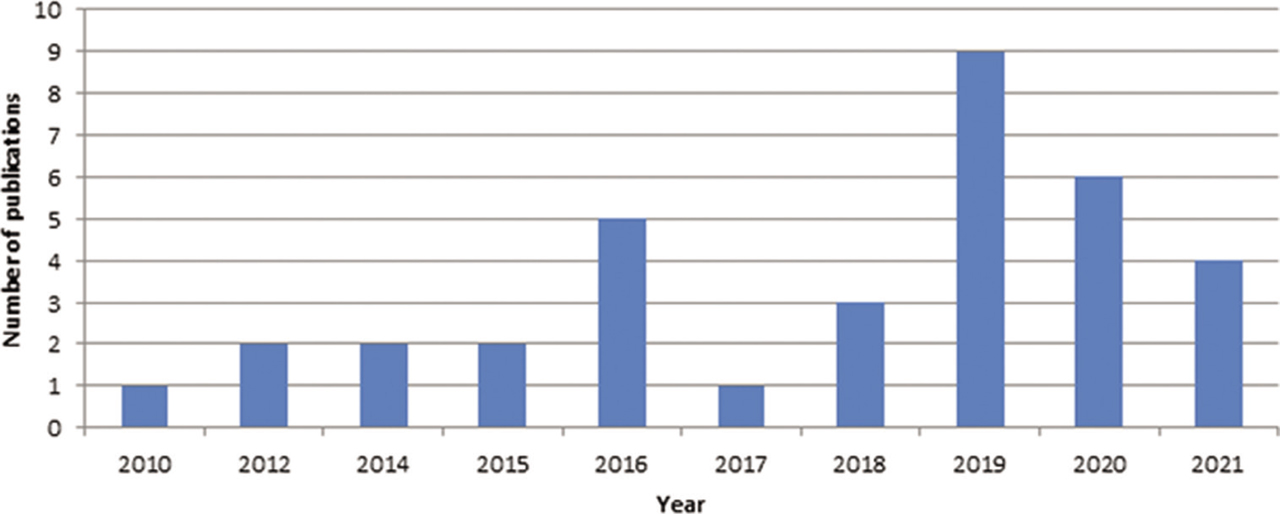
Figure 3
Studies on the topic published in the years 2010–2021 – graph showing the number of studies on the topic published in the years 2010–2021.
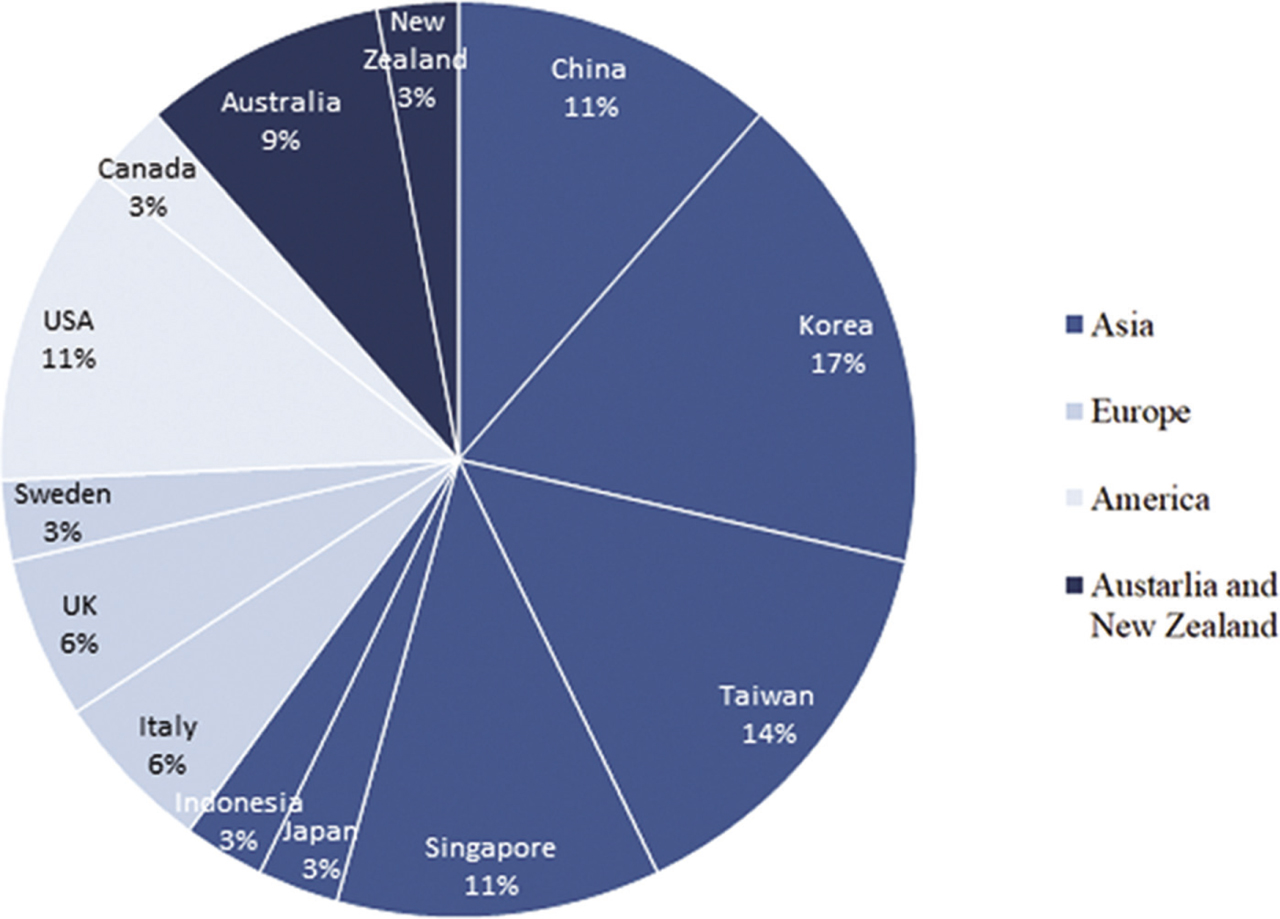
Figure 4
Studies per country of performance – graph showing the number of studies on the topic published per country of performance.
Table 3
The type of people–plant interventions used in the analysed studies.
| Interaction with client | Activity setting | Type of activity | Percentage of studies that applied this intervention | Publications in which this type of activity was used (according to Table 2) | |
|---|---|---|---|---|---|
| Active* | Outdoor | Garden | Gardening (plant care, pruning, watering, weeding, etc.) | 40 | 2, 5, 8, 12, 13, 14, 15, 16, 18, 19, 20, 21, 22, 26 |
| Garden design and planning | 11 | 14, 16, 17, 27 | |||
| Garden parties | 9 | 3, 9, 14, 16 | |||
| Park | Environmental volunteering program | 3 | 31 | ||
| Indoor | Common room, workshop, atelier | Indoor gardening (seeding, propagating, transplanting, etc.) | 29 | 1, 3, 4, 7, 11, 17, 23, 25, 26, 28 | |
| Plant-related art (creating flower pockets, grass dolls, nature art collage, etc.) | 23 | 3, 6, 9, 12, 14, 22, 24, 27 | |||
| Plant-related items (making soaps, teas, potpourri, etc.) | 14 | 4, 17, 22, 27, 28 | |||
| Passive** | Outdoor | Garden | Floristry classes | 23 | 1, 3, 4, 6, 7, 9, 22, 27 |
| Garden visits (educational or sensory strolls in gardens) | 11 | 13, 26, 29, 34 | |||
| Park | Green exercise | 3 | 35 | ||
| Walking group | 3 | 33 | |||
| Indoor | Common room, workshop, atelier | Pot plant visual stimulation | 6 | 30, 32 | |
Table 4
The type of tests and measurements used in the analysed studies.
| Test name | Studies that applied the test/measurement (%) | Publications in which this type of test/measurement was used (according to Table 2)* | ||
|---|---|---|---|---|
| Physiological and functional tests | Depression, anxiety and stress | GDS – Geriatric Depression Scale | 11 | 3, 8, 11, 14 |
| SAS – Zung Self-Rating Anxiety Scale | 6 | 12, 22 | ||
| SDS – Zung Self-Rating Depression Scale | 6 | 12, 22 | ||
| STAI – The State-Trait Anxiety Inventory | 3 | 32 | ||
| PSS – Perceived Stress Scale | 3 | 35 | ||
| Well-being, life satisfaction, quality of life | LSI – Life Satisfaction Index | 6 | 23, 31 | |
| MLS – Meaning of Life Scale | 3 | 28 | ||
| PWI – Personal Well-being Index | 3 | 8 | ||
| QoL – Quality of Life | 3 | 11 | ||
| SF-36 – Self-rated Health and Quality of Life | 9 | 19, 20, 21 | ||
| SPWB – Ryff’s Scales of Psychological Well-Being | 3 | 12 | ||
| SWL – Satisfaction with Life Scale | 3 | 12 | ||
| WEMWBS – Warwick Edinburgh Mental Well-being Scale | 3 | 35 | ||
| WHO-5 – World Health Organization Well-Being Index | 3 | 17 | ||
| Cognitive functions | CDR – The Clinical Dementia Rating | 3 | 22 | |
| MMSE – Mini-Mental State Examination | 14 | 1, 11, 14, 16, 17, 22 | ||
| MoCA – The Montreal Cognitive Assessment | 6 | 12, 27 | ||
| VAS – Visual Analogue Scale | 6 | 22, 29 | ||
| Socio-psychological | FS – Friendship Scale | 9 | 12, 17, 22 | |
| IIS – Interpersonal Intimacy Scale | 3 | 28 | ||
| LSNS – Lubben Social Network Scale | 9 | 8, 23, 31 | ||
| PROS – Positive Relations with Others Sub-Scale | 6 | 12, 13 | ||
| SES – Social Engagement Scale | 3 | 8 | ||
| UCLA – UCLA Loneliness Scale | 6 | 3, 23 | ||
| Happiness and attitudes to yourself | AAQ – Attitudes to Ageing Questionnaire | 11 | 4, 19, 20, 21 | |
| CHI – Chinese Happiness Inventory | 3 | 28 | ||
| CN – Connectedness to Nature Scale | 3 | 35 | ||
| HHI – Herth Hope Index | 3 | 4 | ||
| POMS – Profile of Mood States | 6 | 7, 24 | ||
| PRS – The Perceived Restorativeness Scale | 3 | 29 | ||
| PSRS – The Positive Self-Respect Scale | 3 | 6 | ||
| RSES – Rosenberg Self-Esteem Scale | 3 | 17 | ||
| SHS – Subjective Happiness Scale | 3 | 8 | ||
| Brain activity and emotions | Brain Nerve Growth Factors (BDNF, VEGF, PDGF) | 6 | 15, 16 | |
| Brain mapping (EEG and QEEG) | 9 | 7, 25, 32 | ||
| PSQI – Pittsburgh Sleep Quality Index | 3 | 22 | ||
| VibraImage 8 PRO | 3 | 9 | ||
| Circulatory system | Blood pressure | 6 | 24, 32 | |
| HRV – heart rate variability | 6 | 24, 35 | ||
| Pulse rate | 3 | 24 | ||
| Endocrine system and biomarkers | SAA – salivary amylase activity | 3 | 24 | |
| Biomarkers (IL-1, IL-6, sgp-130, CXCL12/SDF-1, CCL-5/RANTES, hs-CRP, cortisol, DHEA) | 9 | 12, 13, 26 | ||
| Metabolic activity | Metabolomics Study | 3 | 16 | |
| MNA – Mini-Nutritional Assessment | 3 | 8 | ||
| Body composition | BMI | 6 | 14, 35 | |
| Fat mass | 6 | 14, 16 | ||
| Height | 6 | 14, 16 | ||
| Lean mass | 6 | 14, 16 | ||
| Per cent fat | 3 | 16 | ||
| Waist–hip ratio | 3 | 14 | ||
| Weight | 6 | 14, 1 | ||
| Fitness and self-efficiency | ADL-20 – The Activities of Daily Living Scale | 3 | 11 | |
| BI – Modified Barthel Index | 11 | 8, 22, 23, 28 | ||
| FFI – The Fried Frailty Index the General Self-Efficacy Scale | 3 | 8 | ||
| IADL – Lawton’s Instrumental Activities of Daily Living scale | 3 | 8 | ||
| IPAQ-SF – The International Physical Activity Questionnaire-Short Form | 6 | 14, 16 | ||
| PASE – The Physical Activity Scale for the Elderly | 3 | 31 | ||
| TFI – The Tilburg Scale | 3 | 5 | ||
| Scot-PASQ – Scottish Physical Activity Screening Question | 3 | 33 | ||
| SFT – The Senior Fitness Test | 6 | 14, 16 | ||
| Side-by-side/semitandem/full-tandem balance tests | 3 | 2 | ||
| The Cup Stacking Test | 3 | 4 | ||
| Timed walk test | 3 | 2 | ||
| VI – Vitality index | 3 | 11 | ||
| VIA-IS – VIA Inventory of Strengths | 3 | 6 | ||
| Self-developed questionnaires or interviews | Demographic information questions | 9 | 3, 4, 26 | |
| Focus-group interviews | 9 | 2, 34, 35 | ||
| Gardening activity inventory | 9 | 19, 20, 21 | ||
| Garden questionnaire | 11 | 17, 19, 20, 21 | ||
| Individual interviews | 31 | 5, 10, 17, 19, 20, 21, 27, 30, 31, 33, 34 |
* Numbers in this column refer to the publication number in Table 2.
EEG: Electroencephalography; POMS: Profile of mood states; VEGF, Vascular endothelial growth factor.