
INTRODUCTION
Strawberry, which is being cultivated worldwide (Fragaria × ananassa Duch.), is an allo-octoploid species, originating nearly 300 years ago from wild progenitors from the Americas. Since that time strawberry has become the most widely cultivated fruit crop in the world, universally appealing due to its sensory qualities and health benefits (Whitaker et al., 2020). Productivity in strawberries can be recorded by measuring marketable or total yield, and marketable yield is a better indicator of productivity than total yield. Total world production is about nine million tonnes, with significant cultivation in China, the United States, Mexico, Egypt, Turkey and Spain, and other countries (Menzel, 2021). Strawberries are the fifth most preferred fresh fruit in the United States (Yeargin et al., 2021).
Strawberry is the most important berry crop and is grown in different environments, including areas with a temperate, subtropical or Mediterranean climate. Control of flowering is one of the key processes that determines the ability of the species to adapt to different climates and growing conditions (Hytönen and Kurokura, 2020). Strawberry is a fleshy fruit of considerable commercial and nutritional importance. Like tomato, strawberry has sympodial shoot growth and bears fruit for which volatiles and primary metabolites (flavour) and specialised metabolites (colour, nutrition) are of utmost importance. The octoploid cultivated strawberry has a limited genetic basis (Gaston et al., 2020). The colour of strawberries results from the accumulation of anthocyanins, and with a colourful appearance ranging from white to dark red, these fruits were appealing to all consumers (Zhao et al., 2021). Moreover, it was reported that dietary consumption of strawberries could increase the plasma antioxidant capacity (Tulipani et al., 2009; Giampieri et al., 2018) and improve insulin sensitivity (Park et al., 2016). Mertoglu et al. (2021) have established the presence of phytochemicals and anti-microbial properties of some blackberry cultivars, and also found out that blackberries contain phenolic compounds such as total flavonoid and anthocyanin contents that possess antioxidant and anti-microbial properties.
The category of Plant Sciences covers resources concerning many aspects of the study of plants including systematic, biochemical, agricultural, and pharmaceutical topics. This category includes materials on higher and lower plants, terrestrial and aquatic plants, plant cells, entire plants, and plant assemblages (Clarivate, InCites Journal Citation Reports, 2021a). For the keywords of “Strawberry” or “Fragaria × ananassa Duch” in the topic and for the article or review paper types published all these years, the foremost three Web of Science categories are Food Science and Technology, Horticulture and Plant Sciences. This paper was selected and focused on the Plant Sciences category.
Bibliometric indicators have been frequently employed to analyse scientific and technological production in different fields of knowledge. Bibliometric techniques have been adopted in some research, such as essential oil-bearing plants exposed to water stress (Kulak et al., 2019), grafting in horticultural plants (Belmonte-Ureña et al., 2020), scientific research about the fungus Phakopsora pachyrhizi Sydow and Sydow affecting soybean [Glycine max (L.) Merrill] (Meira et al., 2020), highly cited articles in science citation index expanded (SCIE) – subject category of horticulture (Kolle et al., 2017), research, innovation and development on Corylus avellana (Raparelli and Lolletti, 2020), the berries on the top (Yeung et al., 2019), a bibliometric analysis of INRA publications on fruits and vegetables produced between 2002 and 2006 (Tatry et al., 2011), tree fruit growing in Germany (Dalla Via and Baric, 2012), trends in mango research (Kolle et al., 2018), wine research and its relationship with wine production (Jamali et al., 2020). Other research such as soil and water conservation in the Loess Tableland-Gully Region of China (Wang et al., 2019), advances in water use efficiency and sustainable water use in agriculture (Velasco-Muñoz et al., 2018a, 2018b). Sun and Yuan have analysed rice with fertilizer based on Citespace (Sun and Yuan, 2019), the top papers in world rice research (Sun and Yuan, 2020a), Library and Information Science category (Sun and Yuan, 2020b), Water Resources category (Sun and Yuan, 2020c), Agronomy category (Sun and Yuan, 2021), Green and Sustainable Science and Technology category (Yuan and Sun, 2019), scientific research on maize or corn (Yuan and Sun, 2020a, 2020b), global research on muskmelon (Cucumis melo L.) (Yuan et al., 2021), strawberry research publications from Horticulture category (Yuan and Sun, 2021a) and cotton research from Plant Sciences category based on Web of Science (Yuan and Sun, 2021b).
Research is the way to find out the truth so that innovations are important to find something new or a new understanding to approach the truth. It is not helpful for researchers to duplicate the same problem again and again without improving their research. It is the responsibility of authors, reviewers, editors, and readers to stop publishing such problems in the journal. The study aims to assess publications of articles and reviews on strawberry (F. ananassa Duch.) research from the Plant Sciences category by bibliometric science mapping and visualisation tools. We will assess the scatter of publications in citation databases, classification of topics and progress over the years. Country input and author collaboration (co-authorship) will be addressed. Special attention will be dedicated to research topics and research fronts.
DATA AND METHODOLOGY
Web of Science
Clarivate Analytics's Web of Science (WoS) is the world's leading scientific citation search and analytical information platform, and one of the world's largest and most comprehensive academic information resources covering >12,000 core academic journals. The publication counts from the WoS Core Collection were derived from the following databases: The SCIE – 1900-present, Social Science Citation Index (SSCI) – 1900-present, Conference Proceeding Citation Index-Science (CPCI-S) – 2015-present, Conference Proceedings Citation Index-Social Science and Humanities (CPCI-SSH) – 2015-present, Current Chemical Reactions (CCR-EXPANDED) – 1985-present, Index Chemicus (IC) – 1993-present.
Data collection and analysis
This study surveyed papers in WoS Core Collection (1900-present) (retrieval data last updated: 2021-3-20). We used the keywords in the topic, with the query
Topic: (“Strawberry” OR “F. ananassa Duch”.)
Then refined by: Document Types (Article or Review) and WoS categories (Plant Sciences).
There are 2,930 papers from WoS Core Collection. Full record and cited references of the included papers were extracted at other reference software file formats and imported into VOSviewer (version 1.6.16, 2020, Leiden University, Leiden, The Netherlands) for further citation analysis. The impact factors (IF 2019 and IF 5 years) were taken from the Journal Citation Report (JCR 2019) published in 2020, which had the latest data available.
VOSviewer
Visualisations (network and overlay) using the program VOSviewer are conducted on WoS data to determine co-occurrence and clusters of connected publications, country input and author collaboration (co-authorship) as well as clusters of interrelated research topics (text data). We used VOSviewer to show the international collaboration between the authors, organisations, countries and the research trends through all keywords (Van Eck and Waltman, 2010). In this paper, default parameters values of the VOSviewer are usually used in the analysis. Items are represented by a label and a circle. The size of circles reflects the weight of an item. Some items are not displayed to avoid overlapping. The colours in network visualisation (text maps) represent clusters of similar items as calculated by the program. The distance between the items indicates the strength of relationships (Van Eck and Waltman, 2020).
RESULTS AND DISCUSSION
Document type and language of publication
Based on Clarivate Analytics's WoS Index, the 2,930 papers were SCIE (2,930), CPCI-S (31), IC (7), SSCI (4), and Book Citation Index–Science (3).
The document types and languages were displayed in Table 1. Among the document types, there are articles (2,836, 96.792%) and reviews (94, 3.208%), including proceedings papers (30, 1.024%), early access (11, 0.375%) and book chapter (3, 0.102%). The first paper titled “Some new strawberry fungi” written by Stevens and Peterson (1916) was published in Phytopathology.
Table 1
Document types and languages of publication on strawberry research from Plant Sciences category based on WoS.
| Rank | Document type | Records | % of 2,930 | Language | Records | % of 2,930 |
|---|---|---|---|---|---|---|
| 1 | Article | 2,836 | 96.792 | English | 2,894 | 98.771 |
| 2 | Review | 94 | 3.208 | French | 20 | 0.683 |
| 3 | Proceedings paper | 30 | 1.024 | German | 9 | 0.307 |
| 4 | Early access | 11 | 0.375 | Spanish | 3 | 0.102 |
| 5 | Book chapter | 3 | 0.102 | Italian | 2 | 0.068 |
| 6 | Portuguese | 2 | 0.068 |
Almost all the papers were published in English (2,894, 98.771%), with the remaining in French (20, 0.683%), German (9, 0.307%), Spanish (3, 0.102%), Italian (2, 0.068%) and Portuguese (2, 0.068%). English was dominating language from the WoS, and scholars tend to publish their articles in English as they want them to be widely accepted. Most of the published documents were in the form of original research articles and English was the most common language followed (Khan et al., 2020).
Publication output
To know the research trend in strawberry research from the Plant Sciences category based on WoS, a total number of 2,930 articles and reviews were published and trends were obtained from the online version of the WoS database from 1916 to 2021 and displayed in Figure 1. The highest number of papers published is 199 in the year 2020. The following are the percentage ratio of papers with 93.31%, 88.088%, 83.345%, 70.376% and 48.703% published after 1970, 1980, 1990, 2000 and 2010, respectively. The h-index was initially proposed as a measure of a researcher's scientific output based on counting the number of publications (N) by that researcher cited N or more times (Hirsch, 2005). For the total 2,930 papers, the h-index is 102, and the average citation per item is 22.89.
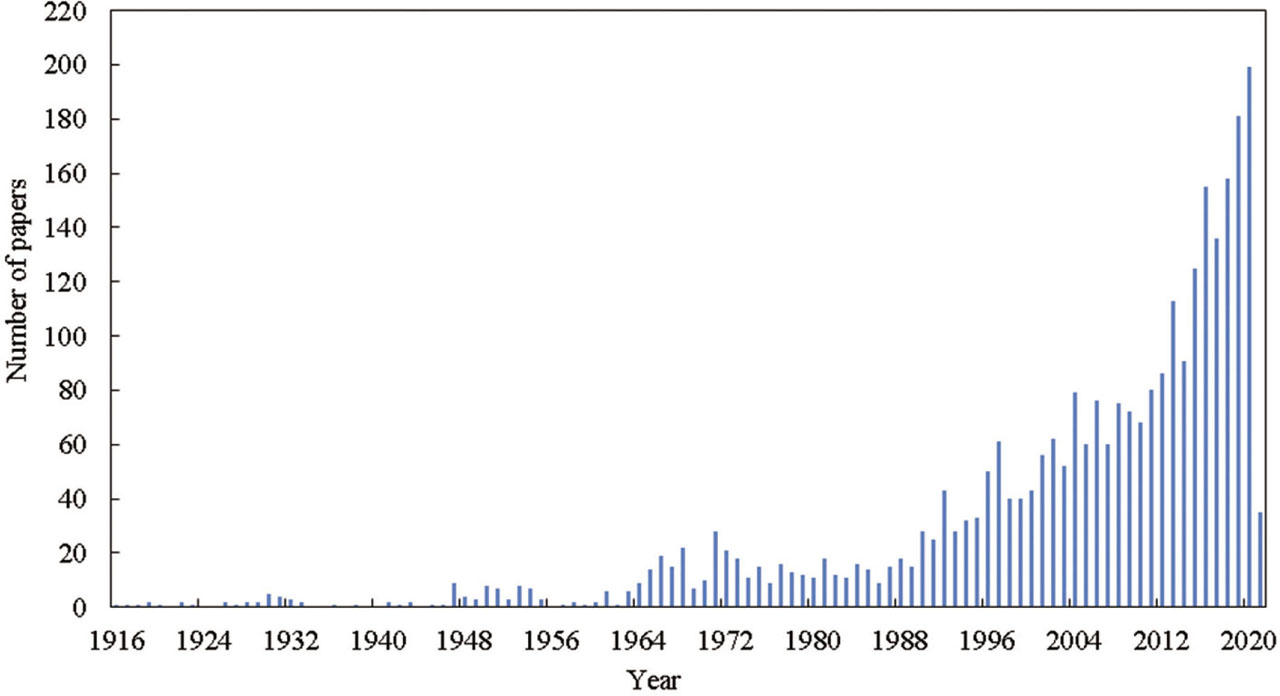
Figure 1
The number of published papers of strawberry research from the Plant Sciences category based on WoS from 1916 to 2021.
Web of Science categories and research areas
For strawberry research from the Plant Sciences category based on WoS, there are a total of 29 WoS subject categories in the science edition (total 254 categories) and 21 research areas. Table 2 shows the top 21 WoS categories and all the research areas in the subject of strawberry research from the Plant Sciences category. The top five WoS categories include Plant Sciences (2,930, 100%), Agronomy (609, 20.785%), Horticulture (372, 12.696%), Biochemistry Molecular Biology (133, 4.539%) and Biotechnology Applied Microbiology (115, 3.925%). The top five research areas include Plant Sciences (2,930, 100%), Agriculture (825, 28.157%), Biochemistry Molecular Biology (162, 5.529%), Biotechnology Applied Microbiology (115, 3.925%) and Genetics Heredity (105, 3.584%). The journals or papers may be classified into two or more categories in the WoS, which shows the multidisciplinary characteristics of the research field (Elango and Ho, 2017, 2018). In WoS, publications mapped to WoS categories are more detailed than research areas (Stopar et al., 2021).
Table 2
Top 21 WoS categories and all research areas for strawberry research from Plant Sciences category based on WoS.
| Rank | WoS categories | TP | Ratio | Research areas | TP | Ratio |
|---|---|---|---|---|---|---|
| 1 | Plant Sciences | 2,930 | 100 | Plant Sciences | 2,930 | 100 |
| 2 | Agronomy | 609 | 20.785 | Agriculture | 825 | 28.157 |
| 3 | Horticulture | 372 | 12.696 | Biochemistry Molecular Biology | 162 | 5.529 |
| 4 | Biochemistry Molecular Biology | 133 | 4.539 | Biotechnology Applied Microbiology | 115 | 3.925 |
| 5 | Biotechnology Applied Microbiology | 115 | 3.925 | Genetics Heredity | 105 | 3.584 |
| 6 | Genetics Heredity | 105 | 3.584 | Food Science Technology | 73 | 2.491 |
| 7 | Food Science Technology | 73 | 2.491 | Nutrition Dietetics | 73 | 2.491 |
| 8 | Nutrition Dietetics | 73 | 2.491 | Chemistry | 48 | 1.638 |
| 9 | Soil Science | 64 | 2.184 | Cell Biology | 45 | 1.536 |
| 10 | Cell Biology | 45 | 1.536 | Environmental Sciences Ecology | 42 | 1.433 |
| 11 | Agriculture Multidisciplinary | 41 | 1.399 | Entomology | 25 | 0.853 |
| 12 | Chemistry Analytical | 36 | 1.229 | Developmental Biology | 24 | 0.819 |
| 13 | Biochemical Research Methods | 29 | 0.99 | Pharmacology Pharmacy | 18 | 0.614 |
| 14 | Environmental Sciences | 28 | 0.956 | Integrative Complementary Medicine | 8 | 0.273 |
| 15 | Entomology | 25 | 0.853 | Forestry | 6 | 0.205 |
| 16 | Developmental Biology | 24 | 0.819 | Evolutionary Biology | 5 | 0.171 |
| 17 | Pharmacology Pharmacy | 17 | 0.58 | Medical Laboratory Technology | 5 | 0.171 |
| 18 | Ecology | 14 | 0.478 | Palaeontology | 3 | 0.102 |
| 19 | Chemistry Medicinal | 13 | 0.444 | Mycology | 1 | 0.034 |
| 20 | Chemistry Applied | 10 | 0.341 | Science Technology Other Topics | 1 | 0.034 |
| 21 | Integrative Complementary Medicine | 8 | 0.273 | Zoology | 1 | 0.034 |
[i] TP, total publication; Ratio, Ratio of 2,930 (%).
Core journals
Based on JCR 2019 data (published in 2020), there are 197 journals and book series for strawberry research from the Plant Sciences category based on WoS. The top 21 core journals were shown in Table 3 with total articles each >37 papers, Journal impact factor as IF 2019 and IF 5 years, and rank Quartile in category (QC).
Table 3
Top 21 journals on strawberry research from Plant Sciences category based on WoS.
| Rank | Journal | TP | Ratio | IF 2019 | IF5 years | QC |
|---|---|---|---|---|---|---|
| 1 | Plant Disease | 252 | 8.601 | 3.809 | 3.95 | Q1 |
| 2 | Phytopathology | 229 | 7.816 | 3.234 | 3.492 | Q1 |
| 3 | Plant Pathology | 93 | 3.174 | 2.169 | 2.432 | Q2 |
| 4 | Frontiers in Plant Science | 89 | 3.038 | 4.402 | 5.207 | Q1 |
| 5 | Canadian Journal of Plant Science | 86 | 2.935 | 0.85 | 1.065 | Q4 |
| 6 | European Journal of Plant Pathology | 86 | 2.935 | 1.582 | 1.732 | Q2 |
| 7 | Journal of Experimental Botany | 86 | 2.935 | 5.908 | 7.011 | Q1 |
| 8 | Journal of Plant Nutrition | 71 | 2.423 | 1.132 | 1.143 | Q3 |
| 9 | Proceedings of the American Society for Horticultural Science | 65 | 2.218 | |||
| 10 | Journal of Berry Research | 64 | 2.184 | 2.208 | 2.495 | Q2 |
| 11 | Plant Physiology and Biochemistry | 58 | 1.98 | 3.72 | 3.966 | Q1 |
| 12 | Euphytica | 55 | 1.877 | 1.614 | 1.883 | Q2 |
| 13 | Plant Cell Tissue and Organ Culture | 54 | 1.843 | 2.196 | 2.329 | Q2 |
| 14 | Plant Science | 53 | 1.809 | 3.591 | 4.253 | Q1 |
| 15 | Plant Physiology | 49 | 1.672 | 6.902 | 7.52 | Q1 |
| 16 | BMC Plant Biology | 40 | 1.365 | 3.497 | 4.494 | Q1 |
| 17 | Theoretical and Applied Genetics | 40 | 1.365 | 4.439 | 4.603 | Q1 |
| 18 | Journal of Plant Physiology | 38 | 1.297 | 3.013 | 3.615 | Q1 |
| 19 | Physiologia Plantarum | 38 | 1.297 | 4.148 | 3.947 | Q1 |
| 20 | Agronomy Basel | 37 | 1.263 | 2.603 | Q2 | |
| 21 | Horticulture Research | 37 | 1.263 | 5.404 | 5.57 | Q1 |
[i] Ratio of 2,930 (%), IF 2019 and IF 5 years.
[ii] Data were from the 2020 edition of Journal Citation Reports.
[iii] TP, total publication; IF, impact factors, QC, quartile in category; JCR, Journal Citation Report,
The top 5, top 10, top 15 and top 20 Journals published about 25.564%, 38.259%, 47.44% and 54.027% of the total papers, respectively. Plant Disease was the most productive journal with 252 papers (8.601%), followed by Phytopathology (229, 7.816%), Plant Pathology (93, 3.174%), Frontiers in Plant Science (89, 3.308%), Canadian Journal of Plant Science (86, 2.935%), European Journal of Plant Pathology (86, 2.935%) and Journal of Experimental Botany (86, 2.935%), that these journals each published >86 papers. Based on Table 3 of the top 21 journals, there are 12 journals in Quartile 1, six journals in Quartile 2, one journal in Quartile 3, one journal in Quartile 4 in Category. White-Gibson et al. (2019) have demonstrated the importance of publishing in the English language and in a journal with a high impact factor. Citation analysis is not a measurement of scientific quality, but it is reflective of its importance.
According to the publication data in the citation of 197 journals, there were 91 journals that meet the thresholds of five publications. The network of citations in the field of strawberry research from the Plant Sciences category based on WoS is shown in six clusters with different colours in Figure 2, the size of circles reflects a total number of journal publication records. The six cluster colours from one to six are red, green, blue, yellow, violet, and shallow blue. Journals in the same cluster usually suggested that they published similar content papers and had close relations with each other.
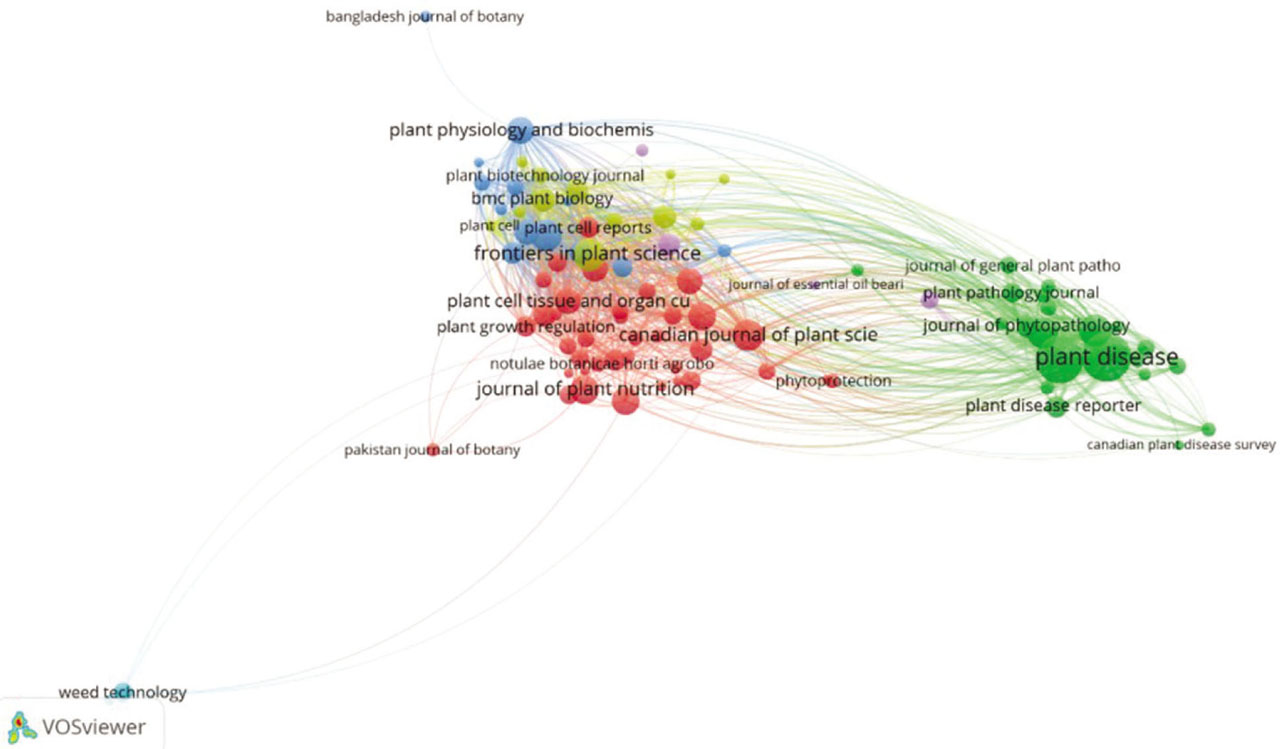
Figure 2
Network visualisation maps of citation journals in strawberry research from Plant Sciences category based on WoS with 91 nodes and 6 clusters.
Authors co-authorship analysis
In general, internationally collaborative articles had the highest visibility and scientific impact followed by inter-institutional collaborative articles, single-country articles and single-author articles, respectively (Wambu and Ho, 2016). According to the publication data, it was revealed that a total of 8,838 authors published 2,930 publications, there were 254 authors that meet the thresholds of 5 publications, but only 105 authors were connected to each other. The network of authorship in the field of Network visualisation maps of authors of strawberry research from the Plant Sciences category based on WoS is shown in Figure 3, the size of circles reflects a total number of records. Authors in the same cluster usually suggested that they studied in a similar field and had close cooperation with each other.
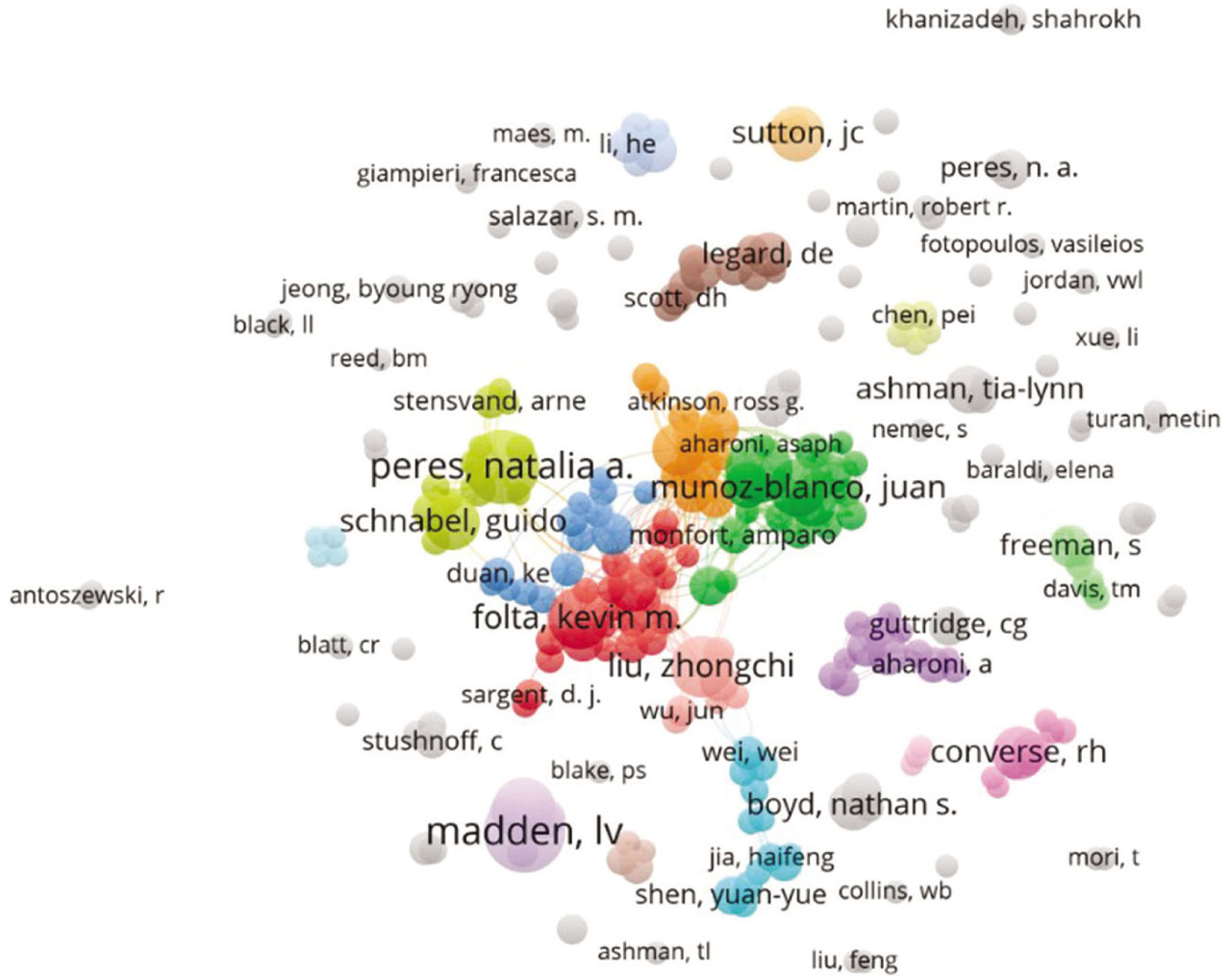
Figure 3
Network visualisation maps of authors of strawberry research from Plant Sciences category based on WoS.
Table 4 shows the top 22 authors who published >17 papers and also lists the citations, average citations, organisation enhanced and countries. The top five authors are Peres, Natalia A. (Peres, Natalia; Peres, N.A.); Madden, LV; Munoz-Blanco, Juan (Munoz-Blanco, J); Schwab, Wilfried (Schwab, W) and Ellis, MA, each published >25 papers. Though we combined the same author with the different spells, the total number of authors was calculated separately. The top five authors with the higher citations per paper are Caballero, Jose L. (Caballero, JL); Freeman, Stanley (Freeman, S); Munoz-Blanco, Juan (Munoz-Blanco, J); Valpuesta, Victoriano (Valpuesta, V) and Schwab, Wilfried (Schwab, W), average citations per paper are >52.12 times. The top 22 authors are mainly from the USA and Spain. There are 11 authors from the USA, four authors from Spain, two authors from England, and then, Germany, Denmark, Israel, Canada and China have one author each.
Table 4
The top 22 most prolific authors published papers in the field of Strawberry research from the Plant Sciences category based on WoS.
| Rank | Author | Papers | Citations | Avg. citations | Organisation-enhanced | Country |
|---|---|---|---|---|---|---|
| 1 | Peres, Natalia A. (Peres, Natalia; Peres, N.A.) | 50 | 774 | 15.48 | University of Florida | USA |
| 2 | Madden, LV | 38 | 1,308 | 34.42 | Ohio State University | USA |
| 3 | Munoz-Blanco, Juan (Munoz-Blanco, J) | 34 | 2,035 | 59.85 | University of Cordoba | Spain |
| 4 | Schwab, Wilfried (Schwab, W) | 34 | 1,772 | 52.12 | Technical University of Munich | Germany |
| 5 | Ellis, MA | 25 | 882 | 35.28 | Ohio State University | USA |
| 6 | Folta, Kevin M. | 24 | 728 | 30.33 | University of Florida | USA |
| 7 | Liu, Zhongchi | 24 | 620 | 25.83 | University of Maryland | USA |
| 8 | Valpuesta, Victoriano (Valpuesta, V) | 24 | 1,334 | 55.58 | University of Malaga | Spain |
| 9 | Ashman, Tia-Lynn (Ashman, TL) | 21 | 544 | 25.90 | University of Pittsburgh | USA |
| 10 | Blanco-Portales, Rosario (Blanco-Portales, R) | 21 | 1,050 | 50.00 | University of Copenhagen | Denmark |
| 11 | Freeman, Stanley (Freeman, S) | 21 | 1,271 | 60.52 | ARO | Israel |
| 12 | Simpson, David W. (Simpson, D.W.; Simpson, DW) | 21 | 604 | 28.76 | NIAB EMR | England |
| 13 | Schnabel, Guido | 20 | 478 | 23.90 | Clemson University | USA |
| 14 | Sutton, JC | 20 | 764 | 38.20 | University of Guelph | Canada |
| 15 | Caballero, Jose L. (Caballero, JL) | 19 | 1,222 | 64.32 | University of Cordoba | Spain |
| 16 | Converse, RH | 19 | 185 | 9.74 | USDA ARS | USA |
| 17 | Davis, Thomas M. (Davis, TM) | 19 | 718 | 37.79 | University of New Hampshire | USA |
| 18 | Mercado, Jose A. (Mercado, JA) | 19 | 835 | 43.95 | University of Malaga | Spain |
| 19 | Boyd, Nathan S. | 17 | 87 | 5.12 | University of Florida | USA |
| 20 | Sargent, Daniel J. (Sargent, D.J.) | 17 | 529 | 31.12 | NIAB EMR | England |
| 21 | Shen, Yuan-Yue (Shen, Yuanyue) | 17 | 749 | 44.06 | Beijing University of Agriculture | China |
| 22 | Whitaker, Vance M. | 17 | 251 | 14.76 | University of Florida | USA |
Countries/regions co-authorship analysis
A total of 96 countries or regions are contributing to the 2,930 papers in this study. Table 5 represents the lists of the top 21 countries or regions that the publications were above 40 papers ranked by the number of total publications (TPs), also lists the cluster, total link strength (TLS), citations and average citations. Among the 21 countries or regions, the USA, People's Republic of China, Spain, Canada and England are the five most papers countries. From the average citations, Netherlands, Israel, France, Germany and Spain show the higher citations per paper.
Table 5
Top 21 countries/regions publishing papers in the field of strawberry research from Plant Sciences category based on WoS.
| Rank | Countries/Regions | Records | Cluster | TLS | Citations | Avg. citations |
|---|---|---|---|---|---|---|
| 1 | USA | 681 | 8 | 279 | 18,343 | 26.94 |
| 2 | People's Republic of China | 351 | 4 | 128 | 5,546 | 15.80 |
| 3 | Spain | 193 | 3 | 141 | 7,118 | 36.88 |
| 4 | Canada | 176 | 4 | 69 | 4,392 | 24.95 |
| 5 | England | 154 | 5 | 126 | 5,028 | 32.65 |
| 6 | Germany | 143 | 7 | 134 | 5,888 | 41.17 |
| 7 | Italy | 135 | 3 | 105 | 3,514 | 26.03 |
| 8 | Japan | 125 | 4 | 55 | 2,742 | 21.94 |
| 9 | France | 73 | 1 | 51 | 3,746 | 51.32 |
| 10 | Argentina | 69 | 3 | 16 | 1,320 | 19.13 |
| 11 | Turkey | 65 | 2 | 47 | 1,045 | 16.08 |
| 12 | Iran | 64 | 3 | 16 | 472 | 7.38 |
| 13 | Brazil | 61 | 2 | 29 | 730 | 11.97 |
| 14 | South Korea | 61 | 6 | 19 | 668 | 10.95 |
| 15 | Australia | 56 | 4 | 31 | 1,822 | 32.54 |
| 16 | Netherlands | 55 | 1 | 65 | 3,210 | 58.36 |
| 17 | Israel | 54 | 4 | 36 | 3,101 | 57.43 |
| 18 | Poland | 49 | 5 | 28 | 648 | 13.22 |
| 19 | Chile | 41 | 4 | 31 | 785 | 19.15 |
| 20 | Finland | 40 | 6 | 41 | 1,179 | 29.48 |
| 21 | New Zealand | 40 | 1 | 29 | 1,333 | 33.33 |
[i] TLS: total link strength.
We developed the international country co-authorship network map using VOSviewer software (Figure 4). The threshold was set as five, 52 countries or regions were meeting the requirement and 51 countries or regions were connected to each other. The VOSviewer software divided these 51 countries or regions into eight clusters with different colours, the size of circles reflects a total number of records and the distance between the countries indicates the strength of relationships. There are different groups with different colours in different clusters that are formed by sets of countries. (Figure 4).
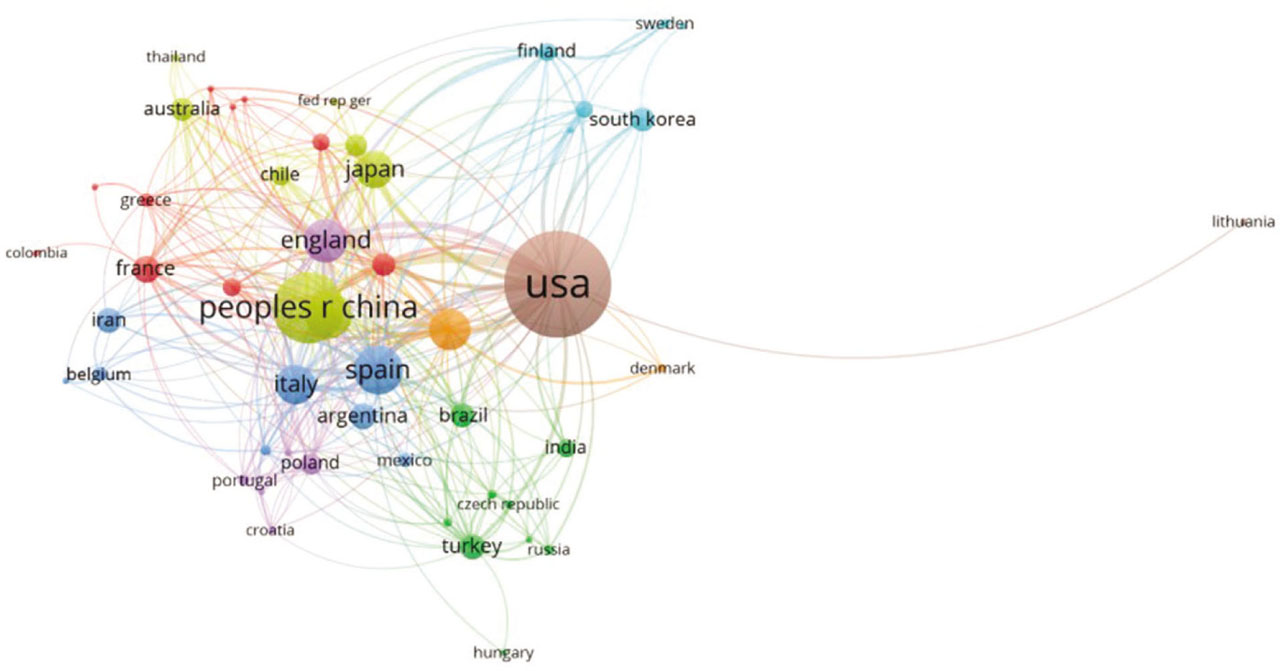
Figure 4
The country co-authorship network of strawberry research from the Plant Sciences category is based on WoS with 51 nodes and 8 clusters.
As we can see from Figure 4, the first cluster consisted of 10 countries and regions (red colour), France, Netherlands, New Zealand, Scotland, Greece, Cyprus, Sri Lanka, Malaysia, Colombia and Indonesia. The second cluster consisted of nine countries or regions (green colour), Turkey, Brazil, India, Russia, Czech Republic, Pakistan, Egypt, Hungary and Saudi Arabia. The third cluster consisted of eight countries (blue colour), Spain, Italy, Argentina, Iran, Belgium, Mexico, Switzerland and Tunisia. The fourth cluster consisted of eight countries and regions (yellow colour), People's Republic of China, Canada, Japan, Australia, Israel, Chile, Thailand and Fed Rep Germany. The fifth cluster consisted of six countries (violet), England, Poland, Portugal, Austria, Croatia and South Africa. The sixth cluster consisted of six countries (shallow blue), South Korea, Finland, Norway, Sweden, Serbia and Vietnam. The seventh cluster consisted of two countries (orange), Germany and Denmark. The eighth cluster consisted of two countries (brown), the USA and Lithuania. More cooperation could bring more advanced achievements in scientific research. Therefore, geographical location is an important factor that determines international cooperation. Nowadays, increasing international exchanges have promoted academic communications (Tang et al., 2018).
Organisations’ co-authorship analysis
According to the publication data, it was revealed that a total of 1,845 organisations published 2,930 publications. Organisation co-authorship analysis reflects the degree of communication between institutions as well as the influential institutions in this field (Reyes-Gonzalez et al., 2016). Table 6 list the top 20 organisations and institutions whose publications were above 30 papers ranked by the number of TPs, also showed the TLS, citations, average citations and country. These organisations were mainly focused in the USA with 11 organisations; China with 2 organisations; Spain with 2 organisations; Canada with 2 organisations; Germany with 1 organisation; France with 1 organisation; and Israel with 1 organisation. University of Florida, USDA ARS, University of Malaga, University of California Davis, Agriculture and Agri-Food Canada are the five most paper organisations. The organisations of Agr Res Org, INRA, University of Cordoba, Cornell University and the University of Malaga show the higher average citations per paper.
Table 6
Top 20 organisations publishing papers in the field of strawberry research from the Plant Sciences category based on WoS.
| Rank | Organisations | Cluster | Records | TLS | Citations | Avg. C | Country |
|---|---|---|---|---|---|---|---|
| 1 | University of Florida | 17 | 142 | 122 | 3,104 | 21.86 | USA |
| 2 | USDA ARS | 15 | 90 | 129 | 2,625 | 29.17 | USA |
| 3 | University of Malaga | 3 | 64 | 67 | 2,856 | 44.63 | Spain |
| 4 | University of California Davis | 15 | 62 | 58 | 2,328 | 37.55 | USA |
| 5 | Agriculture and Agri-Food Canada | 8 | 55 | 27 | 812 | 14.76 | Canada |
| 6 | ARS | 9 | 48 | 57 | 1,031 | 21.48 | USA |
| 7 | China Agricultural University | 2 | 48 | 26 | 1,176 | 24.50 | China |
| 8 | Oregon State University | 16 | 47 | 52 | 863 | 18.36 | USA |
| 9 | Nanjing Agricultural University | 2 | 46 | 32 | 552 | 12.00 | China |
| 10 | University of Cordoba | 3 | 40 | 39 | 2,204 | 55.10 | Spain |
| 11 | Cornell University | 4 | 37 | 53 | 1,704 | 46.05 | USA |
| 12 | Ohio State University | 4 | 37 | 16 | 917 | 24.78 | USA |
| 13 | Clemson University | 7 | 35 | 47 | 865 | 24.71 | USA |
| 14 | Technical University of Munich | 3 | 35 | 25 | 1,459 | 41.69 | Germany |
| 15 | University of Guelph | 8 | 34 | 12 | 673 | 19.79 | Canada |
| 16 | Washington State University | 7 | 34 | 58 | 1,041 | 30.62 | USA |
| 17 | Agr Res Org | 3 | 33 | 28 | 2,141 | 64.88 | Israel |
| 18 | INRA | 9 | 32 | 26 | 1,903 | 59.47 | France |
| 19 | Michigan State University | 7 | 32 | 70 | 1,086 | 33.94 | USA |
| 20 | University of Maryland | 2 | 30 | 35 | 656 | 21.87 | USA |
[i] TLS, Total link strength; Avg. C, Average citations.
Of the all 1,845 organisations, there were 189 organisations that meet the minimum thresholds of five, but 175 organisations were connected to each other in Figure 5, and the VOSviewer software divided these 175 institutes into 19 clusters with different colours. Geographical localisation is an important factor for partnership and joint venture. Therefore, there is a heavy presence of intra-institutional relationships within the scientific network on publications.
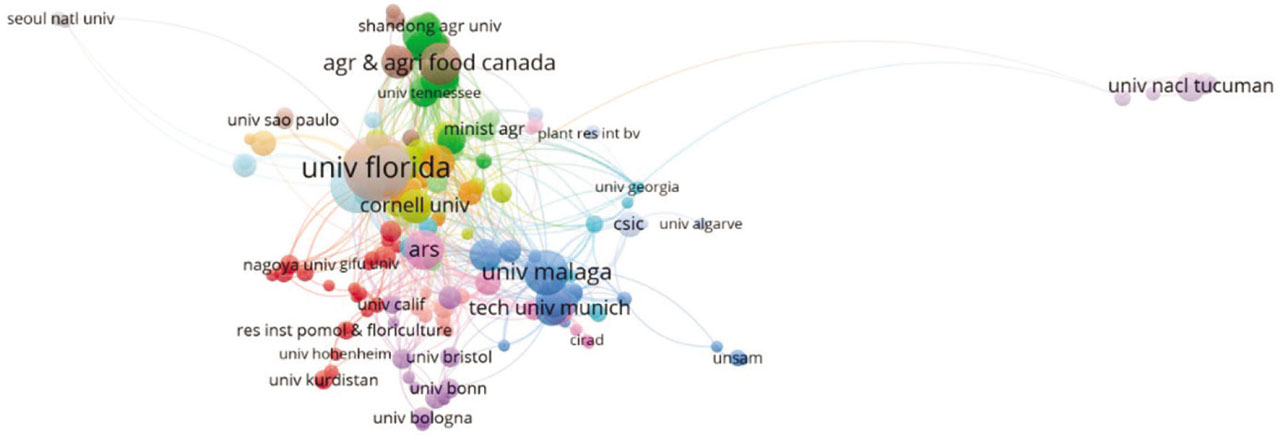
Figure 5
The organisations’ co-authorship network of strawberry research from the Plant Sciences category based on WoS.
All keywords co-occurrence analysis
Of the all 9,779 keywords, there were only 951 keywords that meet the threshold >5 co-occurrence, which were separated into 11 main clusters with viewpoints on strawberry (Fragaria × ananassa Duch.) research from Plant Sciences category based on WoS (Figure 6). The top 20 co-occurrence keywords were strawberry, Fragaria × ananassa, identification, growth, plants, expression, resistance, fruit, Arabidopsis, gene-expression, Fragaria, anthracnose, temperature, biosynthesis, cultivars, leaves, tomato, accumulation, strawberry fruit, quality, etc.
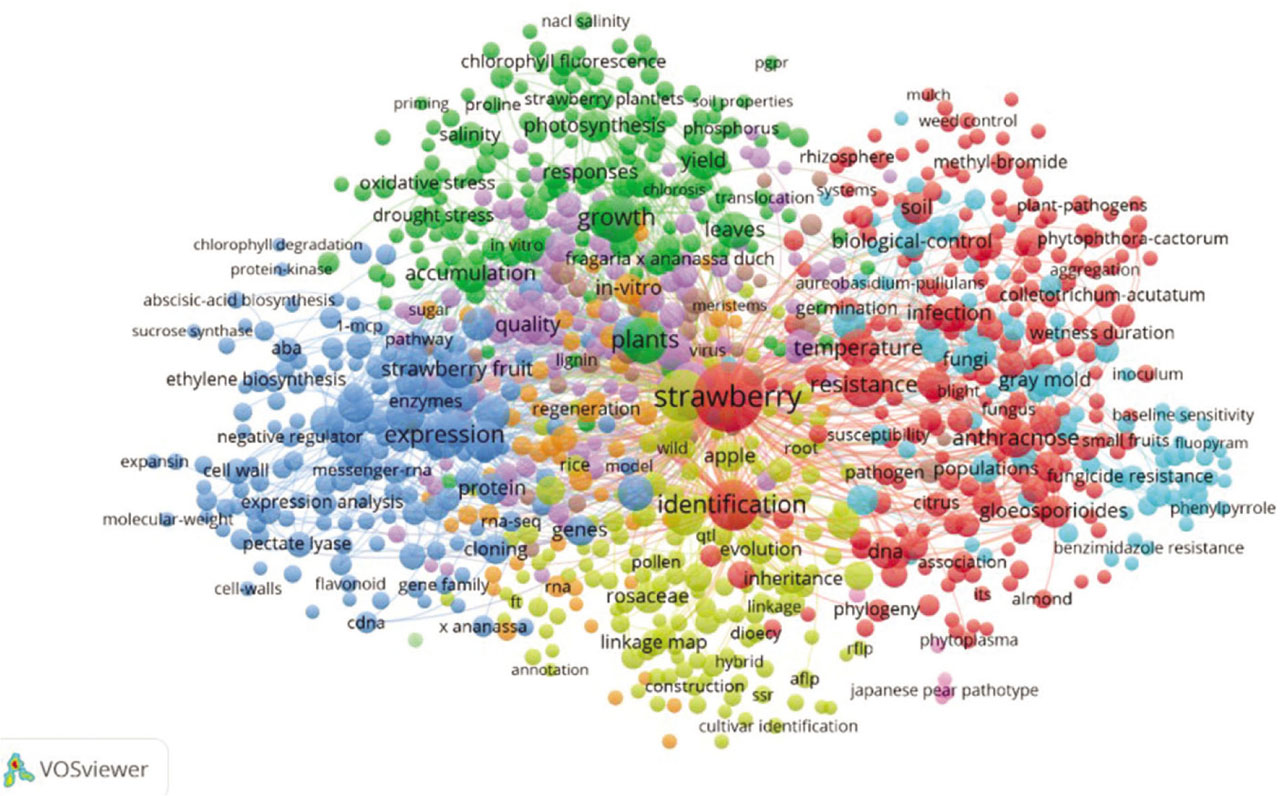
Figure 6
VOSviewer co-occurrence network visualisation mapping of most frequent all keywords (minimum of 5 occurrences) in strawberry research from Plant Sciences category based on WoS.
Then, the same data were arranged as an overlay map (Figure 7). According to the manual for VOSviewer version 1.6.16 (Van Eck and Waltman, 2020), blue colours indicate earlier research topics, whereas, yellow and green colours indicate more recent topics of interest. If a topic is presented in blue, it does not mean that there is now no longer any research to this end. It usually means that, on average, this topic was intensely investigated earlier and that now more attention has shifted towards other topics. Yellow and green circles present those research fronts.
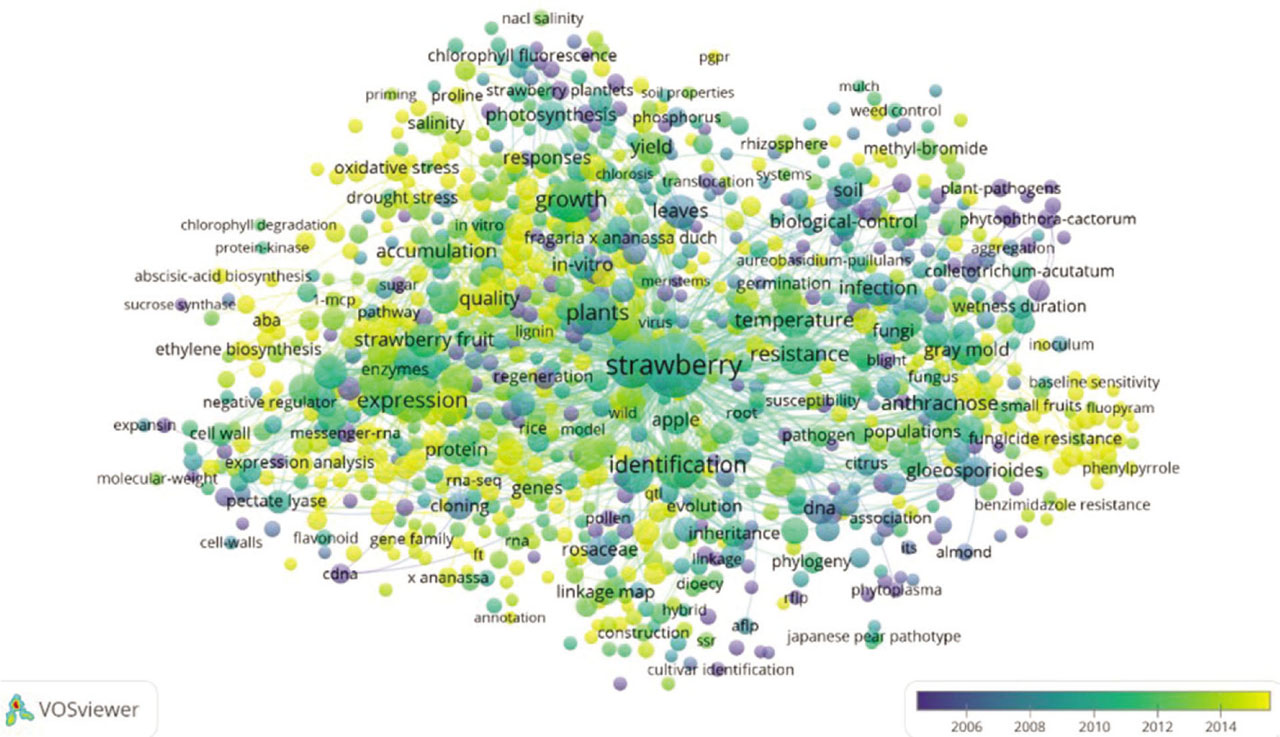
Figure 7
VOSviewer co-occurrence overlay visualisation mapping of most frequent all keywords (minimum of five occurrences) in strawberry research from Plant Sciences category based on WoS.
The top 20 keywords were list and ranked in each cluster (Figure 6).
The first cluster (red colour) is focused on strawberry resistance and disease infection, including keyword terms as strawberry, identification, resistance, anthracnose, temperature, infection, disease, gloeosporioides, DNA, soil, acutatum, pathogenicity, PCR, management, strains, epidemiology, sequence, differentiation, pathogens, rot, etc.
The second cluster (green) represents the plants growth and yield responses to stress, keyword terms ranked as growth, plants, leaves, accumulation, yield, stress, photosynthesis, responses, oxidative stress, tolerance, wheat, salinity, chlorophyll fluorescence, seedlings, nitrogen, plant growth, antioxidant, drought stress, drought, transport, etc.
The third cluster (blue) is focused on gene expression and biosynthesis during strawberry fruit ripening, including keyword terms as expression, Arabidopsis, gene-expression, biosynthesis, tomato, strawberry fruit, ethylene, gene, Arabidopsis-thaliana, abscisic-acid, fruit ripening, metabolism, anthocyanin, tomato fruit, protein, auxin, ripening, genes, cloning, proteins, etc.
The fourth cluster (yellow) represents strawberry genetic diversity, keyword terms ranked as Fragaria × ananassa, Fragaria, diversity, Rosaceae, apple, evolution, genetic diversity, Fragaria vesca, inheritance, genome, plant, linkage map, markers, wild strawberry, selection, photoperiod, diploid strawberry, cultivated strawberry, raspberry, microsatellite markers, etc.
The fifth cluster (violet) is focused on cultivars and fruit quality, including keyword terms as fruit, cultivars, quality, anthocyanins, antioxidant capacity, fruits, acid, phenolic-compounds, strawberries, F. ananassa, fruit quality, antioxidant activity, storage, capacity, aroma, flavonoids, antioxidants, berries, inhibition, vegetables, etc.
The sixth cluster (shallow blue) is focused on strawberry disease management and biological control, keyword terms ranked as grey mould, Botrytiscinerea, molecular characterisation, biological-control, Botrytis cinerea, fungi, populations, biocontrol, mechanisms, biological control, sensitivity, cinerea, fungicide resistance, flowers, strawberry fields, fungicides, fruit rot, grey mould, disease management, pyraclostrobin, etc.
The seventh cluster (orange) is focused on strawberry in-vitro and regeneration, keyword terms as in-vitro, transformation, regeneration, system, agrobacterium-mediated transformation, leaf, cells, RNA, cultures, genetic-transformation, invitro, Fragaria-vesca, tissue-culture, transgenic plants, promoter, transcription, woodland strawberry, agrobacterium, organogenesis, plant-regeneration, etc.
The eighth cluster (brown) is focused on powdery mildew disease resistance, keyword terms as powdery mildew, induction, disease resistance, salicylic-acid, Colletotrichum acutatum, tobacco, defence, induced resistance, systemic acquired-resistance, hypersensitive response, salicylic acid, chitinase, jasmonate, oxidative burst, pathogenesis-related proteins, A. thaliana, defence responses, secondary metabolites, brassinosteroids, defence response, etc.
The ninth cluster (pink) is focused on plant secondary metabolism, keyword terms as secondary metabolism, filamentous fungi, Japanese pear pathotype, ak-toxin, alternaria alternate, host-specific toxin, etc.
The tenth cluster is including two keywords of gibberellins and fruit size.
The 11th cluster is only one keyword of the achene.
Top papers based on essential science indicators
Top papers are the sum of hot papers and highly cited papers, based on Clarivate Analytics’ Essential Science Indicators (ESI). A highly cited paper is a paper that belongs to the top 1% of papers in a research field published in a specified year. The 1% is determined by the highly cited threshold calculated for the research field in the specified year. Hot paper is a paper published in the past 2 years that received several citations in the most recent two-month period that places it in the top 0.1% of papers in the same field. Here, the ESI database has been updated as of January 21, 2021, data covers over a 10-year and 10-month period: January 1, 2010–October 31, 2020 (Clarivate, 2021b. Essential Science Indicators Help).
Based on the ESI database, these top papers are 23 highly cited papers, with no hot paper. These 23 top papers are mainly published in Journal of Experimental Botany (4), Plant Physiology (4), New Phytologist (2), Plant Journal (2), Trends In Plant Science (2), American Journal of Botany (1), Frontiers in Plant Science (1), Journal of Integrative Plant Biology (1), Molecular Plant Pathology (1), Nature Plants (1), Plant Biotechnology Journal (1), Plant Cell (1), Plant Cell and Environment (1), Plant Cell Tissue and Organ Culture (1); and year published in 2011 (1), 2012 (1), 2013 (2), 2014 (3), 2016 (2), 2017 (3), 2018 (2), 2019 (5), and 2020 (3), respectively. Among the 23 top papers, there are nine papers’ citations >100 times which are including Jia et al. (2011), Renner (2014), Schaart et al. (2013), Ruan et al. (2012), Christou et al. (2013), Steffens and Rasmussen (2016), Kang et al. (2013), Medina-Puche et al. (2014) and Leng et al. (2014), and the total citations were 328, 236, 214, 195, 165, 163, 162, 129 and 119, the average citations per year are 29.82, 29.50, 23.78, 19.50, 18.33, 27.17, 18.00, 16.13 and 14.88, respectively. For the 23 top papers, the h-index is 20, the sum of total citations is 2291, and the average citation per item is 99.61.
The most frequently cited articles
Although a great many articles had been published, a relatively small number of individuals account for a large proportion of the citations within the period. Here, the total citations for the most frequently cited articles are >303 times. The eight most cited papers were published in Plant Molecular Biology Reporter (Porebski et al., 1997), Plant and Soil (Hartmann et al., 2009), Theoretical and Applied Genetics (Dirlewanger et al., 2002), Plant Cell (Aharoni et al., 2000), Plant Journal (Aharoni et al., 2001), Plant Physiology (Jia et al., 2011), Phytomedicine (Seeram et al., 2001), Phytopathology (Elghaouth et al., 1992), the total citations were 1058, 517, 446, 389, 356, 328, 326 and 303, and the average citations per year are 42.32, 39.77, 22.30, 17.68, 16.95, 29.82, 15.52 and 10.10, respectively. From Figure 8, it can be found that the citation per year of the papers increased till 2020, but the increase rate is different. The citations per year are still increased for the paper (blue line) published in Plant Molecular Biology Reporter and written by Porebski et al. (1997), and the average citations per year were the highest value as 42.32 in these eight papers. The number of citations to a paper is considered a good quantitative measure of a paper's impact. Among the eight most cited papers, the paper written by Jia et al. (2011) is also the highly cited paper based on ESI.
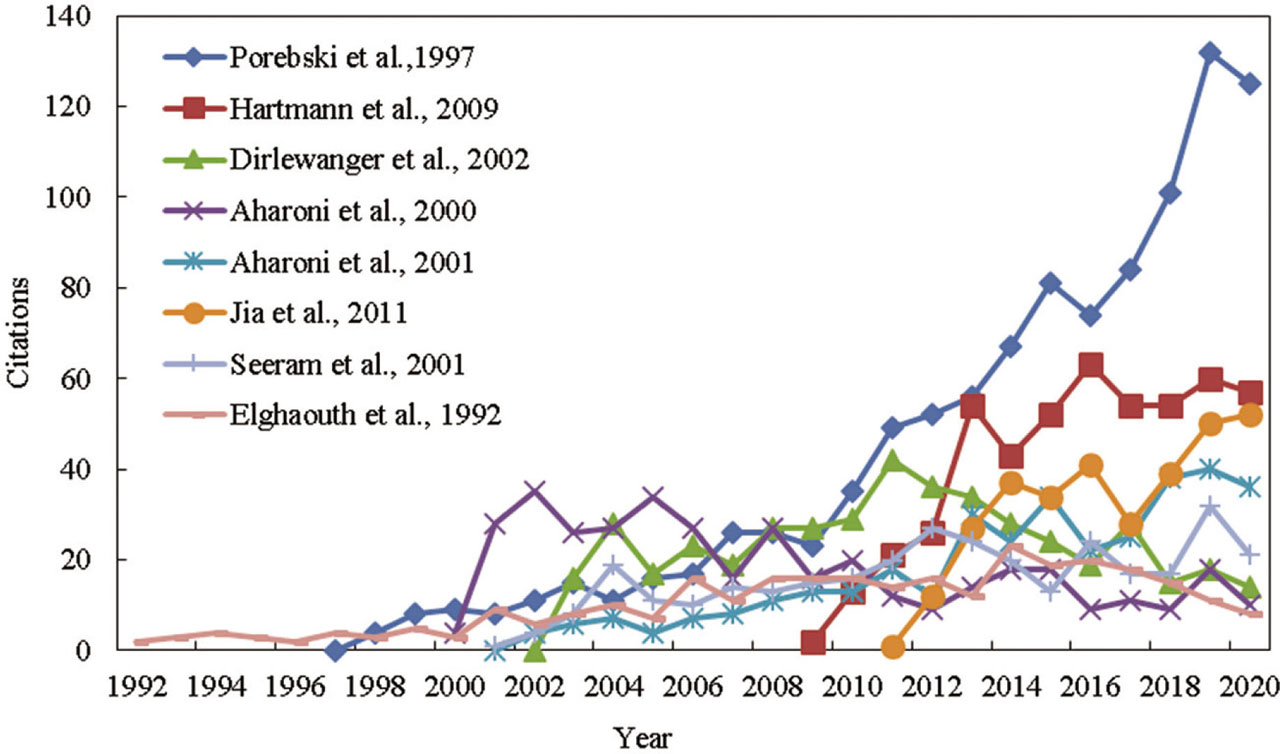
Figure 8
Comparison of the most citations per year of the eight papers from their initial publications to March 20, 2021.
CONCLUSIONS
The study aimed to identify and analyse the 2,930 article and review type papers of strawberry research from the Plant Sciences category based on the WoS. Papers mainly written in English (98.771%), were from a total of 8,838 authors, 96 countries/territories, 1,845 organisations and published in 197 journals and book series. The top seven core journals ranked as Plant Disease, Phytopathology, Plant Pathology, Frontiers in Plant Science, Canadian Journal of Plant Science, European Journal of Plant Pathology and Journal of Experimental Botany. The top five countries and regions were USA, People's Republic of China, Spain, Canada and England. The top five organisations were the University of Florida, USDA ARS, University of Malaga, University of California Davis, Agriculture and Agri-Food Canada. The top five authors are Peres, Natalia A., Madden, L.V., Munoz-Blanco, J., Schwab, W. and Ellis, M.A. All keywords of the strawberry research from Plant Sciences category were separated into 11 clusters for different research topics. Visualisations offer exploratory information on the current state in a scientific field or discipline as well as indicate possible developments in the future. The review could provide a valuable guide for designing future studies.
Notes
[7] FUNDING
This work was supported by the Education science planning project of Hubei Province, Research on University Library Discipline Decision Support Service driven by “Double First Class University Plan” (2019GB016).
[8] Contributed by AUTHOR CONTRIBUTIONS
B.Z. Yuan contributed in formal analysis, writing original draft, validation, writing–review and editing. J. Sun contributed in visualization and investigation, methodology, writing the original draft.
[9] Conflicts of interest CONFLICT OF INTEREST
The authors declare no conflict of interest.