
Introduction
The environmental degradation resulting from Russia’s aggression against Ukraine requires ongoing documentation and systematic analysis, especially regarding the destruction of forests. The full-scale invasion of Ukraine by the Russian Federation (RF), which came as a great surprise to the West (Kaszuba 2023), has had serious consequences in many dimensions (Krzyżowski 2022), including a profound impact on all components of the natural environment. The number of environmental crimes committed by the RF continues to grow (Ecozagroza… 2024).
Unfortunately, the negative impact of war on forest ecosystems persists over time and continues to intensify with each passing day of hostilities (Irland et al. 2023). The area and volume of forests destroyed as a result of Russian military aggression are constantly increasing (Matsala et al. 2024; Myroniuk et al. 2024; Kozak et al. 2025; Milakovsky et al. 2025; Vasylyshyn et al. 2025). Ukraine is currently among the countries with the greatest forest area contaminated by explosive remnants of war (Zibtsev et al. 2022).
Some of the most severe forest damage and biomass loss is observed in the Luhansk region. However, this territory remains occupied by Russian forces and is actively affected by military operations, preventing field measurements. In such conditions, the role and importance of satellite remote sensing data, in particular Sentinel-2 imagery and space-based LiDAR data from the Global Ecosystem Dynamics Investigation (GEDI) mission, are growing significantly.
Recent studies have demonstrated the potential of combining Sentinel-2 data with GEDI measurements to analyze changes in forest ecosystems, including estimation of Above-Ground Biomass (AGB), in cloud environments such as GEE platform (Singha 2025). The rapid development of open-access cloud computing technologies has significantly expanded the capabilities of storing, processing and analyzing large amounts of geospatial data. In this context, the Google Earth Engine platform allows for efficient processing and analysis of satellite and lidar datasets based on cloud technologies (Gorelick et al. 2017; Zhao et al. 2021). Given the large scale of monitoring data and the complexity of their processing, the use of GIS technologies and cloud resources is essential for the effective implementation of such analysis (Tamiminia et al. 2020). GEE is particularly well suited for these purposes, as it is freely available and provides a wide range of built-in algorithms and application programming interfaces (APIs) in JavaScript and Python. Previous studies have confirmed the effectiveness of combining spaceborne LiDAR with optical imagery for biomass estimation at regional and global scales (Baccini et al. 2012). GEDI provides accurate structural reference measurements, while Sentinel-2 offers high spatial resolution and frequent temporal coverage, enabling detailed biomass mapping and monitoring of forest disturbances.
In Ukraine, interest in the application of GEE is gradually growing, especially for forest cover classification (Myroniuk et al. 2018), forest fire studies (Zibtsev et al. 2019), as well as cloud masking and improving the spatial resolution of satellite images (Borodatyi and Bun 2018; Vasylyshyn et al. 2025). Although attention to GEE as a research tool has increased, its application remains insufficient in studies focused on war-affected and occupied territories of Ukraine (Shelestov et al. 2017; Kussul et al. 2017, 2018).
In the context of ongoing military conflict, satellite-based assessment of forest ecosystem degradation is a particularly promising approach. Such assessments support long-term monitoring of forest resources in occupied and hard-to-reach territories and provide the necessary tools to quantify war-related forest damage. Analysis of AGB is particularly valuable as it is a fundamental quantitative attribute and a key indicator for assessing the structure and functioning of forest ecosystems.
Forests in eastern Ukraine have experienced prolonged disturbance due to military operations, fires, shelling, infrastructure destruction, and land abandonment. These disturbances affect forest structure, species composition, and carbon storage capacity. AGB is a key indicator of forest ecosystem condition and carbon stocks. Traditional biomass assessment relies on field measurements, however, in conflict zones such data are inaccessible. Satellite remote sensing offers an alternative for large-scale, repeatable biomass monitoring. The GEDI LiDAR mission provides spaceborne measurements of vertical forest structure and biomass. Sentinel-2 multispectral imagery enables high-resolution mapping of vegetation condition. Google Earth Engine (GEE) allows scalable cloudbased processing.
The aim of this study was to analyze changes in forest AGB using combined GEDI and Sentinel-2 data processed on the GEE platform and analyze Normalized Difference Vegetation Index (NDVI). The analysis was conducted for the test sites of Kuzmyne, Metolkine and Bobrove, located in the occupied Luhansk region of Ukraine.
Material and methods
Study Area and Study Sites
The study was conducted in Luhansk Oblast, eastern Ukraine. The research sites have been located in areas, which were subject, since 2014, to active military operations, resulting in fires that have destroyed a total of 10,240 ha of forest. For a more detailed assessment of changes in forests, including the loss of AGB, and NDVI due to military activities, 3 smaller (each 25 km2) study sites (sub-poligons) were established within the Luhansk Oblast (Fig. 1).
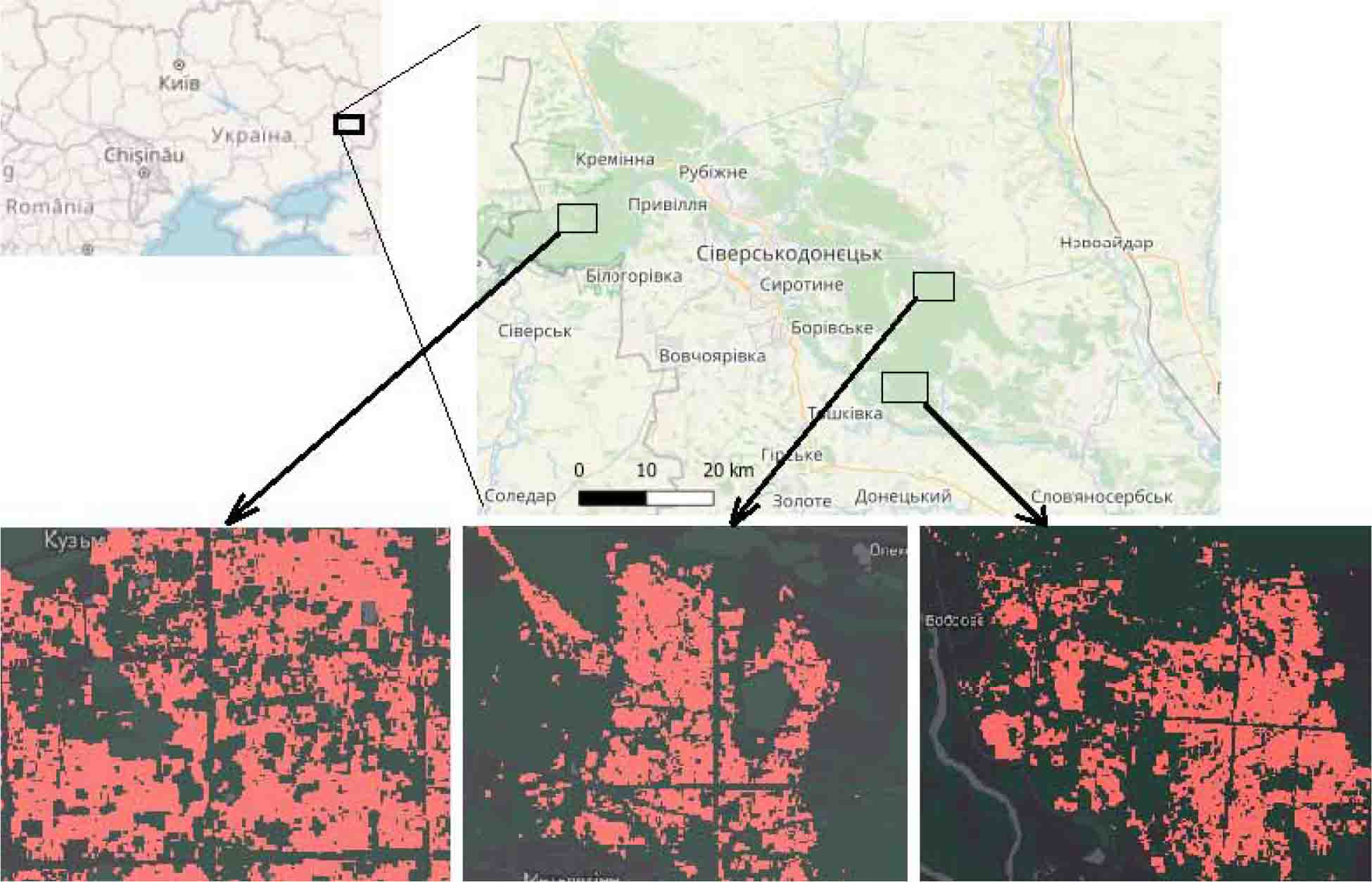
Figure 1.
Study sites in Luhansk Oblast in Ukraine: Kuzmyne at the bottom left, Metolkine at the bottom center, Bobrove at the bottom right (damaged forests are shown in red)
The area is occupied by coniferous and mixed forests, with Scots pine (Pinus sylvestris L.) as a dominating tree species. These forests are particularly vulnerable to forest fires and blast damage associated with military operations (Zibtsev et al. 2021; Kozak et al. 2025). The study area is characterized by an average annual precipitation of approximately 450 mm and an average annual air temperature of 7.8°C. The altitude ranges from 150 to 158 m above sea level. Following the 2022 war escalation, extensive forest degradation occurred due to fires, mechanical destruction, and lack of forest management.
Data and Processing
Analyses were conducted over the period 2019–2025 using spaceborne LIDAR data from the GEDI mission and Sentinel-2 multispectral imagery (Copernicus 2025), processed on the GEE cloud computing platform. GEDI Level 2B (L2B) products were used to derive canopy structural metrics related to AGB. The GEDI instrument, mounted on the International Space Station (ISS), is a full-waveform LiDAR system that records individual laser pulses (“footprints”) with an approximate ground diameter of 25 m. For the study area, all available GEDI observations within the period 2019–2025 were extracted, and quality filtering was applied according to standard GEDI flags. GEDI Level 4A (L4A) biomass product was used as reference AGB (Mg C ha-1).
Sentinel-2 surface reflectance imagery was used to derive spectral predictors and vegetation indices. The data have a spatial resolution of 10 m (visible and nearinfrared bands) and 20 m (red-edge and shortwave infrared bands). Sentinel-2 Level-2A surface reflectance data were processed in GEE. Variables included spectral bands (B2–B12). NDVI was calculated from the red (B4) and near-infrared (B8) bands.
The integration of GEDI LiDAR data and Sentinel-2 optical imagery within the GEE platform consisted of a multi-step modeling workflow. First, GEDI Level 2B footprint-level structural metrics related to AGB were extracted and quality-filtered. These footprint observations served as reference AGB data. Second, Sentinel-2 Level-2A surface reflectance imagery was preprocessed (cloud masking, temporal compositing), and spectral bands and vegetation indices (e.g., NDVI) were calculated. For each GEDI footprint location, corresponding Sentinel-2 spectral values were sampled and aggregated to match the footprint scale. Third, regression models were developed using GEDI-derived AGB metrics as the dependent variable and Sentinel-2 spectral predictors as independent variables. The models were trained and validated using independent subsets of the data. Model performance was assessed using R2, RMSE, MAE, and relative RMSE (rRMSE). Finally, the calibrated model was applied to the full Sentinel-2 image coverage to generate spatially continuous AGB maps for the study area. This approach enables extrapolation from discrete GEDI sampling tracks to wall-to-wall biomass estimation.
The spatial distribution of GEDI footprints within the analyzed sites is presented in Figure 2, illustrating their track-based sampling geometry. The temporal availability and coverage of GEDI data for the study area were assessed (GEDI 2025). All preprocessing, feature extraction, sampling, statistical modeling, and visualization were performed in the GEE Code Editor using JavaScript programming language. Open source scripts and analytical tools available in the GEE environment were applied (Earth 2025). This cloud-based approach proved to be efficient, flexible, and well-suited for processing large Sentinel-2 data-sets, especially for occupied and hard-to-reach regions such as Luhansk Oblast. An additional advantage of GEE was the ability to perform multi-temporal analysis over multiple observation dates. The temporal availability and spatial coverage of GEDI data for the study area were assessed to ensure sufficient sampling density for model development and validation.
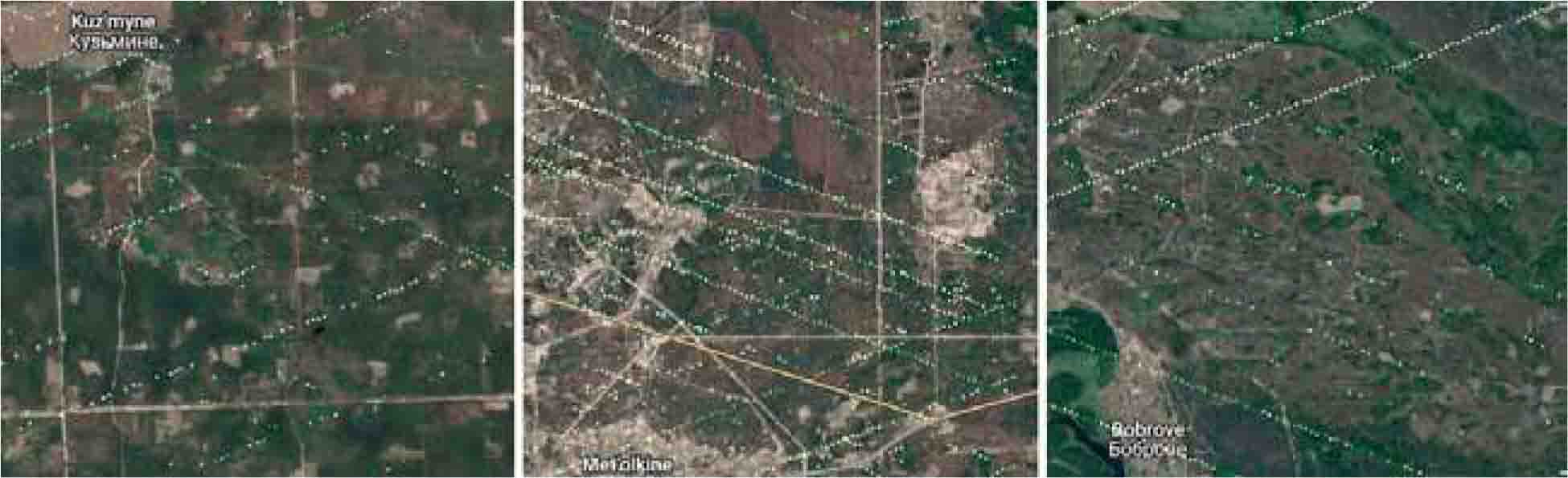
Figure 2.
GEDI sample points on the polygon fragments: Kuzmyne at the left, Metolkine at the center, Bobrove at the right
The workflow included image filtering, vegetation index computation, spatial sampling at reference plot locations, regression modeling, and model validation. Open-source scripts and built-in analytical tools available in the GEE environment were applied to ensure transparency and reproducibility. In particular data preprocessing scripts were used for image filtering, temporal compositing, and spatial clipping to the study areas; vegetation index calculations were implemented using GEE’s image algebra functions; feature extraction tools were applied to derive predictor variables; sampling functions were used to extract pixel values corresponding to reference plot locations; regression and statistical modeling tools were used to develop biomass estimation models; validation procedures were conducted using independent test datasets, and model performance metrics were computed within GEE; visualization tools were used to produce the regression plots presented in Figures 3–5.
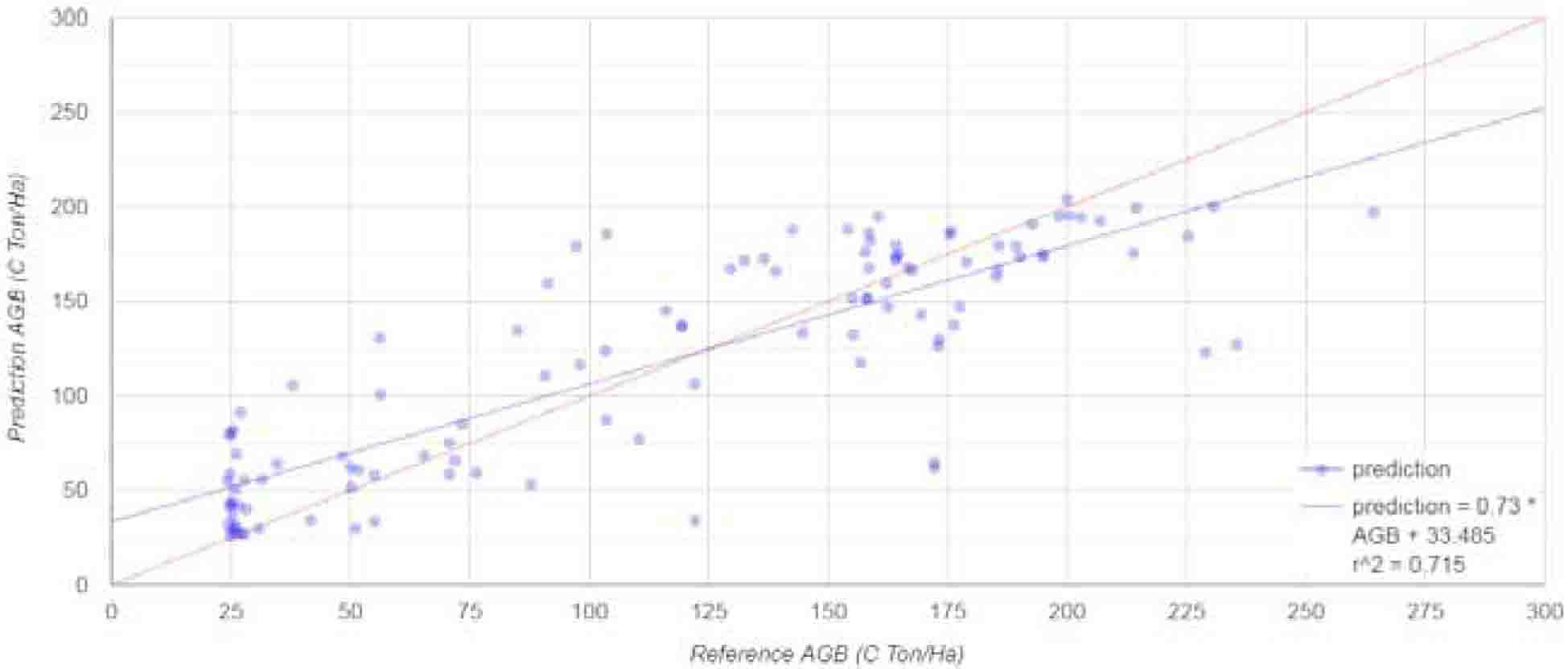
Figure 3.
Reference and predictions of AGB in Kuzmyne site
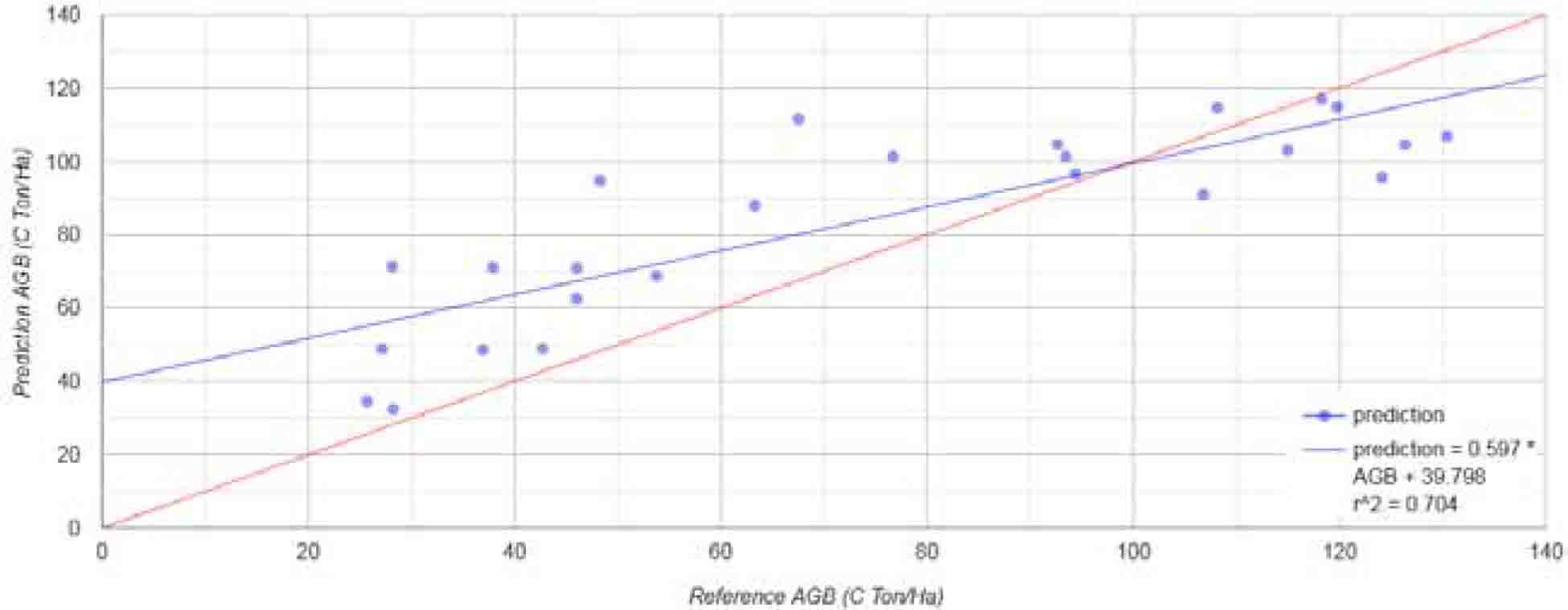
Figure 4.
Reference and predictions of AGB in Metolkine site
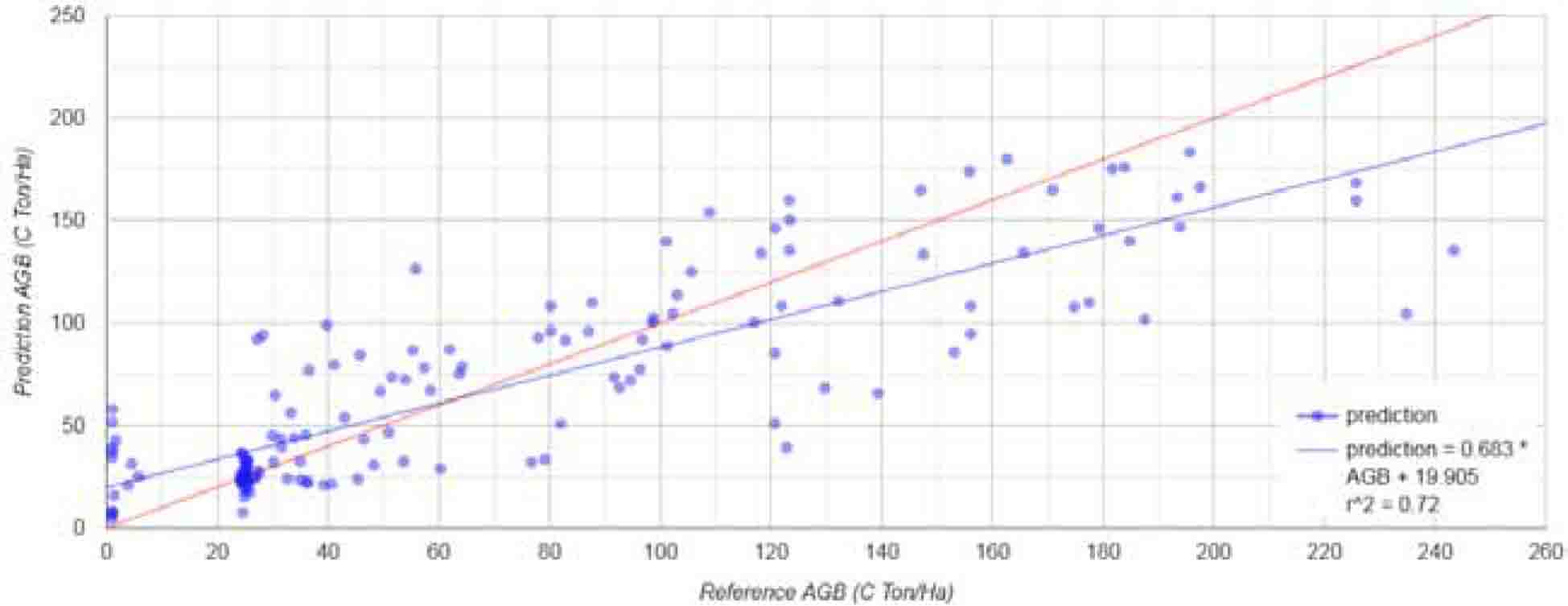
Figure 5.
Reference and predictions of AGB in Bobrove site
Statistical Analysis
Statistical analysis was conducted to evaluate the relationship between GEDI-derived reference biomass (AGB_ref) and Sentinel-2 based predicted biomass (AGB_pred) for each of the three study polygons. Regression models were built separately for each polygon using GEDI AGB as the dependent variable and Sentinel-2 derived predictors. A linear regression framework was applied independently to each polygon.
Model performance was evaluated using the coefficient of determination (R2, that was used as the primary goodness-of-fit metric), Root Mean Square Error (RMSE, provides error magnitude in Mg C ha-1, enabling direct ecological interpretation of biomass uncertainty), Mean Absolute Error, (MAE, was used as a robust measure less sensitive to extreme residuals).
Statistical significance of regression coefficients was assessed using t-tests. All regression relationships were statistically significant indicating that Sentinel-2-derived predictors significantly explain variation in GEDI reference biomass. All statistical computations were performed using Python (scikit-learn, NumPy, and SciPy libraries).
Point-based GEDI metrics were extracted and compared with Sentinel-2-derived variables using statistical indicators. Performance was evaluated through linear regression analysis between modeled and referenced AGB values (Yang et al. 2004). The predictive ability of the models was assessed using the coefficient of determination (R2), as well as the intercept and slope of the fitted regression lines (Vanclay and Skovsgaard 1997). For all three models, regression coefficients were analyzed for statistical significance, which could indicate whether the predictors significantly explained the variability in reference biomass. Slope and intercept analyses were also performed, as indicated by their T-statistics and 95% confidence intervals. The regression analysis was performed using N = 96 validation samples. The efficiency (ME, t/ha), root mean square error (RMSE, t/ha) and relative RMSE (rRMSE, %) were also calculated. All analyses were conducted using custom-developed scripts in Google Earth Engine (GEE), a cloud-based geospatial processing platform (Gorelick et al. 2017).
Results
Above-Ground Biomass
The statistical analysis comparing the values of AGB for the periods before and after the start of the fullscale Russian invasion revealed a significant reduction in forest biomass at the all analyzed sites. Table 1 presents the results as relative AGB values, with 2019 taken as the reference year (100%). The magnitude of AGB losses varied significantly among the study sites. The largest biomass losses were observed at the Kuzmyne site (Tab. 1), where AGB had decreased by as much as 91.08% by 2025 compared to 2019 levels. This area was particularly exposed to intense military activity, as the front line crossed the site three times. In contrast, the other two sites, Metolkine and Bobrove, were affected by the front line only once and were located further away from the main combat zones. Thus, the observed reduction in AGB was somewhat smaller, amounting to 75.23% in Metolkine and 76.66% in Bobrove. Nevertheless, biomass loss in these areas remains severe.
Table 1.
Percent of AGB for 3 sites
| Years | Kuzmyne | Metolkine | Bobrove |
|---|---|---|---|
| 2019 | 100 | 100 | 100 |
| 2020 | 99.78 | 98.34 | 99.25 |
| 2021 | 99.67 | 97.78 | 31.29 |
| 2022 | 26.31 | 30.24 | 28.25 |
| 2023 | 21.32 | 28.56 | 27.17 |
| 2024 | 14.91 | 25.13 | 24.76 |
| 2025 | 8.92 | 24.77 | 23.34 |
The comparison between the reference and predicted AGB values for the analyzed sites demonstrates a good statistical fit, exceeding values reported in comparable studies (Singha 2025). For example, for Kuzmyne site the coefficient of determination (R2) reached 0.715, the derived regression equation, Prediction = 0.73*AGB+33.485 (Fig. 3). The model explained 71.5% of the variability in reference AGB (R2 = 0.715). However, the slope (0.73) and positive intercept (33.489) indicate a tendency to underestimate high biomass values and overestimate low biomass values.
For Metolkine site the coefficient of determination (R2) reached 0.704, the derived regression equation, Prediction = 0.597*AGB+39,798 (Fig. 4). The model explained 70.4% of the variability in reference AGB (R2 = 0.704), however, the slope (0.60) and positive intercept (39.798).
For Bobrove site the coefficient of determination (R2) reached 0.720, the derived regression equation, Prediction = 0.683*AGB+19,905 (Fig. 5). The final model explained 72% of the variability in reference AGB (R2 = 0.72). The slope (0.683) indicates moderate regression toward the mean, while the relatively low intercept (19.9) suggests reduced bias for low biomass values compared to previous model versions. The obtained graphs show that the results are statistically significant, perform well in the mid-range biomass, but tend to underestimate high values and have a positive bias at low biomass.
All three models explained approximately 70–72% of the variability in reference AGB. However, differences were observed in calibration parameters. Model 2 (Metolkine site) exhibited the strongest regression toward the mean effect (slope = 0.597) and the highest positive intercept, indicating substantial bias. Model 3 (Bobrove site) showed the best overall performance (R2 = 0.72), with reduced intercept bias and moderate slope deviation, suggesting improved calibration compared to the other model versions. These analyses indicate predictive relationship and allows a reliable estimate of AGB under the studied conditions.
The results demonstrate that the integration of GEDI LiDAR and Sentinel-2 optical data provides a reliable method for estimating forest AGB in inaccessible or conflict-affected regions where field measurements are not feasible. This is particularly relevant for eastern Ukraine, where ongoing military activities have restricted ground-based forest inventory.
Spatial analysis showed that the most pronounced biomass losses occurred in forest complexes located in Kuzmyne site (south of Kreminna, within the Serebryansk forestry). Clear clusters of biomass losses are visible along the main combat zones, which shifted repeatedly during the study period – initially during occupation in 2022, followed by deoccupation in 2023, and renewed occupation beginning in 2024. Areas located further from the front line showed lower levels of forest damage and AGB loss. Model results indicate that the decrease in AGB is associated with both direct forest loss and secondary impacts, including forest fires, damage from military equipment, shelling and bombardment.
The accuracy assessment of the AGB models confirms their high performance based on the combined GEDI and Sentinel-2 datasets. For all three models, the regression coefficients were statistically significant (p < 0.05). The slopes and intercepts differed significantly from zero, as indicated by their respective T-statistics and 95% confidence intervals. The coefficient of determination (R2) for the reference versus predicted AGB values was 0.704–0.720, RMSE ranging from 28.12 to 31.12 t/ha, MAE from 24.35 to 27.46 t/ha, and rRMSE between 21.53% and 23.18%. These metrics indicate good agreement between predicted AGB values and reference measurements based on GEDI.
Despite the strong model performance, several limitations should be acknowledged. First, optical data alone cannot fully capture complex forest structure, particularly in dense or multilayered forests (Asner and Mascaro 2014). Second, the limited number of GEDI footprints in some areas reduces calibration robustness and may increase model uncertainty. Additionally, environmental factors such as soil background, canopy moisture, and species composition may influence spectral reflectance and introduce additional variability (Lu 2006). The absence of field measurements prevents direct validation of GEDI-derived biomass, although GEDI data have been extensively validated globally and demonstrate high accuracy (Dubayah et al. 2020).
The results confirm that Sentinel-2 data calibrated with GEDI LiDAR can provide reliable biomass estimates for forest monitoring in data-limited and inaccessible regions. This approach enables large-scale assessment of forest condition and disturbance without requiring field measurements.
Such methods are particularly valuable for monitoring forest damage in war-affected regions, where traditional forest inventory is impossible. The integration of spaceborne LiDAR and optical satellite data represents a powerful and operational tool for assessing forest degradation, carbon stock changes, and ecosystem recovery.
Normalized Difference Vegetation Index
Additional evidence of forest degradation is provided by the observed decline in NDVI values. A comparison of June 2020 and June 2025 NDVI across all analyzed sites reveals a sharp decline. While NDVI values were close to 0.7 in September 2021, they fell to around 0.18 in May 2022 in Kuzmyne (Fig. 6) and 0.24 in July in Metolkine (Fig. 7) and remained at a similarly low level through 2025.
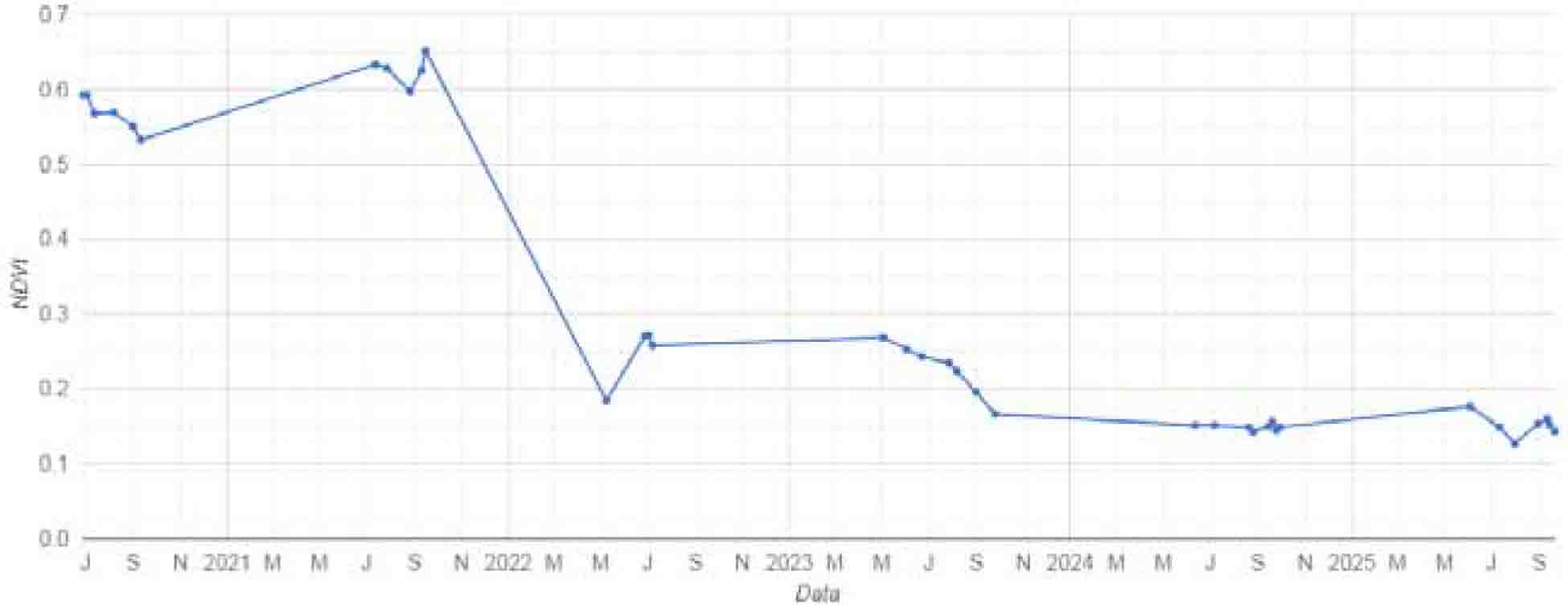
Figure 6.
NDVI values from July 2020 to September 2025 for the Kuzmyne site
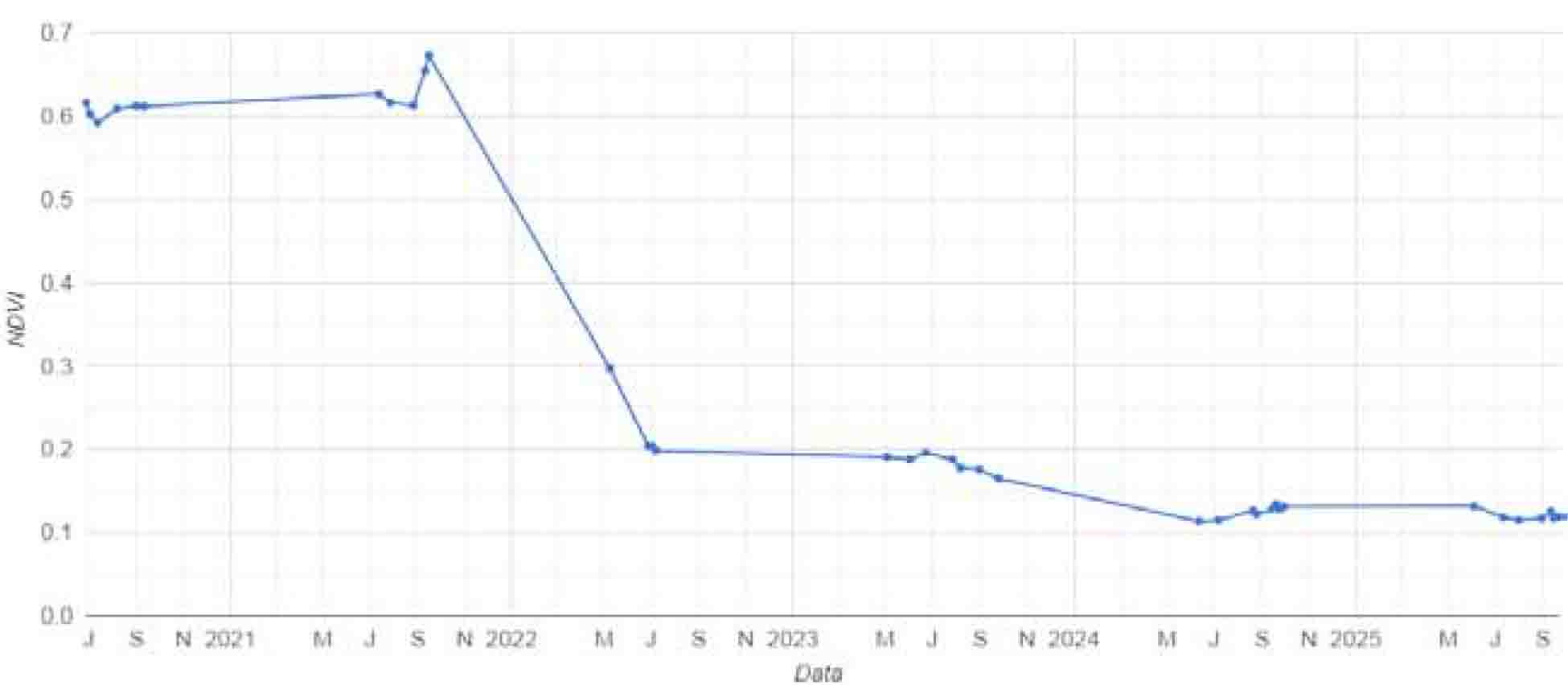
Figure 7.
NDVI values from July 2020 to September 2025 for the Metolkine site
The early decline in NDVI observed in June 2021 for Bobrove site (Fig. 8) is associated with shelling conducted by Russian-supported armed groups, which caused widespread forest fires and significant vegetation destruction. As a result, AGB has already decreased in Bobrove site by 68.71% by 2021 compared to 2019 levels.
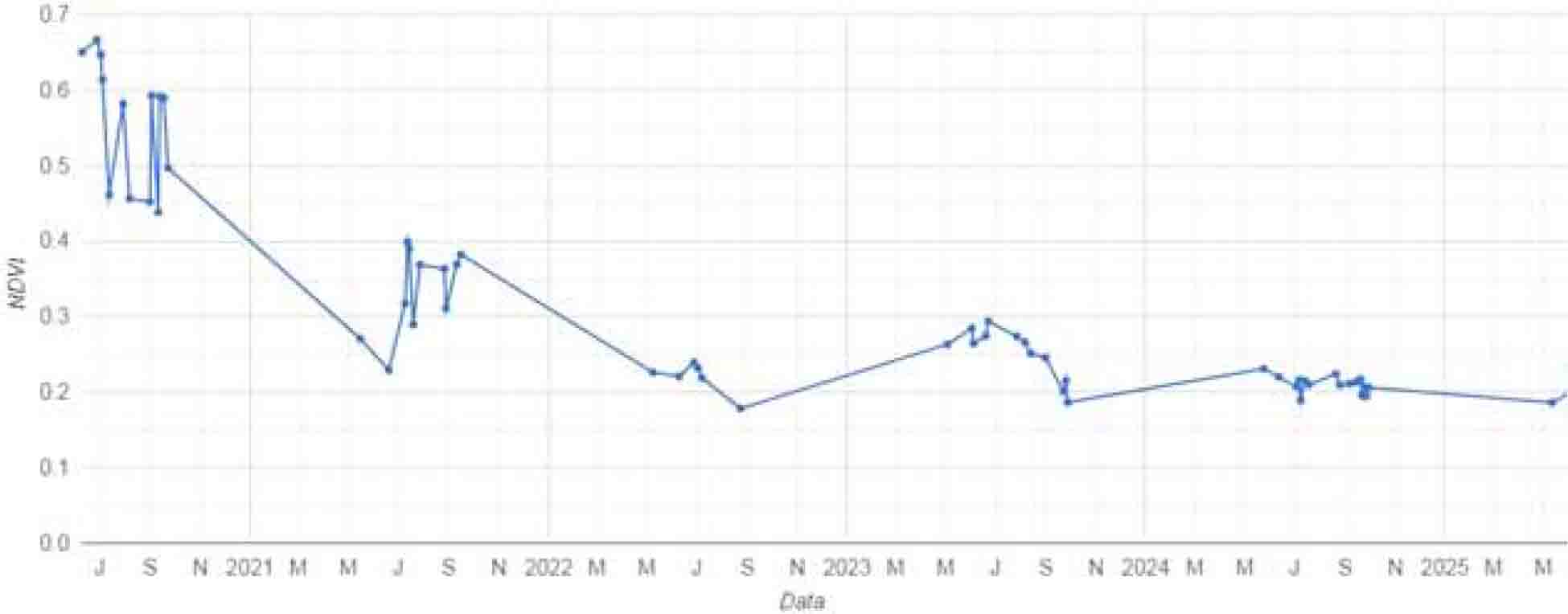
Figure 8.
NDVI values from June 2020 to June 2025 for the Bobrove site
Discussion
The analysis demonstrates that the armed conflict in Luhansk Oblast has led to a significant reduction in AGB, especially in areas closest to the front line and in areas of intense military activity. The results confirm that war impacts forest ecosystems in multiple ways, including direct destruction of forest stands, large-scale fires, blast waves, shell craters, movement of heavy military equipment, and prolonged disruption of forest management practices. These findings suggest that the consequences of armed conflict for forest ecosystems are both immediate and long-term, consistent with previous studies of war-related environmental degradation (Dudley et al. 2002; Gorsevski et al. 2012). The hybrid approach demonstrated high performance, with coefficients of determination (R2) for observed versus predicted AGB values ranging from 0.704 to 0.720, supported by additional statistical metrics (RMSE = 28.12–31.12 t/ha, MAE = 24.35–27.46 t/ha, rRMSE = 21.53–23.18%). These results confirm the effectiveness of the proposed method for analyzing forest degradation, particularly in areas inaccessible due to military activity or occupation.
In this study, the integration consisted of using GE-DI-derived structural metrics as reference and response variables for biomass estimation, while Sentinel-2 spectral bands and vegetation indices were used as predictor variables in regression models. Specifically, GEDI footprint-level AGB-related metrics were spatially matched with Sentinel-2 reflectance data and derived vegetation indices at corresponding locations. Integrating GEDI LiDAR data with Sentinel-2 optical imagery in GEE has proven to be an effective approach to monitor biomass changes in hard-to-reach and high-risk regions. GEDI data, due to their ability to capture the vertical structure of the forest, significantly improves the accuracy of AGB modeling (Dubayah et al. 2020). In turn, Sentinel-2 imagery, characterized by high spatial and temporal resolution, allows for the detection of land cover changes and vegetation indices (e.g. NDVI), which are critical for biomass estimation (Forkuor et al. 2020). This hybrid approach allows for spatially continuous biomass estimation, which would not be possible with GEDI samples alone.
GEDI LiDAR provides highly accurate vertical structure information and is considered one of the most reliable sources for spaceborne biomass estimation (Dubayah et al. 2020). However, GEDI footprint availability depends on orbital coverage and acquisition conditions, which may limit calibration accuracy in areas with sparse sampling.
However, several methodological limitations should be acknowledged. Although GEDI footprints provide high-precision structural measurements, their spatial density is relatively low and patchy, which may lead to an underrepresentation of spatial variability in highly heterogeneous landscapes (Qi et al. 2019). Regression models based on Sentinel-2 data also require robust calibration and validation using representative samples, while disturbances such as smoke, ash, and canopy damage can affect spectral reflectance and introduce uncertainty. Future studies could benefit from incorporating additional data sources, such as Sentinel-1 synthetic aperture radar (SAR), which is less sensitive to atmospheric conditions and provides valuable additional information on forest structure (Rüetschi et al. 2023). From an ecological perspective, the observed reduction in AGB in Luhansk Oblast has grave consequences, including weakening the protective functions of forests, reducing their carbon sequestration capacity, and increasing the risks of soil erosion and habitat destabilization. Forest degradation can also hinder post-conflict infrastructure recovery and increase pressures on local ecosystems during the reconstruction phase. Similar ecological consequences have been documented in other conflict-affected regions, underscoring the global relevance of the issues addressed in this study (Hanson et al. 2009; Reo et al. 2021). Overall, this study confirms the applicability and robustness of an integrated remote sensing approach based on GEDI and Sentinel-2 data for monitoring forest biomass losses caused by the war.
The statistical robustness of the results is confirmed by high coefficients of determination, with R2 values of 0.715 for the Kuzmyne site, 0.704 for Metolkine, and 0.720 for Bobrove exceed those obtained in recent studies such as Singha (2025), who achieved a maximum R2 of 0.71 when predicting forest AGB using SAR imagery and GEDI data combined with machine learning methods in a GEE environment.
The regression slopes ranged from 0.597 to 0.73, indicating systematic underestimation of high AGB values and overestimation of low AGB values. This effect, commonly referred to as regression dilution or saturation bias, has been widely reported in optical remote sensing-based biomass estimation. Optical sensors such as Sentinel-2 are sensitive to canopy structure and vegetation indices but exhibit reduced sensitivity at high biomass levels due to signal saturation (Mutanga and Skidmore 2004).
The ability to estimate biomass without field measurements is particularly valuable in disturbed or inaccessible regions. Forest damage caused by fire, logging, or military activity typically results in measurable reductions in biomass, which can be detected using satellite-based biomass models (Ceccherini et al. 2020).
The results obtained for the three analyzed sites show a catastrophic decline in both AGB and NDVI in the Russian-occupied territories of Ukraine. This highlights the urgent need for comprehensive strategies for forest restoration and protection in war-affected regions, as well as for further development of advanced methodologies that integrate optical and lidar data to assess forest destruction and broader environmental changes.
Summary and conclusions
The war in Ukraine has led to a significant decrease in AGB and NDVI values in forests of Luhansk Oblast, as demonstrated by analyses conducted at three representative research sites. The most severe losses were recorded in areas that experienced direct 3 front line military activity during 2022–2025 years, in particular at the Kuzmyne site. NDVI values were close to 0.7 in September 2021, they fell to around 0.18 in May 2022 in Kuzmyne and 0.24 in July in Metolkine and remained at a similarly low level through 2025. The early decline in NDVI observed in June 2021 for Bobrove site is associated with shelling conducted by Russian-supported armed groups, which caused widespread forest fires and significant vegetation destruction. In Bobrove NDVI values were close to 0.65 in July 2020, they fell to around 0.23 in July 2021. As a result, AGB has already decreased in Bobrove site by 68.71% by 2021 compared to 2019 levels. In all analyzed sites, AGB losses reached approximately 75–91% in 2025 compare to 2019. These losses have serious ecological consequences, including reduced carbon sequestration capacity, habitat degradation, and delayed ecosystem recovery.
The integration of GEDI LiDAR data and Sentinel-2 optical imagery within the GEE platform enabled accurate and efficient monitoring of biomass changes under conditions of Russian occupation. The applied hybrid approach has demonstrated high performance, with coefficients of determination (R2) for observed versus predicted AGB values averaging 0.704–0.720, supported by additional statistical metrics. In the manuscript, we have expanded the methodological description to clearly outline the integration procedure between GEDI LiDAR data and Sentinel-2 imagery, including data preprocessing, spatial matching of GEDI footprints with Sentinel-2 predictors, model development, and validation. Now explicitly describes how GEDI-derived structural metrics were used as response variables, how Sentinel-2 spectral features were extracted as predictors, and how regression models were calibrated and applied to generate spatially continuous AGB estimates.
This study demonstrates that Sentinel-2 data can reliably predict GEDI-derived AGB in war-damaged forests; biomass underestimation at high AGB levels indicates structural degradation; GEDI–Sentinel integration via GEE is an effective methodology for biomass monitoring in conflict zones; the approach enables rapid carbon stock assessment without field data; remote sensing provides a critical tool for monitoring ecological consequences of armed conflict and supports post-war forest restoration planning.
These results confirm the effectiveness of the proposed method for analyzing forest degradation, especially in areas inaccessible due to military activity or occupation. Overall, the results obtained indicate that the integration of GEDI and Sentinel-2 data improves the accuracy of AGB assessment (Sentinel-2 data calibrated with GEDI LiDAR provide reliable AGB estimates R2 ≈ 0.70) for forests under wartime conditions in the Luhansk region, which is currently occupied and unavailable for field-based investigations (remote sensing integration offers a viable solution for forest monitoring in conflict-affected regions where field data are unavailable). Cloud-based processing in Google Earth Engine enables efficient biomass modeling. The results presented in this study can contribute to the identification of areas that require detailed post-war assessment and may serve as a valuable basis for planning forest restoration and ecosystem recovery after the cessation of hostilities.