
Introduction
Forest nurseries play a crucial role in forest management. They are places for rearing and producing of forest tree seedlings. Thanks to them, it is possible to restore destroyed, degraded, or deforested forests. The production of seedlings in nurseries can include various species of trees and shrubs, depending on the objectives of forest regeneration. In Poland, forest nurseries produce over 800 million seedlings every year, most of which are bare-root (SF National Forest Holding 2012). Data from the annual report on the state of forests in Poland (Państwowe Gospodarstwo Leśne Lasy Państwowe 2022) shows that the production area of forest nurseries in 2020 was 1,774 ha, including 1,751 ha in state forests, approximately 15 ha in national park forests and 8 ha in other public forests. Seedling production in the state forests of the State Forest Holding is carried out in a field, container, and tunnel system. Almost 86% of total seedling production comes from field nurseries. In 2021, a total of 672.5 million seedlings of forest trees and shrubs were produced in the state forests, 37 million (6%) less than in the previous year. More than half (52%) were deciduous tree species.
Conifers are usually cultivated for one or two seasons, whereas deciduous species are cultivated for more than three to four years (Tkaczyk et al. 2015). Limiting the spread of pathogens is necessary in forest nurseries that produce materials for reforestation. This is mainly because maintaining healthy and resistant materials promotes proper development in the later years. In addition, pathogens invade forest plantations and foresters lose the ability to control them. A related problem in Poland is the restriction on the use of seeds from a given region, which is provided for in the Act on Forest Reproductive Material and its implementing regulations, which also regulate the transfer of seeds and seedlings (Pigan 2009).
This study aimed to collect and summarize data on the occurrence of fungal diseases in forest nurseries in Poland from 2012 to 2021. For the listed pathogens, the trend in terms of area change was tracked and a synthetic summary of each disease in terms of symptoms, host plants, and weather conditions was presented.
Data on the occurrence of disease factors
The occurrence of fungal diseases was assessed every year from 2012 to 2021 in all forest nurseries in Poland. In all nurseries, the assessment was carried out in accordance with the applicable Forest Protection Instruction (SF National Forest Holding 2012). In accordance with these guidelines, the extent of significant damage subject to registration was assumed to be 5% of the area in which the causative organism occurred. All data were collected by nurserymen working in the management of state forests and submitted in the form of an annual report to the staff of the Forest Research Institute, where the data were processed.
The extent of damage caused by pathogens in the nurseries was assessed for each sowing field with disease symptoms. Only open nurseries were analysed, container nurseries were not considered. The numbers of damaged and dead plants were determined by checking a random sample of 100 plants. In the case of seedling losses due to pre-emergence damping-off or when seedlings infected by post-emergence damping-off rotted and there were no dead specimens, the losses were determined as a percentage of the theoretically expected emergence. The assessment of pine seedling infection by needle-casts fungi in nurseries was carried out in spring, before the planting material was removed from the soil. The method for evaluating the infestation of pine seedlings with needle-casts fungi was carried out analogous to the variant described for damping-off fungi.
Occurrence of diseases in nurseries
Area of disease occurrence in 2012–2021
Over a period of ten years, data was systematically collected on the occurrence of pathogens in forest nurseries. Several categories of diseases of planting material were recorded as part of the study, including diseases such as oak powdery mildew (Erysiphe alphitoides (Griffon & Maubl.) U. Braun & S. Takam.), dampingoff (Fusarium spp, Cylindrocarpon spp., Rhizoctonia solani, Phytophthora spp., Pythium spp.), needle-cast of pine (mainly Lophodermium seditiosum Minter, Staley & Millar), pine twisting rust (Melampsora pinitorqua (Pers.) P. Karst.) and gray mold (Botrytis cinerea Pers.). The areas in which all diseases have occurred in the last ten years are summarized in the chart (Fig. 1).
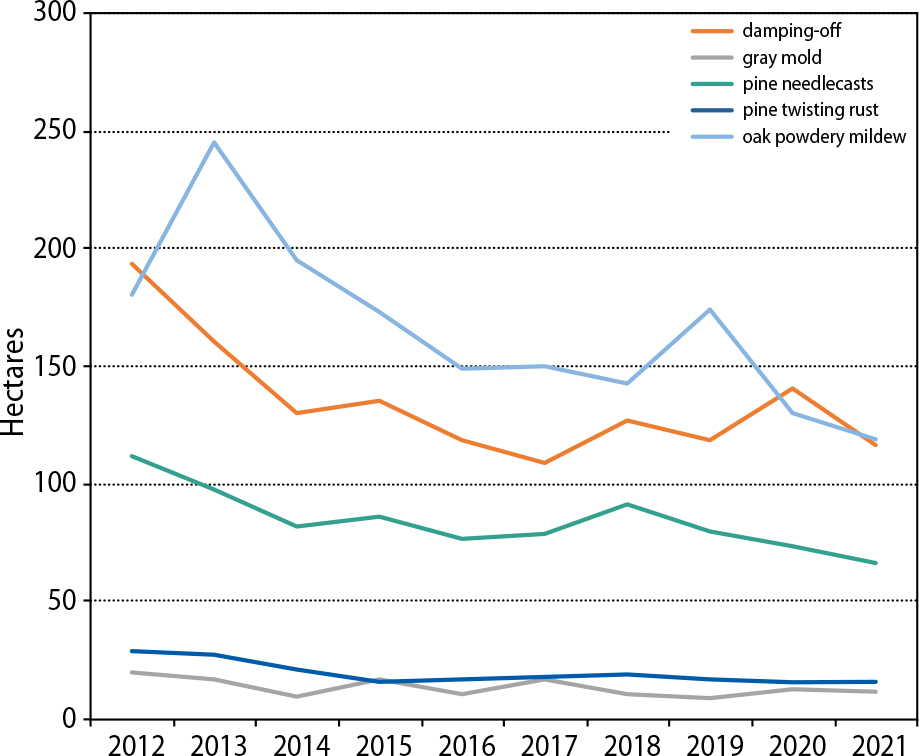
Figure 1.
Area of occurrence of the most important fungal diseases in nurseries in Poland in the period 2012–2021
It should be noted that not only the areas of pathogen occurrence but also the production areas of the forest nurseries changed during the period analysed. The collected data show that in 2012 the production area of the forest nurseries managed by the State Forests was 2281.89 ha and 848,527.85 thousand trees and shrubs were produced there annually. Since then, there has been a downward trend and each year the production area has decreased, resulting in fewer plants being produced (Tab. 1).
Table 1.
Changes in the production area of forest nurseries managed by the State Forests in 2012–2021
| Year | Forest nurseries area [ha] | Total production (trees and shrubs) [thousand pcs.] |
|---|---|---|
| 2012 | 2,281.89 | 848,527.85 |
| 2013 | 2,188.04 | 914,100.04 |
| 2014 | 2,103.89 | 876,653.26 |
| 2015 | 1,993.28 | 820,233.14 |
| 2016 | 1,949.51 | 758,552.60 |
| 2017 | 1,916.82 | 750,292.46 |
| 2018 | 1,880.80 | 728,941.09 |
| 2019 | 1,837.38 | 784,392.03 |
| 2020 | 1,801.73 | 750,162.90 |
| 2021 | 1,773.77 | 709,542.60 |
Powdery mildew
Among the diseases mentioned above, the greatest area of damage was recorded for oak powdery mildew (Erysiphe alphitoides). Powdery mildew is a large group of fungi with specialised pathogens for most plant species except conifers (Jakuschkin et al. 2016). It appears as a dusty, white, or grey coating on the surface of leaves or other plant parts. These diseases are caused by a group of fungi from the ascomycete family (Erysiphaceae) that grow superficially on the leaves, and only haustoria penetrate the cells. Conidia form in large numbers in the form of powdery masses on the infected leaves. The teleomorph of the fungi from the Erysiphaceae family is cleistothecia, which develops between the mycelium and are visible to the naked eye as black dots when mature. Powdery mildew fungal pathogens infect the aerial parts of higher plants and rarely kill their hosts, but their pathogenesis results in significant yield losses mainly due to the removal of nutrients from the host plant, reduction in photosynthesis, stunted growth and increased respiration and transpiration (Wu et al. 2021). A more common consequence of powdery mildew infection is reduced carbon uptake. As biotrophic parasites, powdery mildew fungi obtain their nutrients from living host cells thanks to specialised nutritional structures called haustoria (Divon and Fluhr 2007). Powdery mildew infection can lead to the distortion of young growing leaves (Takamatsu et al. 2007; Hajji et al. 2009; Jakuschkin et al. 2016).
Oak powdery mildew occupies a special place among the biotic factors that threaten English oaks and their regeneration. It is known from the literature that climatic conditions have a significant influence on the development of this organism. For instance, Hewitt’s (1974) investigations explored the interplay between temperature and relative humidity on the growth rate of powdery mildew, revealing that an optimal temperature of 25°C and 96% relative humidity promoted the swiftest growth. Additionally, conidia was observed to expand at relatively low humidity levels of just 32%. It is worth noting that the temperature range of 15–25°C was discovered to be most conducive to the growth of powdery mildew. There are many reports showing the relationship between temperature and the germination rate of powdery mildew conidia. According to Škorić (1926), optimal fungal growth requires a temperature of 26–28°C. However, Karadžić and Milijašević (2005), reported that the conidia of oak powdery mildew germinated most intensively in the range of 20–30°C and a relative humidity of 76–96%. Relative humidity is not a limiting factor for the germination of conidia, especially in the early stages of germination. In contrast, other studies have demonstrated that increased humidity is advantageous and even necessary for the development and spread of oak powdery mildew (Pap et al. 2013). Many authors emphasise the detrimental effects of saturated humidity on powdery mildew conidia germination (Nour 1958; Zaracovitis 1966; Uchiyama et al. 1978; Yarwood 1978; Mishina and Talieva 1987; Chellemi and Marois 1991). The last important factor mentioned in the literature for the development of this disease is the influence of light on the development of oak powdery mildew. It is known from many reports that light stimulates the formation and spread of epiphytic mycelium on leaves (Kelly 2002; Giertych and Suszka 2010). It is known that plants exposed to intense light are highly susceptible to parasitic fungi from the order Erysiphales. This phenomenon can be explained by the fact that they are obligate parasites that require organic substances from living cells for their development, which are abundant in plants with intensive assimilation through strong light (Pap et al. 2013).
By Polish standards, a decline in the number of damaged areas caused by oak powdery mildew was observed during the period analysed (Fig. 2). The greatest intensity of this disease was recorded in 2013, when it occurred on an area of 245 ha. From the maps attached below, it can be concluded that the greatest intensity was recorded in the eastern part of the country. In the following years, a systematic decrease in the severity of the disease was observed, and in 2021 it occurred only on 118 ha.
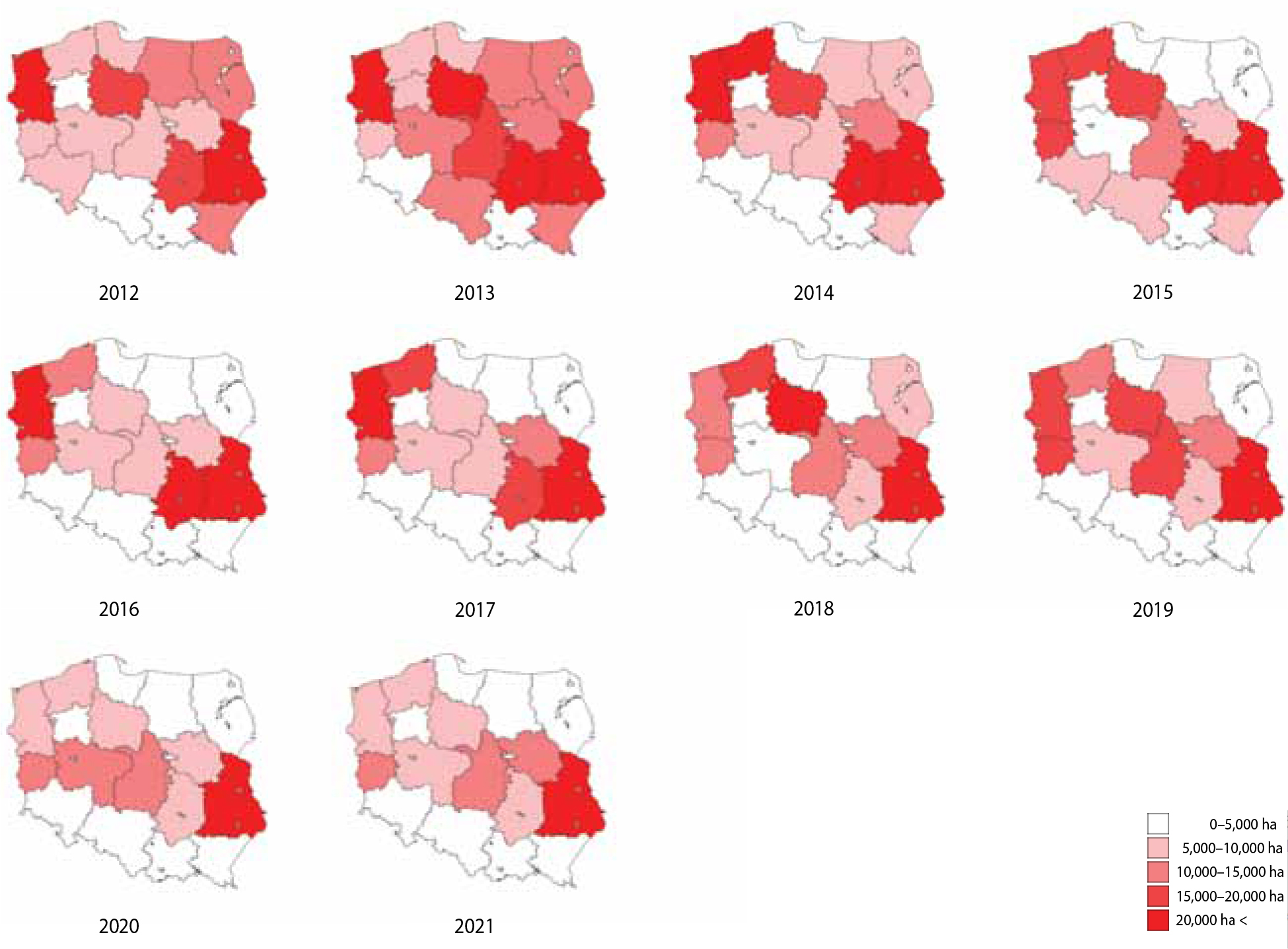
Figure 2.
Location of Powdery Mildew occurrence in the years 2012–2021, divided by Regional Directorates of the State Forests
Damping-off
The pathogenic seedling blight in the years 2012–2021 it remained at a similar level (Fig. 1). Damping-of is a disease of young plants that leads to death within a few weeks of germination. A large group of fungi (belonging to the genera Cylindrocarpon, Fusarium, and Rhizoctonia) and oomycetes (Phytophthora and Pythium) are responsible for this phenomenon (Mittal and Wang 1993; Sutherland et al. 2002; Darvas et al. 1978; Lilja et al. 2010; Lamichhane et al. 2017; Asaka and Shoda 1996; Jung et al. 2016). The total area of damage caused by pathogenic damping-off was almost 1350 ha during the years 2012–2021. It is the second most common disease entity in Poland. For this assessment, pathogenic damping-off on coniferous and deciduous seedlings were considered separately. The first group was more numerous. Damping-off of conifer seedlings in Polish nurseries was mainly infections of Scots pine. In the last ten years, it has remained relatively constant at around 100 ha per year. Major damages were recorded in 2012 (111 ha), 2013 (92 ha), and 2019 (85 ha). The second group was the damping-off of deciduous tree seedlings. This disease mainly affected oaks and beeches, however, alder and birch dieback have also been reported. From 2012 to 2021, a systematic decrease in damage caused by the damping-off of deciduous tree seedlings was observed. A sudden change was observed in 2020, when the area of damage was recorded at 65 ha, while the average value over the entire 10-year period was 54 ha. For this disease as a whole (conifers and deciduous trees), it is difficult to speak of a trend in terms of the intensity of the disease in certain parts of the country, especially in the first years of observation (Fig. 3).
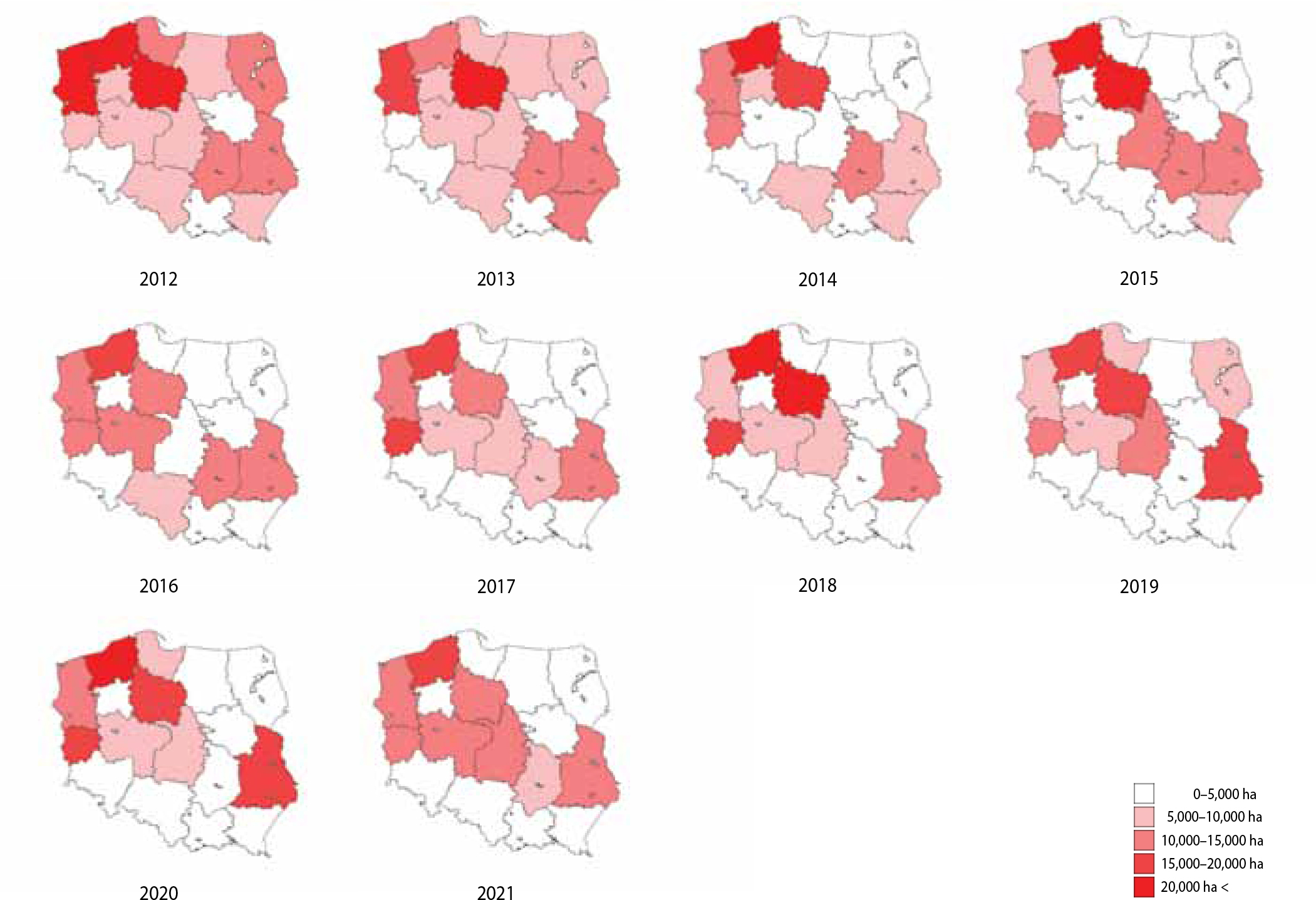
Figure 3.
Location of Damping-off occurrence in the years 2012-2021, divided by Regional Directorates of the State Forests
Needle-cast of pine
The next disease that has become widespread in the last ten years has been needle-cast of pine. This is a disease that affects conifers. The first symptoms of the disease can appear on pine trees in September and October as small yellow or brown spots on needles (Diwani and Millar 1987). Infected needles turn brown and fall off the tree the following spring (Martinsson 1975; Kurkela 1979). Lophodermium is a genus of ascospores fungi that contains both needle pathogens and endophytes of conifer hosts (Müller and Hallaksela 1998). Although Minter et al. (1978) recognised at least four species of Lophodermium that can infect pine needles, only L. seditiosum is considered pathogenic (Diwani and Millar 1987: Kurkela 1979). Ascocarps of L. seditiosum mature on fallen needles (Diwani and Millar 1990) and begin to release ascospores in late summer, with the peak of their development in Europe occurring in September and October (Diwani and Millar 1990). High rainfall in late summer and autumn creates favourable conditions for infection (Lilja et al. 2010; Diwani and Millar 1990). Climatic factors, such as lower autumn temperatures and early snow cover, could explain the lower risk of disease (Lilja et al. 2010). Nevertheless, the maximum development of the disease can occur in early summer. This fact is attributed to favourable temperatures combined with higher relative humidity and frequent rainfall, that coincide with the formation of the first pine needles. Warm, humid summers and the abundance of young, susceptible hosts favor the development of the disease (Woods 2003; Aminev 1980; Kowalski 1982; Hanso and Hanso 2001). Drenkhan (2010) found that occurrence of the needle-cast of pine in Switzerland was related to higher precipitation and higher humidity in summer, while Wyka et al. (2017) found that warmer climates and wetter springs favored the development of needle diseases in white pine (P. strobus L.), but they found a lower probability of disease occurrence with higher winter precipitation and higher humidity. Pagony and Gasko (1977) also observed disease epidemics caused by the high density and humidity of seedlings, which in the context of nursery production is a very important factor influencing the damage caused by this pathogen. In the study by Pandit et al. (2020), which used the MaxEnt SDM climate model, it was again shown that in the area they analysed (southeastern USA), the occurrence of the needle-casts was related to the average dew point, vapour pressure deficit and precipitation in the cold season. The climatic factors they identified as important for the occurrence of the disease – precipitation and hu midity – were consistent with other studies (Boyce 1969; Drenkhan 2010; Wyka et al. 2017).
The occurrence of pine needle-casts is the third most common disease in Polish forest nurseries. In 2012, damage caused by this disease was recorded on a total area of 111 ha. The largest areas of damage are observed in the north-western part of Poland (Fig. 4). As with most of the diseases discussed, a downward trend in the area of damage is observed from year to year. In 2021, the pine disease was detected on 66 ha, which corresponds to a decrease of almost 50% within a decade.
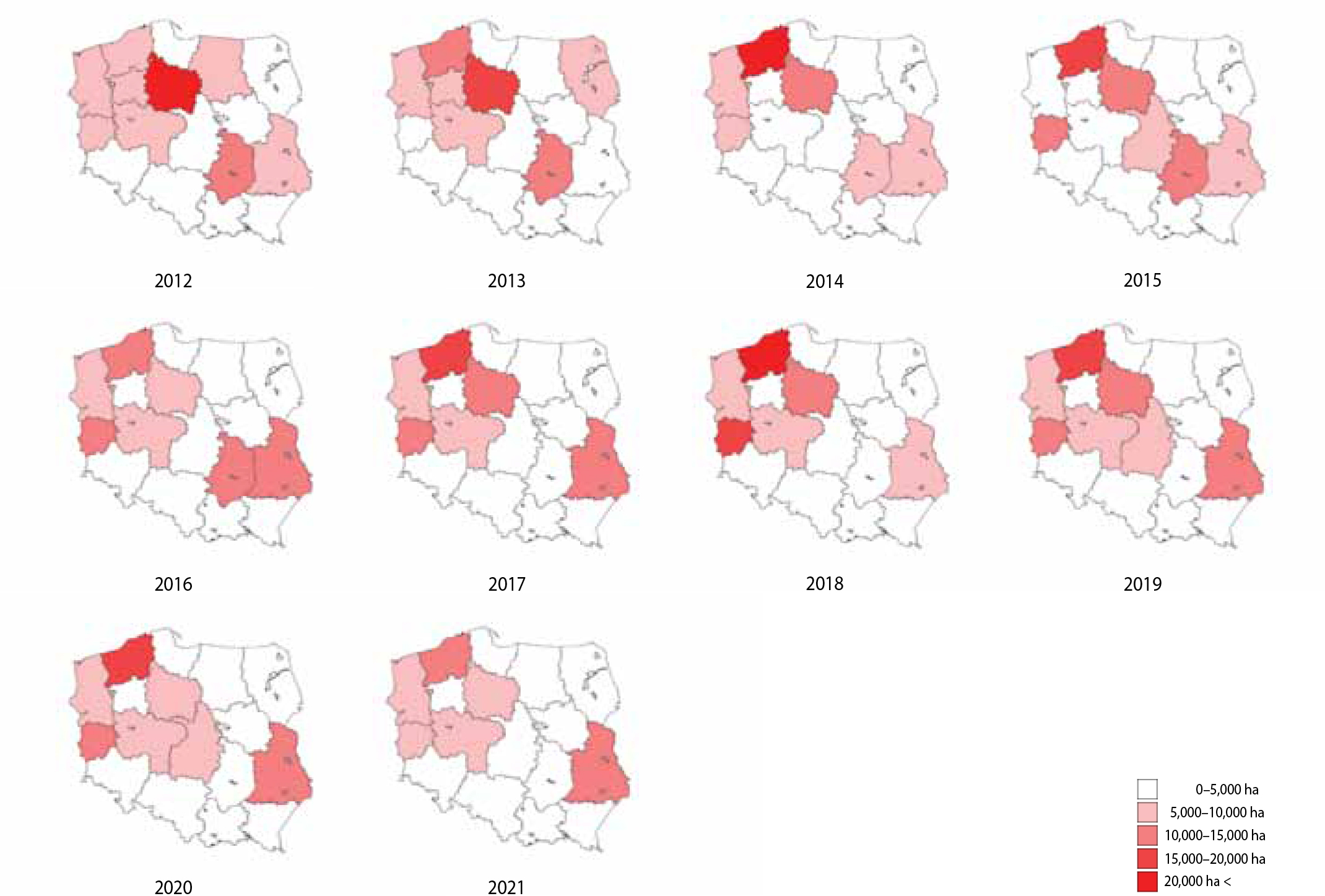
Figure 4.
Location of Needle-cast of pine occurrence in the years 2012–2021, divided by Regional Directorates of the State Forests
Gray mold
Early symptoms of gray mold can be recognised by a greyish, cotton-like mycelium and spores on tree-like conidiophores. The pathogen Botryotinia fuckeliana (de Bary) Whetzel is a saprophytic ascomycete whose asexual stage (Botrytis cinerea) is frequently found in forest nurseries (Gregory and Redfern 1987; Peterson et al. 1988; Sutherland and Davis 1991). Infection with B. cinerea often occurs following abiotic damage, such as frost, fertiliser, or herbicide application (Sutherland and Davis 1991), although low light intensity combined with environmental stress (e.g. 30–40°C or prolonged drought) may also be important as predisposing factors (Zhang and Sutton 1994; Zhang et al. 1995). Gray mold spores are transmitted by humans, flying insects (James et al. 1995), wind and greenhouse ventilation (Sutherland and Davis 1991). The spores germinate at temperatures from 0 to 25°C, whereby the germination rate depends on the temperature and is optimal at 7–20°C (Petäistö 2006). Russell (1990) found that infection can occur after only three hours at 15–20°C and 98% relative humidity if there is free water on the plant surface. Although gray mold infection was thought to start on the lowest, weakened or dead parts of the seedlings before penetrating healthy tissue (Sutherland and Davis 1991), infection of spruce was found to be more severe in the upper parts of the seedlings at 6°C and 80–90% relative humidity (Petäistö 2006).
In Polish nurseries, this disease occurred on average in an area of approximately 13.5 ha from 2012 to 2021. Throughout the analysed period, the area of damage caused by B. cinerea fungus fluctuated slightly, with the lowest value in 2019 (9 ha in the whole of Poland) and the highest in 2012 (20 ha). When looking at the map showing the damage caused by gray mold in Poland, it is difficult to identify a trend in terms of distribution (Fig. 5).
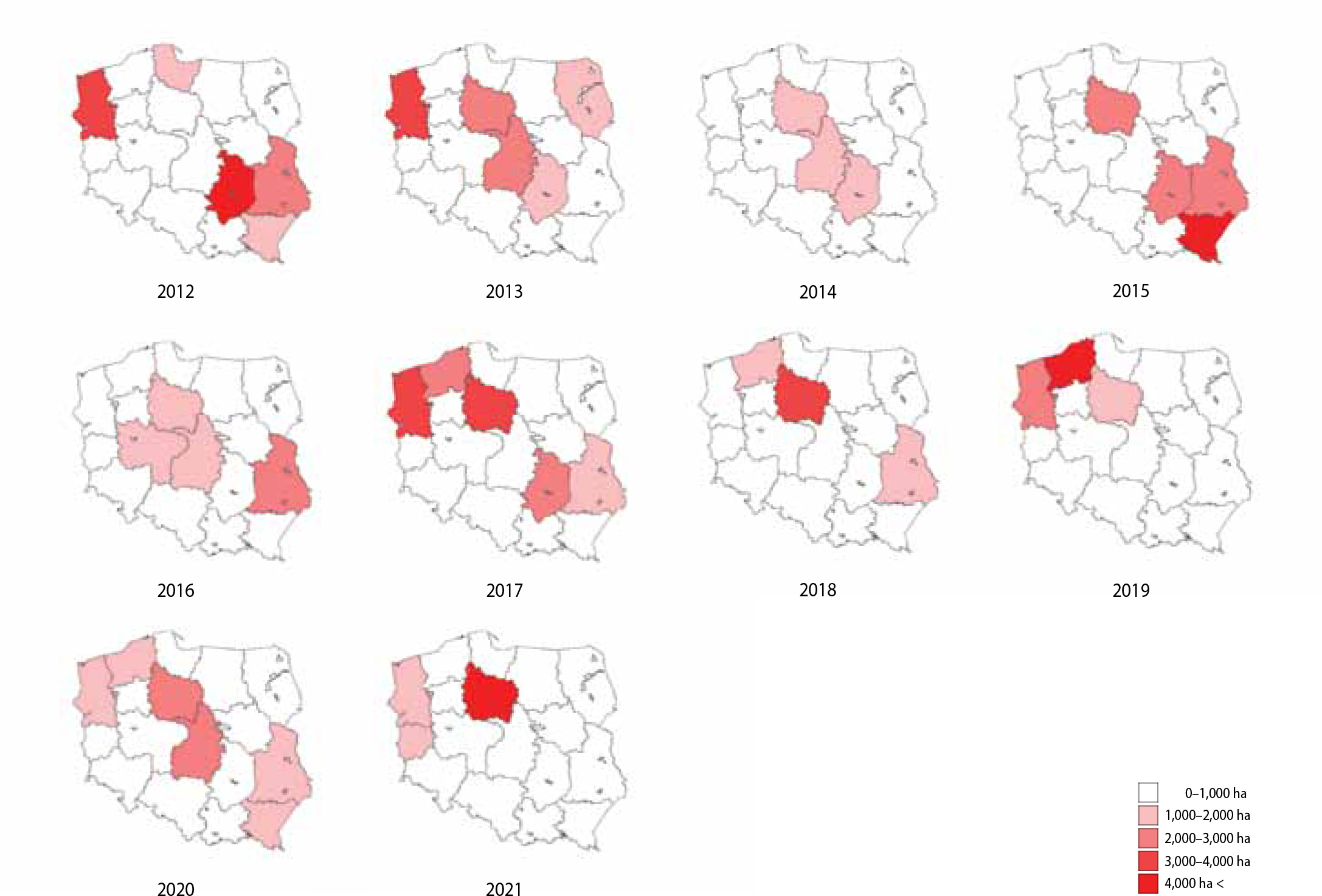
Figure 5.
Location of Gray Mold occurrence in the period 2012–2021, divided by Regional Directorates of the State Forests
Pine twisting rust
Pine twisted rust is caused by Melampsora pinitorqua. This disease occurs sporadically in nurseries and poses a significant threat to pine stands (Jalkanen and Kurkela 1984). An alternative host for this pathogen is often aspen poplar (Populus tremula L.), where the rust overwinters in the form of teliospores on fallen aspen leaves. Under natural conditions, the teliospores germinate in spring after rainfall and produce basidiospores that infect the leading shoots of pine in the current year. Kurkela (1973a, b) studied the dispersal of basidiospores in June in three consecutive years and found that basidi ospores were formed and released at temperatures between 0 and 27°C (with a maximum of 15–20°C), with maximum spore number and density varying considerably from year to year. Rain plays a crucial role in the formation and release of basidiospores, and it also affects the degree of infection (Klingström 1963; Kurkela 1973a).
Similar to the previously described gray mold, pine twisting rust is not a major problem in Polish forest nurseries, but every year a small area of damage causing from this disease is reported. The damages caused by M. pinitorqua averaged 19.7 ha during the analysed period. As with most pathogens analysed, the largest area of damage was recorded in 2012 (almost 30 ha across the country), and since then there has been a gradual decline to 15.7 ha in 2020. Every year, a significant area of damage caused by pine twisting rust is reported mainly in the eastern part of Poland (Fig. 6).
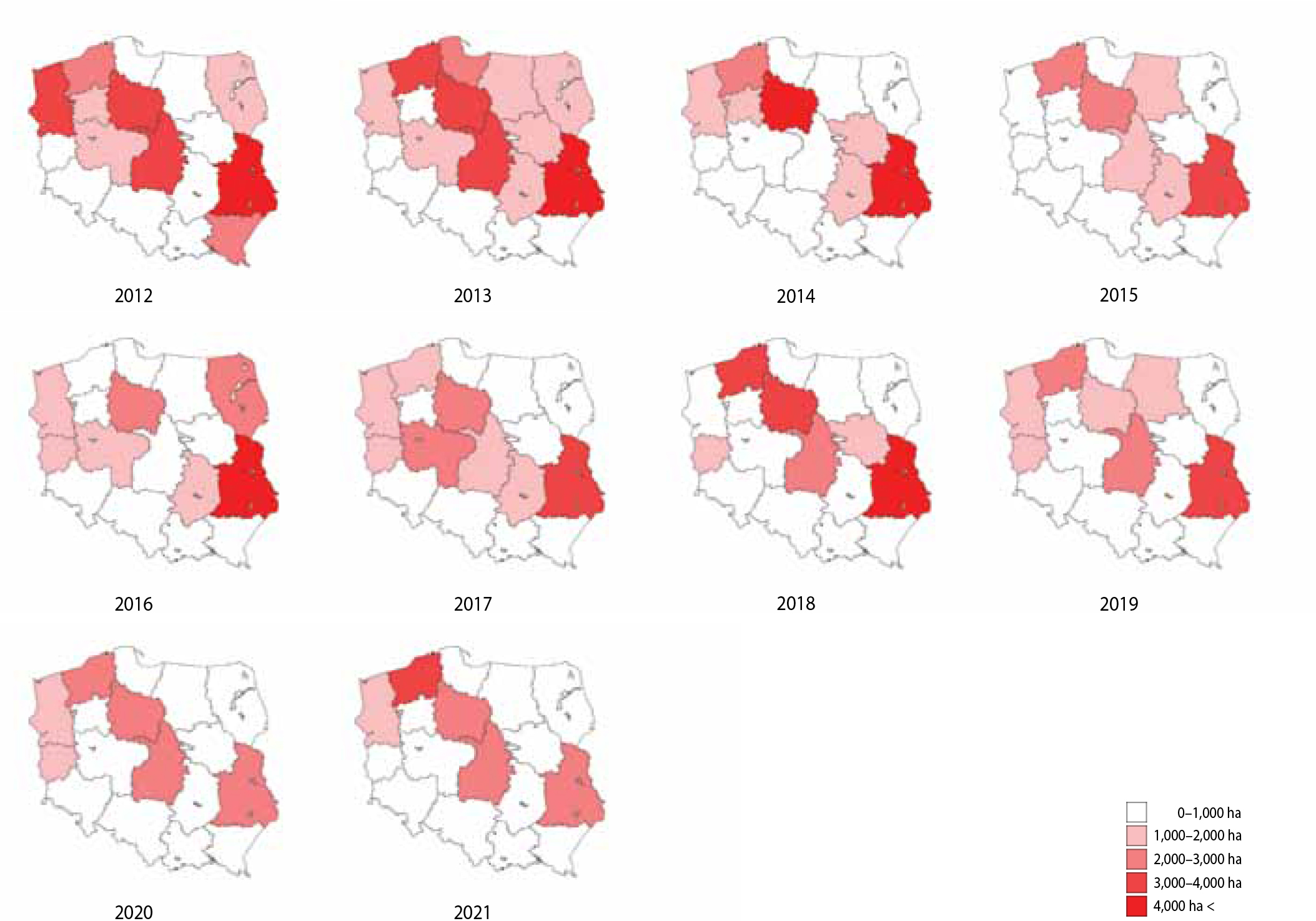
Figure 6.
Location of Pine Twisting Rust occurrence in the period 2012–2021, divided by Regional Directorates of the State Forests
Abiotic factors
Finally, it is important to consider abiotic factors, which can also capable of seriously damaging forest nurseries. However, the data collected between 2012 and 2021 did not record any instances of this phenomenon. It is important to note that the absence of recorded instances does not necessarily mean that this problem does not occur. The factors that cause abiotic diseases in seedlings are primarily unfavourable weather conditions for their development: temperature drops, prolonged drought with high temperatures, sudden and/or prolonged rainfall and hailstorms. The most frequently observed problems in forest nurseries are certainly sunburn, flooding of the roots with water, mechanical damage or frost, which can manifest itself in characteristic discolouration of the assimilation apparatus (e.g. needles).
General conclusions
Factors such as high seedling density, irrigation, fertilisation and herbicides used in nurseries can influence not only the production of conifers and deciduous trees, but also the occurrence of pathogens. To prevent this, it is extremely important to follow hygiene rules, use high-quality seeds, ensure pest-free growth and provide adequate irrigation, aeration, fertilisation and weed control. The study presented shows a trend in the change in the incidence of fungal diseases in forest nurseries over the last decade (from 2012 to 2021). From the annual monitoring of forest nurseries, it can be concluded that the area of damage in nurseries is decreasing from year to year. Nevertheless, damage caused by the same diseases is reported every year. In certain years, the diseases occur with varying intensity, which may be related to weather conditions. The graph in Figure 1 shows that in the years 2015–2018, the damage caused by pathogens was at a low level. This coincided with the occurrence of drought across the country, which was characterised by high temperatures and low rainfall. However, it is important to note that irrigation of seedlings is typically carried out in forest nurseries, which helps to mitigate the impact of extreme weather conditions on young plants. The general meteorological conditions that affect infections by the pathogen mainly affect trees in the immediate vicinity of forest nurseries, which are the inoculum base for young plants susceptible to infection.
The 6th Assessment Report of the Intergovernmental Panel on Climate Change (IPCC WGI), to be published in 2021, confirms that the Earth’s climate has been changing at an unprecedented rate since the mid19th century. The report emphasises that progressive warming poses a threat to the well-being of the planet and its ecosystems, including forests. In Poland, thermal conditions have been changing intensively from year to year since the beginning of the second half of the 20th century. Until the mid-1980s, thermal conditions were classified as either cold or cool. However, since the second half of the 1980s, normal or warmer conditions have become more frequent. The period between 2012 and 2021 saw a range of temperatures from slightly cool to extremely warm, with temperatures exceeding multiannual norms for most of the time. The years 2019 and 2020 were particularly notable in the analysed period due to their extremely warm temperatures. The average annual temperatures in Poland in these years were 10.2°C and 9.9°C respectively, which is 2.4°C and 1.6°C above the long-term norm. In terms of precipitation, however, the years 2012–2021 can be described as mostly normal. Although there was a sufficient supply of precipitation during the decade 2012–2021, soil water decreased because evapotranspiration losses generally exceed precipitation and lead to faster soil water depletion. The National Hydrological and Meteorological Service’s bulletins for 2012–2021 (Wereski 2019) show that drought phenomena were recorded nationally in 2015, 2016, 2018, 2019 and 2020. The European Environment Agency has published a drought forecast for the continent up to 2100, which shows that the frequency and severity of droughts will increase in most parts of Europe. This trend is part of a global pattern of anomalous meteorological phenomena caused by natural and anthropogenic factors. However, for forest nurseries with irrigation systems, drought does not have a major impact on plant health. Nonetheless, changing climatic conditions can indirectly affect the health of seedlings produced in nurseries by affecting the behavior of fungal pathogens.