
1. Introduction
In accordance with the current histological classification of the World Health Organisation, desmoid fibromatosis (DF) (ICD-O code 8821/1) is a mesenchymal tumour that develops from differentiated fibroblasts containing an excessive amount of collagen fibres. DF is also known as aggressive fibromatosis or desmoid fibroma. DF is characterised by an invasive growth pattern and a high tendency to local recurrences but lacks the potential for metastasis. Classified as orphan diseases, DF accounts for less than 3% of the total number of soft tissue tumours[1].
Generally, it is classified as extra-abdominal tumours (located on the limbs, chest wall, shoulder girdle, lumbar region, head and neck), abdominal tumours (in the soft tissues of the anterior abdominal wall) and intra-abdominal tumours originating from the mesenchymal structures of the mesentery, retroperitoneal space and pelvis[2]. Despite the absence of malignancy, DF can express aggressive growth that can lead to severe clinical outcomes and even death[3].
The study of the pathogenesis of DF and methods of treating the disease is a relevant topic today for a number of reasons. One of which is the age of patients. Usually, the disease occurs in young patients (80% of patients are under 40 years old). As the disease progresses, the patients begin to feel pain, and subsequently, the functional abilities of the patient take a toll. This sharply disrupts the quality of life of the patient. Moreover, the cosmetic defect induced by the tumour or due to surgical treatment can incur deep social disadaptation[4].
DF is divided into two types:
– Sporadic
– Associated familial adenomatous polyposis (FAP)
Sporadic DF can be extra-abdominal and abdominal. In the abdominal form, the tumour is located intra-abdominally, usually in the mesentery of the small intestine[4].
DF associated with FAP is found only in 20% of the patients; however, this form is better studied than the sporadic form. With an increase in the tumour, patients may develop complications such as intestinal obstruction or urinary tract stenosis. DF ranks second after colorectal cancer when considering the causes of death in patients with FAP[3,5].
To date, there is no standard of treatment for patients with DF. This is due to the small number of patients with this disease, which hinders the statistical evaluation of the different treatment procedures[6]. Nevertheless, surgery, radiation-, hormonal-, targeted therapies or a combination of them are recommended to the patients. Sometimes, the patients are even left under active surveillance[6,7].
The National Medical Research Centre has the largest clinical experience in the treatment of DF in the Russian Federation. Here, we have presented a clinical case of a patient who was treated in an unusual way[8].
2. Case report
Patient A, 18 years old, first visited an oncologist at the P.A. Herzen Moscow Oncology Research Institute in 2016 due to tumour growth in her right shoulder joint. Initially, an open biopsy of the tumour was performed, and the diagnosis of DF was established. Due to the size and location of the tumour, the patient was left under active surveillance, as the rejection of the tumour could lead to amputation of the right upper limb. In 2017, due to the growth of the tumour, the patient was prescribed hormonal therapy (Tamoxifen and Zoladex). The hormonal therapy kept the tumour under control for the next two years. However, in September 2019, the tumour increased in size, the patient had severe pain and the movement of the right limb was limited. After this, the patient was prescribed chemotherapy with Doxorubicin and Dacarbazine. However, in January 2020, a fast-growing exophytic soft tissue grew in the projection of the right shoulder (10 cm) (Figures 1 and 2).
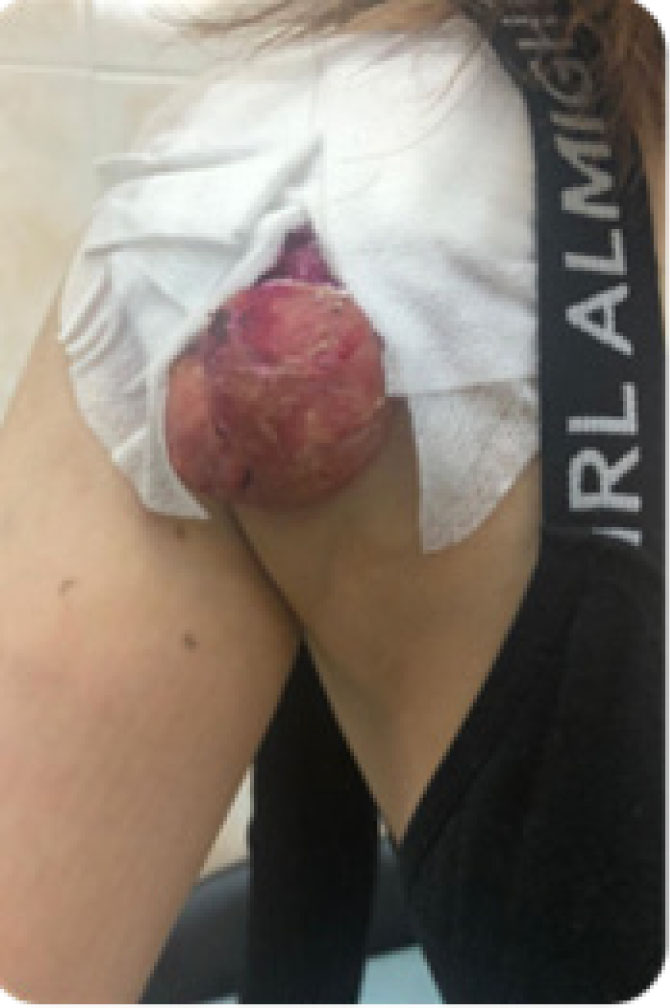
Figure 1:
DF on 30.01.2020.
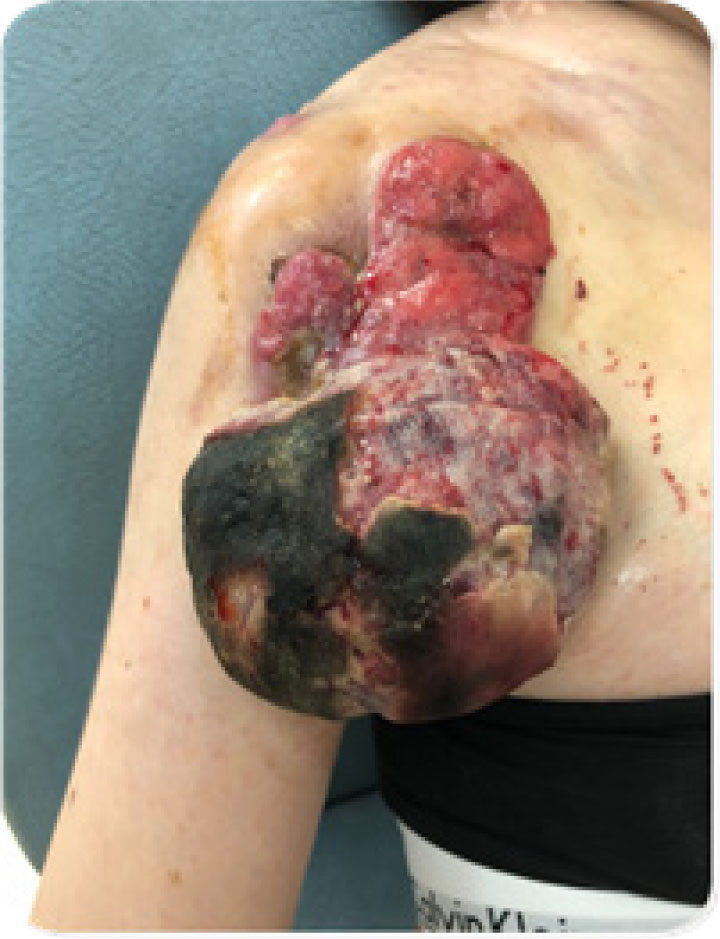
Figure 2:
DF on 05.02.2020.
In order to assess the prevalence of the tumour process, the patient underwent a PET/CT scan. The PET/CT scan revealed that the tumour had occupied the right scapula, right clavicle and partially the right humerus. The size of the tumour was 158 × 173 × 180 mm (SUVmax = 52.99). Multiple lymph nodes were also invaded by the tumour, the largest of which measured 21 × 16 mm. The vessels of the right half of the chest, including the right breast, were dilated and convoluted (Figure 3).
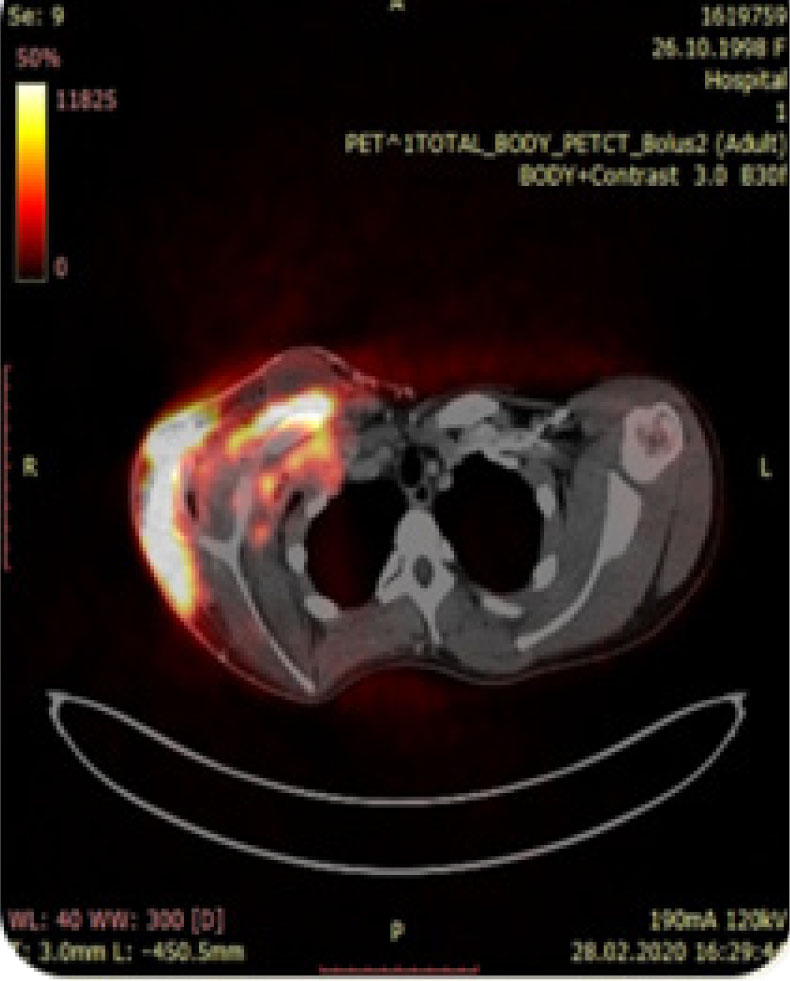
Figure 3:
PET/CT of the thoracic region in axial projection.
Taking into account the data from the PET/CT scan and the aggressive growth of the tumour mass, interscapulothoracic amputation of the right upper limb was performed, which went without complications (Figure 4).
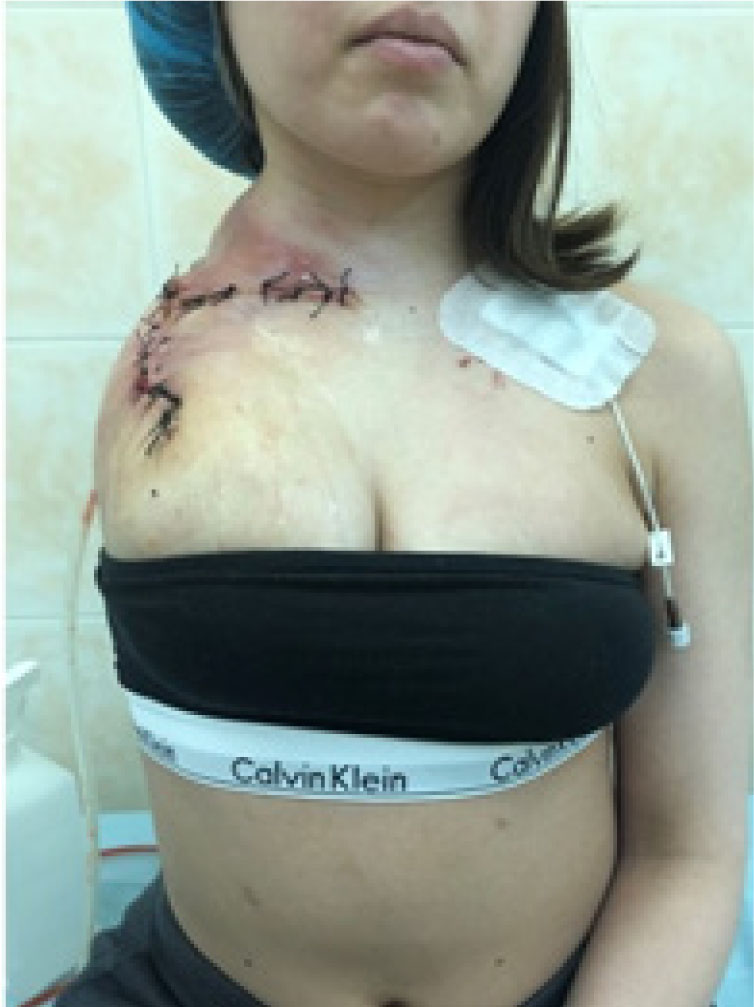
Figure 4:
First day after surgery.
Morphological examination of the surgical material and immunohistochemistry data confirmed the diagnosis of DF of the soft tissues (Figure 5), with signs of therapeutic pathomorphosis of the II degree. Since the tumour was present for a long period of time, transformation into a secondary undifferentiated spindle cell pleomorphic sarcoma (Figure 6) of a high degree of malignancy was also noted (according to the FNCLCC system: 3/2/1 = 6/8 points).
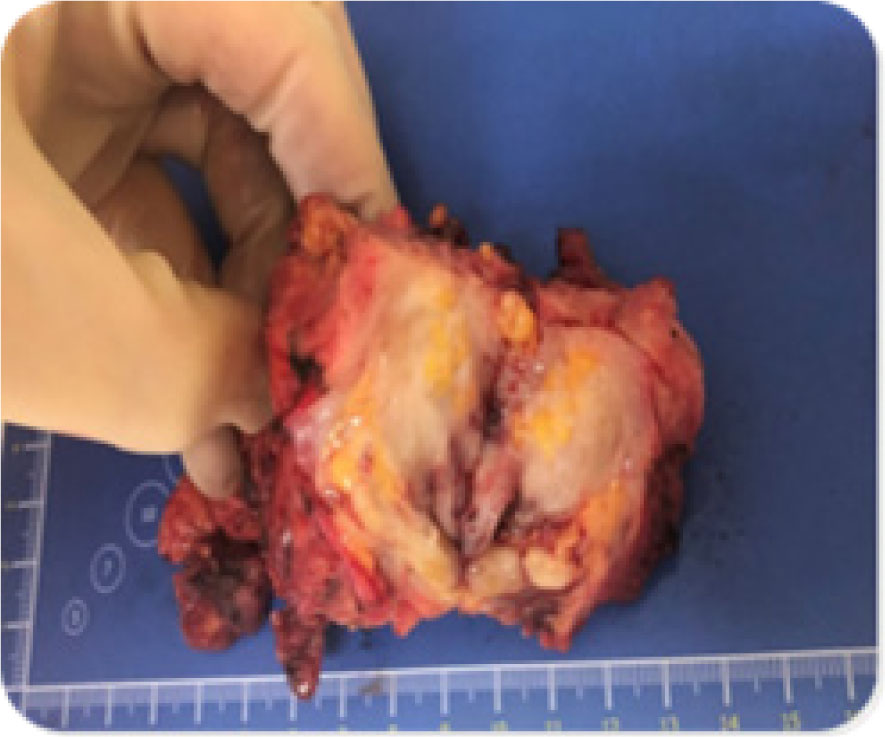
Figure 5:
Postoperative view of DF nodule.
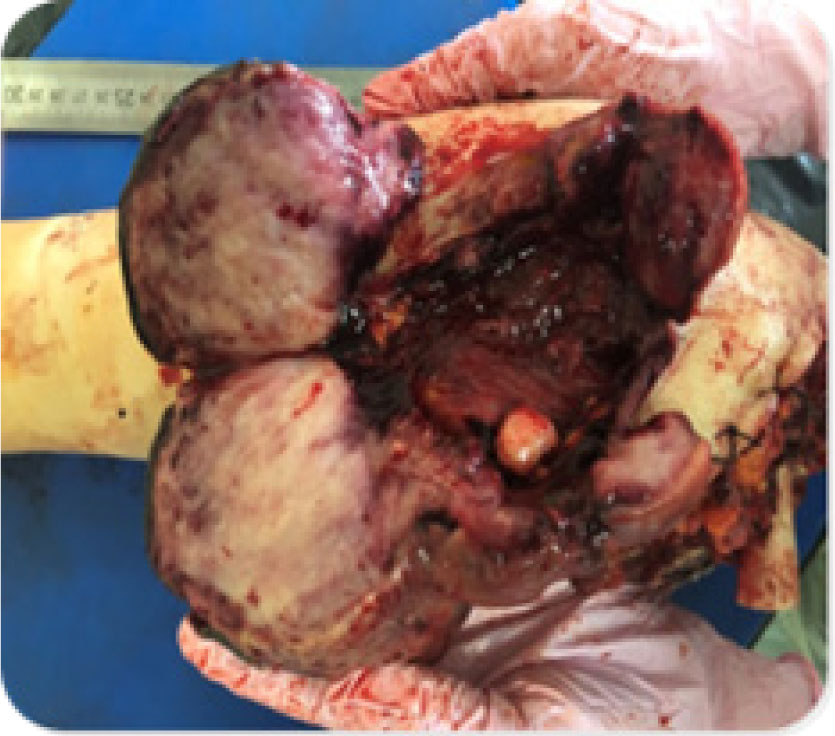
Figure 6:
Postoperative view of soft tissue sarcoma.
Additionally, a comprehensive genomic profiling of tumour tissues was carried out with the help of next-generation sequencing, according to the results of which a mutation in the ALK gene (CLTC-ALK fusion) was detected. Since Crizotinib was shown to be effective against sarcomatous malignancies harbouring ALK fusion[9], it served as the basis for the recommendation of targeted therapy with Crizotinib as an adjuvant therapy. It is to be noted that the ALK has never been found to be expressed by DF[10,11]. At the moment, the patient is under surveillance for 5 years during which she is continuously taking Crizotinib. During the period, no data on the progression of the disease and toxicity have been obtained. The patient is living an active lifestyle, works, plays sports and even drives a car.
3. Discussion
It is generally accepted that DF is not prone to malignancy; however, some literature studies have reported cases of transformation of DF into sarcoma. One of the examples can be found in the article by F. Bertucci and co-authors, who have described a clinical observation of a 61-year-old patient with a diagnosis of right breast cancer in situ. The patient was relapse free for 20 years after the radical treatment; however, DF of 8 cm in the same breast was diagnosed after 20 years. The patient received several lines of drug therapy: Tamoxifen in combination with high doses of Coeloxib, Doxorubicin, Dacarbazine, Vinorelbine and Methotrexate. She received targeted therapy as well (Imatinib, Sorafenib, Sunitinib). Despite the volume of treatment, the tumour aggressively progressed and finally transformed into high-grade sarcoma. The tumour mass was surgically removed without adjuvant therapy. But unfortunately, the sarcoma relapsed after 4 months. The patient was treated with systemic chemotherapy, but the patient passed away as the disease progressed. The authors concluded that the cause of the atypical course of DF may be due to previous radiation therapy for breast cancer[12].
Several cases of radio-induced sarcomas after radiation therapy of DF have been reported. Similarly, there are also several cases of DF in a patient with Milroy’s disease. All patients died within 3 years of being diagnosed with sarcoma[13,14,15,16,17].
In the clinical case presented by us, the patient did not undergo radiation therapy and she did not have any other concomitant diseases; thus, the reason for the atypical progression of the DF remains open.
The ALK inhibitor (Crizotinib) has been found to be used against other rare tumours as well. Indeed, it has been approved by the FDA against inflammatory myofibroblastic tumours and anaplastic large cell lymphomas[18]. In a case study in 2021, Crizotinib has been used against histiocytic sarcoma as well, but the patient died after 18.4 months due to progression of the disease[19].
4. Conclusion
Almost all publications on the pathogenesis, diagnosis and treatment of DF begin with the information that these tumours are extremely rare – their frequency in the population does not exceed 2–4 cases per million people per year. Nevertheless, today it is unfair to say that the disease is completely unstudied. However, there is critically little information about cases of malignancy of desmoid fibromatosis and almost all of them are associated with previous radiation therapy. The observation presented by us is unique as ALK was found to be expressed in the immunohistochemistry, which enabled us to perform targeted therapy using Crizotinib. Similarly, the patient never had radiation therapy. We propose that the targeted therapy with Crizotinib and the absence of radiation therapy resulted in a positive outcome of the disease in a 5-year time period.