
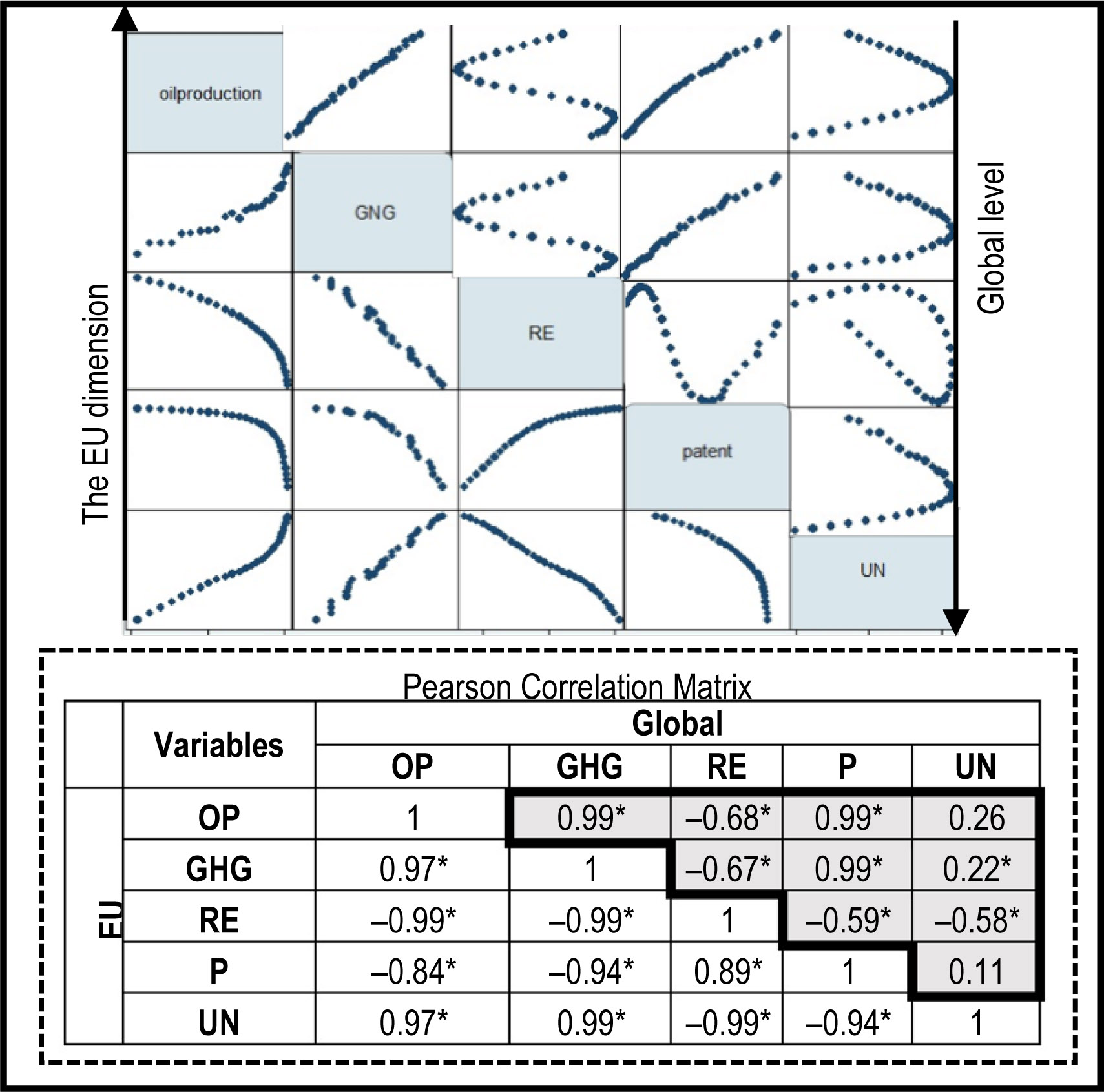
Fig. 1
Results of the correlation analysis into the fluctuation between oil production volumes (for EU countries and the world), greenhouse gas emissions, the use of alternative energy sources, the number of patents for oil production and unemployment
Note: OP — volumes of oil production; GHG — greenhouse gas emissions; RE — the share of alternative energy sources; P — number of patents; UN — unemployment rate; * — statistical significance at the level of 1%
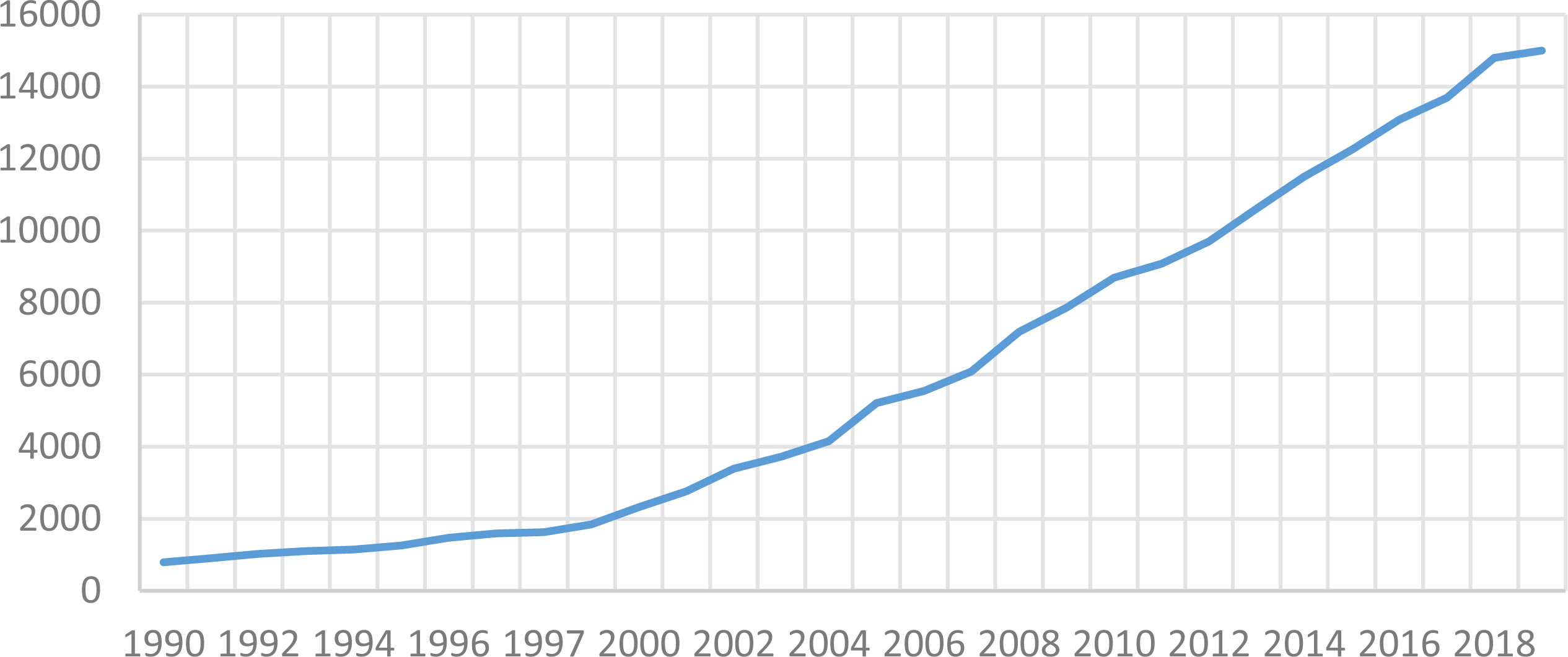
Fig. 2
Results of the trend analysis in publications related to oil production and institutional environment
Sources: elaborated by the authors based on Scopus.
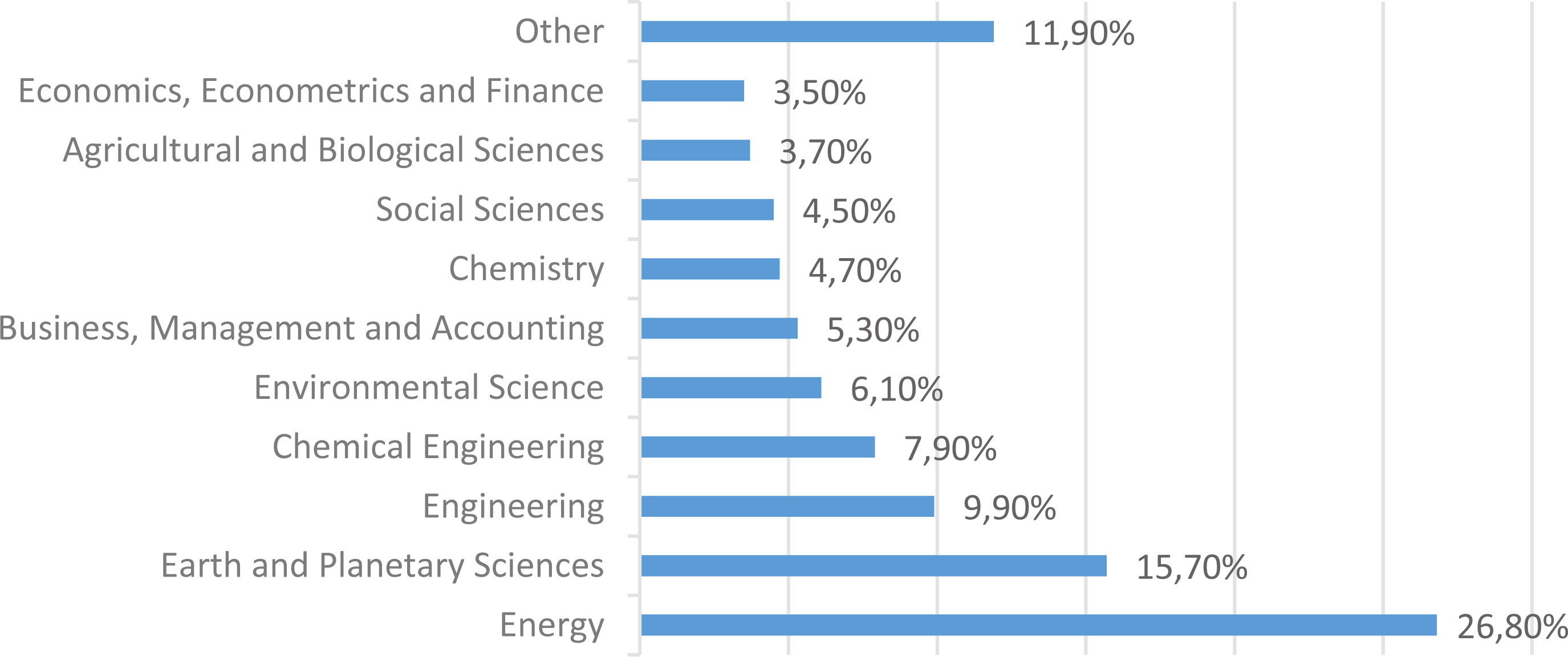
Fig. 3
Subject areas in Scopus dealing with the oil industry and institutional environment
Source: elaborated by the authors based on Scopus.
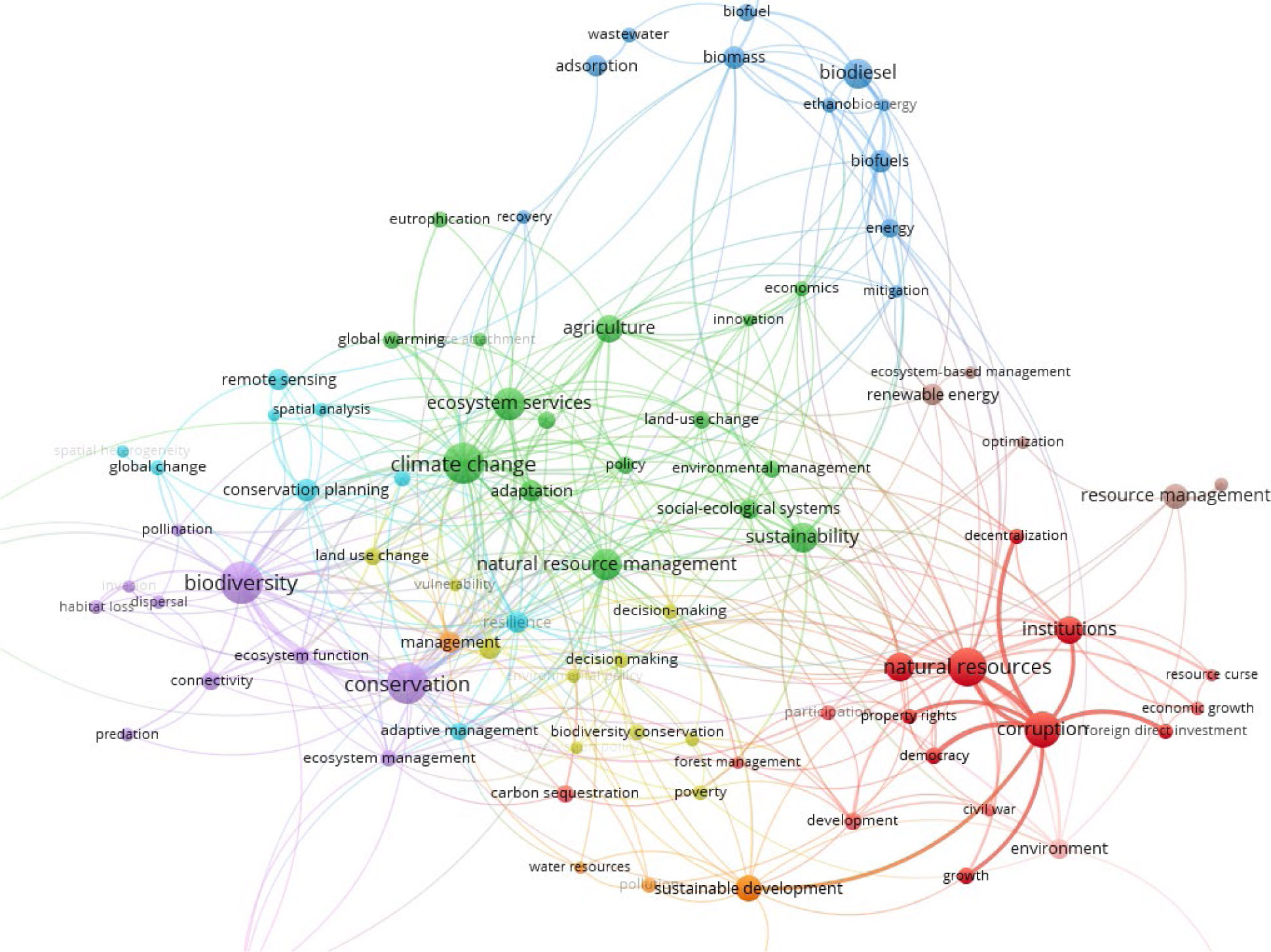
Fig. 4
Results of bibliometric analysis of the structural and functional environment for categories of the oil industry and institutional environment
Source: elaborated by the authors based on Scopus.
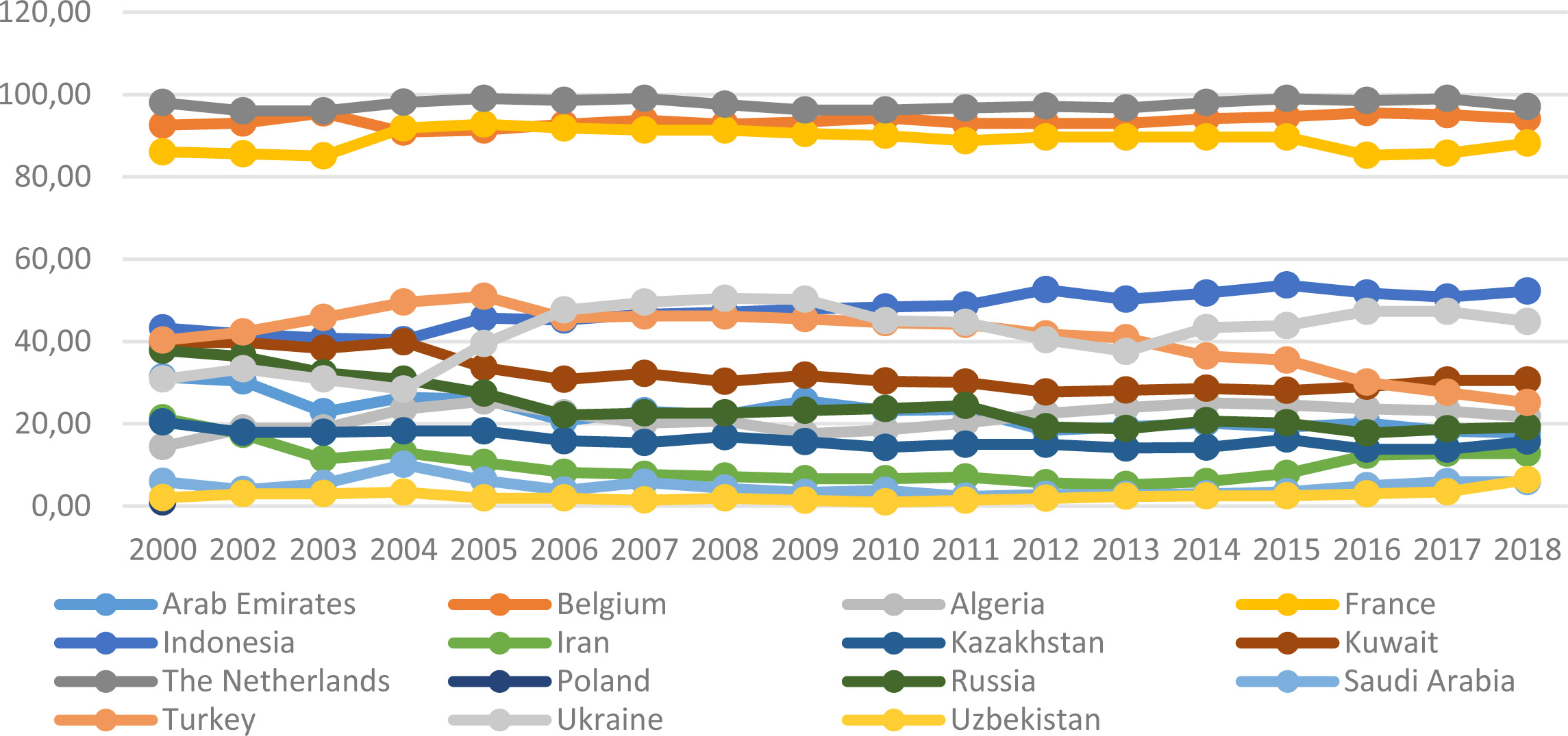
Fig. 5
Dynamics of indicator change: voting rights and accountability in 2000–2018
Source: elaborated by the authors based on (Bilan et al., 2019c).
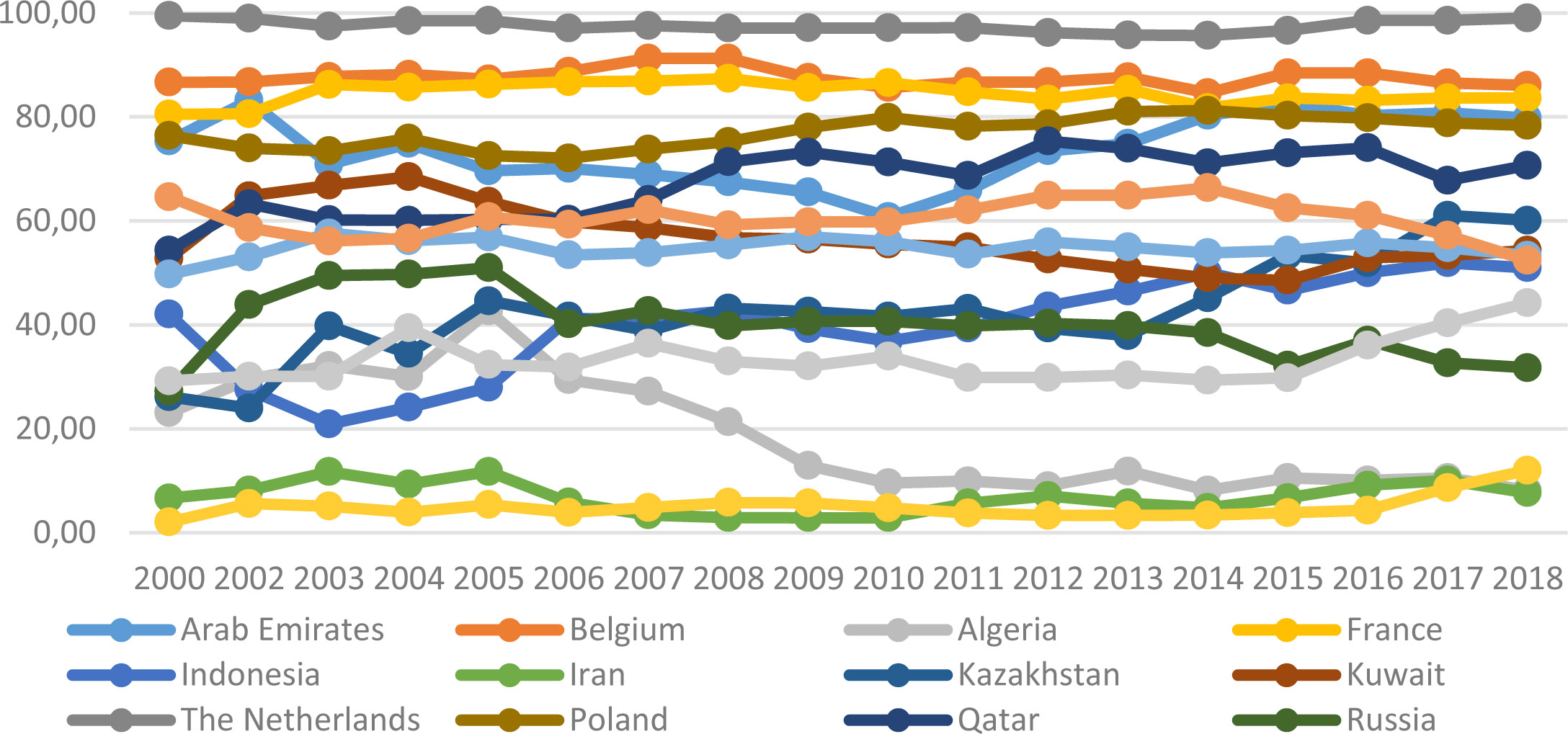
Fig. 6
Dynamics the indicator of the quality of the government's regulatory policy in 2000–2018
Source: elaborated by the authors based on World Governance Indicators.
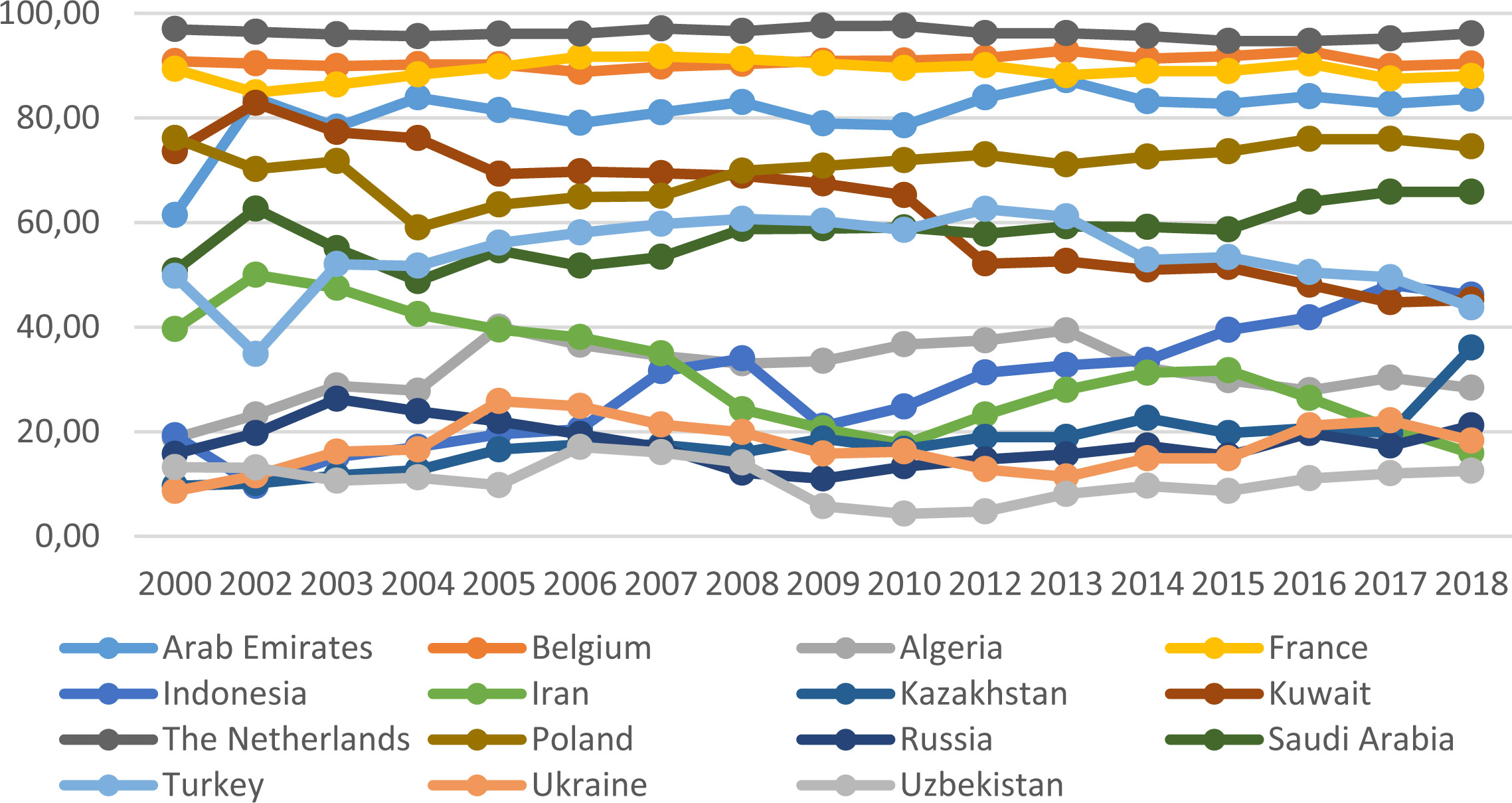
Fig. 7
Dynamics of the indicator or the control of corruption in 2000–2018
Source: elaborated by the authors based on World Governance Indicators.
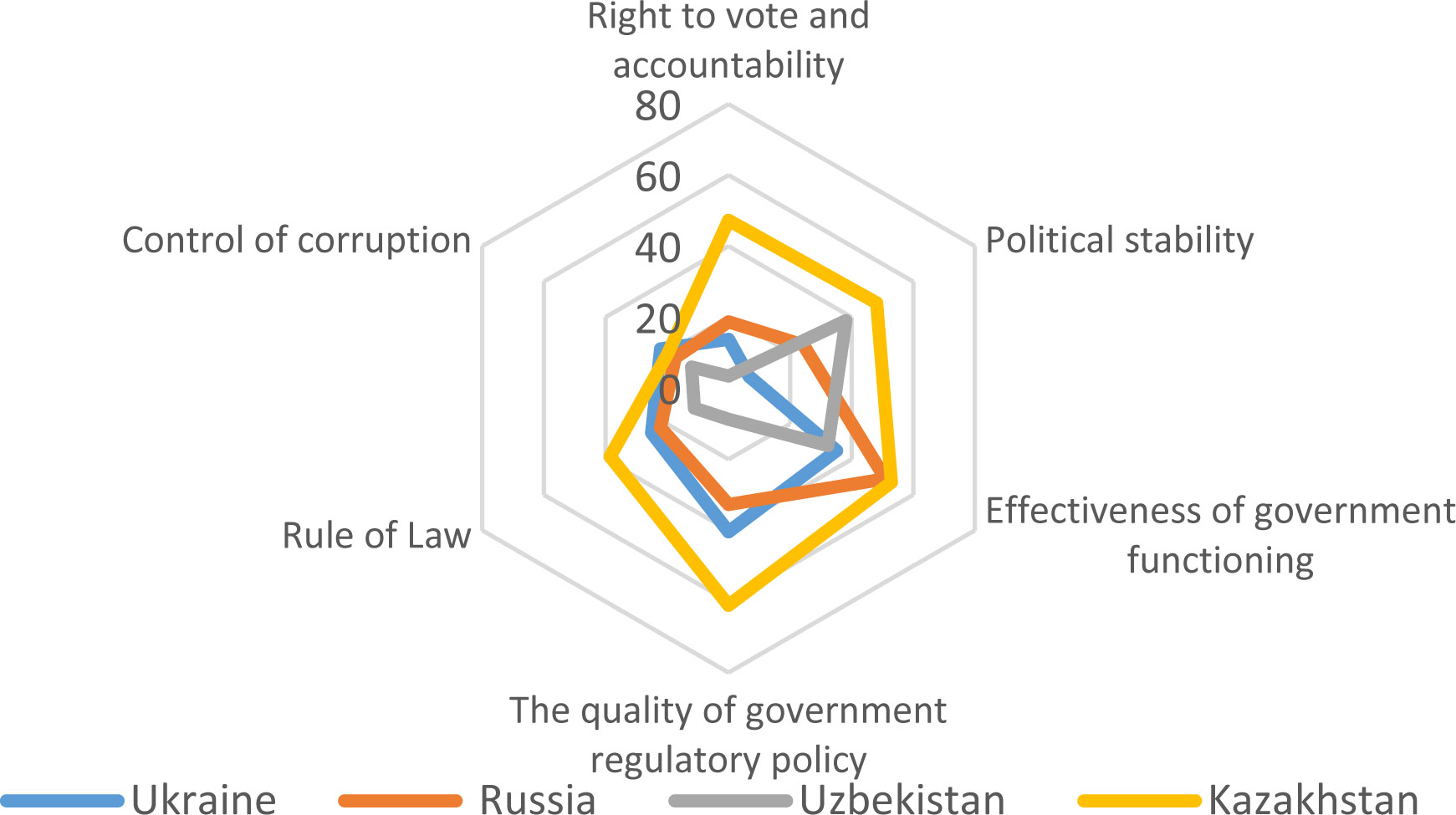
Fig. 8
Public Governance Effectiveness in Ukraine, Russia, Kazakhstan and Uzbekistan in 2016
Source: elaborated by the authors base on World Governance Indicators.
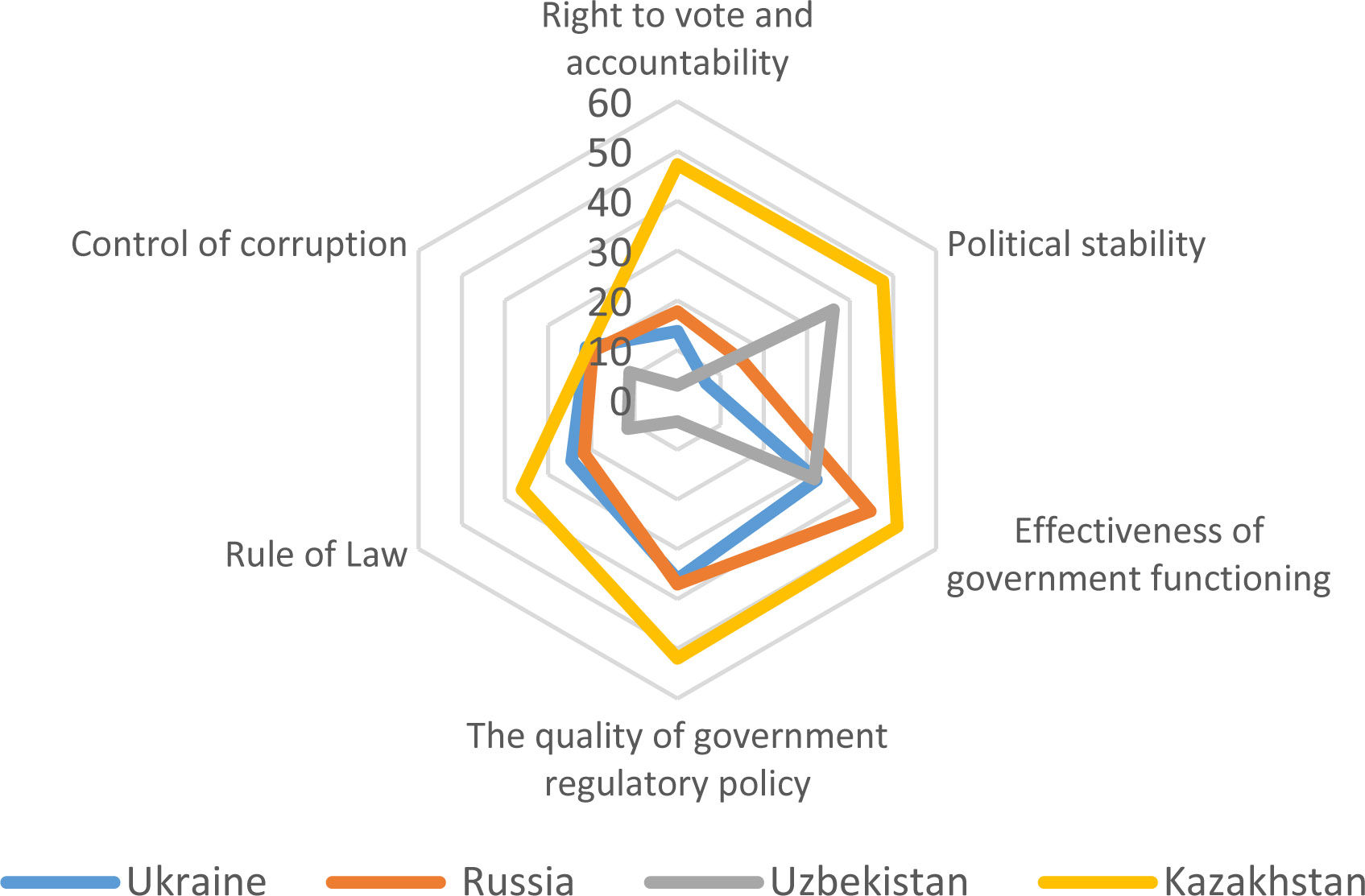
Fig. 9
Efficiency of government in Ukraine, Russia, Kazakhstan and Uzbekistan in 2017
Source: elaborated by the authors based on World Governance Indicators.
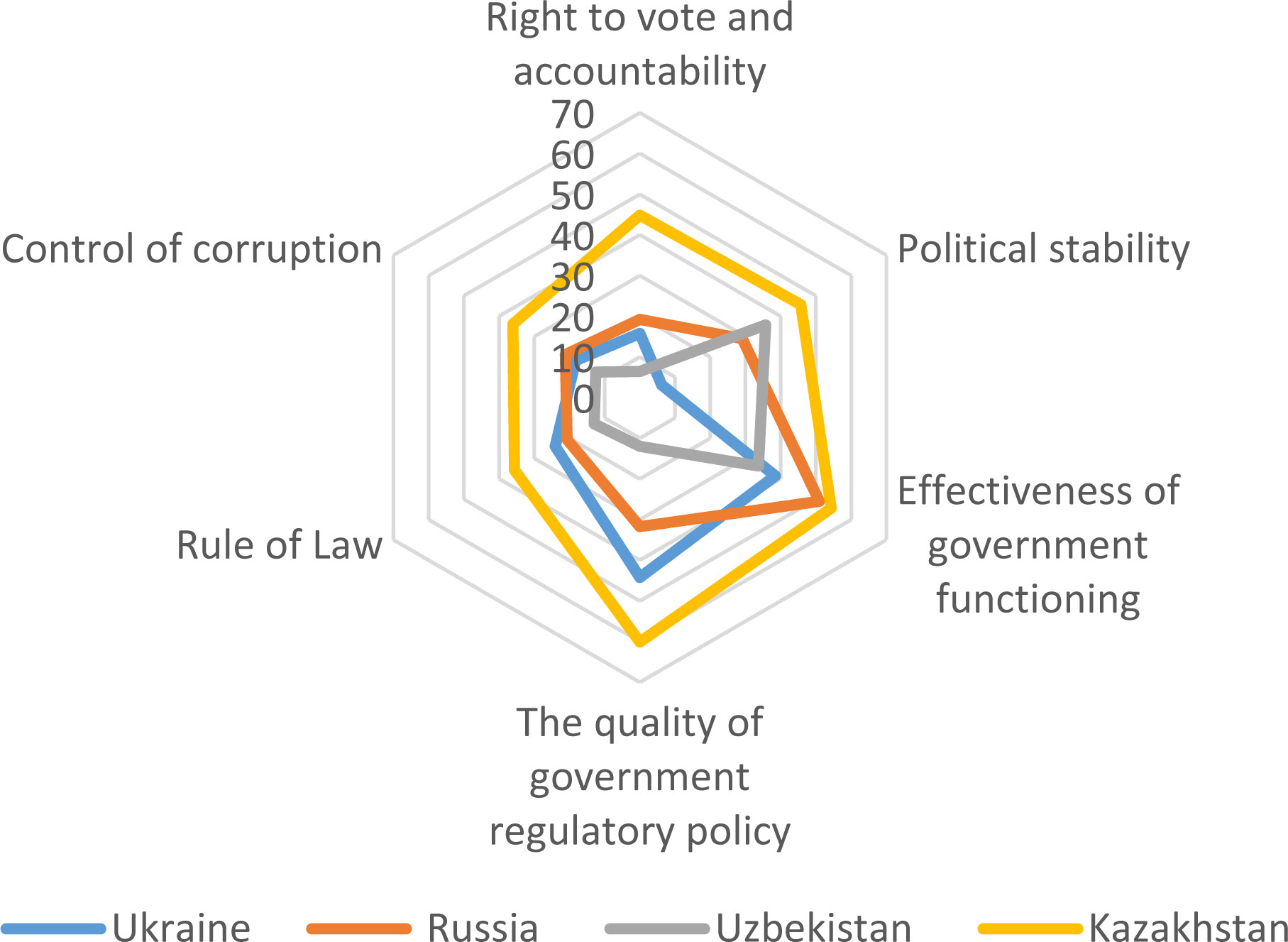
Fig. 10
Public Governance Effectiveness in Ukraine, Russia, Kazakhstan and Uzbekistan in 2018
Source: elaborated by the authors based on World Governance Indicators.
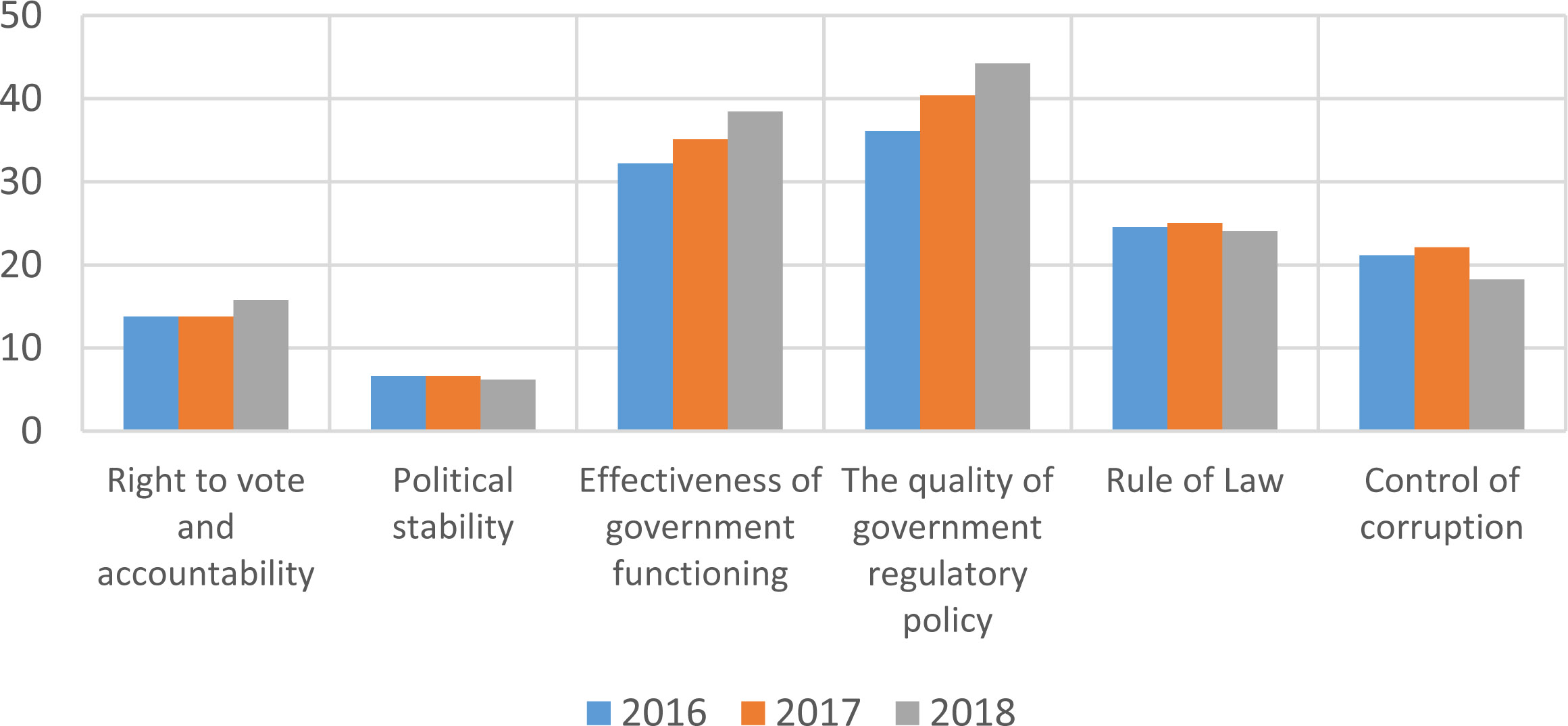
Fig. 11
Dynamics of indicators for the effectiveness of public governance in Ukraine in 2016–2018 by key components
Source: elaborated by the authors based on World Governance Indicators.
Tab. 1
Correlations between variables OP1, OP2, ViA, PS, GE, RL
| OP1 | OP2 | ViA | PS | GE | RL | |
|---|---|---|---|---|---|---|
| OP1 | 1.0000 | 0.4561 (0.0001) | −0.1593 (0.5147) | 0.3484 (0.0000) | −0.3762 (0.1125) | 0.0127 (0.9588) |
| OP2 | 0.4561 (0.0001) | 1.0000 | −0.2110 (0.3859) | 0.3476 (0.0002) | −0.4559 (0.0498) | −0.3060 (0.2026) |
| ViA | −0.1593 (0.5147) | −0.2110 (0.3859) | 1.0000 | −0.1464 (0.5497) | −0.0138 (0.9552) | 0.4578 (0.0487) |
| PS | 0.3484 (0.0000) | 0.3476 (0.0002) | −0.1464 (0.5497) | 1.0000 | −0.644 (0.0029) | −0.1187 (0.6285) |
| GE | −0.3762 (0.1125) | −0.4559 (0.0498) | −0.0138 (0.9552) | −0.644 (0.0029) | 1.0000 | 0.3326 (0.1641) |
| RL | 0.0127 (0.9588) | −0.3060 (0.2026) | 0.4578 (0.0487) | −0.1187 (0.6285) | 0.3326 (0.1641) | 1.0000 |
[i] OP1 — the volume of oil production; OP2 — the volume of rent payments for oil; ViA — indicator of the opinion of the population during the formation of political institutions; PS — the political stability indicator; GE — governance performance indicator; ΔRL — the rule of law indicator; Corruption —the corruption perception index; in () — the level of significance.
Tab. 2
Results of the study into the impact of the institutional environment on the functioning of the national oil-production industry
| Model specification | ||||||||||||||
|---|---|---|---|---|---|---|---|---|---|---|---|---|---|---|
| ΔCorruption | ΔOP1 | ΔOP2 | ΔViA | ΔPS | ΔGE | ΔRL | ||||||||
| Stat. (Prob.) | Stat. (Prob.) | Stat. (Prob.) | Stat. | Prob. | Stat. | Prob. | Stat. | Prob. | Stat. | Prob. | ||||
| Corruption | 0.12 (0.00) | 0.11 (0.00) | –0.16 (0.00) | –0.09 (0.00) | –0.04 | 0.00 | 0.04 | 0.00 | –0.03 | 0.355 | 0.03 | 0.00 | 0.17 | 0.00 |
| OP1 | 1.47 (0.16) | 1.34 (0.08) | 0.521 (0.00) | 0.687 (0.00) | – | – | –0.10 | 0.14 | 0.08 | 0.00 | –0.06 | 0.20 | 0.06 | 0.15 |
| OP2 | –0.54 (0.00) | –0.52 (0.00) | – | – | 0.490 (0.00) | 0.831 (0.00) | –0.98 | 0.00 | 0.34 | 0.72 | 0.19 | 0.37 | –0.13 | 0.46 |
| ViA | 0.28 (0.00) | 0.34 (0.0) | 0.30 (0.41) | 0.27 (0.44) | 0.49 (0.03) | 0.64 (0.52) | 0.09 | 0.012 | – | – | – | – | – | – |
| PS | 1.25 (0.23) | – | 0.23 (0.06) | – | 0.13 (0.08) | – | – | – | 0.208 | 0.00 | – | – | – | – |
| GE | – | 0.18 (0.00) | – | 0.51 (0.18) | – | 0.42 (0.06) | – | – | – | – | 0.308 | 0.00 | – | – |
| RL | 0.48 (0.92) | 0.49 (0.87) | 0.32 (0.53) | 0.28 (0.48) | –0.15 (0.63) | –0.10 (0.84) | – | – | – | – | – | – | 0.07 | 0.05 |
| AR(2) | (0.209) | (0.312) | (0.311) | (0.291) | (0.243) | (0.218) | (0.149) | (0.178) | (0.269) | (0.117) | ||||
| Sargan's OIR stat. | (0.967) | (0.341) | (0.237) | (0.414) | (0.220) | (0.145) | (0.136) | (0.180) | (0.213) | (0.385) | ||||
| Hansen's OIR stat. | (0.782) | (0.492) | (0.623) | (0.625) | (0.618) | (0.713) | (0.487) | (1.00) | (0.503) | (0.578) | ||||
[i] AR(2) is the Second-order autocorrelation of residuals; Sargan's OIR stat. and Hansen's OIR stat. — Sargan and Hansen OIR tests; OIR is the Over-identifying Restrictions Test.