
Tab. 1
Percentage breakdown of the cropping pattern by the main type of cereals in Latvia in 2009–2019
| Crop | 2009 | 2010 | 2011 | 2012 | 2013 | 2014 | 2015 | 2016 | 2017 | 2018 | 2019 |
|---|---|---|---|---|---|---|---|---|---|---|---|
| Wheat | 52.8 | 56.8 | 59.1 | 61.7 | 63.7 | 61.4 | 66.7 | 67.4 | 67.0 | 60.8 | 66.8 |
| Barley | 19.3 | 19.7 | 18.7 | 15.3 | 14.6 | 18.3 | 14.8 | 13.4 | 11.6 | 17.4 | 11.8 |
| Rey | 10.9 | 6.4 | 5.4 | 6.4 | 5.0 | 4.9 | 5.6 | 5.1 | 4.8 | 3.2 | 5.9 |
| Oats | 11.2 | 11.7 | 11.3 | 10.8 | 10.7 | 10.2 | 9.0 | 9.0 | 10.1 | 13.1 | 11.4 |
| Other | 5.7 | 5.4 | 5.5 | 5.7 | 6.0 | 5.1 | 4.0 | 5.0 | 6.5 | 5.5 | 4.2 |
| Total | 100.0 | 100.0 | 100.0 | 100.0 | 100.0 | 100.0 | 100.0 | 100.0 | 100.0 | 100.0 | 100.0 |
[i] Source: elaborated by the authors based on CSB data, 2020.
Tab. 2
Changes in the total cereal output and the average yield in Latvia in 2009–2019
| Year | Total output, thou.t | Annual change (%) | Average yield, quintals/ha | Annual change (%) |
|---|---|---|---|---|
| 2009 | 1663.1 | - | 30.8 | - |
| 2010 | 1435.5 | −13.7 | 26.5 | −14.0 |
| 2011 | 1412.0 | −1.6 | 26.8 | 1.1 |
| 2012 | 2124.5 | 50.5 | 37.0 | 38.1 |
| 2013 | 1948.7 | −8.3 | 33.4 | −9.7 |
| 2014 | 2227.2 | 14.3 | 34.0 | 1.8 |
| 2015 | 3021.5 | 35.7 | 44.9 | 32.1 |
| 2016 | 2703.2 | −10.5 | 37.8 | −15.8 |
| 2017 | 2692.5 | −0.4 | 38.3 | 1.3 |
| 2018 | 2057.3 | −23.6 | 29.8 | −22.2 |
| 2019 | 3163.2 | 53.8 | 42.6 | 43.0 |
| 2009 | 1663.1 | - | 30.8 | - |
| 2010 | 1435.5 | −13.7 | 26.5 | −14.0 |
| 2011 | 1412.0 | −1.6 | 26.8 | 1.1 |
| 2012 | 2124.5 | 50.5 | 37.0 | 38.1 |
| 2013 | 1948.7 | −8.3 | 33.4 | −9.7 |
| 2014 | 2227.2 | 14.3 | 34.0 | 1.8 |
| 2015 | 3021.5 | 35.7 | 44.9 | 32.1 |
| 2016 | 2703.2 | −10.5 | 37.8 | −15.8 |
| 2017 | 2692.5 | −0.4 | 38.3 | 1.3 |
| 2018 | 2057.3 | −23.6 | 29.8 | −22.2 |
[i] Source: elaborated by the authors based on CSB data, 2020.
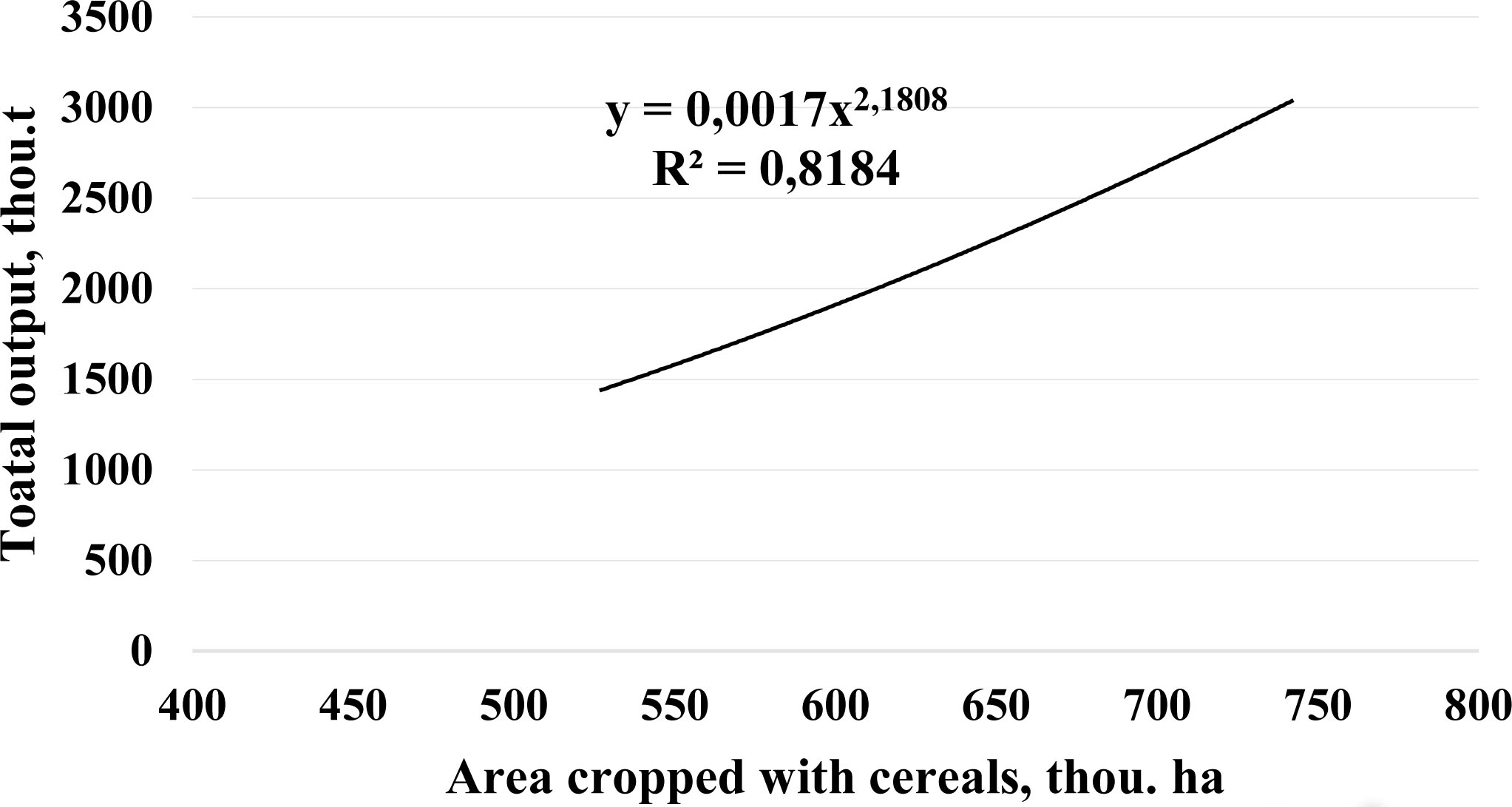
Fig. 1
Correlation between the area cropped with cereals and cereal output in Latvia in 2009–2019
Source: elaborated by the authors based on CSB data, 2020.
Tab. 3
Changes in memberships of grain cooperatives in Latvia in 2017 and 2018
| Cooperative name | 2017 | 2018 | Change (%) | ||
|---|---|---|---|---|---|
| number | (%) | number | (%) | ||
| ASCS Latraps | 915 | 40.6 | 972 | 42.7 | 6.2 |
| ASCS VAKS | 531 | 23.6 | 538 | 23.6 | 1.3 |
| ASCS Durbes grauds | 177 | 7.9 | 179 | 7.9 | 1.1 |
| ASCS Barkavas arodi | 113 | 5.0 | 114 | 5.0 | 0.9 |
| Other | 516 | 22.9 | 475 | 20.9 | −7.9 |
| Total | 2252 | 100.0 | 2278 | 100.0 | 1.2 |
[i] Source: elaborated by the authors based on (Kiryluk, 2005, p. 60).
Tab. 4
Changes in the net turnover of grain cooperatives in Latvia in 2014–2018
| Year | Net turnover, million EUR | Change rate (%) | |
|---|---|---|---|
| Annual | From base year | ||
| 2014 | 246.2 | - | - |
| 2015 | 351.8 | 42.9 | 42.9 |
| 2016 | 304.3 | −13.5 | 23.6 |
| 2017 | 341.8 | 12.3 | 38.8 |
| 2018 | 310.9 | −9.0 | 26.3 |
[i] Source: elaborated by the authors based on data of the Latvian Agricultural Cooperatives Association, 2020.
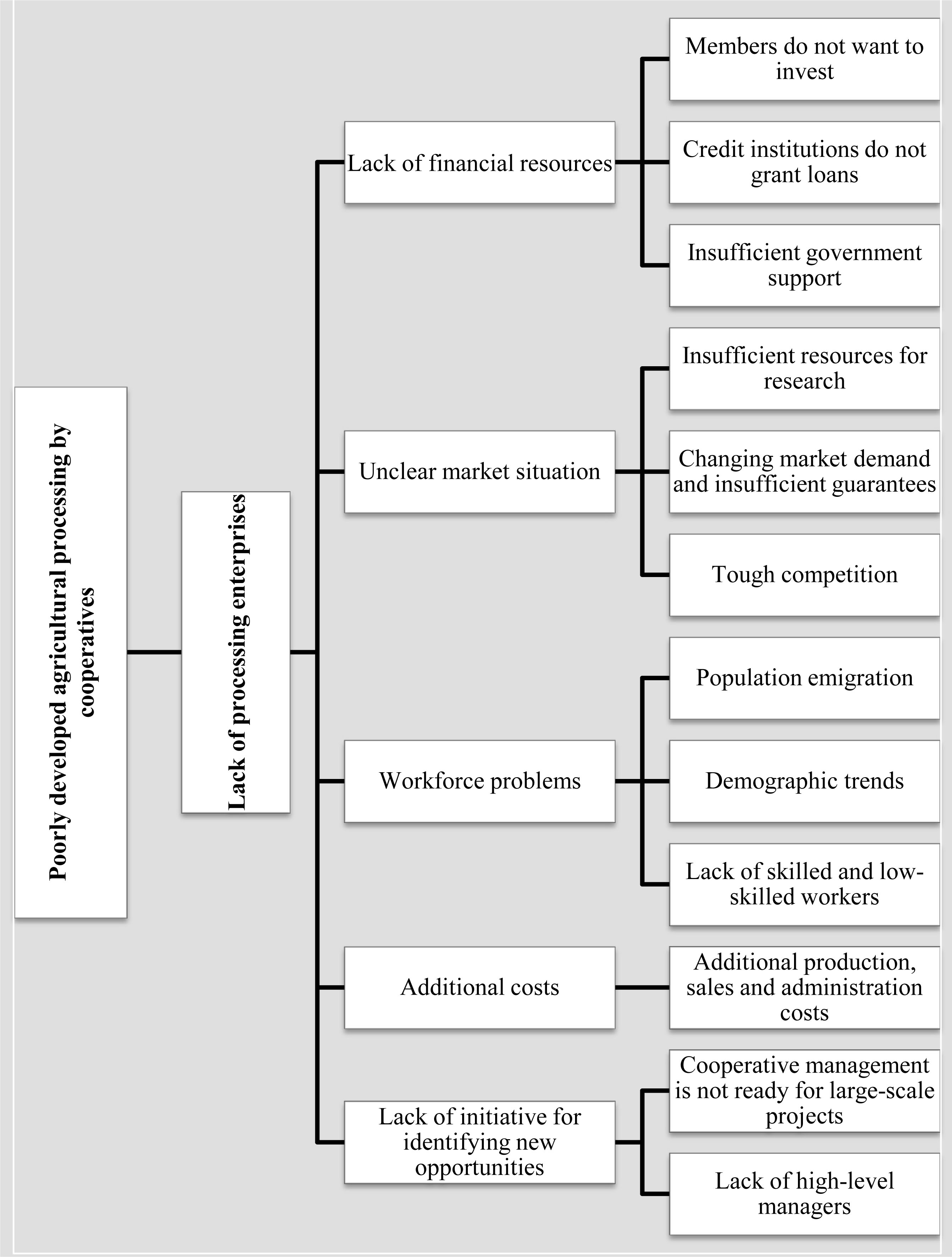
Fig. 2
Tree diagram of the causes for the problem faced by grain cooperatives, i.e. the poorly developed agricultural processing