
1. Introduction
Working at night is a very old form of labour (Freire, 2018; Martins, 2023). This type of work arises from our society’s continuous and rapid growth and the normalization of wok. Within a consumer-based society, it is normal that work continues at all hours of the day, without any kind of interruption. Shift work therefore meets the continuous demands of the market (Campos, 2014). Unlike the general population, there are several professions, including health professionals, industrial workers, and hotel workers, who work night shifts or rotating shifts (Bernardo et al., 2015; Catani et al., 2021).
Night shift work has been linked to negative health impacts, including high cardiovascular risk. As such, discussions on workers’ health and work schedules should include the health risks of night work (Lérias, 2021; Pimenta et al., 2012). Although there have been studies on night and shift work in other sectors of activity — such as nursing (Lérias, 2021) or the police force (Bernardo et al., 2015; Martins, 2023), the subject is not sufficiently addressed in the hotel work sector. This exploratory study is intended to contribute to a better understanding of the occupational risk factors to which hotel workers may be subject.
According to data from the National Statistics Institute, the hotel business in Portugal employs 40,000 people (INE, 2023). During that year, hotel establishments accommodated 11.4 million guests, resulting in30.2 million overnight stays and 1.5 billion euros in total revenue. Considering these numbers and knowing that employees are now unanimously considered to be a company’s most valuable resource, it is important to understand how workers feel their health and safety are affected when they are subject to shift work.
This study tackles this subject because it is a sector of activity that has a multiplicity of working hours, not only governed by the so-called normal nine-to-five schedule. The aim is therefore to help us understand how such work hours affect the health and safety of hotel workers, specifically those who carry out their duties on the night shift. The aim is to ascertain the existence of health implications for hotel workers who work the night shift and shift work, and the existence of safety implications for these workers, by means of a literature review and questionnaire data collection.
A literature review was carried out based on scientific articles, master’s dissertations, doctoral theses, among other sources to understand the impacts of shift and night work on hotel workers’ health, productivity at work and the impact on social and family life. The literature review also examined hotel workers’ shift preferences and labour legislation, which stipulates the exclusive rights of this type of work.
2. Literature Review
Shift work and night work are provided for and regulated in legislation. Specifically, Article 220 of the Labour Code defines shift work as ‘any organisation of team-work in which workers successively occupy the same workstations at a given rate, including rotating, continuous or discontinuous, and may perform the work at different times over a given period of days or weeks’ (Lei no. 7/2009).
With regard to health and safety at work, Article 222 of the aforementioned Labour Code states: ‘The employer must organise occupational health and safety activities in such a way that shift workers benefit from a level of health and safety protection appropriate to the nature of their work’. Additionally, employers must ensure that the means of health and safety protection and prevention for shift workers are similar to those applicable to other workers and are always available (Lei no. 7/2009).
2.1. Health impact
Our body’s metabolism is controlled by a biological clock that determines the periods of highest and lowest energy, which occur and are directly related to the light/dark cycle of sunlight. These cycles, called circadian rhythms, are not only physical, but also mental and behavioural. The circadian rhythm is a 24-hour cycle, and its role is to control different bodily functions, such as alertness, sleep, hormone production, body temperature and the body’s organs. This rhythm influences the moment we are born, the moment we die and the way we lead our lives daily (Franco & Bentes, 2020).
When workers work during the night and sleep during the day, the daily frequency of their organic functions fall out of sync with the circadian cycle (Diniz et al., 2013). As a consequence of circadian desynchronisation, night work can increase the risk of cardiovascular disease, (Lee & Rhie, 2022; Silva-Costa et al., 2021).
Night workers sleep during the day to catch up on the previous night’s sleep, but they must deal with various stimuli, such as the natural light and noise of the daytime, making it more difficult to get quality sleep (Cheres et al., 2012).
According to Azambuja et al. (2019), there are several health disorders related to shift work, including sleep and wakefulness disorders, stress-related illnesses and depression. Long-term dysregulation of circadian rhythms can lead to severe and persistent sleep disturbances, chronic fatigue, anxiety and chronic depression (Alves, 2016; Lee & Rhie, 2022).
Work and health have always been an integral part of humanity, and all types of work have inherent risks in terms of their impact to health, which can impact workers’ performances (Colaço, 2012; Freire, 2018). Worker health, as a field of knowledge and action, is directly related to occupational health and leads to the protection of workers’ health, through different actions, to monitor the risks inherent in working conditions, and to assist workers themselves, through diagnosis, treatment and rehabilitation (Benites et al., 2013; Remédios, 2023). According to Faria et al. (2021), nocturnal lifestyle habits that are linked to work activities affect workers’ health.
Night work’ negative effects have been investigated in the past, especially in relation to health professionals. This research is presented in different literature reviews focused on nursing which determine that working during the night negatively affects the health of workers, and in the case of sleep deprivation or low-quality sleep and the inability to recover it, leads to greater physical and psychological wear and tear, premature ageing and affects social life, which in turn leads to social isolation in the context of employment and mood swings (Boff et al., 2021).
According to Zhang et al. (2020), the health and well-being of employees in the hospitality industry, which is labour-intensive in different service areas within businesses, is fundamental to the well-being of this important sector.
Sleep deprivation is a risk factor and leads to a greater tendency to stress, leading to reduced performance in the work context and thus a greater risk of accidents, as well as causing changes in mood and the immune system. Loss of sleep quality in shift workers leads to cardiovascular, endocrine, respiratory, neurological and sexual functions being affected (Benites et al., 2013; Remedios, 2023).
2.2. Safety and performance
To maintain our performance, cognitive abilities and physiological functions, good quality sleep is essential (Feeley et al., 2024).
According to Han et al. (2021), sleep affects resilience, and sleep deprivation negatively affects cognitive function. Therefore, better quality sleep increases productivity at work and decreases interference between work and personal life.
Shift work directly affects the harmony between employees’ well-being and effectiveness, presenting various risk situations, namely in terms of safety, performance and productivity (Martins, 2017). According to Martins, the night shift, when there is a high volume of work, can lead to problems with health, sleep and reduced productivity.
Shift work has a higher level of fatigue, thus compromising workers’ performance (Feeley et al., 2024). As already reported in the literature, night and shift work present several disease risks and can lead to premature ageing; hence, it is recommended that companies consider the physical and psychological well-being of their employees and the need for a safe and healthy working environment (Antunes, 2021).
During the night shift, according to Rocha (2020), alertness levels are lower, making workers more prone to accidents The same study states that tiredness, drowsiness and a low level of alertness, combined with poor working conditions, are the main factors that cause human error and thus lead to accidents at work. Greater tiredness and lower alertness are more noticeable in shift work compared to the fixed night shift, leading to lower worker productivity. Consequently, performance on rotating shifts is lower than on fixed night shifts (Rocha, 2020).
There are cases of individuals who work night shifts that do not suffer from sleep-related pathologies (Freire, 2018), and some people prefer to work at night. They believe that the additional night shift is advantageous to do so due to a lack of job options (Cheres et al., 2012; Remédios, 2023).
Advances have been made in the field of ergonomics to slow down the harmful effects of night versus day inversion. It is therefore important for management to adopt a more proactive stance with the aim of minimising problems related to the way work is organised (Diniz et al., 2013; Remédios, 2023).
Although some establishments have to work around the clock, there are some suggestions from experts that aim to minimise the damage to night workers’ health, such as: always sleeping at the same times, including on days off, to minimise changes to the biological clock; sleeping between six and eight hours; and leaving the room dark, closing the windows and curtains or wearing earplugs because of the noise that can occur during the day.
Given the shortage of workers in this labour-intensive sector that operates 24 hours a day, every day of the year, without interruption, assessing the impact that different working hours have on the health and safety of hospitality workers is particularly important. This study is important because it addresses an increasingly common sector of work organisation for which there is still little specific research. Therefore, the objective is to help understand how night and shift work affects the health and safety of hospitality workers.
3. Methodology
Several procedures were followed to meet the objectives of the work. One of the most frequently used research tools is the case study, which offers a unique contribution to social, individual and organisational phenomena (Yin, 2015). According to Yin, one of the ways to achieve the objectives of the study is to follow theoretical propositions and conducting a literature review, leading to a set of questions that can be raised. Research questions are essential to carry out a piece of work (Jacquinet, 2021). The different questions are presented below:
Hypothesis One - Are there any health implications for hotel workers who work night shifts and shift work?
Hypothesis Two - Are there safety implications for hotel workers who work the night shift and shift work?
This study was conducted in the Autonomous Region of Madeira, and the questionnaire was administered exclusively in two four- and five-star hotels, using a convenience sampling method (Özkan et al., 2023). This type of hotel was chosen because it is in these units that shift and night work is most prevalent. The target audience was 99 employees of the 5-star hotel and 67 employees of the 4-star hotel, resulting in a total of 166 employees in both hotels. The data collection method was a questionnaire survey, which is normally used in larger-scale studies to cover a larger number of respondents (Batista et al., 2021). The questionnaire is divided into distinct phases, beginning with an introduction, where the authors present the topic under study and its objectives. This demonstrates the importance of the survey responses in the execution and purpose of the study. A statement of confidentiality of responses and guarantee of anonymity for all respondents is also presented, in accordance with the General Data Protection Regulation (Sá et al., 2021).
All data collected through the survey will be treated with the strictest confidentiality in accordance with the privacy and security policy, as well as Law No. 58/2019 of 8 August – Personal Data Protection Law. The management of both hotels was contacted first by email and then directly through a face-to-face meeting, with the aim of presenting the questionnaire, clarifying any doubts and the scope of its application.
At these meetings, the dates and channels for applying the questionnaire were outlined so that it could be carried out simultaneously in both hotels, and positive and immediate feedback was obtained from both management teams.
The questionnaire was implemented by sending the link to the questionnaire created in Google Forms via the WhatsApp platform.
As a method of analysis and classification, the Likert scale was applied, one of the most widely used due to its simplicity and reliability, especially when measuring attitudes and opinions (Monte, 2020). A five-point scale was used to measure the intensity of the respondents’ opinions, where the degree of agreement ranges from Strongly Disagree, Disagree, Neither Agree nor Disagree, Agree and Strongly Agree (with a quantitative score of -2, -1, 0, 1 and 2, respectively).
Microsoft Office Excel software was used to process the data obtained through the questionnaire.
The Excel software’s “CORREL” statistical function was used for data processing to test the correlation between the different questions, thus enabling different conclusions to be reached, in line with the bibliography presented during the development of the work. The “CORREL” function returns the correlation coefficient of two ranges of cells, to determine the relationship between two properties obtained from two ranges of cell values. The equation for the correlation coefficient is:
where and are the sample averages AVERAGE (matrix1) and AVERAGE (matrix2) (Microsoft, 2023). The example in Table 1 returns the correlation coefficient of the two sets of data in rows 2 and 3.Table 1:
Example of two data sets
| A | B | C | D | E | F | |
|---|---|---|---|---|---|---|
| 1 | In the following statements, please indicate your degree of agreement. | Never | Rarely | Sometimes | Often | Regularly |
| 2 | Do you or have you ever taken medication to regulate sleep? | -68 | -6 | 0 | 3 | 2 |
| 3 | Have you ever felt the need to miss work because you felt tired? | -62 | -9 | 0 | 6 | 0 |
Formula = CORREL (B2:F2;B3:F3)
Result: 0,995888923
The correlation coefficient varies between +1 and -1, indicating a positive (+1) or negative (-1) correlation between the matrices. A positive correlation indicates that if the values of one matrix are increasing, the values of the other matrix are also increasing. Conversely, a negative correlation means that if the values of one matrix increase, the values of the other matrix decrease. A correlation coefficient that is closer to 0 indicates no correlation or very weak correlation. The correlation coefficients can be summarised as shown in Table 2:
Table 2:
Correlation coefficients
| Correlation value (+ or -) | Interpretation of correlation |
|---|---|
| 0,00 a 0,19 | Very weak or non-existent |
| 0,20 a 0,39 | Weak |
| 0,40 a 0,69 | Moderate |
| 0,70 a 0,89 | Strong |
| 0,90 a 1,00 | Very Strong |
[i] Source: Shimakura (2006)
Initially, to understand the type of employee, respondents were asked how many years they had been working in the hotel industry (Pimenta et al., 2012), the classification of the hotel where they work and what department they work in (Lee & Rhie, 2022). This first part of the questionnaire was given to all employees, regardless of whether they worked shifts or not. Employees were asked whether they worked shifts, and if so, which shift or shifts they usually worked (Lee & Rhie, 2022). The questions are aimed at employees who work shifts and night shifts, since they carry out their duties during unconventional times, and the impact this may have on their sleep periods is of great importance. We also asked about the employee’s preference for different shifts—namely the morning shift, afternoon shift, night shift, split shifts and mid-shift. Some of the questions serve to understand whether employees need to take medication to regulate their sleep and whether they ever miss work because they feel tired.
In another question, a Likert scale was used to find out how strongly employees felt about different statements. These statements relate to whether employees like working shifts, whether they can choose the shift that suits them best, whether they get good quality sleep and whether they always take the mandatory rest breaks between shifts. Following on from these statements, it was considered whether the employee feels that night work and shift work influence their health, safety in carrying out their duties, productivity, personal and family life, and whether they want to continue with the same company in the medium to long term.
In the final questions, the sociodemographic profile of the respondents was determined, looking at the gender, age and level of education among the employees (Lee & Rhie, 2022). These characteristics were examined in order to understand whether the demographics across and within the individual hotel units are younger or older, the degree of education, and the extent of gender equality. Of the employees who responded to the questionnaire, 59.5% were female and 40.5% were male, with an average age of around 40, most of whom had completed vocational secondary education. Although most respondents were female, the night shift is worked exclusively by male employees. During the analysis of the data, it was found that employees who only work the night shift, regardless of age or level of education, prefer to work the night shift, as opposed to most employees who work other shifts.
The questionnaire began on 29 March 2023 and lasted two weeks, ending on the 12 April 2023.
4. Results and Discussion
In total, 111 responses were obtained, which means that 67% of the target audience responded to the questionnaire, with 58 responses corresponding to the five-star hotel, (representing 52.3%of the responses) while in the four-star hotel 53 responses were obtained (representing 47.7% of the responses).
The questionnaire began by asking how long the employee had worked in the hotel industry. It turned out that employees who have worked in the sector for between 6 and 10 years accounted for 23% of the responses, equal to the percentage of those who have worked for more than 20 years.
The housekeeping department was the most responsive, with a total of 30 employees, representing 24% of the responses, followed by the restaurant with 20 responses, representing 16%; the kitchen and reception with 17 responses, representing 13%; the bar with 15 responses, representing 12%, and the other departments with less representation.
In terms of working hours, 50% of those surveyed do not work shifts, which represents 56 employees. Regarding shift workers or night workers, we can see that 7 employees work both shift work and the night shift, which represents 6% of total responses. 44 replies were received indicating employees worked only shift work, representing 40% of the total responses. Finally, four employees responses indicated exclusively the night shift work (00.00 - 07.00), representing 4% of total responses.
Considering the hours of sleep per day, 47% of employees sleep six hours or less. The employees who sleep between 6 and 8 hours also totalled 47%.
When asked whether employees like working shifts, 29%neither agreed nor disagreed; 27% totally disagreed; 24% agreed; 15% disagreed and 5% totally agreed.
On the question of whether employees have a good quality of sleep, 29% agreed; 24% disagreed; 22% totally disagreed; 18% neither agreed nor disagreed and 7% totally agreed.
When asked if they had ever felt the need to miss work because they felt tired, 57% said they had never felt the need to miss work, while 16% answered that they had sometimes or rarely missed work, and 11% of respondents answered often.
When asked whether night work influences their health, as shown in Figure 1, 16% of respondents totally agreed; 27% agreed; 37% neither agreed nor disagreed; 16% disagreed and 4% totally disagreed.
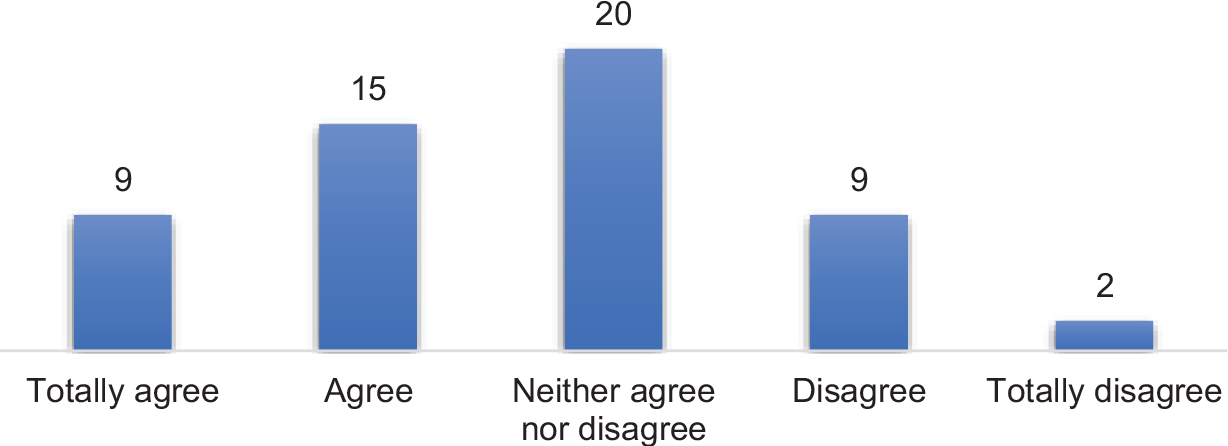
Figure 1:
Statement ‘I feel that night work influences my health’
Source: Author, 2023
According to the question ‘if the employee feels that night work influences their safety in carrying out their duties,’ 40% agreed, 29% neither agreed nor disagreed, 15% disagreed, 9% totally agreed and 7% totally disagreed.
When asked if they felt that night work influenced their personal and family life, 31% of respondents totally agreed, 29% agreed, 27% neither agreed nor disagreed, 7% totally disagreed and 6% disagreed.
In regards to those who do shift work, employees were asked if they feel that this type of work influences their health (Figure 2). 36% agreed, 26% neither agreed nor disagreed, 16% totally agreed, 13 per cent totally disagreed and 9% disagreed.
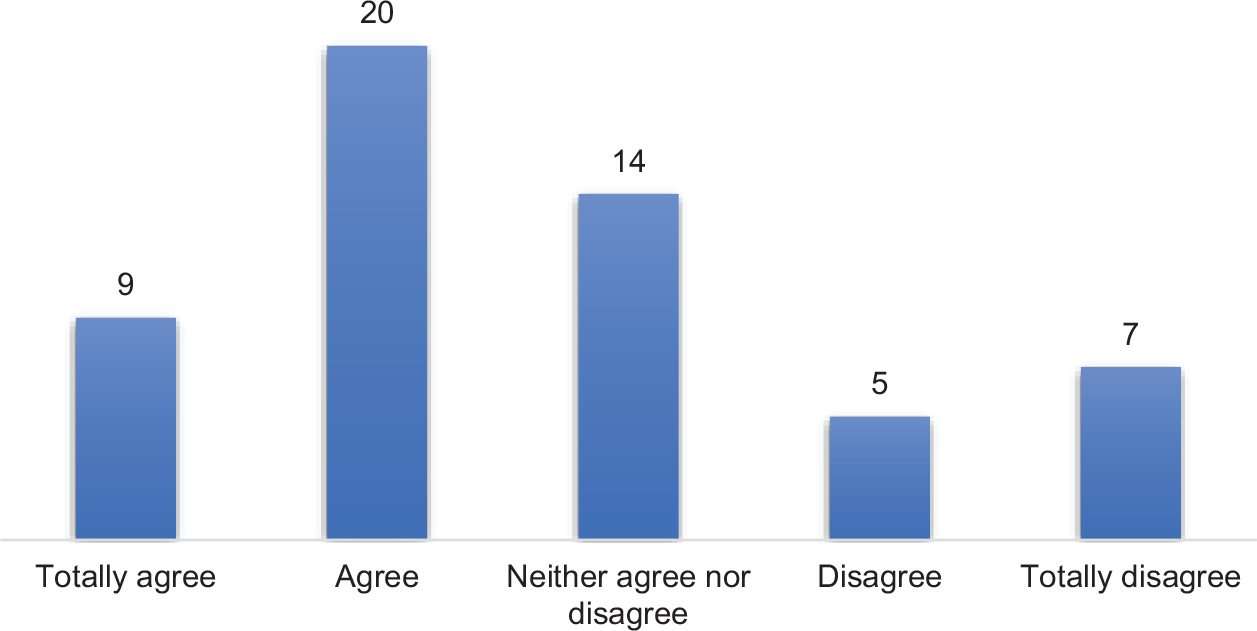
Figure 2:
Statement “I feel that shift work influences my health”
Source: Author, 2023
When asked if they felt that shift work influences their safety in carrying out their duties, 33% of employees agreed, 11% totally agreed, 11% neither agreed nor disagreed, 18% disagreed and 5% totally disagreed, as shown in Figure 3.
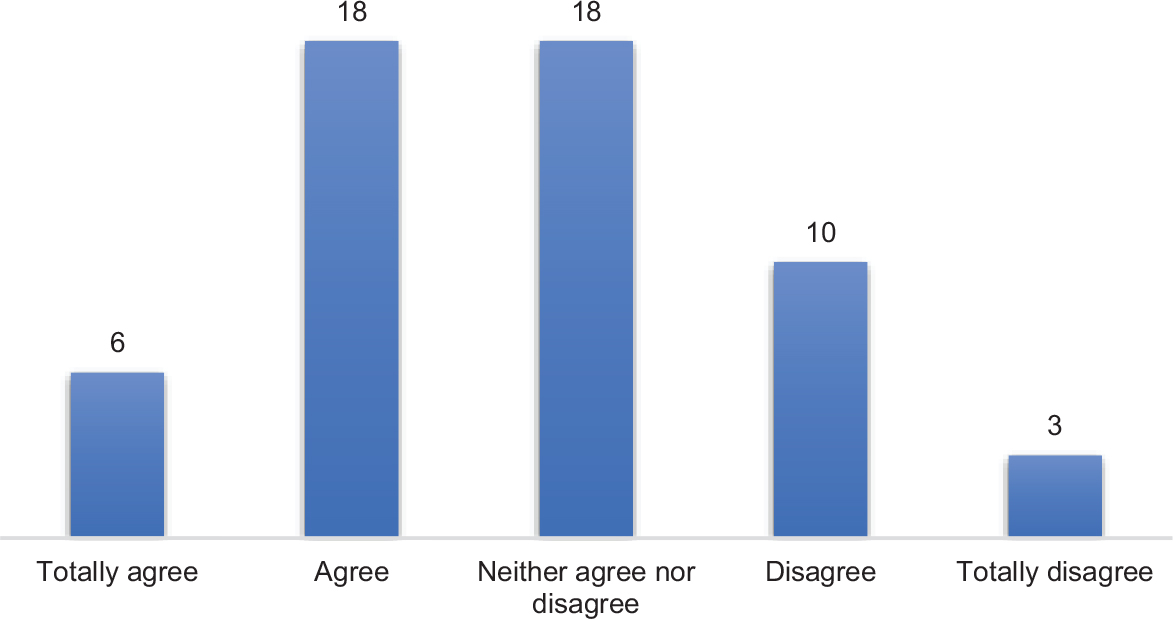
Figure 3:
Statement ‘I feel that shift work influences my safety in carrying out my duties’
Source: Author, 2023
When asked if they feel that shift work influences their personal and family life, 29% totally agreed, 29% neither agreed nor disagreed, 27% agreed, 11% totally disagreed and 6% disagreed.
Figure 4 shows that when asked if they take or have ever taken medication to regulate sleep, 62% of respondents said they never take it, 20% said sometimes, 11% said rarely, 5% said often and 2% said regularly.
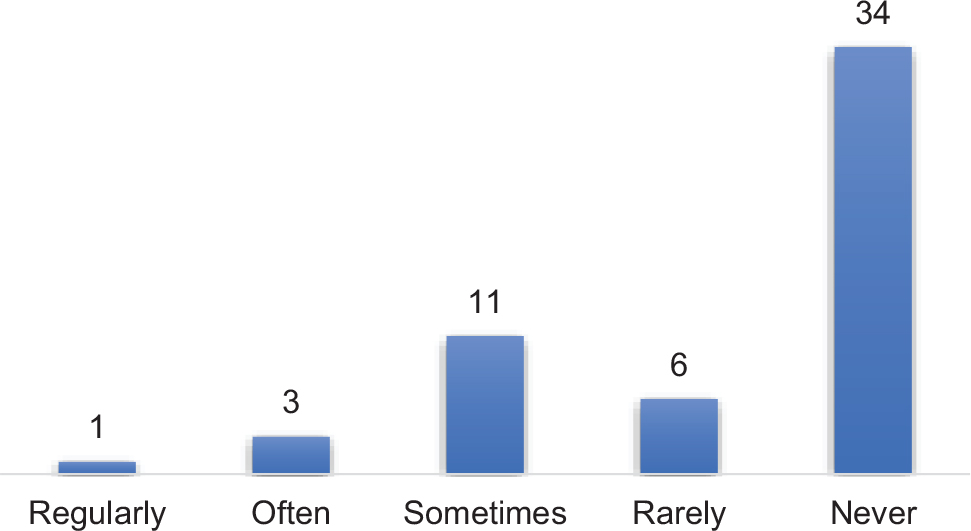
Figure 4:
Taking medication to regulate sleep
Source: Author, 2023
Night and shift work is essential to the operation of a hotel, especially in four- and five-star hotels, as they work around the clock every day of the year.
In both hotels, we found that half of the employees perform shift work or night shifts, or both shift work and night shifts Of that half, approximately 40% do shift work, roughly 6% do shift work and night work and the only 4% of employees do exclusively night shifts.
Figure 5 shows the relationship between the number of hours slept per day and the need to take sleep medication. We can see that the more hours of sleep an employee gets, the less likely they are to take some kind of sleep medication. It should be noted that most workers do not take any medication to regulate their sleep.
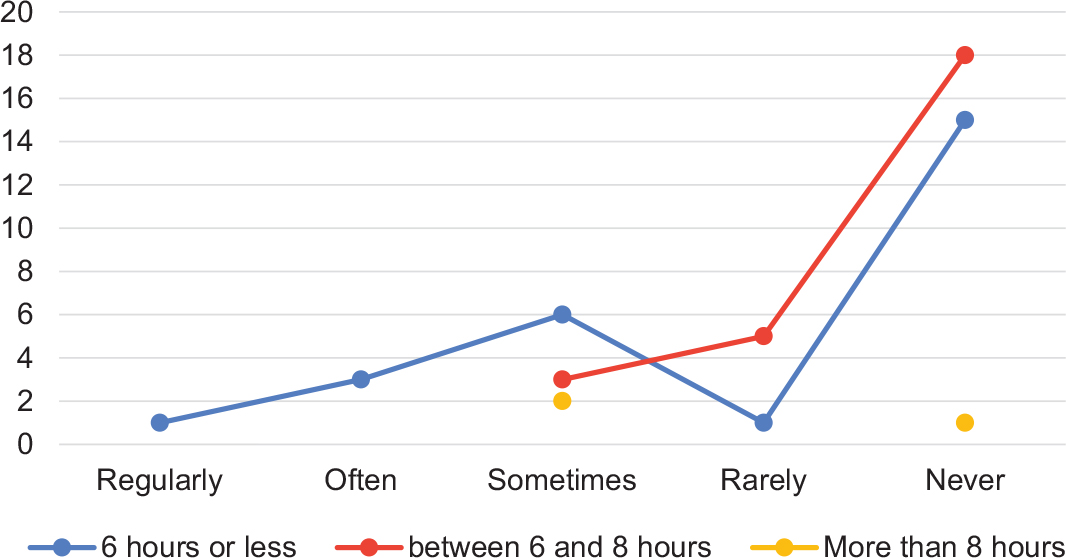
Figure 5:
Relationship between taking medication and the amount of sleep
Source: Author, 2023
Those who work shifts are divided in their opinion regarding good quality sleep, Night shift workers are equally divided between those who agreed and those who neither agreed nor disagreed. Among those who work shifts and do night work, although some agreed, the majority disagreed with their good quality of sleep.
It can therefore be seen that those who only work night shifts agreed more with their good quality of sleep than those who work shifts and those who work both shifts and nights.
The fact that employees who work shifts and work night shifts disagreed more with their good quality of sleep, as opposed to employees who only work night shifts, could be related to the abrupt change in their regular rest schedule.
Figure 6 shows the correlation between the influence of night work on health, medication use to regulate sleep and the need to miss work because of feeling tired. According to the answers obtained in the questionnaire, for night shift workers, there is a moderate correlation, with a correlation coefficient of 0.5 for taking medication to regulate sleep and the need to miss work because of feeling tired.
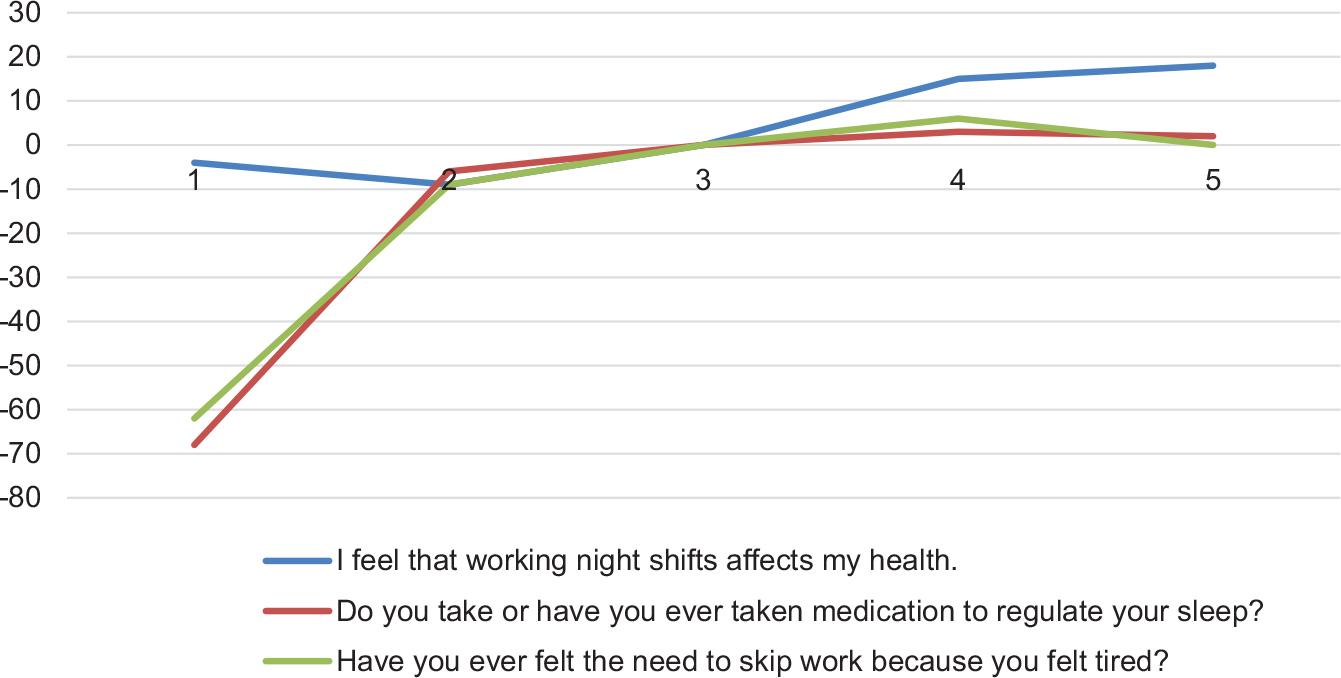
Figure 6:
Correlation between the influence of night work on health, taking medication and absences due to tiredness
Source: Author, 2023
This study shows that the correlation between the influence of night work and shift work on workers’ health, medication use and the need to miss work due to fatigue is higher in shift work than in night work. Both shift workers and night workers feel that this type of schedule affects their health, confirming that there are implications for the health of hospitality workers who work night shifts and shift work.
Figure 7 shows the correlation between the influence of shift work on health and taking medication to regulate sleep and the need to miss work because of feeling tired.
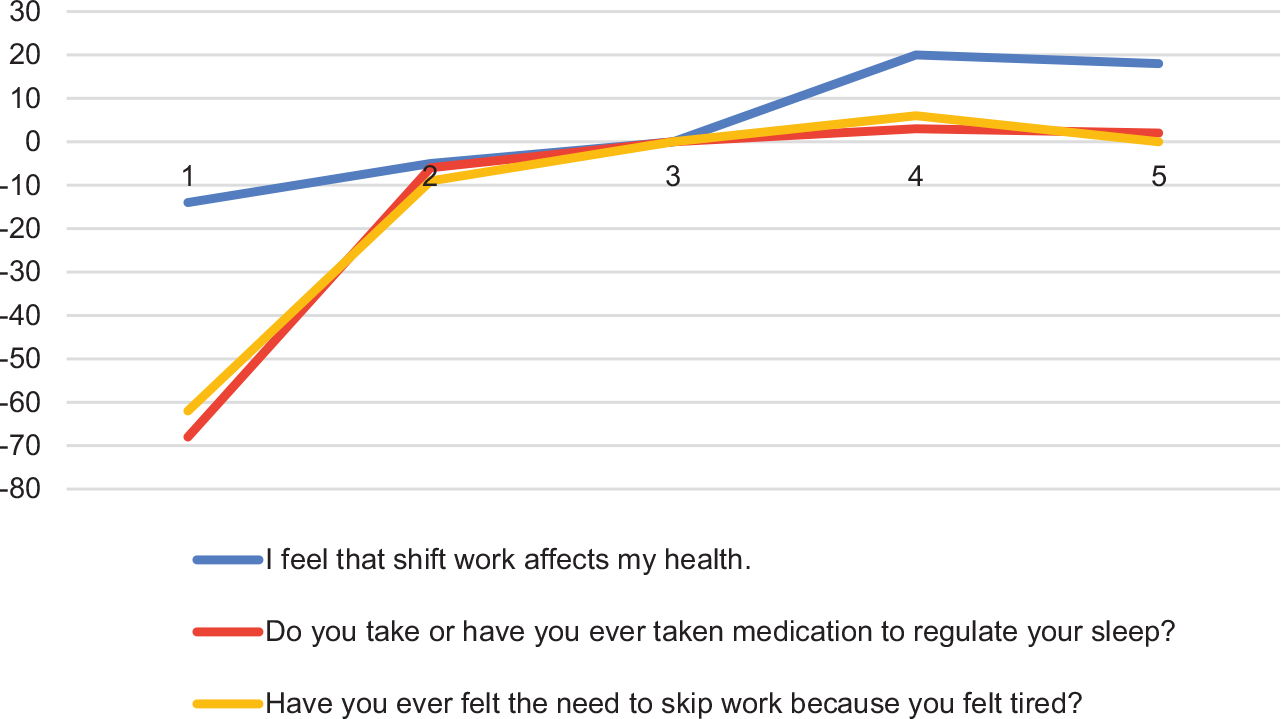
Figure 7:
Correlation between the influence of shift work on health, taking medication and absences due to tiredness
Source: Author, 2023
We can see that shift work does have an influence on the health of shift workers, which leads to a considerable increase in taking medication and the need to miss work because they feel tired.
The correlation between workers’ health and taking medication and the need to miss work due to feeling tired is higher for shift workers compared to night shift workers.
There is a need for caution with night workers, who face the biological and psychosocial damage associated with work processes. Efficient health improvement strategies are required for these individuals, considering chronobiological criteria in interventions, with the aim of promoting workers’ health and well-being (Silva-Costa et al., 2021). Although working the night shift can have physical, psychological and social repercussions that affect the quality of life of professionals, it has a greater financial advantage for many workers (Cheres et al., 2012; Remédios, 2023).
Figure 8 shows the correlation between the influence of night work on feeling safe while performing duties, taking medication to regulate sleep and the need to miss work due to feeling tired.
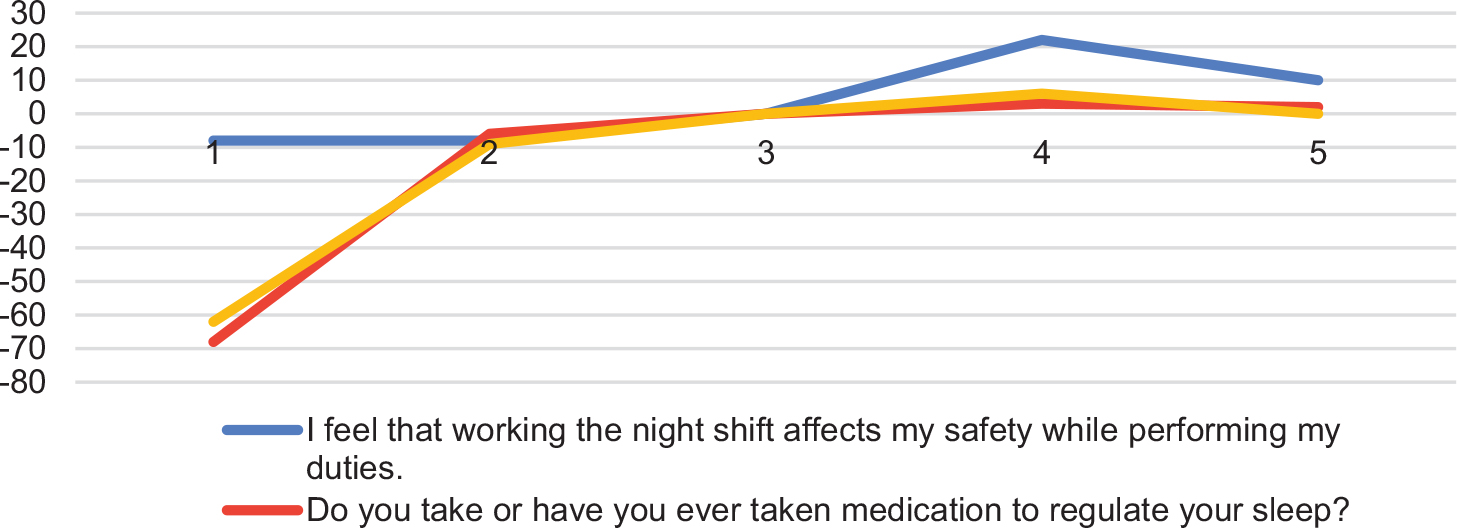
Figure 8:
Correlation between the influence of night work on safety, taking medication and absences due to tiredness
Source: Author, 2023
According to the responses, in the case of the night shift, there is a moderate correlation, with a correlation coefficient of 0.6, regarding the influence of safety on the performance of night workers’ duties, taking medication to regulate sleep and the need to miss work because they feel tired.
In this way, we can confirm that night work does have an influence on the feeling of safety of night shift workers, which leads to an increase in taking medication and the need to miss work because they feel tired.
Figure 9 shows the correlation between the influence of shift work on safety in the performance of duties, taking medication to regulate sleep and the need to miss work because of tiredness.
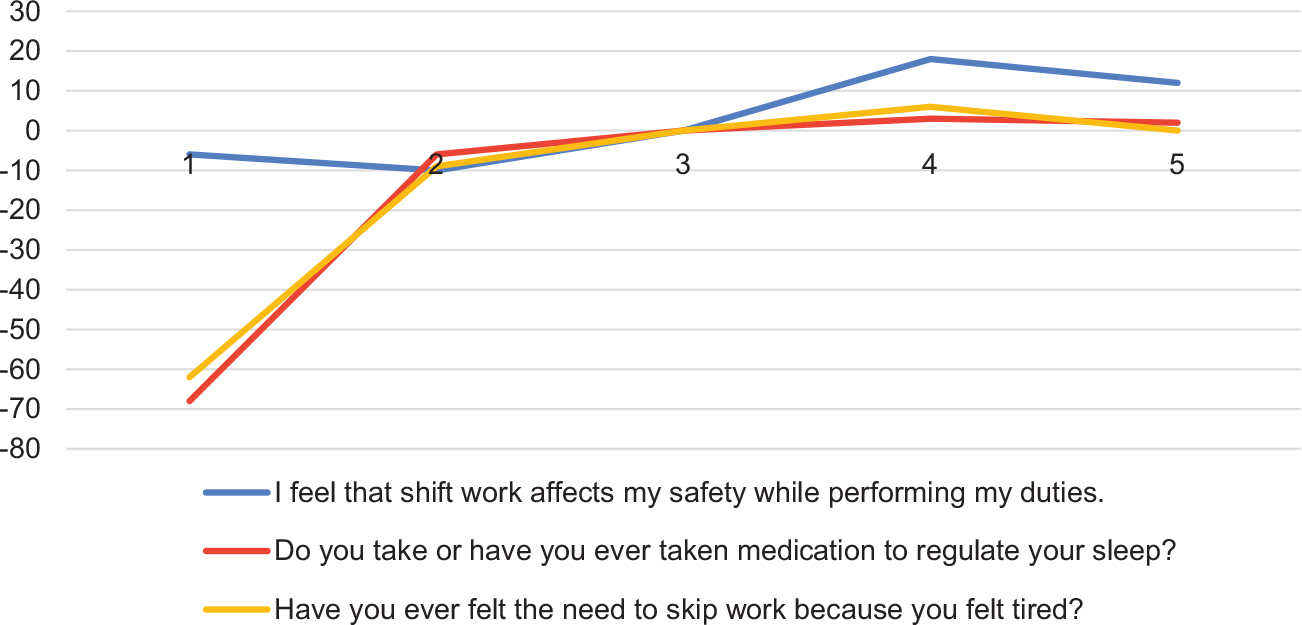
Figure 9:
Correlation between the influence of shift work on safety, taking medication and absences due to tiredness
Source: Author, 2023
According to the responses, in the case of shift workers, there is a moderate correlation, with a correlation coefficient of 0.5 for the influence of safety in the performance of shift workers’ duties on taking medication to regulate sleep, and 0.6 for the need to miss work because of feeling tired.
We can therefore say that shift work and night work have an influence on the feelings of safety of shift workers, leading to an increase in taking medication and the need to miss work due to feeling tired.
The correlation between worker safety in the performance of their duties and taking medication and the need to miss work due to feeling tired is equivalent in shift work and night work.
To summarise, shift and night workers don’t like working shifts and don’t have the opportunity to choose the shift that suits them best. They also disagree with the ability to achieve good quality sleep and don’t fulfil the mandatory rest hours between shifts. Both shift workers and night workers feel that this type of schedule influences their health, safety in carrying out their duties, productivity, personal life and family life.
The correlation between workers’ health and taking medication to regulate sleep and the need to miss work because they feel tired is higher for shift workers than for night shift workers.
The correlation between feelings of safety for shift workers and night shift workers and taking medication and the need to miss work because of tiredness is similar.
5. Conclusions
This study on night and shift work has allowed us to address a situation that is increasingly present today. It is therefore imperative to find solutions that minimise the alteration of circadian rhythms and health, as well as the repercussions on the family and social life of individuals who work this type of regime (Freire, 2018).
The exploratory study presented in this paper is representative of the implications of shift work and night work on the health and safety of workers, thus meeting the themes mentioned throughout the development of the study. To validate Hypothesis One- ‘There are health implications for hotel workers who work night shifts and shift work’, it can be concluded through the data that, in general, the damage caused by night work is very unfavourable for workers’ health (Cheres et al., 2012; Remédios, 2023).
In general terms, according to Azambuja et al. (2019), several negative health consequences are reported for night workers, such as a greater tendency towards cardiovascular disease, cancer, stress, nausea, increased blood pressure, failure of cardiorespiratory capacity, increased abdominal fat and obesity. Specialists should be alerted to changes in sleep, as these changes lead to losses not only for companies, but above all for their workers (Benites et al., 2013; Remédios, 2023). Both shift workers and night workers feel that this type of schedule influences their health, confirming that there are implications for the health of hotel workers who work night shifts and shift work.
Upon investigating Hypothesis Two, ‘There are implications for the safety of hotel workers who work night shifts and shift work’, it was possible to see the direct relationship between shift work and night work and levels of tiredness, thus leading to the need to miss work because employees feel tired or because they don’t always take their rest breaks between shifts. The collected data illustrated the negative impact that shift work and night work have on the health and safety of hotel workers, in line with the existing literature referenced throughout this study.
When assigning shifts, it would be advisable to choose, where possible, the times that are most preferred by workers, bearing in mind that some people prefer to work at different times.
There are several limitations in this study. The first one is that it only covered two hotel units, so it was not probabilistic and consequently not representative of the regional and/or national reality. Within the target audience, 50% of respondents do not work shifts, representing 56 employees. Regarding shift workers or night workers, we can see that 7 employees work shifts and night shifts, representing 6% of respondents. There were 44 respondents working shift work, representing 40%, and 4 respondents exclusively working night shifts, representing 4%.
Another limitation concerns the fact that the health implications are the result of the workers’ own perceptions of their general physical condition and are not based on medical tests, which are not included in this study. There was also some resistance on the part of some people to answering the questionnaire, sometimes for fear of exposing themselves in some way through their answers, even when following data protection rules. It can also be seen that, within the target audience, there is not much interest in scientific studies now, as it is not yet very common in this sector, which opens the door to more studies in the future to develop different investigations in the hotel industry.
Notes
[3] Conflicts of interest Conflicts of Interest
The authors declare no conflict of interest.