
1. Introduction
Due to its abundance of small enterprises and the low obstacles to entry, the tourism industry is a fertile ground for entrepreneurship, and this presents much opportunity for women to launch their own businesses (Figueroa-Domecq et al., 2020). Women’s entrepreneurship plays a significant role in the economy — particularly in rural regions, where it creates income and employment, and both micro and bigger businesses support the sector (Serinikli, 2019; Untari & Suharto, 2021). While large investments in nature-based and rural tourism force men to leave their residences to find a suitable job, women benefit from these significant investments (Aghdasi et al., 2022).
According to a global report published by the World Tourism Organization based on research involving 18 countries from four regions — Africa, Asia and the Pacific, Latin America and the Caribbean, and Europe — women’s employment and women’s entrepreneurship in tourism are among the UN’s Sustainable Development Goals, which have an emphasis on gender equality, women’s education and empowerment (UNWTO, 2024). Women’s entrepreneurship, which is often the sole source of household income in countries such as Uganda, Kenya and Morocco, contributes significantly to socio-economic development by reducing local poverty and inequality (Filimonau et al., 2024). Similarly, women’s entrepreneurship is seen as one of the primary drivers of economic development in nations like Iran, India, as well as various countries in the Middle East (Paramashivaiah, 2018).
Women also play a stronger role than men in terms of sustainability in their entrepreneurial activities. They also have positive effects on social welfare, family and community health, carbon emissions, and greenhouse gas reduction (Figueroa-Domecq et al., 2022). McGehee et al. (2007) investigated the driving forces behind agricultural tourism activities in the state of Virginia, revealing that women prioritise cost-cutting while males prioritise increasing income. Alarcón and Cole (2019) argue that while attaining gender equality is seen as a crucial need for the achievement of sustainable development goals in the travel and tourism industry, theory and practice do not always align. In light of this, sub-titles of the United Nations Agenda 2030 for Sustainable Development include the development of women’s knowledge and skills; ensuring the full and equal participation of women as a decisive factor in achieving sustainable development; the elimination of gender discrimination; and policies, and practices and the adoption of measures to promote gender equality in society and to empower women (UN Women, 2018; United Nations, 2015).
Although there is substantial research on women’s entrepreneurship in the tourism sector (Djrebi et al., 2022; Kumari & Shankar, 2020; Mkini Lugalla et al., 2024; Mwesigwa & Mubangizi, 2016; Shantika et al., 2023; Triantoro et al., 2023), further studies are thought to be necessary to identify the barriers that prevent or delay women from becoming entrepreneurs, and to suggest ways to overcome them. For this reason, the present study, which has been chosen as the field of study for Bilecik Kurşunlu Village, aims to reveal what entrepreneurial activities women are engaged in as part of their ecotourism activities and what problems they may face.
Ecotourism is one of the alternative tourism models that have emerged globally in parallel with the understanding of sustainable tourism. In Türkiye, which is rich in natural resources, ecotourism has begun to be used as a tool to spread tourism across all four seasons. The basis of studies on ecotourism conducted in Türkiye is based on the Forest Law No. 6831, which was enacted in 1956. The concept of ecotourism officially appeared for the first time in Türkiye “Eighth Five-Year Development Plan” (2001-2005) (Tutcu, 2021). One of the provinces in Türkiye that stands out in terms of ecotourism potential is Bilecik, located in the southeastern part of the Marmara region (Vatan, 2018).
Bilecik, which was part of the Bithynia area in antiquity, is regarded as the Ottoman Empire’s birthplace, and also played a significant role in the establishment of the Republic of Türkiye. Many historical structures, such as mosques, tombs, inns, and baths, date back to the Ottoman period. In addition to its tangible cultural heritage, Bilecik’s wetlands, trekking and bicycle-friendly areas, and its variety of camping spots, including Pelitözü Pond, Bozca Armut Lake Camping Area, Harmankaya Canyon Camping Area, and Gölpazarı Kurşunlu Village, make it an ideal destination for ecotourism. These characteristics show how suitable Bilecik is for ecotourism (Göker ‥ Hergül, 2021). The local culinary culture, which is maintained with food from ancestral seeds by the women entrepreneurs of Kurşunlu Village, contributes to the growth of ecotourism in the area. Traditional meals made with natural and organic materials cultivated in Bilecik are also promoted as touristic goods (Göker et al., 2020). This study aims to address the following research questions;
Which tourism products, services and activities are marketed within the scope of ecotourism in Kurşunlu Village, Bilecik?
What are the motivational factors of women entrepreneurs providing ecotourism services in Kurşunlu Village, Bilecik?
What are the challenges faced by women entrepreneurs providing ecotourism services in Kurşunlu Village, Bilecik?
The research holds unique value, as it focuses on the challenges encountered and solutions proposed by the first woman to open her village to ecotourism in Türkiye.
2. Literature review
2.1. Female entrepreneurship in ecotourism
The process of creating, starting, and managing a new company — which usually starts out as a small business — is known as entrepreneurship (Fernandez & Calderon, 2018). The abilities, inventiveness, and market awareness required to spot possibilities, provide value, and support economic growth by creating job opportunities are all included in the definition of this term (Diandra & Azmy, 2020). Entrepreneurship helps emerging nations combat poverty (Bastian et al., 2019). Entrepreneurship also allows women, both as individuals and as members of civil society, to play a key role in supporting the achievement of sustainable development in communities (McCall & Mearns, 2021). Women’s entrepreneurship is vital to rural development, since it creates jobs, boosts economic growth, and lowers poverty. Their commercial endeavours, especially in the fields of agriculture and cattle, improve social and environmental sustainability and generally raise the standard of living in rural areas (Montalvo et al., 2024; Soltana & Gherabi, 2024).
In the tourism sector, entrepreneurship is essential to the economic growth of nations and areas. Furthermore, many nations are supporting this industry in less-developed areas, as it is increasingly perceived as an economic development plan for the poorest and most vulnerable communities (Andrade-Valbuena et al., 2022). Women entrepreneurs frequently work in the tourism sector in jobs that might be seen as an extension of their traditional household duties; for instance, they are frequently active in the accommodation sector, or in agritourism and rural tourism (Costa et al., 2012). While the tourism industry offers significant opportunities for women to create jobs on their own terms, women are most often employed in jobs that require less knowledge and skills and at lower wages (Kimbu & Ngoasong, 2016; Movono & Dahles, 2017).
The motivating factors that drive women into entrepreneurship in the tourism industry are divided into internal and external motivational factors. Self-realization is at the forefront of the motivation that drives women into entrepreneurship. On the other hand, women want to be independent, accepted by society and live a better quality of life. Women who start their businesses through entrepreneurship also contribute to the family economy (Konaklıoğlu & Kaleözü, 2023; Yıldırım et al., 2020). Wilson-Youlden and Bosworth (2019) found that the desire to be independent, to express one’s creativity, to earn money, and to contribute to the sustainability of farms were the main motivators for women working on family farms in the context of farm tourism in the North East region of England.
Empowerment, which has political, social, economic and psychological dimensions and is interlinked, is used as an important catalyst for women’s entrepreneurship. Economic empowerment refers to economic independence, financial support for households, and the development of individual talents (Abou-shouk et al., 2021; Aghazamani et al., 2020). Social empowerment, on the other hand, includes proposals for solutions to social alignment and social problems, while political empowerment entails involvement in decision-making in tourism management. Finally, psychological empowerement can be defined as a sense of self-esteem, selfrespect, and independence (McCall & Mearns, 2021; Aghazamani & Hunt, 2017; Boley et al., 2016; Ramos & Prideaux, 2014).
Women entrepreneurs might go into niche markets within the tourist business, such as eco-tourism, cultural tourism, or community-based tourism. In a country rich in traditional arts and crafts, women might run businesses that entail making and selling local items to tourists. Women also may have a beneficial influence in the hospitality industry as they open restaurants, guesthouses, or cultural events (Akter et al., 2024; Vila-Vázquez et al., 2023).
Ecotourism, which protects the environment and natural areas and increases the well-being of local people, ensures and promotes the implementation of sustainable development goals (Das, 2011; Imikan et al., 2023). In countries where women interact with the natural environment more than men, women’s participation in ecotourism activities is of great importance for the sustainability of natural resources. For instance, in rural areas of Asia, Africa, and the Pacific, women and girls are responsible for collecting water, fodder, and firewood. They also engage in income-generating activities, such as the sale of forest products and handicrafts made from reeds and grasses (Scheyvens, 2000). Ecotourism, especially in rural areas, helps these women, who have extensive knowledge of traditional food culture, agriculture, animal husbandry and hospitality, to transform these traditional activities into income-generating initiatives.
Ecotourism provides self-development and employment opportunities for women in rural areas (Morgan & Winkler, 2019; Saikia & Barua, 2024). Women play an active role by running guesthouses, manufacturing handicrafts, selling gifts, and other activities (Singhania et al., 2021). Tourists, meanwhile, get authentic travel experiences due to the hospitality provided to them.
Irandu and Shah (2014) in their study in Kenya, argued that involving women in ecotourism activities will accelerate social development by encouraging women’s empowerment. Panta and Thapa (2018), in a study aimed at highlighting the benefits and challenges women entrepreneurs face in the area of accommodation management in the Bardia National Park area, one of Nepal’s major eco-tourism areas, found that despite increased personal skills, self-confidence, and income among women, the patriarchal social structure and gender perception in rural areas pushed women to remain confined to subordinate roles, limiting their decision-making power and access to business resources. Djrebi et al. (2022) states that Algerian women entrepreneurs act as a driving force for the development of the tourism industry in the region; they tend to focus more on the service sector, handicrafts, and jobs that align with their personal characteristics. Imikan et al. (2023) found that women in rural Akwa Ibom State have a direct influence on the growth of ecotourism by promoting the preservation of natural resources; enhancing food security via intensive agriculture; supporting biodiversity; and opening up access to the local tourism industry and resource utilization. Women may make more money and have a higher quality of life as a result. Saikia and Barua (2024) found women’s organizations in Assam, India that support sustainable development and encourage entrepreneurship through ecotourism projects.
2.2. Problems female entrepreneurs encounter in ecotourism
Research suggests that women entrepreneurs face greater challenges than men for reasons such as educational level, the role of motherhood and wifehood, networking constraints, risk avoidance, and social norms and stereotypes (Kwapisz & Hechavarría, 2018; Zhang et al., 2020). The barriers to women’s entrepreneurship in tourism are divided into three basic categories; lack of adequate capital; having less say in financial management than men; and the social perception that women must primarily fulfil their roles of spouse and motherhood (Stroh & Reilly, 2012; Alonso-Almeida, 2013; Abouzahr et al., 2018). Women’s entrepreneurial activities in the tourism industry are limited by societal norms. Establishing a business can be challenging for women, who often receive societal backlash due to societal expectations (Akter et al., 2024; Lee et al., 2023; Tahir et al., 2023). Women are confronted with violence and paternalistic attitudes in their entrepreneurial endeavours, and this poses a significant barrier to achieving success (Pécot et al., 2024). Tovmasyan (2022) emphasizes that women entrepreneurs carrying out tourism activities in Armenia encountered problems in starting up a business; developing a business; and keeping up with innovation and marketing. They therefore seek to improve their skills such as communication, marketing, and analytical decision-making.
Ghouse et al. (2021) noted that family, organizational and geographical problems were among the most significant barriers faced by female entrepreneurs in Oman. Lack of education, gender bias, inexperience and capital insufficiency are also high-priority issues faced by women in the entrepreneurial process (Ghaderi et al., 2023; Karakaş & Gökmen; 2016; Serinikli, 2019).
Freund et al. (2023), in a study from Barcelona, confirmed that barriers to entrepreneurship include glass ceiling syndrome; gender stereotypes in society; women’s difficulties surviving in a patriarchal culture; and their various complicated responsibilities. Costa et al. (2012), in a survey of tourism graduates in Portugal, observed that the motherhood role, especially for women with children, is seen as preferrable to that of the businesswoman, and that this negatively affects women’s willingness to start a business. Ntanjana and Mangwane (2019) found that women entrepreneurs in South Africa face many challenges, including lower status and pay. Singhania et al. (2021) specify the problems faced by women entrepreneurs in the ecotourism industry in India as follows: In the division of labour, women are assigned lower-status tasks such as cleaning and cooking; they have to fulfil the roles of housewives even if they are entrepreneurs, that is, they have dual careers; they cannot establish a business network and sell their products to intermediaries at cheaper prices due to their lack of marketing skills; they are employed in lower-paid jobs than men due to their low level of education; and they cannot provide sufficient financial support for entrepreneurship. Ali et al. (2024), in a study conducted among women entrepreneurs engaged in mountain tourism in Pakistan’s Hunza Valley, emphasize the need to establish urgent policies that promote gender equality and social innovation in order to increase women’s participation in tourism in the region. Xaba and Adanlawo (2024) determined that ecotourism in South Africa (four local municipalities of Hlabisa, Jozini, Mtubatuba, and Umhlabuyalingana) has the potential to provide women with meaningful work and economic possibilities, particularly if ecotourism services include gender mainstreaming initiatives. Women who participated in formal venture-creation activities were more likely to receive assistance and support from established ecotourism enterprises and local municipalities, while women who participated in informal ecotourism activities were found to have a significantly lower likelihood of accessing these support services, most often due to a lack of information; limited knowledge and skills; and / or challenges in accessing business opportunities. Similarly, Hulfa et al. (2022) found that the primary challenges faced by the women in the Gili Balu region are related to familial responsibilities, cultural and religious norms, limited capital, lack of knowledge, and inadequate government support. Mkenda (2023) also found that women in Tanzania and Zanzibar face difficulties in accessing the necessary capital when starting and operating tourism-related micro, small, and medium-sized enterprises (MSMEs), and that they often lack adequate business management skills.
3. Methodology
In this study, the case study method was adopted. Case studies are widely employed in the social sciences, as they allow an in-depth examination of a phenomenon within its specific context (Yin, 1993). According to Yin’s classification, this research is designed as a descriptive case study in terms of its purpose; as a single case study in terms of design; and as an embedded single case study in terms of the unit of analysis. This approach enables a comprehensive investigation of the case within its particular context while also offering a simultaneous analysis of its different economic, social, and cultural dimensions (Yin, 2018).
Accordingly, content analysis was employed within the framework of an embedded single case study design. An embedded single case study design is often used when there are multiple units of analysis within a single case (Yıldırım & Şimşek, 2016). The case selected was Kurşunlu Village in Bilecik Province in Türkiye, which constitutes a unique example in the rural tourism literature as the first village in Türkiye to be opened to tourism by a female entrepreneur. Therefore, the study carries particular significance in terms of both gender roles and ecotourism.
Data were collected through a semi-structured face- to-face interview conducted in the village in June 2024. The interview questions were developed as part of a case study protocol that was constructed based on an extensive review of the literature. The protocol outlined the purpose of the research, guiding questions, data collection procedures, and ethical considerations, thereby ensuring systematicity and consistency throughout the research process. The data for this study were obtained solely through a face-to-face interview with Bedriye Berber Engin, without the use of additional data sources such as documents or observations.
The collected data were analysed through content analysis with the support of the qualitative data analysis software ATLAS.ti. The interview transcript was coded, categorised into themes, and examined through codedocument matrices and Sankey diagrams to illustrate relationships among those themes. This rigorous analytical process enhanced the reliability of the findings and ensured transparency in interpretation. Ultimately, this study reveals not only an individual entrepreneurial story, but also the broader dynamics of economic, social, and cultural transformation.
Years ago, Bedriye Berber Engin, a resident of Kurşunlu Village, was inspired by a character in a book she read who earned money by selling goods to tourists visiting her village (see Figure 1). Motivated by this idea, she aimed to establish a similar entrepreneurial endeavour in her own village. As a mother of two, Bedriye Berber Engin began selling her homemade organic products at the village market to help pay for her son’s education. In 2018, she was honoured as part of the Women of the Soil project supported by the Yves Rocher Foundation-Institut de France, winning first place in Türkiye and representing her country at an International Referendum in Paris.
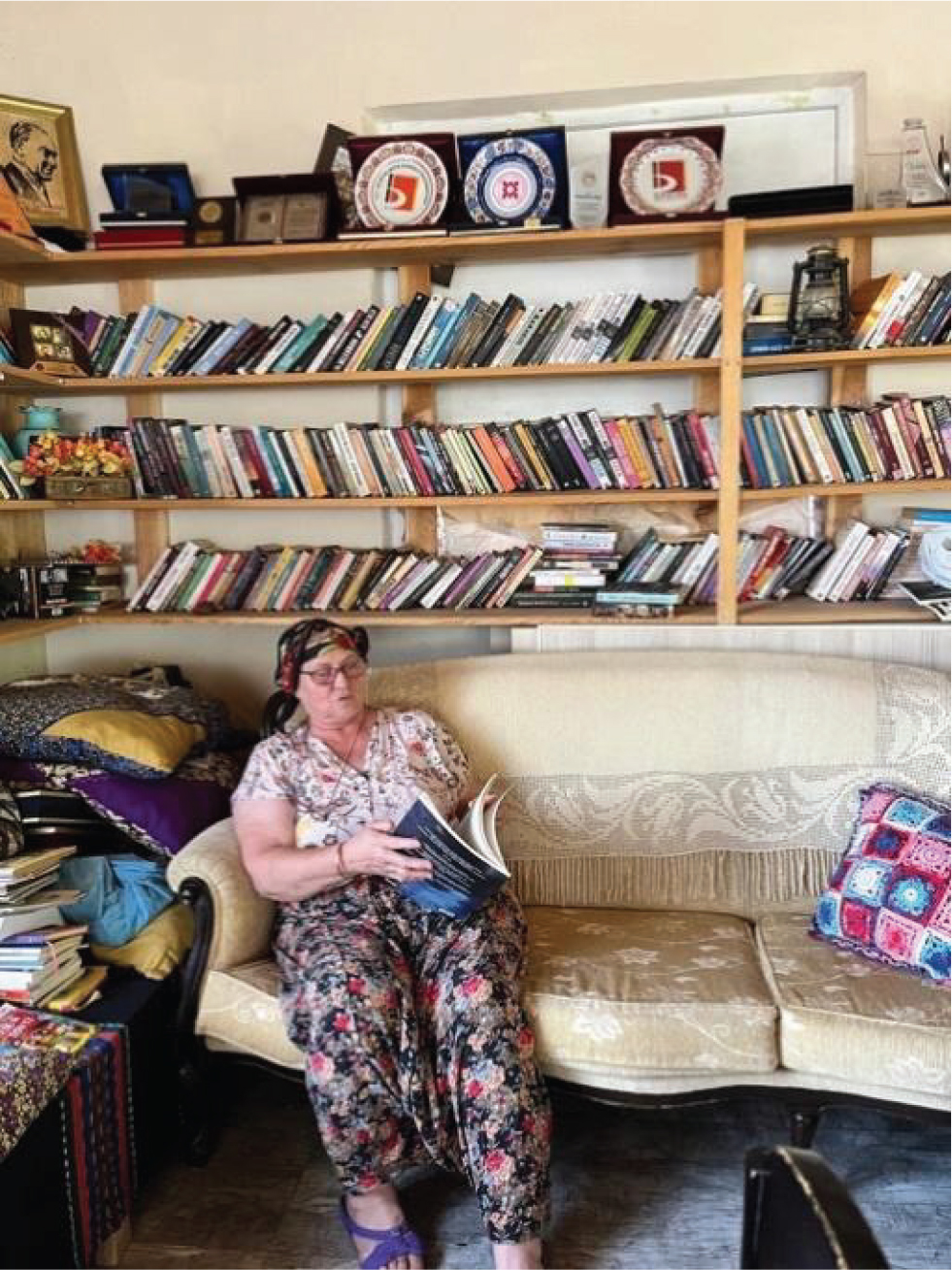
Figure 1
Woman Entrepreneur Bedriye Berber Engin
Tourists from various parts of Türkiye, including Istanbul, Izmir, Ankara, and Eskişehir, visit Kurşunlu Village to participate in ecotourism activities. Over time, travel agencies have also started bringing foreign tourists to the village. International visitors from countries such as Japan, England, the United States, the Netherlands, France, Jordan, Senegal, and Zanzibar now come to experience the village’s ecotourism offerings.
Based on the provided information, the study’s focus area has been identified as Kurşunlu Village, located in the Bilecik Province of Türkiye’s Marmara Region. The Gölpazarı district of Bilecik Province is situated at a close distance to the Marmara and Western Black Sea regions, specifically established on the northern side of the Gölpazarı Plain, and is 43 km away from the Bilecik provincial centre (Başkaya, 2011). Kurşunlu Village, within the Gölpazarı district of Bilecik, is a village where the intangible cultural heritage element of the imece culture is still being preserved and utilised to create value in tourism. Through tourism activities conducted using the traditional imece method, the social roles of women in the village have changed, with women beginning to contribute to their families’ budget (Kozak et al., 2019). The women of Kurşunlu Village continue to host visitors in collaboration with Bedriye Berber Engin, who received the “Difference Maker” title in 2019 from the Sabancı Foundation for her eco-tourism activities in the village (Pektaş & Kurgun, 2024).
On 13 June 2024, a face-to-face interview was conducted with Bedriye Berber Engin in Kurşunlu Village. The semi-structured interview form included open-ended questions aimed at gathering information about the ecotourism activities carried out in Kurşunlu Village; Bedriye Berber Engin’s entrepreneurial process; and the challenges and solutions encountered during this process. With the participant’s consent, the interview was recorded. The recording has a length of 84 minutes and 58 seconds, and is stored on the researchers’ computers.
In content analysis, a specific material is examined and interpreted in detail and systematically to identify patterns, themes, biases, and meanings. The content to be analysed is designed for “coding” as data related to the research questions (Berg & Lune, 2015). In this context, the interview audio recording was transcribed and converted into a plain-text Word document. The interview text was read repeatedly by the researchers to identify main themes, themes, codes, and sub-codes from the raw data. Accordingly, two main themes emerged, “Ecotourism Activities” and “Entrepreneurship Process”, as illustrated in Figures 2 and 3, with themes, codes, and sub-codes being developed within these two main themes. In the first main theme, “Ecotourism Activities,” there are 4 themes, 23 codes, and 5 sub-codes.
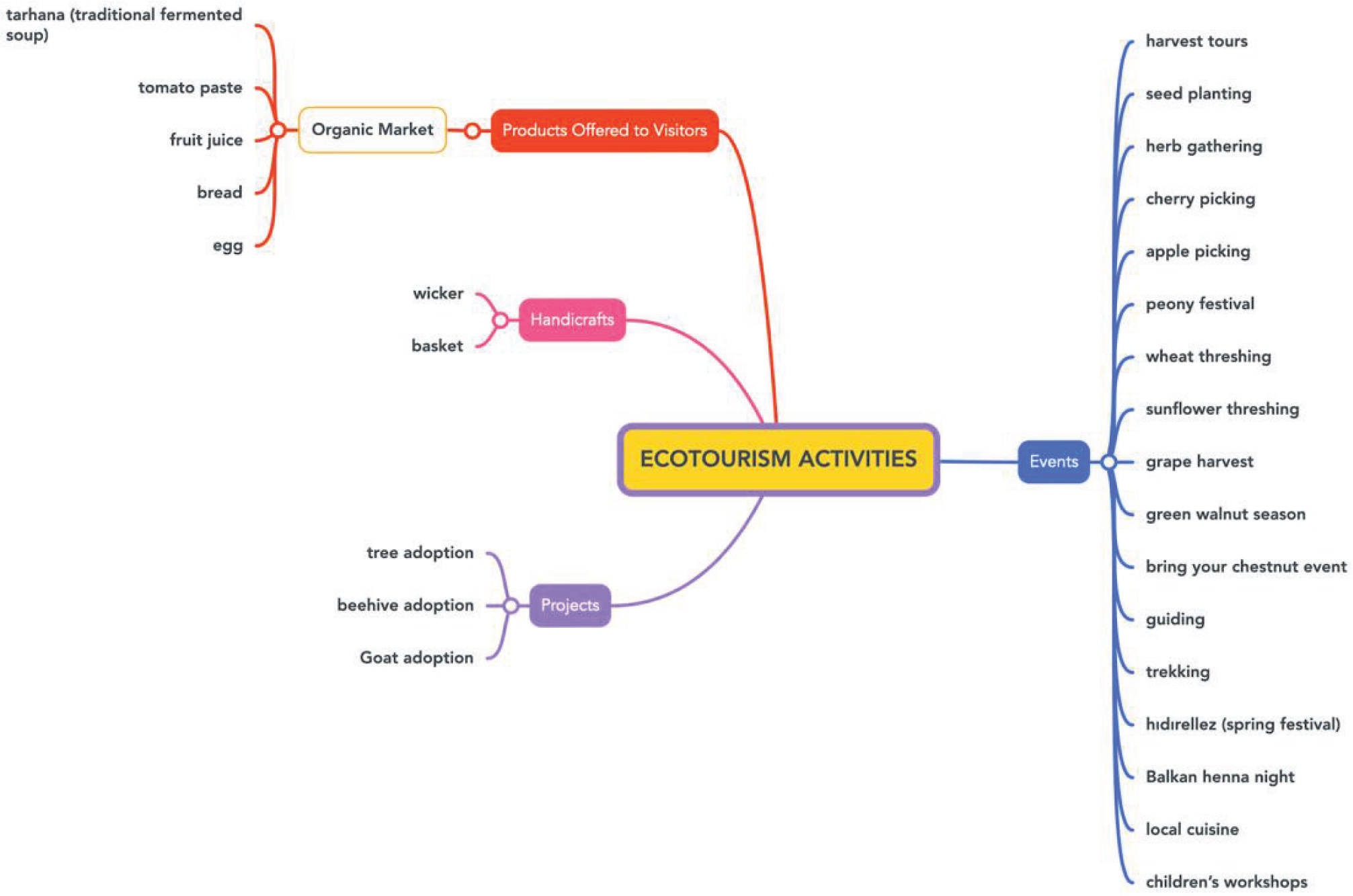
Figure 2
Mind Map of the Ecotourism Activities: Main Theme
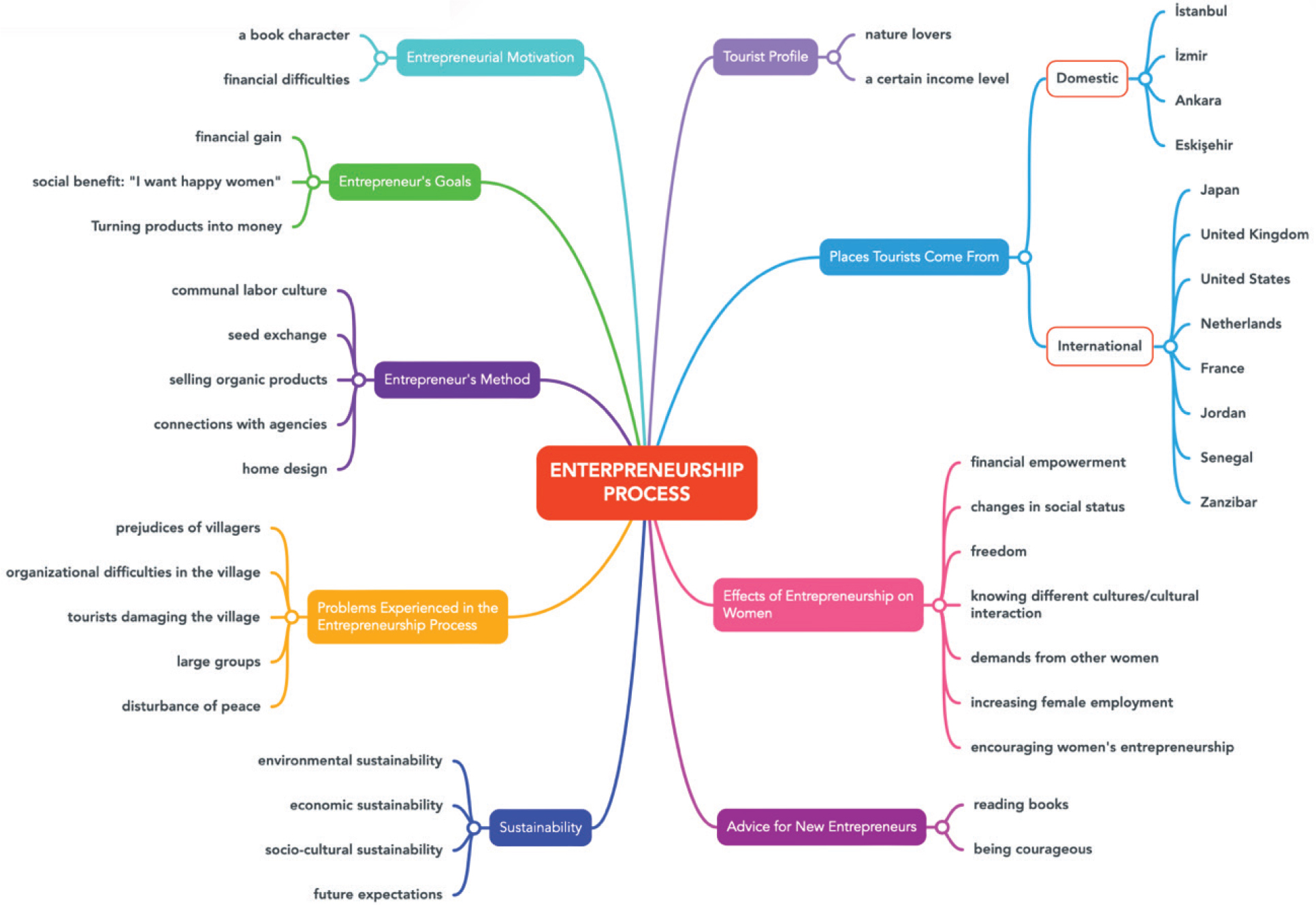
Figure 3
Mind Map of the Entrepreneurship Process Main Theme
The second main theme, “Entrepreneurship Process” (Figure 3), includes seven themes, 32 codes, and 12 subcodes. To collectively present the themes, codes, and subcodes of the two main themes, an online mind-mapping software, “Mindmeister,” was used. This mind map was then utilised in the analysis process, where the raw data was processed according to the themes, codes, and subcodes depicted in the mind map. The computer-assisted qualitative data analysis software, ATLAS.ti, was employed for processing the raw data. In order to ensure the transparency of the analyses, data quotations from the interview text related to the relevant themes, codes or sub-codes were included as needed. In all data excerpts presented in the study, “Participant” is abbreviated as “P.” In this way, through content analysis, all main themes, themes, codes, and sub-codes identified in the interview transcripts were examined, and relationships were determined.
4. Findings
Using ATLAS.ti qualitative data analysis software, firstly, code-document analysis was performed on the texts. As can be seen in Table 1, a total of 89 coded segments were made for two main themes, and most of the data processing was done for the main themes of “Entrepreneurship Process” and “Ecotourism Activities”, and, under these main themes, “Entrepreneur’s Method” and “Events” sub-themes. Table 1 presents the main themes and the frequency of coded segments for each theme numerically. The right-hand column of each row shows how many times sections of the interview transcript were coded for the relevant main theme or subtheme, as well as the percentage of the transcript represented by each theme. Accordingly, a total of 89 code segments were assigned for the two main themes (written in capital letters) and their respective sub-themes. The highest level of data processing was observed for the main themes “Entrepreneurship Process” (67 coded segments; 32.21%) and “Ecotourism Activities” (27 coded segments; 12.98%). Within these main themes, the sub-themes “Entrepreneur’s Method” (20 coded segments) and “Events” (19 coded segments) were the most prominent.
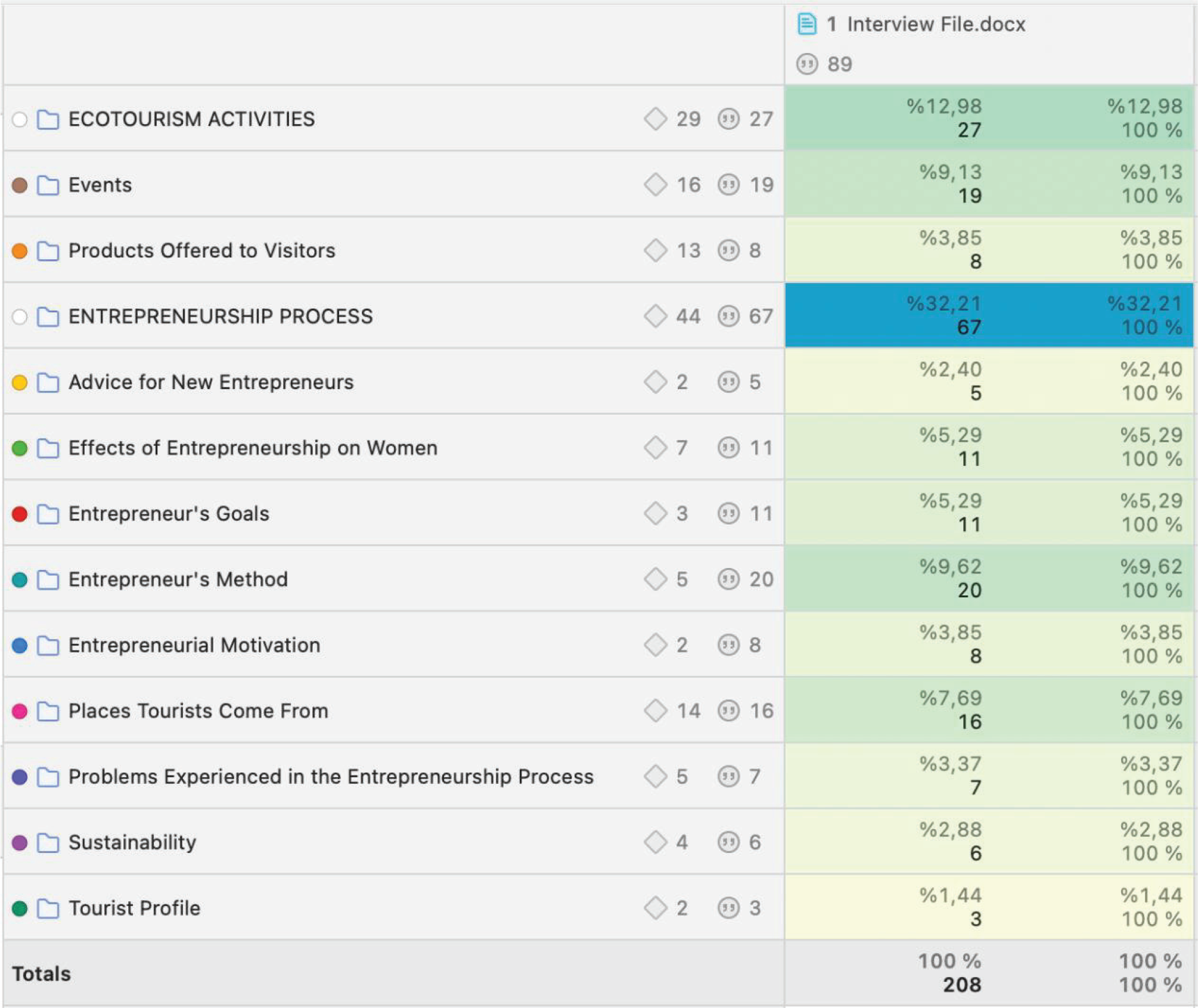
The extensive coding under the “Entrepreneurship Process” theme can be explained by its central role as the primary focus of the study, and by its derivation of a greater number of sub-themes, codes, and sub-codes from the raw data compared to the “Ecotourism Activities” theme. Accordingly, the most frequently coded sub-themes were “Entrepreneur’s Method” and “Events,” indicating that the participant emphasized these aspects most extensively during the interview. Conversely, the least-coded theme was “Tourist Profile” (3 coded segments), which the participant described as follows:
The extensive data processing within the “Entrepreneurship Process” main theme can be explained by the theme’s place as the primary focus of the study, and the greater number of sub-themes, codes, and sub-codes derived from the raw data within this main theme compared to the “Ecotourism Activities” main theme. Accordingly, the most-processed themes under the main themes were “Entrepreneur’s Method” and “Events.” This indicates that the participant discussed these themes the most during the interview. The least processed theme was “Tourist Profile,” which the participant described as follows:
P: “We currently cater to a profile of nature lovers and village enthusiasts. They need to have a certain level of income. I have filtered out other types of tourists by increasing the price, as it was too challenging to accommodate them.”
The numerical values in Figure 4 represent the frequency with which each code was applied in the interview transcript. As seen in Figure 4, the most prominent code under the effects of entrepreneurship on women is “financial empowerment.”
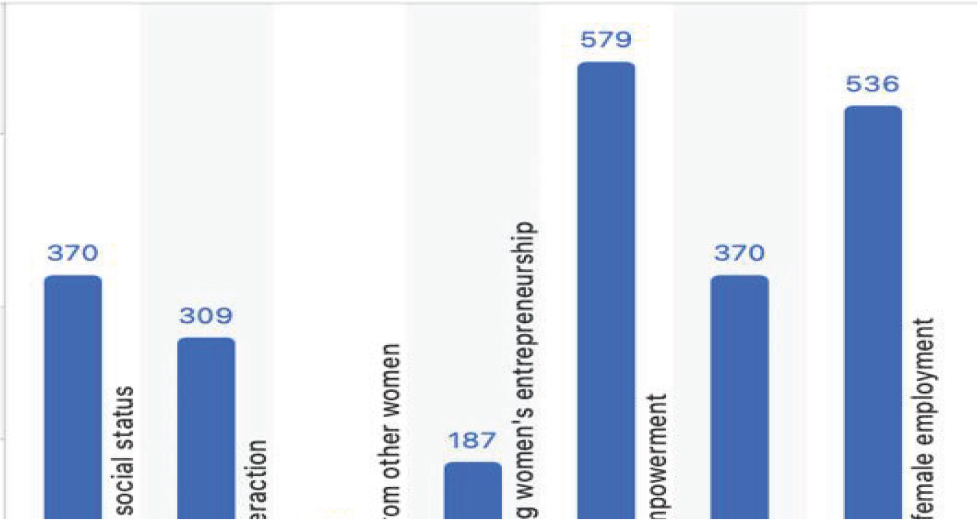
Figure 4
Effects of Entrepreneurship on Women
In the interview, the participant emphasized how entrepreneurship has impacted her life and the lives of the women in her village, and particularly highlighted their financial empowerment. She also put a strong emphasis on increasing female employment, changing women’s social status, and gaining a more liberated life. Relevant excerpts from the participant’s statements regarding these codes are as follows:
P: “I educated my child, supported my husband, and now I go wherever I want. I don’t even ask my husband for permission anymore.”
P: “The greatest intangible benefit that entrepreneurship has brought me is freedom. My position in society has changed as a woman.”
The participant described the positive outcomes of cultural interaction, providing various examples. She emphasized that interacting with people from different countries and cities has educated villagers who initially opposed the start of tourism activities. and played a significant role in breaking their prejudices.
P: “Seeing people from different cultures is a wonderful thing. It’s such a beautiful experience. The women in the village even say that ‘these tourists are educating us.’ They learn and grow through communicating and chatting with them.”
P: “In the beginning, things did not go as I hoped. The then-mukhtar punished anyone who approached me while I was trying to start tourism and did not allow anyone to come near. He was so opposed to it, and I was exhausted from fighting. However, he later became my greatest supporter. Over time, the villagers really enjoyed interacting with the guests. Female tourists would go to the village café, drink tea, and play board games with the men. In our culture, women did not used to go to cafés, so these prejudices were broken, and people got used to it.”
Among the other challenges faced by Bedriye Berber Engin during her entrepreneurial journey were the dissolution of the teams she established; people abandoning her midway; difficulties in organizing events in the village; and a lack of financial support. To overcome these issues, Bedriye initially reduced the number of people around her and continued with a smaller team. Financially, she began to address difficulties by selling her own organic products and gradually expanding her tourism business. She also mentioned ongoing difficulty finding sponsors, and is still working to address deficiencies in order to meet the needs of tourists coming to the village.
In the early days of her business, Bedriye Berber Engin adopted an inclusive approach, catering to all tourist groups. However, she reported that earlier visitors, particularly those from lower socioeconomic backgrounds with less education, would pick flowers, take roots without permission, enter villagers’ gardens without consent, and cause damage. This behaviour led to strong reactions and resentment from the villagers. To address this issue, she gradually increased prices, which shifted the tourist profile towards higher-income nature enthusiasts and environmentally-conscious individuals, effectively resolving the problem.
Over time, Bedriye Berber Engin gained support from the men in the village as her efforts proved successful. She initiated “adoption” projects in the village, such as “tree adoption,” “goat adoption,” and “hive adoption.” These projects involve individuals who “adopt” trees and come to the village at specific times of the year to harvest fruits; those who “adopt” goats receiving natural products made from the goats; and those who adopt beehives being allowed to collect honey from their hives. Through these initiatives, the women in the village are able to achieve financial gain.
Bedriye Berber Engin has particularly emphasised that her main goal in her entrepreneurial efforts is to provide employment for more women. She aims to help more village women earn money by selling their products to tourists and become financially independent. She explained that many village women now request to sell their own products as well. In this way, she indirectly assists these women in earning money.
The values shown in Figure 5 indicate how frequently each code appeared in the interview transcript. The distribution of data for codes within the most extensively processed theme, “Events,” under the main theme of “Ecotourism Activities,” can be seen in Figure 4. Each code represented in the graph corresponds to one of the activities conducted for tourists visiting Kurşunlu Village.
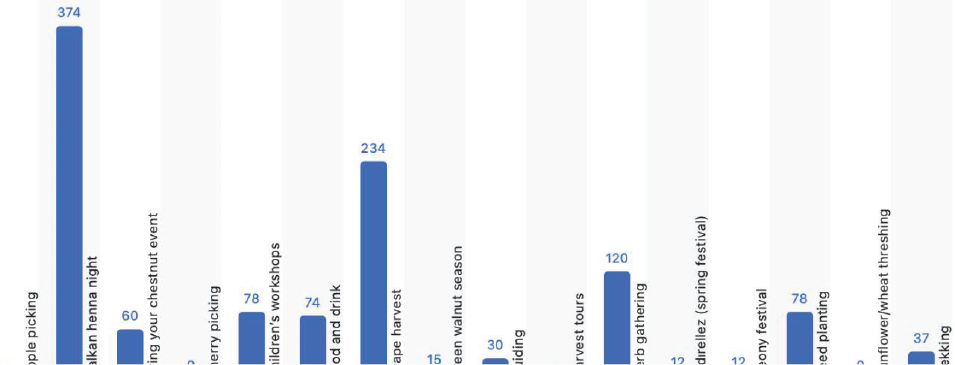
Figure 5
Events
The entrepreneurial women in the village organise these events to facilitate tourists’ engagement with the land, including activities such as planting and harvesting, fruit and vegetable picking, experiencing local festivals, and participation in trekking activities. They also organise children’s camps, where activities such as seed planting, bread baking, and fruit and vegetable picking help provide children with experiences related to the land and village life. Bedriye Berber Engin also introduces tourists to the village in detail, providing information about its history and sharing various legends, thereby acting as a guide.
The most frequently-processed code is “Balkan Henna Night.” Some of the local villagers are Balkan immigrants, and have begun to offer a popular cultural experience to tourists known as “Balkan Henna Nights” through a specially-arranged event for an additional fee. which attracts considerable interest from the visitors. Tourists can enjoy and experience Balkan culture during a Henna Night performance, which features traditional Balkan clothing, local music, and regional food and beverages. Data quotations related to ecotourism activities and Balkan henna nights are as follows:
P: “As part of our ecotourism activities, we organize harvest tours. We start with herb collection events in April. In May, we hold Hıdrellez and peony events. Our mountains are known for their beautiful peony flowers. Currently, for example, we are in cherry season, and throughout June, we conduct cherry picking events. During the grape harvest festival, we visit Bedi Village, where exquisite grapes are grown.”
P: “In the children’s camps, I have the children plant garlic. I give them local seeds to hold in their tiny hands and have them plant flowers, lavender, corn, and other crops. We work with the children in the fields. The children’s camps have their own teachers, and we organise many activities for them.”
P: “An additional fee is charged for the Balkan Henna Night, as it is a separate event with traditional costumes and live music. This includes costs for darbuka, violin, henna, and organizational expenses. The costumes are washed and ironed afterwards.”
The purpose of the events organised as part of the ecotourism activities in Kurşunlu Village is to open up the village, which boasts fertile lands and cultural richness, to both domestic and international tourists, thus facilitating ecotourism activities while also ensuring that people become more aware of nature. These activities also provide visitors an opportunity to escape from their daily routines and engage in an experience focused on enjoyment and relaxation.
The implementation of ecotourism activities in the village is significantly characterized by the tradition of imece (a communal work culture). Under the leadership of Bedriye Berber Engin, the women of the village come together to open their homes to tourists, with each contributing by producing different goods and providing various food, beverage, and activity services. The process of opening the village to tourism has overcome various challenges and advanced step by step, often without financial support. Bedriye Berber Engin expressed a positive outlook regarding the future of ecotourism in the village.
P: “If we have reached this point in 10 years, then of course, our village will be in a much better place in another 10 years. My primary goal is to provide employment to more women.”
Table 2 displays the theme co-occurrence matrix. This table indicates the number of times related themes have been coded together. Regions shown in darker shades represent higher correlations. For instance, the themes “Entrepreneur’s Method” and “Entrepreneur’s Goals” have been identified as the most highly correlated themes when cross-referenced. This suggests that the female entrepreneur applies a method aligned with her goals. The intensity of the relationships formed through co-coding among the themes decreases as the table shading colors go from dark to light.
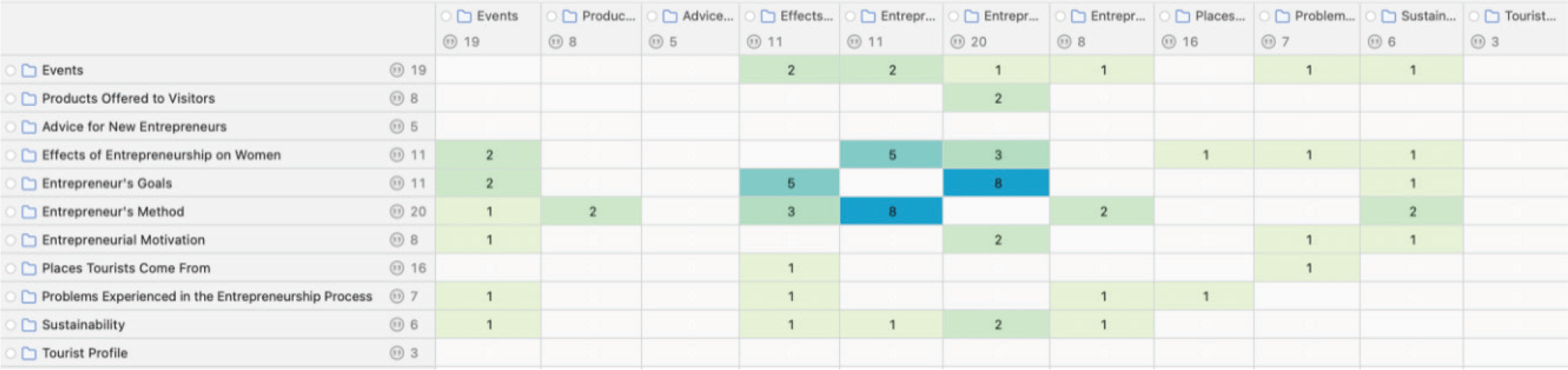
Figure 6 illustrates the co-occurrence and relational positions of the themes. The thick line between the themes “Effects of Entrepreneurship on Women,” “Entrepreneur’s Goals,” and “Entrepreneur’s Method” indicates a strong and shared relationship among these codes. The size of the coloured dots is directly proportional to the amount of data coded to the respective theme.
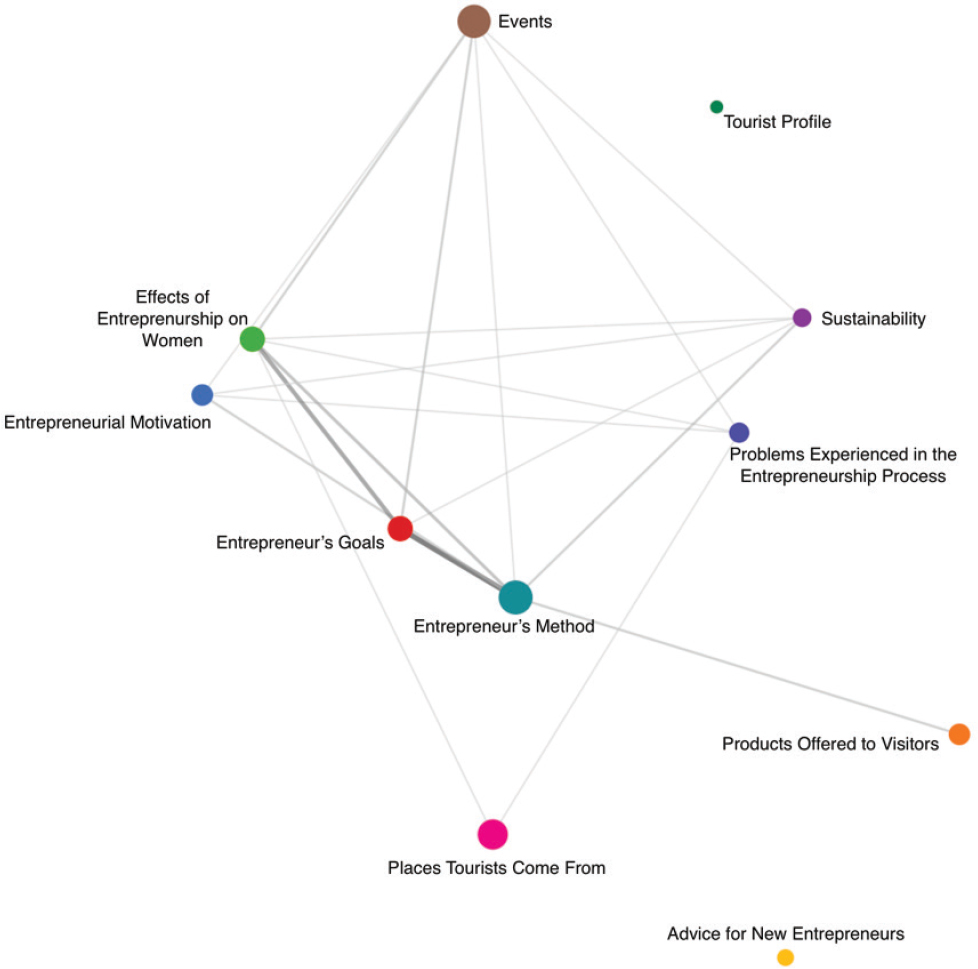
Figure 6
Theme-Co-Occurrence Force-Directed Graph
In Figure 6, the themes “Tourist Profile” and “Advice for New Entrepreneurs” appear disconnected, as they have only been coded within themselves and do not exhibit any co-occurrence with other themes. It is evident that all other themes are either directly or indirectly related to each other.
P: “First and foremost, one must read books. Without reading books, no one can challenge the world. Women who want to become entrepreneurs must first read and conduct research. I am not afraid of anything. Ask yourself, ‘What do I want?’ There must be something you desire. For me, it was tourism; for them, it might be something else. In my opinion, entrepreneurship is walking where there is no path. A smart person walks along the path. However, only those with the kind of mad courage that I have can walk where there is no path. This requires courage and a willingness to take risks. Then, hard work is essential. Additionally, creative ideas are necessary.”
The theme “Products Offered to Visitors” has been found to be related only to the theme “Entrepreneur’s Method.” The co-coding of these two themes stems from Bedriye Berber Engin’s entrepreneurial method of using organic products made by village women and selling them to tourists. None of the products offered to visitors are purchased from markets, and no ready-made food or beverages are served. The team that combines agriculture with ecotourism offers a range of products naturally, including butter, honey, jam, cheese, bread, eggs, tarhana, tomatoes, cucumbers, and peppers. Each house provides a standard menu, with ingredients sourced in a uniform manner. At the end of their stay, tourists who have been eating these natural and organic products can visit a small market where these products are sold, allowing them to purchase and take home the items they desire. In this way, the village women maintain their economic independence by earning money from both accommodation services and the sale of organic products.
All the women in the team are residents of Kurşunlu Village, although there are also other women who sell products indirectly. A standard price is set for the sale of organic products in the village, ensuring that everyone sells their products at the same price. Thanks to the efforts of these women, who also prioritise the cleanliness of the village, Kurşunlu Village has been named “Türkiye’s Cleanest Village”. Bedriye Berber Engin is actively raising awareness among the village residents about maintaining the environmental, economic, and social sustainability of the village. In line with this goal, foreign buyers are not permitted to purchase property in the village; houses can only be sold to the village residents. This approach aims to preserve Kurşunlu Village’s cultural heritage, lifestyle, and ecotourism activities as a cohesive Balkan immigrant community. The village also has an abundance of corn, and in terms of handicrafts, it offers activities such as weaving mats from corn husks and basket-making to tourists.
Figure 7 presents the co-occurrence of themes through a Sankey diagram. The Sankey diagram, which is widely used across various disciplines, is a tool for visualizing data. This diagram aids in interpreting the data by making it clearer and easier to understand. The name of the Sankey diagram originates from its use by the Irish captain Matthew Henry Phineas Riall Sankey in 1898 to demonstrate the energy efficiency of a steam engine with a similar type of diagram (ATLAS.ti, 2023; Erdoğan, 2023).
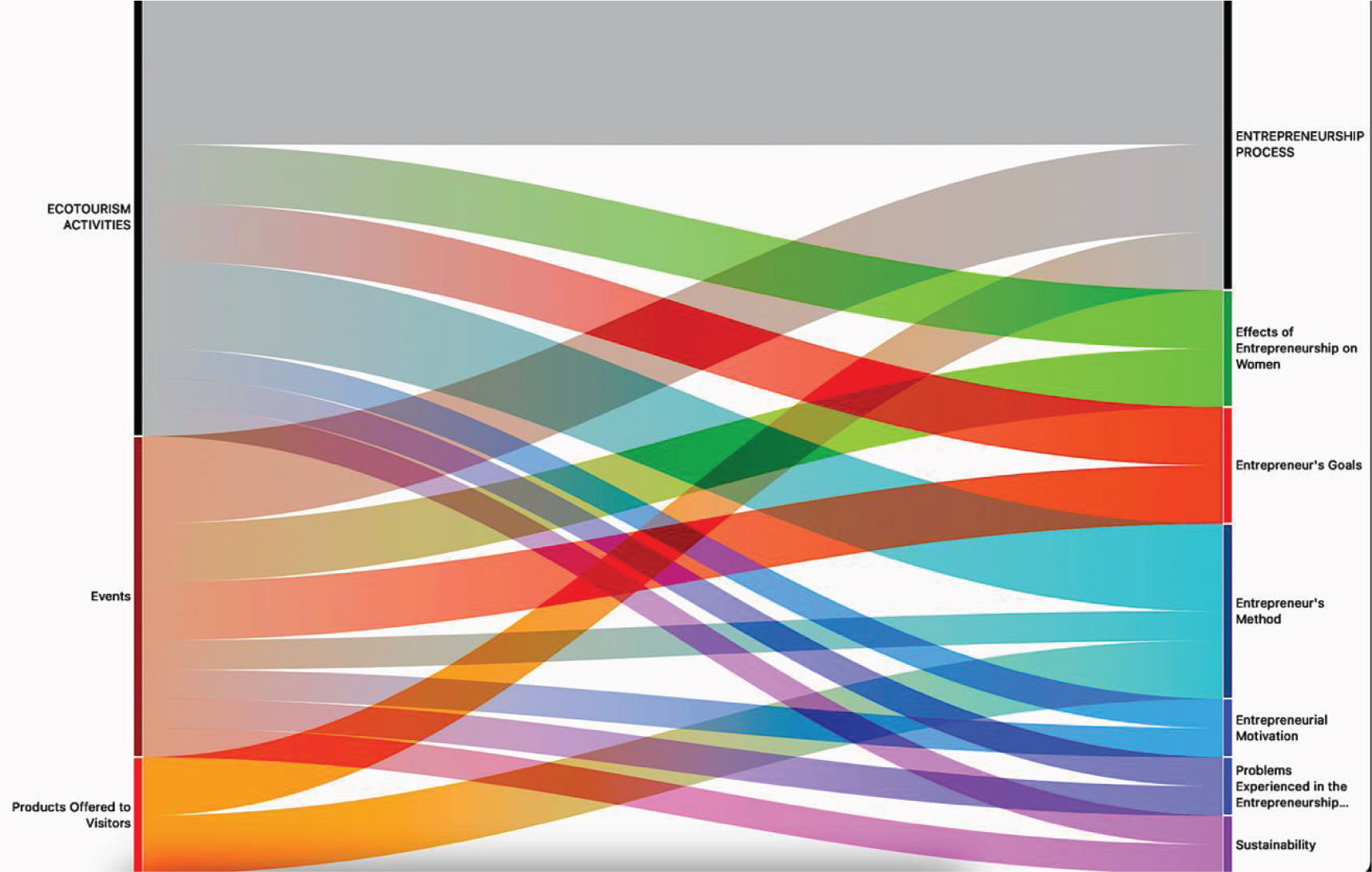
Figure 7
Sankey Theme Co-Occurrence
In the diagram, the direct or indirect relationships between themes are represented through coloured ribbons. In this diagram, the ribbons representing higher-correlated codes are visualized more thickly. At the top of the ribbons, the two main themes with the most data processed are visible. The diagram indicates that the theme “Entrepreneur’s Method” has both a direct and strong relationship with the main theme “Ecotourism Activities,” as well as with the themes “Events” and “Products Offered to Visitors.” Thus, the diagram allows for the observation of both direct and indirect relationships among all the main themes and sub-themes.
4.1. Problems female entrepreneurs encounter in ecotourism
The findings reveal that participation in ecotourism activities contributes significantly to women’s economic empowerment and social status. Rural women gain financial independence and greater self-confidence, in line with previous studies highlighting the benefits of entrepreneurial activities in rural contexts (Ertac & Tanova, 2020).
Women’s initial motivations, such as self-expression and contribution to the family budget, align with findings that financial gain, personal fulfilment, and societal benefits drive female entrepreneurship (Germak & Robinson, 2014). Despite challenges, such as gender-based discrimination, women entrepreneurs can successfully initiate ecotourism activities, benefiting both themselves and the local community. This is consistent with research showing a positive socio-economic impact for female entrepreneurship in resource-constrained areas (Filimonau et al., 2024).
Providing authentic experiences for tourists, as in Kurşunlu Village, further enhances visitor satisfaction and supports local development, echoing previous literature (Kastenholz et al., 2017). Overall, the study shows that female entrepreneurship promotes autonomy, decision-making, and sustainable rural development.
5. Discussion
Tourism is one of the pathways that enable women to integrate into economic and social life, and entrepreneurship particularly supports the enhancement of self-confidence and empowerment of women in rural areas where job opportunities are limited. Ecotourism, in particular, offers significant employment opportunities for women living in rural areas. Participation in ecotourism activities provides women with the freedom to earn their own income and achieve economic independence, while also improving their social status (Ertac & Tanova, 2020; Zapalska & McCutcheon, 2024). However, in developing countries, the masculine associations of entrepreneurship can hinder the success of female entrepreneurs compared to their male counterparts (Nordbø, 2022).
In this study examining the role of female entrepreneurship in the development of ecotourism through a pioneering female entrepreneur, it was found that women initially engage in ecotourism activities to express themselves and contribute to the family budget, and that gender-based discrimination has been identified as the greatest obstacle faced by women during the entrepreneurial process. A study conducted in Sinop province in Türkiye found similar sociological challenges for women entrepreneurs contributing to tourism, such as role conflict, time limitations, and gender-based discrimination; however, these barriers diminished over time, leading to the development of a more positive social perception (Erkol Bayram, 2018). Despite these challenges, interviews in the present study revealed that female entrepreneurs have succeeded in introducing their village to ecotourism, which has also led to improvements in their socio-economic conditions. This demonstrates that supporting women’s potential through entrepreneurial initiatives, rather than harbouring gender biases, can enable them to achieve competitiveness in various fields, including tourism.
The research findings align with the results of previous studies. Similar to Germak and Robinson (2014), the study identifies Bedriye Berber Engin’s entrepreneurial motivations as financial gain, self-fulfilment, personal satisfaction, and providing societal benefits. Engin has successfully educated her child, contributed to the family budget, increased female employment in the village, and achieved personal fulfilment by opening her village to tourism through her entrepreneurial initiative. Another study by Meitasari and Furkan (2021) evaluated the entrepreneurial process of an entrepreneur named Zaenab who played a significant role in establishing a sustainable village and expressed entrepreneurial motivations in a comparable manner.
Untari and Soharto (2021) highlighted the importance of female entrepreneurship for the development of tourism in a village in Indonesia, emphasizing that providing entrepreneurship training to women can significantly support rural development. Engin asserts that the entrepreneurial process is fundamentally a learning process. She notes that although she has not received any formal training in entrepreneurship, such training could create different opportunities and should not be overlooked as a possibility.
Filimonau et al. (2024) emphasized that female entrepreneurship can contribute to tourism development in destinations with limited resources, noting that local cultural traditions, when supported by capital, can have a significant impact. Under Engin’s leadership, the initiation of ecotourism activities in the village has contributed to the socio-economic development of village women. According to the study by Karacaoğlu and Yolal (2020), in Kurşunlu Village, the leadership of a female entrepreneur enabled women’s involvement in active production processes and transformed their social roles, while the tourism initiative also fostered local participation and contributed to strengthening social development in the village. Engin additionally stated that these ecotourism activities positively impact the tourism experience, as providing tourists with the opportunity to experience village life in a natural and authentic environment reinforces tourist satisfaction. This dynamic can also be seen in previous studies (Kasten-holz et al., 2017; Wang et al., 2022; Zhao et al., 2024).
6. Conclusion
This study demonstrates the pivotal role of women’s entrepreneurship in developing ecotourism in Kurşunlu Village, Bilecik Province, as illustrated through the entrepreneurial journey of Bedriye Berber Engin, who successfully led other women in the village and opened her community to tourism without financial support. The findings indicate that women’s entrepreneurial initiatives foster economic empowerment, enhance their social status, and contribute to community development, supporting previous research emphasizing the positive socio-economic impacts of female entrepreneurship in rural contexts (Ertac & Tanova, 2020; Filimonau et al., 2024).
The study contributes to the literature by providing empirical evidence on the intersection of women’s entrepreneurship and ecotourism, highlighting how entrepreneurial actions can transform both individual lives and community development. These results align with prior studies suggesting that supporting female entrepreneurs through training, financial assistance, and preservation of traditional crafts can strengthen cultural and rural tourism (Aghdasi et al., 2022; Karacaoğlu, 2023).
Despite these contributions, the study has certain limitations, as it was conducted exclusively within the scope of ecotourism activities in Kurşunlu Village, and these may restrict the generalizability of the findings. Future research could examine women’s entrepreneurship in rural areas with varying amounts of tourism potential and investigate how tourism demand influences female entrepreneurs in more-developed destinations. Considering that special interest tourists plan their travels based on experiences, exploring the effects of women entrepreneurs on tourists’ experiences could provide deeper insights into the relationship between entrepreneurship and travel behaviour (Kastenholz et al., 2017).
In conclusion, this study directly addresses the research question by demonstrating how women’s entrepreneurship contributes to the development of ecotourism in rural areas. The findings provide theoretical contributions by enriching the literature on women’s entrepreneurship and ecotourism; providing practical implications for local development and community empowerment; and making policy-level recommendations for supporting female entrepreneurs through training, financial assistance, and preservation of cultural heritage. The study’s limitations and suggestions for future research, such as examining other rural areas with different levels of tourism potential and exploring the impact of female entrepreneurs on tourist experiences, offer avenues to further deepen understanding of this topic.