
Introduction
Effective Altruism rests on a simple yet powerful premise: we should do the most good we can. 2 For individuals in affluent societies, merely avoiding harm is insufficient; surplus resources should be directed toward improving the lives of others (Singer, 2015, p. vii). Singer advocates a frugal lifestyle to enable greater charitable giving, emphasizing that effective altruism is not limited to the wealthy but applies equally to those with modest means. He notes that donating as little as ten percent of one’s income can “save lives or restore sight” for those living in extreme poverty (Singer, 2015, pp. 36–37). Beyond financial contributions, Singer highlights the importance of tissue and organ donation as significant expressions of effective altruism. He states that “blood, bone marrow, and stem cell donations are relatively simple forms of effective altruism, and as the cells soon regenerate, they can become a regular part of an altruistic life” (Singer, 2015, p. 71). In contrast, the donation of non-regenerative organs has traditionally been viewed differently. However, Singer notes that the number of individuals willing to donate organs has been steadily increasing. He remarks that “nondirected organ donation, as it is officially called, demonstrates the existence of altruism in a considerable section of the population, and it is a form of altruism for which you do not need to have money” (Singer, 2015, p. 70).
While not all effective altruists identify as utilitarians, the movement clearly draws on core utilitarian principles. As a result, effective altruism and utilitarianism often converge in their moral evaluations, both emphasizing rational, evidence-based reasoning as the foundation of ethical action and a commitment to maximizing overall well-being (MacAskill & Pummer, 2020). From the effective altruist perspective, pursuing the “greatest good” means striving to create a better world—one characterized by less suffering and greater happiness. As Singer (2015) explains, “A world with less suffering and more happiness in it is, other things being equal, better than one with more suffering and less happiness … These values explain why helping people in extreme poverty is a popular cause among effective altruists” (Singer, 2015, p. 7).
EA represents a distinct approach to altruism, contrasting sharply with traditional notions. While traditional altruism emphasizes self-sacrifice, moral duty, and the intrinsic virtue of helping others, EA focuses on identifying the most effective ways to do good through rational analysis and empirical evaluation. It can be understood as a refined form of consequentialism, which stresses the optimal allocation of resources to achieve the greatest moral outcomes (Chukwuma et al., 2020, pp. 14804–14807). This consequentialist perspective leads EA to advocate for individuals to pursue high-earning careers, as earning more allows for more substantial charitable donations. As MacAskill (2015, pp. 39–45) explains, choosing a lucrative career in finance may be more beneficial than working directly for a charitable organization. Charity workers are generally replaceable; others can perform similar roles. In contrast, a high-earning individual can donate a significant portion of their income to a charity, which can then fund the salaries of multiple additional workers.
The overall positive impact of these donations would likely surpass the marginal benefit of an individual working directly for the charity. In this framework, donors become irreplaceable in a way that aid workers are not; if one does not take the high-paying job, someone else will, but they may not donate as large a share of their income. Thus, by entering finance and donating generously, one arguably contributes more to the objectives of charitable organizations than by joining as staff. Similarly, EA encourages individuals to become advocates or work for meta-charities that support and evaluate other charities due to their multiplier effect. For example, securing a position at the World Bank could enable a person to influence and direct significantly greater financial resources toward effective charitable interventions. Additionally, founding or organizing campaigns may also be a better option for some, as the potential positive impact of a new organization might never materialize without the initiative of a particular individual (Singer, 2015, pp. 39–45).
Moreover, EA strongly emphasizes impartiality in moral decision-making, asserting that individuals should prioritize helping those most in need, irrespective of personal connections. As Singer (1972) argues, our moral obligation to a distant stranger is just as important as our duty to a friend or family member. In this framework, moral actions should not be influenced by emotional responses to identifiable individuals. Singer explains, “We can have cognitive empathy with thousands of children, but it is very hard to feel emotional empathy for so many people whom we cannot even identify as individuals… Effective altruism does not require the kind of strong emotional empathy that people feel for identifiable individuals and can even lead to a conclusion opposed to that to which this form of emotional empathy would lead us” (Singer, 2015, p. 78). Building on this principle, EA tends to prioritize large-scale, systemic interventions over localized or emotionally compelling causes. For instance, it advocates for funding the most effective charities or the highest-impact initiatives in areas such as disease prevention and extreme poverty alleviation (MacAskill, 2015, pp. 6–9). The central goal of EA is to direct attention and resources toward causes where the marginal benefit is greatest, regardless of geographic distance or emotional closeness.
If EA were to enhance its evidence-guided framework with the relational sensitivity of care ethics, its practical priorities could shift significantly. For instance, funding criteria might expand to encompass outcomes like trust, dignity, and community retention. Additionally, embedding participatory processes into grant governance and recognizing caregiving, community organizers, and local knowledge as essential drivers of moral effectiveness, alongside statistical efficiency, would be beneficial. CE brings unique strengths that complement EA’s utilitarian approach. It emphasizes the importance of specific contexts, values emotional and relational dimensions of moral life, and resists the reduction of individuals to mere units of cost and benefit. By prioritizing empathy, reciprocity, and the real-life experiences of marginalized communities, care ethics ensures that moral practices are rooted in human complexity rather than abstract technicalities. This raises a central question: Can a care-informed decision-making process enhance EA’s choices in humanitarian settings? The answer is yes. Therefore, I propose a new multidimensional assessment tool that balances efficiency with relational, ethical, and experiential values, demonstrating its application through a case study of the 2010 Haiti earthquake. Together, this normative framework and the empirical example illustrate how integrating EA and care ethics can realign funding criteria, advocacy priorities, and governance processes toward a model of altruism that is more relationally and ethically grounded.
Reconsidering effective altruism through the lens of care ethics
In contrast to EA, CE posits that moral obligations arise from interpersonal relationships and that ethical judgments should be rooted in specific contexts rather than abstract universal principles (Gilligan, 1982). From this perspective, it is both acceptable and morally appropriate to give special moral consideration to those with whom one has close relationships (Noddings, 1984). This leads to a practical guideline: responsibilities to family members, communities, or those with whom one has a close relationship cannot be dismissed simply because other actions might yield higher overall utility. The two frameworks also differ significantly in how they treat emotion. While EA regards emotion as a potential source of bias to be minimized in ethical decision-making (Singer, 2015, pp. 77–79), CE considers empathy to be central to moral understanding. For Gilligan and Noddings, the capacity to recognize and respond to another’s needs through empathy forms the basis of moral responsiveness. As such, ethical choices should be guided by attentiveness to lived experiences and concrete human needs, rather than merely by abstract measurements. Held (2006) expands this idea by developing a political conception of care, demonstrating how relational values can scale to institutional and systemic contexts. The guiding principle here is that institutions should be assessed not only on their efficiency in maximizing welfare but also on their ability to sustain and nurture the networks of care—familial, communal, and civic—upon which human well-being depends. In this framework, funding priorities should explicitly include support for caregiving labor, protection for vulnerable populations, and policies that strengthen social trust, even if such investments do not appear to be the most cost-effective in the short term. Tronto (1993) further clarifies that care functions as an ongoing practice with distinct phases: attentiveness, responsibility, competence, and responsiveness. These phases provide procedural criteria for ethical action. To be justifiable, interventions must not only be technically effective but also attentive to local needs, developed in collaboration with affected communities, and responsive to the outcomes as experienced by those receiving care. For example, while EA might focus on global poverty interventions that save the most lives per dollar, CE insists that the effectiveness of these interventions must also be evaluated based on whether they respect cultural contexts, empower local actors, and avoid paternalism.
From the perspective of CE, several key limitations of EA become evident. First, EA tends to overlook the moral significance of personal relationships and emotional bonds. Its focus on donating to the most “efficient” causes often implies prioritizing distant strangers over loved ones. Singer himself highlights the stark contrast between poverty in the United States and the extreme deprivation defined by the World Bank (Singer, 2015, p. 111). For effective altruists, this disparity justifies directing aid internationally, where each dollar can do more good. However, from a care ethics perspective, such moral impartiality is insufficient, as moral life is deeply embedded in one’s community and close personal relationships. Additionally, the rational and calculative nature of EA often downplays the role of empathy and emotional connection in moral agency (Ioannidis, 2020). This is particularly evident in healthcare, where altruism, empathy, and relational care play roles that cannot be replaced by cost-efficiency metrics. For instance, Community Health Workers (CHWs), especially in low-resource settings, demonstrate that moral and professional conduct must involve personal concern, cultural sensitivity, and respectful engagement with patients. A narrow focus on organizational efficiency may disregard the ethical integrity of CHWs and compromise the quality of care delivered (Gopichandran, Subramaniam & Palanisamy, 2024).
Singer later acknowledges the need to balance altruism with familial obligations. He argues that EA does recognize that parents have special responsibilities toward their children, grounded not only in rational considerations but also in natural emotional bonds (Singer, 2015, p. 8). It would be unrealistic to demand absolute impartiality from parents, as the emotional partiality in parent-child relationships is necessary for a child’s healthy development. To love someone is to care more deeply for them than for others, and such partiality in close relationships is both natural and morally valid. At the same time, Singer emphasizes that altruism does not need to dominate every aspect of one’s life. Effective altruists are not saints; they are individuals who aim to do good in meaningful and sustainable ways. They also value time with family and personal fulfillment, recognizing these as essential components of a well-lived life. However, they are aware of the moral limits of familial entitlement. For instance, they argue that children do not need the latest toys or extravagant birthday parties, and it is ethically questionable to pass down all of one’s wealth solely to one’s descendants. Instead, they advocate donating a substantial portion of one’s estate to those in greater need, thereby maximizing the moral impact of one’s resources.
EA has also been criticized for making moral demands that can feel overly abstract and detached from real-world ethical practice, often expecting individuals to make significant personal sacrifices, such as donating a large portion of their income to charity. From the perspective of CE, such expectations may seem depersonalized and unrealistic, neglecting the individual’s moral development and socio-economic circumstances. More broadly, some scholars argue that EA’s outcome-oriented framework may deprioritize rights-protecting interventions when they appear less cost-effective according to standard metrics. In these cases, vulnerable groups risk being overlooked, as the focus on aggregate welfare maximization can overshadow considerations of individual dignity or justice. For example, Gabriel (2017, pp. 462–463) examines debates regarding sweatshops in developing countries, where some effective altruist reasoning emphasizes the economic benefits of factory employment despite exploitative conditions. From this perspective, banning sweatshops could be seen as harmful to workers who depend on them for income. A similar issue arises with labor rights initiatives, such as enforcing workplace safety standards, ensuring living wages, or supporting unionization. These efforts often struggle to attract funding aligned with EA principles because their benefits are more diffuse, harder to measure, and less immediately quantifiable than direct health interventions like vaccine distribution (Srinivasan, 2015). The concern is not that EA categorically rejects such efforts, but rather that its strong focus on cost-effectiveness can lead to undervaluing interventions that protect basic rights when their outcomes do not easily fit utilitarian metrics.
Within the EA framework, career choice is often viewed as a means to maximize impact. Therefore, they suggest people to choose high-income or high-leverage professions, based on the reasoning that greater earnings or influence can lead to more substantial philanthropic contributions (Singer, 2015; MacAskill & Pummer, 2020). However, this approach raises critical ethical questions. Does it imply that pursuing a career driven by personal passion or in low-income social work is morally inferior or shameful? What status is assigned to roles such as caregiving, domestic labor, and parenting, which are deeply meaningful but often unpaid or undercompensated and thus marginalized by EA’s cost-effectiveness metrics? If everyone is encouraged to pursue high-earning professions, who would perform the essential, low-paid labor that sustains society, such as teaching, caregiving, sanitation, and emergency response? EA’s emphasis on quantifiable impact fails to capture the subjective fulfillment and social necessity provided by these roles. Similar to utilitarianism, it risks reducing individuals to mere means rather than recognizing them as ends in themselves, commodifying human lives through impersonal calculations. Furthermore, the push for individuals to enter lucrative fields in order to donate more does not address the structural roots of global inequality; instead, it may inadvertently reinforce capitalist and neocolonial systems. In this way, EA often relies on the philanthropy of billionaires, a model that arguably upholds elite interests more than it dismantles injustice (Crary, 2023). The genuine eradication of poverty requires systemic reforms, including global tax justice, fair trade, and labor rights protections, rather than an overreliance on private charity. Even within its philanthropic model, EA faces internal tensions. While Singer advocates for transparent giving to cultivate a cultural norm of altruism, scholars have noted that such practices can unintentionally promote performative altruism, where donations are motivated partly by reputational incentives or the desire to demonstrate moral commitment (Chukwuma et al., 2020, pp. 14810–14811). In these cases, the act of giving may be influenced as much by the donor’s social identity as by the needs of the beneficiaries, raising questions about the balance between genuine ethical commitment and public performance.
Moreover, EA’s heavy reliance on quantitative metrics and strict consequentialism has been criticized for neglecting other crucial dimensions of moral motivation beyond rational calculation. Effective altruists often assert that reason is the primary driver of ethical action, but this assumption has long been challenged by David Hume, who argued that reason alone cannot motivate action; it must be accompanied by desire or some form of emotional engagement (Hume, 1960). This challenges the notion that rational beliefs, without affective input, are sufficient to inspire moral behavior. EA’s evaluative frameworks also face systemic biases. One bias stems from the movement’s reliance on randomized controlled trials and measurable data, which favors interventions that are easy to quantify, such as vaccine distribution, while sidelining less tangible but potentially transformative efforts like structural policy reform. Another concern is quantification bias. Metrics such as the Disability-Adjusted Life Year (DALY), commonly used to assess health-related impact, systematically overlook qualitative aspects of human experience, including dignity, well-being, and hope. For instance, HIV funding often prioritizes prevention programs because they are less costly and yield higher statistical efficacy, while the rights and long-term needs of existing patients, who require more expensive care, are frequently neglected (Jacobsen & Walensky, 2016). Amore fundamental concern is the instrumentalism, wherein preference is given to technocratic, expert-driven interventions at the expense of community knowledge, lived experience, and participatory engagement (Gabriel, 2017, pp. 464–467). As a result, interventions are often poorly adapted to local realities and risk becoming misaligned with the cultural and social contexts they aim to improve. A care-integrated model of effective altruism would directly address this deficit by embedding caregiving labor, CHWs, and community organizers into the evaluative frame itself. Rather than treating these actors as replaceable inputs or administrative overhead, their contributions would be recognized as central drivers of impact. Concretely, this means supplementing cost-effectiveness metrics with outcomes such as patient retention, continuity of care, community trust, and dignity—factors shown to strongly mediate long-term health effects. Evidence-guided philanthropy could, for instance, fund wage floors, supportive supervision models, and relational training for CHWs, thereby improving not only worker well-being but also measurable outcomes such as adherence to treatment and reductions in preventable mortality. Similarly, community organizers who cultivate local participation and cultural alignment would be seen as amplifiers of intervention efficacy rather than as inefficiencies to be minimized. By reframing these forms of relational labor as high-value interventions in themselves, care-integrated EA would not abandon the demand for evidence but would broaden its evidentiary horizon to capture dimensions of human flourishing that purely technocratic models overlook.
Lastly, EA’s reliance on a binary framework that separates reason and emotion perpetuates a flawed understanding of how ethical decision-making is actually formed. It neglects the role of emotion and relational responsibility in moral judgment, despite the fact that sound ethical decisions require both rational deliberation and affective engagement. For example, Singer identifies emotion as a major barrier to animal rights advocacy. He observes that “the portrayal of those who protest against cruelty to animals as sentimental, emotional, ‘animal-lovers’ has had the effect of excluding the entire issue of our treatment of nonhumans from serious political and moral discussion” (Singer, 1975, p. ix). For Singer, the problem is not rooted in a philosophical rejection of sympathy, nor in misogyny, which often feminizes or marginalizes the animal protection movement, but rather in the way emotional expressions are dismissed as sentimentalism. This dismissal has the effect of keeping animal suffering outside the domain of serious moral discourse. The EA’s framework supports the notion that a small group of rational actors can determine the priorities and strategies of the animal rights movement. This presumes a privileged stance—one that takes the lived social reality of a few as the universal basis for defining oppression and designing solutions. However, as Adams (2023) argues, activists, donors, and theorists all speak from particular perspectives, and these perspectives inevitably shape the decisions they make, often to the exclusion of diverse, community-rooted understandings of animal rights. Judging which animals “ought” to be protected based on efficiency alone contradicts fundamental ethical intuitions and human empathy. Just as one would not sacrifice a loved one to save a greater number of strangers despite the logic of utilitarian calculus, many people find it impossible to ignore the suffering of their companion animals. This highlights a central critique of EA: while its prioritization of farm animals over pets may be rationally compelling on the basis of scale and cost-effectiveness, it encounters serious limitations on emotional, practical, and ethical grounds.
The emotional bond with pets is immediate and profound for many people, while farm animals remain largely invisible in everyday life. This asymmetry in emotional proximity reduces the likelihood that individuals will be equally moved to act on behalf of farm animals. Moreover, emphasizing efficiency while sidelining emotional connection may discourage public engagement with animal welfare initiatives. Research shows that moral motivation is often driven more by emotion than by pure reason (Ball & Friedrich, 2009). Thus, asking people to prioritize the suffering of unseen animals in distant industrial farms over the visible suffering of familiar pets may erode overall support for the animal welfare movement. In contrast, rescuing stray pets and promoting adoption are highly visible and emotionally resonant actions, which more effectively motivate donors and the public. EA’s neglect of these dimensions fails to address the root causes of animal suffering, and reinforces arbitrary distinctions between companion and farm animals—distinctions that are, in fact, cultural constructions. Many animal rights advocates argue that rather than simply improving the conditions of factory farming, we should be challenging and transforming the social structures that support it (Regan, 1983). By focusing narrowly on efficiency, EA risks overlooking the broader ethical questions surrounding human-animal relationships, and may miss the opportunity to drive systemic transformation. For example, if advocates argue that helping pets is a lower-impact use of funds compared to aiding farm animals, they may alienate significant portions of animal lovers (Francione, 2010). This could risk fragmenting the animal rights movement, undermining the unity needed for broad-based change. Additionally, the pragmatic strategies promoted by EA often come at the expense of moral imagination—the ability to envision alternative, ethically richer futures. By focusing on incremental, measurable reforms (such as cage-free egg policies), EA may limit activists’ ability to pursue more ambitious goals, such as abolishing industrial animal agriculture. This compromise with agribusiness interests can sometimes lead to a form of moral Stockholm syndrome, where the movement collaborates with the very systems it aims to dismantle, under the illusion of making progress. To break free from these constraints, animal advocacy must adopt a broader ethical vision. While incremental reforms may reduce suffering in the short term, they should be paired with systemic, long-term changes aimed at ending factory farming altogether and achieving true animal liberation (deCoriolis et al., 2023).
In summary, while EA offers analytical rigor and global reach, it also has significant blind spots. Its reliance on cost-effectiveness metrics risks sidelining rights-protecting and relational values, while its focus on scalable interventions can obscure the moral significance of dignity, trust, and local knowledge. Strategies like “earning to give” may further reinforce structural inequalities rather than dismantling them. On the other hand, community engagement (CE) emphasizes empathy, attentiveness to context, and the value of interpersonal relationships, although it too has its limitations in terms of partiality and scalability. The potential for integration lies in combining EA’s evidence-based clarity with CE’s relational and normative depth. The next section introduces a preliminary model for such integration and illustrates how this synthesis can reshape humanitarian responses by recalibrating funding criteria, participatory governance, and advocacy priorities.
A preliminary idea of integrating effective altruism and care ethics
As demonstrated in the previous analysis, EA faces several practical and philosophical challenges. However, these challenges are not insurmountable. CE can serve as a crucial complement, bringing emotional sensitivity, relational awareness, and contextual moral reasoning into the ethical conversation (Herro & Obeng-Odoom, 2024). By integrating care-based elements into the EA framework, moral decision-making can extend beyond mere cost-effectiveness calculations to include empathy, human relationships, and communal well-being. This approach fosters a more human-centered and globally balanced model of altruism that addresses both local and distant needs. EA often relies on abstract rationality and statistical calculations, such as “cost per life saved”. This logic typically favors large, quantifiable interventions through well-established organizations, which can overlook the complexity of moral issues rooted in social, historical, and relational contexts. An integrated model that draws on CE would reaffirm the moral significance of context-specific knowledge and relational responsibility, recognizing that ethical obligations cannot be reduced to mere metrics. From this perspective, moral action is not only about maximizing outcomes; it is also about directly responding to suffering with compassion and attentiveness.
One potential way forward is to rethink the metrics at the core of EA, particularly Disability-Adjusted Life Years (DALYs) and other cost-effectiveness tools, through the lens of CE. These measures can be supplemented with what I propose as a Relational–Qualitative Impact Framework (RQIF). This framework aims to balance efficiency with relational, ethical, and experiential values. It retains quantitative health gains as an important dimension but adds a rights-based safeguard to ensure that interventions do not jeopardize basic human dignity. Additionally, it incorporates indicators of well-being and hope, such as patient-reported outcomes, to highlight lived experiences of resilience, trust, and dignity. The framework also considers relational and community impacts, asking whether interventions strengthen or undermine social bonds and care infrastructures. For example, community-led HIV care centers may appear less cost-effective than large prevention campaigns when viewed through the lens of DALYs; however, they build trust, empower local actors, and ensure continuity of care, which are essential for long-term success. Finally, the framework evaluates the potential for structural transformation, distinguishing between temporary relief and deeper systemic change. A diagram illustrating the framework follows below:
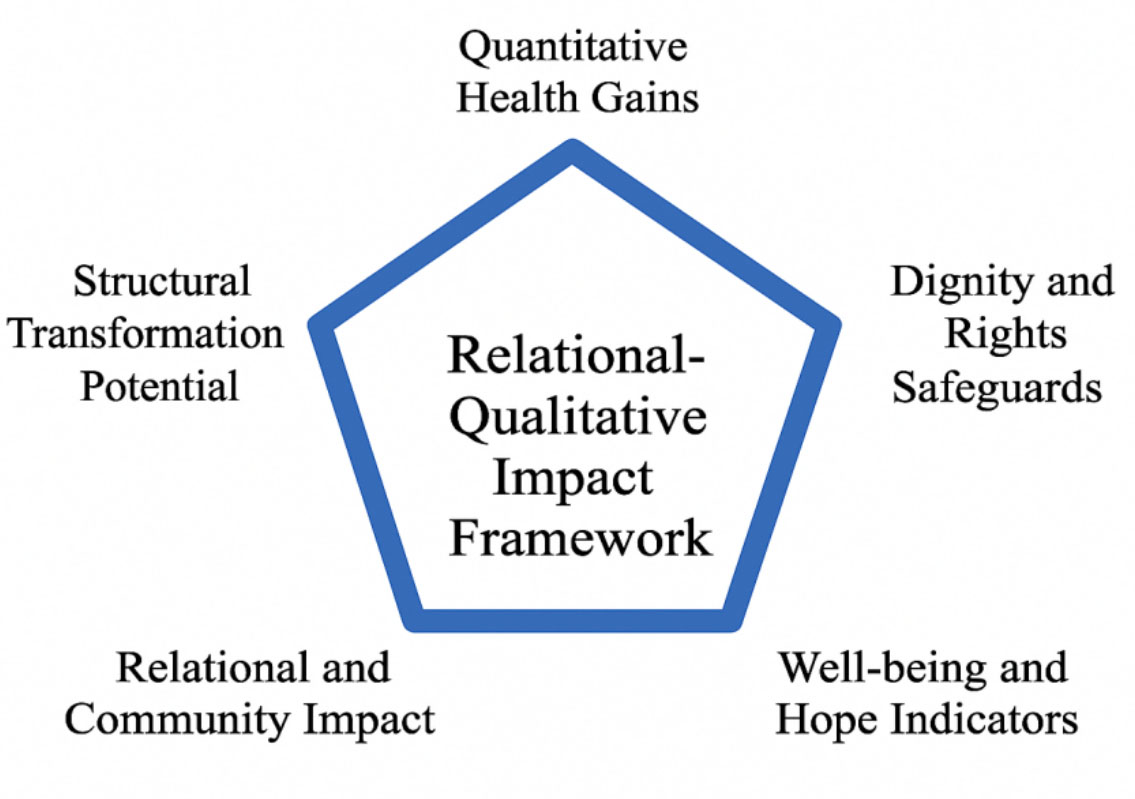
By adopting the RQIF framework, evidence-based reasoning is preserved, while care ethics emphasizes the importance of dignity, relational trust, and justice in moral evaluation. This integration broadens the evaluative scope of EA, making it more responsive to the complexities of human flourishing and social justice. The relevance of this integrated approach becomes particularly evident in humanitarian contexts. Contemporary humanitarian organizations often rely on data-driven metrics—such as the number of meals distributed or liters of water supplied. While these metrics are valuable, they frequently overlook recipients’ emotional needs, cultural contexts, and the sustainability of aid. This oversight creates tensions between global efficiency and local relational responsibility (Carbonnier, 2014). Additionally, neglecting the well-being of aid workers can undermine the quality of care provided and contribute to burnout, especially when fair compensation and emotional resilience are undervalued. A more balanced ethical model would integrate empathy, professional integrity, and self-compassion, ensuring that both caregivers and recipients are supported over time (Burks & Kobus, 2012).
A compelling case study is the 2010 Haiti earthquake. In the immediate aftermath, humanitarian organizations guided by logics similar to EA prioritized easily quantifiable interventions like meals delivered, liters of water supplied, or patients treated. While these indicators were crucial for accountability, they obscured less visible harms, one of which was the alarming rise in gender-based violence (GBV) within displacement camps. According to a study on GBV in the context of the 2010 Haiti earthquake, 26% of women and girls in Haiti aged 15 years and older were expected to experience GBV during their lifetime prior to the disaster. Following the earthquake, reports indicated a dramatic increase in GBV, particularly among women and girls displaced in tent camps. This spike in violence was linked to unsafe camp conditions, including poor lighting, long and dangerous walks to latrines, flimsy tents that couldn’t be locked, and the breakdown of community protection norms (Sloand et al., 2015). Human Rights Watch (2011) similarly identified overcrowding, lack of lighting, and inadequate policing as key factors contributing to this vulnerability. Because GBV prevention initiatives did not perform well on DALY-style metrics, women-led organizations focused on promoting safe shelters or community patrols struggled to secure funding (Schuller, 2012). However, evaluations showed that protective measures could be both effective and affordable. For example, gender-segregated latrines with locks significantly reduced nighttime risks for only $30–$60 more per unit than standard facilities (IASC, 2010). Community-based night patrols organized by women’s groups effectively deterred attacks at a very low cost, only requiring modest stipends to sustain volunteers.
This case illustrates the risks associated with a purely cost-effectiveness approach, which may deprioritize interventions that protect rights, even when these interventions are clearly cost-effective in the long term by promoting safety, trust, and social stability. Analyzing the situation through the Relational–Qualitative Impact Framework (RQIF) highlights the shortcomings of this response:
Quantitative Health Gains: Interventions like food aid, water delivery, and medical treatment received high scores because their outputs were measurable and scalable.
Dignity and Rights Safeguards: Prevention of gender-based violence (GBV) was deprioritized because DALYs did not account for rights violations, such as a woman’s freedom from sexual violence. This illustrates how relying solely on cost-effectiveness analysis can overlook essential human rights.
Well-being and Hope Indicators: Survivors of GBV often faced trauma, fear, and stigma, but these experiences were absent in data-driven assessments. For example, women refrained from using latrines at night, which compromised both their physical and mental health.
Relational and Community Impact: Some actions that did not seem immediately efficient were overlooked. For instance, providing gender-segregated latrines with locks or organizing community night patrols helped foster safety and solidarity while strengthening social trust.
Structural Transformation Potential: Funding women-led organizations aimed at preventing GBV could have empowered local leaders and addressed the structural factors contributing to vulnerability. However, many international NGOs in this case centralized decision-making, often sidelining grassroots leadership.
By examining the response in Haiti across these five dimensions, it becomes evident that a care-integrated approach to EA would reframe funding criteria to ensure that rights protections and relational outcomes are regarded as essential components of impact, rather than secondary concerns.
Conclusion
Effective Altruism prioritizes rationality, efficiency, and the maximization of overall well-being, offering a systematic framework for moral evaluation. Yet its strengths also reveal its limits. By relying heavily on quantifiable metrics and data-driven models, EA often overlooks less measurable dimensions of moral life—human emotion, dignity, and relationality. As a result, it struggles to capture the contextual and affective complexities of social reality. Moreover, its tendency to minimize the ethical importance of emotional bonds and local obligations can yield a model of aid detached from lived human relationships. The emphasis on “earning to give,” while pragmatically appealing, risks underestimating the structural injustices that sustain global inequality and may inadvertently reinforce capitalist and neocolonial patterns of wealth and power.
Integrating Effective Altruism with Care Ethics offers a promising path beyond these limitations. EA contributes analytical rigor, scalability, and global reach, while CE restores the moral centrality of empathy, contextual sensitivity, and interpersonal responsibility. Together, they form a complementary moral framework that reconciles rational calculation with emotional understanding, and global justice with local care. In addressing urgent crises—from climate change and extreme poverty to gender-based violence and animal suffering—this integrated ethic can support a justice-oriented, contextually grounded, and practically viable vision of moral action.
However, integrating EA and CE is not without difficulty. A central tension lies in reconciling EA’s commitment to impartiality with CE’s emphasis on partial, relational obligations. Addressing this challenge requires models of tiered responsibility—frameworks that acknowledge the moral legitimacy of special duties to loved ones and communities while situating them within a wider ethic of global concern. One possible approach is to develop hybrid evaluative tools, such as the RQIF, which preserve EA’s comparative rigor while incorporating relational indicators such as trust, dignity, and empowerment.
A further challenge is the risk of co-optation: CE’s feminist and political commitments must not be subsumed as sentimental supplements to EA’s utilitarianism, but recognized as independent and indispensable moral principles. Far from undermining the integrative project, these tensions underscore its philosophical depth and transformative potential. By engaging with questions of scope, measurement, institutional practice, and normative grounding, an integrated framework can advance both theoretical innovation and practical reform in the pursuit of a more humane and justice-oriented moral vision.
Acknowledgment
I want to thank the two anonymous reviewers for their helpful and constructive suggestions, which greatly improved this article. I also appreciate Guangxi University for providing financial support for this research.
The Sekyra Foundation funds the open access publication of the article in the journal.