
INTRODUTION
Cancer remains the leading cause of death worldwide, accounting for nearly 10 million deaths in 2022. Among the most common cancers, lung and prostate cancers predominate in men, while breast cancer is the most prevalent among women (GLOBOCAN 2020, IARC). This disease is characterized by uncontrolled cell proliferation, often associated with deregulation of the mechanisms governing the cell cycle (1).
The cell cycle is a fundamental biological process essential for growth and tissue homeostasis. It is finely regulated by a series of molecular events that ensure orderly cell division (2),(3). This regulation largely depends on the coordinated action of CDKs and their regulatory partners, cyclins (4),(5). These proteins drive cell cycle progression by activating phase-specific checkpoints. Among CDKs, cyclin-dependent Kinase 1 (CDK1) plays a pivotal role in the G2/M transition by forming a complex with cyclins A and B. This complex initiates mitosis through the phosphorylation of key substrates involved in chromosome condensation, nuclear envelope breakdown, and mitotic spindle formation (6).
CDK activity is counterbalanced by specific inhibitors (CDKIs), whose alterations are frequently observed in various cancers (4). Overexpression of CDK1, or inactivation of its inhibitors, disrupts cell cycle regulation, leading to uncontrolled proliferation and tumorigenesis. Given its central and highly conserved role in the cell cycle, CDK1 deregulation has major repercussions and has been implicated in the development of several cancers, including breast, colorectal, ovarian, liver, gastric, esophageal, and oral cancers (7),(8),(9).
Consequently, the development of selective CDK1 inhibitors represents a promising strategy to restore cell cycle homeostasis and suppress tumor growth. Recent studies have focused on plant-derived bioactive compounds for their anticancer potential. The Linum genus, belonging to the Linaceae family, is known for its richness in bioactive secondary metabolites and is attracting increasing attention in molecular oncology due to its diverse biological activities (10),(11),(12),(13).
In parallel, in silico approaches have emerged as powerful tools for the discovery of new therapeutic agents, particularly through drug repositioning. These computational methods include signature matching, molecular docking, genetic analysis, signaling pathway mapping, and data integration from various sources (14). Specifically, molecular docking predicts the optimal binding conformation between a ligand and its protein target, subsequently evaluated using scoring functions that estimate binding affinity and stabilizing interactions (15),(16).
Such structure-based approaches significantly reduce the time and cost required for new drug development (17). The present study aims to investigate the inhibitory potential of compounds identified in the ethyl acetate (EtOAc) extracts of two Linum species, L. numidicum Murb. (LN) and L. trigynum L. (LT), against CDK1, using an in-silico approach. The objective is to evaluate their interactions with this key cell cycle regulator and to determine their potential as therapeutic agents in cancer treatment.
MATERIALS AND METHODS
Preparation of target proteins
The three-dimensional structures of CDK1/Cks2 and CDK1/cyclin B1/Cks2 were obtained from the Protein Data Bank (PDB), identified by PDB IDs 6GU7 and 5LQF, respectively. These complexes represent key molecular targets for the development of anticancer therapeutics. Table 1 summarizes the crystallographic properties of 6GU7 and 5LQF. Protein energy minimization was carried out using the Austin Model 1 (AM1) Hamiltonian implemented in the Molecular Operating Environment (MOE) software, with force fields derived from the Merck Molecular Force Field (MMFF94x). Water molecules were removed from the protein surface to maintain exposure of the contact region during docking. Docking simulations were focused on the canonical ATPbinding pocket of CDK1. This site was explicitly defined according to the coordinates of the co-crystallized high-affinity inhibitors found in the PDB structures: AZD5438 for 6GU7 and NU6102 for 5LQF (Figures 1 and 2). The centroid X, Y and Z for co-crystalized ligands 6GU7 [328.345, 213.852, 191.967], 5LQF receptor A [33.777, −67.413, 185.099] and 5LQF receptor D [−26.487, −101.353, 233.771], residues within a 6 Å radius of the ligands were considered as part of the active site and used for subsequent docking studies.
Table 1.
Crystallographic properties of enzymes.
| Enzyme | PDB ID | Classification | Organism | Expression system | Resolution | Method | TSW (kDA) | Chain |
|---|---|---|---|---|---|---|---|---|
| CDK1/Cks2 | 6GU7 | Cell Cycle | Homo sapiens | Spodoptera frugiperda, Escherichia coli | 2.75 Å | XRD | 179.75 | 1) A, C, E, G 2) B, D, F, H |
| CDK1/cyclinB1/CKS2 | 5LQF | Transferase | Homo sapiens | Escherichia coli | 2.06 Å | XRD | 153.23 | 1) A, D 2) B, E 3) C, F |
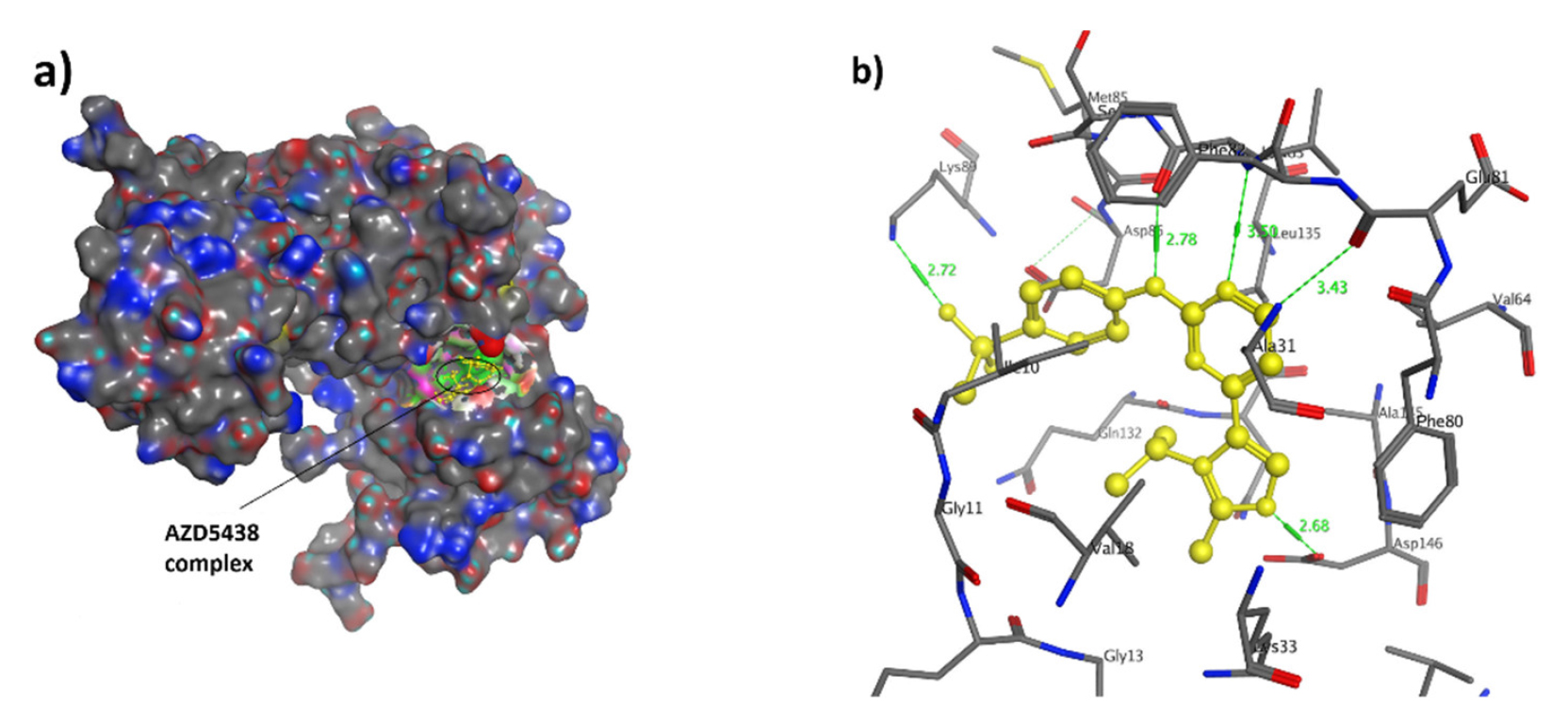
Figure 1.
The crystal structure of 6GU7 in complex with AZD5438
a) Surface representation of the protein and
b) A close view of the substrate (in yellow) binding in pocket by hydrogen bonds (in green).
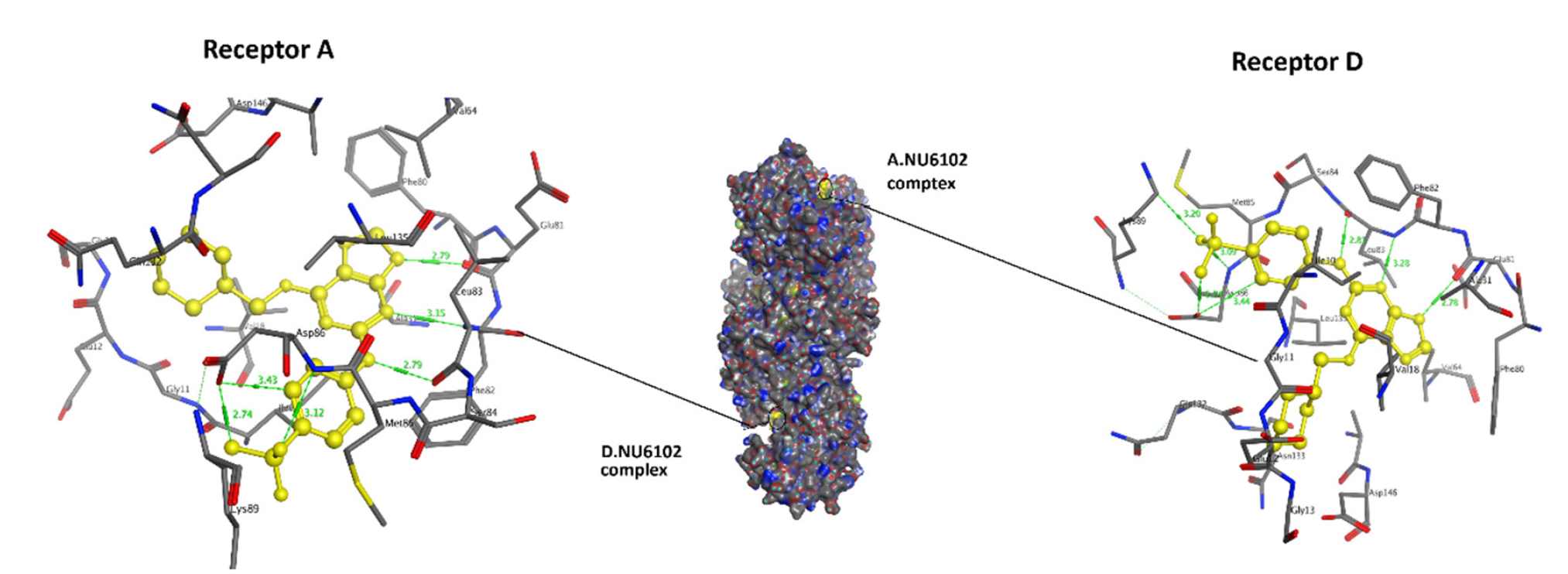
Figure 2.
The crystal structure of 5LQF in complex with NU6102 (4SP).
Middle: Surface representation of the protein. Left: A close view of the substrate in receptor A.
Right: A close view of the substrate in receptor D, substrate (in yellow) and hydrogen bonds (in green).
Preparation of ligands
The main chemical constituents of LN and LT were identified in our previous study (10). These compounds have demonstrated anticancer activity by inducing cell cycle arrest and apoptosis. To evaluate the drug-like properties of the active compounds, a drug-likeness prediction was performed using the SwissADME online tool to determine their physicochemical parameters, including molecular weight, lipophilicity, hydrogen bond donors, and hydrogen bond acceptors (18). The chemical structures were drawn using ChemDraw (Mol format) and subsequently converted into 3D structures in the MOE software for further analysis. Table 2 lists the ligands used in this study.
Table 2.
Chemical compounds and physicochemical parameters of compounds identified by LC-HRMS/MS analysis in ethyl acetate extracts of L. numidicum (LN) and L. trigynum (LT).
| Compounds Name | MW (g/mol) | Conse Log Po/w | TPSA (Å2) | GI Abs | P-gp Sub | Lipinski | CYP3A4 inhibitor |
|---|---|---|---|---|---|---|---|
| 6,4ʹ-dimethoxy- scutellarein-7-neohesperidoside | 622.57 | −0.01 | 227.2 | low | Yes | No | No |
| 8,3ʹ,4ʹ-trihydroxyflavone-7-O-6(6ʺ-O-p-coumaroyl)-β-d-glucopyranoside | 594.52 | 1.15 | 216.58 | low | No | No | No |
| Foliasalacioside B1 | 504.57 | −0.57 | 175.37 | low | No | No | No |
| Isovitexin 2ʺ-O-arabinoside | 564.49 | −1.26 | 239.9 | low | yes | No | No |
| Luteolin-7,3ʹ-di-O-β-d-glucoside | 610.52 | −1.49 | 269.43 | low | yes | No | No |
| Malvidin 3-O-β-galactoside | 493.44 | −0.74 | 191.67 | low | No | No | yes |
| Olivil 4ʹ-O-β-d-glucoside | 538.54 | 0.1 | 187.76 | low | Yes | No | No |
| Rutin | 610.52 | −1.29 | 269.43 | low | Yes | No | No |
| Vicenin-2 isomer 2 | 594.52 | −1.98 | 271.2 | low | No | No | No |
| Vicenin-2 isomer 3 | 594.52 | −1.98 | 271.2 | low | Yes | No | No |
| Violanthin | 578.52 | −1.43 | 250.97 | low | Yes | No | No |
| Vitexin-2ʺ-rhamnoside | 578.52 | −0.99 | 239.97 | low | Yes | No | No |
The chemical structures and physicochemical properties of drugs currently in clinical trials for cancer therapy specifically targeting CDK1 were presented in Table 3. This table provides key insights into the characteristics and features of these drugs, facilitating the understanding and evaluation of their potential efficacy against cancer (19),(20),(21),(22),(23).
Table 3.
Chemical structures and physicochemical parameter of main proposed drugs for cancer treatment.
| Drugs name | Pub chem ID | MW (g/mol) | Conse Log Po/w | TPSA (Å2) | GI Abs | P-gp Sub | Lipinski | CYP3A4 inhibitor |
|---|---|---|---|---|---|---|---|---|
| Flavopiridol | 44297210 | 401.8 | 2.78 | 94.14 | high | Yes | Yes | Yes |
| Dinaciclib | 46926350 | 396.49 | 1.84 | 91.15 | high | Yes | Yes | No |
| AZD5438 | 16747683 | 371.46 | 2.51 | 98.15 | high | Yes | Yes | No |
| NU6102 (4SP) | 4566 | 402.47 | 2.22 | 144.26 | Low | Yes | Yes | No |
| Indirubin | 135398511 | 365.38 | 2.38 | 110.43 | high | Yes | Yes | No |
| Roniciclib | 45380979 | 430.44 | 3.74 | 116.57 | Low | Yes | Yes | Yes |
| Podophyllotoxin | 10607 | 414.41 | 2.28 | 92.68 | high | No | Yes | Yes |
Molecular docking
To evaluate their potential interactions with the target proteins, natural ligands identified from the EtOAc fractions of LN and LT, along with the reference drugs, were subjected to energy minimization under standard conditions (temperature 300 K, pH 7). Molecular docking was then carried out using MOE 2015.10 against the CDK1/Cks2 (PDB ID: 6GU7) and CDK1/cyclinB1/CKS2 (PDB ID: 5LQF) complexes. The Triangle Matcher method was employed for ligand placement, generating 75 poses per ligand. The resulting poses were refined and scored using the GBVI/WSA dG scoring function, and the best three poses for each compound forming higher interactions were selected for further analysis.
RESULTS AND DISCUSSION
The results obtained by Mouna et al. (10) demonstrated that the EtOAc extracts of LN and LT induced cell cycle arrest in PC3 cells at the G2/M phase. This blockage already suggested an interference with key cell cycle regulators, particularly CDKs, notably CDK1, which plays an essential role in the G2/M transition(24). To further investigate these observations, we conducted a complementary molecular docking study to evaluate the affinity of the compounds identified in the extracts toward CDK1, a major therapeutic target in several cancers, including prostate cancer. For each ligand, 75 docking poses were initially generated. These poses were scored and ranked, and the top three poses per ligand were selected for further analysis. The final ranking of the compounds was determined based on a consensus between the best docking score (ΔG) and the formation of key hydrogen bonds with crucial residues in the ATP-binding pocket. The compound exhibiting the most favorable balance between these two parameters was identified as the top candidate. (25)
The in silico pharmacokinetic profiling revealed a distinct ADME (Absorption, Distribution, Metabolism, and Excretion) divergence between the investigated natural compounds (Table 2) and the established synthetic CDK inhibitors (Table 3). The natural compounds consistently exhibited high molecular weights (MW > 500 Da), negative consensus Log P values, and large topological polar surface areas (TPSA > 175 Å2). Collectively, these characteristics explain their uniformly predicted low gastrointestinal absorption and their frequent classification as P-glycoprotein substrates, suggesting significant limitations in oral bioavailability. (26) In contrast, the synthetic drugs generally complied with Lipinski’s Rule of Five, showing lower MW and positive Log P values, which correlate with higher predicted gastrointestinal absorption (GI Abs) in most cases. However, this enhanced permeability is counterbalanced by a greater risk of drug–drug interactions, as several synthetic inhibitors (e.g., Flavopiridol, Roniciclib) are predicted to inhibit CYP3A4, a key metabolic enzyme. (18) Consequently, while the natural compounds may display poor absorption, the synthetic agents could pose toxicity risks associated with cytochrome P450 inhibition. (27)
Molecular docking studies
The molecular docking study carried out on the 78 compounds identified in EtOAc extracts of both Linum species assessed their affinity for the CDK1/Cks2 (PDB ID: 6GU7) and CDK1/cyclin B1/CKS2 (PDB ID: 5LQF) complexes, 12 most promising were listed in the (Table 5). These results were compared with reference inhibitors (Table 4) to identify the most promising molecules as potential CDK1 inhibitors.
Table 4.
Docking results of drugs under clinical test and reference ligands inhibitors.
| 6GU7 | 5LQF receptor A | 5LQF receptor D | ||||
|---|---|---|---|---|---|---|
| Drugs and reference ligands | E score | RMSD | E score | RMSD | E score | RMSD |
| Flavopiridol | −7.4933 | 1.6222 | −7.6560 | 2.0977 | −7.5930 | 1.1823 |
| Dinaciclib | −7.5641 | 2.9463 | −8.6410 | 1.6370 | −7.7471 | 2.7987 |
| AZD5438 | −6.7570 | 1.4343 | −8.2058 | 1.1977 | −7.6836 | 1.4969 |
| NU6102 (4SP) | −7.0154 | 1.4603 | −9.2294 | 1.8517 | −8.7623 | 2.1990 |
| Indirubin | −5.9587 | 1.17179 | −6.5945 | 0.8525 | −6.4472 | 0.8468 |
| Roniciclib | −7.1375 | 1.75631 | −8.9343 | 0.8115 | −8.6737 | 2.6749 |
| podophyllotoxin | −6.6977 | 2.1235 | −7.6797 | 2.0758 | −7.3931 | 2.1096 |
Table 5.
Results of docking of compounds identified in ethyl acetate extracts of L. numidicum and L. trigynum with 6GU7 and 5LQF targets
| 6GU7 | 5LQF/A | 5LQF/D | ||||
|---|---|---|---|---|---|---|
| Ligands | E score | RMSD | E score | RMSD | E scrore | RMSD |
| 6,4ʹ-dimethoxy-scutellarein-7-neohesperidoside | −8.7922 | 2.4460 | −9.8332 | 1.4417 | −9.6457 | 1.6701 |
| 8,3ʹ,4ʹ-trihydroxyflavone-7-O-6(6ʺ-O-p-coumaroyl)-β-d-glucopyranoside | −8.8836 | 1.5144 | −9.8308 | 2.1867 | −9.6374 | 2.0696 |
| Foliasalacioside B1 | −8.1466 | 2.2304 | −7.9735 | 2.0343 | −9.0780 | 1.5581 |
| Isovitexin 2ʺ-O-arabinoside | −8.2867 | 2.2208 | −8.7986 | 1.0639 | −9.0273 | 1.3896 |
| Luteolin-7,3ʹ-di-O-β-d-glucoside | −8.4639 | 1.5872 | −9.7184 | 1.4914 | −9.3306 | 2.0331 |
| Malvidin 3-O-β-galactoside | −7.5680 | 1.7951 | −8.7742 | 2.6041 | −8.9311 | 1.8049 |
| Olivil 4ʹ-O-β-d-glucoside | −8.0439 | 1.5787 | −8.8431 | 2.1685 | −8.5054 | 1.7226 |
| Rutin | −8.5279 | 1.7807 | −9.5872 | 2.1477 | −9.1845 | 1.8575 |
| Vicenin-2 isomer 2 | −8.9413 | 1.3524 | −9.7820 | 1.4479 | −9.6997 | 1.1453 |
| Vicenin-2 isomer 3 | −8.5247 | 1.2757 | −8.7863 | 1.8631 | −9.6332 | 1.3865 |
| Violanthin | −8.0624 | 1.2929 | −9.1498 | 2.5548 | −9.5624 | 1.5645 |
| Vitexin-2ʺ-rhamnoside | −8.5079 | 2.4076 | −8.6167 | 3.7997 | −8.9943 | 1.4957 |
Analyses revealed that the CDK1/cyclin B1/CKS2 complex (5LQF) exhibited overall lower binding energy values than the CDK1/CKS2 complex (6GU7), indicating more stable interactions with the tested ligands. Among the inhibitors evaluated, NU6102 (4SP) showed the lowest binding energies for the 5LQF sites A and D, with values of −9.2294 kcal/mol and −8.7623 kcal/mol, respectively. Conversely, for the 6GU7 complex, dinaciclib displayed the highest binding affinity, with a score of −7.5641 kcal/mol (Table 4).
Among the compounds studied, most ligands showed greater affinity for the 5LQF complex than the reference inhibitor NU6102 (4SP), with binding energies below −9.0 kcal/mol. For active site A, five compounds exhibited particularly low binding energy values: 6,4ʹ-dimethoxy-scutel-larein-7-neohesperidoside (−9.8332 kcal/mol), 8,3ʹ,4ʹ-trihydroxyflavone-7-O-6(6ʺ-O-p-coumaroyl)-β-d-glucopyranoside (−9.8308 kcal/mol), vicenin-2 isomer2 (−9.7820 kcal/mol), luteolin-7,3ʹ-di-O-β-D-glucoside (−9.7184 kcal/mol), and rutin (−9.5872 kcal/mol).
With regard to active site D, six compounds also demonstrated high affinity: Vicenin-2 isomer2 (−9.6997 kcal/mol), 6,4ʹ-dimethoxy-scutellarein-7-neohesperidoside (9.6457 kcal/mol), 8,3ʹ,4ʹ-trihydroxyflavone-7-O-6(6ʺ-O-p-coumaroyl)-β-d-glucopyranoside (−9.6374 kcal/mol), vicenin-2 isomer3 (−9.6332 kcal/mol), violanthin (−9.5624 kcal/mol), and luteolin-7,3ʹ-di-O-β-d-glucoside (−9.3306 kcal/mol).
While several compounds exhibited higher binding affinity than dinaciclib (−7.5641 kcal/mol), six stood out with significantly lower energy scores, testifying to particularly stable interactions with CDK1 (6GU7): vicenin-2 isomer 2 (− 8.9413 kcal/mol), 8,3ʹ,4ʹ-trihydroxyflavone-7-O-6(6ʺ-O-p-coumaroyl)-β-D-glucopyranoside (−8.8836 kcal/mol), 6,4ʹ-dimethoxy-scutellarein-7-neohesperidoside (−8.7922 kcal/mol), rutin (−8.5279 kcal/mol), vicenin-2 isomer 3 (− 8.5247 kcal/mol), and vitexin-2 ʺ-rhamnoside (−8.5079 kcal/mol). The compound 8,3ʹ,4ʹ-trihydroxyflavone-7-O- 6(6ʺ-O-p-coumaroy)-β-d-glucopyranoside, identified exclusively in the LN EtOAc extract, exhibited lower binding energies than all inhibitors tested against both 5LQF (sites A and D).
The results also revealed that several major compounds from the EtOAc extracts of both Linum species (10), notably vicenin-2 and its isomers, showed particularly low energy scores for 5LQF (sites A and D) and 6GU7. The low root means square deviation (RMSD) values (consistently below 2.0 Å for the top-ranked poses), together with these high-affinity interactions, indicate a high degree of pose reliability and geometric consistency, thereby reinforcing the robustness and significance of these findings. These findings align with computational benchmarks for kinase inhibitors. Our docking scores compare favorably with those reported in validated studies using similar methodologies, where successful CDK1 inhibitors typically exhibit scores between −8.5 and − 10.5 kcal/mol. (28),(29)Successful posture reproduction was defined as RMSD < 2.0 Å for 75% of re-docked ligands in the Comparative Assessment of Scoring Functions (CASF) 2016 benchmark. (29). Our vicenin-2 isomers’ geometric consistency (RMSD 1.1–1.4 Å) was superior than flavonoid glycosides’ mean RMSD of 2.3 Å in the KLIFS kinase-ligand interaction database investigation of 45 CDK-inhibitor complexes (30). Results align with docking validation studies that reference the PDBbind database(31) as a standard benchmark, where RMSD < 2.0 Å is commonly used as a criterion for successful pose reproduction. Additionally, our findings demonstrate similar pose accuracy than Patel (2025) (32), who reported RMSD values of 1.8–2.3 Å for 1574 natural compounds from the NPACT database targeting CDK1.
Ligands-Protein Interactions
Interactions of ligands with 6GU7
The interaction between vicenin-2 isomer 2 (binding energy: −8.9413 kcal/mol) and 6GU7 revealed six potential hydrogen bonds: five hydrogen-donor interactions involving the amino acid residues Asp128, Asp146, Asp86, Ser84, and Asp128, and one hydrogen-acceptor interaction with Lys89. The corresponding interaction energies were −0.8, −2.6, −0.8, −1.8, −1.2, and −2.4 kcal/mol, with hydrogen bond distances of 3.18, 2.76, 3.24, 2.8, 3.34, and 2.81 Å, respectively (Figure 3).
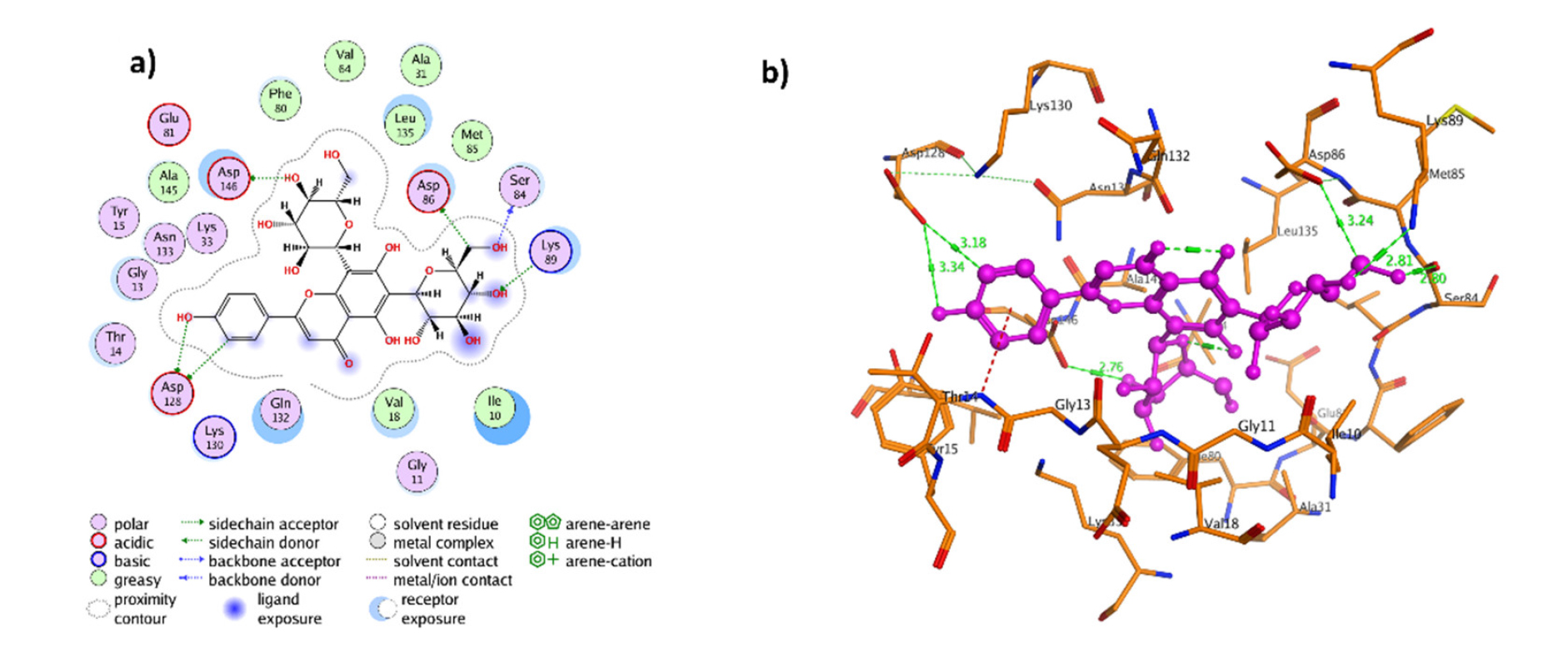
Figure 3.
a) 2D and b) 3D interactions of vicenin-2 isomer 2 in the binding site of 6GU7. (in 3D: Ligand in purple, residues pocket in orange, hydrogen bonds in green, pi interactions in red)
This extensive hydrogen-bonding network aligns with computational studies of high-affinity CDK1 inhibitors, where interaction with Asp86 and Asp146 in the hinge region is consistently reported as critical for sub-micromolar activity (33). The binding energy scores falls within the range reported for known flavonoid-based CDK1 inhibitors (−8.5 to − 10.2 kcal/mol) in similar docking studies using MOE. (34)
The highest number of hydrogen bond interactions between ligands and the 6GU7 complex was observed with 8,3ʹ,4ʹ-trihydroxyflavone-7-O-6(6ʺ-O-p-coumaroyl)-β-d-glucopyranoside (Figure 4), which achieved the second-lowest binding energy among all ligands tested (−8.8836 kcal/mol). This compound formed six hydrogen-donor interactions with the residues Asp128 (two bonds), Ile10, Asp86, and Asp146, as well as two hydrogen-acceptor interactions with Lys89, and one additional interaction with Thr14. The interaction energies were −2.0, −4.1, −2.1, −1.0, −3.9, −5.5, −3.8, −1.0, and −1.4 kcal/mol, with corresponding bond distances of 2.81, 2.69, 2.88, 3.16, 2.65, 2.74, 2.84, 3.30, and 4.26 Å.
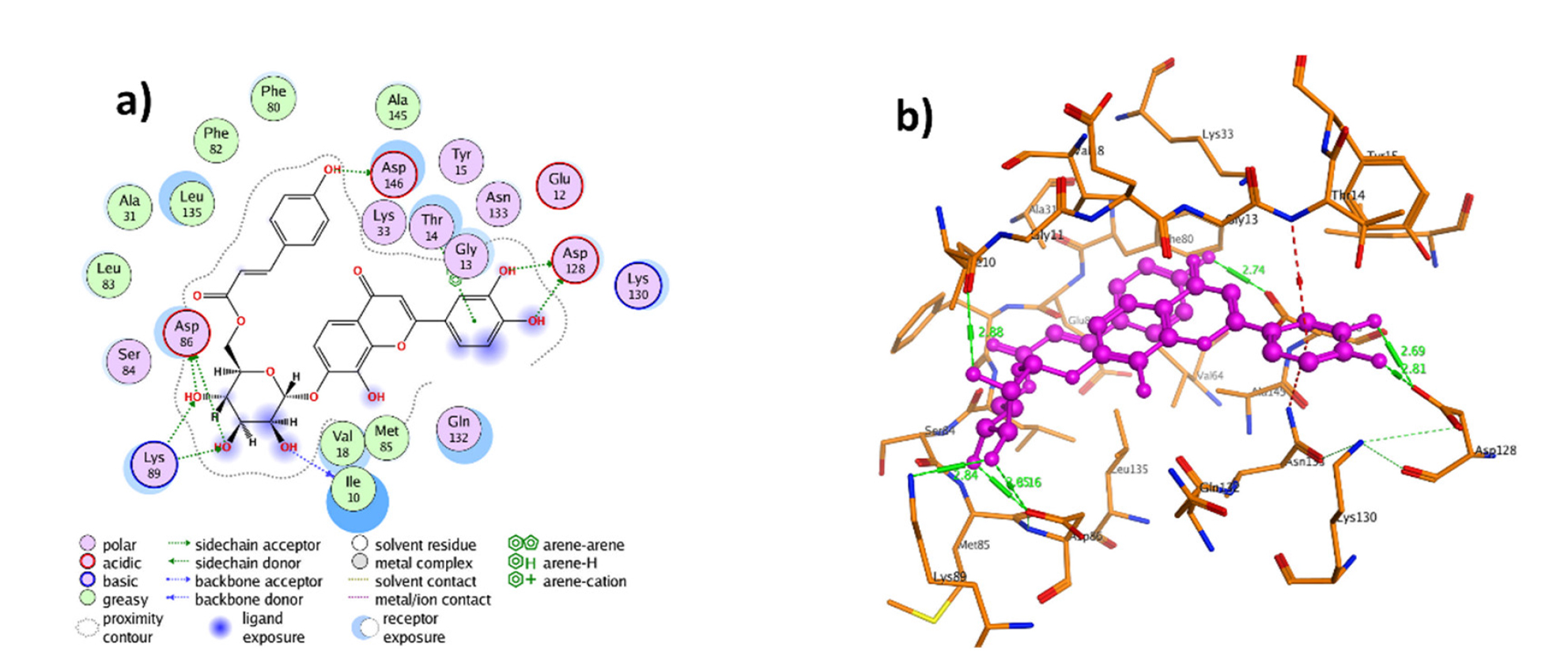
Figure 4.
a) 2D and b) 3D interactions of 8,3ʹ,4ʹ-trihydroxyflavone-7-O-6(6ʺ-O-p-coumaroyl)-β-d-glucopyranoside in the binding site of 6GU7. 3D: Ligand in purple, residues pocket in orange, hydrogen bonds in green, pi interactions in red.
Moreover, most compounds identified from the EtOAc extracts of Linum species (LN and LT) established at least four potential hydrogen bonds with the 6GU7 complex. The detailed interaction data for beast 12 compounds are provided in the supplementary Information (Table S1).
Interactions of ligands with 5LQF
The interaction between 6,4ʹ-dimethoxy-scutellarein-7-neohesperidoside and the 5LQF receptor A (binding energy: −9.8332 kcal/mol) revealed seven hydrogen bond interactions. These included two H-donor bonds with amino acids Ile10 and Glu12, and three H-acceptor bonds with Gln132, LEU83, and Glu12. Additionally, two π-H interactions were observed with Val18 and Ala145. The corresponding interaction distances were 2.83, 2.79, 2.92, 3.43, 2.97, 4.28, and 4.22 Å, with respective interaction energies of −3.0, −1.7, − 1.7, −1.4, −2.4, −0.6, and −0.8 kcal/mol (Figure 5). This binding affinity (−9.83 kcal/mol) is particularly notable, as it exceeds the threshold of −9.0 kcal/mol that Sankket et al (34) correlated with sub-micromolar CDK1 inhibition in their benchmark study of 15 flavonoids as anticancer.
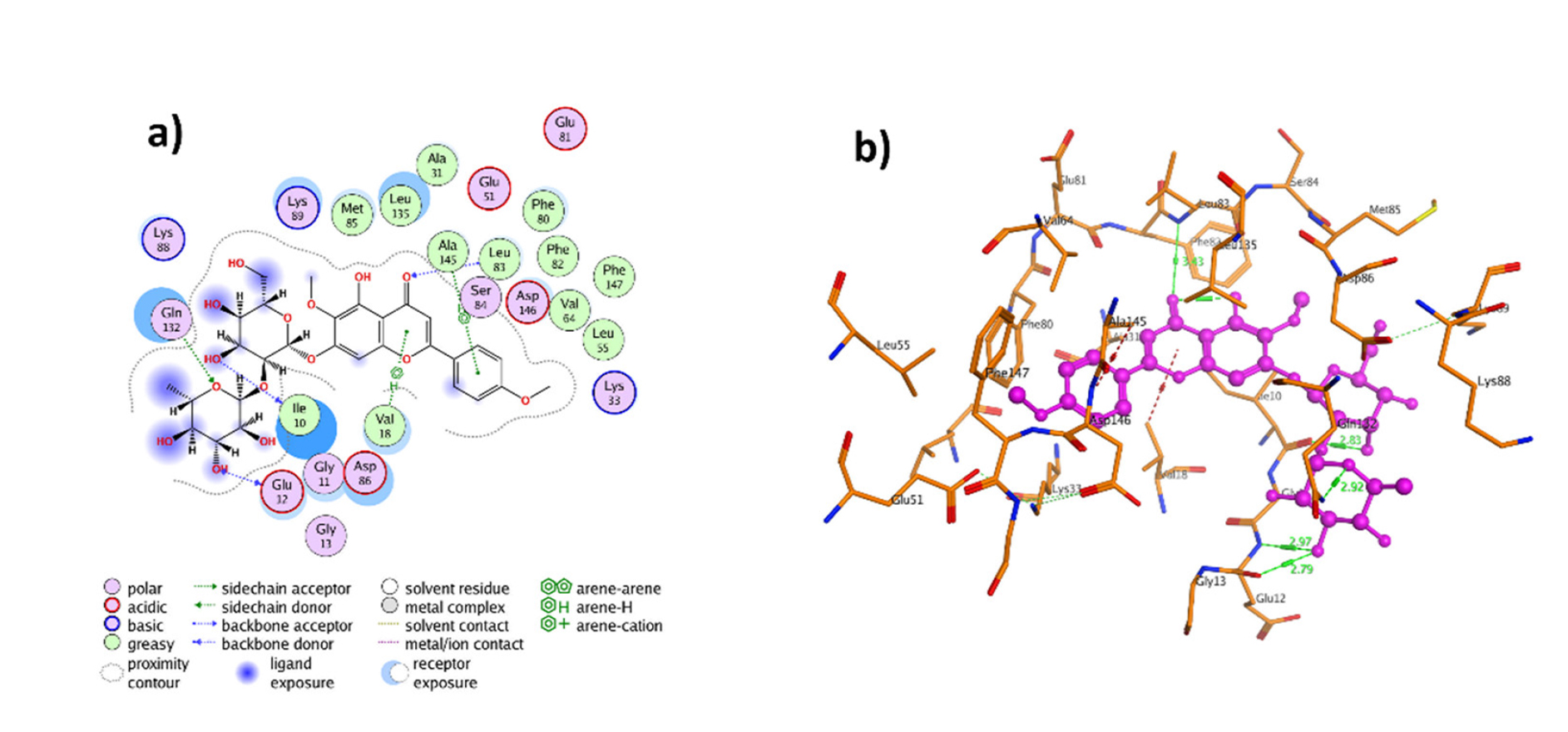
Figure 5.
a) 2D and b) 3D interactions of 6,4ʹ-dimethoxy in the binding sites of 5LQF receptor A. 3D: Ligand in purple, residues pocket in orange, hydrogen bonds in green, pi interactions in red.
For other receptor D, the interaction with Vicenin-2 isomer 2 binding energy: −9.6997 kcal/mol (Figure 6), exhibited two hydrogen bonds and tow π-H interactions. These included one H-donor and one H-acceptor bonds with Leu83, as well as two π-H interactions involving Val18 and Ala145. The corresponding distances were 3.09, 3.40, 4.33, and 4.19 Å, with associated interaction energies of −0.7, −1.4, −0.7, and −0.8 kcal/mol, respectively (Figure 4b). Furthermore, the other compounds interactions with the 5LQF/A complex were described in supplementary Tables S2 and S3).
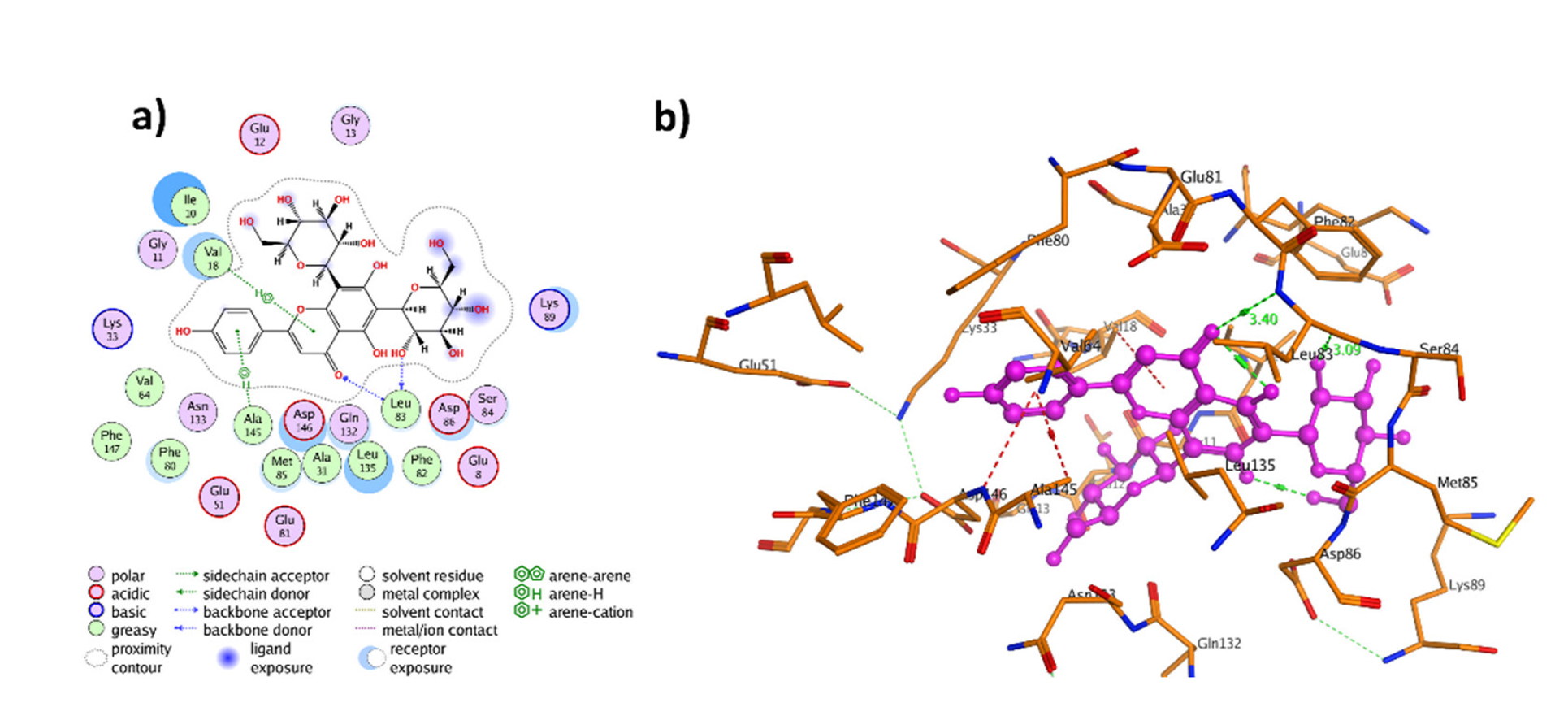
Figure 6.
a) 2D and b) 3D interactions of vicenin-2 isomer 2 in the binding sites of 5LQF receptor D. 3D: Ligand in purple, residues pocket in orange, hydrogen bonds in green, pi interactions in red.
The results of this study confirm that several compounds present in the Linum EtOAc extracts exhibit a strong affinity for CDK1 complexes, particularly for the CDK1/cyclin B1/CKS2 (5LQF) complex, suggesting their potential role as CDK1 inhibitors. Comparative analysis between the two protein complexes studied revealed that 5LQF is the most stable with the ligands tested. This may be attributed to the synergistic stabilizing effect of cyclin B1 and CKS2, which maintain the CDK1 conformation, thereby enhancing its interaction with inhibitors (35).
One of the most promising compounds, 8,3ʹ,4ʹ-trihydroxyflavone- 7-O-6(6ʺ-O-p-coumaroyl)-β-D-glucopyranoside, was identified exclusively in the EtOAc extract of LN. This compound displayed the lowest binding energies at both 5LQF sites A and D, which may explain the stronger cell cycle blockade observed for the LN EtOAc extract compared to the LT EtOAc extract, as previously reported (10). Moreover, the major compounds identified in the EtOAc extracts of LN and LT, notably vicenin-2 and its isomers, showed high affinity for both CDK1 complexes (5LQF and 6GU7). The affinity ranges and interaction patterns of flavonoid derivatives in CDK1 docking studies were similar, with substantial hydrogen bonding and hydrophobic interactions impacting inhibitory potential. Retamal & Caballero 2016(36) found that flavonoid scaffolds docking simulations reveal different binding orientations and activity patterns due to hydrogen bond donors and hydrophobic interactions. Moreover, many biochemical tests shown that nitrogen-containing flavonoid analogues inhibit CDK1/Cyclin B, highlighting the importance of flavonoid scaffolds for CDK1 suppression. (37)
Binding mode analysis confirms competitive inhibition
To confirm that the investigated compounds act as competitive ATP inhibitors, we analyzed their binding modes in comparison with the co-crystallized reference inhibitors NU6102 (in 5LQF) and AZD5438 (in 6GU7). Docking simulations revealed that all top-ranked compounds bind directly within the ATP-binding pocket and exhibit a high degree of pose similarity with these known competitive inhibitors. This spatial overlap with established ATP-competitive inhibitors provides strong computational evidence for a competitive mechanism, consistent with validation protocols used in kinase inhibitor discovery pipelines (38)
The binding pose superpositions in Figure 7 demonstrate that Vicenin-2 isomer 2 not only occupies the ATP-binding pocket but also forms a more robust hydrogen-bonding network than the reference compounds. Vicenin-2 forms six hydrogen bonds (described above) including the critical hinge interaction, compared to four for AZD5438 (Figure 7a) and only one for Dinaciclib (Figure 7b). This enhanced interaction profile within the same site provides compelling evidence that Vicenin-2 acts as a competitive inhibitor.
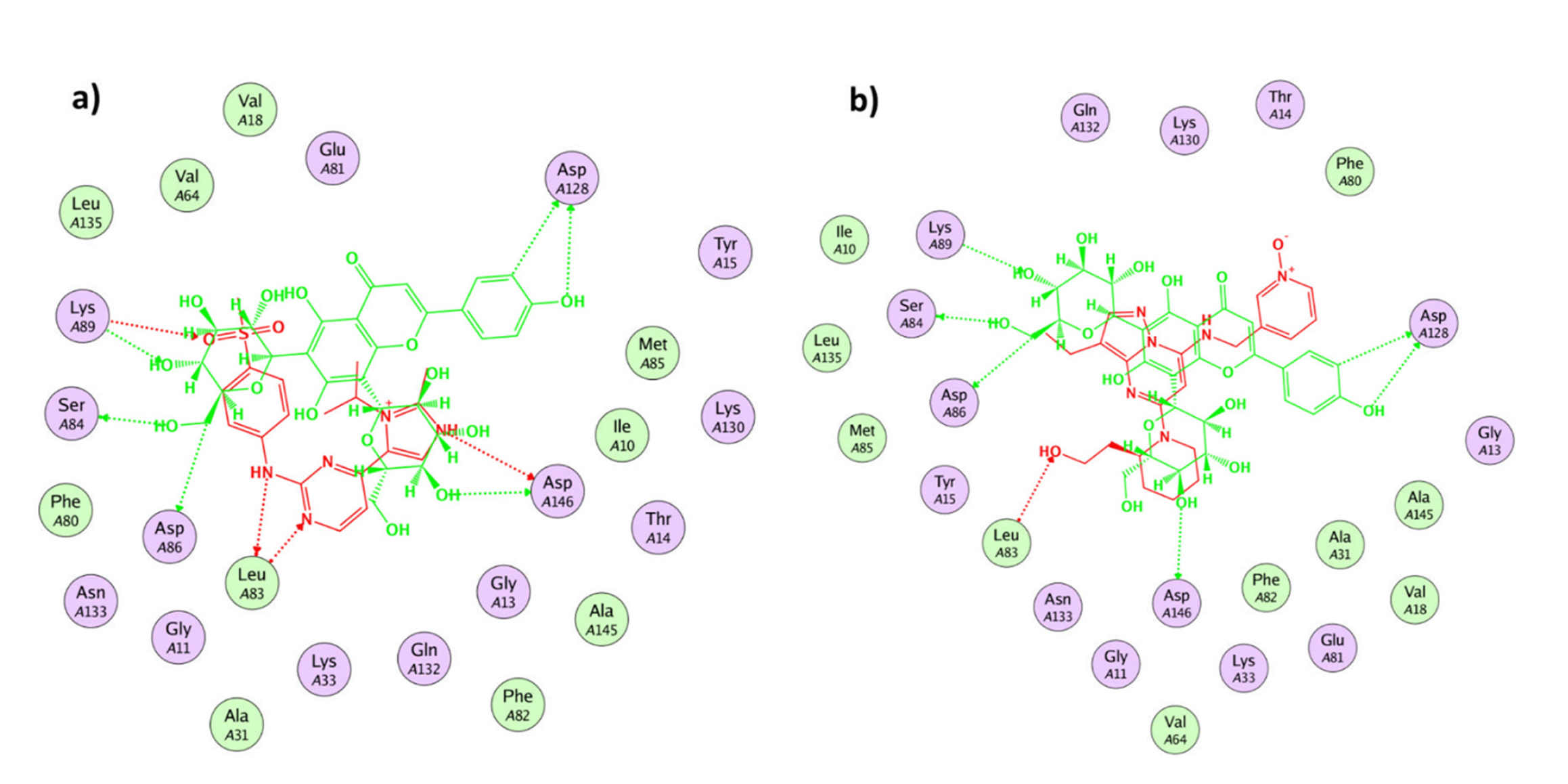
Figure 7.
Overlaid 2D interactions diagrams in 6GU7 receptor.
a) Vicenin-2 isomer 2 (green) and the reference inhibitor AZD5438 (red).
b) Vicenin-2 isomer 2 (green) and Dinaciclib (red).
Also 6,40-dimethoxy scutellarein-7-neohesperidiside demonstrate a superior interaction profile compared to NU6102. In the ATP-binding pocket of 5LQF receptor A (Figures 8a), our compound forms seven hydrogen bonds (described above), one more than the reference ligand. In receptor site D (Figures 8b), both compounds perform equally well, each forming seven hydrogen bonds, confirming the high affinity of our compound for the target sites. The findings align with earlier research indicating that dinaciclib is a powerful ATP-competitive inhibitor of CDK1 Parry et al., 2010 (39)and that NU6102 suppresses CDK1/2 in cancer cells under treatment, the increased affinity of NU6102 for 5LQF may result from the stabilizing effects of cyclin B1 and CKS2, establishing a dependable criterion for assessing natural compounds as prospective CDK1 inhibitors.
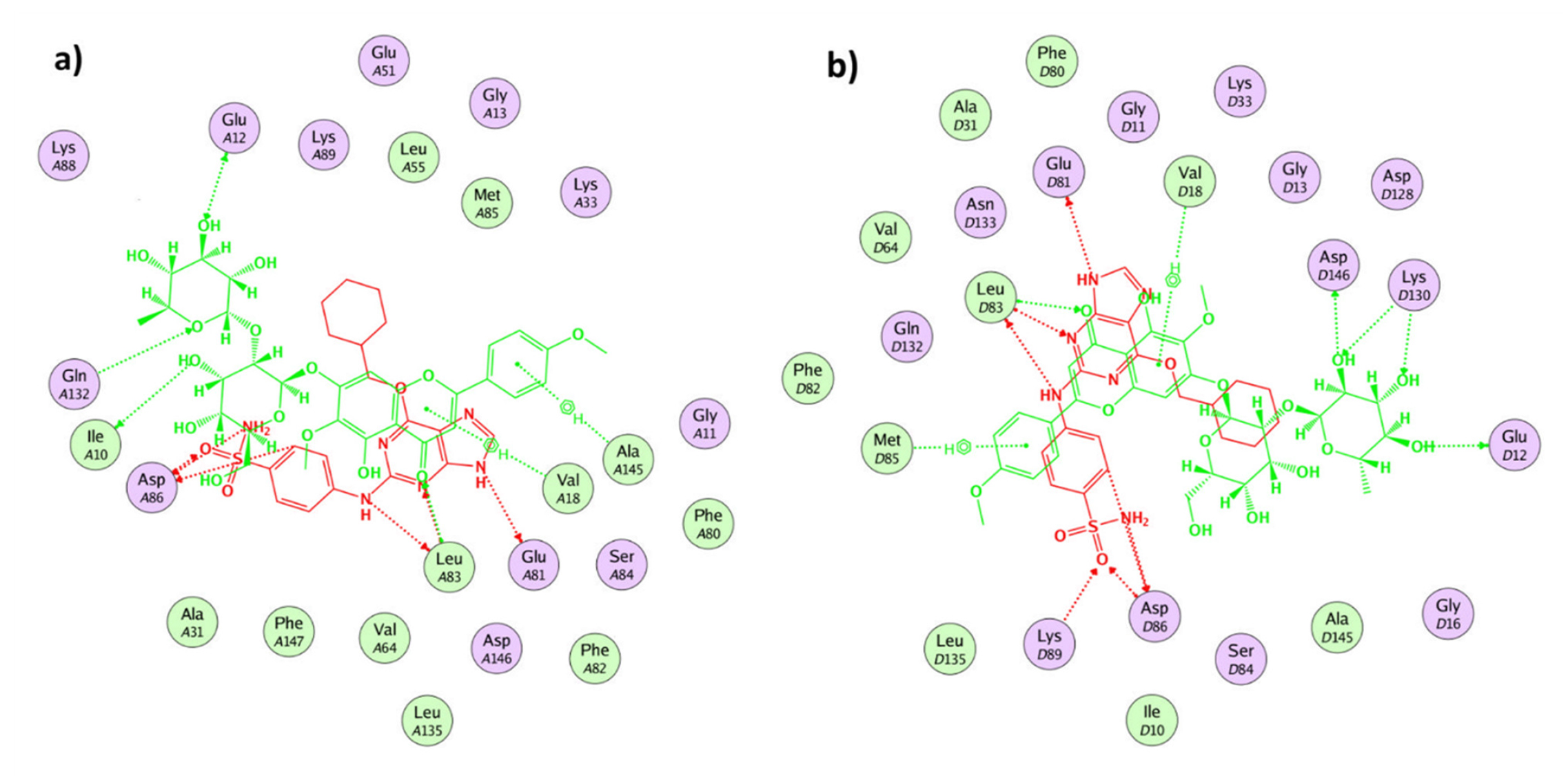
Figure 8.
Overlaid 2D interactions diagrams:
a) 6,4ʹ-dimethoxy (green) and the reference inhibitor NU6102 (red) in 5LQF receptor A.
b) Vicenin-2 isomer 2 (green) and Dinaciclib (red) in 5LQF receptor D.
This affinity, which exceeds that of the reference inhibitors, suggests a promising inhibitory potential likely responsible for the observed antiproliferative effects. The docking results also revealed that several other compounds present in the EtOAc extracts of LN and LT, including 6,4ʹ-dimethoxyscutellarein- 7-neohesperidoside, luteolin-7-O-β-d-glucoside, rutin, violanthin, foliasalacioside B1, isovitexin 2ʺ-Oarabinoside, vitexin-2ʺ-rhamnoside, and malvidin 3-O-β-galactoside, exhibited strong binding affinities toward CDK1, with binding energies lower than those of the reference inhibitors tested. This aligns with computational studies showing that 37 flavonoids often outperform inhibitors in CDK1 docking due to their extended interaction networks (36). This high affinity reinforces our previous findings: inhibition of CDK1 prevents activation of the cyclin B/CDK1 complex, a key regulator of the G2/M transition, thereby explaining the G2/M cell cycle arrest observed in PC3 cells following treatment with the EtOAc extracts from both plants. Similar correlations between CDK1 docking scores and G2/M arrest have been reported for other natural products. (40)
These findings suggest that the identified natural compounds could serve as promising candidates for the development of CDK1-targeted inhibitors in innovative cancer therapies.
Analysis of the molecular interactions revealed a complex network of bonds, mainly hydrogen bonds, but also hydrophobic and polar interactions. These multiple interactions confer notable stability to the formed complexes, an essential requirement for effective CDK1 inhibition.
Hydrogen bonds ensure precise anchoring of the ligands within the active site, promoting an optimal orientation for interaction, whereas hydrophobic interactions significantly contribute to the stabilization of the ligand-protein complex. This multimodal binding mechanism plays a key role in the molecular recognition and selective inhibition of enzymatic targets. The combination of hydrophobic filling, electrostatic steering, and optimized hydrogen bonding represents a comprehensive binding strategy observed in successful kinase inhibitor designs. (41)
In line with the findings of Sahu et al. (42), hydrophobic forces play a fundamental role in the final phase of the binding process, filling hydrophobic cavities within the active site, reducing void spaces, and reinforcing complex cohesion through van der Waals interactions. Electrostatic forces also contribute to the initial long-range molecular recognition, facilitating the orientation of ligands toward the catalytic pocket.
Another factor influencing complex stability lies in the specific geometry of the binding systems. As demonstrated by Rupniak et al. (43), a temporarily stabilized ring system, dependent on the conformation of donor and acceptor groups, can reduce the energetic penalty associated with desolvation. Such a conformation may enable ligands like vicenin-2 to navigate the protein structure more effectively, thereby enhancing their capacity to establish long-lasting and specific interactions with CDK1.
Finally, the work of Thorson et al. (44) emphasizes that even a single additional hydrogen bond can enhance the biological activity of a ligand by up to a hundredfold, underscoring its critical role in optimizing both affinity and selectivity.
This principle is reflected in our findings, where the stabilized conformations of the ligand–CDK1 complexes strengthen anchoring within the active site, supporting a competitive inhibition mechanism with strong therapeutic potential.
Overall, these observations confirm not only the structural stability of the formed complexes but also their pharmacological relevance as selective CDK1 inhibitors. They thus open up promising perspectives for the development of new naturally occurring antiproliferative agents targeting CDKs.
CONCLUSION
The molecular docking study conducted on 78 compounds identified in the ethyl acetate (EtOAc) extracts of two Linum species revealed several molecules exhibiting remarkable affinity toward the CDK1/cyclin B1/CKS2 (5LQF) and CDK1/Cks2 (6GU7) complexes. The results indicate that the 5LQF complex displayed overall lower binding energies, reflecting more stable interactions with the tested ligands. Among the analyzed compounds, 6,4ʹ-dimethoxy-scutellarein- 7-neohesperidoside, 8,3ʹ,4ʹ-trihydroxyflavone-7-O- 6(6ʺ-O-p-coumaroyl)-β-d-glucopyranoside, vicenin-2 and its isomers, luteolin-7-O-β-d-glucoside, rutin, violanthin, foliasalacioside B1, isovitexin 2ʺ-O-arabinoside, vitexin-2ʺ- rhamnoside, olivil 4ʹ-O-β-d-glucoside and malvidin 3-O-β-galactoside demonstrated binding affinities comparable to, or even greater than, those of the reference inhibitors NU6102 and dinaciclib.
These in silico findings provide a plausible molecular explanation for the previously observed G2/M cell cycle arrest induced by Linum extracts in PC3 cells. They identify potential bioactive constituents that may act as CDK1 inhibitors and justify further investigation. However, as molecular docking offers predictive rather than experimental evidence, future work should include molecular dynamics simulations and in vitro kinase inhibition assays to validate the biological relevance of these interactions.